
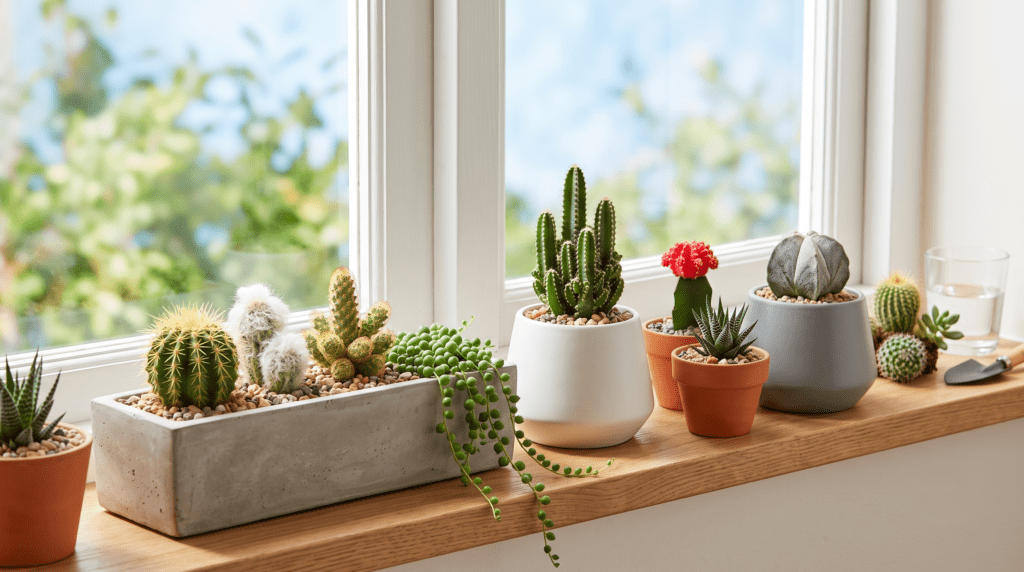
Have you ever stared at a bright, sunny, but frustratingly narrow window ledge and wished you could turn it into a thriving indoor garden? You aren’t alone. Finding the right cacti arrangement ideas for windowsills can completely transform a cramped, underutilized space into a striking, low-maintenance micro-desert. ☀️
As someone deeply immersed in plant cultivation, soil health diagnostics, and creating highly visual botanical displays, I can tell you that the secret isn’t just about cramming a few random pots together. It’s about strategic design. When working with a space that is often less than six inches deep, every element—from the texture of your potting mix to the silhouette of your plants—matters.
This comprehensive guide goes beyond the basics. We are going to dive deep into sustainable plant care, optimal root health, and highly photogenic styling techniques. Whether you want to create a Pinterest-perfect display or simply want to keep your prickly friends thriving for years, you’ll find everything you need right here. 🪴
Why Windowsills are the Ultimate Micro-Climate for Cacti 🌡️
While cacti are renowned for their hardiness, indoor environments can actually be quite hostile to them if not managed correctly. Windowsills, however, offer a unique micro-climate that, when utilized properly, mimics their natural arid habitats perfectly.
Decoding Light Requirements for Indoor Cacti ☀️
Light is the primary food source for your desert plants. Not all windowsills are created equal, and understanding your light exposure is the first step to a successful arrangement.
-
South-Facing Windowsills: This is the holy grail for cacti. In the Northern Hemisphere, a south-facing window receives intense, direct sunlight for the majority of the day. This is ideal for sun-loving varieties like the Golden Barrel Cactus (Echinocactus grusonii) or Prickly Pear (Opuntia).
-
West-Facing Windowsills: These ledges catch the fiery afternoon sun. While excellent for most cacti, the intense late-day heat combined with magnifying window glass can sometimes scorch younger or less established plants.
-
East & North-Facing Windowsills: These are generally too dim for traditional desert cacti. If you only have these windows available, you will need to pivot to epiphytic, jungle cacti—such as the Holiday Cactus (Schlumbergera) or Mistletoe Cactus (Rhipsalis)—which prefer bright, indirect light.
Turning Space Constraints into a Design Advantage 📏
The primary complaint about windowsill gardening is the lack of depth. However, from a design perspective, this limitation is actually a massive advantage.
A narrow ledge forces intentional, linear design rather than chaotic, cluttered clustering. It naturally creates a “gallery” effect, turning your plants into a focused visual asset. Furthermore, elevating your arrangements on a windowsill keeps them away from high-traffic household accidents—safely out of reach of curious pets or bumping elbows. 🐾
The Foundation: Perfecting Soil Health & Container Selection 🏺
The most beautiful arrangement in the world will inevitably fail if the foundational plant care principles are ignored. Because windowsill containers are often shallow and subject to intense solar heat, managing soil health and moisture retention is the most critical factor for long-term success.
Formulating the Ultimate Gritty Mix for Shallow Containers 🪨
Standard, store-bought “cactus potting soil” is notoriously misleading. For indoor environments, these commercial bags often contain far too much peat moss, which becomes compacted and retains moisture for too long, inevitably leading to root rot.
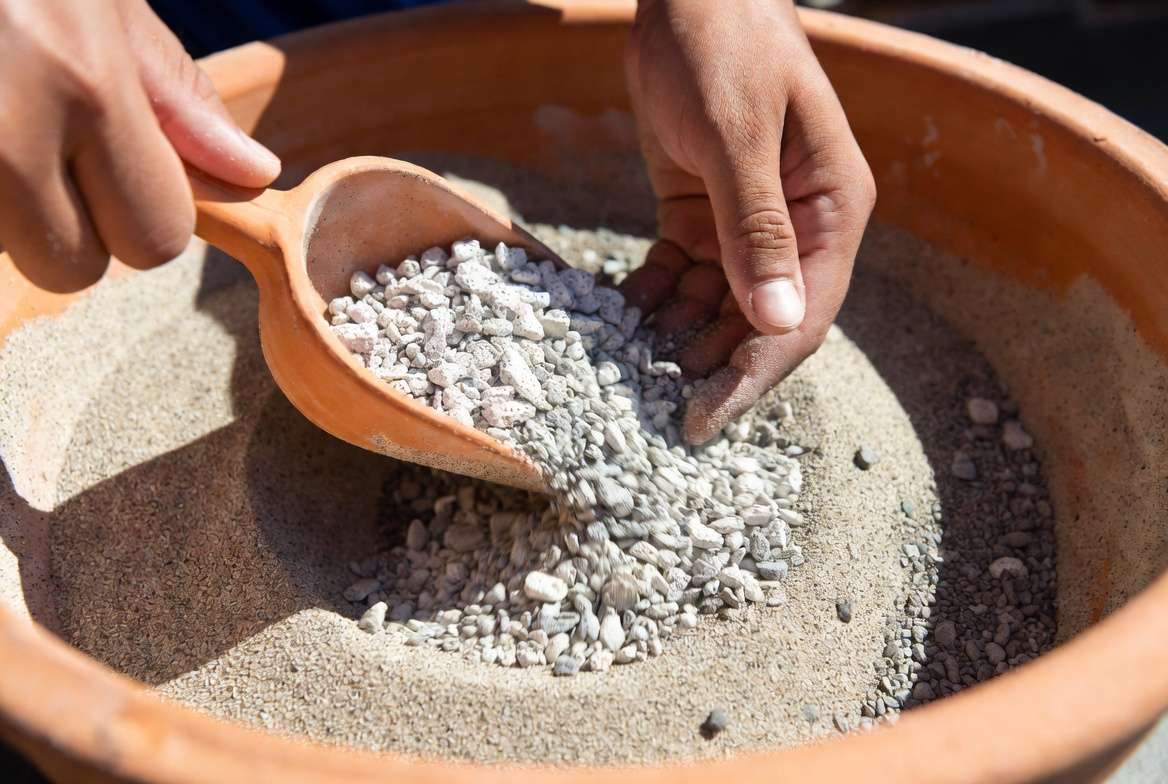
To ensure optimal root health and vibrant plant growth, you need a high-porosity gritty mix that drains instantly and allows oxygen to reach the root system.
The Expert Windowsill Soil Recipe:
-
50% Inorganic Material (Drainage): Use horticultural pumice, crushed calcined clay, or poultry grit. This provides structure and prevents compaction.
-
25% Coarse Sand (Aeration): Ensure it is coarse builder’s sand, not fine play sand (which will cement the roots).
-
25% Organic Matter (Nutrients): High-quality coconut coir or sifted compost.
Selecting the Right Planter Material 🪴
The pot you choose dictates how often you will need to water and how the roots will breathe. When styling a windowsill, you must balance aesthetics with functionality.
| Planter Material | Pros for Windowsills | Cons for Cacti Care |
| Terracotta / Clay | Highly breathable, wicks moisture away, preventing root rot. Classic aesthetic. | Can dry out too quickly on a hot, south-facing windowsill, requiring more frequent watering. |
| Glazed Ceramic | Heavy and stable (won’t tip over). Endless colors and patterns for styling. | Holds moisture longer; strictly requires large drainage holes to prevent soggy roots. |
| Metal Troughs | Sleek, modern, and fits narrow architectural ledges perfectly. | Can heat up intensely in direct summer sun, potentially baking the roots if not monitored. |
| Resin / Plastic | Lightweight and inexpensive. | Poor breathability; requires a highly gritty soil mix to compensate. |
5 Stunning Cacti Arrangement Ideas for Windowsills 🏜️
Now that we have established the crucial foundation of soil health and container selection, it is time to design. Because a windowsill is essentially a long, narrow frame, your arrangement should act as a piece of living art.
Here are five expertly crafted cacti arrangement ideas designed to maximize tight spaces while delivering maximum visual impact.
1. The Minimalist Linear Row (Modern & Clean) 🟩
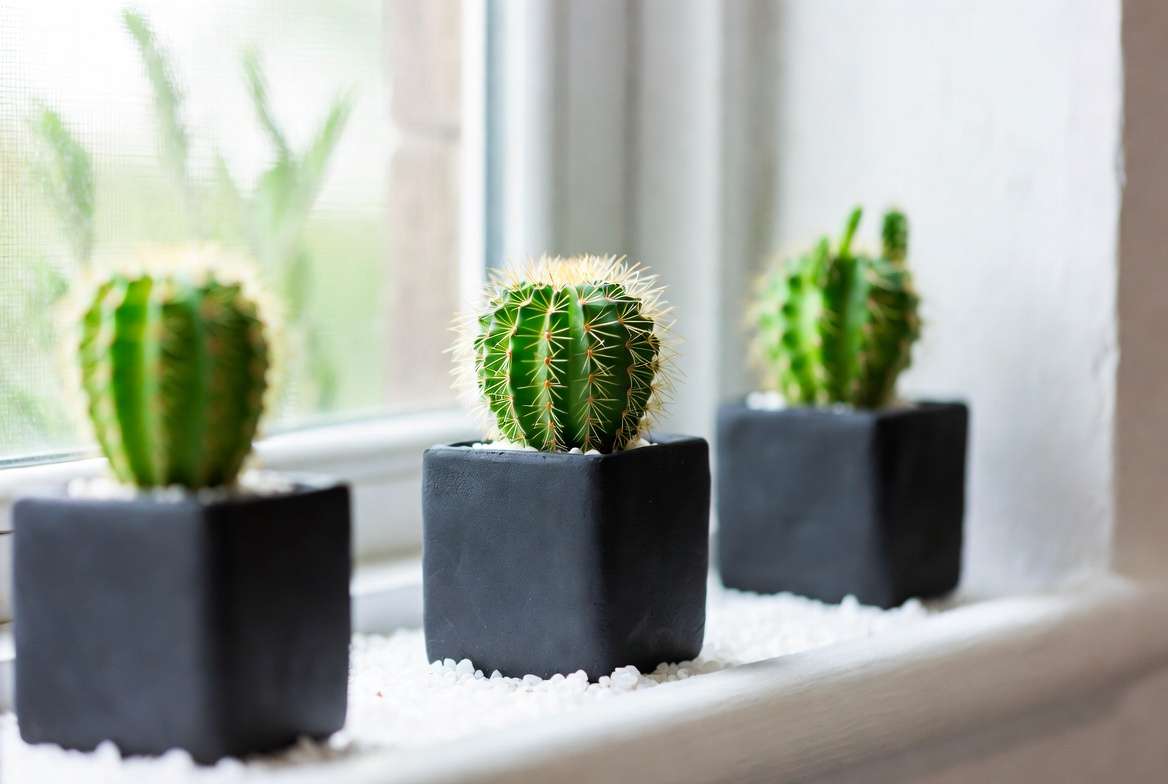
If you prefer a sleek, contemporary aesthetic, the minimalist linear row is your best choice. This arrangement relies on the power of repetition and geometric harmony.
-
The Layout: Select 3 to 5 identical, sharply angled pots (such as matte black or white ceramic cubes). Place them in a perfectly straight line with exactly two inches of breathing room between each container.
-
The Plants: For this look, uniformity is key. Choose perfectly spherical cacti, like the Golden Barrel Cactus (Echinocactus grusonii), or striking columnar varieties like the Peruvian Apple Cactus (Cereus repandus).
-
The Vibe: Clean, uncluttered, and highly photogenic. This is an incredibly strong visual hook for anyone looking to add a touch of modern desert chic to an office or living room window.
2. The Layered Desert Trough (Maximized Depth) 🛶
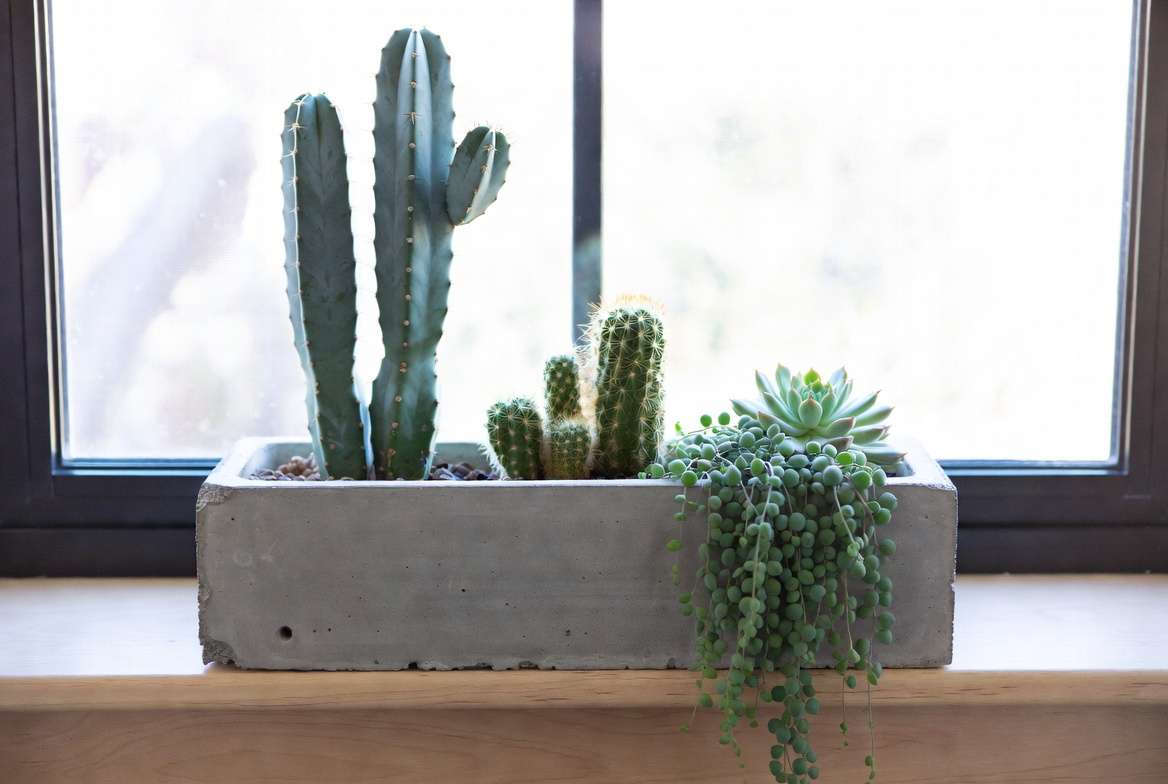
When you are working with a windowsill that is only a few inches deep, a single, long rectangular trough planter can give the illusion of a much deeper miniature landscape.
-
The Layout: Instead of placing individual pots, plant a mini-desert ecosystem directly into a metal or terracotta trough.
-
The Plants: The secret to this arrangement is vertical layering. Plant a tall, structural cactus (like a Blue Myrtle) in the back corner. In the middle ground, use clustering cacti like the Peanut Cactus (Echinopsis chamaecereus). Finally, plant a trailing succulent—like String of Pearls (Senecio rowleyanus) or String of Bananas—so it cascades beautifully over the front edge of the trough.
-
The Vibe: Abundant and lush. The trailing elements break the harsh horizontal line of the windowsill, softening the overall look and drawing the eye downward.
3. The Mixed-Texture Showcase (Spiky, Hairy, and Smooth) 🧶
One of the most captivating ways to style a plant arrangement is by contrasting extreme textures. A windowsill offers the perfect close-up gallery for this tactile approach.
-
The Layout: Use a cluster of shallow, bowl-like pots grouped closely together in the center of the sill.
-
The Plants: Pair the wildly “hairy” Old Man Cactus (Cephalocereus senilis) right next to a completely smooth, spineless Bishop’s Cap (Astrophytum myriostigma). Add a fiercely spiky Ferocactus into the mix for aggressive contrast.
-
The Vibe: Highly engaging and visually complex. When the intense morning or afternoon sun hits this arrangement, the backlight will illuminate the white “hairs” and cast dramatic shadows from the spines, making for spectacular macro photography or social media content.
4. The Vertical Climbers (Using Height to Save Width) 🧗♀️
If you cannot build outward, build upward! If your windowsill has high vertical clearance (like large bay windows or tall sash windows), you can create massive impact without taking up any extra ledge space.
-
The Layout: Select tall, slender, heavy-bottomed pots (to prevent tipping) and place them at varying intervals along the sill.
-
The Plants: Focus exclusively on branching, vertical climbers. The Fairy Castle Cactus (Acanthocereus tetragonus) is perfect for this, as it grows into multiple enchanting spires. The African Milk Tree (Euphorbia trigona—technically a succulent that mimics a cactus) is another brilliant vertical grower.
-
The Vibe: Architectural and dramatic. It draws the eye all the way up the glass, making the window itself look larger and more majestic.
5. The Upcycled Teacup Garden (For Tiny Sills) ☕
For those ultra-narrow ledges in kitchens or bathrooms that can barely fit a standard pot, upcycling is the answer.
-
The Layout: Gather a collection of vintage, mismatched teacups or small ceramic bowls.
-
The Plants: Miniature and slow-growing varieties thrive here. Thimble Cacti (Mammillaria gracilis fragilis) or tiny Haworthia pups (succulents that pair well with low-light cacti) are perfect.
-
The Critical Step: You must drill a drainage hole. Use a diamond-tipped masonry drill bit and a steady trickle of water to safely drill a hole in the bottom of each teacup. Without this, your teacup garden will quickly become a swamp.
-
The Vibe: Charming, whimsical, and deeply personal.
Styling Secrets for a Picture-Perfect Display 📸
Creating an arrangement that catches the eye and stops the scroll requires a little bit of artist’s intuition. Whether you are staging your windowsill to elevate your interior design, or styling it to capture high-quality visual assets, these two rules are non-negotiable.
The Rule of Odds and Varied Heights 📐
In interior design and botanical staging, even numbers often feel rigid, staged, and unnatural.
-
The Rule of Odds: Always group your plants in odd numbers—threes, fives, or sevens. A trio of cacti forms a natural triangle, which is infinitely more pleasing to the human eye than a pair.
-
Varied Heights: Never place three plants of the exact same height next to each other unless you are deliberately doing the “Minimalist Linear Row.” Instead, aim for a “thriller, filler, and spiller” height dynamic. Have one tall focal point, a mid-sized companion, and a low-profile base plant. This creates visual movement and prevents the arrangement from looking flat.
The Magic of Top Dressing 🎨
If there is one expert secret that separates amateur plant shelves from professional-grade botanical displays, it is top dressing.
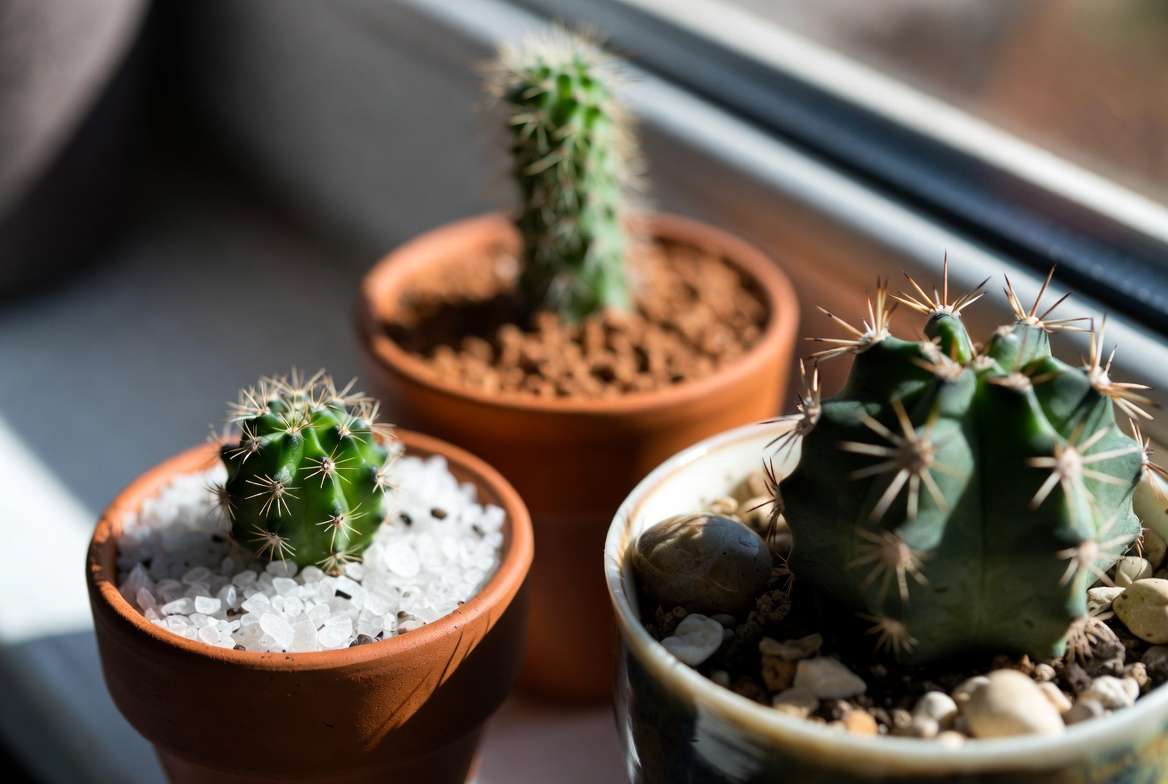
Top dressing is the practice of adding a decorative layer of gravel, crushed quartz, or polished river stones over the exposed potting soil.
-
Aesthetic Benefit: It hides the messy, uneven organic matter and gives the arrangement a polished, miniature-landscape finish.
-
Health Benefit: It prevents the lightweight perlite or pumice in your gritty mix from floating away during watering, and it acts as a dry barrier that significantly deters fungus gnats from laying eggs in the damp soil beneath.
Specialized Windowsill Care: Keeping Your Arrangement Thriving 💧
A windowsill is a dynamic environment. The conditions in July are drastically different from the conditions in December. Adapting your care routine is essential for the longevity of your cacti arrangement.
Mastering the Watering Routine 🚿
The golden rule of desert plant care is the “soak and dry” method, but a hot windowsill accelerates this process.
During the active growing season (Spring and Summer), a south-facing windowsill can bake the moisture out of a small terracotta pot in just a few days. You must thoroughly drench the soil until water runs freely out the drainage holes, and then let it dry completely before watering again. Never give your cacti “little sips” of water; this encourages weak, shallow root systems that are highly susceptible to rot.
Managing Seasonal Drafts and Temperature Swings ❄️
Window glass is a terrible insulator. In the summer, it acts as a magnifying glass, intensifying the heat. In the winter, it acts as a freezer.
By allowing your cacti to experience a cool, dry winter (around 50°F to 55°F if possible), you signal their natural dormancy period, which is required for flower production the following year.
Troubleshooting Common Windowsill Cactus Problems 🛠️
Even with the perfect soil and the most stunning arrangement, the intense environment of a window ledge can occasionally throw a curveball. Being able to diagnose and correct these issues quickly is the hallmark of a true plant expert. Here are the two most common problems windowsill cacti face and exactly how to fix them.
Sunburn (Yes, it happens!) 🥵
It seems counterintuitive—how can a desert plant get sunburned? In the wild, cacti grow outdoors and are acclimated to harsh UV rays from the moment they sprout. However, greenhouse-grown cacti purchased from a nursery are used to filtered light. If you immediately place a new cactus directly on a blazing south-facing windowsill in mid-July, the magnifying effect of the glass will scorch the plant’s epidermis.
-
The Symptoms: Look for bleached, pale yellow, or crispy white patches on the side of the cactus directly facing the glass. Unlike a fungal infection, sunburn will only appear on the sun-exposed side.
-
The Fix: Unfortunately, sunburn scars are permanent. However, you can prevent further damage by pulling the arrangement a few inches back from the glass or using a sheer curtain to diffuse the midday light. Always acclimatize new plants slowly, moving them closer to the window over a period of two weeks.
Etiolation (Stretching) 🦒
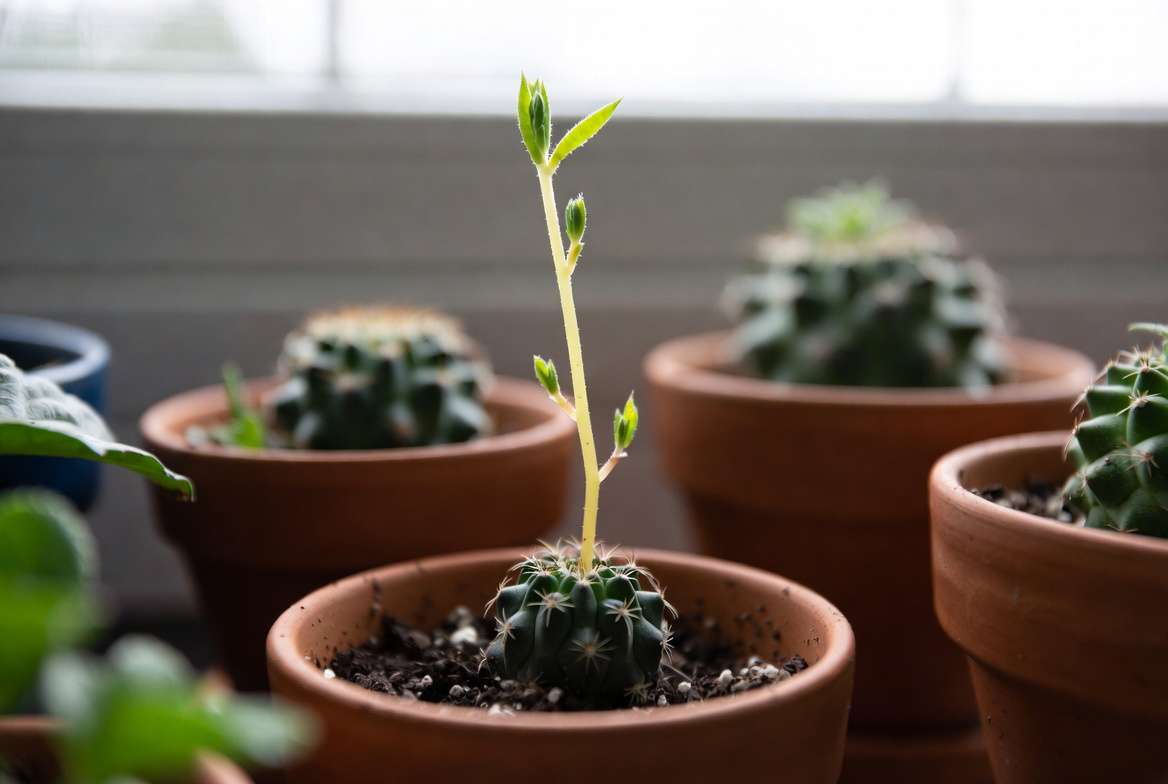
This is the most frequent issue in indoor succulent and cacti care, and it occurs when a plant is starved for light.
-
The Symptoms: Instead of growing compact and stout, the cactus begins to stretch rapidly toward the window. The new growth will look pale green or yellowish, notably thinner than the base, and the spines will be spaced further apart.
-
The Fix: A stretched cactus will never shrink back to its original shape. To correct it, you must move the arrangement to a sill with brighter, more direct sunlight. To maintain an aesthetically pleasing and even shape moving forward, make it a habit to rotate your pots 90 degrees every time you water them. This ensures all sides of the arrangement receive equal light exposure, keeping the growth perfectly symmetrical.
Frequently Asked Questions (FAQs) ❓
To ensure your windowsill garden remains healthy and vibrant, here are expert answers to the most commonly asked questions regarding indoor cacti arrangements.
Can cacti survive on a North-facing windowsill? Traditional desert cacti (like the Golden Barrel or Saguaro) will not thrive on a North-facing windowsill; they will slowly stretch and weaken due to the lack of direct sunlight. However, this is the perfect spot for epiphytic jungle cacti! Varieties like the Christmas Cactus (Schlumbergera bridgesii), Easter Cactus, or Mistletoe Cactus (Rhipsalis) naturally grow under the canopy of trees and will flourish in the bright, cool, indirect light of a North-facing ledge.
How close together can you plant cacti in a single arrangement? When creating a layered trough or a mixed-texture bowl, you can plant cacti surprisingly close together—often with just an inch of space between their bases. Because cacti have relatively shallow, slow-growing root systems, they do not compete for space as aggressively as leafy tropical plants. However, ensure your gritty potting mix is highly aerated so that the densely packed roots can still breathe.
Do I need to repot my windowsill cacti every year? No. In fact, most indoor cacti prefer to be slightly root-bound. Repotting too frequently can stress the plant and damage delicate root hairs. You generally only need to repot a windowsill cactus every 3 to 4 years, or when the plant has grown so large that it is physically touching the sides of its container or becoming top-heavy. When you do repot, only increase the pot size by one inch in diameter.
Conclusion 💚
Transforming a narrow, bare ledge into a breathtaking botanical display doesn’t require a massive budget or endless hours of maintenance. By mastering the fundamentals of highly gritty soil, choosing the right planter materials, and applying strategic design principles like the rule of odds and top dressing, you can create cacti arrangement ideas for windowsills that truly maximize your space.
Whether you opt for a sleek, modern linear row or a highly textured, upcycled teacup garden, your windowsill has the potential to become the most captivating architectural feature in your room. Not only do these mini-deserts purify the air and bring a sense of calm to your living space, but their unique geometry and vibrant textures make for incredible, eye-catching photography—perfect for sharing on Pinterest, featuring in YouTube thumbnails, or simply enjoying with your morning coffee.
Grab your tape measure, assess your window’s light direction, and start planning your ultimate windowsill micro-desert today. Happy planting! 🌵🪴✨











