
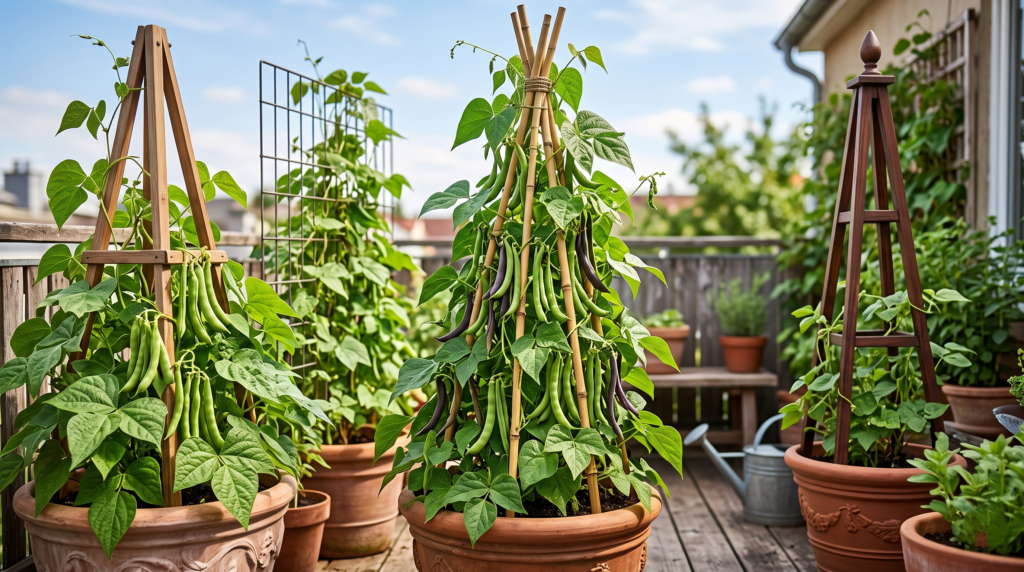
Picture this: your urban patio is bathed in warm summer sunlight, but your bean plants are a tangled, unruly mess sprawling haphazardly over the edges of their pots. Sound familiar? Many small-space gardeners struggle with low yields, rotting pods, and diseased foliage simply because their vines lack proper guidance. The secret to transforming a chaotic balcony garden into a highly productive, lush green oasis lies in growing upward. By utilizing the right vertical supports for container-grown beans, you can drastically maximize your harvest, improve overall plant health, and save precious square footage.
Whether you are a seasoned urban farmer seeking to optimize your patio layout or a first-time grower looking for reliable plant care strategies, this comprehensive guide will walk you through the structural setups, material selections, and expert horticultural techniques needed to elevate your harvest. Let’s reach for the sky! 🚀
Why Your Container Beans Beg for Verticality 🧗♀️
Growing beans in pots comes with a unique set of challenges, primarily restricted space and limited soil volume. Allowing your vines to trail along the ground or cascade aimlessly over the sides of a pot is a recipe for a disappointing harvest. Implementing a sturdy vertical structure is not just an aesthetic choice; it is a fundamental plant care requirement that directly impacts your yield.
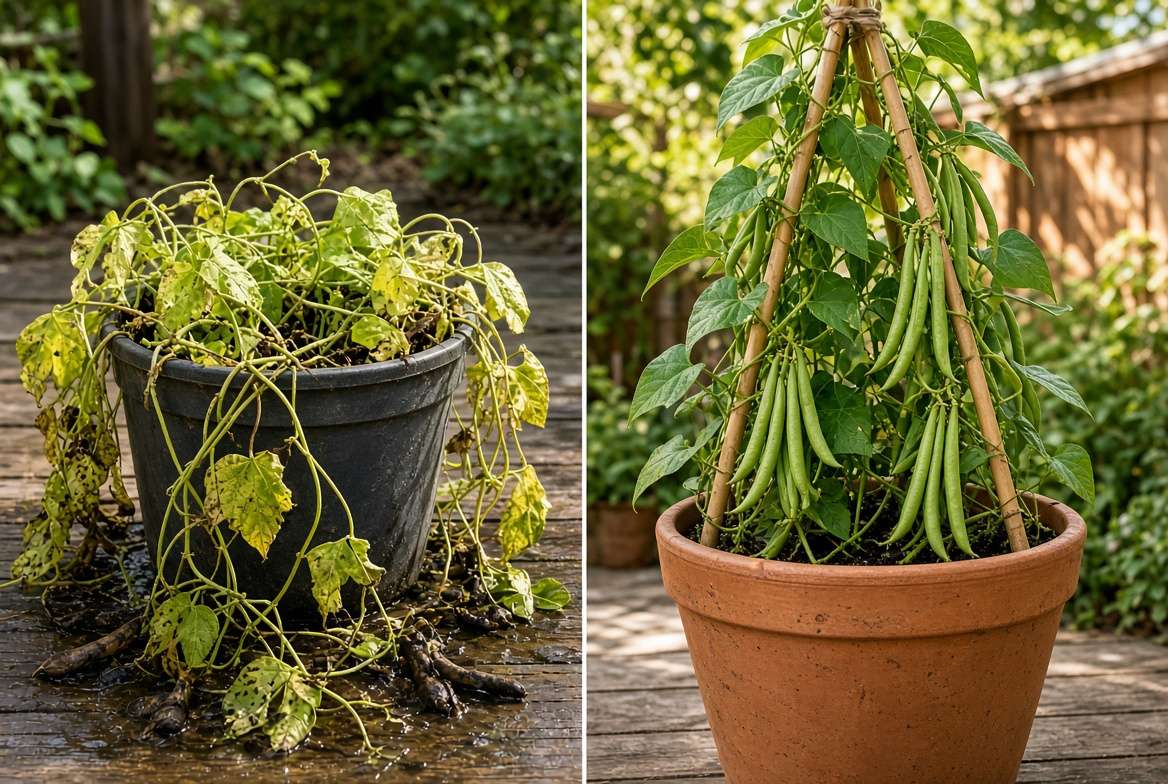
1. Superior Airflow and Disease Prevention 🌬️ Fungal diseases thrive in damp, stagnant environments. When bean foliage is clumped together near the soil line, moisture from watering and morning dew lingers on the leaves. This creates the perfect breeding ground for powdery mildew, blight, and soil-borne fungal pathogens. By lifting the dense foliage away from the damp soil, vertical supports promote essential air circulation. The breeze can easily flow through the leaves, drying them rapidly and keeping fungal spores at bay.
2. Maximum Sunlight Absorption ☀️ Beans are sun-loving crops that require a minimum of six to eight hours of direct light daily to produce a heavy yield of crisp, sweet pods. An upright structure allows the leaves to spread and cascade naturally, creating a larger surface area exposed to the sun. This maximized light absorption leads to vigorous photosynthesis, stronger stems, and a much higher pod-setting rate compared to shaded, sprawling vines.
3. Streamlined Pest Management 🐛 Elevating your crop creates a physical barrier that makes it significantly harder for ground-dwelling pests—like slugs, snails, and pillbugs—to decimate your hard work. Furthermore, training your vines up a trellis brings the foliage to eye level. This makes routine visual inspections much easier. You can quickly spot aphids, spider mites, or early signs of distress on the undersides of leaves and address them before an infestation takes hold.
Know Your Vines: Pole Beans vs. Bush Beans 🫘
Before hammering in a single stake, it is crucial to understand the growth habits of the specific bean varieties you are cultivating. Not all beans climb, and matching the right plant to the right support is the foundation of container gardening success.
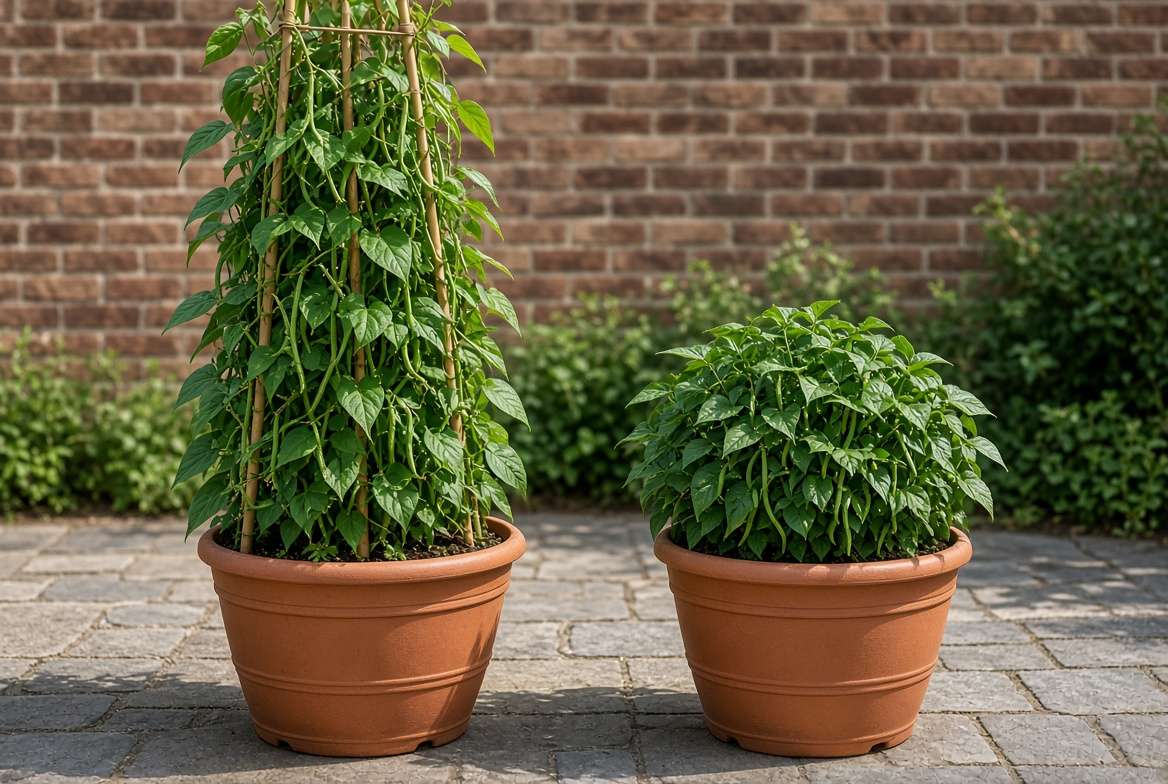
The Aggressive Climbers: Pole Beans 🌿 Pole beans (indeterminate varieties) are the marathon runners of the garden. They produce vines that can easily surge to 8, 10, or even 12 feet in length over a single growing season. Because they continue to grow and produce fruit until the first frost, they have an absolute requirement for tall, highly robust structures. Without proper trellising, pole beans will stunt their own growth, choke each other out, and yield a fraction of their potential. Varieties like ‘Kentucky Wonder’ and ‘Scarlet Runner’ demand heavy-duty verticality to reach their peak performance.
The Compact Producers: Bush Beans 🪴 Bush beans (determinate varieties) are compact, bushy plants that typically max out at around 2 feet in height. They set all their fruit at once over a short period. While traditional garden wisdom suggests that bush beans do not need trellising, container growers know differently. When grown in loose potting soil, a bush bean plant laden with heavy, mature pods is highly susceptible to toppling over or snapping at the main stem during heavy summer rainstorms or high winds. Providing them with low-profile, supportive structures prevents breakage and keeps the pods from touching the wet soil, preventing rot.
The Top 5 Vertical Supports for Container-Grown Beans 🏆
Selecting the right trellis depends on your container size, your aesthetic goals, and the specific variety of bean you are growing. Here are the top five expert-approved support systems for small-space container gardening.
1. The Classic Bamboo Teepee 🎋
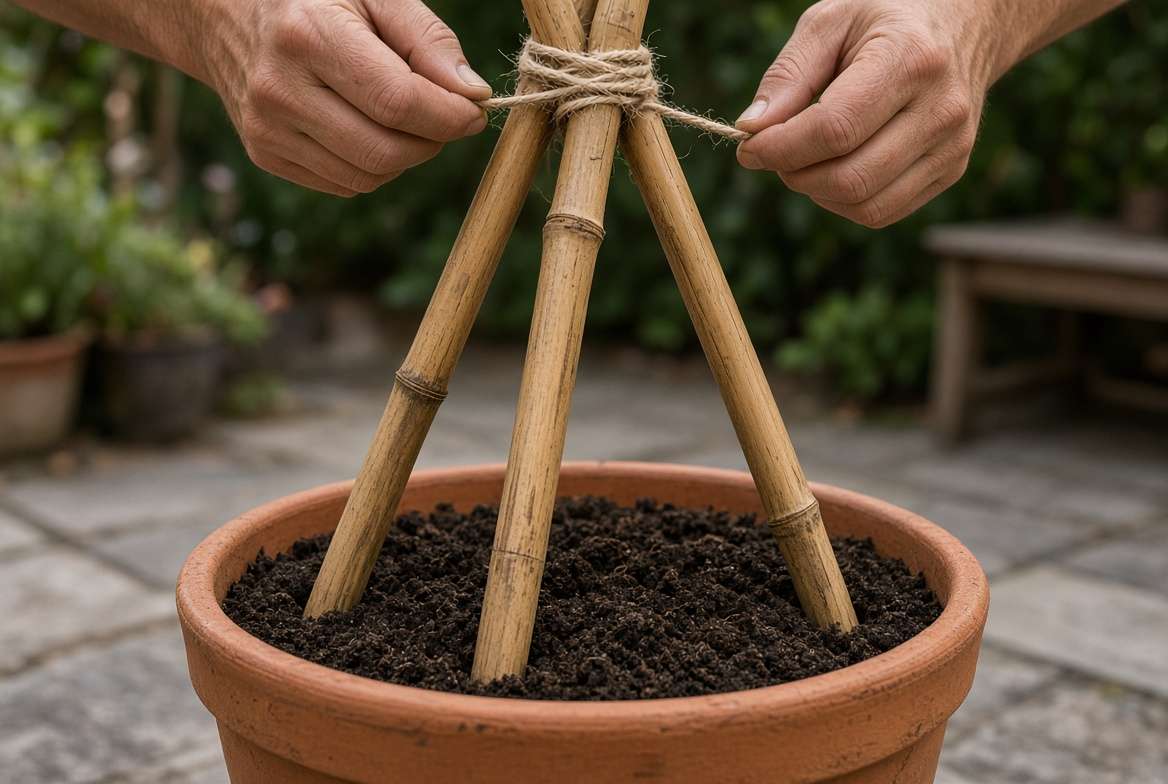
The bamboo teepee is the gold standard for container trellising. It is inexpensive, lightweight, and offers incredible structural integrity. The triangular shape perfectly distributes the weight of heavy vines, making it highly resistant to tipping, which is crucial for balcony gardens exposed to wind.
-
How to Build It: Select a deep, round container (at least 15 inches in diameter). Insert 3 to 5 sturdy bamboo poles (6 to 7 feet tall) evenly spaced around the inner rim of the pot, pushing them down to the very bottom for stability. Gather the tops together at the apex and lash them tightly with weather-resistant garden twine or zip ties.
-
Best For: All pole bean varieties. The rough texture of natural bamboo provides excellent grip for the twining tendrils.
2. Repurposed Heavy-Duty Tomato Cages 🍅
Do not limit tomato cages to nightshades! Heavy-duty, galvanized steel tomato cages are phenomenal, ready-made micro-trellises.
-
How to Use Them: Simply plunge the prongs deep into the potting mix. For a more secure fit in wider, shallower pots, you can carefully snip the bottom ring, invert the cage, and push the newly cut spikes into the soil, leaving the widest part at the bottom.
-
Best For: Bush beans, half-runner varieties, or shorter cowpeas. The horizontal rings provide perfect resting places for heavy, pod-laden branches, preventing them from snapping.
3. Trellis Netting and Balcony Railing Grids 🕸️
For apartment dwellers with rectangular planter boxes, traditional stakes might not maximize vertical space. Utilizing nylon or jute trellis netting transforms bare walls and railing gaps into highly productive green screens.
-
How to Set it Up: Anchor the netting securely to your balcony railing or wall using hooks, ensuring it remains taut. Place your rectangular container directly beneath it. As the seedlings emerge, gently weave them through the first set of squares.
-
Best For: Creating a lush, living privacy screen. Jute netting is particularly excellent because, at the end of the season, you can simply cut it down and throw the entire vine-covered net straight into the compost bin.
4. The Wooden Obelisk 🪵
If your container garden doubles as an outdoor living space, aesthetics matter. A wooden obelisk is a four-sided, architectural feature that adds incredible curb appeal, height, and structure to a patio even before the seeds sprout.
-
Why It Works: Obelisks are heavy and highly stable, making them ideal for large half-whiskey barrels or heavy ceramic pots. The cross-bracing gives beans multiple points of contact, resulting in a dense, uniform column of green foliage and hanging pods.
-
Best For: Ornamental edible landscaping. An obelisk draped in vibrant purple podded beans or flowering runner beans creates a visually striking focal point.
5. DIY & Upcycled Solutions ♻️
Urban gardening is all about resourcefulness. If you are on a budget, look around your home or neighborhood for upcycling opportunities.
-
Creative Ideas: An old, weathered wooden A-frame ladder straddling two large pots creates a massive, rustic growing arch. A bicycle wheel mounted horizontally at the top of a central wooden post, with strings running down to the rim of the pot, makes a beautiful “maypole” trellis. Even sturdy, foraged branches from a local woodland can be woven into a beautiful wattle-style support.
-
Best For: The creative gardener looking to add a unique, personalized touch to their patio.
Essential Setup Tips for Unbreakable Structures 🛠️
Building the trellis is only half the battle. To ensure your vertical supports for container-grown beans survive the season, you must focus on foundation and timing.
The Foundation of Growth: Prioritize Soil Health 🌱 Climbing vines demand massive amounts of energy to fight gravity and push water and nutrients up a 6-foot stem. A standard, depleted potting soil will not suffice. To sustain aggressive vertical growth, you must begin with a premium, well-draining potting mix. Before planting, aggressively amend the soil with rich worm castings, aged compost, and a slow-release organic fertilizer. Healthy soil builds strong, thick stems that can actually support the weight of the foliage as it climbs the trellis.
Timing the Installation: Before You Plant ⏱️ This is a critical expert tip: always install your stakes, teepees, or cages before you plant your seeds or transplant your seedlings. Forcing thick bamboo poles into a pot that already contains growing plants will sever the delicate root systems, stunting the plant’s growth and introducing stress and disease. Build the architecture first, then plant the seeds at the base of each vertical leg.
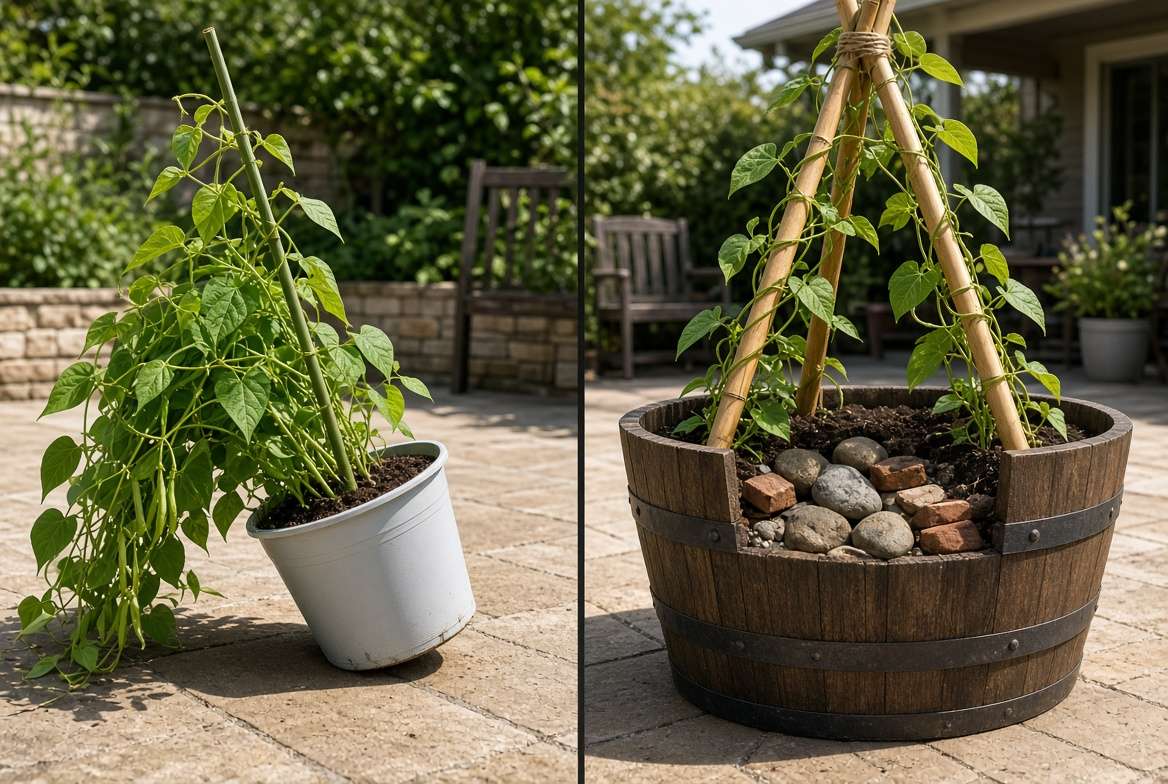
Choosing the Right Pot Weight ⚖️ Remember the laws of physics. A 7-foot bamboo teepee covered in dense leaves acts exactly like a sail when a summer storm rolls through. If your container is too light, the entire structure will blow over, destroying your crop. Avoid cheap, lightweight plastic pots for tall vertical setups. Instead, use heavy terracotta, thick ceramic, or large wooden barrels. If you must use plastic or fabric grow bags, place a layer of heavy river rocks or gravel at the very bottom of the container before adding soil to lower the center of gravity.
Designing for Aesthetics and Content Creation ✨
For modern gardeners, a patio garden isn’t just about food production—it’s a beautiful, relaxing sanctuary and often a space to capture stunning photography or shareable media.
Training the Vines for a Manicured Look 🌿 While beans are natural climbers, they sometimes need a little gentle encouragement. Pole beans naturally twine in a counter-clockwise direction. When the seedlings are about six inches tall, gently wrap the growing tip counter-clockwise around your bamboo or string. Regularly tucking rogue vines back into the structure keeps the plant looking incredibly neat, professional, and intentionally designed, rather than chaotic.
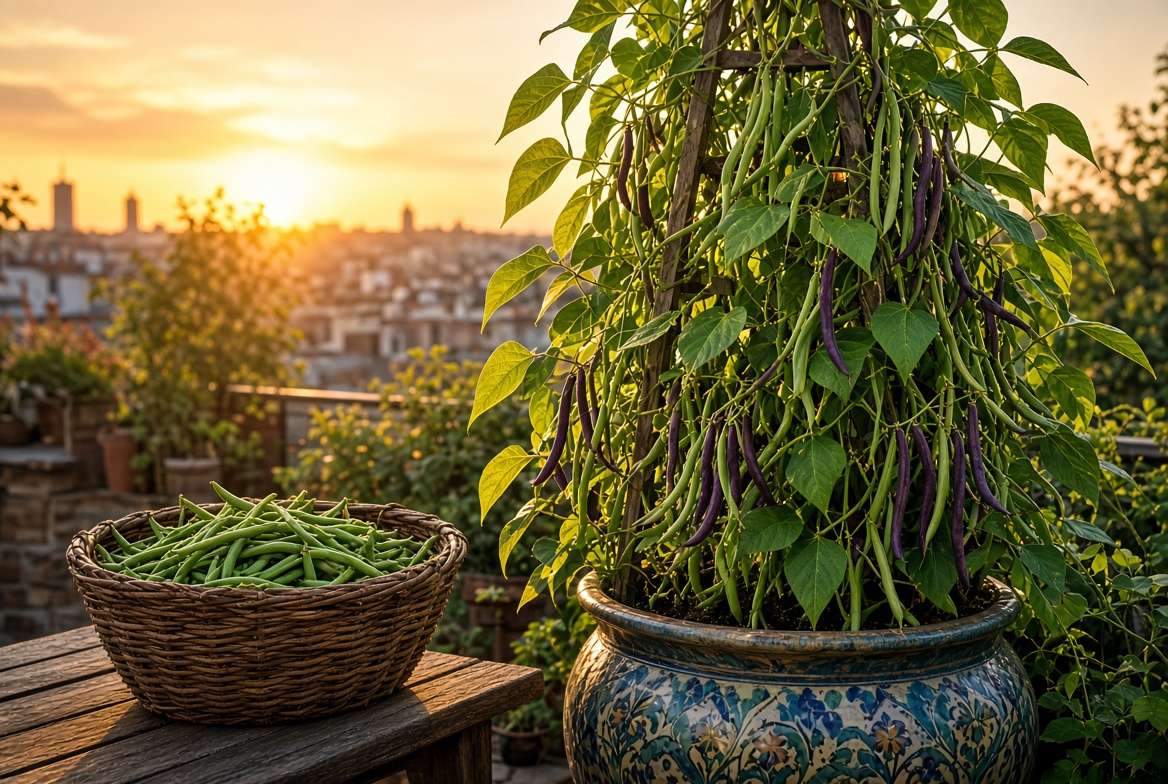
The Visual Payoff 📸 A well-structured bean tower, heavily laden with bright green, yellow, or purple pods, is a visual masterpiece. When designing your container layout, consider positioning your most beautiful obelisks or neatest teepees where they can catch the golden hour sunlight (shortly after sunrise or before sunset). The backlighting illuminates the broad leaves and highlights the hanging pods, creating the perfect, vibrant backdrop for high-quality garden photography, eye-catching Pinterest pins, and compelling YouTube video thumbnails. A clean, vertical garden always translates beautifully on camera, showcasing your plant care expertise to the world.
Expert Insights: Common Trellising Mistakes to Avoid 🚫
Even experienced green thumbs can run into structural failures if they overlook the specific mechanics of how climbing vegetables grow and mature. To ensure your vertical supports for container-grown beans stand strong through harvest time, avoid these common pitfalls.
Waiting Too Long to Train the Vines ⏳ One of the most frequent mistakes is allowing seedlings to grow a foot or more along the soil before attempting to tie them to a support. As bean vines mature, the stems rapidly thicken and become rigid to support future fruit. Trying to forcefully bend and tie a stiff, mature stem up a trellis often leads to a devastating snap, effectively ending that vine’s production.
-
The Fix: Begin training your vines when they are only a few inches tall and their tendrils are highly flexible. If you do find a rogue mature vine, gently elevate it over several days, tying it loosely in stages rather than bending it all at once.
Relying on Flimsy or Inadequate Materials 🧵 It is incredibly easy to underestimate the sheer weight of a mature bean plant. A healthy pole bean vine in peak summer is loaded with thick foliage and dozens of water-heavy pods. If you use cheap, thin plastic stakes or standard sewing string, the structure will inevitably collapse or the strings will snap under the immense water weight, especially after a heavy rain shower.
-
The Fix: Invest in robust materials. Swap thin string for heavy-duty jute twine, thick nylon garden netting, or wire. Use thick bamboo, galvanized steel, or solid wood for the primary load-bearing poles. A slightly over-engineered trellis is always better than a collapsed one.
Ignoring the Pot-to-Trellis Ratio 📏 Placing a massive, 8-foot obelisk into a shallow, 10-inch plastic pot is a recipe for disaster. The root system will not have enough room to anchor the plant, and the physical structure will be incredibly top-heavy.
-
The Fix: Match the scale of your support to the volume and width of your container. A standard 5-foot bamboo teepee fits beautifully in a 15-inch wide, deep pot, while an 8-foot wooden frame requires the heft and width of a half-whiskey barrel to maintain safety and proportion.
Frequently Asked Questions (FAQ) ❓
Can I successfully use a tall trellis in a fabric grow bag? Yes, but it requires strategic preparation! Fabric grow bags are fantastic for root health, but they lack rigid sides to hold a trellis tight. To secure your vertical supports, push your bamboo poles or wooden stakes all the way down until they touch the bottom of the bag. Before adding your potting soil, surround the base of the poles with heavy river rocks or bricks. This anchors the legs in place and prevents them from shifting outward as the bag expands and the soil settles.
Exactly how tall should my support be for a standard pole bean variety? For most indeterminate pole beans, you should aim for a support structure that is 6 to 8 feet tall above the soil line. Keep in mind that a 7-foot bamboo pole will lose about a foot of height once it is driven deep into the container’s soil. If your trellis is too short, the beans will reach the top and begin cascading back down on themselves, creating a tangled canopy that blocks sunlight and reduces airflow.
Do bean vines need to be manually tied, or do they cling naturally? Beans are natural climbers equipped with twining stems (rather than the clinging tendrils you see on peas or cucumbers). They will naturally wrap themselves around poles, string, and wire. However, they need an initial introduction to the trellis. You will need to manually guide the young tips to the pole and perhaps secure them loosely with a piece of soft garden twine or plant tape. Once they make a full loop, they will take over and climb autonomously.
Can I grow multiple bean plants on a single support? Absolutely! In a container setting with a bamboo teepee, you can typically plant two to three seeds at the base of each individual pole. As they grow, they will share the support. Just ensure your container is large enough to support the root systems of multiple plants and that you are providing adequate water and liquid fertilizer to sustain the high-density planting.
Conclusion: Reach for the Sky 🚀
Transitioning your patio garden from a sprawling, unmanageable tangle to an organized, upward-reaching oasis is one of the most rewarding steps you can take as a plant care enthusiast. By implementing the right vertical supports for container-grown beans, you are not just saving valuable balcony space; you are actively optimizing the health, vitality, and yield of your crops.
Elevated plants enjoy superior airflow, bask in maximum sunlight, and stay safely out of reach of hungry soil pests. Whether you choose the rustic charm of a bamboo teepee, the architectural elegance of a wooden obelisk, or a clever upcycled netting solution, the key is to build a sturdy foundation, plant the right varieties, and guide those young tendrils upward.
Don’t let a small patio limit your harvest potential. Gather your materials, prep your favorite heavy containers with nutrient-rich soil, and start building your vertical supports today. Your future self—and your bountiful bean harvest—will thank you! 🌿✨











