

We have all been there. You bring home a vibrant, lush pot of fresh herbs from the local nursery, set it proudly by the kitchen sink, and envision a future of elevated, farm-to-table cooking. Yet, just two weeks later, you are staring at yellowing leaves, drooping stems, and stringy growth. The frustration of watching indoor plants fade is incredibly common. But here is the good news: growing dill and parsley in kitchen windowsills is not impossible, nor does it require a magical green thumb. It simply requires understanding the unique microclimates of your home.
The primary reason indoor herbs fail is a mismatch of environment—specifically inadequate light, poor soil drainage, and improper watering techniques. Having spent years diagnosing plant health and refining indoor soil management strategies, I can confidently tell you that treating your indoor herbs like outdoor garden plants is a recipe for failure. By adjusting a few key elements, you can transform your windowsill into a flourishing, year-round herb garden. This comprehensive guide will walk you through the exact science and practical steps needed to keep these two culinary favorites thriving season after season. 👩🌾💚
2. Why Dill and Parsley Make the Perfect Kitchen Companions 👩🍳
Before diving into the mechanics of plant care, it is worth understanding why this specific pairing is a powerhouse for indoor gardeners.
The Culinary Benefits 🍲 Nothing elevates a dish quite like fresh herbs. Having them within arm’s reach of your cutting board changes the way you cook. Dill offers a bright, tangy profile perfect for potato salads, roasted fish, and homemade dressings. Parsley, whether flat-leaf or curly, acts as a brilliant palate cleanser and flavor enhancer for pastas, soups, and marinades. When you grow them in the kitchen, you eliminate the need to buy those expensive, plastic-wrapped plastic herb bundles from the grocery store that wilt in the crisper drawer after three days.
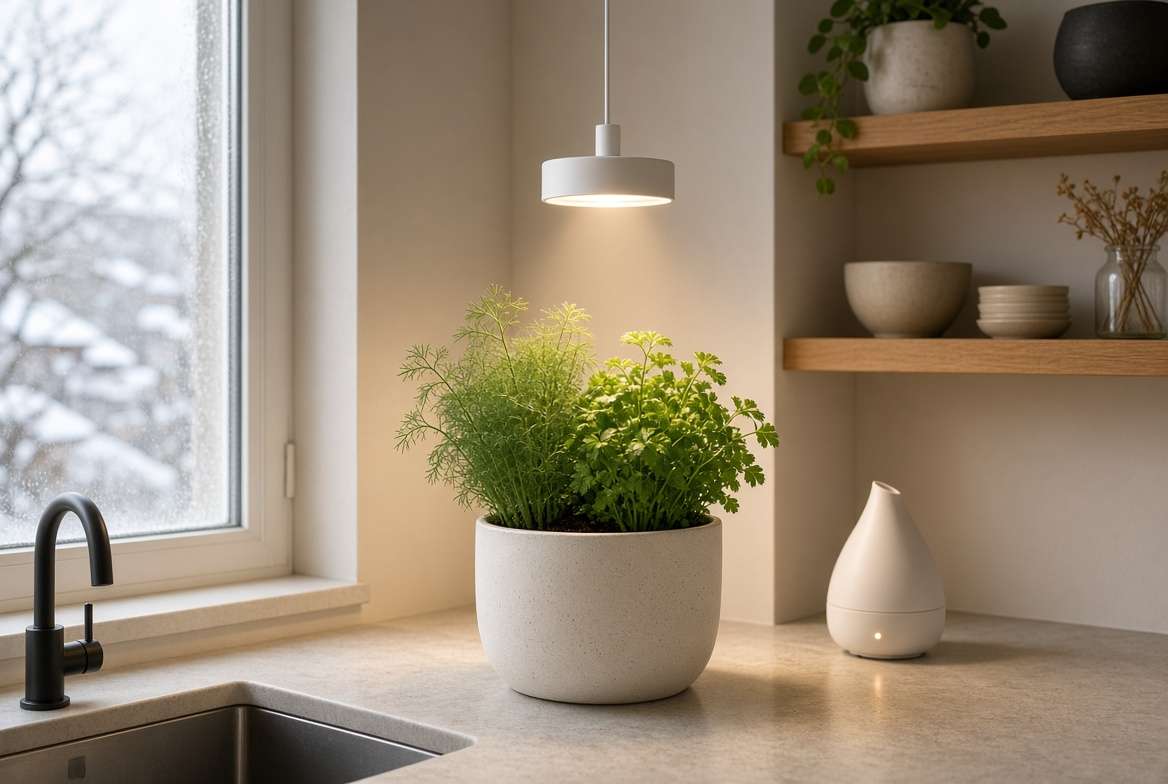
Complementary Growth Habits 🌿 Aesthetically and structurally, dill and parsley are the perfect visual pair for a windowsill display. Dill grows upwards, producing tall, feathery, delicate fronds that catch the light beautifully. Parsley, on the other hand, is a grounding plant. It grows bushy and dense, filling out the lower half of your visual space.
Creator Tip: This visual contrast makes for highly engaging media. If you are creating visual assets for your blog, capturing a side-by-side shot of the tall, wispy dill next to the dense, vibrant parsley makes for an incredibly clickable, aesthetically pleasing Pinterest pin or YouTube thumbnail. 📸✨
3. The Foundation: Sunlight and Microclimates ☀️
Light is food for plants. While humans eat to survive, plants use light to photosynthesize and generate energy. Without the right light, your herbs will slowly starve, no matter how much you water them.
Decoding Kitchen Window Directions 🧭 Not all windows are created equal when it comes to indoor gardening.
-
South-Facing Windows: This is the holy grail for windowsill herbs. South-facing windows receive the most intense, sustained sunlight throughout the day. Both dill and parsley will thrive here.
-
East-Facing Windows: These provide gentle, cool morning light. Parsley will do quite well here, but dill might stretch slightly to find more sun.
-
West-Facing Windows: West windows offer intense, hot afternoon sun. While great for growth, you must monitor your pots closely to ensure the soil does not completely bake and dry out.
-
North-Facing Windows: Unfortunately, these provide too little light for herbs to truly thrive. If this is your only option, you will absolutely need supplemental lighting.
Navigating Kitchen Drafts and Temperatures 🌡️ Kitchens are volatile environments. The ambient temperature can spike when you boil pasta or run the oven, and drop significantly near cold windowpanes in the winter. Keep your herbs pushed a few inches away from the actual glass to prevent cold damage to the leaves.
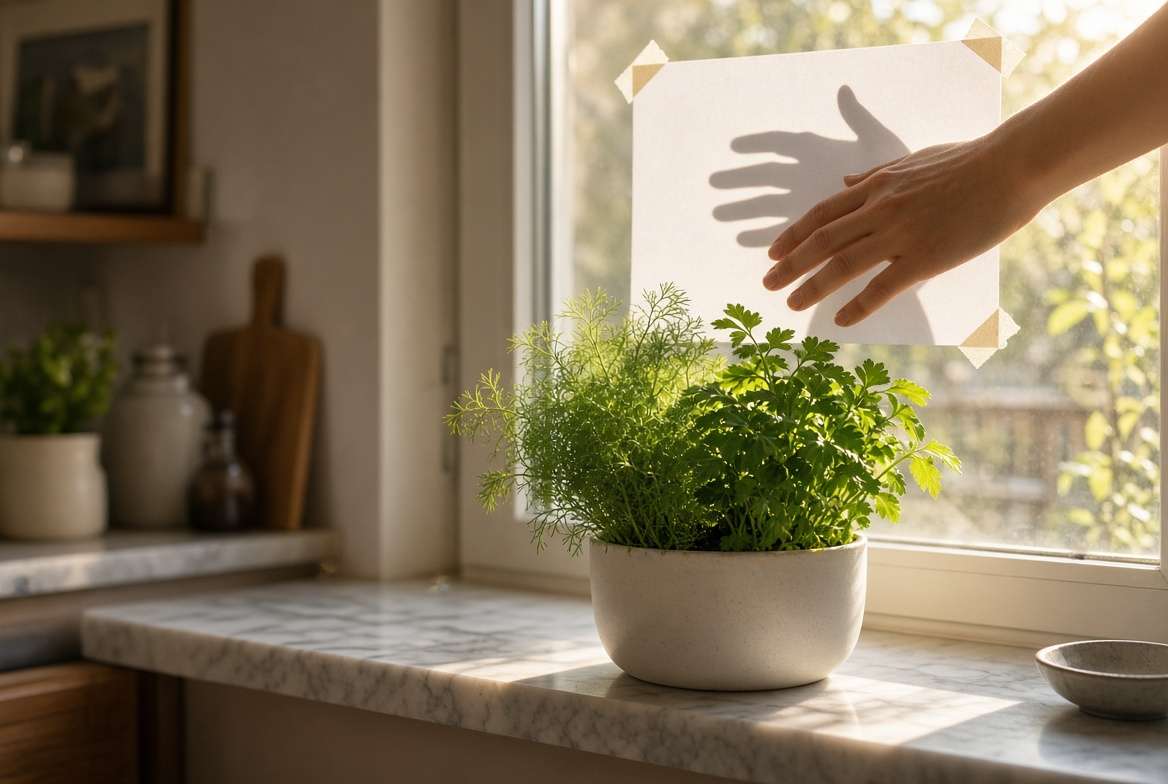
Expert Tip 💡: The Shadow Test To test your windowsill’s “true” light, place your hand about 12 inches above your countertop on a sunny afternoon. If the shadow cast is sharp and clearly defined, you have excellent bright light. If the shadow is fuzzy or barely visible, your herbs will struggle and become “leggy” (stretching desperately for a light source).
4. Soil Health & Potting: The Secret to Year-Round Survival 🌱
When it comes to indoor gardening, soil health is the unsung hero. You cannot scoop dirt from your backyard, put it in a pot, and expect success. Outdoor soil compacts heavily in containers, suffocating the roots and preventing proper oxygen flow.
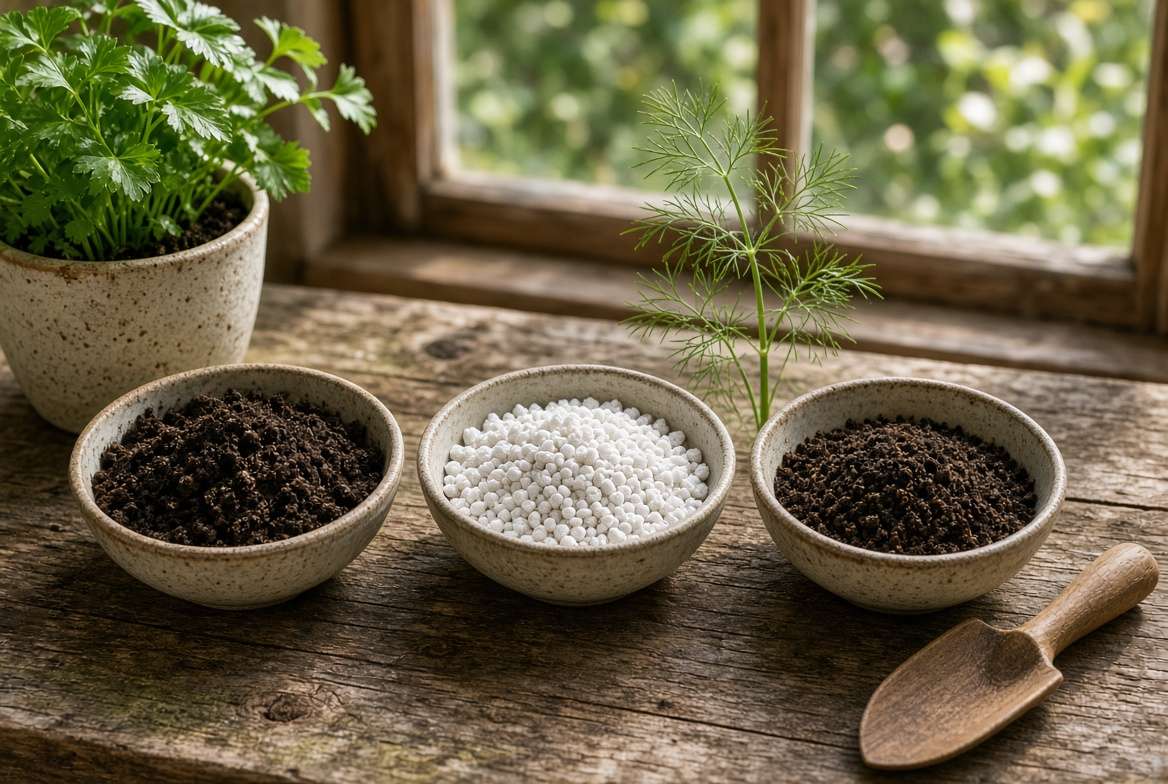
Crafting the Perfect Indoor Herb Soil Mix 🪱 To achieve year-round success, you need a living, well-aerated potting mix. Dill has a long taproot that resents sitting in soggy conditions, while parsley requires consistent moisture without becoming waterlogged. Create this optimized blend for your windowsill pots:
-
60% High-Quality Organic Potting Soil: This provides the base structure and moisture retention.
-
20% Perlite or Pumice: Crucial for aeration. This prevents soil compaction and allows oxygen to reach the roots, which directly combats root rot.
-
20% Organic Compost or Worm Castings: This introduces essential microbial life and natural nutrients into the soil, slowly feeding the plants over time without the harsh salt buildup caused by synthetic fertilizers.
Selecting the Right Planters 🪴 Your pot choice directly impacts soil moisture.
-
Terracotta: Porous and breathable. It pulls moisture from the soil, making it excellent for preventing overwatering, but it means you will need to water more frequently.
-
Plastic or Glazed Ceramic: These retain moisture longer. If you use these, you must be careful not to overwater.
-
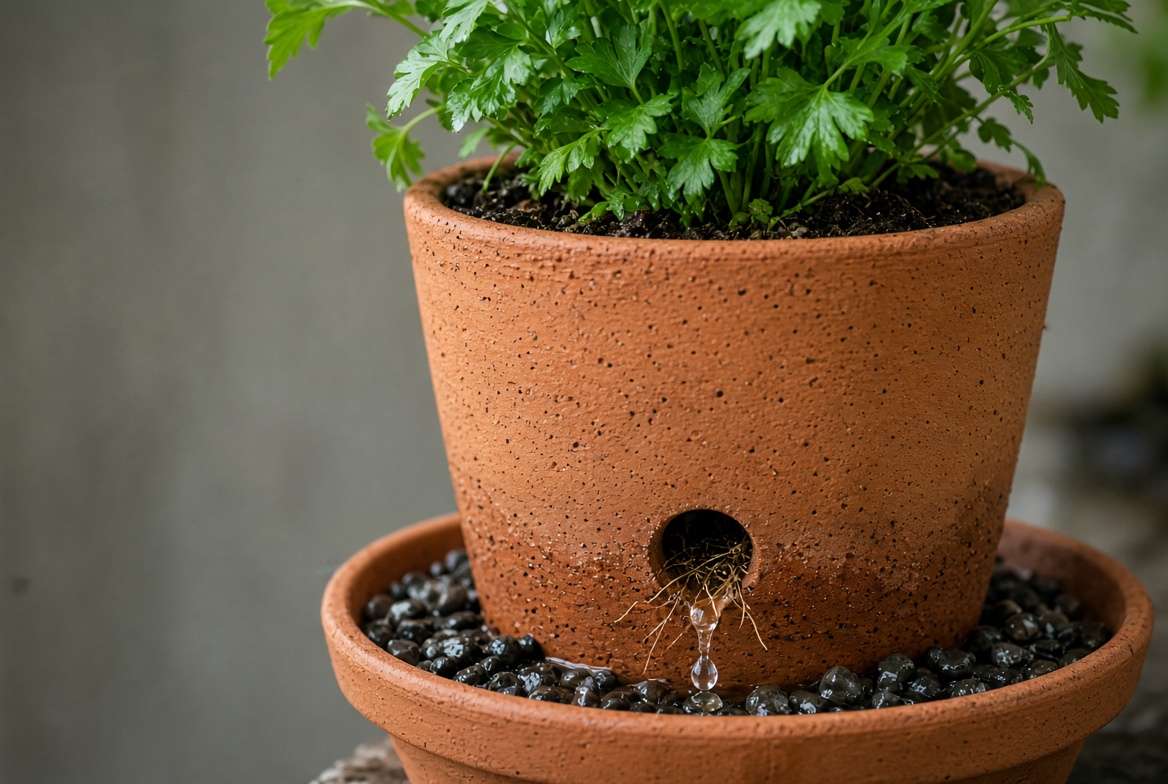
The Non-Negotiable Rule: Regardless of the material, your pots must have drainage holes. Putting rocks at the bottom of a hole-less pot does not create drainage; it creates a stagnant water table that will quickly rot your plants’ roots.
5. Deep Dive: Caring for Dill Indoors 🌾
Dill (Anethum graveolens) is a breathtaking herb, but it is often misunderstood by indoor gardeners. Because it is naturally designed to grow tall and wide in open fields, bringing it indoors means we have to cater to its specific biological needs to prevent it from failing.
Understanding the Taproot and Watering Requirements 💧 Unlike plants with shallow, fibrous root systems, dill develops a long, central taproot—similar to a carrot. This structural feature makes dill incredibly sensitive to both root disturbance and overwatering. If the bottom of your pot is constantly soggy, the taproot will rot, and the plant will collapse within days.
To water dill correctly, practice the “soak and dry” method. Allow the top two inches of the soil to dry out completely before watering again. When you do water, water deeply until you see excess liquid draining from the bottom holes. Always empty the saucer afterward so the pot never sits in a puddle.
Preventing “Leggy” Dill ☀️ If you notice the stems of your dill becoming pale, thin, and stretching awkwardly toward the window, your plant is becoming “leggy.” This is a classic symptom of light starvation. Dill needs a minimum of six to eight hours of direct sunlight.
-
The Fix: Rotate the pot 90 degrees every two days. This ensures all sides of the plant receive equal light exposure, encouraging sturdy, straight stem growth rather than a leaning, weakened plant.
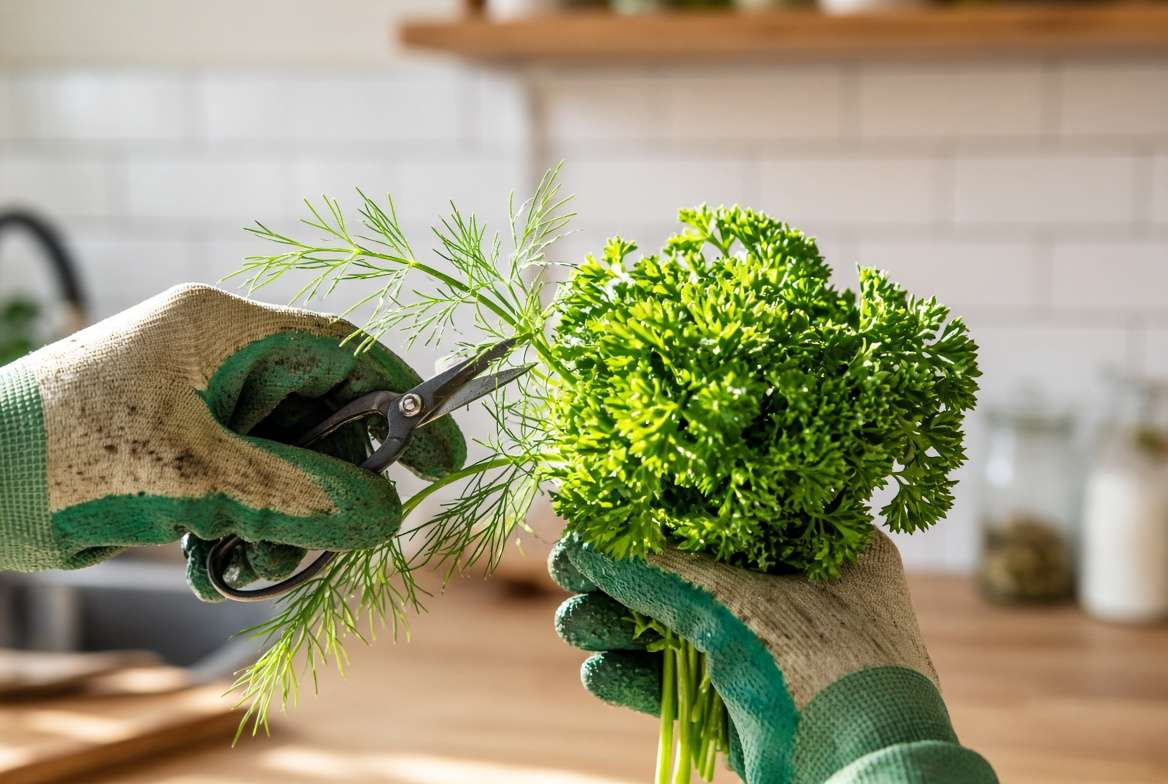
The Right Way to Harvest Dill ✂️ Improper harvesting is the quickest way to stunt a dill plant’s growth. Never snip the main, central stem of a young plant. Instead, target the older, outer fronds first. Use sharp, sterilized scissors to cut the frond close to the main stem. By leaving the central growth node intact, the plant can continue to produce new, feathery leaves for your recipes.
6. Deep Dive: Caring for Parsley Indoors 🌿
Parsley (Petroselinum crispum) is far more forgiving than dill, making it an excellent anchor for your windowsill garden. It is naturally a biennial plant (meaning its life cycle spans two years), but when grown indoors, we treat it as an evergreen, continuous producer.
Flat-Leaf vs. Curly Parsley: Which is Better Indoors? 🥗 When selecting your plant, you will typically choose between Italian flat-leaf parsley and curly parsley.
-
Italian Flat-Leaf: This variety tends to grow slightly taller and is generally preferred by chefs for its robust, peppery flavor. It adapts wonderfully to indoor conditions.
-
Curly Parsley: This variety stays compact, bushy, and low to the soil. Its structural density makes it highly resilient to indoor temperature fluctuations, and it looks beautiful as a fluffy, green mound on the windowsill. Both thrive indoors, so choose based on your culinary preference!
Watering and Humidity: Creating a Microclimate 🌫️ Parsley enjoys consistent moisture slightly more than dill does. You want the soil to feel like a wrung-out sponge—damp, but not soaked.
Furthermore, parsley thrives in a slightly more humid environment than most modern kitchens naturally provide, especially in the winter when central heating dries out the indoor air. To create a localized microclimate:
-
Fill a shallow tray with small pebbles.
-
Pour water into the tray until it sits just below the top of the pebbles.
-
Place your parsley pot on top. As the water evaporates, it creates a gentle, humid cloud directly around the foliage, keeping the leaves crisp and vibrant.
Harvesting Parsley for Regrowth 🥬 To keep parsley bushy and productive year-round, you must harvest it strategically. Always cut the stems from the outside in. The new growth emerges from the center of the plant (the crown). By removing the mature outer leaves at the base of the stem, you signal to the plant to push more energy into the center, resulting in a continuous, lush harvest.
7. Overcoming the Winter Slump: Keeping Herbs Alive Year-Round ❄️
Many gardeners successfully grow dill and parsley in kitchen windowsills from April to September, only to watch them wither away in November. Winter introduces a hostile combination of low light, dry air, and cold drafts. To achieve true year-round success, you must pivot your care routine.
Compensating for Low Winter Light 💡 As the days shorten, the angle of the sun drops, meaning your previously bright windowsill might fall into shadows. If your herbs start dropping leaves or halting growth completely, it is time to intervene.
-
The Solution: Introduce a full-spectrum LED grow light. Modern grow lights come in highly aesthetic designs, including halos that stick directly into the soil or sleek under-cabinet strips. Set the light on an automatic timer for 12–14 hours a day to mimic summer sunlight.
Adjusting Your Watering Schedule 🚰 During the winter, plant metabolism slows down significantly. Because they are receiving less light and growing less vigorously, they drink far less water. A watering schedule that worked in July will drown your plants in December. Throw out the schedule and rely strictly on feeling the soil. Let the pots dry out slightly more than you would in the summer to prevent winter root rot.
Winter Feeding: The Rules of Fertilizer 🧪 A common mistake beginners make is fertilizing a struggling winter plant, thinking it needs “food.” Fertilizer is not medicine; it is an energy supplement for actively growing plants. When your dill and parsley go dormant or slow down in the winter, adding synthetic liquid fertilizer can burn their roots. Pause all fertilizing from November to February. Resume with a gentle, half-strength organic fish emulsion or kelp fertilizer once you see aggressive new growth in the spring.
8. Troubleshooting Common Windowsill Herb Problems 🚑
Even with the best soil and lighting, growing indoor plants comes with occasional challenges. Diagnosing these issues early is the key to preventing a minor setback from becoming a complete loss. Here is how to troubleshoot the most common issues you will face when maintaining your windowsill herb garden.
Yellowing Leaves: Water or Nutrients? 🍂 Yellowing foliage is the most frequent complaint among indoor gardeners, and it usually boils down to two culprits:
-
Overwatering: If the yellow leaves feel soft, limp, and squishy to the touch, and the soil is damp, you are overwatering. The roots are suffocating and beginning to rot. Stop watering immediately, ensure your pot has proper drainage, and let the soil dry out.
-
Nutrient Deficiency: If the yellow leaves are dry or crispy around the edges, or if the entire plant looks pale but the watering is spot-on, your soil may be depleted of nitrogen. A light dose of organic liquid fertilizer can restore their vibrant green hue.
White Powdery Mildew 💨 If you notice a dusty, white coating spreading across the leaves of your parsley or dill, you are dealing with powdery mildew. This fungal issue thrives in stagnant, damp air.
-
The Fix: Kitchens can be surprisingly humid, but if the air is not moving, fungal spores settle. Improve air circulation by keeping a small fan nearby or opening the window slightly on warm days. You can treat existing mildew by spraying the leaves with a gentle mixture of water and a few drops of organic neem oil. Be sure to prune away any heavily infected leaves to stop the spread.
Banish Fungus Gnats Naturally 🪰 Nothing ruins a beautiful kitchen display faster than tiny black flies hovering around your soil. Fungus gnats breed in the top layer of constantly moist potting mix.
-
The Fix: First, let the top two inches of your soil dry out thoroughly between waterings—gnat larvae cannot survive in dry dirt. Second, treat your watering can with “mosquito dunks” (which contain Bti, a naturally occurring soil bacterium that targets gnat larvae without harming the plant, pets, or humans). Finally, place yellow sticky traps near the base of the pots to catch the adult flyers.
9. Frequently Asked Questions (FAQs) ❓
To make sure you have all the information you need, here are the answers to the most common questions about cultivating these culinary herbs indoors.
Can I plant dill and parsley in the exact same pot? 🪴 While they look beautiful together, it is generally best to pot them separately. Dill has a deep taproot and prefers slightly drier conditions between waterings, whereas parsley has a fibrous root system that appreciates consistent, even moisture. Planting them in separate containers allows you to tailor your watering routine to each plant’s specific biological needs.
How long do dill and parsley live indoors? ⏳ Dill is a true annual, meaning its natural life cycle is designed to last one growing season (typically a few months) before it sets seed and dies. To have year-round dill, you should practice “succession planting”—sowing a few new seeds in a small pot every 4 to 6 weeks. Parsley is a biennial. With excellent care, proper harvesting, and adequate lighting, a single parsley plant can produce lush foliage on your windowsill for up to two years!
Why does my indoor dill keep falling over? 🥀 Dill falling over is almost always a sign of inadequate light. When the plant stretches too fast to find the sun (becoming “leggy”), the stem becomes too weak to support the weight of the feathery fronds. Provide a stronger light source, rotate the pot regularly, and don’t be afraid to gently stake a leaning dill plant with a small wooden skewer and a piece of soft twine.
Should I mist my parsley plant? 💦 While parsley loves humidity, misting the leaves with a spray bottle is actually not recommended. Misting only increases humidity for a few minutes and leaves standing water on the foliage, which invites fungal diseases like powdery mildew. Instead, use the pebble tray method discussed earlier or place a small, aesthetic humidifier near your plant shelf.
10. Conclusion: Bring Your Kitchen to Life 🍽️
Growing dill and parsley in kitchen windowsills is one of the most rewarding projects an indoor gardener can undertake. It bridges the gap between plant care and culinary art, bringing vibrant life, soothing aromas, and incredible flavor directly into the heart of your home.
Remember the golden rules: prioritize bright, direct light (or invest in a sleek grow light for the winter months), insist on well-draining soil mixed with perlite, and always water based on the moisture of the soil rather than a strict calendar schedule.
Indoor gardening is a journey of observation and small adjustments. Do not get discouraged if a plant struggles—use it as a learning experience to refine your microclimate. By applying the expert techniques outlined in this guide, you will transition from simply trying to keep herbs alive to watching them thrive year-round.
Now it’s your turn! Are you ready to upgrade your kitchen windowsill? Grab your pots, mix up your soil, and start growing. If you found this guide helpful, share it with a fellow plant lover, and be sure to tag us in photos of your lush, indoor herb setups on social media! Happy growing! 👩🌾💚✨











