
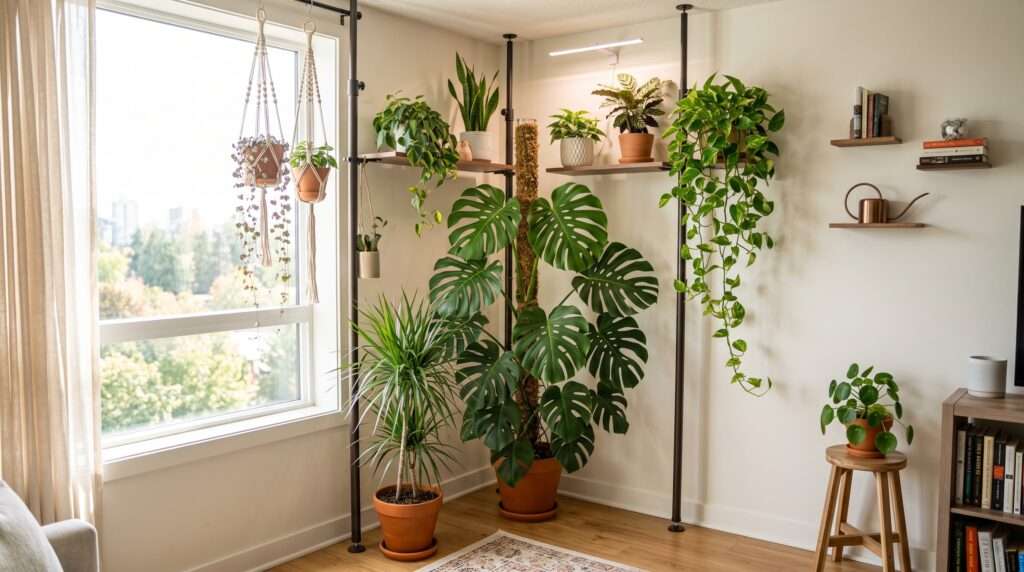
Have you ever looked at that empty, shadowed nook in your living room and felt it was simply wasted square footage? You are certainly not alone. For many indoor gardeners, cramped rooms and “dead” corners are a constant source of design frustration. But what if that awkward, empty space was actually an untapped canvas for a lush, towering indoor jungle? By focusing on maximizing corner spaces for vertical growth, you can transform the tightest, most overlooked quarters of your home into a breathtaking, living architectural feature. 🪴
When we shift our perspective from horizontal floor space to vertical cubic footage, the possibilities for indoor plant cultivation expand dramatically. Vertical indoor gardening doesn’t just save space; it draws the eye upward, making ceilings feel higher and rooms feel larger. In this comprehensive guide, we are going to dive deep into the science and art of corner planting, from assessing your unique microclimates to selecting the perfect climbing champions and designing setups that are structurally sound and visually spectacular.
Let’s turn that empty corner into your favorite part of the house! ✨
🪴 Introduction & Corner Microclimate Analysis
Before you rush out to the nursery to buy the tallest plant you can find, it is crucial to understand that corners are distinct microclimates within your home. A plant that thrives in the center of a room or directly in front of a window might struggle in a corner. Why? Because corners naturally trap air and restrict light pathways.
Assessing Your Microclimate 🌡️
To ensure your vertical garden thrives, you must become an expert on the specific conditions of your chosen corner.
-
Light Assessment (Foot-Candles & Lux): The most common mistake in corner planting is overestimating the available light. Light intensity drops exponentially the further you move from a window. A corner that looks bright to the human eye might be practically pitch-black to a photosynthesizing leaf. Use a light meter or a reliable smartphone light app to measure the foot-candles (FC) in your corner at different times of the day. If your corner receives less than 100 FC, you are dealing with a low-light environment and must choose your plants accordingly—or supplement with a sleek vertical grow light. ☀️
-
Air Circulation and Transpiration: Corners are notorious for stagnant air. Without a gentle breeze, a plant’s transpiration rate (the process of water moving through the plant and evaporating from aerial parts) slows down significantly. This stagnant environment can lead to prolonged damp soil, increasing the risk of root rot and fungal gnats. To mitigate this, ensure your corner is not completely blocked off by heavy furniture. You might also consider placing a small, aesthetically pleasing oscillating fan nearby to keep the air gently moving. 🌬️
🌿 E-E-A-T Expert Insight: “The secret to long-term survival in vertical corner gardening is matching a plant’s native origin to your home’s microclimate. An understory tropical plant naturally thrives in the dappled, low-air-flow environments found at the base of larger trees—making them perfect candidates for indoor corners. Don’t fight the environment; plant for it.”
🌿 Plant Selection for Vertical Growth
Choosing the right plant is the foundation of a successful vertical space. You need species that are naturally inclined to climb, trail, or grow tall and narrow, rather than sprawling wide and eating up your precious floor space. When designing these spaces—especially if you plan to capture the lush final results for highly clickable Pinterest pins or stunning YouTube thumbnails—layering different textures, like pairing a glossy leaf with a deeply fenestrated one, creates incredible visual depth. 📸
Trailing & Climbing Champions 🧗♀️
Climbing plants (epiphytes and hemiepiphytes) are the undisputed kings and queens of vertical growth. In their natural habitats, they use aerial roots to latch onto tree trunks, reaching upward toward the forest canopy.
-
Low-Light Survivors: If your corner is on the darker side, Epipremnum aureum (Golden Pothos) and Philodendron hederaceum (Heartleaf Philodendron) are incredibly forgiving. They can be trained up a wall or allowed to cascade gracefully from a high shelf. While they tolerate low light, keep in mind that their growth will be slower and their variegation may revert to solid green. 🌱
-
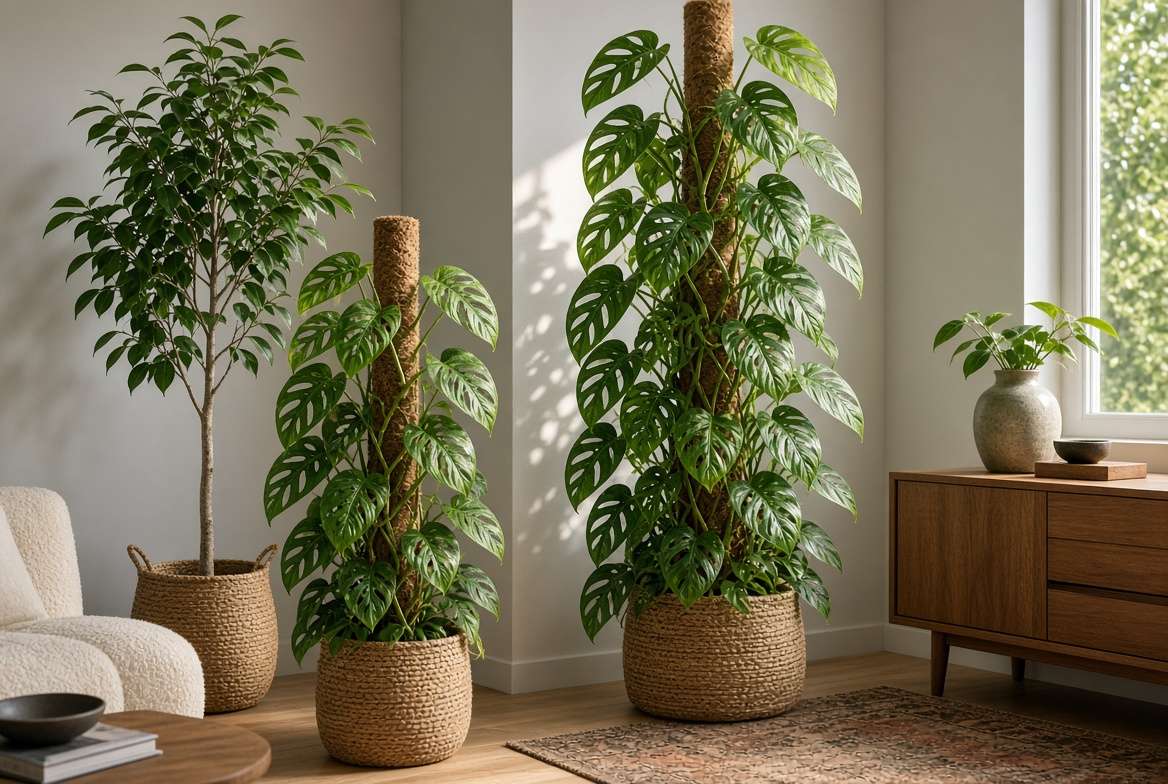
Bright-Light Lovers: For corners adjacent to large, bright windows, Monstera adansonii (Swiss Cheese Vine) or Rhaphidophora tetrasperma (often called the Mini Monstera) are spectacular choices. These plants are eager climbers. When provided with a climbing structure, their leaves will actually mature, growing significantly larger and developing more dramatic fenestrations (splits and holes). 🧀🌿
Narrow-Profile Indoor Trees 🌳
If you prefer a standalone statement piece rather than a trailing vine, narrow-profile indoor trees provide immediate verticality without expanding into the room’s footprint.
-
Dracaena marginata (Dragon Tree): With its slender, twisting canes and spiky, architecturally striking foliage, the Dracaena is a fantastic corner filler. It naturally sheds lower leaves as it grows, leaving a clean, bare trunk that takes up very little visual space at the floor level. 🐉
-
Ficus benghalensis (Ficus Audrey): Often heralded as the easier-to-care-for cousin of the Fiddle Leaf Fig, the Ficus Audrey grows relatively straight and tall. Its velvety green leaves and striking white trunk add a touch of modern elegance to any corner.
-
Strelitzia nicolai (White Bird of Paradise): For a tropical, sweeping look, this plant grows impressively tall. While the leaves fan out, the base remains quite narrow. Just ensure your ceiling is high enough, as these can easily reach 8 to 10 feet indoors! 🦜
Growth Rate Considerations 📏
When curating your corner, always research the mature size and growth rate of your chosen species. A vigorous climber like a Monstera deliciosa might start as a cute, manageable desk plant, but within two years, it can completely overtake a small corner, pushing against walls and requiring aggressive pruning. Match the plant’s vigor to your available space and structural support system to avoid structural damage to your walls or a tangled, unmanageable canopy. ✂️
🪜 Structural Solutions: Maximizing Corner Spaces for Vertical Growth
Once you have analyzed your corner’s microclimate and selected the perfect botanical candidates, it is time to build the infrastructure. The goal here is to provide sturdy, aesthetic support that encourages vertical climbing while keeping your floor plan completely unhindered. A well-designed structural setup is the backbone of indoor vertical gardening.
Moss Poles & Wall Trellises 🪵
For aroids and other natural climbers, standard bamboo stakes simply won’t cut it if your goal is spectacular, mature growth. You need living supports.
-
The Science of Sphagnum Moss Poles: A properly constructed sphagnum moss pole mimics the damp bark of a tropical tree canopy. When a climbing plant’s adventitious (aerial) roots sense the persistent moisture and texture of the moss, they physically anchor into it. This biological trigger tells the plant it is safely climbing a sturdy tree, prompting it to produce significantly larger, deeply fenestrated leaves. To maintain this, the moss pole must be kept consistently moist—a dry pole is just a stick to your plant! 💦
-
Wall Trellises: If you prefer a more structured, geometric look, wooden or wire wall trellises can be mounted directly into the corner walls. Honeycomb or grid-style trellises allow you to gently weave the vines upward, creating a living piece of wall art. When installing wall mounts, always use proper drywall anchors to account for the increasing weight of the plant as it matures. 🛠️
Tiered Shelving & Tension Rods 🪜
Not every plant is a climber, and not every home allows for drilling into the drywall. For renters or those who prefer a dynamic, modular display, freestanding structures are absolute lifesavers.
-
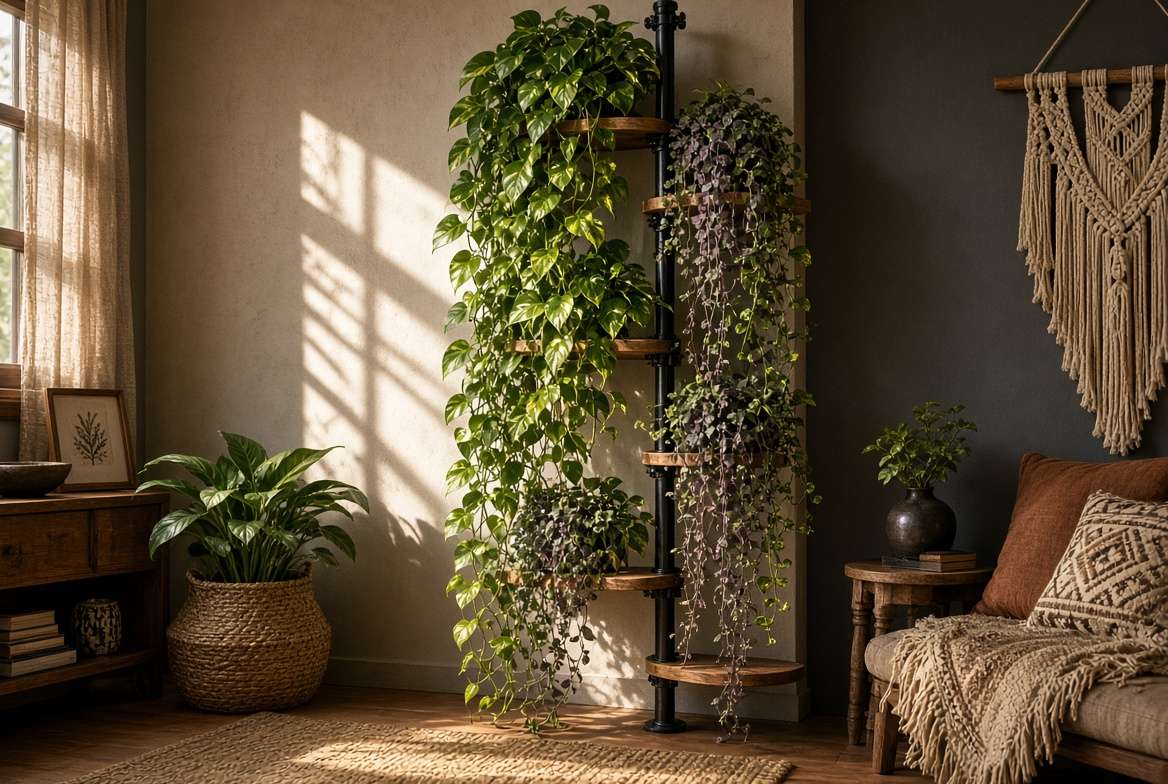
Floor-to-Ceiling Tension Poles: This is perhaps the most underrated tool for maximizing corner spaces for vertical growth. Tension poles wedge securely between your floor and ceiling without a single screw. They typically come with adjustable, rotating trays. You can stagger trailing plants on the top tiers and upright plants on the bottom, instantly filling an entire corner with zero wall damage. 🏢
-
Floating Corner Shelves & Tiered Plant Stands: Radial corner shelves that fit snugly into 90-degree angles are perfect for creating a cascading “waterfall” of foliage. Place a bushy fern or a trailing Ceropegia woodii (String of Hearts) on the highest shelf, allowing the vines to drape down and connect visually with the plants stationed on the lower tiers. 🪴
Suspension Techniques 🪢
When floor space is at an absolute premium, the best direction to go is up. Utilizing your upper airspace through suspension techniques keeps the floor completely clear, which is especially useful for vacuuming or making room for pets and furniture.
-
Macramé Hangers and Ceiling Hooks: Traditional macramé adds a beautiful, bohemian texture to your corner. By hanging plants at varying lengths (e.g., one at 3 feet down, another at 5 feet down), you create a layered, multi-dimensional canopy. Always locate a ceiling joist or use heavy-duty toggle bolts when installing hooks, as freshly watered pots are surprisingly heavy. ⚓
-
The Curtain Rod Hack: For an incredibly easy corner setup, mount a heavy-duty tension rod or a corner-specific curtain rod across the very top of your corner walls. You can hang multiple lightweight planters from S-hooks along the rod, instantly creating a floating green valance. 🌿
💧 Advanced Soil, Maintenance & FAQs
A towering corner garden looks phenomenal, but it requires a slightly different approach to daily maintenance than a standard potted plant sitting on a coffee table. The unique microclimate of a corner, combined with the physical height of your vertical setup, demands specialized care strategies.
Soil Health in Stagnant Corners 🪨
Because corners typically experience less air flow and lower light than the rest of the room, evaporation rates plummet. Soil that stays wet for too long is the number one cause of root rot in indoor houseplants.
-
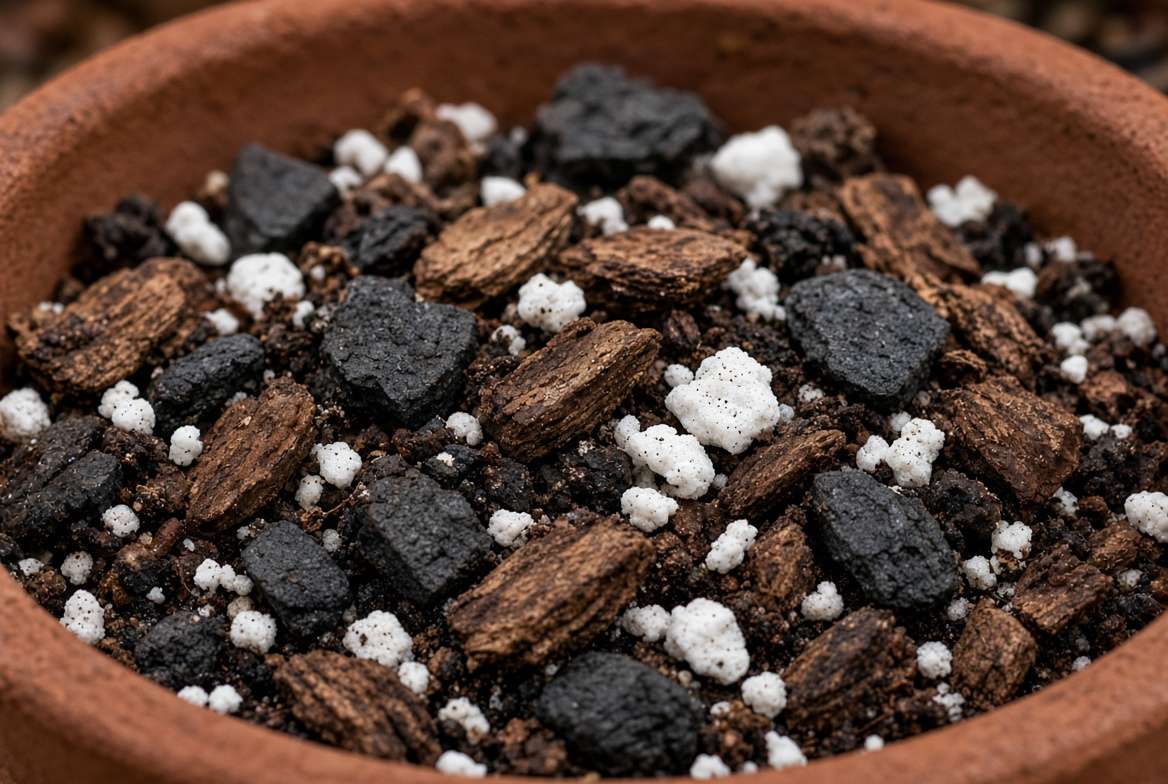
The Chunky Aroid Mix: To combat this, you must ditch standard, dense potting soil. Opt for a highly aerated, chunky substrate. A professional-grade mix for corner plants usually consists of one part high-quality potting soil, one part orchid bark, one part coarse perlite, and a handful of horticultural charcoal. This formula ensures rapid drainage and allows vital oxygen to reach the root zone, even in stagnant corner air. 🌬️🌱
Watering Logistics for High Setups 🚿
Let’s address the elephant in the room: how on earth do you water a plant that is hanging eight feet in the air or strapped to a six-foot moss pole without ruining your floors?
-
Self-Watering Planters: For high shelves, self-watering pots with a reservoir system are a game-changer. They utilize capillary action to draw water up into the soil exactly as the plant needs it, reducing your watering chores to a quick top-up every few weeks. 💧
-
Long-Reach Wands & Localized Drip Trays: Invest in an indoor watering can with a long, narrow spout or a pump-action watering wand. For hanging plants, always use pots with attached, deep drip trays, or place a discreet plastic saucer inside the decorative cachepot to catch excess runoff. When watering a moss pole, a great hack is to place an inverted water bottle with a pinhole in the cap at the very top of the pole; it will slowly drip down, hydrating the moss evenly without spilling onto the floor. 🍼
🚑 Troubleshooting Common Vertical Gardening Issues
Even with the best planning, maximizing corner spaces for vertical growth comes with its own unique set of challenges. When you are growing plants in elevated, slightly restricted areas, identifying and solving problems early is key to maintaining a lush indoor jungle.
Combating Leggy Growth (Etiolation) 🦒
One of the most frequent complaints with corner plants is that they become “leggy”—meaning the spaces between the leaves (internodes) become excessively long, and the stems look bare. This is a direct response to inadequate light; the plant is literally stretching to find the sun.
-
The Fix: If you notice your Pothos or Philodendron producing smaller leaves with huge gaps between them, it is time to intervene. First, prune the leggy vines back (you can propagate these cuttings!). Then, introduce a supplemental LED grow light. You can also rotate the plant 90 degrees every time you water it to ensure all sides of the foliage receive even light exposure, preventing the plant from leaning aggressively out of the corner. 🔄☀️
Pest Management in Tight Quarters 🕷️
Pests absolutely love the microclimate of an undisturbed, high corner. Spider mites, in particular, thrive in the warm, dry, and stagnant air near the ceiling. Because the plants are tucked away, an infestation can easily go unnoticed until it is severe.
-
The Fix: Proactive prevention is your best defense. Incorporate a systemic houseplant insect control granule into your chunky soil mix (if you do not have pets or small children). Additionally, make it a habit to bring your vertical plants down to the shower every few months for a gentle, lukewarm foliage wash. This physically knocks off pests like aphids and spider mites while washing away dust, allowing the leaves to photosynthesize more efficiently. 🚿🐛
Protecting Your Walls and Floors 🛡️
When bringing nature indoors, especially near drywall and hardwood floors, moisture damage is a valid concern. Moss poles that are constantly sprayed and pots that are heavily watered can leave lasting marks.
-
The Fix: Never spray a moss pole directly if it is touching the wall. Instead, use the water bottle drip method mentioned earlier, or pull the plant slightly forward during maintenance. For the floor, always use a high-quality, waterproof cork mat beneath your structural tension poles or floor planters to prevent condensation and accidental spills from warping your wood or staining your carpet. 🧱
🎨 The Aesthetics of Corner Plant Design
You don’t just want a corner that keeps plants alive; you want a space that looks intentionally designed and highly photogenic. Applying basic interior design principles to your indoor garden will take it from a messy collection of pots to a stunning focal point.
The Rule of Threes (and Odd Numbers) 🔢
In interior design, items arranged in odd numbers are naturally more appealing, memorable, and effective than even-numbered groupings. When styling a corner, group your plants in threes or fives. For example, pair a tall, structural Dracaena (1) with a mid-height bushy Fern (2) and a low, trailing String of Pearls (3). This creates a pleasing visual triangle that guides the eye effortlessly from the floor up to the ceiling. 📐
Playing with Color and Contrast 🌈
Shadowy corners can easily swallow up dark green foliage, making your beautiful plants disappear into the background. To make your vertical garden pop, use contrast to your advantage.
-
Pottery Choices: If your corner is dark, avoid navy, black, or dark green pots. Opt for crisp white, terracotta, or reflective metallic planters to bounce light around and clearly define the space. 🏺
-
Foliage Variegation: Strategically place highly variegated plants—like the Marble Queen Pothos or Calathea White Fusion—in your darkest corners (supported by grow lights, of course). The bright white and cream streaks in the leaves act like natural reflectors, visually brightening the entire nook. 🤍🌿
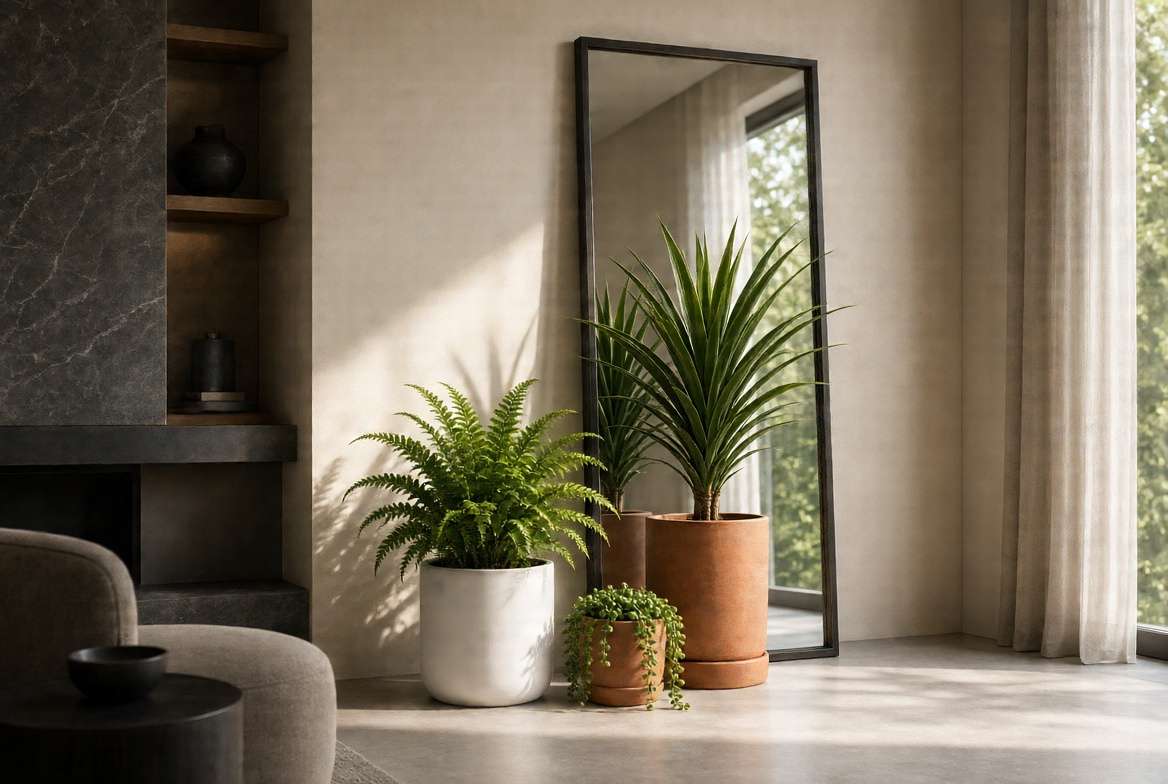
Incorporating Non-Botanical Elements 🪞
To truly maximize a small space, blend your vertical garden with other functional decor. Placing a tall, slender mirror directly behind your corner plant setup is an incredible designer hack. Not only does it instantly double the visual density of your foliage, but it also reflects whatever natural light is in the room back onto the backsides of your plants! 🪞✨
FAQs 🧐
To ensure your corner garden thrives, here are the answers to the most common questions indoor gardeners face:
How do I light a dark corner for plants? If your corner receives practically zero natural light, you must supplement. LED grow lights have come a long way and are no longer purple and industrial. Look for full-spectrum, warm-white LED grow bulbs that can be screwed into a standard floor lamp or stylish pendant light. Position the light 12 to 18 inches above the plant’s canopy for optimal photosynthesis. 💡
Which climbing plants are safe for pets? Unfortunately, many popular climbers like Pothos and Monstera are toxic to cats and dogs. If you have furry friends, opt for pet-safe vertical growers like the Hoya carnosa (Wax Plant), Cissus rhombifolia (Grape Ivy), or the Peperomia prostrata (String of Turtles). 🐾🐢
How do I clean the leaves of my vertical plants? Dust accumulation blocks precious light, which is already scarce in a corner. Every month, gently wipe down the leaves of your accessible plants with a damp microfiber cloth. For high, hard-to-reach trailing vines, a gentle, feather-light dusting wand works wonders. 🧹
Transforming an empty corner into a vertical indoor oasis requires a blend of structural creativity and botanical understanding. By evaluating your microclimate, choosing the right vertical climbers, and installing smart structural supports, you can maximize your space and elevate your home’s aesthetic to new heights. 🪴✨
🌟 Conclusion: Elevating Your Indoor Oasis
Maximizing corner spaces for vertical growth is so much more than a space-saving hack; it is a creative journey into indoor horticulture and structural design. By understanding the unique microclimates of your home, selecting the right climbing and trailing species, and utilizing smart vertical infrastructures like moss poles and tension rods, you unlock the true potential of your living space.
Remember, patience is key. A towering indoor jungle takes time to establish, but watching those aerial roots finally grip a trellis, or seeing a new, perfectly fenestrated leaf unfurl near your ceiling, makes every moment of effort incredibly rewarding.
Now grab your light meter, mix up some chunky soil, and start looking at those empty corners not as wasted space, but as a blank canvas for your next great botanical masterpiece! 🪴💚











