
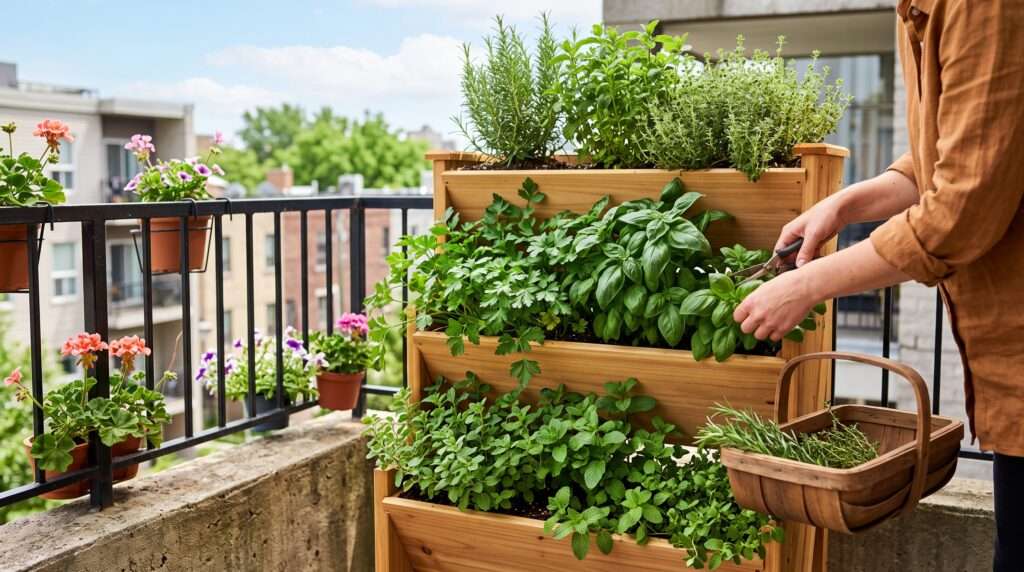
Picture this: you are staring at a tiny, empty concrete balcony, dreaming of fresh, fragrant pesto and mint mojitos, but feeling completely defeated by the lack of square footage. Traditional pots take up too much precious floor space, get poor airflow in cramped corners, and severely limit how many plant varieties you can grow.
The solution? Going vertical. By utilizing tiered herb planters for balconies, you can transform a simple two-foot footprint into a lush, multi-level edible oasis. In my years of helping urban dwellers design thriving balcony gardens, the number one mistake I see beginners make is ignoring their vertical space. This guide is the exact blueprint I use to help apartment renters harvest handfuls of fresh herbs daily, no matter how small their outdoor space is. 👩🌾
Why Tiered Herb Planters are Perfect for Balconies 🏢✨
Growing herbs in a high-density environment requires strategic planning. Tiered systems offer immense biological and practical advantages over standard flat container gardening.
-
The “Up, Not Out” Rule 📏: Tiered systems double or even triple your growing area. You are building a green skyscraper, allowing you to grow ten different herbs in the space normally reserved for two standard pots.
-
Superior Airflow and Light ☀️💨: In cramped urban corners, ground-level pots often shade each other out. Elevating your plants ensures equitable sunlight distribution and prevents devastating fungal diseases like powdery mildew by dramatically improving air circulation around the foliage.
-
Natural Pest Defense 🐛🛑: Raising your edible plants off the ground deters common crawling pests. As a bonus, it saves your back—no more bending over awkwardly during harvest time!
This vertical approach is the ultimate life hack for the modern urban gardener looking to maximize yields without sacrificing patio space.
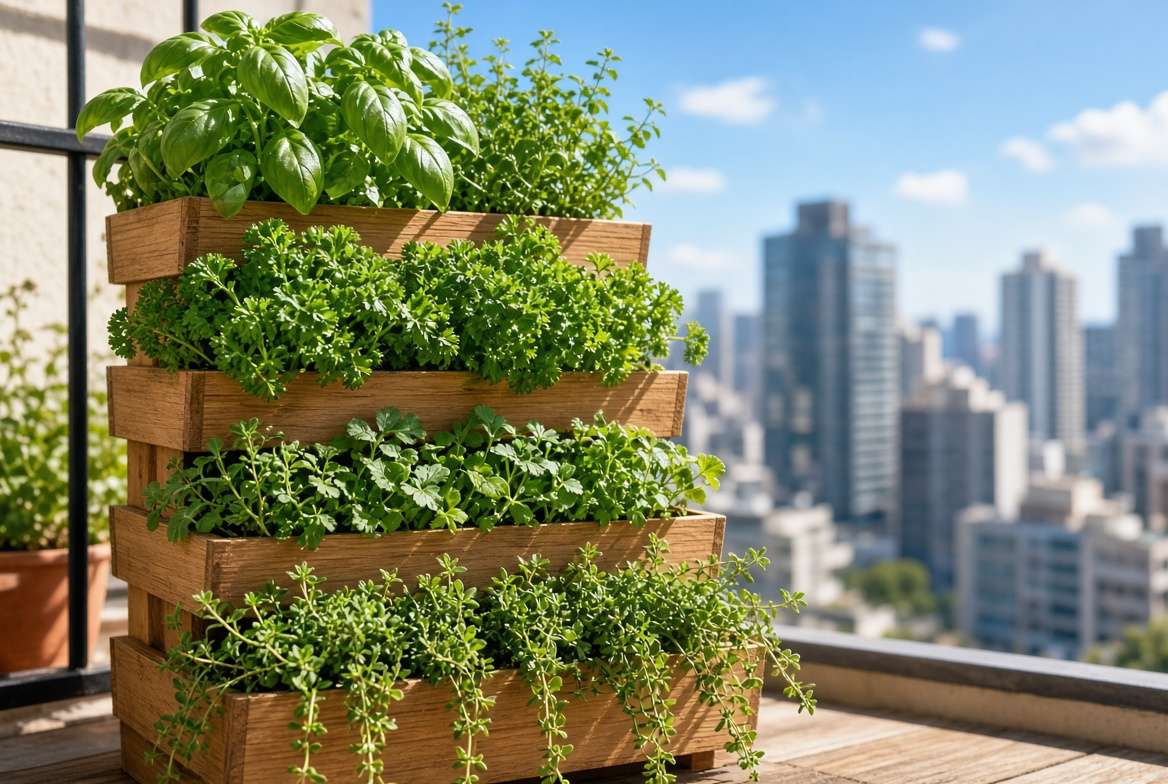
How to Choose the Perfect Tiered Herb Planters for Balconies 🛒🪴
Not all vertical gardens are created equal. When you are growing food in a restricted urban environment, the container you choose acts as the entire ecosystem for your plants. Choosing the wrong setup can lead to root rot, structural issues, or dried-out herbs. Here is an expert breakdown of what to look for when selecting your planter.
Material Matters: Wood, Plastic, or Metal? 🪵🛢️
The material of your planter dictates how often you will need to water and how long the unit will survive the outdoor elements.
-
Wood (Cedar, Redwood, or Teak): Wooden tiered planters are gorgeous and offer excellent natural insulation for plant roots, protecting them from extreme temperature fluctuations. However, they are heavy. If you choose wood, ensure it is rot-resistant (like cedar) and never treated with toxic chemicals, since you are growing edibles.
-
Food-Safe Plastics and High-Density Resin: These are arguably the best choices for high-rise apartment dwellers. They are incredibly lightweight, highly durable, and retain soil moisture beautifully. Crucial check: Always look for a “BPA-free” or “Food Safe” label (often marked with a recycling number 2, 4, or 5) to ensure harmful chemicals won’t leach into your basil.
-
Galvanized Metal: Metal offers a sleek, modern, industrial aesthetic. While beautiful, metal absorbs and conducts heat. On a sunny, south-facing balcony in the middle of July, a metal planter can literally bake your plant roots. If you opt for metal, line the inside with a breathable fabric pot or keep it in a spot that gets afternoon shade.
Understanding Balcony Weight Limits ⚖️
Expert Tip 💡: This is the step most beginners skip, sometimes with disastrous results. A 50-quart bag of potting soil feels manageable when dry, but once saturated with water, it becomes exponentially heavier.
Balconies are structurally engineered to hold a specific amount of weight (usually around 50 to 100 pounds per square foot). A large, wooden, multi-tiered planter filled with wet soil and mature plants can easily exceed 200 pounds. To keep things safe, opt for lighter resin planters and use a soil mix amended with perlite or vermiculite to significantly reduce the overall weight while maintaining great drainage.
The Drainage Dilemma (A Crucial Feature) 💧
If your tiered planter does not have adequate drainage, you are essentially building a swamp. Herbs absolutely despise sitting in stagnant water; it leads to a fatal condition called root rot.
Look for a “cascading drainage” system. In these intelligent designs, excess water from the top tier drips down to water the middle tier, and so on. This is brilliant for urban water conservation and prevents you from accidentally flooding your downstairs neighbor’s balcony! However, it also requires you to place your plants strategically based on their moisture needs.
Plant Placement Strategy: What to Grow on Each Tier 🌿🗺️
A tiered herb planter isn’t just a space-saver; it creates distinct microclimates. The top tier experiences completely different conditions than the bottom tier. To achieve that “Big Harvest,” you must match the right plant to the right level.
The Top Tier: The Sun Worshippers ☀️
The highest level of your planter will receive the most direct sunlight, the most wind exposure, and will dry out the fastest. This is the perfect home for Mediterranean herbs that thrive in hot, dry conditions and actually produce better flavor when slightly stressed.
-
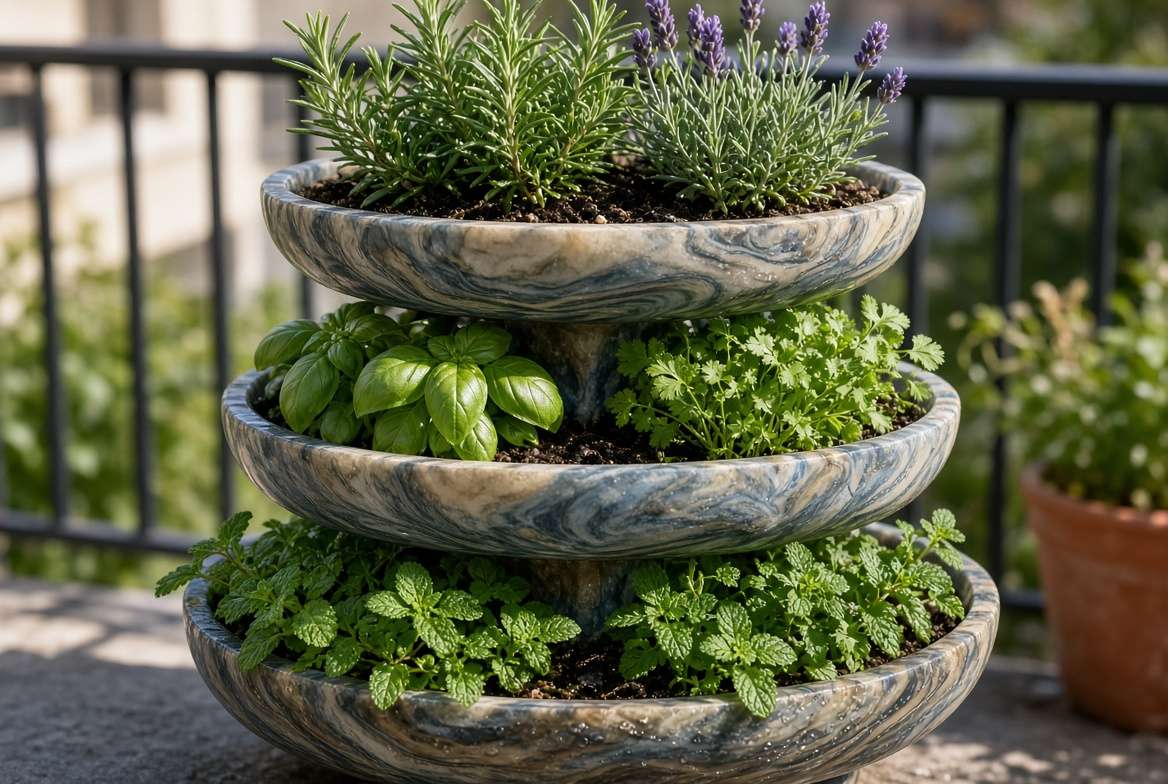
Ideal Herbs: Rosemary, Thyme, Oregano, Lavender, and Sage.
-
Why they thrive here: They love full sun (6-8 hours), tolerate urban wind gusts, and prefer their roots to dry out completely between waterings.
The Middle Tier: The Balanced Growers ⛅
The middle sections receive excellent ambient light but are often slightly shielded from the harsh, scorching midday sun by the plants above them. The soil here stays moderately moist, thanks to water trickling down from the top.
-
Ideal Herbs: Basil, Parsley, Cilantro, and Tarragon.
-
Why they thrive here: These culinary favorites need good sunlight to produce large leaves, but their delicate foliage can burn in extreme heat. They also prefer a consistent, even level of soil moisture.
The Bottom Tier: The Shade & Moisture Lovers 🌧️
The lowest level naturally receives the least amount of direct sunlight and acts as the collection zone for the most water runoff. This is the coolest, most humid microclimate in your vertical garden.
-
Ideal Herbs: Mint, Lemon Balm, Chives, and Chervil.
-
Why they thrive here: These herbs tolerate partial shade beautifully and enjoy having “wet feet” (moist soil).
-
Warning: Mint is notoriously invasive. Growing it on the bottom tier of a segmented planter is a fantastic way to keep it contained so its aggressive roots don’t choke out your delicate thyme!
Companion Planting Cheat Sheet 📋
To maximize the health of your balcony garden, plant these friends together on the same tiers:
Step-by-Step: Setting Up Your Tiered Balcony Garden 🛠️👩🌾
Now that you have chosen the perfect vertical planter and mapped out your plant placement, it is time to get your hands dirty. Setting up your balcony garden correctly from day one is the secret to a season-long, abundant harvest.
1. Mapping Your Light Exposure 🧭
Before pouring a single ounce of soil, determine exactly how much sunlight your balcony receives.
-
South-facing balconies: Receive the most intense, prolonged sunlight. Perfect for your sun-loving Mediterranean herbs, but you will need to water more frequently.
-
East/West-facing balconies: Offer gentle morning or afternoon sun, ideal for a balanced mix of herbs like basil and parsley.
-
North-facing balconies: The most challenging for herbs, as they receive mostly indirect light. If you face north, focus heavily on shade-tolerant varieties like mint, chervil, and lemon balm.
2. Mixing the Perfect Urban Soil 🪣
Do not make the rookie mistake of using heavy garden topsoil from your yard; it is far too dense for containers and will suffocate your plant roots. Instead, create a lightweight, nutrient-dense potting mix designed specifically for container gardening.
The Expert Balcony Recipe:
-
60% High-Quality Organic Potting Mix: This acts as your base, providing an airy structure.
-
20% Organic Compost: This provides slow-release nutrients essential for leaf production.
-
20% Perlite or Pumice: These white, porous volcanic rocks are non-negotiable for tiered herb planters. They create air pockets, ensure rapid drainage, and significantly reduce the overall weight of the planter on your balcony.
3. Planting and Spacing 🌱
When transplanting your nursery herbs into the planter, resist the urge to cram them in. Herbs need breathing room! Overcrowding leads to poor airflow, which invites powdery mildew and pests.
-
Gently tease the root ball of each herb before placing it into the soil. This encourages the roots to grow outward rather than wrapping around themselves.
-
Leave at least 3 to 4 inches of space between each plant, depending on their mature size.
4. Initial Watering Protocol 🚿
Your first watering sets the tone. Water each tier slowly and thoroughly until you see excess liquid draining from the bottom holes. This process, known as “settling,” removes harmful air pockets from the soil and ensures the roots make good contact with their new environment.
-
Pro Tip 💡: Do this slowly! Dumping water too fast will splash soil over the sides, creating a muddy mess on your pristine balcony floor.
Expert Care Tips for a “Big Harvest” 🧺✂️
Keeping your plants alive is one thing; encouraging them to produce massive yields in a small space requires a little finesse.
The “Cut and Come Again” Harvesting Technique ✂️
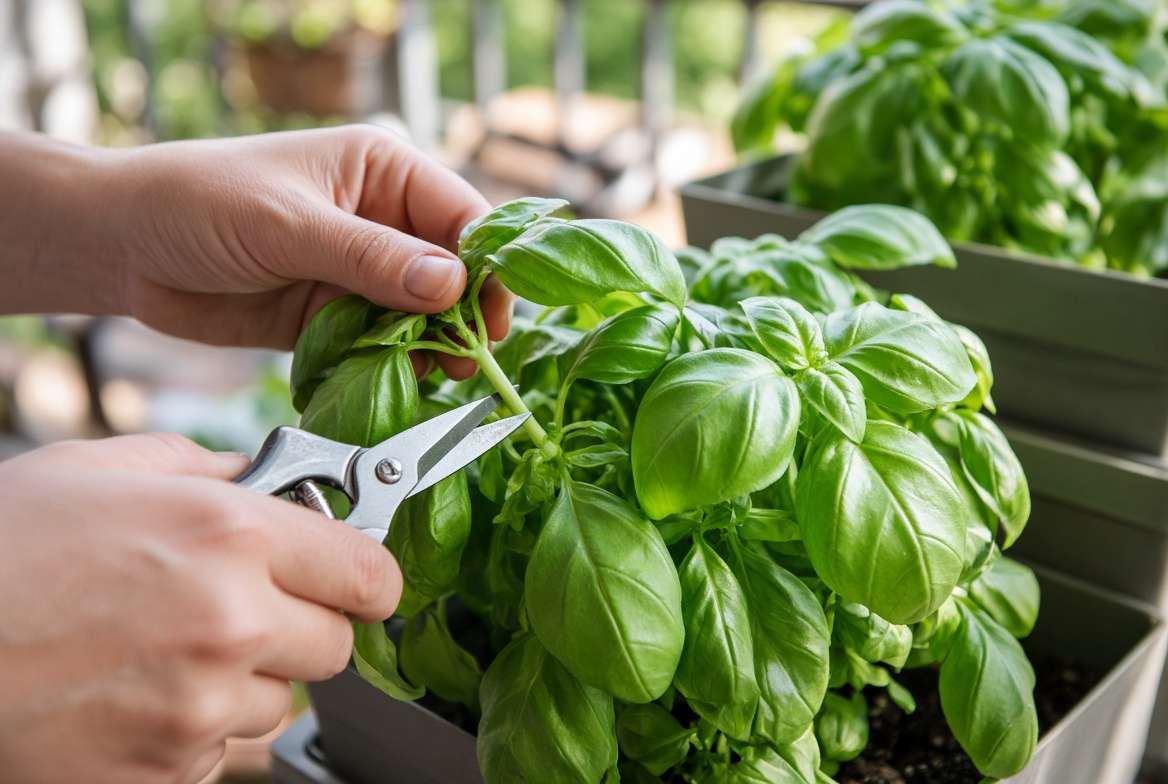
The most common question I get is, “Why do my herbs look tall, stringy, and sad?” The answer is almost always a lack of proper pruning. To get bushy, robust herbs, you must use the “cut and come again” method. Never just pluck leaves off the side of the stem. Instead, use clean micro-snips to cut the main stem just above a leaf node (the little bump where new leaves are forming). By cutting the main vertical stem, you force the plant to send its energy outward, growing two new lateral stems. The more you harvest this way, the bushier and higher-yielding your plant becomes!
Watering Hacks for Tiered Planters 💧
Because tiered planters create microclimates, uniform watering will kill half your garden. The top tier will almost always dry out faster than the bottom tier.
-
The Finger Test: Never water on a strict schedule. Instead, push your index finger about an inch into the soil of each individual tier. If it feels dry, water that specific level. If it feels cool and moist, skip it for another day.
Urban Fertilizing Schedule 🧪
Herbs grown in containers quickly deplete the nutrients in their soil because every time water drains out the bottom, it takes a little bit of plant food with it. To maximize yields, feed your herbs every 14 to 21 days during the growing season. Stick to organic fertilizers since you will be eating these plants. A liquid seaweed extract or fish emulsion diluted in your watering can is perfect. It provides a gentle boost of nitrogen (crucial for leafy growth) without burning the roots.
Troubleshooting Common Balcony Garden Problems 🚑🥀
Even the most carefully planned urban gardens face challenges. Here is how to handle the most common balcony setbacks:
-
Problem: Wind Burn. High-rise balconies often act as wind tunnels, drying out foliage and snapping delicate stems.
-
Solution: Use a protective windbreak, like a bamboo screen attached to your railing, and stick to hardy herbs (rosemary, thyme) on the most exposed top tier.
-
-
Problem: Spider Mites and Aphids. Dry, hot, urban air is a breeding ground for spider mites.
-
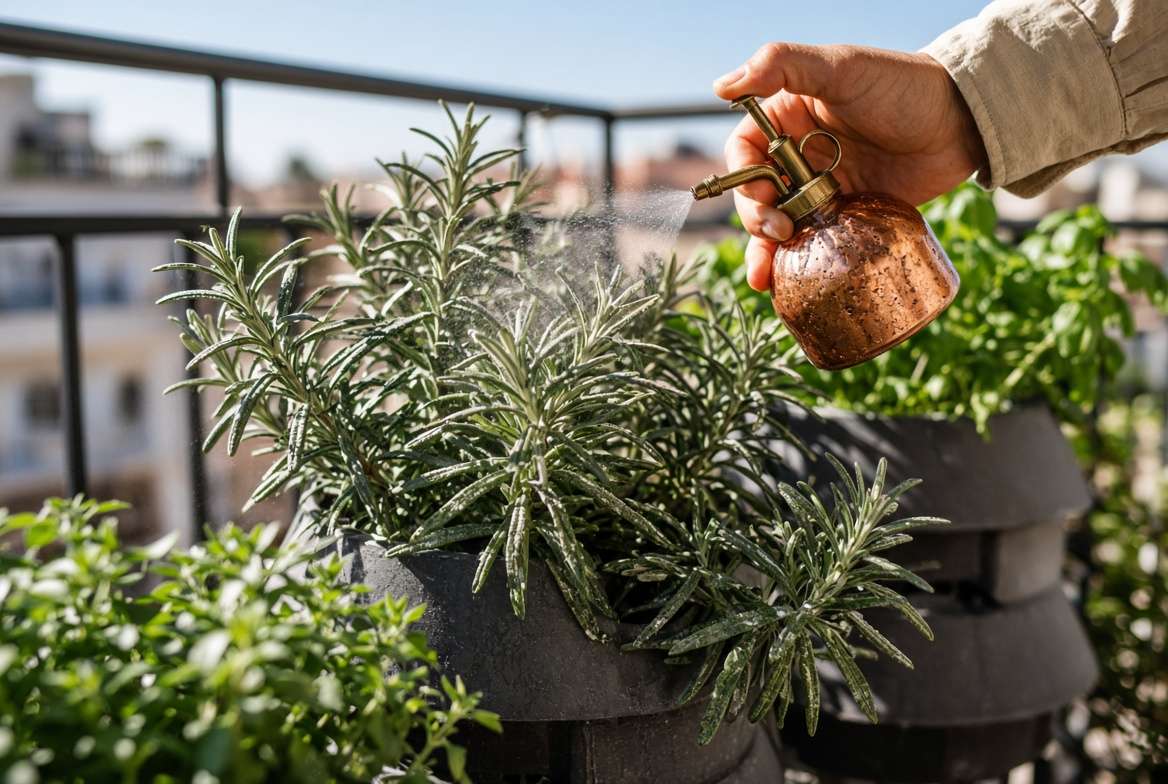
Solution: Mite infestations look like fine webbing on the leaves. Combat this by misting your plants lightly with water in the mornings to increase humidity. For aphids, a gentle spray of organic Neem oil or insecticidal soap applied in the evening will clear them out safely.
-
-
Problem: The Top Tier is Thriving, but the Bottom Tier is Rotting.
-
Solution: This is classic overwatering of the bottom tier due to cascading drainage. Stop watering the bottom tier entirely until the soil dries out, and ensure the bottom drainage holes are not clogged with compacted dirt.
-
Frequently Asked Questions (FAQs) 🤔💬
Do tiered herb planters need drainage holes? Absolutely. Without drainage, water pools at the bottom of the planter, displacing oxygen and literally drowning the roots. Root rot is irreversible and the fastest way to kill an herb garden.
Can I leave my tiered herb planter on the balcony in winter? It depends on two factors: the material of your planter and your USDA hardiness zone. High-quality plastics and metals can usually stay outside, but terracotta may crack in freezing temperatures. Perennial herbs like sage, thyme, and oregano can survive mild winters, but annuals like basil will die at the first frost and should be brought indoors or composted.
What is the easiest herb to grow on a balcony for complete beginners? Chives and mint. Both are incredibly forgiving of poor soil, irregular watering, and less-than-ideal sunlight. Just remember to keep that mint isolated on the bottom tier!
How much space do I actually need for a tiered planter? Surprisingly little! A standard corner tiered planter requires a footprint of just 2×2 feet (4 square feet), yet it can provide enough vertical space to comfortably house 10 to 12 thriving herb plants.
Start Your Balcony Harvest Today! 🥗🌇
You don’t need a sprawling backyard to enjoy the unparalleled luxury of clipping fresh herbs for your evening meals. By utilizing tiered herb planters for balconies, you can master your vertical space, create an eye-catching focal point, and maximize your yields, turning even the tiniest concrete slab into a thriving urban farm.
With the right soil, strategic plant placement, and a little pruning know-how, you will be well on your way to a “Big Harvest.”
Over to you! What is the first herb you are planning to grow on your balcony this season? Have you ever struggled with keeping basil alive in an apartment? Share your thoughts, questions, or photos of your own balcony setups in the comments below! 👇🌿











