
Picture this: It is finally taco night. You step out to your garden, garden shears in hand, ready to harvest a massive handful of fresh cilantro. But instead of lush, tender leaves, you are greeted by towering, lanky stems topped with delicate white flowers. Your cilantro has bolted. Fast forward two weeks, and you have absolutely nothing ready to harvest.
This frustrating “feast or famine” cycle is the bane of the home chef’s existence. When we plant a whole packet of seeds on the exact same day, they all mature on the exact same day. The secret to breaking this cycle is a professional market gardening technique called staggered planting for continuous herb harvest. By adapting this method for the home garden, you can ensure that the moment one batch of herbs begins to fade or go to seed, a fresh, vibrant batch is perfectly sized and ready for your kitchen.
The Professional Solution for the Home Garden 🏡
Also known in agricultural circles as succession sowing, staggered planting is the strategic spacing out of your seed sowing dates over several weeks or months. Instead of one massive planting in early spring, you divide your garden space—or your container layout—into specific zones.
As a garden expert, I cannot emphasize enough that maintaining a consistent supply of fresh culinary herbs isn’t just a matter of scheduling; it is an active management of your garden’s ecosystem.
Why Soil Health Matters First 🪱
Before you even touch a seed packet, we have to talk about the foundation of succession planting: soil health. A continuous harvest demands non-stop plant growth, which in turn demands robust soil microbiology.
When you are constantly growing and harvesting from the same small area, you are rapidly depleting the soil’s nutrient reserves. A healthy, living soil web—teeming with beneficial microbes, mycorrhizal fungi, and organic matter—is non-negotiable. If you want your staggered batches to grow quickly enough to keep up with your kitchen’s demands, your soil needs to be a nutrient powerhouse. Start with a premium organic potting mix or garden soil deeply amended with rich compost before you even begin to map out your planting schedule.
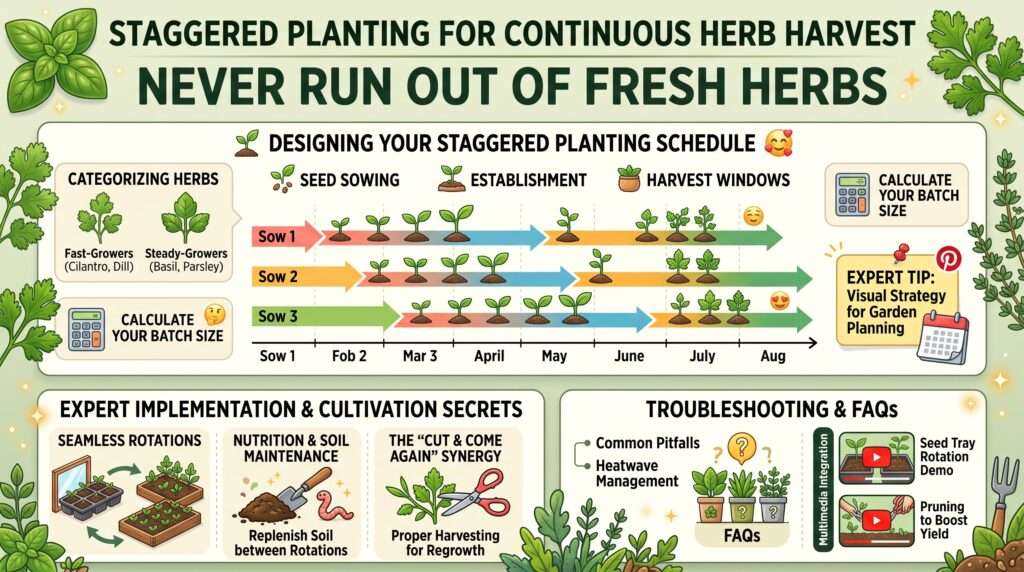
Designing Your Staggered Planting Schedule 📅
To execute a flawless succession strategy, you have to understand the specific biological clock of the plants you are growing. Not all herbs grow at the same pace, and treating them as if they do will instantly derail your continuous harvest.
Categorizing Herbs by Growth Rate ⏱️
We need to divide our culinary herbs into two distinct categories to build our planting calendar:
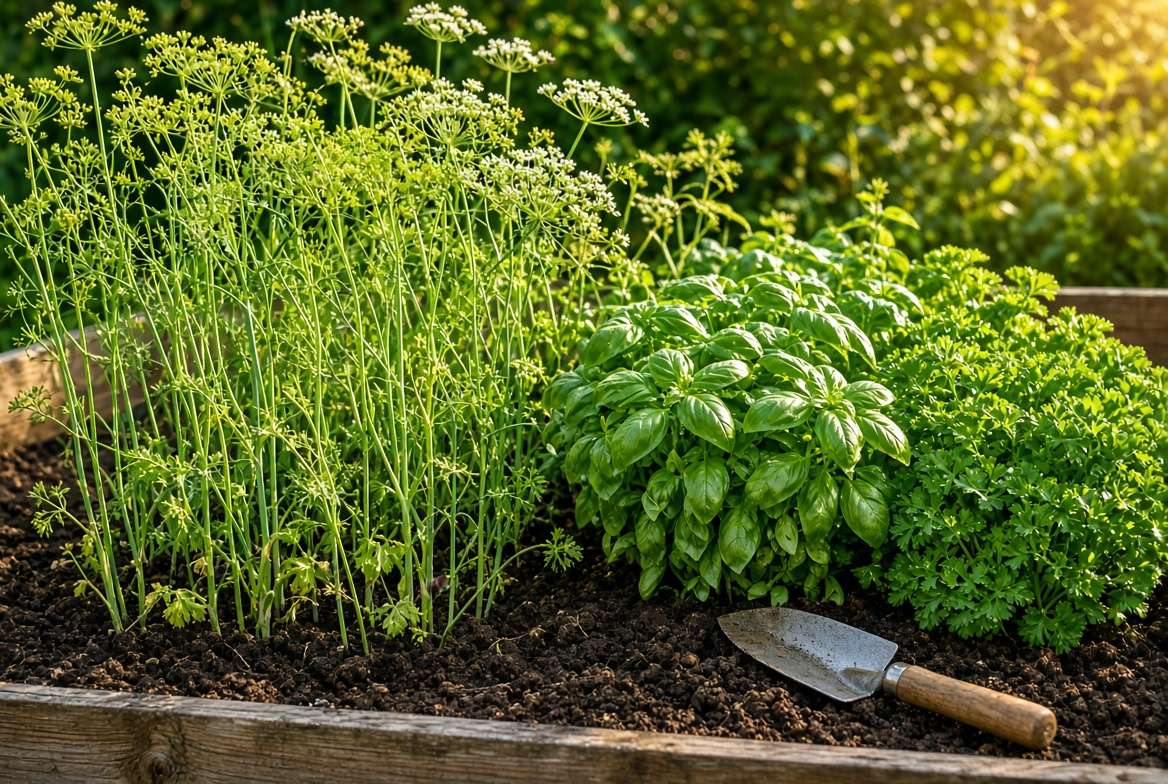
1. The Fast-Growers (The “Bolt-Prone” Herbs) 🏃💨 These herbs have a rapid lifecycle. They germinate quickly, grow rapidly, and are incredibly eager to produce seeds (bolting), especially when the weather warms up.
-
Examples: Cilantro (Coriander), Dill, Arugula, Chervil, and Borage.
-
The Strategy: Because their harvest window is notoriously short (sometimes only a week or two in peak summer), these require aggressive staggered planting. You should aim to sow a new, small batch of seeds every 14 to 21 days.
2. The Steady-Growers (The “Cut-and-Come-Again” Herbs) 🚶🌿 These herbs are the reliable workhorses of the garden. While they do eventually go to seed, they respond beautifully to regular pruning and will continuously push out new foliage for months if managed correctly.
-
Examples: Basil, Parsley, Chives, and annual varieties of Mint. (Note: Woody perennials like Rosemary, Thyme, and Sage do not require succession planting; a single healthy plant can last years).
-
The Strategy: You do not need to sow these as frequently. However, to guarantee a lush supply that never gets woody or tired, plan to sow a fresh batch every 4 to 6 weeks. This ensures that when your first basil plant starts looking ragged in late July, a vibrant new plant is just hitting its peak.
Calculating Batch Sizes: The Math of Succession 🧮
The biggest mistake beginners make with staggered planting is sowing too much in each rotation. This leads to overcrowding, wasted seeds, and ultimately, wasted food.
To calculate your ideal batch size, look at your weekly kitchen consumption.
-
Example Calculation: If your family uses roughly one bunch of cilantro per week (about 4-5 mature plants), you need 4-5 plants maturing every single week.
-
Since cilantro takes about 4 weeks to reach maturity from seed, and you are sowing every 2 weeks, you should plant roughly 10-15 seeds per bi-weekly sowing. This accounts for less-than-perfect germination rates and provides a buffer for pests.
Visual Strategy for Garden Planning 📌
Keeping track of multiple sowing dates, germination times, and harvest windows can quickly become overwhelming. I highly recommend creating a highly visual planting calendar.
Many expert gardeners design color-coded charts or visually striking digital planners to track their rotations. Whether you keep a physical garden journal, print out a custom tracking graphic for your fridge, or save well-designed botanical infographics and pins to a dedicated Pinterest board, having a visual reference is crucial. When your tracking system is beautiful and easy to read at a glance, you are vastly more likely to stick to the schedule and actually put those seeds in the soil every two weeks.
Expert Implementation & Cultivation Secrets 🪴
Once your timeline is established, the physical execution of your staggered planting schedule dictates your success. Managing multiple generations of plants requires a bit of finesse, but once you establish a rhythm, it becomes second nature.
Sowing Techniques for Seamless Rotations 🔄
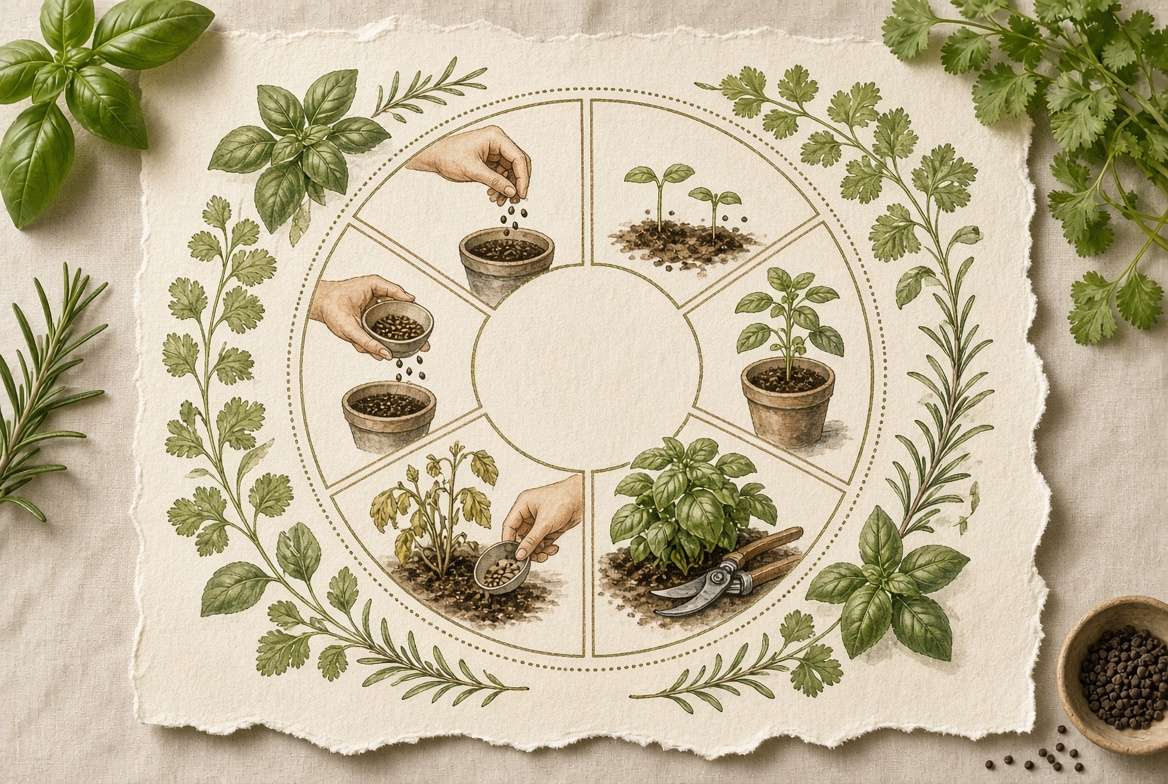
To maintain an uninterrupted supply of herbs, you have to decide where these new seeds will begin their lives. You generally have two options: direct sowing or utilizing indoor seed-starting trays.
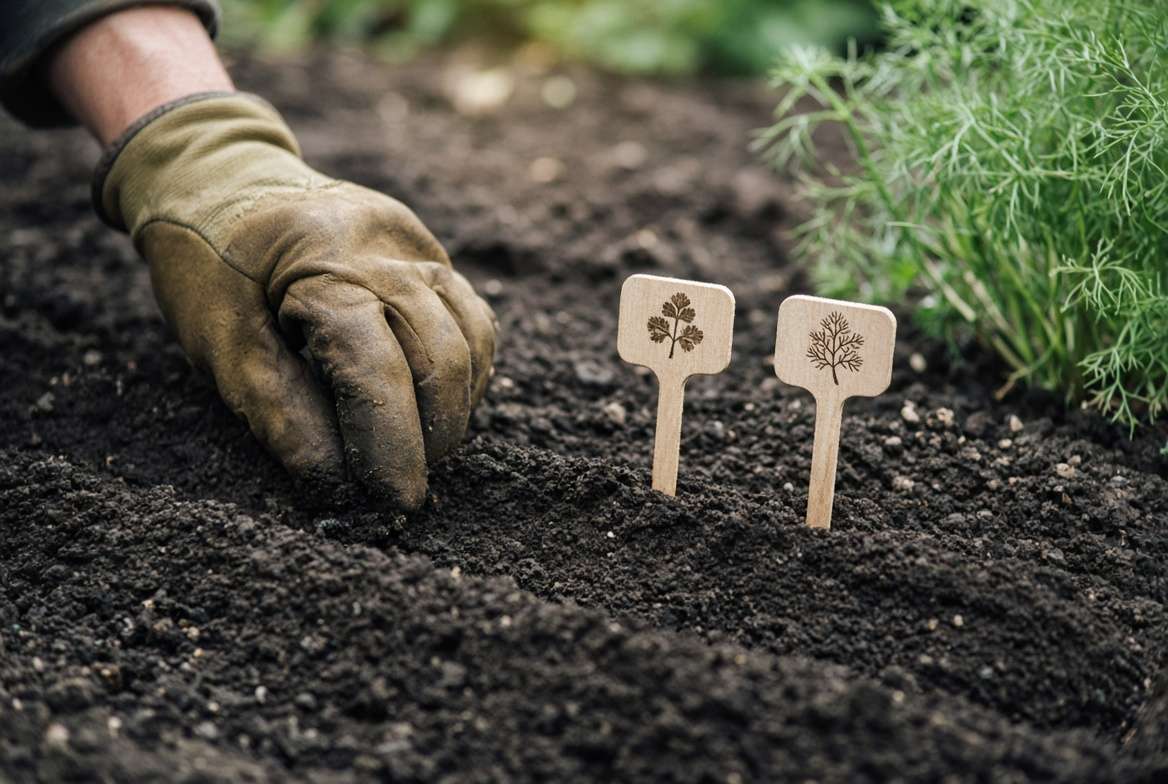
1. Direct Sowing Outdoors 🌱 For fast-growers like cilantro and dill, direct sowing is often preferred because these plants develop sensitive taproots and deeply resent being transplanted.
-
The Technique: Dedicate a specific “succession bed” or a series of large containers. Every two weeks, simply draw a shallow line in the soil next to your previous planting, drop in your seeds, and lightly cover them. This creates a beautiful, cascading visual of herbs at various stages of maturity right next to one another.
2. Utilizing Seed-Starting Trays (The Nursery Method) 🐣 For steady-growers like basil and parsley, starting seeds in plug trays offers ultimate control.
-
The Technique: While your current batch of basil is thriving in the garden, you can start the next generation in small soil blocks or plug trays in a protected area (like a greenhouse or under grow lights). By the time your outdoor plants are exhausted, you already have robust, 4-inch transplants ready to take their place. This “nursery method” completely eliminates the agonizing weeks of waiting for outdoor seeds to germinate, saving precious growing time and garden real estate.
Nutrition and Soil Maintenance 🪱
As mentioned earlier, treating your soil like a bank account is critical. When practicing staggered planting for a continuous herb harvest, you are constantly making withdrawals. If you don’t make regular deposits, your subsequent batches of herbs will be stunted, pale, and lackluster.
Top-Dressing for Success 🍂 Between every single rotation—the moment you pull up an exhausted plant to make room for new seeds or transplants—you must replenish the soil.
-
Add a 1-to-2-inch layer of rich, well-aged compost or a generous handful of worm castings to the surface.
-
Gently work it into the top layer of the soil to instantly introduce fresh organic matter and beneficial microbes.
-
For heavy feeders like basil, supplementing with a diluted, organic liquid kelp or fish emulsion every two weeks will keep foliage lush, vibrant, and packed with essential oils.
The “Cut & Come Again” Synergy ✂️
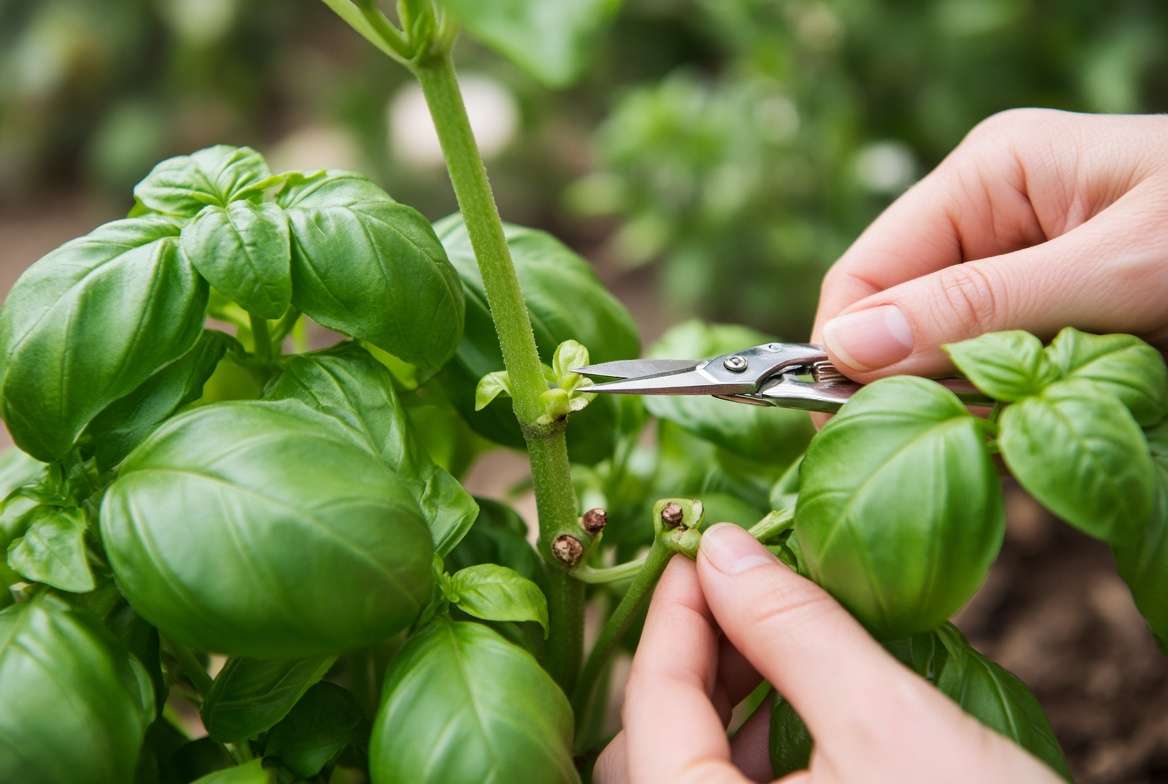
Staggered planting works best when combined with proper harvesting techniques. You can dramatically extend the life of your steady-growing herbs by mastering the “cut and come again” method.
Never harvest by plucking individual leaves; this stresses the plant. Instead, use clean, sharp pruning snips to cut the stem just above a leaf node (the point where two small leaves are emerging from the main stem). This triggers the plant to branch out, creating a bushier, more productive herb. By the time this deeply pruned plant finally exhausts its energy, your staggered, backup seedling will be perfectly sized to take the baton.
Expanding Your Garden Knowledge Visually 📹
Reading about garden techniques is fantastic, but gardening is an inherently visual medium. To truly master the timing and techniques of succession sowing, visual aids are invaluable.
I always encourage gardeners to supplement their reading with rich visual media. Seek out high-quality video demonstrations that show exactly how deep to plant seed rotations or how to properly snip above a leaf node. On our own platform, we frequently pair these written guides with dedicated YouTube videos—just look for the bright, easy-to-spot thumbnails that highlight the exact technique you need to learn. Additionally, saving beautifully designed pin graphics to your gardening Pinterest boards is an excellent way to organize your seasonal plans and keep your staggered planting schedules easily accessible whenever you head out to the dirt.
Troubleshooting, FAQs & Conclusion 👩🏻🌾
Even with the best plans, nature is unpredictable. Here is how to navigate the most common hurdles of succession sowing.
Preventing Common Pitfalls 🚧
-
The Overcrowding Trap: It is tempting to squeeze just a few more seeds into an empty patch of dirt. Resist! Overcrowded herbs compete aggressively for water and airflow, leading to fungal diseases like powdery mildew and stunted root systems. Stick strictly to your calculated batch sizes.
-
Managing Sudden Heatwaves: High temperatures are the number one trigger for bolting in fast-growing herbs like cilantro. When a heatwave is forecasted, protect your younger, staggered batches with a 30% shade cloth. This keeps the soil cool and tricks the herbs into staying in their vegetative state a bit longer.
-
Watering Depths: A newly sown seed requires consistent, shallow surface moisture to germinate. A mature herb right next to it requires deep, infrequent watering to establish a strong root system. Utilizing targeted drip irrigation or carefully hand-watering your newly sown zones ensures you don’t accidentally rot your mature plants while trying to sprout your new ones.
Audience FAQs 🙋🏽♀️
Can I practice staggered planting for continuous herb harvest in small containers? Absolutely! In fact, container gardening makes succession sowing incredibly easy to manage. Instead of dividing a large garden bed, simply use a series of smaller pots. Sow one pot of dill this week, a second pot two weeks later, and a third pot two weeks after that. Rotate the pots as they mature!
When is it too late to start succession sowing? It depends on your first expected frost date, but generally, you can continue sowing fast-growing herbs (like cilantro and arugula) well into late summer and early autumn. Because they mature in just 30 to 45 days, a late-season sowing often results in a massive, delicious fall harvest!
Why are my second and third batches growing slower than my first? This is almost always a soil nutrition issue. Re-read the “Nutrition and Soil Maintenance” section. Your first batch had access to a fresh, nutrient-dense bed. By the third batch, the soil is tired. Top-dress with compost and worm castings religiously!
Conclusion & Action Step 🚀
Mastering staggered planting for a continuous herb harvest transforms you from a casual grower into a strategic garden manager. It eliminates the heartbreak of bolting herbs, prevents overwhelming gluts of produce, and ensures that your kitchen is never without the vibrant, fresh flavors that make home cooking so deeply rewarding.
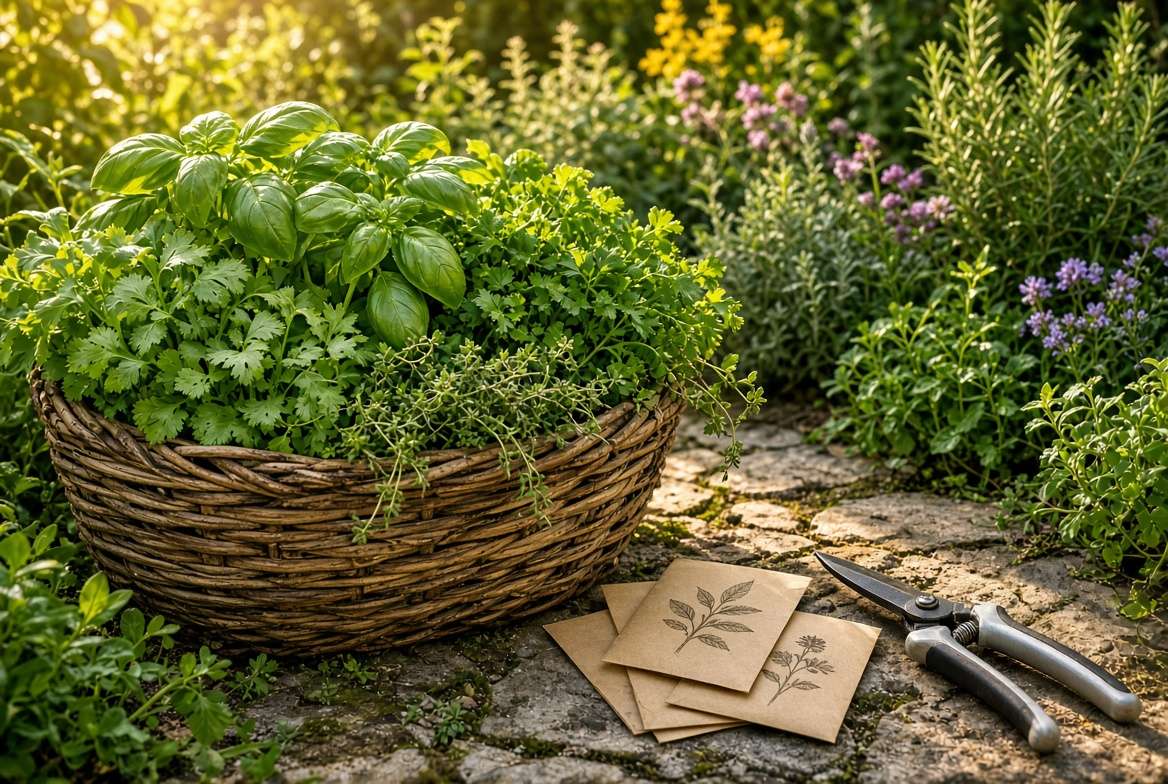
You do not need an acre of land to pull this off; you just need a plan, a little bit of math, and a commitment to healthy soil.
Your Action Step for Today: Grab a piece of paper (or your favorite digital planner) and map out your first three zones. Choose just two herbs to start with—one fast-grower like cilantro, and one steady-grower like basil. Sow your very first batch today, and set a reminder on your phone for 14 days from now to sow your second. Your future self (and your dinner plates) will thank you! 🌿✨











