
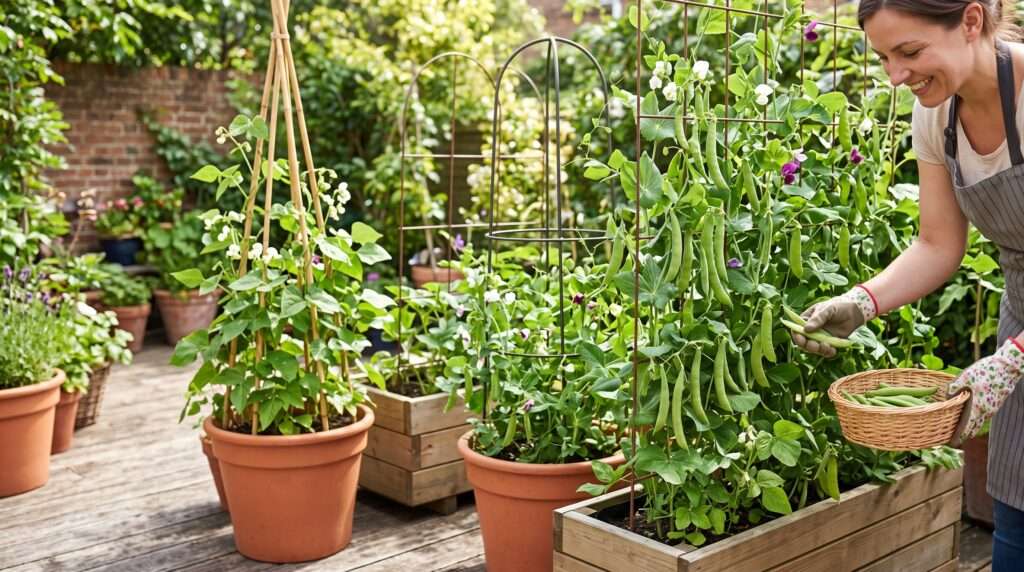
You don’t need a sprawling backyard or a quarter-acre plot to harvest baskets of crisp snap peas and tender green beans. Vertical gardening allows urban homesteaders, patio gardeners, and balcony growers to produce pounds of fresh food from a single square foot of space. However, the secret to a thriving vertical harvest isn’t just about throwing seeds in dirt; it lies in choosing the right genetics and support structures. Finding the best bean and pea options for container trellises is the most critical step for small-space growers looking to maximize yield and avoid the heartbreak of tangled, underperforming vines.
In this comprehensive guide, we will dive deep into the specific cultivars that thrive in confined environments, the engineering behind sturdy balcony trellises, and the foundation of living soil health that fuels heavy pod production. Whether you are looking to create a stunning visual screen of edible foliage or just want fresh ingredients for your evening stir-fry, this guide will transform your patio into a vertical food forest. ✨
🪴 Container & Support Foundations
Before selecting your seeds, you must build the right environment. Legumes have delicate root systems that are highly sensitive to both waterlogging and extreme drought, making your choice of container and soil composition absolutely vital.
Container Sizing & Soil Chemistry for Climbing Legumes 🪱
Vining peas and beans are aggressive climbers above ground, which means they need an adequate anchor below ground.
-
Volume & Depth: Always use a minimum container size of 5 to 7 gallons per 2–3 climbing plants. The pot must be at least 12 inches deep to accommodate their taproots and prevent the container from tipping over under the weight of a fully grown, wind-blown vine.
-
The Living Soil Formula: Legumes thrive in a loose, well-draining potting mix with a pH between 6.0 and 6.8. A thriving soil microbiome is essential. Create a robust, living soil blend using:
-
40% Coco coir or peat moss (for moisture retention)
-
30% Perlite or pumice (for critical root aeration)
-
30% High-quality, well-aged compost (to provide slow-release nutrients and beneficial microbes)
-
-
Container Materials: Fabric grow bags are vastly superior for container legumes. They allow for “air pruning” of the roots, preventing the circular root-binding that often stunts container plants. They also offer excellent drainage, which prevents the dreaded root rot.
Choosing the Right Trellis for Pots & Balconies 🪜
A flimsy trellis will collapse under the weight of mature, rain-soaked bean vines. Your support system must be matched to your container type.
-
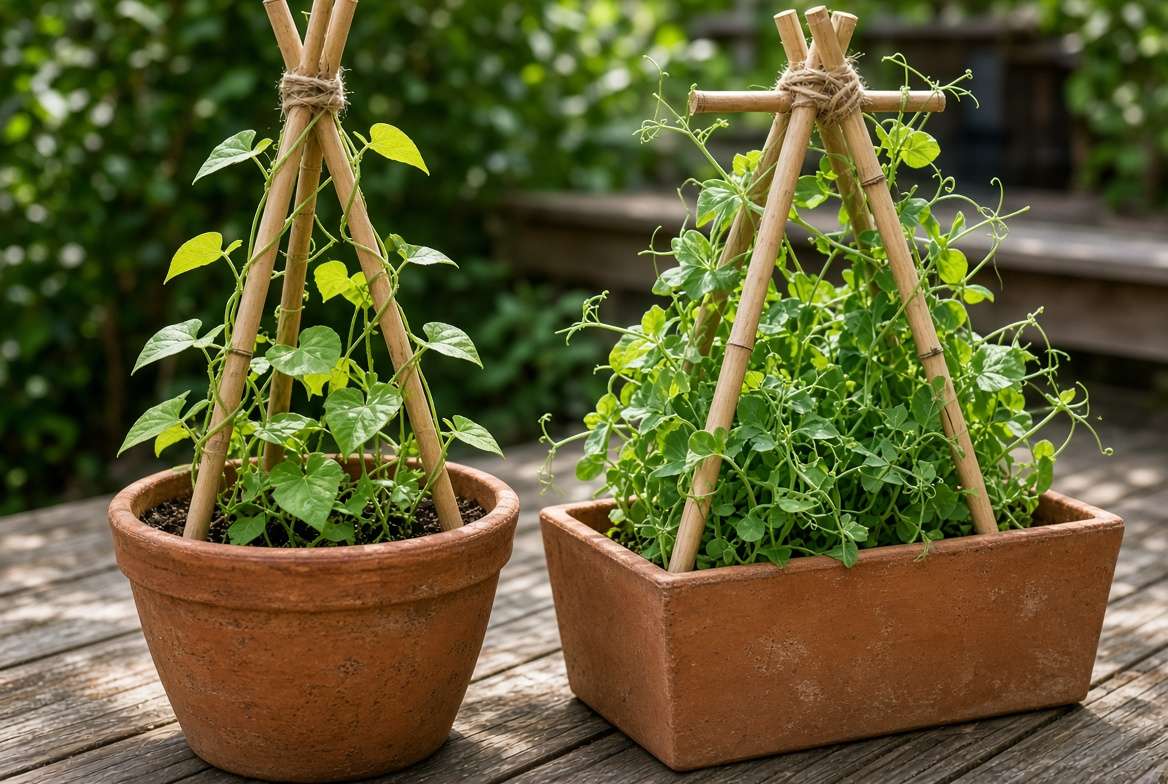
Bamboo or Wooden Obelisks (Teepees): The absolute best choice for round pots (like 5-gallon buckets or fabric bags). Pushing 3 to 5 bamboo stakes deep into the soil and tying them at the top creates a structurally sound pyramid that resists wind.
-
Wall-Mounted Nylon Netting: If you have a square planter box pushed up against a balcony wall, soft nylon trellis netting is perfect. It has zero floor footprint and allows tendrils to weave naturally. Just ensure it is securely hooked to the wall or railing.
-
Collapsible A-Frames: Ideal for long, rectangular window boxes or trough planters. They provide a sturdy, ladder-like structure that makes harvesting from both sides incredibly easy.
🫘 The Top Bean Options for Container Trellises
When growing beans vertically in pots, you want pole beans (which climb up to 6–8 feet) rather than bush beans (which stay short and wide). Pole beans provide a continuous harvest over a longer period, making them the most efficient use of tight vertical spaces.
High-Yield Climbing & Pole Beans for Small Spaces
Here are the most reliable, vigorous, and disease-resistant climbing beans tailored for container environments:
1. ‘Kentucky Blue’ (Pole Bean) 💙
A brilliant cross between ‘Kentucky Wonder’ and ‘Blue Lake’, this variety offers the best of both worlds. It produces heavy yields of sweet, stringless 6-inch pods. It is highly adaptable to container life, climbing a neat 6 feet without becoming overly chaotic.
-
Pro Tip: Keep picking them! The more you harvest, the more flowers the plant will produce.
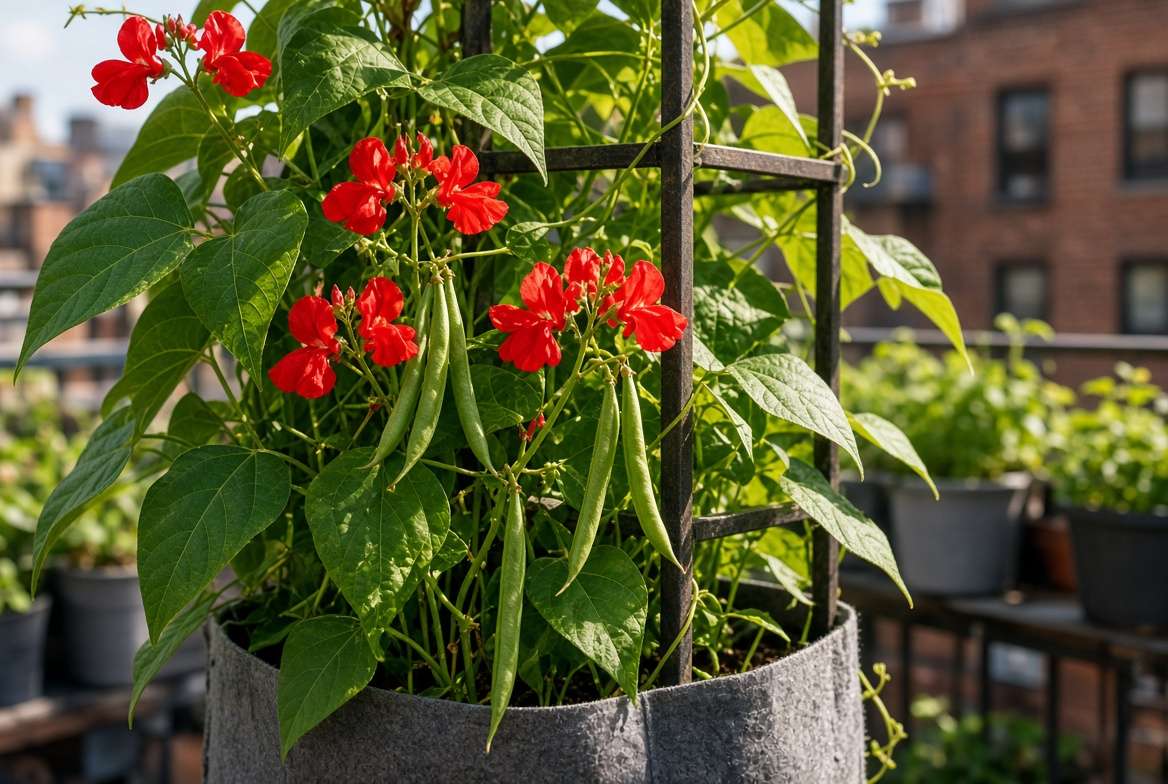
2. ‘Scarlet Runner’ (Phaseolus coccineus) 🌺
If you want your balcony to look as good as it tastes, this is your bean. Scarlet Runner beans are aggressive climbers that produce stunning, bright red, edible flowers that act as a magnet for hummingbirds and pollinators. The pods are best eaten when very young and tender. Because they are highly vigorous, give them at least a 10-gallon pot and a very sturdy 7-foot trellis.
3. ‘Rattlesnake Bean’ 🐍
For gardeners in high-heat zones (like the Southern US or hot urban rooftops), the Rattlesnake pole bean is a lifesaver. It is incredibly drought-tolerant and handles heat stress beautifully. The pods are visually striking, featuring dark purple streaks over a green background, which magically turn solid green when cooked.
4. ‘Blauhilde’ (Purple Pole Bean) 💜
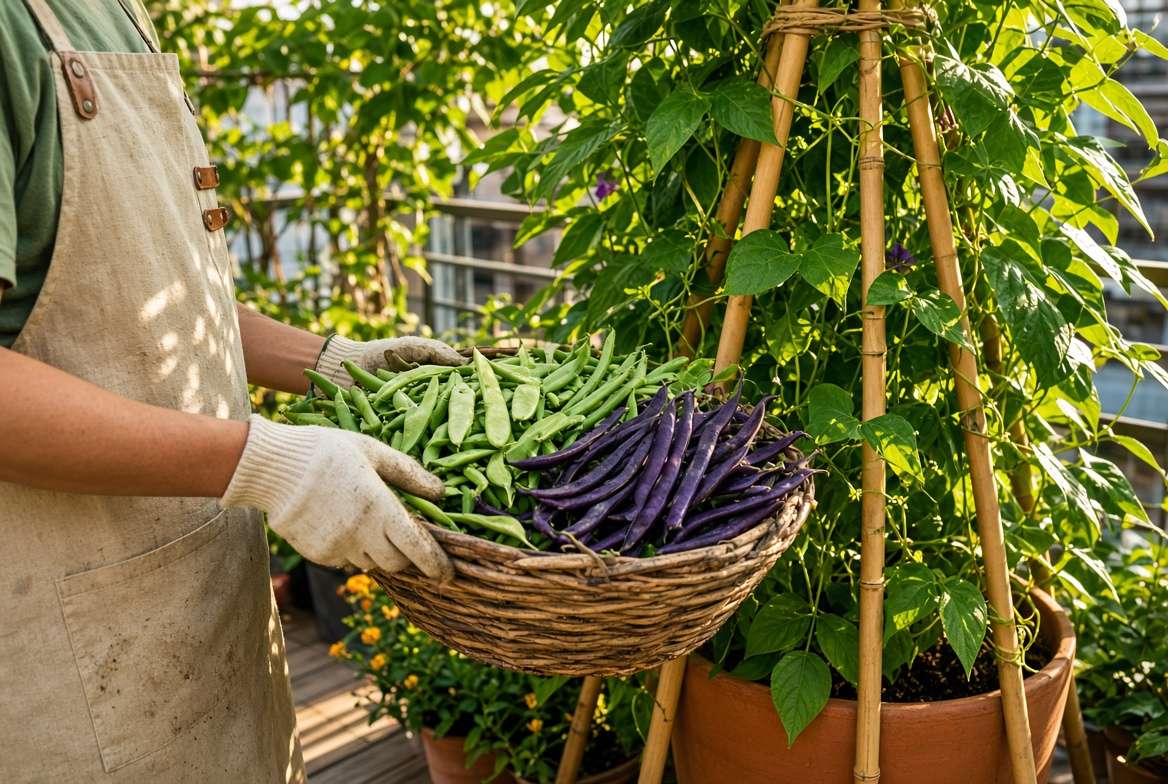
A spectacular German heirloom that produces rich, deep purple pods against bright green foliage. Beyond its beauty, it is highly resistant to the bean mosaic virus. The vibrant purple color makes the beans incredibly easy to spot and harvest among the dense green leaves.
Semi-Vining & Half-Runner Alternatives
If you only have space for a 3- to 4-foot trellis, look for “half-runner” beans like the ‘State Half Runner’. They offer a sprawling habit that falls right between a bush bean and a towering pole bean, perfectly maxing out a mid-sized balcony railing.
Long Bean Options for Warm Climates
For sweltering summer patios, Yardlong or Asparagus Beans (Vigna unguiculata) are exceptional. Related to cowpeas, these thrive in humidity and heat that would cause standard green beans to drop their blossoms. They require a tall, strong trellis, as the pods themselves can reach up to 18–24 inches long!
| Cultivar | Trellis Height Needed | Days to Maturity | Min. Pot Size | Standout Feature |
| Kentucky Blue | 6 Feet | 60-65 Days | 5 Gallon | Classic flavor, high yield |
| Scarlet Runner | 7+ Feet | 70 Days | 7-10 Gallon | Ornamental red flowers |
| Rattlesnake | 6-8 Feet | 65 Days | 5 Gallon | Extreme heat tolerance |
| Blauhilde | 6 Feet | 65 Days | 5 Gallon | Easy-to-spot purple pods |
We have covered the foundational setup and the best beans for the warm season. In the next section, we will dive into the top cool-season climbing peas, the masterclass on seed inoculation, and the secrets to double-cropping your containers.
🫛 The Top Pea Options for Container Trellises
While beans dominate the hot summer months, vining peas are the undisputed champions of the cool season. Peas thrive in the brisk temperatures of early spring and crisp autumn air. Because their root systems are relatively shallow compared to heavy summer crops, they are perfectly adapted to container life.
When shopping for seeds, ensure you are buying “climbing” or “tall vining” varieties rather than “bush” or “dwarf” types to truly maximize your vertical space.
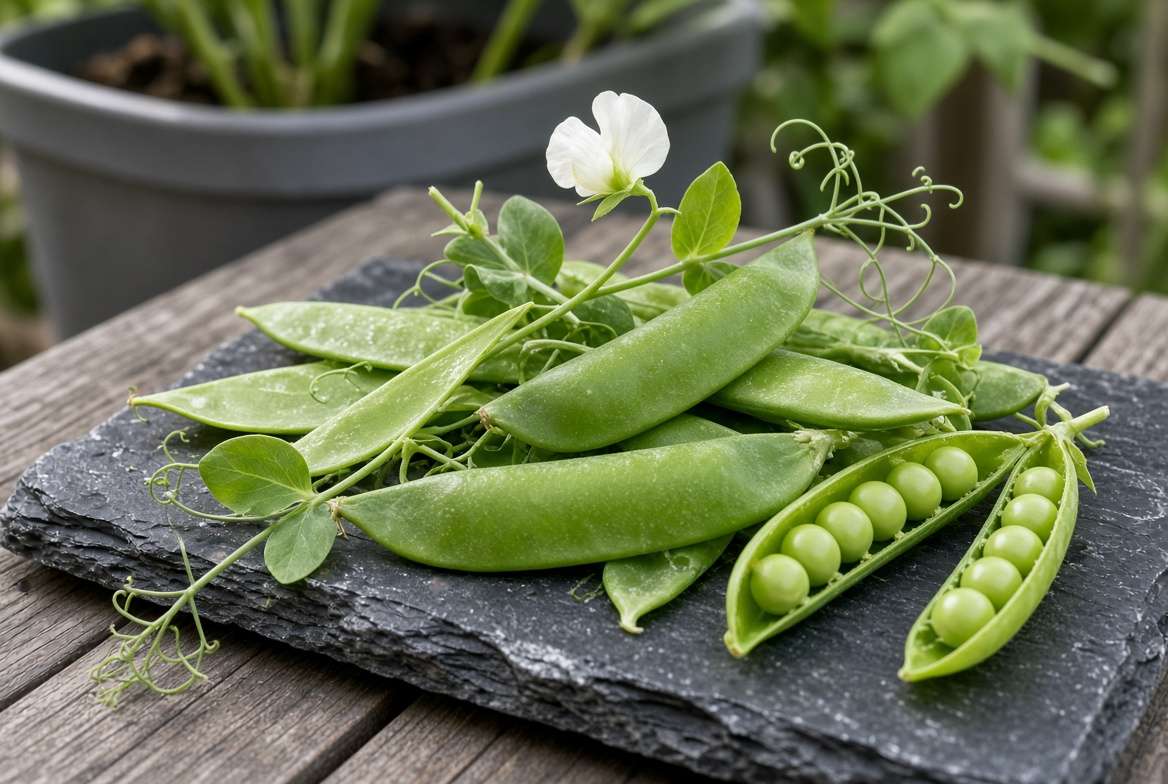
Best Sugar Snap Peas (Eat Pod & Seed) 🍬
Sugar snap peas are the ultimate garden snack—crisp, sweet, and completely edible from pod to pea.
-
‘Sugar Snap’ (Classic): The gold standard of climbing snap peas. These vigorous vines easily reach 6+ feet and require a sturdy obelisk or tall netting. The flavor is exceptionally sweet, and the crunch is unmatched.
-
‘Super Sugar Snap’: An improved version of the classic, boasting higher yields and shorter intervals between nodes (meaning more pods per foot of vine!). It also carries robust resistance to powdery mildew, a common issue in crowded container gardens.
Top Snow Pea Varieties (Flat Pods for Stir-Fries) 🥢
Snow peas are harvested flat, before the inner seeds fully develop. They are essential for Asian-inspired dishes and light summer salads.
-
‘Mammoth Melting Sugar’: Don’t let the name intimidate you; this is a spectacular container variety. The vines grow to about 4 or 5 feet, producing massive, sweet, thick-walled flat pods that retain their crunch even after a quick sauté.
-
‘Oregon Giant’: While sometimes categorized as a semi-tall vining type, it can comfortably climb a 3- to 4-foot container trellis. It yields enormous, tender pods and is highly resistant to enation mosaic virus, fusarium wilt, and powdery mildew.
Shelling / English Peas (For Fresh Pea Seeds) 🟢
Shelling peas possess tough, fibrous pods that are discarded (or composted!) to harvest the sweet, round peas inside.
-
‘Alderman’ (also known as ‘Tall Telephone’): An heirloom marvel from the late 1800s. These vines can soar up to 6–8 feet. Because it produces large pods filled with 8–10 plump peas each, it requires a deep, heavy pot to counterbalance the towering, heavy foliage.
| Cultivar | Pod Type | Cold Hardiness | Trellis Requirement |
| Super Sugar Snap | Edible Pod (Thick) | Excellent | 5-6 Feet (Netting/Stakes) |
| Mammoth Melting | Edible Pod (Flat) | Very Good | 5 Feet (A-Frame/Netting) |
| Alderman / Tall Telephone | Shelling (Discard Pod) | Good | 6-8+ Feet (Heavy Obelisk) |
👩🌾 Step-by-Step: Planting, Inoculation & Training
Successful container trellising isn’t just about sticking seeds in dirt. Following a precise planting protocol ensures fast germination and aggressive vertical growth.
Seed Preparation & Rhizobium Inoculation 🦠
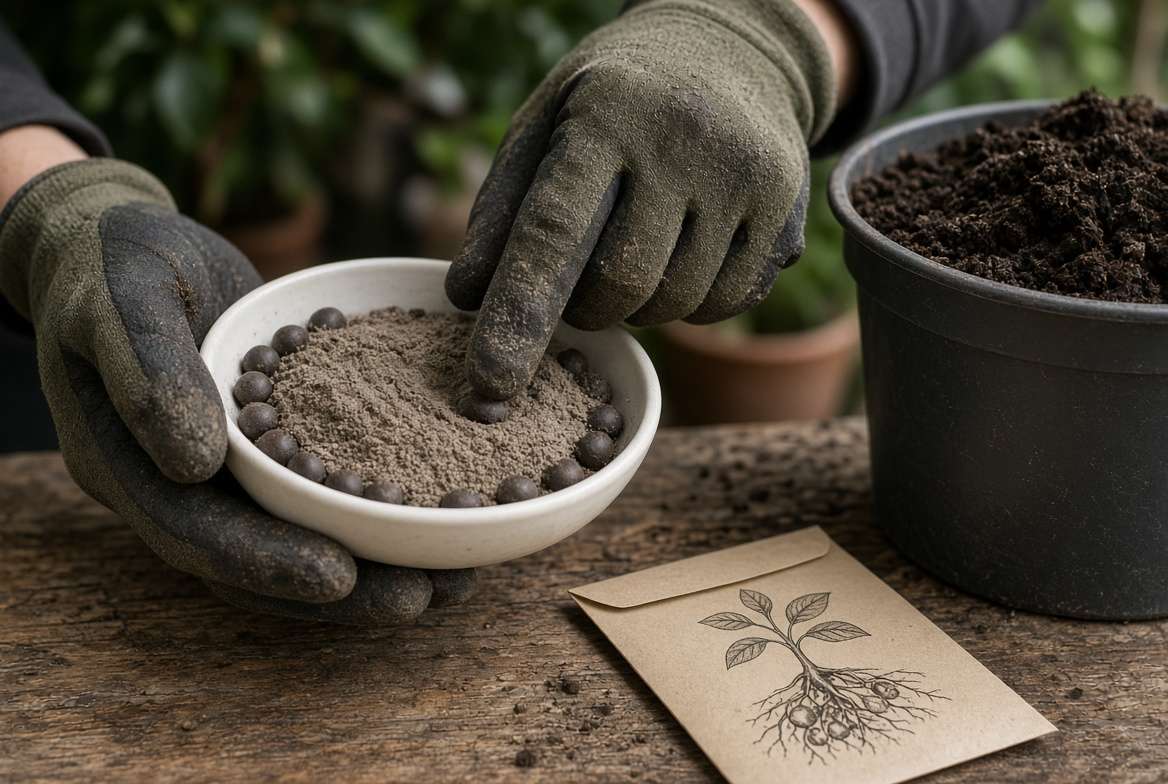
Here is an expert secret to explosive legume growth, rooted in optimizing your soil health: inoculation. Beans and peas have a symbiotic relationship with beneficial soil bacteria called Rhizobium leguminosarum.
-
The Process: Before planting, dampen your seeds and coat them in a commercially available legume inoculant powder (it looks like black dust).
-
The Benefit: This bacteria colonizes the plant’s roots, forming small pinkish nodules that literally pull nitrogen out of the atmospheric air and fix it into the soil. This boosts your plant’s growth without the need for synthetic fertilizers and builds a thriving, rich soil biome right in your container.
Sowing Depth, Spacing & Germination Temperatures 🌡️
-
Peas (Cool Season): Direct sow seeds 1 inch deep when soil temperatures are between 45–65°F (7–18°C). Space them about 2–3 inches apart along the base of your trellis.
-
Beans (Warm Season): Wait until all danger of frost has passed. Beans rot in cold, wet soil. Direct sow 1 inch deep when soil temperatures reliably hit 65–85°F (18–29°C). Space pole beans 4–6 inches apart.
Guiding Young Tendrils 🧶
Vines don’t always know where to go. When seedlings reach 4 to 6 inches tall, gently guide them toward your support structure.
-
Peas use delicate tendrils to grasp thin supports; soft jute twine or thin nylon netting works best.
-
Pole beans twine their entire main stem around supports. Always wrap them counter-clockwise (as viewed from above), as this is their natural climbing direction!
🩺 Maintenance, Nutrition & Pest Troubleshooting
Growing vertically in pots concentrates your foliage, making targeted care crucial for a heavy harvest.
Precision Watering Mechanics 💧
Containers dry out exponentially faster than raised beds, especially when a massive 6-foot bean vine is transpiring water under the summer sun. Water deeply until moisture runs out the drainage holes. Consistency is key; letting the soil dry out completely during flowering will cause “blossom drop,” meaning no pods will form. Mulch the top of your containers with straw or shredded leaves to lock in moisture.
Feeding Without Excess Nitrogen 🍂
Because legumes fix their own nitrogen (thanks to your inoculation step!), adding high-nitrogen liquid fertilizers will cause the plant to produce a massive jungle of green leaves with zero flowers or pods. Instead, feed them a bloom-boosting organic fertilizer rich in Phosphorus and Potassium (like bone meal or liquid kelp) once flowers appear to encourage heavy pod set.
Organic Pest & Disease Management 🐞
-
Powdery Mildew: A white, dusty fungus that loves crowded, humid balcony corners. Combat this by thinning out excess lower foliage to improve airflow and applying a preventative organic neem oil or diluted milk spray.
-
Spider Mites & Aphids: These pests thrive in hot, dry container environments. A strong blast from a hose, followed by insecticidal soap, will keep them at bay.
🔄 Succession Blueprint: Double Your Harvest
Why settle for one harvest when you can have three? Small-space gardening requires ruthless efficiency. By practicing vertical succession planting, you keep your trellis productive from the first thaw to the final frost. Plus, a towering, densely packed trellis of Blauhilde beans transitioning into bright green autumn peas creates a visually striking setup—perfect for snapping eye-catching photos to use as Pinterest pins or YouTube thumbnails if you document your garden journey online.
The Spring-to-Fall Vertical Rotation:
-
Early Spring (March/April): Sow cold-hardy Snow or Snap Peas. Harvest heavily through early summer.
-
Late Spring/Summer Transition (June): As the heat causes peas to fade and turn yellow, cut them off at the base. Do not pull the roots out! Leave those nitrogen-rich root nodules in the soil to feed the next crop. Top-dress the container with a fresh inch of compost, and immediately sow your heat-loving Pole Beans around the base of the old pea roots.
-
Late Summer/Fall (August/September): As the summer beans finish their lifecycle, cut them back and sow a final round of quick-maturing Sugar Snap peas for an autumn harvest.
❓ Frequently Asked Questions (FAQ)
Can I grow bush beans on a trellis?
No. Bush beans are genetically determined to grow as compact, bushy plants (usually 18–24 inches tall) and lack the vining tendrils or wrapping stems necessary to climb a trellis. Stick to pole, half-runner, or climbing varieties for vertical setups.
How many bean plants can I put in a 5-gallon bucket?
For maximum yield without extreme competition, plant 3 to 4 pole bean seeds around the perimeter of a 5-gallon container, thinning to the strongest 2 or 3 plants.
Why are my bean flowers dropping without producing pods?
Blossom drop is typically caused by extreme environmental stress. The most common culprits in container gardening are temperatures soaring above 90°F (32°C), inconsistent watering (allowing the pot to dry out completely), or a lack of pollinators.
Do peas need deep containers to thrive?
Peas have shallower root systems than pole beans, meaning they can survive in containers as shallow as 8 to 10 inches. However, a deeper container (12+ inches) is always recommended to hold more moisture and provide enough weight to anchor the tall trellis.
🌸 Conclusion & Action Checklist
Growing vertically is the ultimate “hack” for urban and small-space gardeners. By selecting the right bean and pea options for container trellises, investing in a high-quality living soil mix, and providing sturdy infrastructure, you can transform a barren balcony into a lush, productive vertical farm.
Your Small-Space Vertical Legume Cheat Sheet:
-
[ ] Choose the right pot: 5+ gallons, minimum 12 inches deep, preferably a fabric grow bag.
-
[ ] Build the soil: Mix coir, perlite, and high-quality compost.
-
[ ] Anchor the trellis: Use bamboo teepees, A-frames, or secure wall netting.
-
[ ] Select the seeds: ‘Sugar Snap’ peas for cool weather, ‘Kentucky Blue’ or ‘Scarlet Runner’ beans for summer heat.
-
[ ] Inoculate: Coat seeds in Rhizobium bacteria before planting.
-
[ ] Harvest often: Pick pods every 2–3 days to signal the plant to produce more!
Are you ready to build your first vertical container garden, or are you upgrading an existing patio setup this season? Let us know which climbing variety you are most excited to try in the comments below! 🌿✨











