
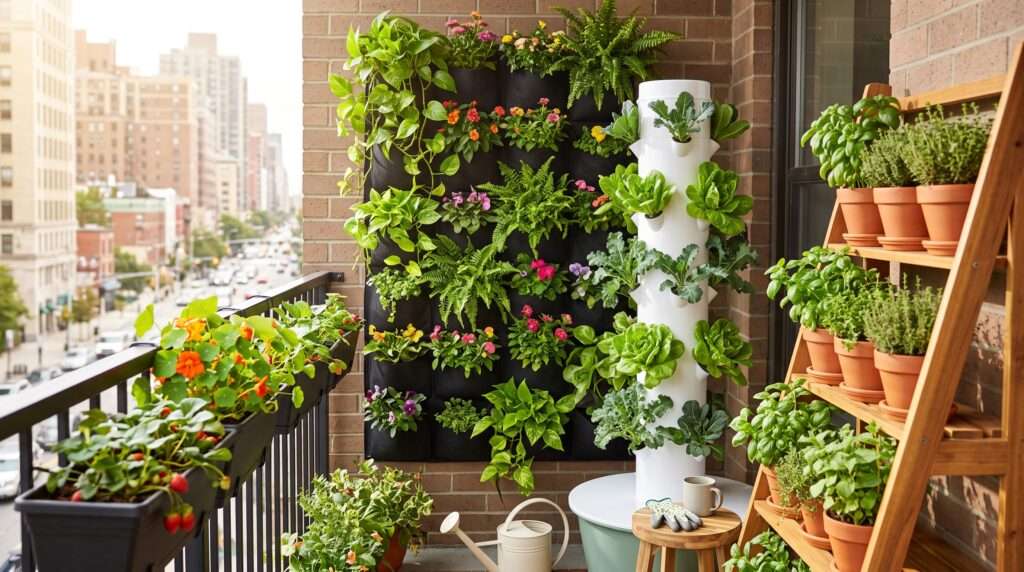
Living in a concrete jungle shouldn’t mean giving up on your dream of a lush, thriving garden. If you are staring at a tiny 50-square-foot balcony, a compact patio, or just a sunny apartment windowsill, the solution isn’t to plant less—it is to plant up. Finding the right vertical gardening systems for urban spaces is the ultimate game-changer for city dwellers. Incorporating small space vertical garden ideas and indoor living wall systems not only purifies your air but also unlocks hidden square footage. As an experienced horticulturist who has spent years designing high-yield apartment gardens and maintaining complex hydroponic setups, I can confidently tell you: you do not need a sprawling backyard to grow a vibrant green oasis or harvest fresh greens. 🪴
Critical Factors for Urban Vertical Gardens 📐
Before investing in a vertical setup, it is crucial to assess your specific environment. Building a successful garden in the city requires evaluating safety, climate, and structural integrity first.
Structural Weight & Balcony Limits ⚖️
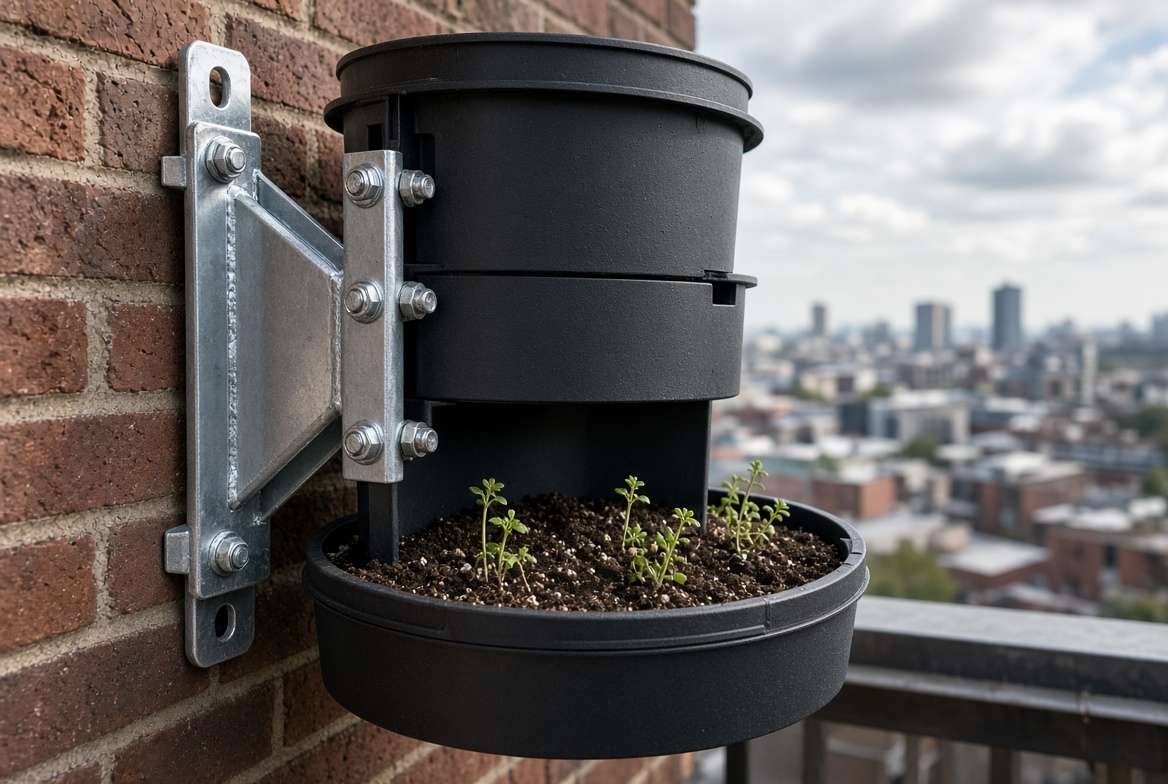
Wet soil is incredibly heavy. When you stack planters vertically, that weight is concentrated onto a very small footprint, which can be an issue for older apartment balconies.
-
Always check your lease or building guidelines for balcony load-bearing limits.
-
Calculate the total weight of your system: the framework + saturated potting mix + filled water reservoirs.
-
Opt for lightweight, soilless potting mixes (such as a blend of coconut coir and perlite) to significantly reduce the structural strain.
Sunlight & Urban Microclimates ☀️🌬️
City living creates unique and sometimes challenging microclimates. Tall neighboring buildings might block the sun for half the day, or reflective glass from adjacent skyscrapers might scorch your delicate leaves.
-
Track your light: Observe your space for a full day to determine if you truly get full sun, partial shade, or indirect light before buying plants.
-
Wind tunnels: High-rise balconies often experience intense winds that dry out soil rapidly and can easily topple lightweight freestanding towers.
-
Stability: Always anchor your vertical system directly to a sturdy wall or heavy railing if wind is a regular factor in your area.
Drainage & Water Runoff Management 💧
In shared apartment buildings, water runoff is one of the most common causes of neighbor disputes. When watering a vertical tower, gravity naturally pulls excess moisture straight downward.
-
Prevent runoff complaints: Look for closed-loop drainage systems or incorporate deep drip trays at the base to capture excess water before it spills onto the balcony below.
-
Protect indoor flooring: For indoor living walls, ensure the system includes a waterproof backing board and a secure drainage channel to safeguard drywall and hardwood from moisture damage.
-
Balance drainage and aeration: Vertical containers dry out faster than traditional garden beds because of increased air circulation around the root zones; your system must provide rapid drainage while retaining sufficient moisture.
Top Vertical Gardening Systems Reviewed & Ranked 🏆
Selecting the right setup comes down to your personal goals: do you want a bumper crop of salad greens, a fragrant herb station right outside your kitchen, or a soothing wall of tropical foliage? Here is a breakdown of the leading vertical garden systems tailored specifically for urban homes.
+-----------------------------------------------------------------------------------+
|                           VERTICAL GARDENING SYSTEMS                              |
+--------------------------+------------------------------+-------------------------+
| Stackable Towers         | Wall-Mounted Felt Pockets    | Hydroponic Towers       |
| • 2-3 sq ft footprint    | • Mounts on bare walls       | • Soil-free & automated |
| • High crop yield        | • Living wall aesthetics     | • Rapid indoor growth   |
+--------------------------+------------------------------+-------------------------+
1. Stackable Planter Towers (Best for High Yields in Tiny Footprints) 🍓
Stackable tiered planters are vertical columns made of interlocking tiers, each offset from the one below it. These systems allow you to stack four to seven tiers on a footprint of less than two to three square feet.
-
How it operates: Water is poured into the top tier or fed through a central internal funnel system, cascading downward through each level to saturate the root zones evenly.
-
Best suited for: Strawberries, cut-and-come-again lettuces, bush beans, spinach, and culinary herbs like oregano and thyme.
-
The Horticultural Advantage: The tiered design exposes every single plant pocket to direct light while keeping root zones separated, which prevents aggressive root competition.
-
Watch Outs: Lower tiers can receive less water if the upper tiers absorb too much during quick hand-watering sessions. Look for models equipped with a slow-release central distribution pipe.
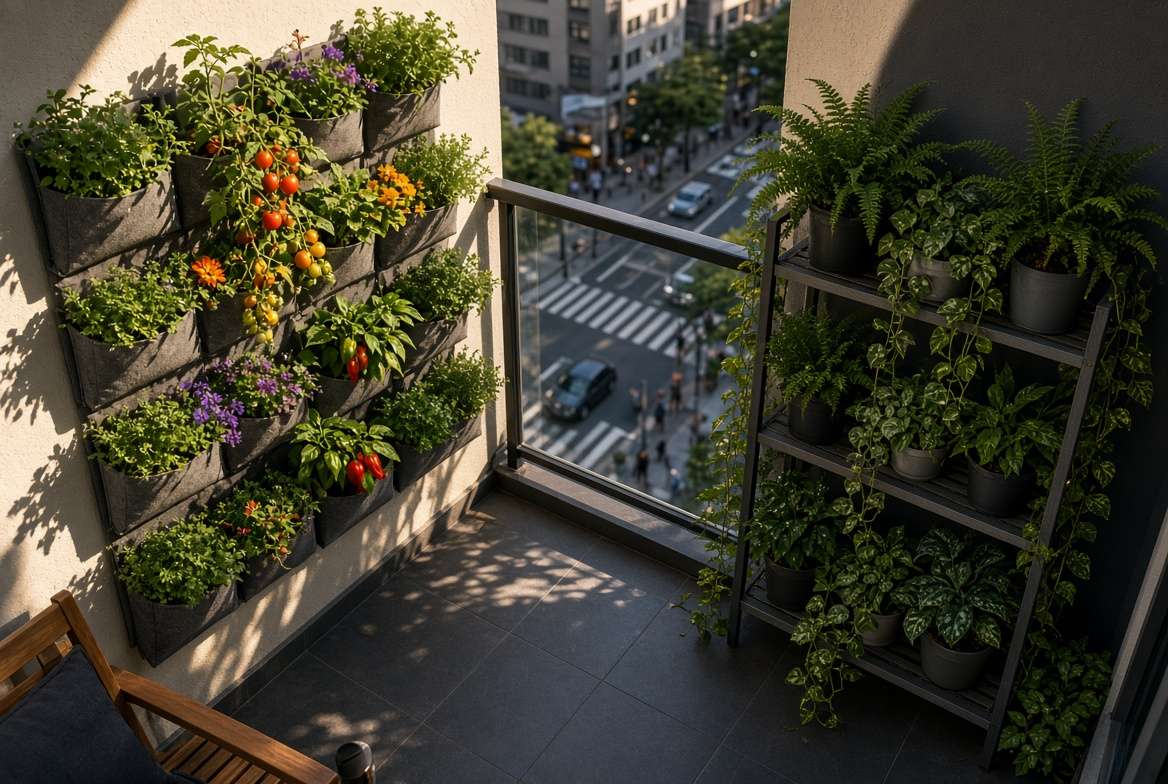
2. Wall-Mounted Felt Pocket Systems (Best for Living Walls & Greenery) 🍃
Constructed from heavy-duty, breathable geotextile felt, these hanging pocket organizers attach directly to exterior siding, balcony brickwork, or sturdy interior frames.
-
How it operates: Soil is placed directly inside each felt pouch. The porous fabric allows air to reach the roots from all angles.
-
Best suited for: Trailing ornamentals (pothos, english ivy, string of hearts), ferns, and shallow-rooting greens (arugula, loose-leaf lettuce).
-
The Horticultural Advantage: Felt pockets naturally “air-prune” roots. When roots reach the breathable fabric wall, exposure to air stops them from circling, stimulating new, fibrous feeder roots for superior nutrient uptake.
-
Watch Outs: Geotextile fabric breathes so well that it dries out substantially faster than plastic or ceramic. Pair felt pocket walls with an automated micro-drip line to prevent underwatering.
3. Vertical Hydroponic & Aeroponic Towers (Best for Maximum Clean Edibles) 🥬
For urban spaces with limited sunlight or no outdoor space at all, vertical hydroponic systems represent the peak of modern indoor agriculture.
-
How it operates: Plants grow without soil in an inert medium like rockwool or clay pebbles. A submersible pump in the base reservoir cycles nutrient-rich water up to the top of the tower, where it rains down over the bare root systems on a timer.
-
Best suited for: Kale, bok choy, gourmet lettuces, mint, cilantro, and basil.
-
The Horticultural Advantage: Because nutrients and oxygen are delivered directly to the root zone, plants mature up to 30% faster than in conventional soil, with zero risk of soil-borne pests or weeds.
-
Watch Outs: These systems require electricity to power the pump and full-spectrum LED grow lights, along with routine monitoring of water pH and Electrical Conductivity (EC) levels.
                  [ Water Flow Controller ]
                             │
                             ▼
      ┌─────────────────────────────────────────────┐
      │  Tier 1: Basil, Cilantro, Leaf Lettuce      │
      ├─────────────────────────────────────────────┤
      │  Tier 2: Arugula, Spinach, Alpine Berries   │
      ├─────────────────────────────────────────────┤
      │  Tier 3: Trailing Thyme, Oregano, Parsley   │
      └─────────────────────────────────────────────┘
                             │
                             ▼
                 [ Drip / Catchment Tray ]
4. Freestanding Ladder & Tiered Shelf Planters (Best for Renters) 🪜
If you rent your apartment and cannot drill mounting holes into exterior brick or stucco, freestanding tiered shelf planters provide vertical elevation without structural alterations.
-
How it operates: An A-frame ladder holds removable rectangular planting troughs at staggered heights to ensure lower plants are not shaded out by upper containers.
-
Best suited for: Compact determinate tomatoes, bell peppers, root herbs (chives, green onions), and flowering pollinator companions (marigolds, nasturtiums).
-
The Horticultural Advantage: Deep, continuous trough boxes accommodate deeper root systems than shallow pocket systems, making them ideal for heavier-feeding fruiting plants.
-
Watch Outs: These units have a slightly larger horizontal footprint than circular towers, so measure your floor clearance carefully before purchasing.
5. Railing-Mounted Hanging Planters & Trellises (Best for Narrow Balconies) 🌺
When usable balcony floor space is at an absolute premium, your perimeter railings offer prime growing real estate.
-
How it operates: Over-the-rail compression brackets hold dual-sided saddle boxes, paired with vertical climbing trellises or mesh screens extending upward.
-
Best suited for: Climbing sugar snap peas, pole beans, miniature cucumbers, and trailing morning glories.
-
The Horticultural Advantage: Elevates your crops to the highest natural sunlight zone on the balcony while creating an organic privacy screen from neighboring apartments.
-
Watch Outs: Railing boxes bear the brunt of wind and solar heat. Secure them with heavy-duty safety straps and monitor soil moisture twice daily during heatwaves.
System Breakdown at a Glance 🔍
Expert Plant Curation for Vertical Layouts 🌱
Not every plant thrives when elevated. Selecting species with root structures and growth habits suited to confined vertical spaces is essential for long-term health.
Top Edibles for Small-Space Towers 🌿
-
Cut-and-Come-Again Greens: Loose-leaf lettuces (‘Oakleaf’, ‘Black Seeded Simpson’), Swiss chard, and wild arugula provide continuous harvests for months when outer leaves are cut progressively.
-
Compact Herb Varieties: Greek oregano, fine-leaf basil, French thyme, and curly parsley maintain tidy root systems and respond enthusiastically to regular trimming.
-
Dwarf Fruiting Crops: Micro-dwarf tomato cultivars (such as ‘Tiny Tim’ or ‘Orange Hat’) max out at 8 to 12 inches tall while producing abundant cherry tomatoes in small containers.
       LIGHT REQUIREMENT           SUITABLE VERTICAL PLANTS
   ┌───────────────────────┐   ┌───────────────────────────────┐
   │ Full Sun (6+ Hours)   │──>│ Dwarf Tomatoes, Strawberries  │
   ├───────────────────────┤   ├───────────────────────────────┤
   │ Partial Sun (3-5 Hrs) │──>│ Arugula, Kale, Thyme, Chives  │
   ├───────────────────────┤   ├───────────────────────────────┤
   │ Indirect / Low Light  │──>│ Pothos, Ferns, Philodendron   │
   └───────────────────────┘   └───────────────────────────────┘
Best Ornamentals for Indoor Vertical Green Walls 🌸
-
Epipremnum aureum (Golden Pothos): Exceptional resilience, tolerant of inconsistent watering, and trails downward to cover structural framing.
-
Philodendron hederaceum (Heartleaf Philodendron): Thrives under standard indoor fluorescent or LED lighting with lush, cascading foliage.
-
Nephrolepis exaltata (Boston Fern): Provides full volume and texture; excels in bathroom living walls with higher ambient humidity.
What NOT to Plant in Vertical Systems 🚫
-
Taproot and Deep Root Crops: Standard carrots, parsnips, daikon radishes, and potatoes require deep soil beds to expand and will deform or fail entirely in shallow pockets.
-
Vigorous Indeterminate Crops: Full-size standard indeterminate slicing tomatoes, large melons, and pumpkins have massive biomass and root systems that will quickly overwhelm and destabilize a vertical structure.
Long-Term Maintenance for Thriving Vertical Gardens 🩺
Setting up your vertical garden is only the first step; maintaining its vitality in a confined city space requires a slightly different approach than traditional backyard gardening. Because elevated containers have less soil volume and are exposed to more airflow, their environmental needs fluctuate rapidly. Here is the urban plant care masterclass to keep your vertical systems lush year-round.
Smart Watering Strategies 🚿
The number one reason vertical gardens fail is improper watering—specifically, underwatering the top tiers and waterlogging the bottom ones.
-
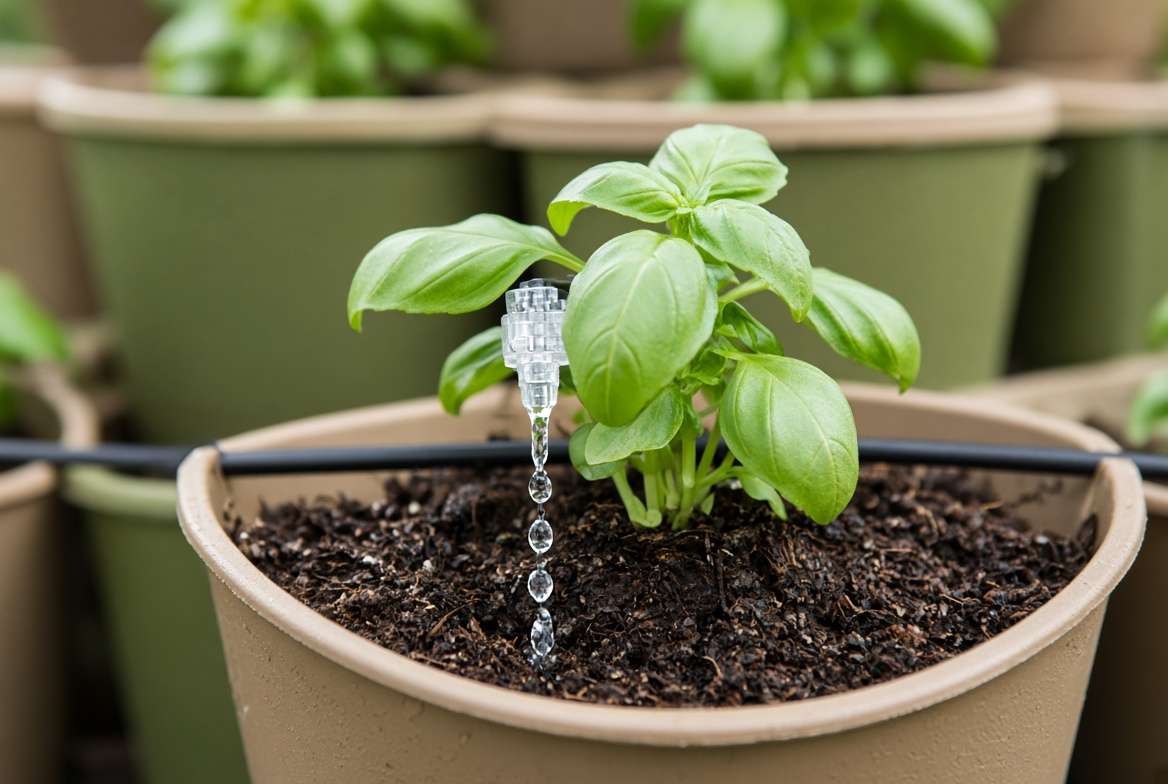
Automated Drip Irrigation: If your balcony has an outdoor spigot, invest in a simple, gravity-fed micro-drip irrigation kit with an automated faucet timer. Run a main ¼-inch vinyl tubing line up the side of your system, branching off with individual drip emitters for each pocket or tier. This ensures precise, consistent moisture delivery.
-
Self-Watering Hacks for Renters: If you do not have outdoor plumbing, look for self-watering reservoirs or utilize terracotta watering spikes attached to recycled glass bottles. These slowly wick moisture into the root zone over several days, perfect for busy professionals or weekend trips.
-
The Finger Test: Because microclimates change, never water purely on a schedule. Always push your finger one inch into the soil of a middle tier. If it feels dry, it is time to water.
Lightweight Soil Formulation 🪨
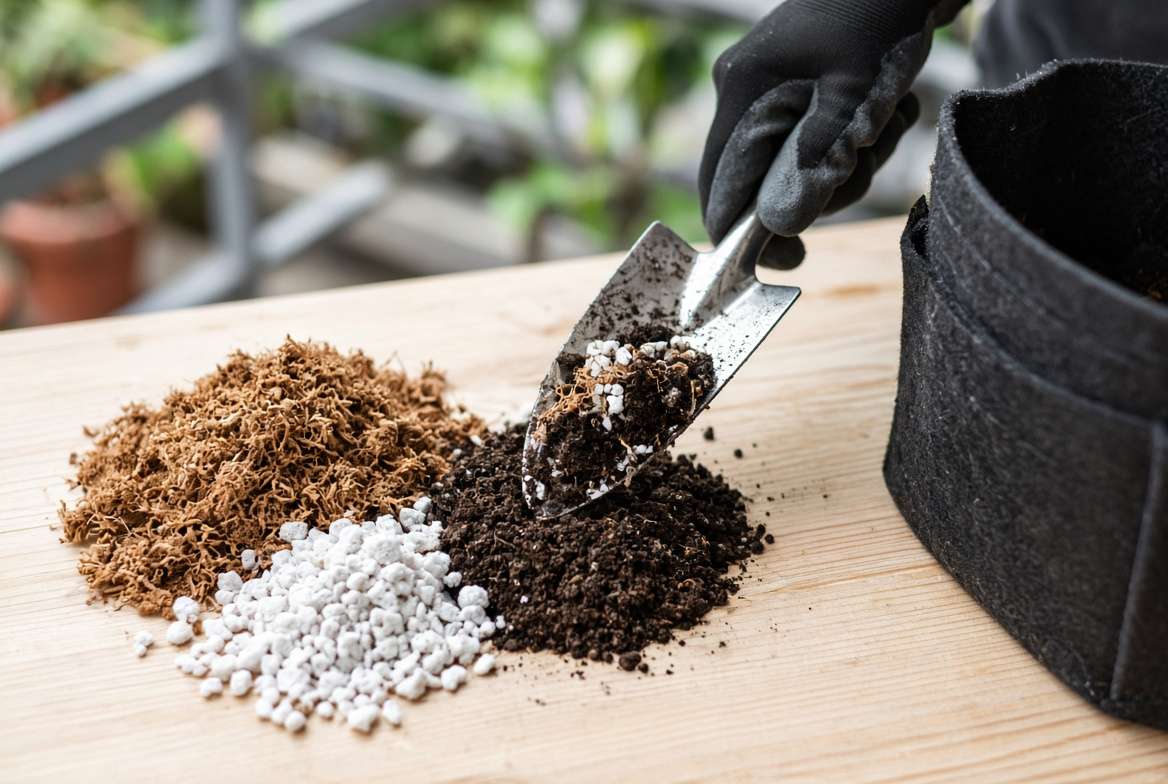
Standard garden soil or cheap potting dirt is far too heavy for balcony limits and compacts easily, suffocating delicate root systems in vertical containers. You need a custom, highly porous mix that balances moisture retention with aggressive drainage.
The Ultimate Urban Vertical Soil Recipe:
-
50% Coconut Coir: A sustainable alternative to peat moss, coir absorbs water brilliantly and keeps the overall weight of the planter incredibly light.
-
30% Perlite or Pumice: These lightweight volcanic rocks trap oxygen in the soil matrix, ensuring roots can breathe and preventing water from pooling.
-
20% Organic Compost or Worm Castings: Since vertical spaces have limited soil volume, the soil you do use must be nutrient-dense. Worm castings provide a slow-release, gentle fertilizer that will not burn sensitive roots.
Pest Control in Confined Urban Spaces 🐞
When plants are stacked tightly together, pests can spread vertically in a matter of days. In enclosed spaces like sunrooms or screened-in balconies, natural predators (like ladybugs) are absent, meaning you must be the frontline of defense.
-
Fungus Gnats: These tiny black flies thrive in overly damp indoor potting soil. Combat them by allowing the top inch of your soil to dry out between waterings and applying a biological larvicide like Bacillus thuringiensis israelensis (BTI), commonly found in “mosquito dunks.”
-
Spider Mites & Aphids: Hot, dry balcony winds create a breeding ground for spider mites. Mist your foliage twice a week to raise humidity. If an infestation occurs, treat your plants in the evening with an organic, cold-pressed Neem oil spray.
-
Companion Planting: Utilize biological warfare by mixing in pest-deterring herbs. Plant strong-scented marigolds, garlic, or mint in the lower tiers of your system to naturally repel whiteflies and aphids from your precious greens above.
Urban Vertical Gardening FAQs 💡
Even with a solid plan, city gardening comes with unique hurdles. Here are the most common questions I hear from my clients transitioning to vertical layouts.
Q1: How much weight can a standard apartment balcony hold for gardening? While building codes vary by city and country, most standard concrete apartment balconies are designed to support a live load of 50 to 100 pounds per square foot. However, always consult your property manager or strata board before installing heavy, soil-filled structures. Stick to lightweight resins, fabric pockets, and soilless potting mixes to be safe.
Q2: Do indoor vertical gardens cause mold or moisture issues on walls? They can, but only if installed improperly. To prevent mold, never hang a porous felt pocket system directly against drywall. Always install a waterproof backing—such as heavy-duty plastic sheeting, a corrugated plastic board, or a dedicated vapor barrier—between the planters and the wall. Additionally, ensure there is adequate air circulation in the room using a small oscillating fan.
Q3: What is the cheapest DIY vertical gardening method for renters? The most budget-friendly, renter-safe method is upcycling an over-the-door canvas shoe organizer. Simply hang it over a sunny balcony railing or a heavy-duty tension rod, poke small drainage holes in the bottom of each shoe pouch, fill with lightweight potting mix, and plant your herbs! Another great option is upcycling wooden pallets, provided you verify they are heat-treated (marked with an “HT” stamp) and not chemically treated.
Q4: How do I protect vertical plants from intense city heat and dry winds? High-rise balconies can feel like a desert landscape in mid-July. Protect your foliage by installing a UV-blocking shade cloth (30% to 50% opacity) across your railing to filter harsh afternoon rays. To combat wind, create a micro-windbreak using a bamboo screen or by placing hardy, wind-tolerant shrubs (like ornamental grasses) on the windward side of your vertical towers to shield the more delicate edibles.
Start Your Urban Green Wall Today 🌻
Whether you choose a sleek, automated hydroponic tower for your kitchen corner or a budget-friendly felt pocket wall for your fire escape, vertical gardening systems for urban spaces offer an accessible, highly rewarding way to reconnect with nature.
By strategically selecting the right system for your microclimate, mixing lightweight and well-aerated soil, and choosing compact plant varieties, you can transform even the starkest concrete balcony into a flourishing, edible retreat. The mental health benefits of tending to your own green space, combined with the culinary joy of snipping fresh herbs just steps from your stove, are well worth the initial setup. There are no more excuses for leaving your vertical space bare.
Which specific challenge is holding you back the most from starting your urban garden—is it the lack of natural sunlight, or concerns about your balcony’s space and weight limits?











