
You aren’t alone. While synthetic chemical fertilizers come with strict, printed instructions on the back of the bottle, organic biology does not. Without a reliable homemade compost tea schedule, you risk either wasting your time and resources by over-applying, or starving your soil food web by under-applying. Over the years, I’ve seen countless gardeners pour their hearts into brewing the perfect tea, only to apply it at the wrong time of day or the wrong time of year, effectively neutralizing all those beneficial microbes.
As a plant care specialist and arborist who has spent years rehabilitating ancient oak trees and cultivating heavy-feeding organic vegetable gardens, I’ve tested countless application timelines. This article isn’t just theory. It is the definitive, foolproof regimen that takes the guesswork out of organic plant care. 👩🌾🌳
By the end of this guide, you will know exactly when, how, and where to apply your brew for maximum explosive growth. Let’s dig in! 🪴
Why Timing is Everything with Compost Tea ⏱️
When you apply a synthetic fertilizer, you are directly feeding the plant with soluble nutrients. But when you apply actively aerated compost tea (AACT), you are doing something entirely different: you are inoculating the soil with living organisms. 🦠
Because compost tea is alive, timing isn’t just a suggestion—it is the difference between a thriving garden and a total waste of effort.

The Soil Food Web Think of your soil as a bustling underground city. The bacteria, fungi, protozoa, and nematodes in your compost tea are the new workers moving into that city. If you introduce them when the environment is extremely hostile (like during the scorching midday sun or in the dead of winter), they will simply die before they can colonize the root zone. A proper schedule ensures you are introducing microbes when the soil temperatures and moisture levels are optimized for them to multiply. 🌱
Prevent Nutrient Runoff and Waste Unlike chemical fertilizers that easily wash away into local waterways, compost tea helps build long-term soil structure that naturally retains moisture and nutrients. However, applying it during a dormant period when plants aren’t actively absorbing nutrients, or right before a torrential downpour, means those beneficial microbes won’t have time to anchor themselves to the plant’s root exudates.
💡 Expert Insight Box: Compost tea is a living ecosystem in a bucket. Timing your application in rhythm with your plant’s natural growth cycle ensures those beneficial microbes survive, multiply, and actively protect the root zone from pathogens. You are farming microbes, not just watering plants! 🪱
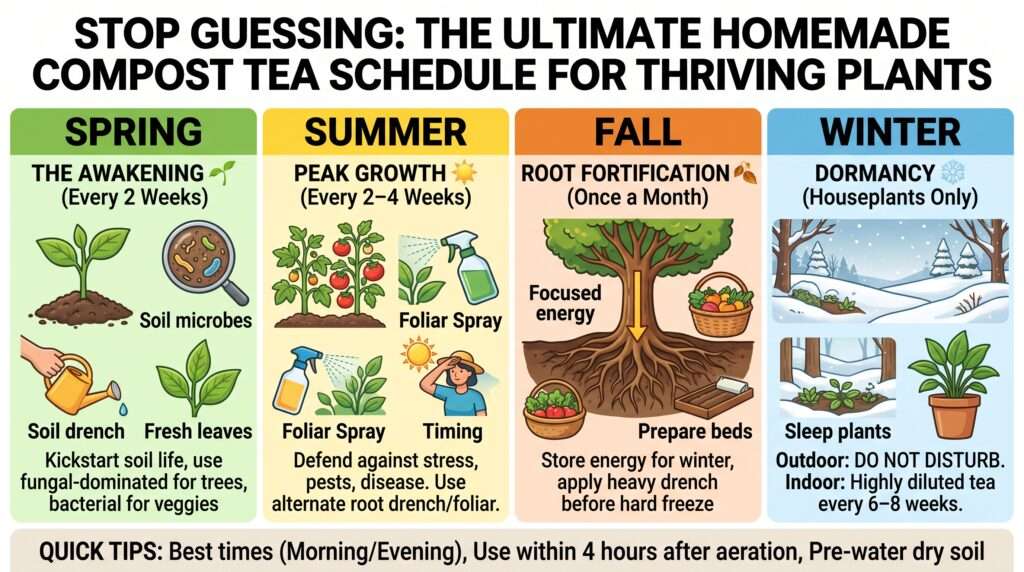
The Master Homemade Compost Tea Schedule (By Season) 🗓️🌸
To truly master your garden’s health, you need to adjust your routine as the seasons change. Here is the definitive schedule to follow throughout the year to maximize nutrient uptake and plant vitality.
### Spring: The Awakening (Every 2 Weeks) 🌱
-
The Focus: Kickstarting microbial life in cold, sluggish soil as the ground thaws.
-
The Action: Perform a heavy soil drench around the drip line of your trees, shrubs, and raised garden beds as soon as the danger of the hardest frosts has passed. Aim for an application every 10 to 14 days during the rapid spring growth phase.
-
Pro-Tip: Your first application of the year should be tailored to what you are growing. Use a purely fungal-dominated compost tea (steeped with humic acid, kelp, or oatmeal) for trees and woody perennials, and a bacterial-dominated tea (brewed with a touch of molasses) for your annual vegetable beds. 🪵
##Summer: Peak Growth & Stress Defense (Every 2–4 Weeks) ☀️
-
The Focus: Supporting heavy fruit and flower production while actively defending the plant’s foliage against heat stress and summer pests.
-
The Action: This is when you should switch to alternating between a root drench (to keep the soil moist and biologically active) and a foliar spray (spraying the leaves directly). Apply every 2 to 4 weeks depending on the heat and the health of the plants.
-
Warning: Never apply a foliar spray in the middle of a hot summer day. The UV rays from the sun will instantly fry the delicate microbes you worked so hard to brew, and the water droplets can act as magnifying glasses, burning the leaves. Always apply in the early morning (before 9 AM) or late evening as the sun goes down. 🌅
### Fall: Root Fortification (Once a Month) 🍂
-
The Focus: Helping perennials, shrubs, and trees store energy for the long winter ahead. The focus shifts entirely away from leafy, green above-ground growth and focuses deeply on root development.
-
The Action: Perform a heavy, thorough soil drench after your final vegetable harvest to prep the beds for next year, and around the base of trees before the ground undergoes its first hard freeze. Once a month during autumn is plenty. 🍁
### Winter: Dormancy (Houseplants Only) ❄️🪴
-
The Focus: Outdoor plants are asleep, and their root systems are barely active. Do not disturb them with active nutrients.
-
The Action: Shift your compost tea schedule entirely indoors. Apply a highly diluted (half-strength) tea to your indoor houseplants once every 6 to 8 weeks. This helps maintain healthy potting soil biology without forcing unnatural winter growth that leads to leggy, weak plants.
Customizing the Schedule by Plant Type 🌳🍅
While the seasonal framework provides a fantastic baseline, true garden mastery comes from understanding that a delicate indoor orchid and a massive, ancient oak tree do not have the same biological needs. To elevate your organic gardening game, you must tailor your homemade compost tea schedule to the specific type of plant you are nurturing.
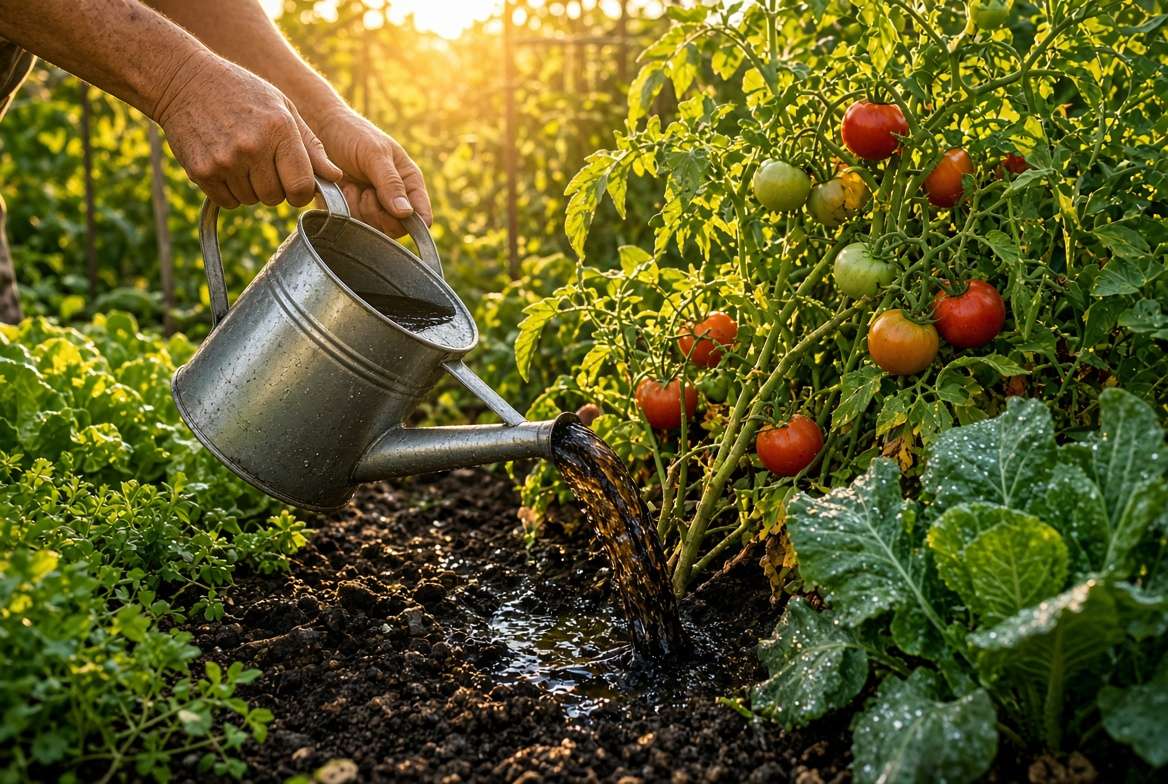
### Vegetable Gardens (Heavy Feeders) 🥬 Annual vegetables—like tomatoes, peppers, cucumbers, and heavy-feeding brassicas (broccoli, cabbage)—are essentially athletes running a marathon. They need to grow from tiny seeds to massive, fruit-bearing plants in just a few short months. Because they deplete soil nutrients rapidly, they require a highly active, bacterial-dominated soil environment.
-
The Schedule: Apply a bacterial-rich compost tea every 10 to 14 days during their peak vegetative and fruiting stages.
-
Expert Tip: Once your tomato plants start setting blossoms, switch to alternating between a root drench and a foliar spray to help prevent common fungal issues like early blight. 🍅
### Fruit Trees & Deciduous Shade Trees 🍎 Trees operate on a completely different timeline than vegetables. They evolved in forest ecosystems dominated by complex fungal networks (mycorrhizae). Constantly blasting a tree with high-nitrogen, bacterial tea can actually disrupt this delicate fungal balance.
-
The Schedule: Less is more. Apply a fungal-dominated compost tea (brewed with humic acids, kelp meal, or fish hydrolysate) just 3 to 4 times a year. Aim for early spring (bud break), mid-summer (fruit swell), and late fall (pre-dormancy).
-
Expert Tip: Always apply tree treatments as a deep soil drench exactly at the “drip line”—the imaginary ring on the ground where the outermost branches end. This is where the most active feeder roots live! 🌳
### Lawns and Turfgrass 🌾 Tired of burning your lawn with synthetic nitrogen fertilizers? Turfgrass thrives in a moderately bacterial environment that actively breaks down grass clippings and thatch into usable organic matter.
-
The Schedule: Apply a standard, balanced compost tea once a month during the active growing season (Spring through early Fall).
-
Expert Tip: Spraying your lawn with liquid biology just after aerating it will allow the microbes to penetrate deeply into the root zone, creating thick, drought-resistant turf that naturally crowds out weeds. 🚜
### Delicate Houseplants 🪴 Indoor potting soil is essentially a closed loop. Because it doesn’t have earthworms or natural rainfall to refresh the biology, potting soil can quickly become sterile and compacted. However, houseplants are sensitive and confined to small pots, meaning they don’t need intense feeding schedules.
-
The Schedule: Apply a quarter-strength, heavily diluted compost tea every 4 to 6 weeks during the spring and summer.
-
Expert Tip: Ensure your indoor pots have excellent drainage. If the soil stays soggy after a compost tea application, you risk breeding fungus gnats or creating foul-smelling anaerobic conditions in your living room! 🪟
Foliar Spray vs. Soil Drench: When to Do What 💦
One of the most common questions I get from consulting clients is: “Should I water the soil or spray the leaves?” The answer is both—but at different times and for different reasons. Incorporating both methods into your homemade compost tea schedule is the secret to total plant immunity.
### The Soil Drench (Feeding the Roots) 🪱 A soil drench involves pouring the liquid directly onto the soil around the base of the plant.
-
Best For: Long-term soil conditioning, relieving soil compaction, encouraging deep root growth, and early spring awakenings.
-
How it Works: The microbes travel down into the soil profile, creating symbiotic relationships with plant roots. They physically mine nutrients out of the organic matter and trade them to the plant in exchange for carbon sugars (exudates).
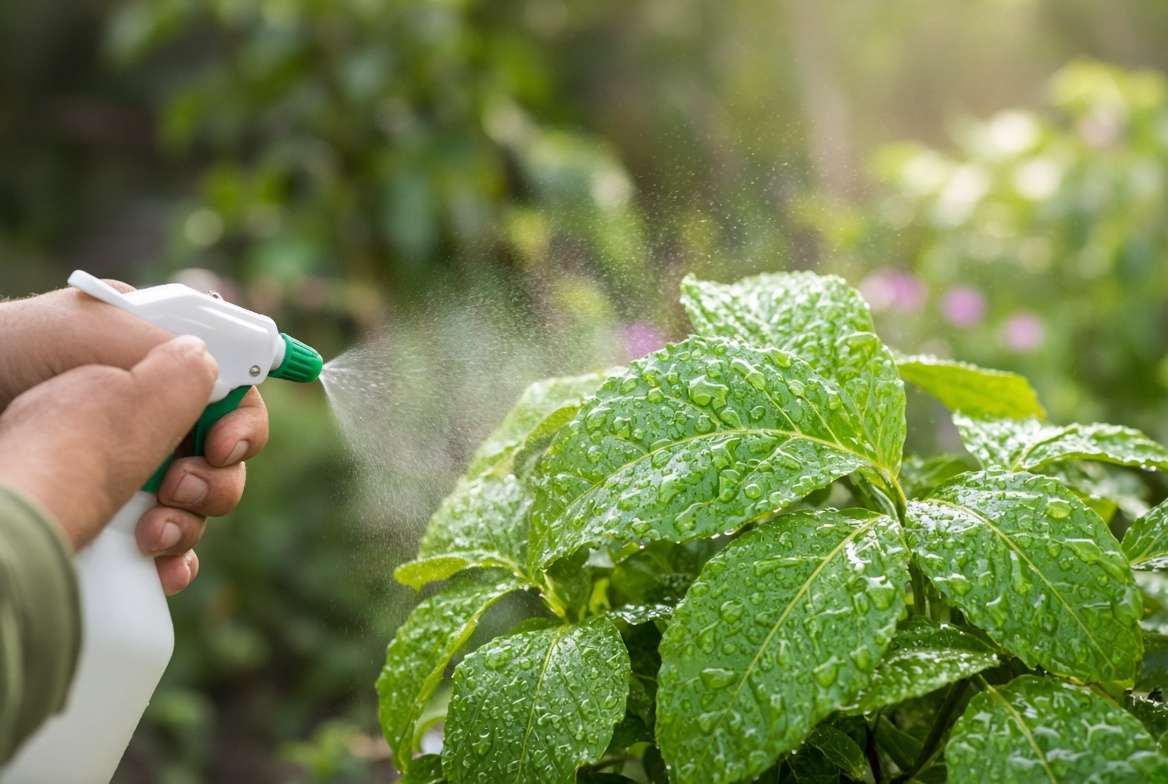
### The Foliar Spray (Protecting the Leaves) 🍃 Foliar feeding involves using a pump sprayer to mist the tea directly onto the tops and undersides of the plant’s leaves.
-
Best For: Immediate disease suppression (like fighting powdery mildew or black spot), pest deterrence, and quick nutrient absorption during peak summer stress.
-
How it Works: Plants can actually absorb nutrients through tiny pores on their leaves called stomata. Furthermore, coating the leaf surface with beneficial microbes leaves no physical room for pathogenic (disease-causing) fungi to land and take hold. It is a living, biological shield! 🛡️
### Quick Comparison Table: Foliar Spray vs. Soil Drench 📊
Signs You Need to Tweak Your Schedule 🔍
Even the most perfect schedule requires a gardener’s intuition. Plants communicate their needs silently, and learning to “read” your garden will tell you if you need to adjust your application frequency.
### Signs of Under-Application (Increase Frequency) 🥀 If you aren’t applying compost tea often enough, your soil will begin to revert to a lifeless state. Look out for:
-
Soil Compaction: If the soil feels hard, crusty, and water pools on the surface instead of sinking in, your microbial life is low. Microbes create tiny air pockets (aggregation) that keep soil fluffy.
-
Increased Pest Pressure: Aphids, spider mites, and whiteflies often target stressed, nutrient-deficient plants. A sudden infestation might mean it’s time for a foliar spray. 🐞
-
Chlorosis (Yellowing Leaves): If older leaves are turning pale yellow while the veins remain green, your plant is struggling to access nutrients. A biological boost can unlock the nutrients bound up in the soil.
### Can You Over-Apply Compost Tea? (Decrease Frequency) 🛑 One of the greatest benefits of organic compost tea is that it will not chemically “burn” your plants like a synthetic miracle-grow powder can. However, you can over-do it environmentally.
-
Anaerobic Soil: If you drench your soil too frequently, especially in heavy clay, the soil stays constantly wet. This drives out oxygen, killing off the good aerobic microbes and breeding harmful anaerobic bacteria. If your soil smells like sulfur, sewage, or rotten eggs, stop watering immediately and let it dry out. 🤢
-
Wasted Effort: Plants can only host so many microbes. Applying tea every single day doesn’t make them grow 30 times faster; it just wastes your precious compost and time. Stick to the schedule!
Pro-Tips for Brewing the Perfect Timed Batch 🪣✨
You can have the most precise homemade compost tea schedule in the world, but if your brew itself is flawed, your plants won’t see the benefits. Timing your application isn’t just about the calendar; it’s also about managing the clock on your brewing bucket!
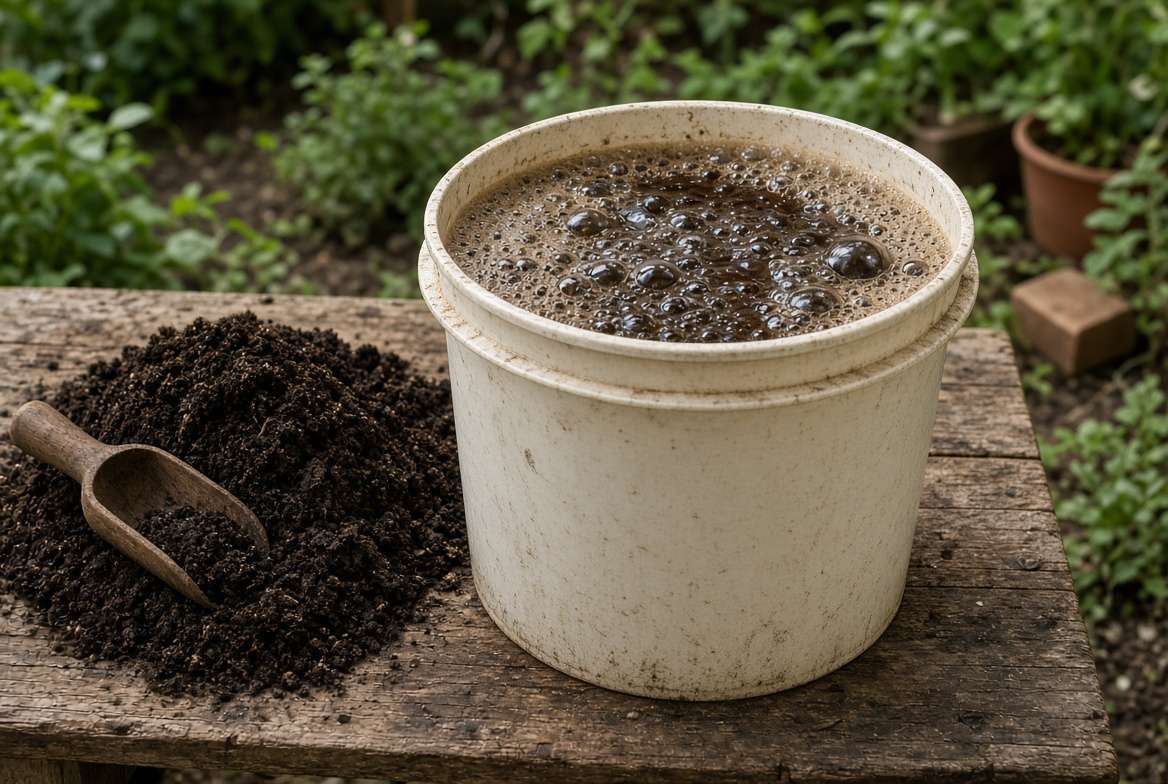
### Timing the Brew (The 24-48 Hour Window) ⏰ Actively Aerated Compost Tea (AACT) takes time to cultivate. You cannot decide at 8:00 AM that you want to spray at 9:00 AM.
-
Depending on the temperature of your water, a healthy batch takes between 24 to 48 hours of constant bubbling (via an air stone and pump) for the microbial populations to peak.
-
Pro-Tip: If you plan to do your weekend garden chores on Saturday morning, you need to start your brewer on Thursday morning or evening. Plan ahead!
### The 4-Hour Shelf-Life Rule ⏳ This is the most common mistake beginners make! Once you turn off the air pump, the oxygen levels in the water will rapidly drop.
-
The millions of aerobic (oxygen-loving) microbes you just bred will begin to suffocate and die, replaced by anaerobic (bad) bacteria.
-
The Rule: You must apply your compost tea within 4 hours of turning off the aerator. Do not try to bottle it, store it in milk jugs, or save it for next week. If you brew it, use it!
### Weather Watching 🌦️ Always check the forecast before you start a brew.
-
Heavy Rain: Never apply compost tea right before a torrential downpour. The heavy water flow will simply wash your liquid gold right past the root zone and out of the soil profile entirely.
-
Drought Conditions: If your soil is bone-dry and cracked, it will repel water (becoming hydrophobic). Always pre-water your garden with regular hose water a few hours before applying your compost tea. Damp soil acts like a sponge, pulling the microbes deeply into the root zone. 🧽
Frequently Asked Questions (FAQs) 🙋♀️
To ensure you have every piece of information you need, let’s address some of the most common questions I get regarding compost tea applications.
### How long does homemade compost tea last? As a living liquid, actively aerated compost tea does not have a long shelf life. It must be used within 4 to 6 hours after the aeration pump is turned off. Commercial, bottled “compost teas” found on store shelves are usually just dormant extracts, which is why homemade AACT is vastly superior and highly active.
### Should I water my plants before applying compost tea? Yes! Applying compost tea to already-damp soil is highly recommended. Moist soil is a hospitable environment for microbes. If you pour tea onto severely dehydrated, dusty soil, the dry earth will instantly pull moisture out of the microbes, killing them. Water normally first, then apply your tea. 💧
### Can I use compost tea every time I water? You could, but you absolutely shouldn’t. Using it daily or every time you water is overkill. Plants have a maximum capacity for the microbial partnerships they can support at any given time. Applying it every 1 to 2 weeks during peak season is more than enough. Save your time and compost! 🛑
### What is the best time of day to apply compost tea? The best times are early in the morning (before 9 AM) or late in the evening (after 6 PM). The UV radiation from direct midday sunlight is a natural sterilizer and will quickly kill the beneficial bacteria and fungi. Applying during the cooler parts of the day ensures maximum survival rates. 🌥️
## 8. Conclusion: Your Garden’s New Rhythm 🎶🌻
Mastering organic gardening doesn’t require a degree in microbiology; it simply requires observation and a little bit of discipline. By transitioning away from the immediate, salt-based hit of chemical fertilizers and embracing a biologically active homemade compost tea schedule, you are playing the long game.
Remember, consistency is far better than volume. Sticking to a reliable routine—waking the soil up in the spring, defending the foliage in the summer, and fortifying the roots in the fall—builds an unbreakable, healthy soil food web over time. Your plants will develop robust immune systems, your soil will hold water beautifully, and your yields will speak for themselves. 🌱✨
Call to Action: Don’t lose track of this guide! Bookmark this page, or write down the seasonal schedule on a calendar you keep in your garden shed. 📋
Now I want to hear from you: What is your favorite recipe to use when brewing your homemade compost tea? Do you prefer using worm castings, thermal compost, or throwing in a little kelp meal? Let me know in the comments below! 👇👩🌾











