Imagine enjoying your morning coffee on the patio without feeling on display to the entire neighborhood, or finally blocking out the road noise from the busy street next door. Fences are expensive, frequently restricted by strict HOA height limits, and lack the aesthetic warmth of nature. Unwanted views, noise pollution, and harsh winds can easily make your outdoor living space feel uncomfortable and entirely too exposed.
Planting a living privacy screen is the most cost-effective, environmentally friendly, and visually stunning way to secure your property line. To help you create a backyard sanctuary, we have reviewed the best 10 screening trees available for direct delivery to your door on Amazon.
These living barriers do more than just block prying eyes—they act as natural soundproofing, filter out pollution, and provide brilliant year-round greenery. Whether you need a towering, fast-growing evergreen for a large rural property or a compact, narrow hedge for a tight suburban lot, this comprehensive guide will help you choose the exact species to solve your privacy problems quickly and beautifully.
Buyer’s Guide: How to Make an Informed Decision
Before adding trees to your Amazon cart, it is crucial to evaluate your specific landscape to ensure your new investment thrives. Keep these core factors in mind:
-
Determine Your Hardiness Zone: Matching a tree to your local USDA climate zone is the non-negotiable first step. A tree that flourishes in the heat of Texas (Zone 8) might perish in the freezing winters of Michigan (Zone 5). Always check the recommended zones before purchasing.
-
Growth Rate vs. Maintenance: There is a trade-off between speed and labor. Fast-growing varieties provide quick privacy but require more frequent pruning to keep them from overtaking your yard. Moderate growers take longer to establish but maintain a neat, structured shape naturally.
-
Sunlight and Soil Requirements: Assess your yard’s drainage and light profile. Trees like the Italian Cypress demand blazing, full sun and well-draining soil, while options like the Skip Laurel thrive in partial shade under existing canopies.
-
Spacing and Mature Width: Calculating how many trees you need requires knowing their mature width. Planting trees too close together creates immediate screening but forces root systems to compete, leading to stunted growth or disease down the road.
-
Deciduous vs. Evergreen: For a true privacy screen, evergreens are the gold standard. Deciduous trees drop their leaves in the fall, leaving you exposed for half the year. All the trees in our top 10 are evergreens to ensure year-round coverage.
Quick Comparison Matrix
Use this scannable table to quickly identify which trees align with your yard’s conditions and privacy goals before diving into the detailed reviews below.
In-Depth Reviews: The Top Screening Trees on Amazon
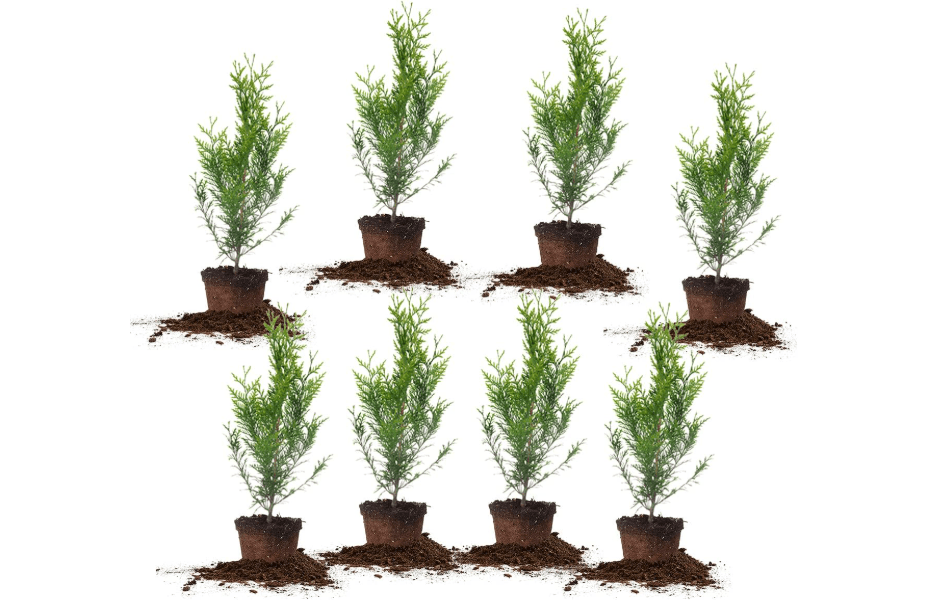
1. Thuja ‘Green Giant’ Arborvitae
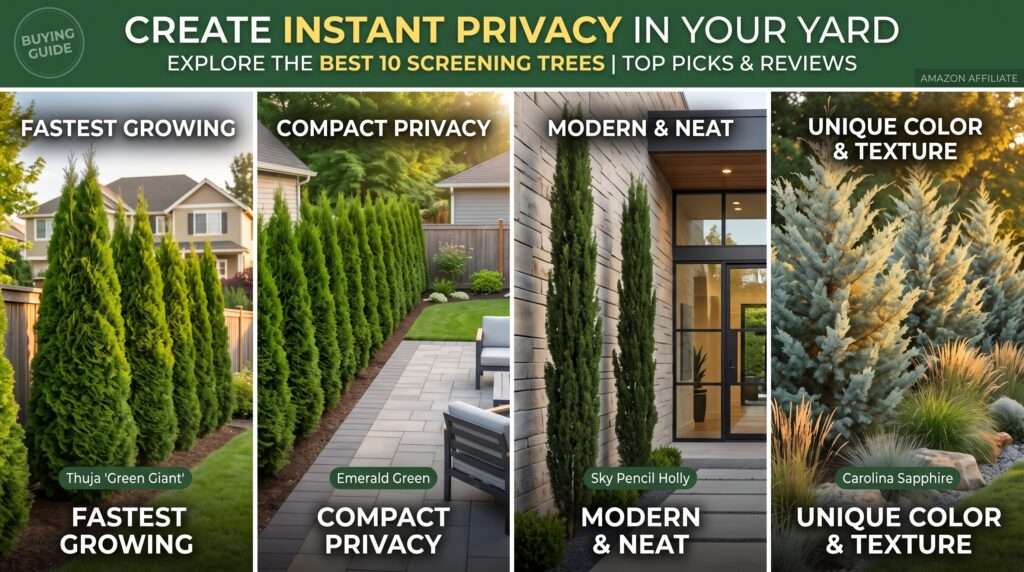
The Thuja ‘Green Giant’ is a vigorous, pyramidal evergreen that rapidly shoots up to form a dense, green wall. It has become the undisputed champion of privacy trees because it is highly resistant to deer, virtually immune to most common plant diseases, and adapts easily to a variety of soil types.
-
Estimated Price: $82.47
-
Key Features & Benefits: This hybrid tree boasts an astonishing growth rate of up to 3 to 5 feet per year once established. It reaches a staggering 40-60 feet at maturity and retains a rich, vibrant green color year-round without bronzing in the winter.
-
Pros and Cons:
-
Pros: Incredibly fast growth; creates an excellent windbreak; adaptable to most soils; very low maintenance.
-
Cons: Can easily overwhelm small urban yards if not aggressively topped; requires wide spacing (5-6 feet apart) which demands a lot of linear footage.
-
-
Amazon Customer Ratings & Reviews: 4.5/5 Stars. Buyers consistently praise the trees for arriving healthy and growing rapidly. Some reviewers note the critical need for deep, consistent watering during the first summer to help the root ball establish.
-
Why it’s a Good Choice For: Best Overall for Fast Privacy.
-
Ideal Use Case: Large suburban or rural properties needing a tall, impenetrable perimeter as quickly as possible.
2. Emerald Green Arborvitae
If the Green Giant is too massive for your lot, the Emerald Green Arborvitae is the perfect substitute. This classic, narrow evergreen features soft, shimmering emerald foliage that holds its color beautifully through freezing winters. It naturally grows into a tight, neat cone without needing constant shaping.

-
Estimated Price: $199.00
-
Key Features & Benefits: Offers a very compact mature width of just 3-4 feet and reaches 12-15 feet tall. It is highly cold-hardy and practically maintenance-free once planted in well-draining soil.
-
Pros and Cons:
-
Pros: Perfect for tight spaces and narrow property lines; incredibly neat, uniform appearance; excellent cold tolerance.
-
Cons: Slower growth rate (roughly 6-9 inches a year); highly susceptible to deer browsing in rural areas.
-
-
Amazon Customer Ratings & Reviews: 4.6/5 Stars. Highly rated for their secure packaging and immediate curb appeal upon unboxing. Reviewers in deer-prone areas strongly advise using repellents or netting during the winter months.
-
Why it’s a Good Choice For: Best for Small Spaces and Narrow Yards.
-
Ideal Use Case: Townhome dividing lines, pool enclosures, or any property where horizontal ground space is strictly limited.
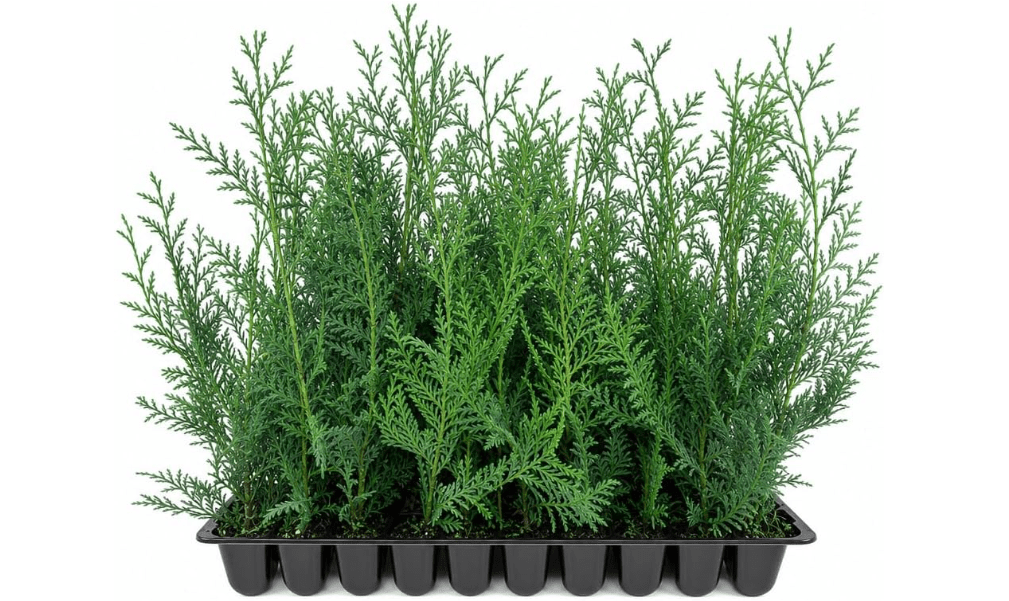
3. Leyland Cypress
The Leyland Cypress is a majestic, feathery evergreen known for its immense size and dense branch structure. It is historically one of the most planted screening trees in the United States because of its ability to quickly block out multi-story buildings and muffle loud, persistent highway noise.
-
Estimated Price:$69.97
-
Key Features & Benefits: Achieves explosive growth of 3+ feet per year. It features soft, scale-like leaves that are gentle to the touch and is notably salt-tolerant, making it a viable option for coastal planting.
-
Pros and Cons:
-
Pros: Unbeatable for instant gratification, immense height, and sound dampening; great for coastal areas.
-
Cons: Can be prone to bagworms and canker disease, particularly if stressed by extreme heat or drought.
-
-
Amazon Customer Ratings & Reviews: 4.3/5 Stars. Reviewers love the rapid screen formation but frequently emphasize the necessity of adequate spacing (at least 6-8 feet apart) to allow proper airflow and prevent future fungal diseases.
-
Why it’s a Good Choice For: Best for Maximum Height & Soundproofing.
-
Ideal Use Case: Blocking out intrusive two-story neighboring houses or buffering intense traffic noise from a nearby road.
4. Sky Pencil Holly
An architectural marvel of the plant world, the Sky Pencil Holly grows straight up in a tight, narrow column resembling a pencil. It brings a sleek, modern, and highly formal look to any landscape without encroaching on walkways or patios.

-
Estimated Price:
-
Key Features & Benefits: Grows up to 10 feet tall but remains incredibly slim at only 2 feet wide. It produces small, subtle black berries and takes remarkably well to container planting on hardscapes.
-
Pros and Cons:
-
Pros: Zero pruning required to maintain its shape; fits in the absolute tightest corners; visually striking and unique.
-
Cons: Slower grower compared to conifers; absolutely needs good drainage to avoid root rot.
-
-
Amazon Customer Ratings & Reviews: 4.4/5 Stars. Customers love using these to frame front doors or line narrow apartment patios. Many note they arrive safely secured in tall, specialized boxes.
-
Why it’s a Good Choice For: Best for Modern Landscapes & Containers.
-
Ideal Use Case: Urban balconies, framing architectural entrances, or lining ultra-narrow property lines where a traditional hedge is impossible.
5. Cryptomeria ‘Radicans’ (Japanese Cedar)
The Cryptomeria ‘Radicans’ is an elegant, fluffy conifer with soft, blue-green foliage that offers a gracefully textured alternative to traditional arborvitaes. It grows with a beautifully tiered branching structure that brings a high-end, professionally landscaped look to any property.

-
Estimated Price: $24.99
-
Key Features & Benefits: Highly disease resistant, growing 2-3 feet per year. It reaches 30-40 feet at maturity and features foliage that bronzes slightly in winter, providing lovely seasonal interest before returning to vibrant green in spring.
-
Pros and Cons:
-
Pros: Thrives in intense southern heat; excellent, disease-free alternative for areas where Leyland Cypress struggles.
-
Cons: Prefers slightly acidic soil; requires supplemental deep watering during extreme droughts to prevent browning.
-
-
Amazon Customer Ratings & Reviews: 4.7/5 Stars. Praised heavily for its graceful weeping habit and hardiness through hot, humid summers where other evergreens fail.
-
Why it’s a Good Choice For: Best Disease-Resistant Alternative.
-
Ideal Use Case: Southern gardens (Zones 5-9) needing a reliable, large-scale windbreak and privacy hedge that can withstand the heat.
6. Wax Myrtle
The Wax Myrtle is a rugged, native evergreen shrub-tree combination featuring olive-green leaves that release a pleasant bayberry fragrance when crushed. It is the ultimate survivalist plant, thriving in conditions that would easily kill more delicate nursery trees.

-
Estimated Price: $39.97
-
Key Features & Benefits: Extremely fast-growing (up to 3-5 feet per year under good conditions). It maxes out around 15-20 feet tall, tolerates poor, sandy soils, withstands heavy salt spray, and even fixes its own nitrogen to enrich the surrounding soil.
-
Pros and Cons:
-
Pros: Highly adaptable to terrible soil; phenomenal for coastal regions; attracts beneficial birds and pollinators.
-
Cons: Can look wild or scraggly if not pruned annually; branch structure is weaker and prone to snapping in heavy, wet snow.
-
-
Amazon Customer Ratings & Reviews: 4.5/5 Stars. Buyers commend its incredible toughness and ability to thrive in utility easements and coastal areas where other trees have repeatedly died.
-
Why it’s a Good Choice For: Best Native Tree for Southern and Coastal Climates.
-
Ideal Use Case: Beachfront properties, areas with poor topsoil, and native wildlife gardens requiring a quick, naturalistic screen.
7. Nellie R. Stevens Holly
For those looking to combine privacy with top-tier property security, the Nellie R. Stevens Holly is unmatched. This robust, dense broadleaf evergreen features glossy, dark green leaves and produces vibrant red berries throughout the winter months, offering a beautiful contrast against the snow.

-
Estimated Price: $65.97
-
Key Features & Benefits: Grows 15-25 feet tall with an incredibly dense, impenetrable foliage structure. It thrives in high heat and maintains a neat, pyramidal shape with minimal intervention.
-
Pros and Cons:
-
Pros: Creates a solid physical barrier that deters trespassers and wildlife; gorgeous winter color; exceptionally drought-tolerant once established.
-
Cons: Prickly leaves make pruning an uncomfortable chore; slower initial growth rate during the first year of planting.
-
-
Amazon Customer Ratings & Reviews: 4.6/5 Stars. Customers frequently mention the thick, lush foliage arriving in fantastic condition and its high success rate in establishing a secure, visually appealing property border.
-
Why it’s a Good Choice For: Best for Dense Security & Winter Berries.
-
Ideal Use Case: Creating a barrier to keep trespassers or neighborhood dogs out while adding significant winter curb appeal.
8. Skip Laurel (Schip Laurel)
Finding a privacy tree that actually thrives in the shade can be incredibly frustrating, but the Skip Laurel solves this perfectly. It is a refined broadleaf evergreen offering polished, glossy green leaves and fragrant white flower spikes in the spring, adding a touch of elegance to shadowed yards.

-
Estimated Price:
-
Key Features & Benefits: Tolerates partial shade beautifully. It grows moderately to 10-18 feet tall, forming a dense, vase-shaped wall of foliage that looks right at home in high-end woodland gardens.
-
Pros and Cons:
-
Pros: One of the very few privacy screens that thrives under the canopy of larger trees; beautiful, fragrant spring blooms.
-
Cons: Susceptible to shot-hole disease if overwatered or planted in poorly draining clay; leaves are toxic to pets if ingested.
-
-
Amazon Customer Ratings & Reviews: 4.5/5 Stars. Highly rated for its ability to grow vigorously along property lines that are heavily shaded by existing mature oaks, maples, or tall fences.
-
Why it’s a Good Choice For: Best for Partial Shade Environments.
-
Ideal Use Case: Screening along a woodland property line or areas blocked from the sun by neighboring architecture.
9. Italian Cypress
The Italian Cypress is the iconic, towering exclamation point of the Mediterranean landscape. It brings a highly formal, classic aesthetic to any yard, shooting straight into the sky without expanding outward and eating up your usable lawn space.

-
Estimated Price: $19.97
-
Key Features & Benefits: Grows aggressively up to 40 feet tall but rarely exceeds a width of 3 to 4 feet. It is incredibly drought-tolerant and features dense, dark green foliage tightly packed against its trunk.
-
Pros and Cons:
-
Pros: Unmatched formal aesthetic; takes up almost zero horizontal ground space; thrives in blazing, direct sun.
-
Cons: Prone to spider mites in dusty areas; struggles significantly in highly humid, wet climates or freezing northern winters.
-
-
Amazon Customer Ratings & Reviews: 4.3/5 Stars. Buyers love the “Tuscan” look they add to driveways and borders, but experienced reviewers note they absolutely must be planted in well-draining soil to avoid root issues.
-
Why it’s a Good Choice For: Best for Mediterranean and Dry Climates.
-
Ideal Use Case: Desert landscaping, lining long driveways, or planting flush against tall, blank exterior walls for architectural interest.
10. Carolina Sapphire Cypress
If you want your privacy screen to stand out rather than blend in, the Carolina Sapphire Cypress is the ultimate choice. This stunning evergreen features feathery, silvery-blue foliage that provides a brilliant, eye-catching color contrast against standard green landscaping.

-
Estimated Price:
-
Key Features & Benefits: Exceptionally fast growth rate (up to 3 feet per year). The foliage is highly aromatic, releasing a pleasant lemon and mint scent. It handles harsh sun and prolonged drought with ease, reaching 20-30 feet at maturity.
-
Pros and Cons:
-
Pros: Unique, striking blue color; highly drought resistant; the strong scent naturally deters deer and pests.
-
Cons: Can develop a loose, open habit if not lightly pruned; root systems are prone to rot in heavy, wet clay soils.
-
-
Amazon Customer Ratings & Reviews: 4.6/5 Stars. Reviewers rave about the vibrant color and the refreshing scent, noting it provides a beautiful, fast-growing alternative to standard green conifers in dry climates.
-
Why it’s a Good Choice For: Best Drought-Tolerant Evergreen for Color Contrast.
-
Ideal Use Case: Xeriscaping, sunny and dry climates, and adding distinct visual interest to an otherwise monotonous green yard.
Planting, Care, and Maintenance Guide
Buying your trees on Amazon is only step one; planting them correctly guarantees your investment survives. Follow this professional regimen to ensure your new privacy screen takes root and thrives.
-
Unboxing from Amazon: Live plants experience stress during transit. The minute your boxes arrive, carefully cut them open in a shaded area. Check the soil moisture immediately; if it is dry, water the root balls thoroughly and let the trees acclimate to your outdoor climate for 24 to 48 hours before planting.
-
Digging the Trench/Hole: The golden rule of planting is “twice as wide, just as deep.” Dig a hole twice the width of the nursery pot to loosen the surrounding soil, allowing new roots to easily push outward. Do not bury the tree deeper than the soil level it was sitting at in the pot, as this can rot the trunk.
-
Watering Regimen: The number one cause of tree failure is improper watering. New trees require deep, infrequent watering during the first 12 months. Instead of lightly spraying them every day, use a soaker hose at the base of the trees for 30-45 minutes twice a week to encourage roots to grow deep into the earth.
-
Fertilizing and Mulching: Hold off on heavy nitrogen fertilizers for the first year to avoid burning tender new roots. Instead, use a liquid root stimulator at planting. Apply a 2-3 inch layer of hardwood mulch around the base (keeping it a few inches away from the trunk itself) to suppress weeds, regulate soil temperature, and lock in vital moisture.
Frequently Asked Questions (FAQ)
-
How close should I plant my screening trees? If you want immediate, impenetrable privacy, use the staggered zig-zag method. Plant two rows of trees, staggering them diagonally. This blocks sightlines instantly while giving roots more space. For a single straight line, space them based on their mature width—typically 3-4 feet apart for narrow trees (Emerald Green) and 5-8 feet apart for large trees (Green Giant).
-
Do live trees bought online actually survive shipping? Yes. Top Amazon nursery sellers utilize specialized corrugated packaging that locks the soil and pot in place so the tree does not shift during transit. Depending on the season, trees may be shipped in a semi-dormant state to reduce stress, waking up perfectly once planted in your yard.
-
How long does it take for privacy trees to completely fill in? This depends on the growth rate and spacing. Fast-growing trees like the Leyland Cypress or Green Giant typically form a solid, gap-free wall within 2 to 3 years. Slower-growing options like the Emerald Green may take 4 to 5 years to touch branches, requiring a bit more patience for a flawless screen.
The Final Verdict
Transforming your exposed yard into a secluded, private retreat is entirely achievable with a living barrier. While traditional fencing depreciates and breaks down over time, a high-quality tree screen grows thicker, taller, and more valuable every single year.
To make your decision as easy as possible, keep these top three actionable recommendations in mind:
-
For pure speed and size: Go with the Thuja Green Giant. It will block out the neighbors faster than anything else on the market.
-
For tight, suburban spaces: Pick the Emerald Green Arborvitae. It delivers neat, manicured privacy without eating up your lawn.
-
For shady property lines: Choose the Skip Laurel. It easily out-performs conifers under the shadow of larger trees.
Measure your available space, confirm your USDA hardiness zone, and order your ideal trees today. Securing your inventory early ensures you catch the optimal spring or fall planting windows, putting you one season closer to the peaceful, private backyard you deserve