
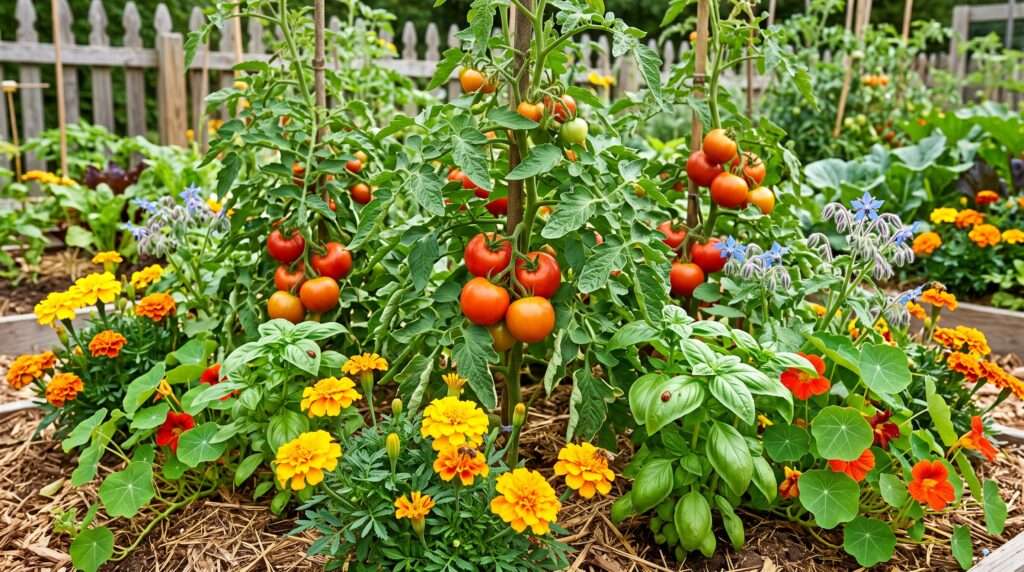
There is nothing quite as heartbreaking for a gardener as nurturing a prized tomato plant for months, only to lose the harvest to aphids, hornworms, or whiteflies. Before you reach for harsh chemical sprays that can harm beneficial pollinators and soil health, consider a natural alternative. If you are wondering exactly what to plant with tomatoes to keep bugs away, you are in the right place. Companion planting is a centuries-old, science-backed method that uses plant synergies to naturally deter pests and boost your overall harvest.
How Companion Planting Protects Tomatoes 🔬
Companion planting goes beyond garden lore; it relies on biological mechanisms to create a resilient, self-regulating ecosystem. A well-designed garden bed utilizes these natural defenses to protect your vulnerable vines.
-
Masking Scents: Strong-smelling herbs disguise the scent of tomato plants, confusing destructive pests.
-
Trap Cropping: Sacrificial plants draw harmful bugs away from your main crop to keep your harvest safe.
-
Predator Attraction: Specific flowers welcome beneficial insects like ladybugs and parasitic wasps that eat pests for you.

The Best Plants for Natural Pest Control 🌿
Creating a protective barrier around your tomatoes is easy when you choose the right companions. These plants offer incredible pest-repelling properties and enhance your garden’s biodiversity.
-
Basil: This powerful herb repels tomato hornworms and whiteflies while also improving the flavor of your growing tomatoes. 🍃
-
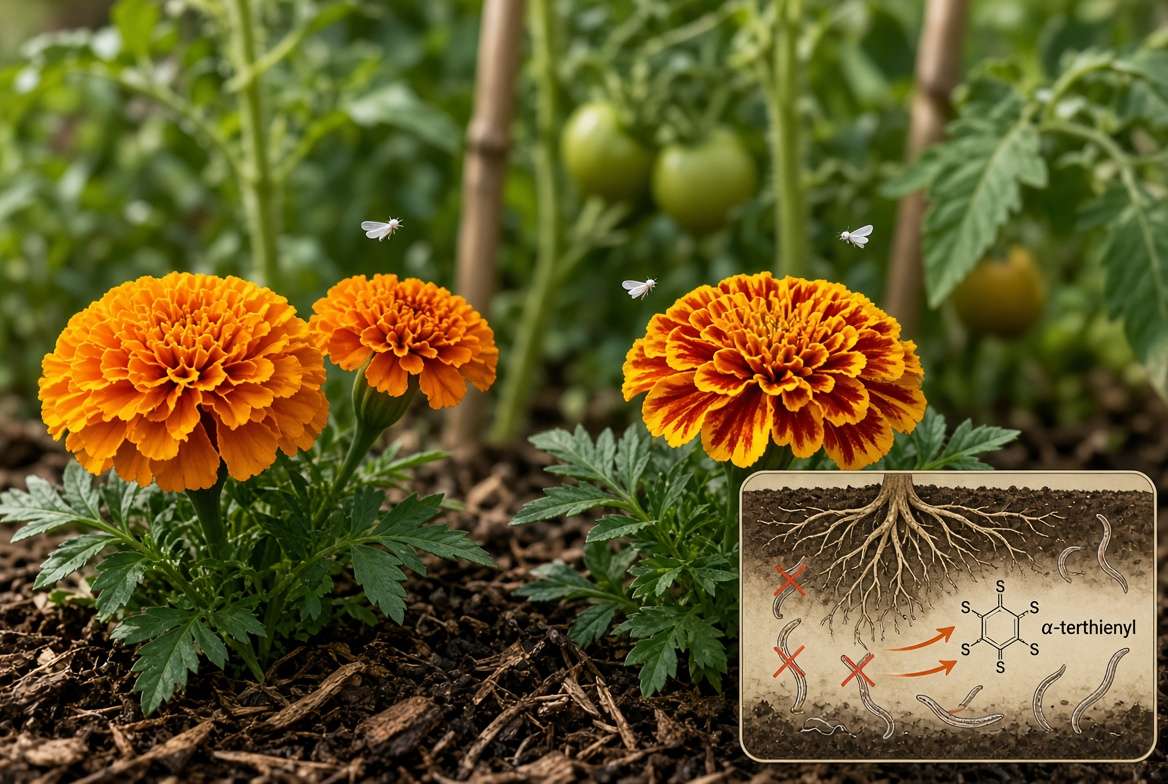
French Marigolds: These vibrant flowers release a natural nematicide into the soil, protecting roots from harmful root-knot nematodes. 🏵️
-
Nasturtiums: Acting as an excellent trap crop, they successfully lure aphids and squash bugs away from your prized fruit. 🌺
-
Borage: This beautiful flowering herb repels hornworms and attracts vital pollinators like bumblebees. 🌸
-
Sweet Alyssum: This acts as a fantastic living mulch that draws in hoverflies, whose larvae quickly devour aphid populations. 💮
What NOT to Plant Near Tomatoes 🚫
Just as some plants are best friends in the garden, others are fierce enemies. Avoid these combinations to ensure your tomatoes thrive.
-
The Brassica Family: Cabbage, broccoli, and kale compete for the exact same soil nutrients and will actively stunt tomato growth. 🥦
-
Corn: The corn earworm and tomato fruitworm are the exact same pest, so planting them together creates a massive buffet for this destructive bug. 🌽
-
Potatoes: Both are nightshades susceptible to blight; planting them close together drastically increases the risk of a total crop failure. 🥔
Expert Tip: Always ensure your companion plants share the same deep-watering and full-sun requirements as your tomatoes to prevent fungal diseases from overcrowding.
The Best Aromatic Herbs to Repel Tomato Pests 🌿
Herbs contain high concentrations of essential oils, which are nature’s very own bug repellents. By interplanting these highly fragrant herbs around your tomato vines, you create an olfactory barrier that confuses and repels pests looking for a quick meal.
Basil: The Ultimate Tomato Best Friend 🍃
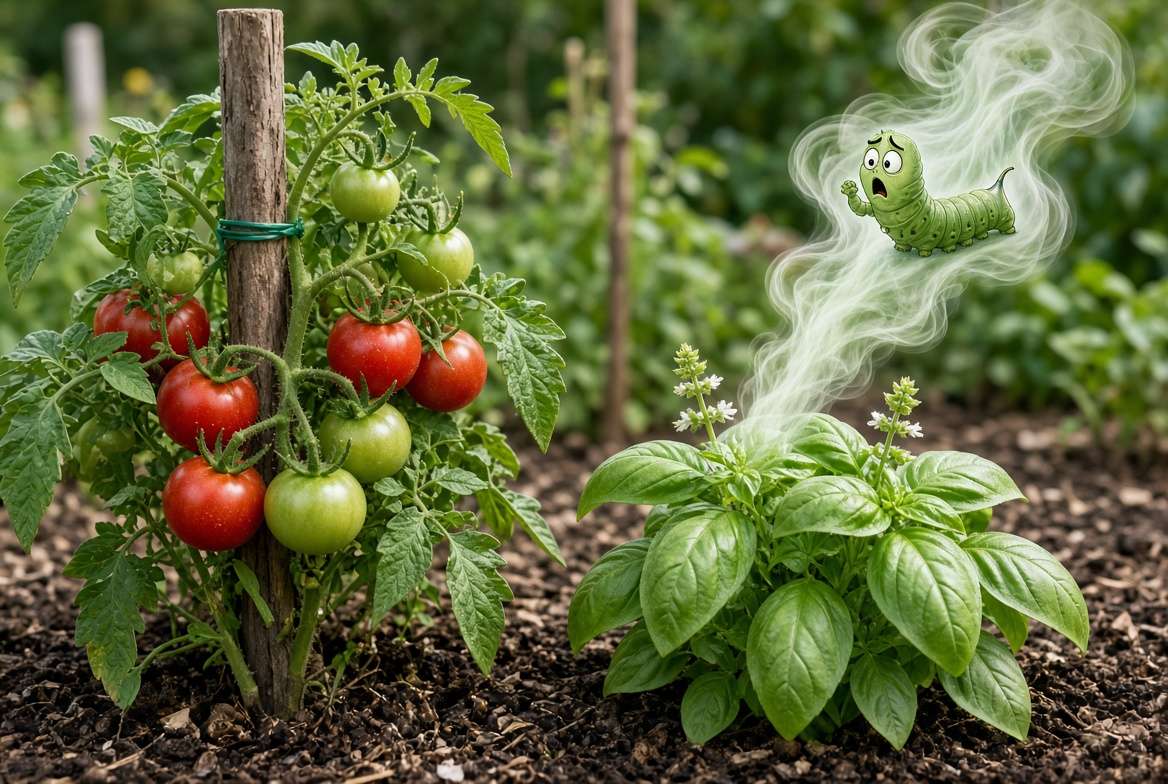
If you only have room for one companion plant in your garden bed, make it basil. The culinary pairing of tomatoes and basil is famous in the kitchen, but their relationship in the soil is just as legendary.
-
Pests Repelled: Tomato hornworms, whiteflies, aphids, and even mosquitoes.
-
How it Works: Basil emits a strong, spicy aroma that masks the scent of the tomato foliage. The dreaded tomato hornworm—a massive green caterpillar that can strip a tomato plant of its leaves overnight—relies heavily on smell to find its host plant. Basil acts as an invisibility cloak for your tomatoes.
-
Expert Insight: Extensive organic gardening studies suggest that planting basil at the base of your tomatoes actually improves the flavor of the fruit and increases overall yields.
-
Planting Tip: Plant basil about 12 to 15 inches away from the base of the tomato plant. This provides enough room for airflow while keeping the protective scent shield close by.
Alliums (Garlic, Onions, and Chives) 🧄
The allium family is another heavy hitter when it comes to natural pest control. Their pungent sulfur compounds are highly offensive to many common garden pests.
-
Pests Repelled: Red spider mites, aphids, and some species of root-knot nematodes.
-
How it Works: Red spider mites are tiny arachnids that suck the sap out of tomato leaves, leaving them yellow and stippled. The strong scent of garlic and chives drives them away.
-
Actionable Tip: Chives are perennial and make an excellent, permanent border around your tomato beds. You can also make a natural pest spray by crushing garlic cloves, steeping them in water, and spraying the solution directly onto the tomato foliage to deter aphids.
Borage: The Hornworm Hater 🌸
Borage is a lesser-known but highly effective companion plant. It is a beautiful, sprawling herb that produces star-shaped blue flowers.
-
Pests Repelled: Tomato hornworms and cabbage worms.
-
Added Benefit: Borage is an absolute magnet for vital pollinators, especially bumblebees. Tomatoes are self-pollinating, but they rely on the “buzz pollination” (vibration) of bees to shake the pollen loose within the flower. By attracting more bumblebees with borage, you will see a massive increase in your tomato fruit set.

Top Flowers for Natural Tomato Pest Control 🌼
Integrating flowers into your vegetable garden isn’t just about aesthetics; it is a vital strategy for organic pest management. Flowers can act as underground warriors and above-ground decoys.
Marigolds (Specifically French Marigolds) 🏵️
When gardeners ask what to plant with tomatoes to keep bugs away, marigolds are almost always the first flower mentioned—and for good reason.
-
Pests Repelled: Root-knot nematodes (underground) and whiteflies (above ground).
-
Scientific Note: Root-knot nematodes are microscopic soil-dwelling worms that attack the roots of tomato plants, causing them to develop swollen galls. This prevents the plant from absorbing water and nutrients, leading to stunted, sickly vines. French marigolds release a chemical compound called alpha-terthienyl from their roots into the surrounding soil. This compound is highly toxic to nematodes, effectively sanitizing the soil organically.
-
Pro Strategy: For maximum effectiveness, plant marigolds densely around the perimeter of your tomato bed, or intersperse them directly between the tomato plants. Make sure to choose pungent varieties like French marigolds (Tagetes patula), as they produce the most pest-repelling compounds.
Nasturtiums: The Perfect Trap Crop 🌺
Trap cropping is a brilliant organic gardening technique where you intentionally plant something pests love more than your main crop, luring them away from your harvest.
-
Pests Repelled (by distraction): Aphids, squash bugs, and whiteflies.
-
How it Works: Nasturtiums are an aphid favorite. Instead of swarming your delicate tomato blossoms, aphids will flock to the fleshy leaves and stems of the nasturtiums. Once the nasturtiums are heavily infested, you can simply pull them out and dispose of them, pests and all, or leave them as a sacrifice while your tomatoes grow strong and pest-free.
-
Added Bonus: Nasturtium flowers and leaves are entirely edible, offering a peppery, radish-like flavor that looks stunning in summer salads!
Plants That Attract Beneficial Predatory Insects 🐝
Sometimes, the best pest control is not repelling the bad bugs, but inviting the good ones to lunch. By planting species that attract predatory insects, you build a miniature army to patrol your tomato vines.
Sweet Alyssum 💮
This low-growing, delicate white or purple flower is a powerhouse in the vegetable garden.
-
Attracts: Hoverflies (also known as syrphid flies) and parasitic wasps.
-
The Benefit: While adult hoverflies are excellent pollinators, it is their larvae that do the heavy lifting for pest control. A single hoverfly larva can consume hundreds of aphids in just a few days.
-
Design Tip: Sweet alyssum grows like a thick carpet. Use it as a “living mulch” at the base of your tomato plants. It will attract beneficial predators while simultaneously shading the soil, retaining moisture, and suppressing weeds.
Dill and Cilantro (Allowed to Flower) 🌱
Most gardeners harvest dill and cilantro before they bolt (go to seed), but if you want to protect your tomatoes, you need to let them flower.
-
Attracts: Ladybugs, lacewings, and parasitic wasps.
-
The Benefit: The tiny, umbrella-shaped flower clusters (umbels) of blooming dill and cilantro are the perfect shape for microscopic parasitic wasps to land on and sip nectar. These tiny, non-stinging wasps lay their eggs inside tomato hornworms and aphids, naturally controlling their populations.
-
Expert Warning: While dill is great for attracting predators, mature dill can eventually stunt the growth of mature tomato plants. Plant dill nearby (a few feet away) rather than right next to the tomato root zone to get the benefits without the drawbacks.
I will pause here before we dive into the expert design tips for laying out your companion beds and the Frequently Asked Questions that will further boost your SEO.
Expert Tips: How to Design Your Tomato Companion Bed 📐
Knowing exactly what to plant with tomatoes to keep bugs away is only half the battle. Designing your garden bed correctly ensures that these beneficial relationships thrive without plants competing for resources.
Here are three expert strategies for laying out an organic, pest-free tomato patch:
-
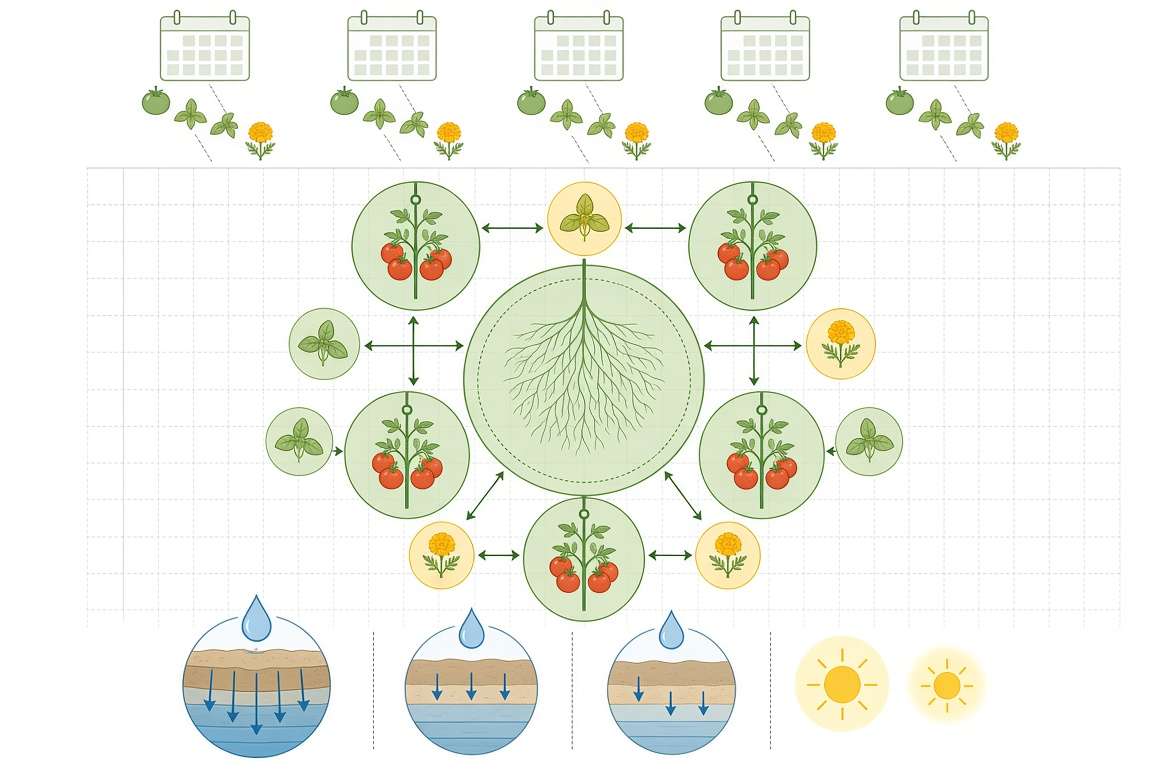
Prioritize Proper Spacing: While it is tempting to cram as many companion plants as possible around your tomatoes, overcrowding restricts airflow. Poor air circulation is the leading cause of fungal diseases like early blight and powdery mildew. Leave at least 18 to 24 inches between your tomato plants and their companions.
-
Match Sun and Water Requirements: Tomatoes are heavy feeders that require deep, consistent watering and a minimum of six to eight hours of direct sunlight. Always choose companions that thrive in these exact conditions. Basil, marigolds, and borage are perfect matches because they also love full sun and moist, well-draining soil.
-
Practice Succession Planting: Pests arrive at different times throughout the growing season. To keep a constant barrier of protection, plant your companions in successions. Sow a new batch of marigold or basil seeds every three weeks so that you always have fresh, highly aromatic plants blooming right when tomato pests are most active.
Frequently Asked Questions (FAQs) ❓
When transitioning to natural pest control, gardeners often have specific questions about implementation. Here are the answers to the most common queries regarding tomato companion planting.
Do marigolds really keep bugs away from tomatoes? Yes, they absolutely do! French marigolds are scientifically proven to release compounds into the soil that kill root-knot nematodes. Above ground, their strong scent repels whiteflies and confuses other pests looking for a tomato meal.
Can I plant companion herbs in the same container as my tomatoes? You can, but you must use a large enough container. A tomato plant requires at least a 10 to 15-gallon pot to develop a healthy root system. If your container is large enough, planting a small border of sweet alyssum or a single basil plant at the base works wonderfully.
What is the best way to get rid of tomato hornworms naturally? In addition to planting borage and basil to repel them, attracting parasitic wasps is your best defense. If you see a hornworm covered in tiny white clusters (which look like grains of rice), do not remove it! Those are parasitic wasp eggs, and they will hatch to naturally decimate the hornworm population.
Will planting mint help protect my tomatoes? Mint is highly aromatic and effectively repels spiders, aphids, and ants. However, mint is incredibly invasive and spreads rapidly through underground runners. Always keep mint in a separate pot nearby, rather than planting it directly in the same soil bed as your tomatoes.
Conclusion: Growing a Healthier, Happier Tomato Garden 🍅💚
Protecting your homegrown harvest does not require toxic chemicals or expensive synthetic sprays. By understanding what to plant with tomatoes to keep bugs away, you can transform your garden into a balanced, thriving ecosystem.
Remember the powerhouse trio: Basil to mask scents and repel hornworms, French Marigolds to sanitize the soil against nematodes, and Nasturtiums to act as the ultimate trap crop for aphids. When you invite nature to do the heavy lifting, you are rewarded with healthier plants, richer soil, and the most delicious, blemish-free tomatoes imaginable.











