
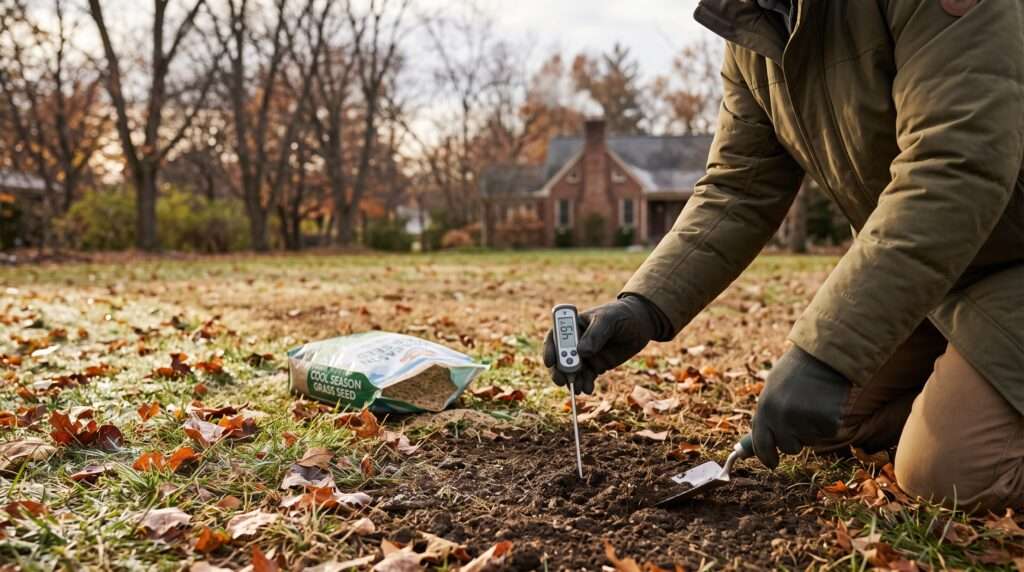
Every autumn, panicked homeowners stare at bare lawn patches and ask me the exact same question: when is it too late to plant grass seed? If you are watching the leaves fall and worrying that you have missed the seasonal window, take a deep breath. 🍂 Over my years as a plant and turf care specialist, I have rescued countless doomed late-season lawns. The definitive answer doesn’t depend on the calendar; it depends entirely on your soil temperature. Once your soil temperature consistently drops below 50°F, seed germination completely halts. 📉
The Science: Understanding Your Planting Deadline 🌡️
Air temperature is incredibly deceptive. You might have a warm 70°F afternoon, but freezing nights will crash your soil temperatures, leading to dead seeds and wasted money.
To calculate your exact planting deadline, you need to understand your local frost date and grass type:
-
The 45-Day Formula: Count backward 45 days from your region’s first expected frost. This is your absolute cutoff date for planting cool-season grasses like Kentucky Bluegrass or Tall Fescue. ❄️
-
The Soil Temperature Rule: Invest in a basic soil thermometer. Warm-season grasses (like Bermuda) need soil temps above 65°F, while cool-season grasses require 50°F to 60°F. 🌱
-
The Moisture Factor: Late-season planting often aligns with heavy autumn rains, which can wash away ungerminated seeds or cause fungal rot in freezing conditions. 🌧️

What to Do Instead: Expert Alternatives 🛠️
If you have officially missed the window, do not attempt the “throw and grow” method. It will fail. Instead, pivot to these professional strategies:
-
Dormant Seeding: Wait until the ground is cold but just before the first heavy snow. The seeds will safely overwinter and germinate naturally during the early spring thaw. 🌨️
-
The Sod Solution: If you need immediate results, laying sod is viable much later into the season than seeding, provided the ground isn’t fully frozen. 💸
-
Soil Preparation: Redirect your time and budget into core aeration, soil testing, and applying a winterizer fertilizer to set your existing turf up for spring success. 🧪
🧬 The Biology of Grass Seed Germination: Why Deadlines Matter
To truly understand when it’s too late to plant grass seed, we have to look underground. Seed germination isn’t magic; it’s a precise biological reaction triggered by moisture and, most importantly, sustained heat.
When you scatter seed across your soil, it absorbs water and begins breaking down its internal starches to push out its first delicate root (the radicle). If the soil is too cold, this metabolic process slows to a crawl or stops completely.
Even if a few seeds manage to sprout during a brief warm spell in late autumn, they face a fatal threat: winter kill. Young grass seedlings need time to develop a robust root system before the ground freezes solid. If the roots are too shallow when frost heaves the soil, the fragile crowns freeze, and the newly sprouted grass will simply not survive until spring. 🌱
🌾 Cool-Season Grasses: The Fall Favorites
Cool-season turfgrasses are the primary candidates for fall planting. These include varieties like:
-
Kentucky Bluegrass
-
Tall Fescue
-
Fine Fescue
-
Perennial Ryegrass
These varieties thrive in northern climates and transition zones. Their peak germination window opens when soil temperatures sit comfortably between 50°F and 65°F (usually correlating to daytime air temperatures of 60°F to 75°F). For cool-season grasses, planting too late means you miss this golden window of warm soil and cool, moist air, leaving the seed vulnerable to rot. 🍂
☀️ Warm-Season Grasses: The Summer Lovers
If you live in the southern states and rely on warm-season grasses, your deadlines are completely different. These varieties include:
-
Bermuda grass
-
Centipede grass
-
St. Augustine grass
Warm-season seeds require much higher soil temperatures—typically between 65°F and 70°F (daytime air temperatures of 80°F+). Therefore, it is almost always too late to plant warm-season grass seed in the fall. Their ideal planting window is late spring to early summer. Attempting to seed Bermuda in October is a guaranteed way to feed your local bird population without growing any turf. 🐦
🔢 The Frost Date Formula: Calculating Your Exact Window
As an expert, the most reliable tool I give my clients isn’t a specific calendar date—it’s a mathematical formula. Since the weather fluctuates wildly from year to year, calculating your deadline based on historical frost data is your safest bet. ❄️
Here is how you execute the 45-Day Frost Formula:
-
Find Your First Average Frost Date: Use the Farmer’s Almanac or your local agricultural extension office’s website to look up the historical first frost date for your specific zip code.
-
Count Backward: Subtract 45 days from that date.
-
Mark Your Calendar: This new date is your absolute final deadline for planting cool-season grass seed.
An Expert Example: Let’s say you live in Ohio, and your historic first frost date is October 15th. Counting backward 45 days brings you to September 1st. In this scenario, planting seed on October 1st is highly risky, and planting on October 10th is definitively too late. The seeds simply will not have the 4 to 6 weeks required to establish deep, winter-resistant roots. 🗓️
If you have realized that you have officially passed your 45-day window, do not panic. The worst thing you can do is force a late seeding. Instead, we need to shift our focus to professional fallback strategies.

🌨️ Dormant Seeding: The Professional’s Winter Secret
If you have entirely missed the early autumn window, you might think you have to wait until spring to do anything. But turf care experts use a secret weapon for late-season lawn recovery: dormant seeding.
Dormant seeding is the process of putting down grass seed after the weather has become too cold for germination, but before the first heavy, permanent snowfall. Instead of trying to force the seed to grow before winter, you are intentionally putting it to sleep. The seed will overwinter safely in the cold soil, and as soon as the ground thaws and spring rains arrive, it will germinate naturally. 🌱

💡 Why Dormant Seeding Works (and Why “Throw and Grow” Fails)
When homeowners panic and plant seed in late October or early November (the “throw and grow” method), the seed often sprouts just in time to be murdered by the first hard freeze.
Dormant seeding works because the soil is already below the 50°F threshold. The seed remains fully dormant. Throughout the winter, the natural freeze-thaw cycles of the soil actually help pull the seed down into the earth, creating perfect seed-to-soil contact. When the snow melts, it provides deep, consistent moisture exactly when the seed is ready to wake up. 💧
📋 Step-by-Step Dormant Seeding Guide
-
Wait for the Deep Chill: Monitor your soil temperature. Wait until it consistently reads below 50°F (usually late November or December, depending on your hardiness zone).
-
Prep the Area: Mow your existing grass short (about 1.5 to 2 inches) and rake away all leaves and debris. The seed absolutely must touch the soil, not a blanket of dead leaves. 🍂
-
Seed at a Heavier Rate: Winter can be harsh, and birds, runoff, and extreme cold will claim some of your seeds. As a best practice, increase your seeding rate by 20% to 30% to compensate for winter mortality. 🐦
-
Let the Snow Do the Work: Do not water the seeds. Let the winter snow act as an insulating blanket. As it melts in the spring, it will naturally hydrate your new lawn. ❄️
💸 The Sod Solution: Instant Turf When Time Runs Out
What if you don’t have the patience for dormant seeding? What if you have exposed dirt turning into a mud pit, and you need a lawn right now?
When it is undeniably too late to plant grass seed, laying sod is your most reliable alternative. Because sod consists of mature, already-germinated grass with an established root system, it doesn’t need warm soil to sprout. It just needs soil that isn’t completely frozen solid. 🧊

🌱 Late-Season Sod vs. Seed
-
The Temperature Advantage: You can lay cool-season sod (like Kentucky Bluegrass) well into November and even December in many regions. As long as you can stick a shovel into the unfrozen ground to prep it, the sod can be installed.
-
The Winter Slumber: The newly laid sod won’t grow aggressively in the cold. Instead, it will immediately go into winter dormancy, acting as a living blanket over your soil to prevent mud and erosion.
-
The Cost Factor: The major drawback here is budget. Sod is significantly more expensive than seed, and late-season installation can be grueling work in the cold. However, it guarantees a complete lawn immediately, eliminating the anxiety of waiting for spring germination. 🚜
🧪 Pivot to Preparation: Turning a Missed Deadline into a Spring Advantage
If neither dormant seeding nor sod fits your budget or timeline, it is time to pivot. Do not waste money buying seed that will only rot in the freezing mud. Instead, use these late-season weeks to turn your yard into an optimal environment for next spring’s planting.
By taking action now, you will guarantee explosive growth when the weather finally warms up. Here is the expert lawn prep checklist for late fall:
1. Perform a Comprehensive Soil Test 🔬
Healthy grass starts with healthy dirt. Late fall is the perfect time to send a soil sample to your local university extension or use an at-home testing kit. If your lawn is highly acidic (which is common in areas with heavy oak tree coverage), you can apply lime now. The lime will have all winter to break down and balance your soil pH by spring.
2. Core Aeration 🕳️
If your soil is compacted, grass roots cannot breathe, and water cannot penetrate. Renting a core aerator in the late fall pulls plugs of soil out of the ground. The winter freeze-thaw cycles will naturally break down these plugs, relieving compaction and leaving you with soft, breathable soil ready for spring seed.
3. Apply a Winterizer Fertilizer 🌾
If you already have existing grass, feed it! A late-fall winterizer fertilizer (high in potassium) strengthens the roots of your current turf, helping it survive harsh winter stresses and bounce back greener than ever in the spring. (Note: Do not apply pre-emergent weed control now if you plan to seed in the early spring, as it will block your grass seeds from germinating!)
🗣️ Targeted FAQs: Your Late-Season Seeding Questions Answered
When homeowners realize the seasonal window is closing, the same specific questions flood my inbox. To help you make the best decision for your yard, I have answered the most common late-fall lawn care queries below.
Will grass seed germinate in November? 🦃
In most of the United States, no. Unless you live in the deep South (where you should be planting warm-season grasses in the summer anyway), November brings soil temperatures well below the required 50°F for cool-season germination. If you plant in November in northern or transition zones, you are effectively practicing dormant seeding. The seed will sit in the cold soil and wait until spring.
What exactly happens if I plant grass seed too late? 🍂
If you plant grass seed too late, one of three things will happen:
-
Seed Rot: Autumn rains combined with freezing temperatures can cause the seed to become waterlogged and rot in the mud. 🌧️
-
Winter Kill: If a brief warm spell causes the seed to sprout, the subsequent freeze will instantly kill the fragile seedling (the roots won’t be deep enough to survive). 🧊
-
An Expensive Bird Feeder: Ungerminated seed sitting on the surface of the soil is a buffet for migrating birds and hungry rodents. 🐦
Does frost kill unsprouted grass seed? ❄️
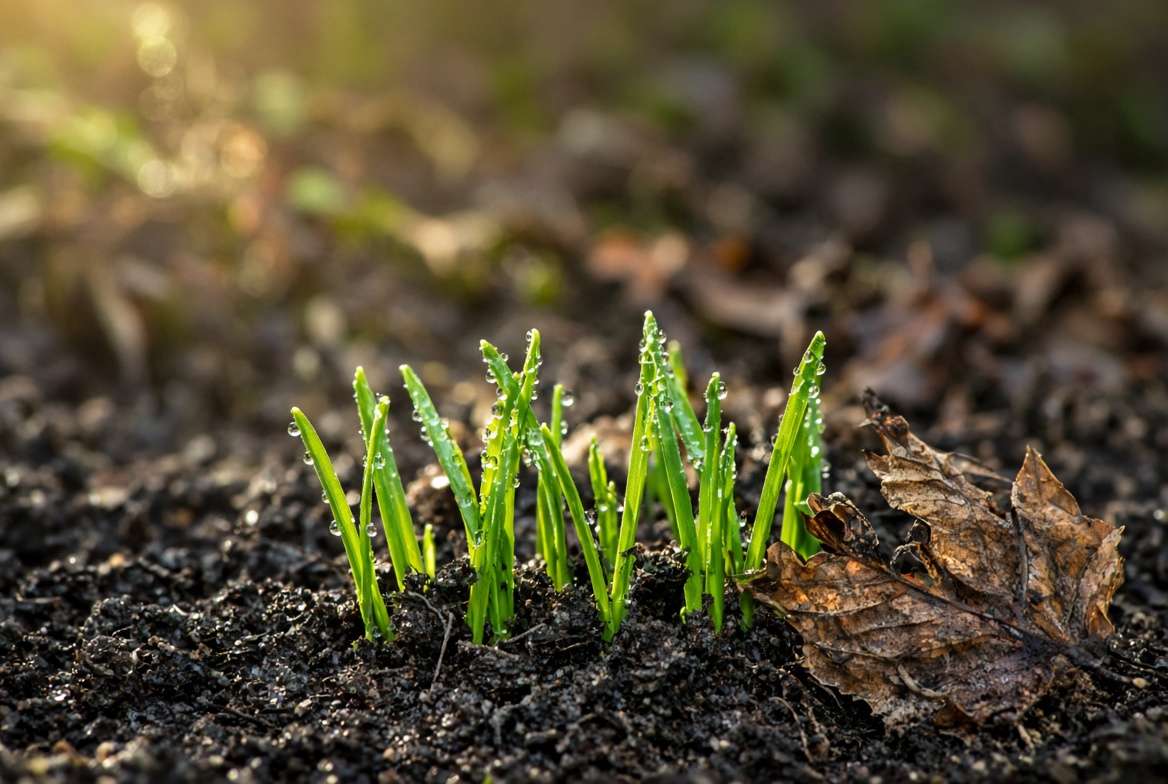
Here is a fascinating piece of turf biology: frost does not kill a dry, unsprouted grass seed. Seeds are incredibly resilient and designed to survive harsh winters (which is why dormant seeding works). However, frost absolutely will kill a newly sprouted seedling that hasn’t established a deep root system. If the seed has already popped open and pushed out a green shoot, frost is a death sentence.
Can I just throw grass seed on top of snow? ⛄
Absolutely not. This is a massive waste of money. If you throw seed on top of snow, it will wash away into your gutters or your neighbor’s yard during the spring melt. Seed must have direct, firm contact with the soil to germinate.
🌧️ Debunking Late-Season Lawn Care Myths
Over my years of managing turf, I’ve seen homeowners try every trick in the book to cheat winter. Let’s debunk a few dangerous myths so you don’t repeat these costly mistakes.
-
Myth 1: “More seed equals better chances in the cold.” 🚫
-
The Truth: Dumping double the recommended amount of seed in November won’t overcome cold soil. In fact, if they all survive until spring, the seedlings will compete for limited nutrients, leading to weak, patchy grass susceptible to fungal diseases like “damping off.” Follow the bag’s recommended seeding rate!
-
-
Myth 2: “Starter fertilizer will force the seed to grow faster before the snow.” 🚫
-
The Truth: Fertilizer is food, not magic heat. Applying a heavy nitrogen starter fertilizer right before winter will push the plant to grow delicate green top shoots right when it should be focusing on deep root survival. You will end up causing severe winter injury to your lawn.
-
-
Myth 3: “I can just cover the seeds with straw to keep them warm.” 🚫
-
The Truth: While straw helps retain moisture and prevents erosion, it does not raise the temperature of the soil enough to counteract 30°F nights. Plus, cheap agricultural straw often contains weed seeds that will infest your lawn next spring. 🌾
-
📝 The Ultimate Spring Recovery Checklist
If it is officially too late to plant grass seed this fall, don’t dwell on the bare patches. Focus on the future! Save this expert checklist so you can hit the ground running the moment the snow melts:
-
Arm Yourself with a Thermometer: Buy a soil thermometer now. In the spring, start checking your soil temps. Do not plant until the soil reads a consistent 50°F to 55°F for several consecutive days. 🌡️
-
Clean Up the Debris: As soon as the ground thaws and dries out (don’t walk on a muddy lawn, as it causes compaction), rake up all dead leaves, twigs, and dead grass (thatch). Your seeds need an unobstructed path to the dirt. 🧹
-
Seed and Feed: Apply your high-quality grass seed alongside a dedicated starter fertilizer (which is high in phosphorus to encourage explosive root growth). 🌱
-
The Water Rule: Spring rains are helpful, but you must take control. Keep the newly seeded area consistently moist (like a damp sponge) but never heavily flooded. Water lightly 1 to 2 times a day until the grass is 2 inches tall. 💧
-
Hold Off on Weed Control: Do not apply standard pre-emergent crabgrass preventers in the area you are seeding. Most traditional weed preventers will stop your grass seed from germinating just as effectively as they stop crabgrass! 🛑
🧑🌾 Final Expert Thoughts
Nature has its own schedule, and as plant care enthusiasts, our job is to work with that schedule, not against it. Asking “when is it too late to plant grass seed” is the exact right question—because it shows you are paying attention to the environment rather than just following instructions on a bag.
If you missed the autumn window, give yourself some grace. Pivot to dormant seeding, consider laying sod if the budget allows, or simply prep your soil for a massive spring comeback. By understanding the science of soil temperatures and frost dates, you have already taken the most important step toward cultivating a thick, lush, deeply rooted lawn. 🏡✨











