
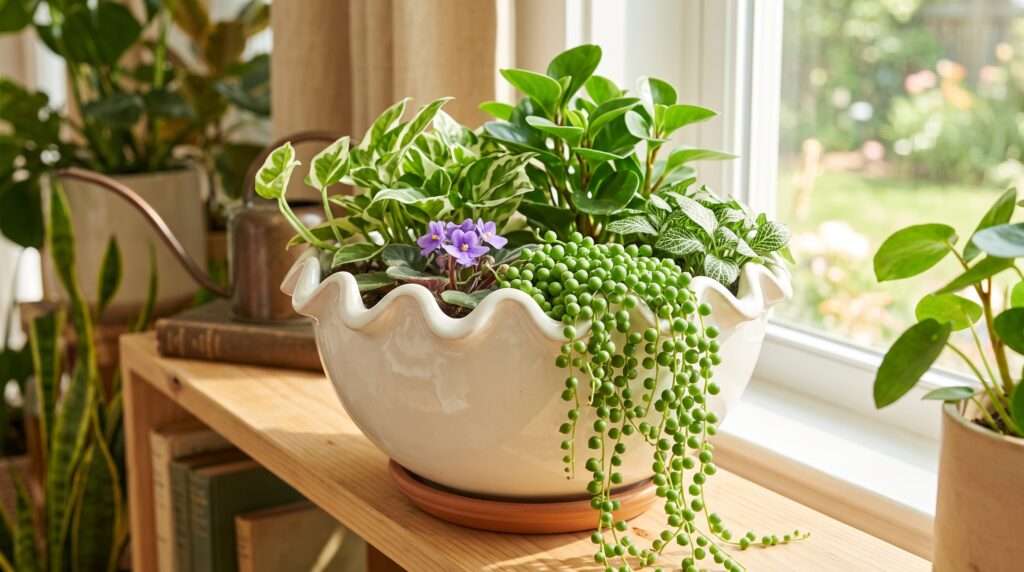
Welcome to the era of grandmillennial and cottagecore design, where rigid, minimalist lines are being delightfully replaced by soft, romantic textures. If you have scrolled through Pinterest, Instagram, or TikTok lately, you have undoubtedly witnessed the explosive popularity of the scalloped planter. With their undulating, wavy edges and vintage-inspired charm, these decorative pots have become a staple for interior decorators and indoor plant enthusiasts alike.
However, as a horticultural expert, I frequently see a common tragedy strike in the pursuit of aesthetic perfection. Beautiful decorative pots often prioritize design over basic plant physiology. Many lack crucial drainage holes, feature irregular shapes that make repotting a nightmare, or act as stagnant water traps that inevitably lead to a houseplant’s worst enemy: root rot. 🥀
This comprehensive guide is designed to be the ultimate bridge between stunning interior design and expert plant care. We are not just going to explore the most visually striking plants to pair with that beautiful scalloped edge. We are also going to dive deep into foolproof, horticulturally sound potting methods to ensure your roots stay just as healthy as your foliage looks. Let’s create a thriving indoor garden that belongs on the cover of a magazine! 📖🌿
II. The Anatomy of a Scalloped Planter: Aesthetic Magic vs. Plant Health ⚖️
Before we dive into the plant selection, it is crucial to understand exactly what we are working with. Successfully growing houseplants requires us to look at our containers through both a designer’s eye and a botanist’s microscope. 🔬
Why Texture Matters in Plant Styling 🏡 In interior design, contrast and texture are the secret ingredients to a dynamic space. The undulating, wavy rim of a scalloped planter serves a specific visual purpose: it softens the rigid architectural lines of a room (like square windows, flat tables, and straight shelves). When pairing a plant with this specific shape, you want foliage that either mimics that romantic ruffle or provides a stark, striking contrast. The goal is to make the planter and the plant look like a cohesive, intentional piece of living art, rather than just a pot that happened to be empty. 🎨
The Hidden Drainage Dilemma 💧 Here is where the expertise comes in. Most scalloped planters available on the market are crafted from glazed ceramic, polished resin, or painted terracotta. Because they are designed as decorative indoor pieces, manufacturers frequently omit drainage holes to protect your furniture from water damage.
When you plant directly into a container without a drainage hole, water pools at the bottom of the soil. This standing water displaces oxygen in the soil matrix, leading to a condition called hypoxia (oxygen starvation). Without oxygen, the roots cannot undergo cellular respiration. They suffocate, die, and become a breeding ground for anaerobic fungal pathogens like Pythium and Phytophthora—the microscopic culprits behind root rot. 🦠 To keep our plants thriving in these gorgeous pots, we have to outsmart the design (which I will teach you how to do in Section IV).
III. 7 Best Houseplants for a Scalloped Planter 🌿
Choosing the right houseplant for your wavy-edged pot comes down to matching growth habits, texture, and adaptability to decorative containers. Here are the top seven houseplants that look absolutely magical in a scalloped planter. ✨
1. String of Pearls (Senecio rowleyanus) 📿
Why it works: If you want a striking visual contrast, the String of Pearls is your top contender. The cascading, perfectly spherical, pea-like foliage creates an incredible geometric juxtaposition against the wavy, ruffled rim of a scalloped planter. As the delicate vines spill over the edges, it draws the eye downward, making it a spectacular choice for a scalloped hanging basket or a planter placed on a high bookshelf. 📚 Care highlight: This succulent is highly susceptible to overwatering. Because of its shallow root system, it requires a very fast-draining, gritty soil mix. It is the perfect candidate for the “cachepot” method, as planting it directly into a hole-less scalloped pot is almost guaranteed to cause stem rot. ☀️ Ensure it gets plenty of bright, indirect sunlight right at the crown of the plant.
2. Pothos ‘N’ Joy (Epipremnum aureum) 🍃
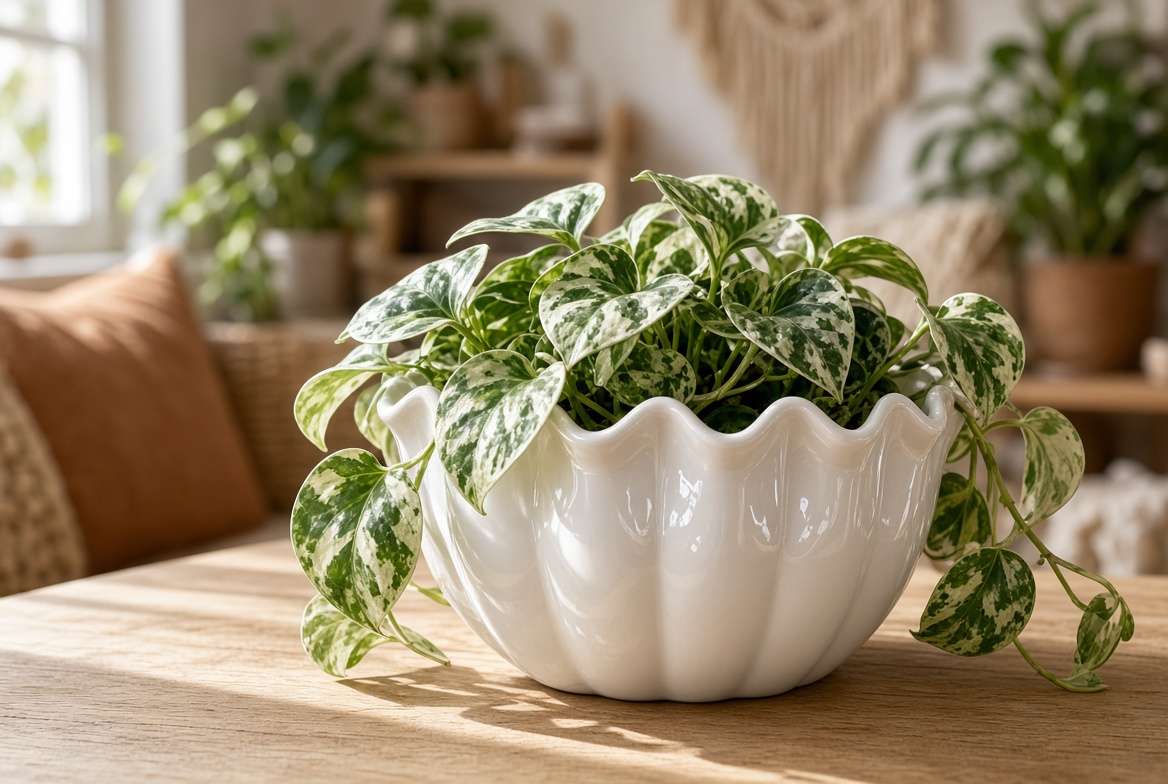
Why it works: While a standard Golden Pothos is lovely, the ‘N’ Joy cultivar takes things to the next level. Its leaves are smaller, highly variegated with crisp whites and greens, and most importantly, slightly ruffled or crinkled along the margins. These wavy leaves perfectly mimic the scalloped edges of the pot, creating a cohesive, romantic, and lush aesthetic. 🤍💚 Care highlight: Pothos are famously forgiving, making them ideal for indoor gardening beginners. They adapt wonderfully to the slightly confined spaces of a decorative pot and will tell you when they are thirsty by slightly drooping their leaves, preventing accidental overwatering.
3. Baby Rubber Plant (Peperomia obtusifolia) 🟢
Why it works: If you have a tabletop scalloped planter and need a plant that stays relatively compact, the Baby Rubber Plant is a dream. Its thick, glossy, perfectly ovate (round) leaves offer a smooth, architectural contrast to the textured details of the pot. It grows in a bushy, upright habit, ensuring the decorative rim of your planter remains visible and isn’t entirely swallowed by trailing vines. 🪴 Care highlight: Peperomias have semi-succulent leaves that store water, meaning they prefer to dry out significantly between waterings. Their root systems are quite small and delicate, so they thrive in tight nursery pots slipped inside your decorative scalloped container.
4. Boston Fern (Nephrolepis exaltata) 🪴
Why it works: The Boston Fern is the quintessential grandmillennial and cottagecore plant. When paired with a scalloped planter, the feathery, arching, intricately detailed fronds create an explosion of vintage elegance. It looks like a Victorian parlor masterpiece. The lush volume of the fern spilling over the wavy rim creates a beautifully wild, untamed aesthetic. 🕰️ Care highlight: Unlike the succulents mentioned above, Boston Ferns love moisture. They require consistent humidity and evenly moist (but not soggy) soil. Using a glazed ceramic scalloped planter can actually be beneficial here, as the non-porous material helps retain soil moisture longer than bare terracotta. 🚿
5. Polka Dot Plant (Hypoestes phyllostachya) 💖
Why it works: When styling a minimalist white or earthy terracotta scalloped planter, sometimes you need a vibrant pop of color to bring the arrangement to life. The Polka Dot Plant delivers exactly that. With its mottled leaves splashed in shades of bright pink, striking red, or crisp white, it elevates a simple ruffled pot into a vibrant focal point. 🎨 Care highlight: These plants love bright, indirect light to maintain their vivid variegation. If they get too leggy, pinch back the top leaves to encourage bushy growth. They are somewhat dramatic when thirsty, wilting quickly to let you know it is watering day, making them a great communicator for attentive plant parents. 🗣️
6. African Violet (Saintpaulia) 🌸
Why it works: For a truly traditional, vintage pairing, the African Violet is practically made for decorative ceramics. The soft, fuzzy leaves and dainty, jewel-toned blooms perfectly complement the romantic, intricate nature of a scalloped edge. Because African Violets stay incredibly low to the soil line, the decorative rim of your planter remains a prominent feature of the display. 💎 Care highlight: African Violets despise getting water on their fuzzy foliage, which can cause ugly spotting and crown rot. This makes them perfect candidates for bottom-watering via the cachepot method, allowing them to soak up moisture from below without ever touching the delicate leaves. 💧
7. Fittonia (Nerve Plant) 🕸️
Why it works: Similar to the African Violet, the Fittonia is a low-profile, bushy creeper. Its heavily veined, intricate leaves (resembling delicate nerves or spider webs) provide a gorgeous micro-texture that contrasts beautifully against the smooth, sweeping waves of a scalloped planter. It creates a dense, lush carpet of foliage that looks incredibly intentional and manicured. 🪴 Care highlight: Fittonias are notorious moisture lovers and require high humidity. They thrive in rich, moisture-retaining soil but absolutely cannot sit in stagnant water, making our upcoming drainage techniques crucial for their survival. 🌿
IV. How to Pot Plants in a Scalloped Planter for Perfect Drainage (The Expert Method) 🛠️
Now that you have selected the perfect botanical pairing, we must address the most critical aspect of indoor gardening: drainage. As a horticultural expert, I cannot stress this enough—putting a plant directly into a pot without drainage is a ticking time bomb for root rot. Here is how to utilize your beautiful scalloped planter without sacrificing your plant’s health. 👩🌾
Method 1: The “Cachepot” Technique (Highly Recommended) 🏆
This is the gold standard for indoor plant styling. The word cachepot is French for “hide a pot.” Instead of planting directly into the decorative scalloped planter, you use it merely as an aesthetic sleeve.
-
Keep it in Plastic: Leave your plant in its flimsy plastic nursery pot (which inherently has excellent drainage holes).
-
The Drop-In: Simply drop the nursery pot inside the scalloped planter.
-
The Spacer Trick: If the decorative pot is a bit deep, place a spacer at the bottom. A plastic lid, an upside-down deli cup, or a layer of large river rocks works perfectly. This elevates the nursery pot, creating a reservoir underneath. When you water the plant, any excess drains into this empty space, keeping the roots safely above the puddle. 🛡️
-
Watering Day: You can easily lift the nursery pot out, water it thoroughly in the sink, let it drain completely, and place it back into its gorgeous scalloped home. 🚰

Method 2: Drilling a Drainage Hole (For Ceramic or Terracotta) 🪛
If you absolutely must plant directly into your scalloped planter, you need to create an escape route for the water.
-
Gather Supplies: You will need a power drill and a diamond-tipped or carbide masonry drill bit (standard wood bits will shatter your pot). 🛠️
-
Lubricate: Place the pot upside down on a towel. Pour a small puddle of water over the spot you intend to drill. This keeps the bit cool and prevents the ceramic from cracking due to heat friction. 🧊
-
Go Slow: Apply gentle, even pressure. Let the drill do the work. It may take a few minutes, but eventually, you will punch a perfect drainage hole. Wear safety glasses to protect your eyes from ceramic dust! 🥽
The “Gravel at the Bottom” Myth Busted 🛑
You have likely heard the old wives’ tale: If your pot doesn’t have a hole, just put a layer of gravel at the bottom before adding soil!
Do not do this. Botanically speaking, this creates a phenomenon known as a perched water table. Water does not move easily from a fine-textured material (soil) to a coarse-textured material (gravel) due to capillary action. Instead of draining into the rocks, the water pools directly in the soil layer sitting just above the rocks—right where your roots are trying to grow. This actually guarantees root rot rather than preventing it. Stick to the cachepot method or drill a hole. 🚫🪨
V. The Ultimate Soil Mix Recipe for Decorative Planters 🤎
When dealing with decorative ceramic or resin planters, airflow is often restricted compared to breathable, unglazed terracotta. To compensate, your potting soil needs to be exceptionally airy and well-draining. Bagged potting soil from the hardware store is generally too dense and retains too much moisture for indoor environments.
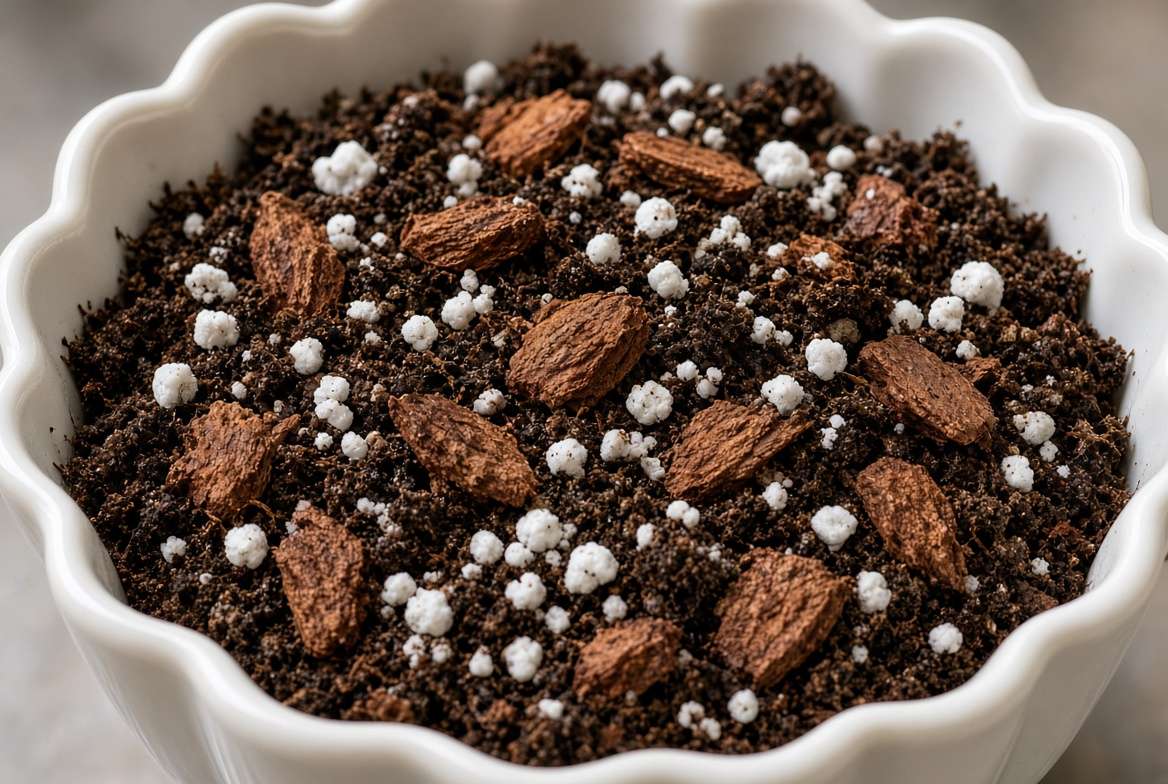
The Expert Scalloped Planter Soil Recipe:
-
50% High-Quality Indoor Potting Soil (or coco coir/peat moss for the base matrix).
-
30% Chunky Perlite or Pumice (creates macropores in the soil, allowing oxygen to reach the roots). 🪨
-
20% Orchid Bark (adds organic chunkiness, mimicking the natural forest floor where many tropical houseplants originate). 🌲
Mix these thoroughly. When you squeeze a handful of this moistened soil, it should easily fall apart when you open your hand, rather than clumping into a dense mud ball. 🤲
VI. Pro Maintenance Tips for Scalloped Pots ✨
Keeping your setup looking immaculate requires a little bit of targeted maintenance.
Perfecting Your Watering Routine 🚿
Always check the soil before watering. Use a wooden chopstick or a moisture meter to probe the lower half of the nursery pot. The top inch of soil might feel dry, but the root zone in a decorative pot can remain wet for weeks. If you are using the cachepot method, periodically check the bottom of the scalloped planter to ensure standing water isn’t pooling and breeding fungus gnats. 🪰
Cleaning the Grooves 🧽
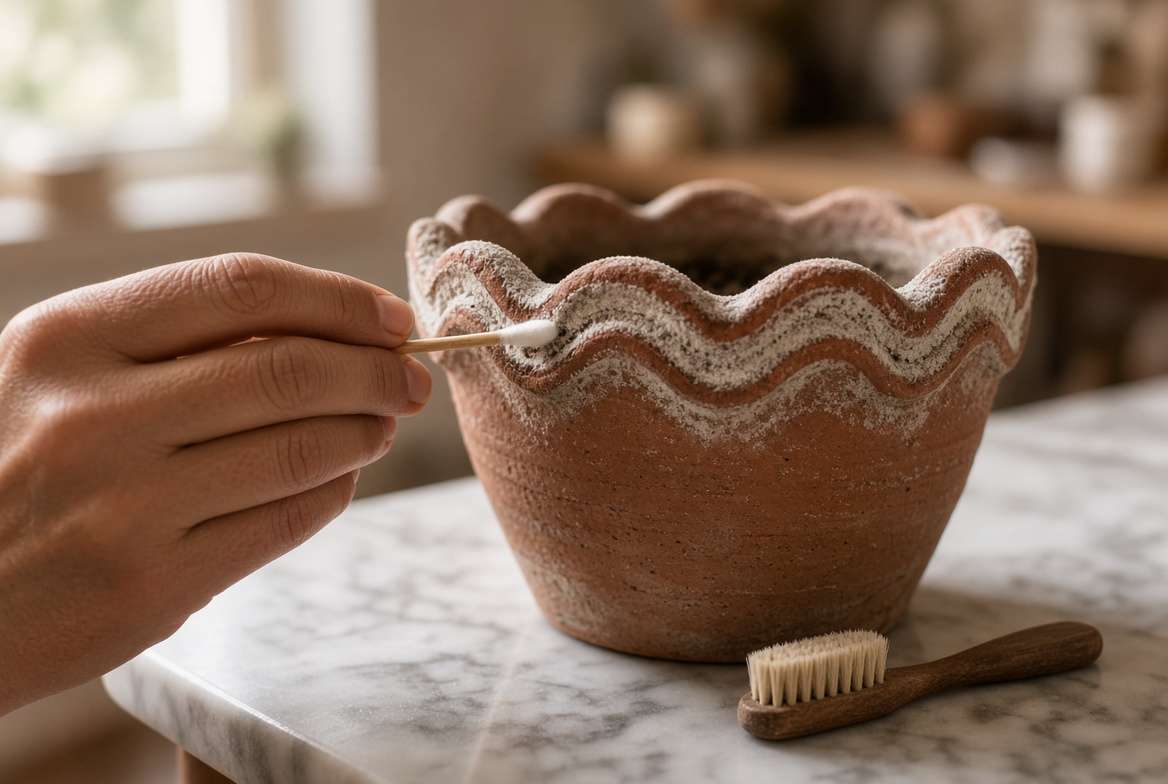
The very feature that makes scalloped planters beautiful—those deep, wavy grooves—is also a magnet for dust, hard water stains, and fertilizer crust.
-
For Dust: Use a soft, clean makeup brush or paintbrush to sweep dust out of the crevices without having to move the heavy pot. 🖌️
-
For Mineral Buildup: If you notice a white, crusty rim developing along the scalloped edges, this is mineral buildup from tap water. Dip a cotton swab or an old toothbrush in a solution of equal parts white vinegar and water, and gently scrub the grooves. It will dissolve the minerals instantly, restoring the pot’s glossy finish. ✨
VII. Frequently Asked Questions (FAQs) 🤔
Can I plant succulents directly into a scalloped planter without holes? Technically, yes, but it is highly discouraged. Succulents (like the String of Pearls) require their roots to dry out completely between waterings. Without a drainage hole, moisture inevitably builds up at the bottom of the pot, causing rapid fungal decay. Always use a nursery pot insert for succulents in decorative containers. 🌵
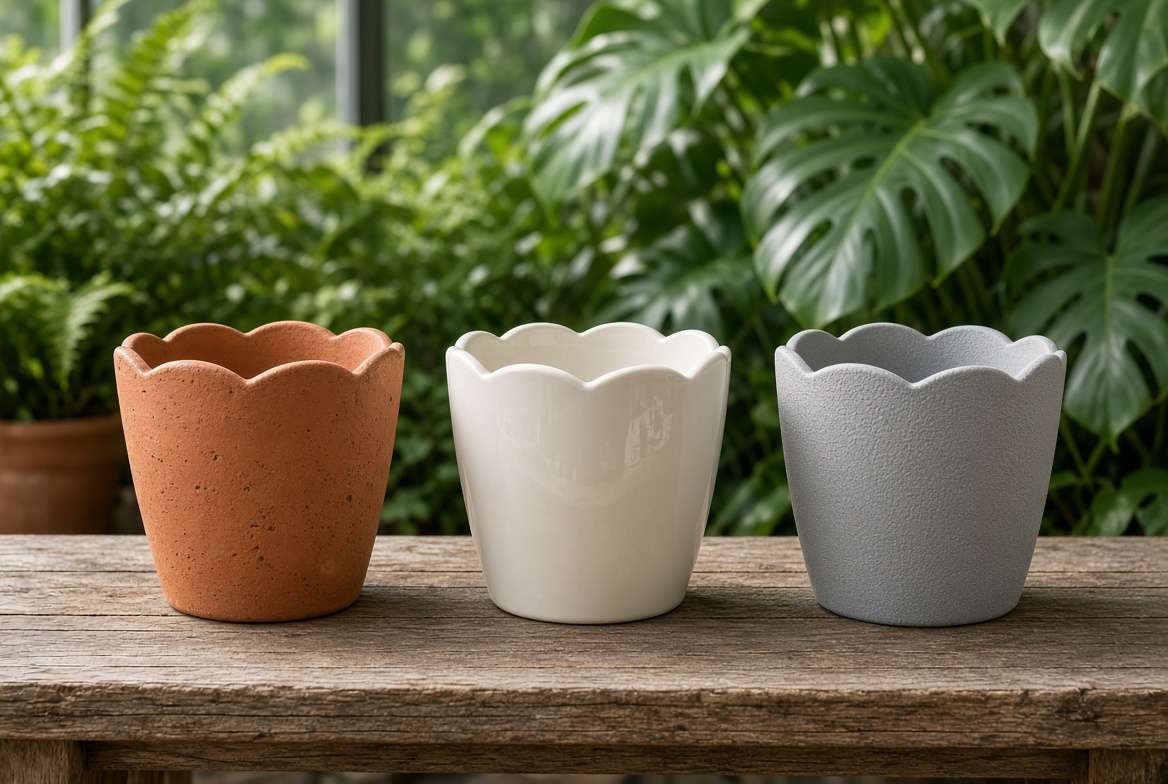
What is the best material for a scalloped planter? It depends on your plant’s needs. Unglazed terracotta breathes well, making it great for moisture-sensitive plants. Glazed ceramic and resin are beautiful and non-porous, meaning they hold moisture longer—excellent for ferns and Fittonias, provided you use the cachepot method for drainage. 🏺
How do I choose the right size plant for my scalloped pot? Aesthetically and practically, you want to leave about 1 to 2 inches of space between the rim of the plastic nursery pot and the decorative scalloped rim. This gives you enough room to slip your fingers in to easily remove the plant on watering day, while still looking full and lush. 📏
The secret to a thriving indoor garden is not just about curating beautiful accessories; it is about harmonizing your aesthetic design choices with smart, science-backed plant care. By selecting a houseplant with textures that intentionally complement those romantic, wavy edges, and utilizing the cachepot method to guarantee perfect drainage, you ensure your greenery stays vibrant for years to come. Your home gets the visual upgrade of a stunning decorative piece, and your plants get the healthy environment they need to flourish. Which plant are you planning to pair with your scalloped planter? Let me know in the comments below, or tag us in your plant-styling photos! 📸💚











