

You bought a gorgeous guava plant, gave it a prime spot in the yard, and waited patiently for a tropical bounty. But instead of baskets of sweet, fragrant fruit, you are left looking at a very green, very leafy bush. Why? This is the most common frustration for home gardeners venturing into tropical fruit cultivation. Most people treat a guava plant like a standard shade tree, completely missing the unique environmental triggers required for heavy fruit production.
In this comprehensive guide, we are unlocking the five expert secrets to transforming a stubborn guava plant into a heavy-yielding fruit machine. Whether you are nurturing Psidium guajava in a sprawling backyard orchard or coaxing a dwarf variety to bloom in a sunny patio pot, these horticultural techniques will ensure you maximize your harvest and keep your plant thriving year-round.
Why Is My Guava Plant Not Fruiting? (The Quick Diagnostic) 🩺
Before applying the five secrets, it is vital to diagnose why your tree is underperforming. A healthy-looking tree that refuses to bloom is usually suffering from one of three common issues:
Age of the Plant ⏳
Patience is a virtue in tropical gardening. If your guava plant was grown from a cutting or a graft, it typically needs 1 to 3 years to establish its root system before producing a heavy yield. If you grew your tree from a seed, you might be waiting 3 to 8 years for your first flower. Do not rush the process; young plants need to focus their energy on structural growth before supporting the heavy weight of fruit.
The Nitrogen Trap 🧪
Nitrogen is essential for plant growth, but it is a double-edged sword. If you are feeding your plant a fertilizer that is exceptionally high in nitrogen (often found in standard lawn fertilizers), the plant will dedicate all its energy to pushing out magnificent, lush green leaves at the exact expense of flower development. No flowers mean no fruit.
Temperature Shock 🌡️
Guavas are heat-loving tropicals. While established trees can survive brief temperature dips down to 29°F, unexpected late spring frosts or prolonged cold snaps can severely damage microscopic bud development. Even if the leaves look fine, a cold shock can abort an entire season’s fruiting potential.
💡 Expert Tip Box: Do a quick check! Is your plant under 2 years old? Are you using lawn fertilizer near its drip line? Did you have a late frost? Pinpointing the root cause saves you months of frustration.
Secret #1: Location is Everything – Sunlight, Soil, and Spacing 🌞
A heavy harvest begins long before the first flower blooms; it starts the moment you put the shovel in the dirt. Environmental positioning dictates the plant’s metabolic rate and disease resistance.
Chasing the Sun ☀️
A guava plant is a sun-worshipper. To trigger fruit production, the plant requires a strict minimum of 6 to 8 hours of direct, unfiltered sunlight every single day. Morning sun is particularly critical. As the sun rises, it quickly evaporates overnight dew resting on the leaves. Prolonged moisture on foliage is the leading cause of fungal diseases like rust and anthracnose, which will quickly ruin a developing crop. If your plant is in partial shade, it will survive, but it will stubbornly refuse to fruit.

The Perfect Soil Mix for Guava Plants 🌱
Guavas are relatively adaptable, but they thrive best in rich, well-draining soil with a slightly acidic to neutral pH (ranging from 5.0 to 7.0). They despise heavy, compacted clay that traps water around their roots. If your native soil is poor or heavy, you must amend the planting hole. Mix in generous amounts of well-aged compost, perlite, and coarse sand to improve drainage and introduce beneficial microbes. The organic matter feeds the soil web, which in turn feeds your tree.
Spacing and Airflow 🌬️
Crowding is the enemy of a heavy harvest. If you are planting multiple fruit trees, space your guava plants at least 8 to 12 feet apart. This generous spacing ensures their shallow, aggressive root systems do not compete for underground nutrients. Above ground, adequate spacing guarantees that the mature canopy receives full 360-degree sunlight and crucial wind circulation to naturally deter pests.
Secret #2: The Art of Watering a Guava Plant (Avoiding Root Rot) 💧
Improper watering is the fastest way to kill a guava plant. Understanding the delicate balance between hydration and suffocation is an expert grower’s best-kept secret.
The “Soak and Dry” Method 🚰
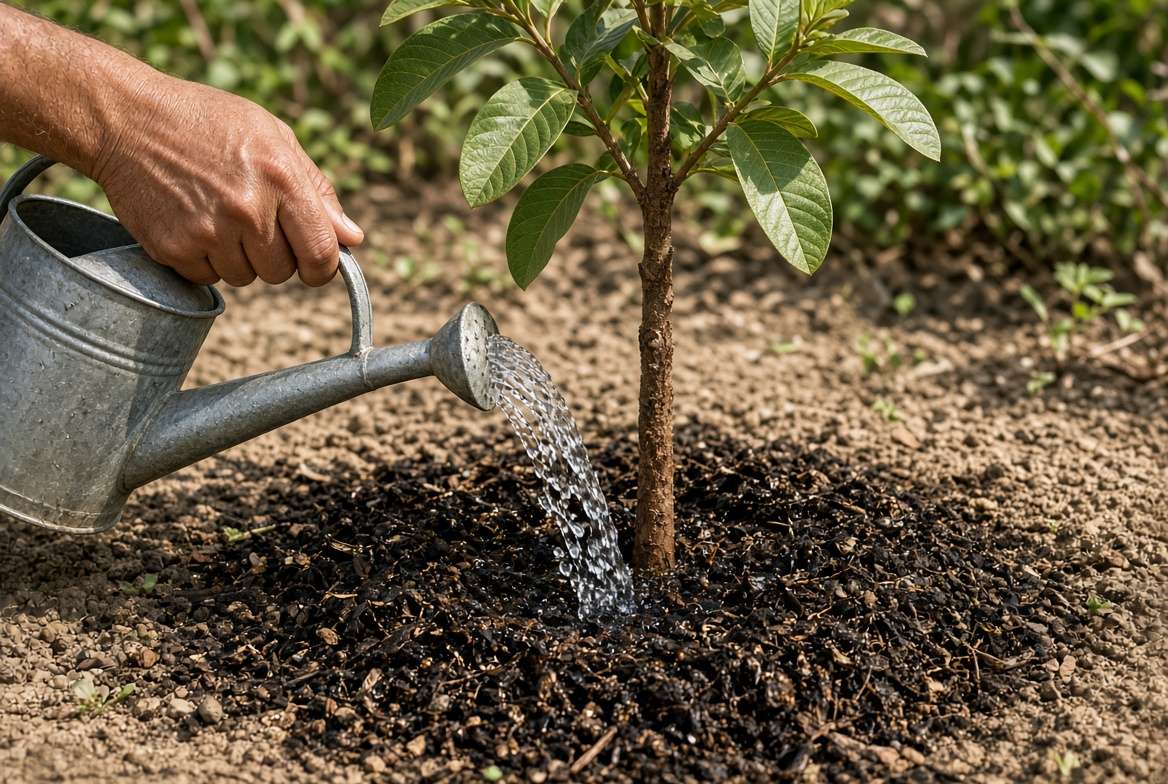
Guavas originate in regions with distinct wet and dry seasons, meaning they absolutely hate “wet feet.” Constant soil saturation chokes the roots of oxygen, leading to root rot—a fungal disease that causes the tree to slowly collapse. Instead of giving the plant a little splash of water every day, adopt the “soak and dry” method. Water the root zone deeply once or twice a week, allowing the water to penetrate far into the subsoil to encourage a deep, drought-resilient root system. Then, let the top 2 to 3 inches of soil completely dry out before watering again. Stick your finger in the dirt; if it feels moist at the knuckle, wait another day.
Adjusting Water for Blooming and Fruiting 🌸
Water requirements drastically shift during the plant’s reproductive cycle. When the plant pushes out its delicate white, puffball-like flowers, it enters a highly sensitive phase. Severe drought or water stress during this flowering stage will cause the tree to panic and abort its blooms, resulting in massive fruit drop. During the blooming and fruit-setting stage, maintain consistent, even moisture.
💡 Pro Tip: Apply a generous 2 to 3-inch layer of organic mulch (like pine bark or hardwood chips) around the base of the tree. Keep the mulch pulled a few inches away from the trunk to prevent rot. Mulch acts as an insulator, retaining soil moisture during peak summer heat and regulating root temperatures without suffocating them.
Secret #3: Feeding for Yields – The Ultimate Fertilizer Strategy 🍴
Water and sunlight provide the baseline for survival, but strategic fertilization is the fuel that drives massive fruit production. A guava plant is a heavy feeder, especially when it is working hard to produce a dense canopy and swelling fruit.
The Right NPK Ratio 📊
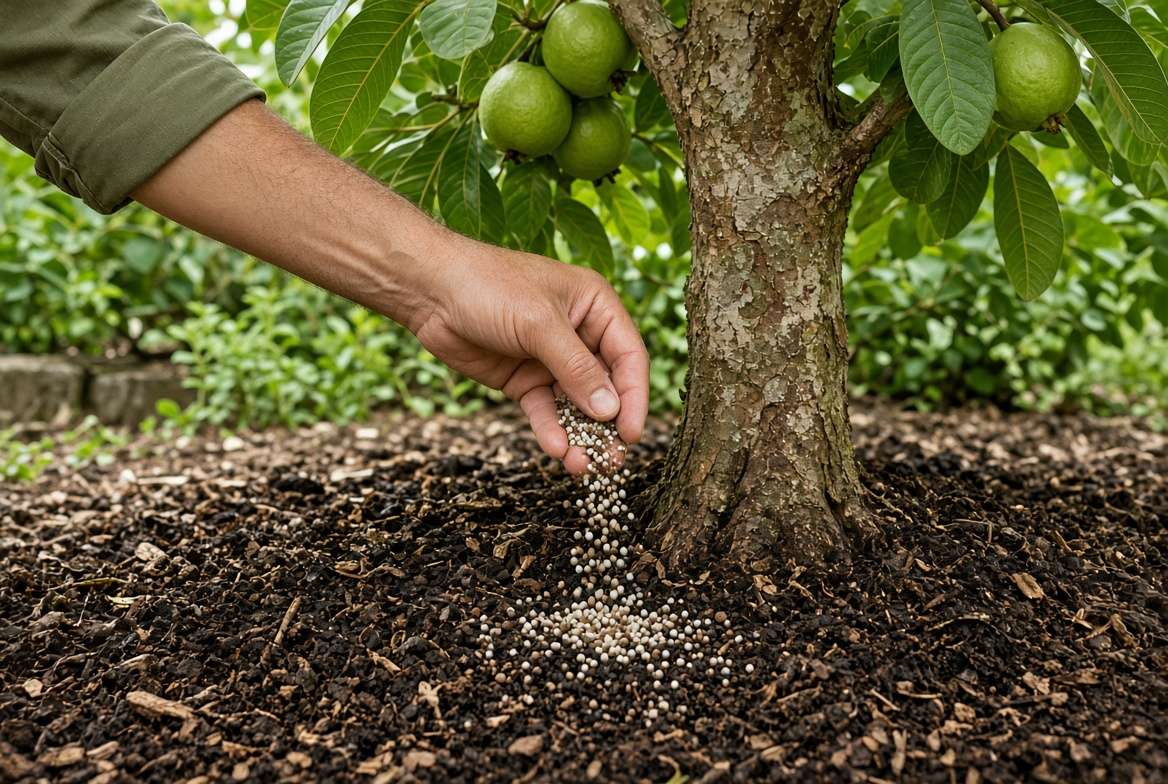
When looking at fertilizer labels, you will see three numbers representing the NPK ratio: Nitrogen (N), Phosphorus (P), and Potassium (K). While nitrogen grows leaves, you need Phosphorus and Potassium to push blooms and develop large, sweet fruit. For a mature, fruit-bearing guava plant, recommend a balanced granular fertilizer like a 6-6-6 or an 8-8-8 during the early growing season. As the plant approaches its blooming phase, switch to a formula higher in Potassium (such as a citrus or tropical fruit fertilizer) to enhance fruit size, sugar content, and overall crop yield.
The Secret Weapon: Magnesium and Trace Minerals 🪨
Many gardeners perfect their NPK ratios but still suffer from poor yields and sickly-looking trees. The culprit is usually a lack of micro-nutrients. Guava plants are highly susceptible to magnesium, iron, and zinc deficiencies. If you notice the leaves on your guava plant turning yellow while the veins remain starkly green (a condition called interveinal chlorosis), your plant is screaming for nutrients. Supplementing with a foliar spray of liquid iron or adding Epsom salts (magnesium sulfate) to the soil can rapidly correct these deficiencies, restoring the deep green vitality required for photosynthesis.
Seasonal Feeding Schedule 📅
To maximize your harvest, you must time your feeding with the plant’s natural metabolic rhythm:
-
Spring (The Awakening): Apply a balanced fertilizer as soon as the danger of frost has passed and new growth emerges. This provides a high-energy boost to build the structural wood that will hold the fruit.
-
Summer (The Fruiting Phase): Apply a potassium-heavy feed mid-summer as the fruit begins to swell. This ensures the plant doesn’t drop the fruit prematurely due to exhaustion.
-
Winter (The Dormancy): Stop fertilizing entirely by late fall. Feeding a guava plant in winter encourages tender new shoots that are highly vulnerable to frost damage. Let the plant rest.
Secret #4: Pruning for Production – Why New Growth Equals More Fruit ✂️
If there is one horticultural secret that separates the amateurs from the masters, it is pruning. Unpruned guava trees quickly turn into tangled, unproductive messes.
The Biology of Guava Blooms 🧬
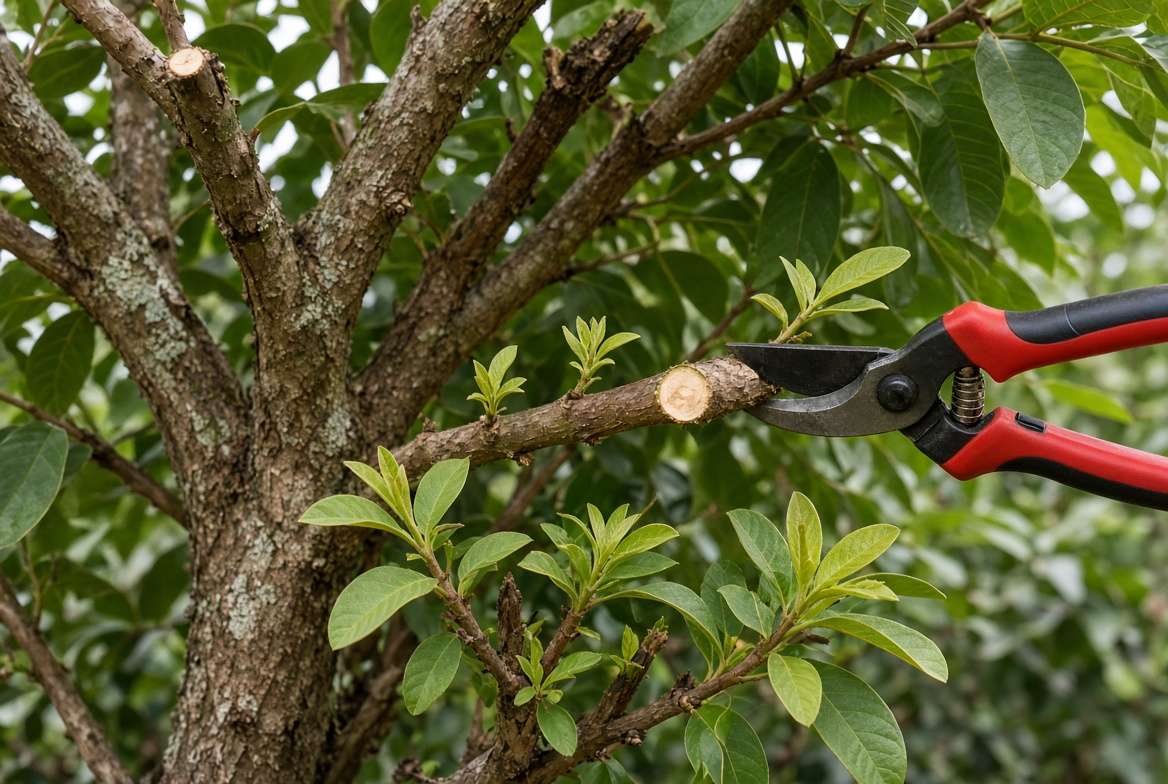
Here is the golden rule of guava tree care: A guava plant only produces flowers and fruit on new growth (current season’s shoots). If you let your tree grow wild without cutting it back, the new growth only happens at the very tips of the highest branches. By heavily pruning the tree, you force it to push out dozens of new lateral shoots lower down on the canopy. More new shoots directly equate to more flowers, which means exponentially more fruit.
When and How to Prune 🪚
The optimal time to prune your guava plant is in late winter or early spring, just before the tree breaks dormancy and pushes out new buds. Start by “topping” the tree. In commercial orchards, guava trees are strictly kept at a height of 6 to 8 feet. This stops the plant from wasting energy growing 20 feet tall and keeps the heavy harvest completely accessible without the dangerous use of a ladder. Cut back the main vertical leaders to encourage a bushier, horizontal spread.
Opening the Canopy 🌬️
Next, thin out the interior of the tree. Remove any branches that are crossing and rubbing against each other, as well as any inward-growing shoots. Eliminate dead, diseased, or damaged wood. Your goal is to create an open, vase-like structure. Sunlight must be able to penetrate the very center of the tree, and the wind should flow freely through the branches. This structural pruning drastically reduces fungal issues and ensures uniform fruit ripening.
Secret #5: Defending Your Harvest – Natural Pest & Disease Control 🛡️
Nothing is more heartbreaking than waiting months for your tropical harvest, only to find the fruit ruined by pests or rot. Proactive defense is critical.
Common Guava Pests 🐛
The sweet scent of ripening guavas is a magnet for insects. The most notorious offender is the Caribbean fruit fly, which lays its eggs inside the developing fruit, causing it to rot from the inside out. You must also keep an eye out for sap-sucking insects like aphids, mealybugs, and whiteflies, which excrete a sticky honeydew that leads to black sooty mold on the leaves. In the soil, root-knot nematodes can damage the root system, causing the plant to slowly decline.
Organic Eradication & Protection 🌿
You do not need harsh, toxic chemicals to protect your food.
-
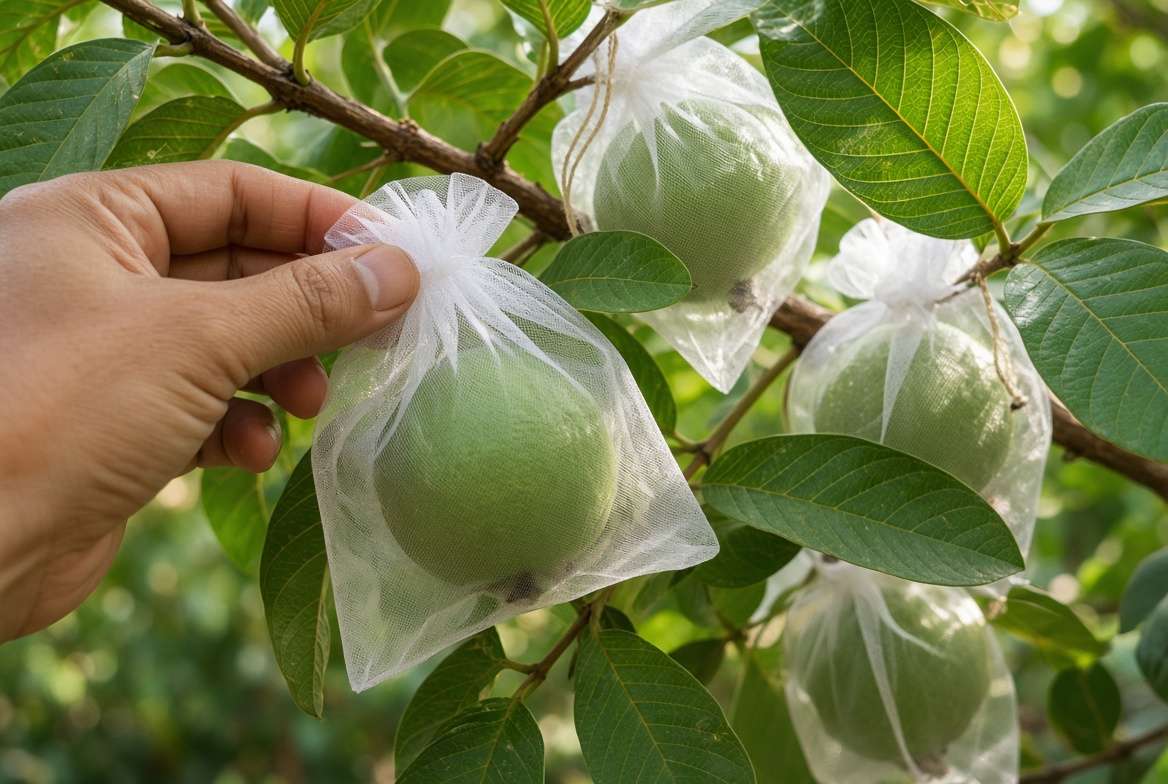
Fruit Bagging: The absolute most effective, 100% organic way to protect against fruit flies and birds is bagging. When the guavas are the size of a golf ball, slip a specialized fruit protection bag (or a simple mesh organza bag) over the fruit and pull the drawstring tight. The fruit will ripen perfectly inside the bag, untouched by pests.
-
Neem Oil & Insecticidal Soap: For aphids and mealybugs, spray the foliage with cold-pressed Neem oil mixed with a gentle insecticidal soap. Always apply these sprays in the early evening to prevent the hot sun from burning the coated leaves.
Preventing Rust and Fungi 🍄
Guava rust is a fungal pathogen that manifests as powdery yellow or brown pustules on the leaves and young fruit. As mentioned in Secret #1, the best prevention is excellent airflow and avoiding overhead watering. If rust does appear, a preventative spray of organic copper fungicide early in the season can stop the spores from spreading and save your harvest.
Growing a Guava Plant in Pots: Container Gardening Tips 🪴
What if you live in a cold climate or simply don’t have backyard space? You can absolutely achieve heavy harvests by growing your guava plant in a container!
Choosing the Right Pot and Variety 🍓
Not all guavas are suited for pot life. Standard Psidium guajava can grow too large, too fast. Instead, select dwarf or compact varieties. The Dwarf Hawaiian Guava or the Strawberry Guava (Psidium cattleianum) are spectacular choices that naturally stay small and produce prolific, delicious fruit. Start with a 5-to-7-gallon container. As the root system fills the pot, gradually up-pot the tree every two years until it resides in a permanent 15-to-20-gallon half-barrel or heavy resin pot.
Container Soil and Winter Care ❄️
Potted plants have zero tolerance for poor drainage. Use a premium, lightweight potting mix heavily amended with perlite and pine bark fines. Ensure the pot has multiple large drainage holes at the bottom. Because guava plants are tropical (thriving in USDA Hardiness Zones 9-11), potted plants must be protected from freezing temperatures. When the threat of frost approaches, roll the pot into a bright, climate-controlled sunroom, greenhouse, or near a large South-facing window indoors. Reduce watering drastically during this indoor overwintering period.
Harvesting & Enjoying the Fruits of Your Labor 🍐😋
After months of careful cultivation, pruning, and feeding, the ultimate reward is finally at hand. But picking a guava too early or too late can ruin the culinary experience.
How to Tell When a Guava is Ripe 👃
Guavas do not ripen significantly off the tree, so you must harvest them at peak perfection. Rely on your senses:
-
Color: The hard green rind will transition to a softer yellowish-green, bright yellow, or even a pinkish hue depending on the specific cultivar.
-
Touch: Give the fruit a very gentle squeeze. It should yield slightly to thumb pressure, similar to a ripe avocado or peach. If it is rock hard, leave it. If it is mushy, it is overripe.
-
Smell: This is the ultimate test. A ripe guava emits an intoxicating, sweet, musky, tropical floral fragrance that you can often smell from several feet away.
Proper Harvesting Technique ✂️
Never yank or pull a guava off the branch. The branches are brittle, and pulling can strip the bark or snap the fragile fruiting wood, which damages the plant’s future growth potential. Always use a pair of sterilized, sharp pruning shears to cleanly clip the stem just above the fruit.
Frequently Asked Questions (FAQ) 🤔
To round out your expertise, here are the most common questions growers ask when cultivating a guava plant:
Do you need two guava plants to get fruit? No. The vast majority of guava varieties are self-fruitful (self-pollinating), meaning a single plant contains both male and female flower parts and will produce fruit all by itself. However, having a second tree nearby for cross-pollination by bees can significantly increase the total yield and the size of the individual fruits.
Why are my guava plant’s leaves turning yellow? Yellowing leaves are the plant’s check-engine light. If the older leaves are turning yellow and dropping, it is usually a sign of overwatering and poor drainage. If the new leaves are yellow with green veins, it is a nutrient deficiency (typically iron or magnesium). Evaluate your soil moisture first before applying fertilizers.
How long does it take for a guava plant to bear fruit? If you purchase a grafted tree or one grown from a cutting (which is highly recommended), you can expect fruit within 1 to 3 years. If you plant a seed from a grocery store guava, it can take 3 to 8 years to reach maturity, and the resulting fruit may not taste identical to the parent fruit due to genetic variation.
Is the guava plant toxic to dogs or cats? Good news for pet owners! The leaves, stems, and roots of the guava plant are completely non-toxic and pet-friendly. However, you should prevent your pets from gorging on the fruit, especially unripe, green guavas, as eating too much can cause a mild upset stomach or diarrhea due to the high fiber and sugar content.
Final Thoughts 🌟
Growing a guava plant is one of the most rewarding endeavors a gardener can undertake. By implementing these five expert secrets—providing maximum sun, mastering the soak-and-dry watering method, feeding strategically, pruning for new growth, and proactively managing pests—you are no longer just leaving things to chance. You are actively cultivating an environment where your tropical fruit tree cannot help but thrive.
Grab your pruning shears, check your soil, and get ready. Your heavy tropical harvest is just a season away!











