
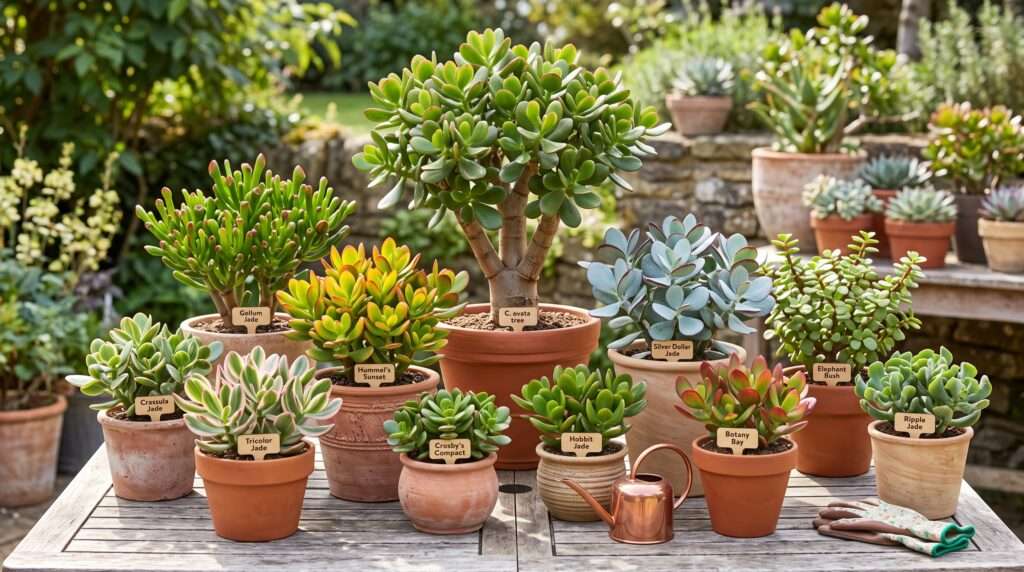
Most plant parents start their indoor jungle journey with a classic green succulent, completely unaware of the incredible variety waiting to be discovered. If you’ve ever stood in a big-box garden center staring at a generic “Succulent Assortment” label trying to figure out what you just bought, you are not alone. As a horticulturist and long-time succulent collector, I’ve grown and propagated dozens of these resilient beauties. This guide will walk you through the 15 most stunning jade plant types, helping you correctly identify your specific variety while providing the exact care secrets needed to keep them thriving for decades.
The Botanical Basics of True Jade Plants 🌿
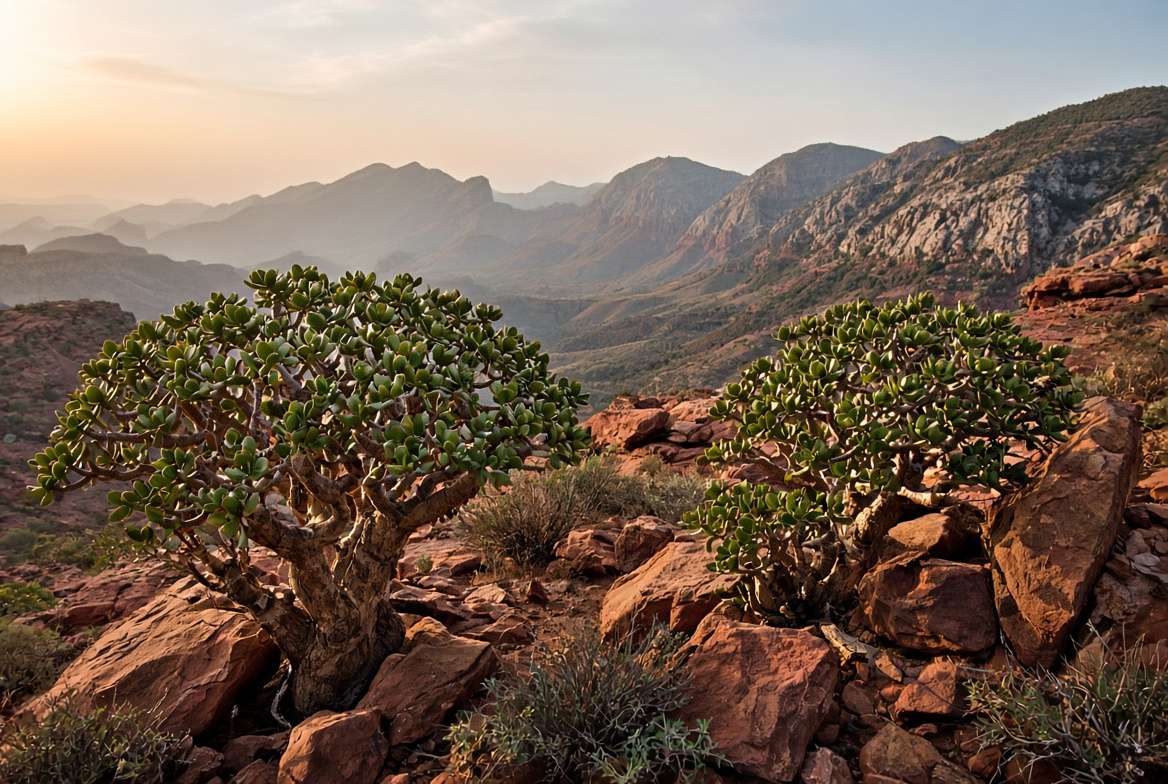
Before identifying your specific variety, it helps to understand what makes a Jade plant unique. True Jades belong to the Crassula genus (primarily Crassula ovata and Crassula arborescens) and are native to the arid, rocky slopes of South Africa.
Expert Insight 💡: These plants evolved to survive harsh droughts by storing massive amounts of water in their thick, fleshy leaves and stems. Understanding their native, dry habitat is the ultimate secret to mastering their care—they thrive on benign neglect and rot quickly when treated like standard tropical houseplants.
15 Stunning Jade Plant Types You Need to Know 🤩
Whether you are looking for classic miniature trees, vibrant sun-stressed colors, or bizarre tubular leaves, there is a variety for every plant lover.
The Classics & Miniatures
-
1. Traditional Jade Plant (Crassula ovata) 🌳: The gold standard of indoor succulents. It features smooth, tear-drop-shaped, emerald-green leaves. Over decades, it can grow into a massive, heavy-trunked indoor shrub.
-
2. Dwarf Jade / Crosby’s Compact (Crassula ovata ‘Crosby’s Compact’) 🤏: Visually similar to the traditional variety, but the leaves are half the size and grow much more densely. It is the perfect candidate for small windowsills or beginner bonsai enthusiasts.
-
3. Elephant Bush / Mini Jade (Portulacaria afra) 🐘: While widely sold and labeled as a “Miniature Jade” in commercial nurseries, this is technically not a true Crassula. We include it here to clear up common market confusion! It features tiny, round leaves on reddish-brown stems and requires slightly more frequent watering than true Jades.
The Variegated & Colorful Beauties
-
4. Golden Jade (Crassula ovata ‘Hummel’s Sunset’) 🌅: A spectacular cultivar that shifts from green to a vibrant yellow-gold with red margins. It requires intense, direct sunlight to maintain this “sun-stressed” color; in low light, it reverts to standard green.
-
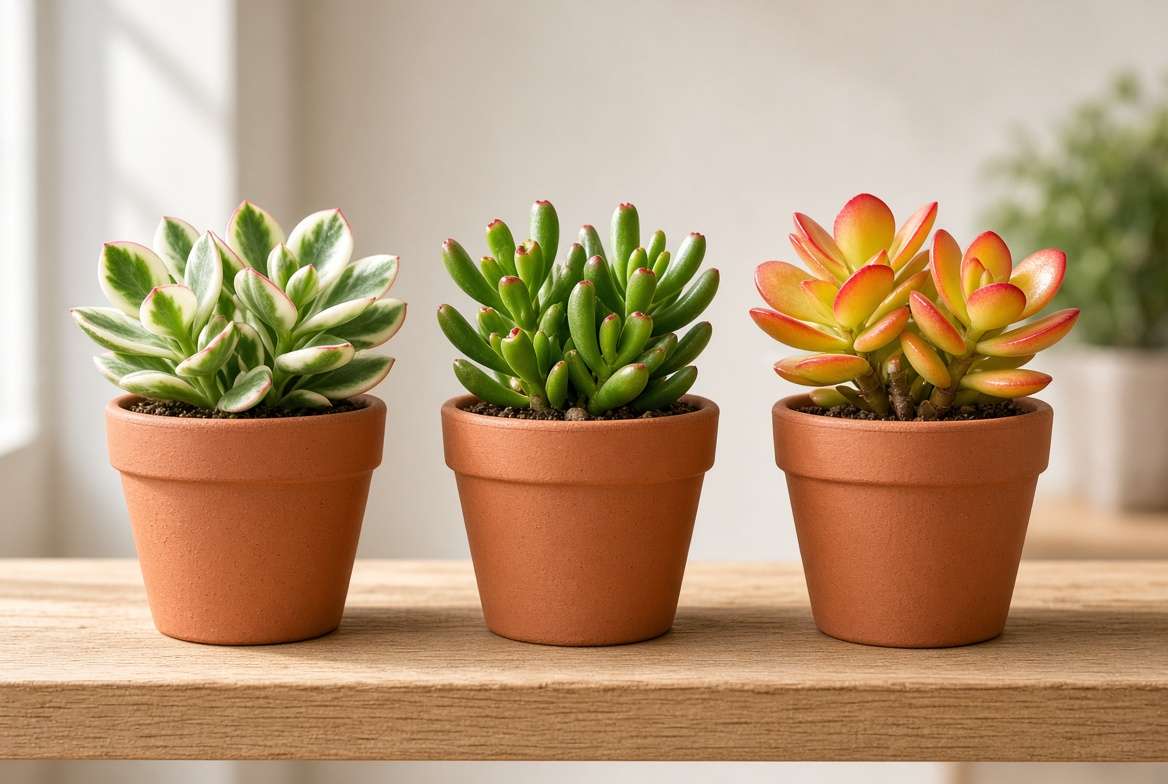
5. Tricolor Jade (Crassula ovata ‘Tricolor’) 🎨: Features gorgeous creamy white and green striped leaves, often edged in a delicate pink when exposed to bright light.
-
6. Lemon & Lime Jade (Crassula ovata ‘Lemon & Lime’) 🍋: Identifiable by its striking, high-contrast pale yellow and lime green variegation.
-
7. Pink Beauty (Crassula ovata ‘Pink Beauty’) 🌸: While most Jades can bloom, this variety is specifically cultivated for its prolific clusters of pink, star-shaped winter flowers and stems that carry a distinct pinkish hue.
The “Tolkien” Group (Tubular & Mutated Jades)
-
8. Gollum Jade (Crassula ovata ‘Gollum’) 🧌: Features fascinating tubular leaves that look distinctly like Shrek’s ears, ending in a red, suction-cup-like tip.
-
9. Hobbit Jade (Crassula ovata ‘Hobbit’) 💍: Often confused with Gollum, you can identify a Hobbit Jade by looking at the leaves—they are curled back and spoon-shaped rather than fully enclosed tubes.
-
10. Skinny Fingers (Crassula ovata ‘Skinny Fingers’) 🤌: Produces long, slender, finger-like tubular leaves that lack the flared, alien-like tips of the Gollum.
-
11. Red Horn Tree (Crassula ovata ‘Red Horn Tree’) 🐂: A massive, spectacular hybrid of Hummel’s Sunset and Gollum. It produces huge, tubular leaves that flush bright crimson red under heavy sunlight.
The Silver & Ruffled Varieties
-
12. Silver Dollar Jade (Crassula arborescens) 🪙: Stands out with perfectly round, flat, silvery-blue leaves bordered with maroon edges. The leaves feature a natural powdery coating called farina, which acts as a natural sunscreen.
-
13. Ripple Jade (Crassula arborescens undulatifolia) 〰️: Highly sculptural and dense, featuring twisted, wavy, bluish-green leaves that add incredible texture to mixed succulent pots.
-
14. Bluebird Jade (Crassula arborescens ‘Bluebird’) 🐦: Boasts powdery blue-grey foliage. It is flatter than the Silver Dollar but shares that same stunning frosted, matte appearance.
-
15. Botany Bay Jade (Crassula ovata ‘Botany Bay’) 🏖️: A relatively new cultivar bred for a tight, compact growth habit. In cooler weather or bright light, the entire leaf blushes a deep, gorgeous red.
Universal Jade Plant Care & Propagation Guide ☀️💧
No matter which of the 15 varieties you bring home, their foundational care remains virtually identical.
-
Light (The Secret to Color): Jades do not just survive in direct sun; they require it to thrive. Place them in your brightest south- or west-facing window. Adequate “sun stress” is the only way to bring out the bright reds, yellows, and pinks in variegated varieties.
-
Watering (The “Soak and Dry” Method): Overwatering is the number one killer of indoor succulents. Wait until the soil is 100% dry before watering. The Taco Test: Gently squeeze a lower leaf. If it is firm, do not water. If it feels slightly soft and bends easily like a taco, give the plant a deep, thorough soaking until water runs out the drainage holes.
-
Soil & Potting: Standard potting soil holds too much moisture. Use a specialized cactus mix, or create your own by blending 50% regular potting soil with 50% coarse perlite or pumice. Always use unglazed terracotta pots, which wick excess moisture away from the roots.
-
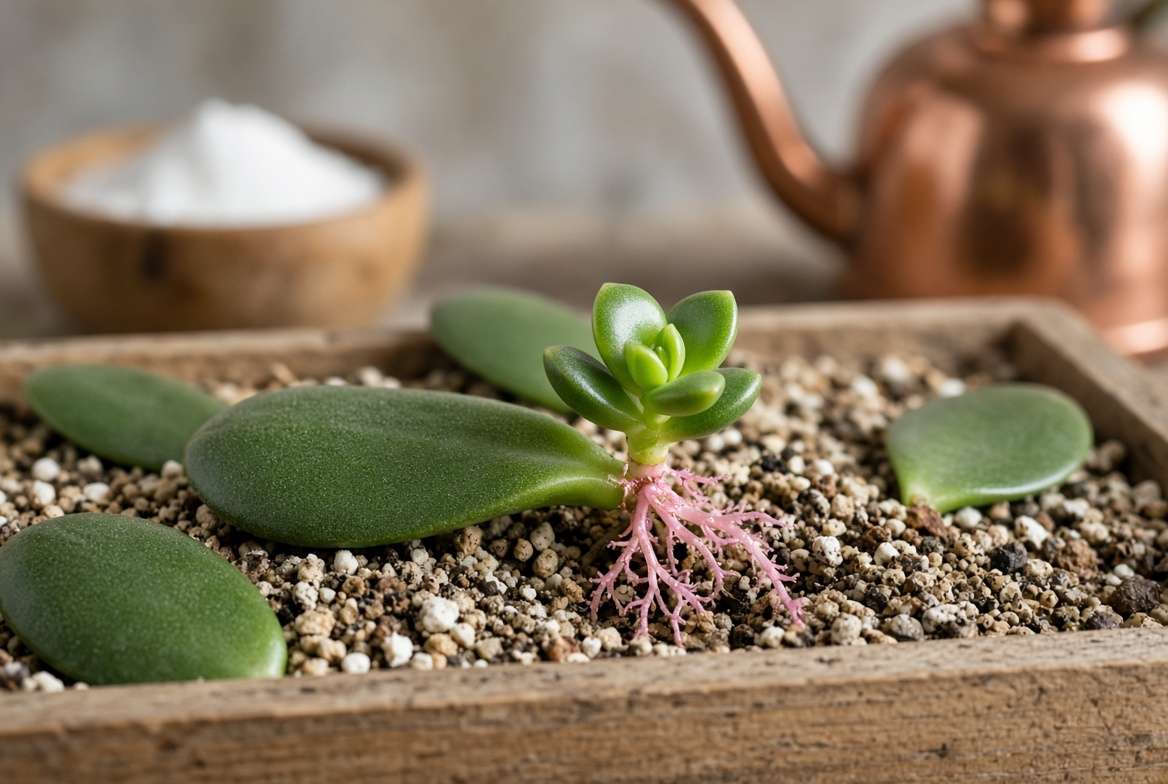
Propagation: You can easily turn one plant into fifty. Simply twist a healthy leaf off the stem, let the raw end dry and callous over for three days, and lay it flat on dry succulent soil. In a few weeks, tiny pink roots and a miniature plant will emerge. For faster results, take a 3-inch stem cutting, callous it, and plant it directly in dry soil. Do not water cuttings until roots have formed!
Troubleshooting Common Jade Plant Problems 🚑
Even the most experienced growers run into issues. Here is how to diagnose and fix common ailments to keep your collection healthy.
-
Wrinkled, shriveled leaves that feel thin: Your plant is severely underwatered. Give it a deep soak.
-
Yellow, translucent, mushy leaves dropping off: This is the classic sign of overwatering and impending root rot. Immediately stop watering, remove the plant from its pot to let the root ball dry, and repot in fresh, dry, highly porous soil.
-
Stretchy, leggy stems with large gaps between leaves (Etiolation): The plant is starving for light and stretching toward the nearest source. Move it to a brighter location. You can prune the leggy tops off to encourage bushier growth lower down.
-
White, cotton-like fuzz in the leaf joints: You have mealybugs. Dip a cotton swab in 70% isopropyl rubbing alcohol and dab directly onto the bugs to kill them instantly, or spray the plant with horticultural neem oil.
Whether you choose a classic Crassula ovata or a funky Gollum Jade, these resilient succulents are lifetime companions that often get passed down through generations. Have you checked your collection to see exactly which varieties you own, and are you planning to add a new “Tolkien” or variegated type to your windowsill next?
While the foundational care guide above will keep your succulents alive, truly mastering these plants requires a deeper understanding of their seasonal rhythms, pruning techniques, and advanced troubleshooting. To elevate your plant care journey and ensure your jade plant types grow from small windowsill novelties into magnificent, blooming indoor trees, let’s dive into the advanced care protocols.
Advanced Jade Plant Care: Seasonal Rhythms 🗓️
Jade plants are highly responsive to the changing of the seasons, and your care routine must adapt accordingly. Unlike many tropical houseplants that grow year-round, Crassula species have distinct periods of active growth and semi-dormancy.
Spring and Summer: The Active Growth Phase 🌱 During the warmer months, your Jade is focused on producing new foliage and lengthening its stems.
-
Watering: You will notice the soil dries out much faster. You may need to water every 10 to 14 days, depending on your climate and pot size. Always rely on the “Taco Test” mentioned earlier rather than a strict calendar schedule.
-
Fertilization: This is the only time of year you should feed your Jade. Use a liquid succulent-specific fertilizer or a balanced houseplant fertilizer diluted to half-strength. Apply it once a month immediately after a regular watering to prevent root burn.
-
Outdoor Vacation: Jades love spending summers outdoors! Wait until all danger of frost has passed and night temperatures are consistently above 50°F (10°C). Crucial Step: Acclimate them slowly. Start them in full shade for a few days, gradually moving them into dappled sunlight, and finally into direct morning sun. Moving an indoor Jade directly into harsh outdoor afternoon sun will result in severe, irreversible white scorch marks on the leaves.
Fall and Winter: The Rest Phase ❄️ As days shorten and temperatures drop, Jades enter a period of slowed growth.
-
Watering: Drastically reduce your watering frequency. The plant is not actively taking up as much moisture, making it highly susceptible to root rot. You might only need to water once a month or even less.
-
Temperature Drop: Jades actually prefer cooler temperatures in the winter. Keeping them in a room that drops to 50-55°F (10-13°C) at night mimics their natural winter habitat.
-
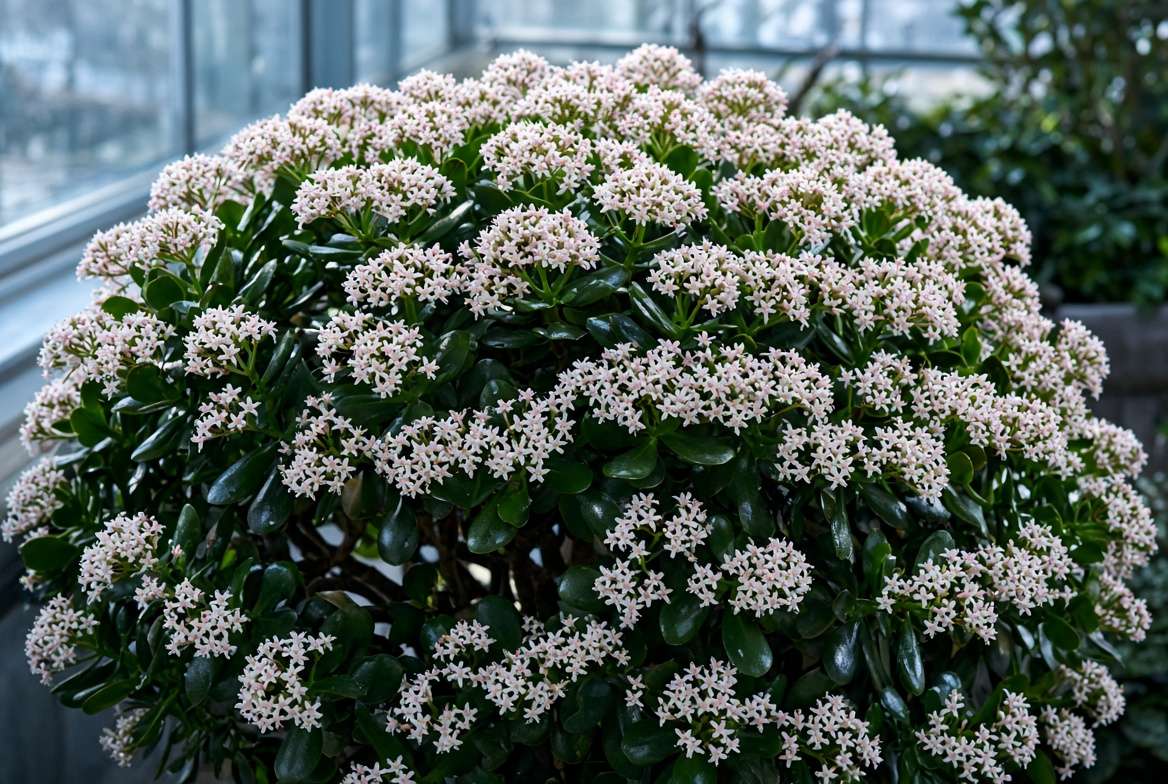
The Secret to Blooms: If you want your mature Crassula ovata to produce its famous clusters of white or pink star-shaped flowers, this winter temperature drop combined with absolute drought (withholding water for several weeks) and short daylight hours is the exact biological trigger they need to bloom.
The Art of Pruning and Shaping: Creating a Jade Bonsai ✂️🌳
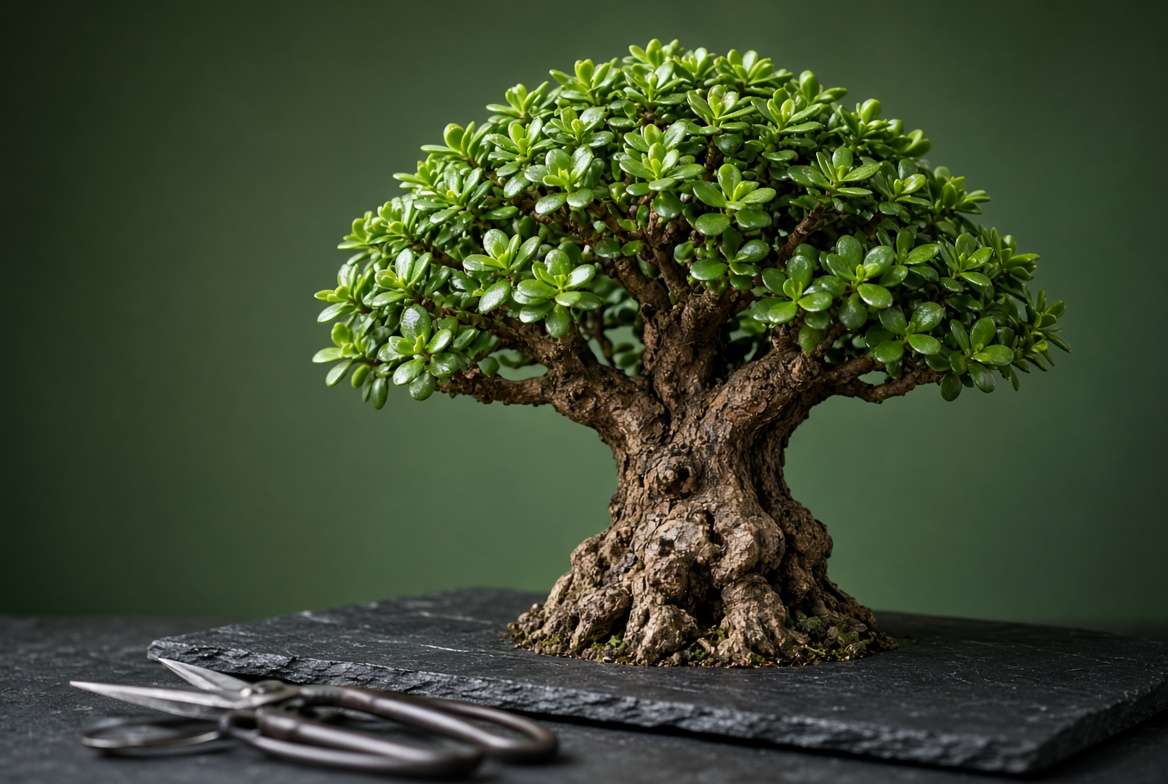
One of the most rewarding aspects of growing traditional, Dwarf, or “Tolkien” jade plant types is their incredible response to pruning. Because they develop thick, woody stems over time, they are spectacular candidates for beginner bonsai.
Why Pruning is Necessary Left entirely to their own devices, Jade plants can become top-heavy. Their thick, water-filled leaves weigh down slender stems, eventually causing branches to snap under their own weight. Pruning encourages the main trunk to thicken and forces the plant to grow bushier, more compact canopies.
How to Prune Like a Pro:
-
Use the Right Tools: Always use sterilized, sharp bonsai shears or a razor blade to make clean cuts.
-
The “Rule of Two”: Whenever you cut a Jade stem just above a leaf node (the little rings around the stem where leaves attach), the plant will heal the cut and push out two new branches from that exact spot. This is how you build a wide, canopy-like structure.
-
Bottom Pruning: To create a “tree” look, gently snap off the lowest leaves on the main stem to expose the trunk.
-
Don’t Toss the Scraps! Every single healthy leaf and stem you remove during pruning can be propagated into a brand-new plant using the methods outlined in our propagation section.
Frequently Asked Questions (Deep Dive) 🤔
To make this the ultimate skyscraper guide to Jade plants, let’s address the most common and nuanced questions plant parents ask.
Are Jade plants toxic to cats and dogs? 🐈🐕 Yes. This is a critical piece of information for pet owners. All Crassula species are toxic to cats, dogs, and horses. Ingestion can cause vomiting, depression, lethargy, and a lack of coordination. Keep your Jades on high shelves or in plant rooms inaccessible to curious pets. (Note: The Elephant Bush, Portulacaria afra, is non-toxic, making it a great pet-safe alternative!).
How fast do Jade plants actually grow? 📏 Jades are notorious slow growers. Under optimal indoor conditions with plenty of light, you can expect a classic Crassula ovata to grow about 2 to 3 inches per year. Dwarf varieties and mutated types like the Gollum Jade grow even slower. Patience is key; you are growing a generational plant.
Why are the leaves on my Jade plant turning red? 🔴 If the edges of the leaves are blushing red (especially on varieties like Hummel’s Sunset or Botany Bay), congratulations! You are doing an excellent job providing adequate light. This red margin is called “sun stress,” which is a protective pigmentation the plant produces in high light. It is completely harmless and highly sought after by collectors.
What is the white, powdery stuff on the leaves? (Farina vs. Powdery Mildew) 🌫️ If you own a Silver Dollar Jade or Bluebird Jade, you will notice a hazy, whitish-blue powder coating the leaves. This is called farina (epicuticular wax). It is a natural sunscreen that protects the plant from harsh UV rays and water loss. Never rub it off, as the leaf cannot regenerate it! However, if you have a green Jade and see fuzzy, localized white patches accompanied by distorted leaf growth, you might be dealing with powdery mildew (a fungal issue caused by poor airflow) or mealybugs.
Elevate Your Indoor Jungle 🪴✨
Mastering the care of these magnificent succulents is a highly rewarding horticultural journey. By understanding the specific needs of the various jade plant types—from the high-light demands of the Golden Jade to the sculptural pruning of the Gollum Jade—you are well on your way to cultivating an indoor forest of miniature, living trees.
Armed with the right soil, a sunny window, and a heavy dose of patience between waterings, your Jade won’t just survive; it will become a stunning, architectural centerpiece in your home for decades to come.
If you found this guide helpful, be sure to bookmark it for your next repotting or pruning session! Which variety are you most excited to try? Drop your thoughts in the comments below, and don’t forget to check out our comprehensive guide on [How to Mix the Ultimate DIY Succulent Soil] to get your new plant off to the perfect start!











