
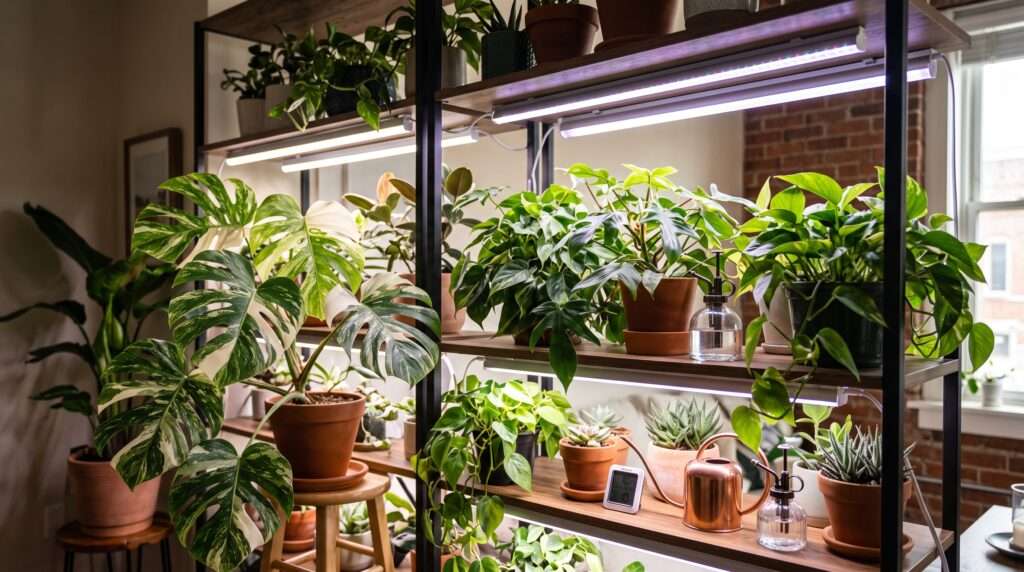
Have you ever stared at a pale, stretching indoor Monstera and wondered why it doesn’t look like the lush, vibrant giants thriving in a professional greenhouse? Standard LED grow lights are excellent for basic photosynthesis, but they often lack a crucial ingredient found in natural sunlight. If you want to push your indoor garden to its absolute peak, understanding how to safely use UV lights on plants is the ultimate game-changer. However, introducing ultraviolet wavelengths comes with a very real fear of scorching delicate foliage. By the end of this comprehensive guide, you will know exactly how to safely introduce supplemental lighting to unlock explosive growth, richer colors, and enhanced natural pest resistance—without crisping a single leaf. 🌿
Author’s Note: As an indoor horticulturist, I’ve seen firsthand the difference supplemental ultraviolet lighting makes. I recently rehabilitated a struggling, faded Monstera Thai Constellation simply by carefully dialing in its light exposure, reviving its striking variegation and pushing vigorous new growth in just four weeks. Let’s dive into the science so you can replicate these results safely in your own home.
The Science of Sunlight and UV Wavelengths 🌞
To understand why your indoor garden might be underperforming, we have to decode the light spectrum. Most commercial grow lights are engineered strictly to provide PAR (Photosynthetically Active Radiation), which covers the visible light spectrum from 400 to 700 nanometers. While PAR drives photosynthesis, it entirely misses the invisible ultraviolet spectrum that plants evolved to rely on outdoors.
Not all ultraviolet light is created equal, and knowing the difference is the first step to safe indoor growing:
-
UV-A (315-400 nm): This is the gentle booster. It is readily absorbed by plants and plays a significant role in thickening leaves, enhancing photomorphogenesis (structural development), and deepening pigmentation.
-
UV-B (280-315 nm): This is the stress-tester. While too much is harmful, controlled exposure triggers vital defense mechanisms, stimulating the plant to produce protective resins, trichomes, and essential oils.
-
UV-C (100-280 nm): This is the danger zone. Used primarily for sterilization in medical settings, these highly energetic wavelengths destroy cellular DNA and should never be used directly on living plants.
The Secret Benefits and the Danger Zone 🌱✨
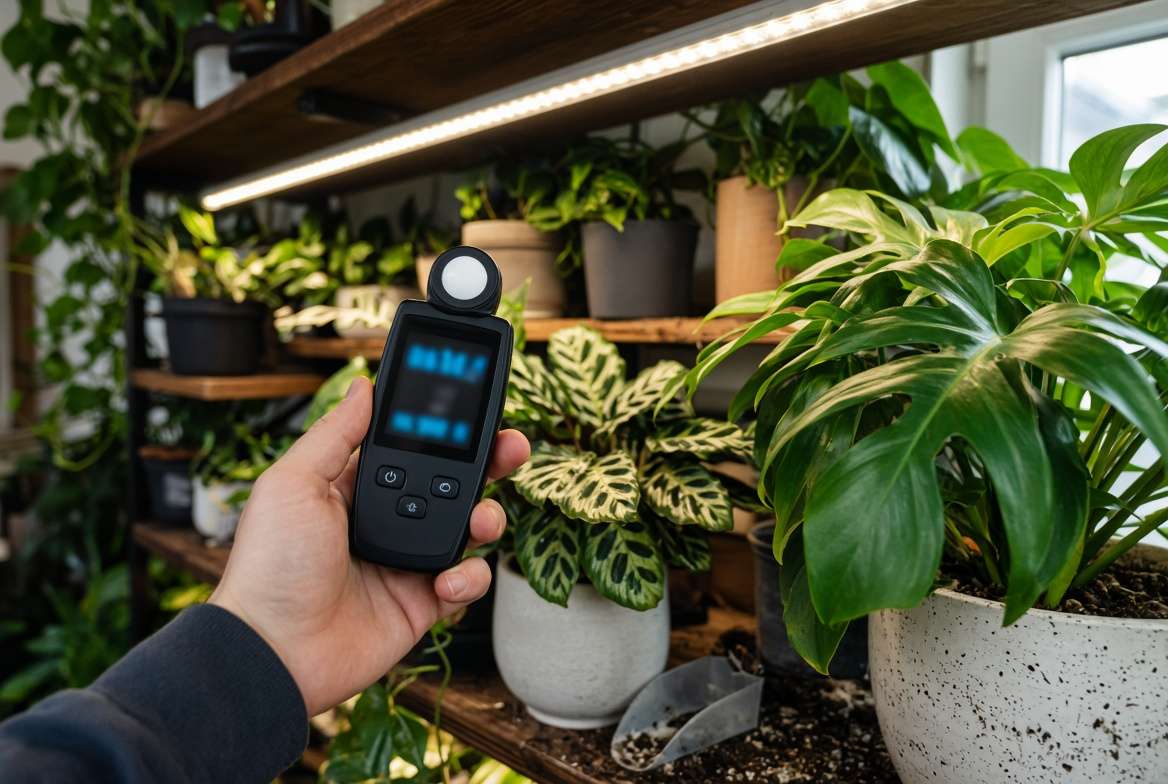
When applied correctly, ultraviolet wavelengths act as a natural hack for plant optimization. The primary benefit is thicker, stronger stems and leaves. Exposure signals the plant to build a robust cellular structure to handle intense light, resulting in a sturdier canopy. Furthermore, to protect themselves from radiation, plants produce “sunscreen” in the form of anthocyanins. This process drastically enhances colors, bringing out stunning reds, deep purples, and brighter whites in highly variegated species.
This hardened exterior also provides incredible natural pest and disease resistance. A thicker plant cuticle is much less appetizing to common indoor pests like spider mites, thrips, and aphids, while the radiation naturally suppresses airborne mold and mildew spores.
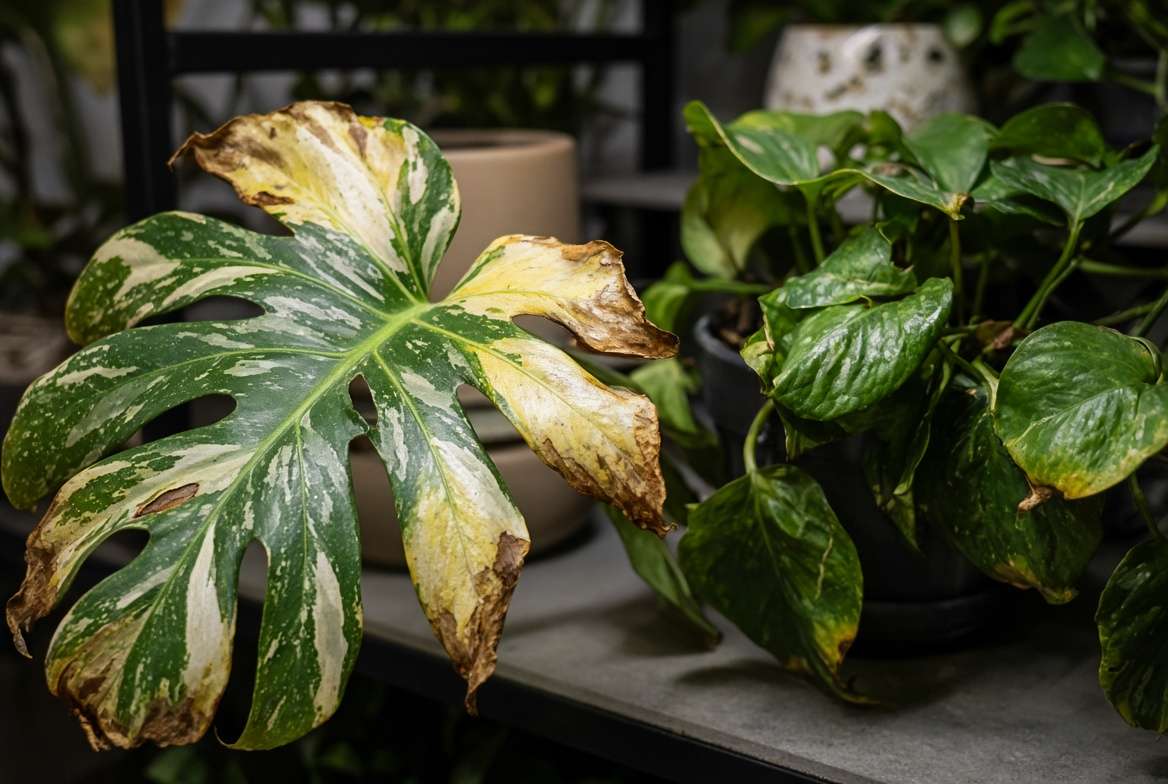
However, crossing the line from healthy stress to thermal damage happens fast. Light burn is irreversible at the cellular level. If you push your plants too hard, they will exhibit clear distress signals:
-
Crispy, brown leaf edges that crumble to the touch.
-
Severe bleaching or washing out of the upper canopy closest to the fixture.
-
Curling leaves (often called “tacoing”) as the plant attempts to hide its surface area from the light.
The Step-by-Step Guide to Safe UV Exposure 🛠️
Introducing an intense new light spectrum requires patience. If you immediately place your indoor plants under a powerful supplemental bar for 12 hours a day, they will burn.
Step 1: The Acclimation Process Hardening off your indoor plants is non-negotiable. Start by running your supplemental light for just 15 to 30 minutes a day. Monitor the canopy closely for 48 hours. If there are no signs of tacoing or bleaching, increase the exposure by 15 minutes every three to four days until you reach your target duration.
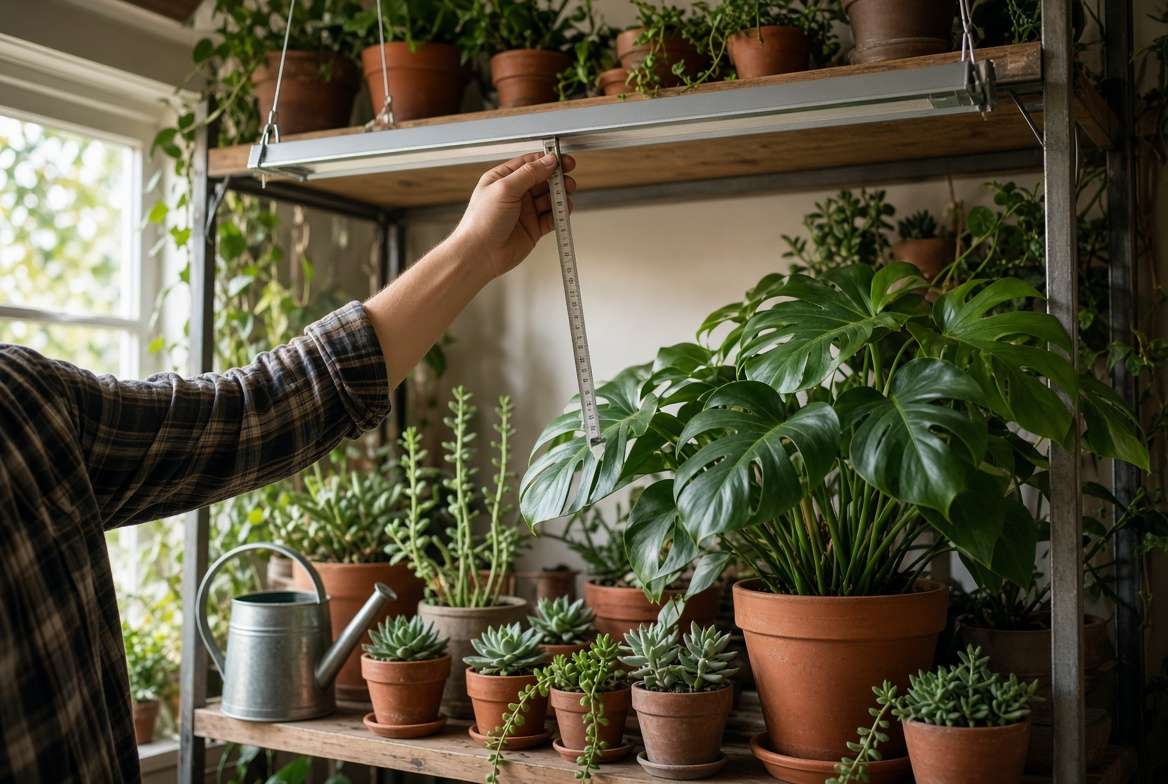
Step 2: Nailing the Distance Proximity dictates intensity. For a high-output supplemental bar (like a fluorescent T5 or a specialized LED strip), hang the fixture at least 24 to 36 inches above the highest leaf of your canopy. As your plants acclimate, you can lower it slightly, but maintaining a buffer zone prevents accidental thermal shock.
Step 3: Timing for Maximum Impact You should not run these wavelengths all day. Outdoors, plants only receive peak ultraviolet radiation during solar noon. Mimic this natural rhythm by setting your supplemental fixture on a timer to turn on for just 2 to 4 hours directly in the middle of your standard daily light cycle.
Plant-Specific Guidelines and Buying Tips 🛒🪴
Not all greenery is created equal, and your approach must adapt based on what you are growing.
-
Tropical Houseplants (Monstera, Pothos, Philodendron): These forest-floor natives have low to moderate needs. A high-quality full-spectrum LED is usually sufficient to support their variegation without risking damage.
-
Succulents and Cacti: These desert natives boast incredibly high tolerance. Supplemental exposure is highly recommended to prevent stretching (etiolation) and to force out their vibrant “stress colors.”
-
Edibles and Herbs (Citrus, Peppers, Basil): These require high UV-B exposure to maximize flavor profiles, aromas, and overall fruit yields.
-
Low-Light Plants (Calathea, Ferns): Keep these delicate understory plants far away from dedicated supplemental ultraviolet fixtures to prevent instant scorching.
When upgrading your setup, beware of cheap, purple-tinted LEDs found on massive online marketplaces that falsely advertise ultraviolet output; true UV diodes are expensive to manufacture. Instead, invest in a dedicated fluorescent T5 bulb or a premium supplemental LED bar from a reputable horticultural lighting brand. Keep in mind that true ultraviolet radiation is harmful to human skin and eyes, so always wear proper protective glasses when working directly beneath your powered-on fixtures.
Mastering indoor sunlight comes down to one golden rule: start slow, hang the fixture high, and watch your plants closely. What are you currently growing that could benefit from a light upgrade?
While the golden rule is to start slow and hang high, choosing the exact right equipment is where most indoor gardeners make their first critical mistake. Let’s dive deeper into the hardware, because throwing your money at the wrong fixture won’t just waste electricity—it could actively damage your indoor jungle.
VII. The Ultimate Buying Guide: Choosing the Right UV Grow Light 💡🛒
Navigating the grow light market can be overwhelming. With thousands of products claiming to be “full spectrum,” it is incredibly easy to fall victim to clever marketing. When you are specifically looking for UV lights on plants, you need to understand the hardware.
Full Spectrum LEDs vs. Supplemental UV Bars
Most modern, high-quality “full-spectrum” LED grow lights do an excellent job of mimicking the visible light of the sun (the PAR range). Some premium models will even include a handful of UV-A diodes (usually peaking around 385nm to 395nm). For casual growers of tropical houseplants, this built-in UV-A is often enough to support healthy leaf development and moderate variegation.
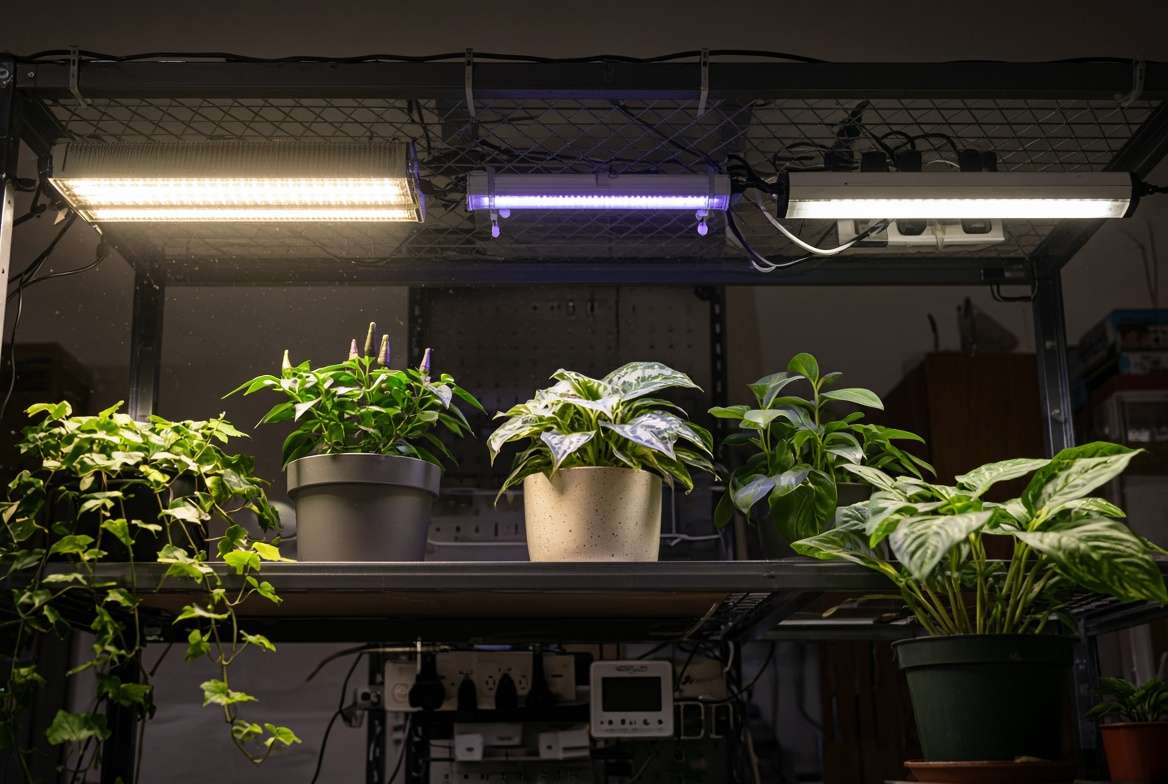
However, if you are growing high-light plants, forcing stress colors on succulents, or cultivating indoor fruiting plants and herbs, a standard full-spectrum LED won’t cut it. You will need a supplemental UV bar. These are standalone fixtures designed strictly to blast ultraviolet wavelengths (specifically UV-B) and are meant to be run alongside your primary grow lights.
Red Flags When Buying UV Lights 🚩
When shopping on massive online marketplaces, you will see hundreds of cheap, purple-tinted lights (often called “blurples”) claiming to emit high UV. Here is the reality: true ultraviolet diodes are expensive to manufacture.
-
The Fake UV Scam: If a light costs $20 and claims to output massive amounts of ultraviolet radiation, it is almost certainly just a standard blue LED (around 450nm). It will look purple to your eye, but it provides zero true ultraviolet benefits to your plant canopy.
-
Check the Spectral Graph: Reputable brands will always provide a spectral graph or an integrating sphere report. Look specifically for spikes in the 280-315 nm (UV-B) and 315-400 nm (UV-A) ranges. If the graph stops at 400nm, it does not contain true ultraviolet light.
Top 3 Recommendations for Home Growers 🏆
To help you skip the guesswork, here are three expert-approved setups based on different budgets and spatial needs:
-
The Budget-Friendly Classic (AgroMax Pure UV T5): Fluorescent technology is older, but it remains one of the absolute best and most affordable ways to deliver pure UV-B to a plant canopy. A single T5 bulb fixture is incredibly effective for small indoor setups and won’t break the bank.
-
The Mid-Tier Modular Option (AC Infinity Ionbeam UV): If you grow in an indoor greenhouse cabinet (like a converted IKEA Milsbo) or on a shelving rack, LED light bars are the way to go. Brands like AC Infinity offer magnetic, low-profile supplemental bars that integrate seamlessly into existing smart-grow systems.
-
The Premium/Commercial Grade (California Lightworks or HLG): For dedicated grow tents or large indoor edible gardens, high-end horticultural brands like Horticulture Lighting Group (HLG) or California Lightworks offer dedicated supplemental bars. These are incredibly powerful, highly efficient, and built to cover wide canopies.
VIII. Frequently Asked Questions (FAQs) 🤔
To make this the most comprehensive guide on the internet, let’s address the most common questions indoor gardeners have when introducing this intense light spectrum.
Can standard LED grow lights provide enough UV for my plants? Generally, no. As mentioned above, most standard LED grow lights peak in the blue and red visible spectrums to maximize photosynthesis efficiency. While they might emit a negligible fraction of UV-A, they almost never emit UV-B, which is the wavelength responsible for triggering the plant’s advanced defense mechanisms, increased trichome production, and enhanced essential oils.
Do UV lights kill spider mites on houseplants? They don’t “zap” bugs like an outdoor bug zapper, but they are a fantastic preventative tool! Prolonged exposure to UV-B radiation disrupts the reproductive cycle of many soft-bodied pests, including spider mites and fungus gnats. More importantly, the ultraviolet light thickens the plant’s cuticle (the waxy outer layer of the leaf), making it physically harder for pests to pierce the leaf tissue and feed.
Can I use a reptile UV bulb for my indoor plants? Yes, but with caveats. Reptile bulbs (like those used for bearded dragons) do emit true UV-A and UV-B. However, they are designed as “spotlights” to heat a specific rock or small area. The light footprint is very narrow, meaning only a tiny portion of your plant canopy will receive the light. If you only have one small succulent, a reptile bulb can work in a pinch, but for a whole shelf of plants, a linear grow bar is vastly superior.
Is UV light safe for humans and pets in the house? ⚠️ This is the most critical safety question. True ultraviolet light—especially UV-B and UV-C—is harmful to human skin and eyes. It is the exact same radiation that causes sunburns and cataracts outdoors.
-
Safety Rule #1: Never look directly at a powered-on ultraviolet grow fixture.
-
Safety Rule #2: If your plants are in a common living area (like a living room), only run the supplemental lights while you are at work or out of the room.
-
Safety Rule #3: If you are working inside a grow tent while the lights are on, invest in a pair of specialized horticultural UV-blocking glasses.
IX. Conclusion: Mastering Indoor Sunlight 🌟
Bringing the full power of the sun indoors is the ultimate step in mastering your indoor garden. By carefully introducing UV lights on plants, you are no longer just keeping your greenery alive—you are optimizing it. You are telling your plants to build stronger cellular walls, produce breathtaking, vibrant pigmentation, and naturally defend themselves against invasive pests.
Remember the golden rules of supplemental lighting: Start slow, hang high, and watch closely. Treat ultraviolet light like a powerful plant medicine; the right dose cures, but an overdose destroys. By paying close attention to your canopy’s daily response and following the acclimation steps outlined in this guide, you will unlock a level of indoor growth you never thought possible.
Now, I want to hear from you! 👇 What are you currently growing in your indoor jungle, and which plant are you most excited to try under UV light? Drop a comment below with a picture of your setup! And don’t forget to subscribe to our newsletter to receive your Free Printable Grow Light Distance & Timing Cheat Sheet directly to your inbox. Happy growing! 🌱✨











