
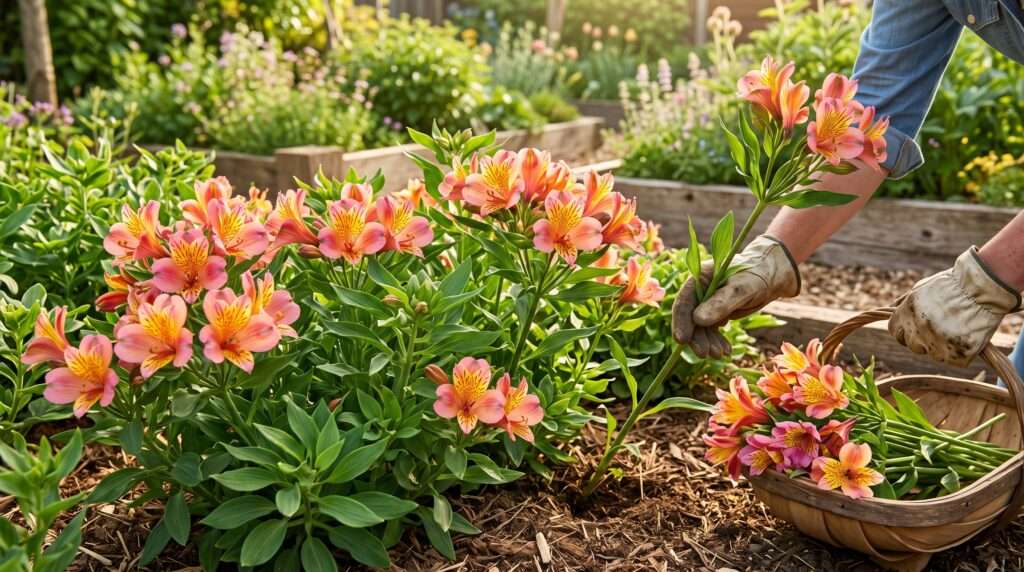
Have you ever brought home a stunning bouquet from the florist, captivated by those vibrant, freckled petals, and wished you could have them in your garden forever? If you have ever tried growing Peruvian lily plants (Alstroemeria), you might already know they are the ultimate cut flower, often lasting up to three weeks in a vase. However, you might also know the deep frustration of seeing them produce lush green foliage in their second year with absolutely zero blooms.
Why do these prolific bloomers suddenly stop flowering? The secret to unlocking endless color isn’t just about watering or basic potting soil; it lies in understanding the unique underground anatomy and physiological triggers of the plant. As a long-time cultivator who has trialed both cold-hardy varieties in garden borders and hybrid greenhouse cultivars in patio containers, I have seen first-hand how simple adjustments in soil temperature and harvesting techniques can transform a dormant plant into a blooming machine.
In this comprehensive guide, we are moving past basic seed-packet instructions. We will dive deep into the specific horticultural “secrets”—from rhizome chilling requirements to the florist’s stem-pulling harvest method—that guarantee your Peruvian lily plants will bloom profusely, year after year.
Quick Reference: Cultivation at a Glance 📋
-
Botanical Name: Alstroemeria spp.
-
Hardiness Zones: USDA 7–10 (with specific cold-hardy cultivars surviving down to Zone 5/6)
-
Sunlight Requirements: Full morning sun with dappled afternoon shade
-
Soil pH: 5.8 – 6.8 (Slightly acidic to neutral)
-
Bloom Window: Late spring through mid-autumn
2. Understanding Alstroemeria: Anatomy, Growth Habits, and Varieties 🌱
To master the care of Peruvian lilies, you first need to understand how they are built. They are quite unlike your standard garden perennials, possessing unique quirks both above and below the soil.
The Anatomy of Peruvian Lily Plants: Tubers, Rhizomes, and Foliage 🔬
Underneath the soil, Alstroemeria relies on a dual-root system that confuses many beginner gardeners.
-
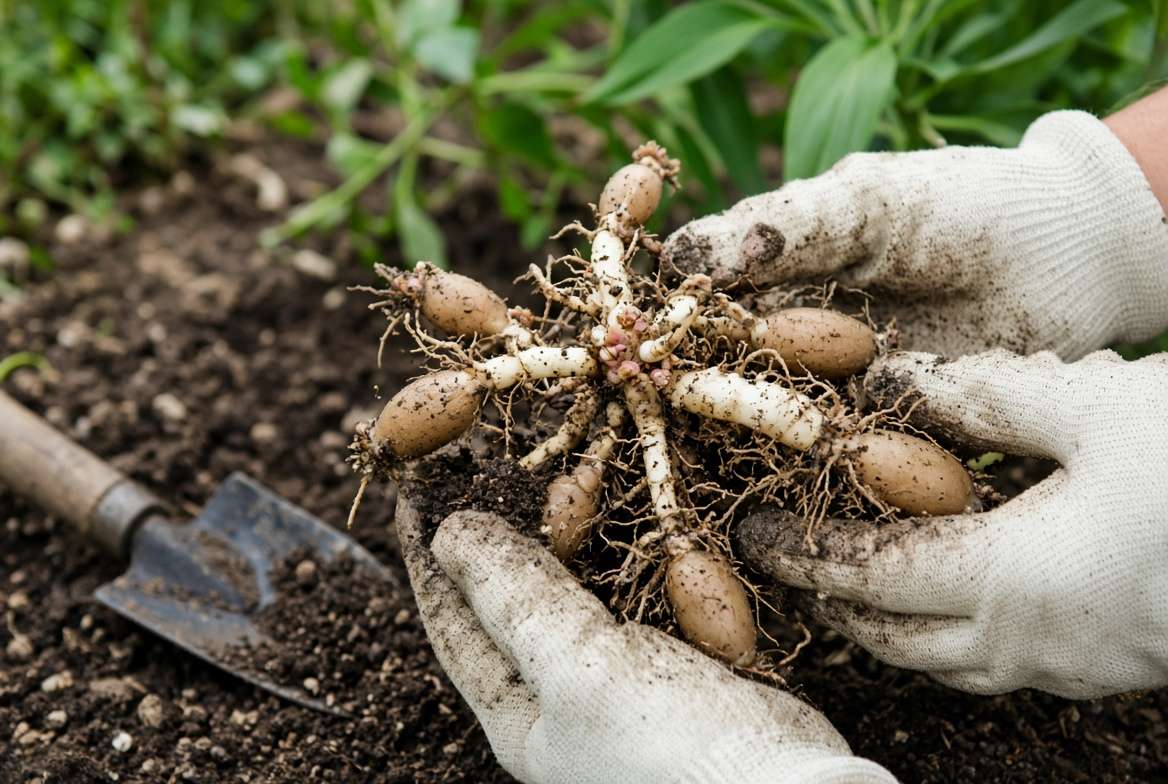
The Root System: The plant grows from a white, fleshy, creeping rhizome that acts as the main growing crown. Attached to this rhizome are swollen, sausage-like storage tubers. While the rhizome pushes up new shoots and actively grows, the tubers act as water and carbohydrate reservoirs. If you accidentally snap a tuber during planting, the plant will survive. But if you damage the rhizome, the plant’s growth will stunt severely.
-
Resupinate Leaves: Above ground, Peruvian lilies exhibit a fascinating botanical trait called resupination. As the stems emerge, they twist 180 degrees at the base, meaning the physical “bottom” of the leaf is actually facing upward toward the sun. This twisting gives the foliage its unique, textured appearance and helps the plant maximize photosynthesis in its native South American habitats.
Top Cultivars for Nonstop Garden Performance 🏆
Not all Peruvian lilies are created equal. Depending on your climate and gardening setup, selecting the right cultivar is half the battle.
-
Compact/Patio Series: If you are growing in pots, look for dwarf varieties like the Princess Lilies series, ‘Inticancha’, or ‘Colorita’. These stay under 12–15 inches tall, making them perfect for container gardening and small balconies where tall stems might flop over. 🪴
-
Cold-Hardy Perennial Workhorses: For gardeners in colder climates (Zones 5 and 6), you need genetics bred for winter survival. ‘Sweet Laura’ is a wonderfully fragrant, yellow-and-orange variety that handles freezes exceptionally well. The ‘Indian Summer’ variety, with its striking dark bronze foliage and fiery orange blooms, is another robust survivor. ❄️
-
Tall Florist Selections: If your goal is a dedicated cutting garden, seek out the tall Dutch hybrids (often reaching 3 to 4 feet tall). These require staking or netting but reward you with the long, sturdy stems prized in commercial floral arrangements. 💐
3. Ideal Growing Conditions: Building the Perfect Foundation ☀️
If your plant is producing lots of leaves but no flowers (a condition known as “blind stems”), the problem almost always traces back to its foundational growing environment.
Light and Temperature: The Delicate Balance ⚖️
Peruvian lilies are incredibly sensitive to root zone temperatures.
-
Sunlight Requirements: They crave sunshine to produce flowers, but they despise baking heat. The sweet spot is 6 to 8 hours of direct morning sun, followed by protective, dappled shade during the scorching afternoon hours.
-
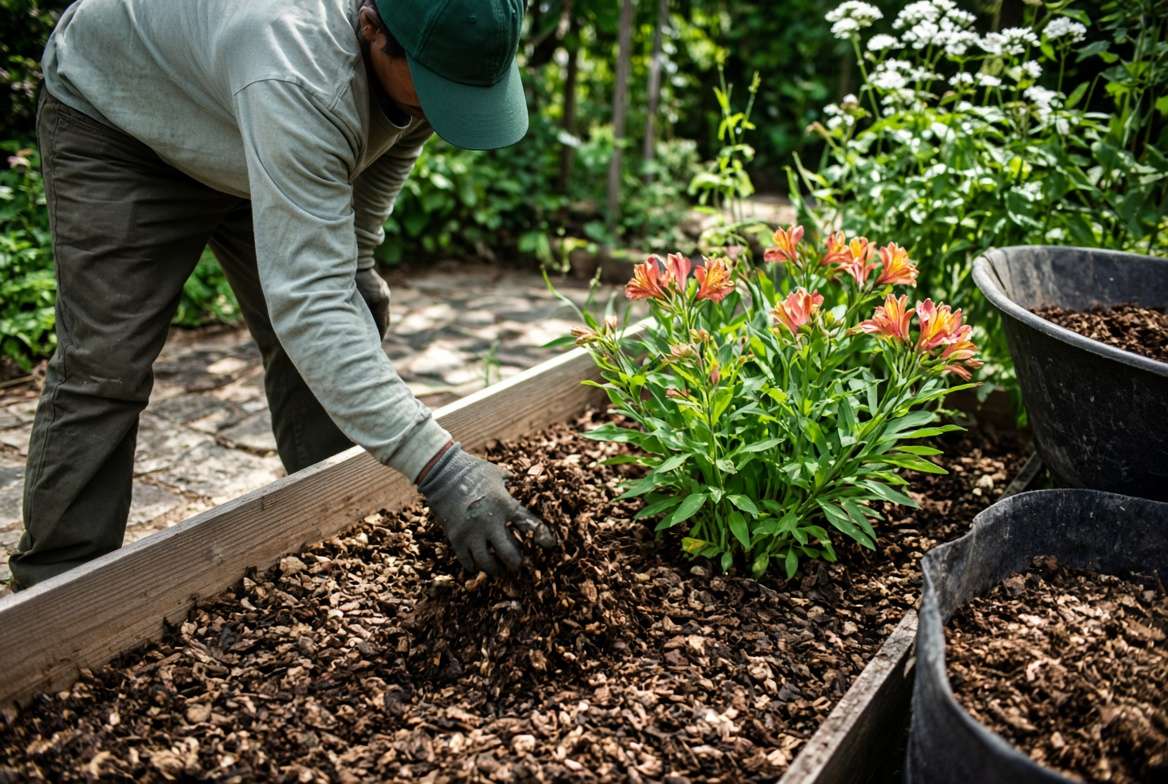
Root Zone Temperature Management (The Big Secret): Here is the most critical secret to Alstroemeria: If the soil temperature exceeds 70°F (21°C), the rhizome stops producing flower buds. High soil temperatures trigger the plant to produce only leafy, blind stems. To combat this, you must keep the root zone cool. Applying a 2- to 3-inch layer of organic mulch (like shredded bark or compost) over the root zone acts as insulation, keeping the soil significantly cooler than the ambient air temperature and tricking the plant into continuous blooming. 🌡️
Soil Science and Potting Mix Chemistry 🪴
The quickest way to kill a Peruvian lily is by letting it sit in soggy, heavy clay soil. Their fleshy tubers will rot in a matter of weeks.
-
Texture & Drainage: Your soil must be loose, gritty, and exceptionally well-draining. If planting in the ground, amend heavy clay with generous amounts of coarse sand, perlite, and well-rotted compost. The goal is a loamy structure where water flows through easily, yet enough organic matter remains to retain essential moisture.
-
Optimal pH: Alstroemeria prefers slightly acidic to neutral soil, ideally between 5.8 and 6.8 on the pH scale. If your soil is too alkaline, the plant will struggle to absorb iron and manganese, leading to yellowing leaves (chlorosis). Incorporating pine bark fines or peat moss can gently lower the pH to the optimal range.
4. Planting Step-by-Step: From Bare Rhizome to Lush Foliage 🚜
Proper planting technique ensures your rhizomes establish quickly without rotting or suffering from transplant shock.
When and How to Plant Peruvian Lilies 🗓️
-
Spring vs. Autumn Planting: In colder regions (Zones 5–7), plant bare-root rhizomes or potted nursery plants in early spring after the danger of frost has passed. This gives them the entire summer to establish a deep root system before winter. In warmer zones (Zones 8–10), autumn planting is highly recommended so the roots can establish during the cool, rainy winter months.
-
Planting Depth and Spacing: Dig a hole roughly 6 to 8 inches deep. Place the rhizome carefully, ensuring you do not snap the brittle tubers. Do not plant too deep! The top of the crown should sit just 2 inches below the soil surface. Space multiple plants at least 18 to 24 inches apart. Alstroemeria expands outward via its creeping rhizomes; planting them too closely will lead to overcrowding and immediate nutrient competition.
Container Gardening Protocols for Patios & Balconies 🏺
Growing in pots is a fantastic way to control soil temperature and moisture.
-
Pot Selection: Choose a deep container. Because the taproots and tubers reach downward, your pot should be at least 12 to 14 inches deep.
-
Material Matters: Terracotta pots look beautiful but heat up quickly in the sun and evaporate moisture fast. Thick glazed ceramic, high-density resin, or double-walled plastic pots are superior for Peruvian lilies because they provide better thermal insulation for those heat-sensitive roots. Ensure the pot has large drainage holes—layering gravel at the bottom is an outdated myth; just use a premium, perlite-heavy potting mix right to the bottom!
5. The Core Secrets: Watering, Nutrition, and the Bloom Triggers 💧
Mastering the daily care of Peruvian lilies requires balancing their need for hydration and energy with their extreme sensitivity to rot and over-stimulation.
Precision Irrigation: Hydrating Without Suffocating Roots 🚰
During their active spring growth surge, Peruvian lily plants are thirsty. They need consistent moisture to fuel the rapid elongation of their stems and the development of flower buds.
-
The “Knuckle Test”: The golden rule for watering is to check the soil moisture with your finger. Plunge your index finger down to the second knuckle. If it feels completely dry, it is time to water deeply. If it is still damp, wait.
-
Summer Heat Management: As temperatures rise in mid-summer, the plant naturally slows down its growth. Overwatering during this semi-dormant period is a fatal mistake, as the warm, wet soil will rapidly induce rhizome rot.
-
Drip Irrigation: Always water at the base of the plant. Using a drip line or a soaker hose keeps the upper foliage dry, which is critical for preventing fungal diseases like powdery mildew and botrytis blight.
Fertilizer Regimes for Maximum Bud Formation 🧪
Feeding Alstroemeria requires a strategic approach. If you apply the wrong type of fertilizer, you will end up with a gorgeous, bushy green plant completely devoid of flowers.
-
Avoid High-Nitrogen Fertilizers: Nitrogen fuels foliar (leaf) growth. A lawn fertilizer or a standard high-nitrogen vegetable feed will suppress flower production.
-
Potassium and Phosphorus Focus: To trigger prolific blooming, switch to a fertilizer high in phosphorus (for root health) and potassium (for flower production). A balanced N-P-K ratio like 5-10-10 or a slow-release organic tomato feed is perfect. Organic kelp or fish emulsions applied every two weeks during the spring surge work wonders.
-
Timing Your Applications: Begin feeding as soon as you see the first shoots emerge in early spring. Stop all fertilization by late summer to allow the plant to naturally harden off and prepare for autumn dormancy.
6. The “Pluck, Don’t Cut” Secret: Pruning and Harvesting Florist Blooms ✂️
If there is one absolute “insider secret” to unlocking continuous blooms on Peruvian lily plants, it is the harvesting technique. Most gardeners intuitively grab their pruning shears to cut faded flowers, but with Alstroemeria, cutting is the worst thing you can do.
Harvesting Technique: The Stem-Pulling Method ✋
When you cut a stem with shears, the remaining base of the stem sits on the rhizome, slowly dying back. This signals to the plant that the stem’s life cycle is complete, but it does not trigger new growth.
-
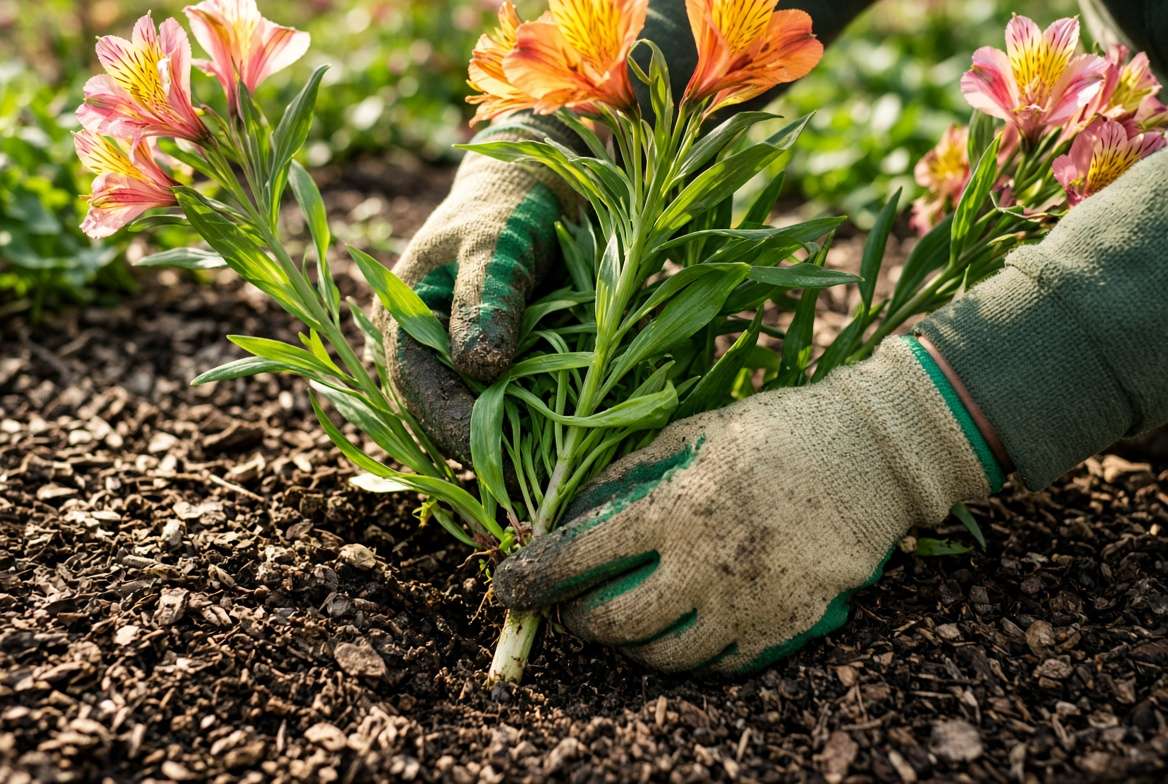
How to Pull: Instead of cutting, reach deep into the plant, grasp the stem firmly near the soil line, and give it a sharp, twisting pull upward.
-
Why it Works: This action completely cleanly detaches the stem directly from the underground rhizome. This slight, localized “wound” acts as a biological trigger, stimulating the rhizome’s meristematic tissue to immediately push up a brand-new, flower-bearing shoot. This “pluck, don’t cut” method applies whether you are harvesting fresh stems for a vase or simply deadheading spent blooms.
Conditioning Cut Stems for a 3-Week Vase Life 💐
To achieve that legendary florist-quality vase life, treat your freshly pulled stems with care:
-
Strip away any lower foliage that will sit below the water line in your vase to prevent bacterial rot.
-
Underneath a running faucet, trim a half-inch off the very bottom of the pulled stem. Cutting underwater prevents air bubbles from blocking the stem’s vascular system.
-
Place them in fresh, cool water mixed with a standard commercial floral preservative to feed the unfolding buds.
7. Seasonal Care: Overwintering and Spring Revival ❄️
Peruvian lilies are incredibly resilient if you respect their natural seasonal rhythms. The rhizomes actually require a period of cold dormancy (vernalization) during the winter to reset their biological clocks and produce flowers the following spring.
Protecting Alstroemeria in Cold Climates (Zones 5–6) 🌨️
If you are pushing the hardiness boundaries, winter protection is non-negotiable.
-
Heavy Mulching Strategies: Wait until the first hard frost kills back the upper foliage. Trim the dead, mushy leaves away, and then mound 6 to 8 inches of dry organic mulch—such as straw, pine needles, or shredded autumn leaves—directly over the crown. Cover this mound with an inverted nursery pot or a cloche to keep heavy winter rains from soaking the mulch. Remove the covering promptly in early spring.
-
Overwintering Containers: Potted Peruvian lilies are much more vulnerable to freezing because their roots lack the insulating warmth of the earth. Before the deep freeze sets in, move your pots into an unheated garage, cool cellar, or cold frame. They need to stay cold (between 35°F and 45°F) but not frozen solid. Water them very sparingly—perhaps once a month—just to keep the soil from turning into dust.
Summer Slump Care in Warm Climates (Zones 9–10) ☀️
In Southern gardens, the challenge is not the winter chill, but the blistering summer heat. When soil temperatures spike, the plant goes into a “summer slump,” dropping its blooms and looking ragged. Do not panic; this is natural. Provide 30% to 50% shade cloth coverage during July and August, maintain a thick layer of cooling mulch, and wait for the cooler temperatures of autumn, which often trigger a spectacular second flush of blooms.
8. Common Troubleshooting: Pests, Diseases, and Cultural Problems 🩺
Even robust Peruvian lily plants occasionally face challenges in the garden. Early diagnosis is key to keeping your plants vigorous.
Solving Common Plant Ailments 🔍
-
Yellowing Leaves (Chlorosis): If the entire plant is turning pale yellow but the veins remain dark green, your soil pH is likely too high (alkaline), preventing iron absorption. Apply a chelated iron drench and amend the soil with agricultural sulfur or peat moss. If the yellowing is accompanied by mushy stems, you are overwatering.
-
Blind Stems (Lush Leaves, No Buds): As mentioned, this is usually caused by soil temperatures exceeding 70°F (21°C), excessive nitrogen fertilizer, or planting a non-hardy variety in an area without a sufficient winter chilling period.
-
Pest Deterrence: The tender, succulent shoots emerging in early spring are magnets for slugs and snails. Surround the base of the plants with crushed eggshells, diatomaceous earth, or organic iron-phosphate slug baits. Spider mites and aphids can occasionally target the undersides of the leaves during dry spells; a strong blast from a garden hose or an application of insecticidal soap will dispatch them.
-
Fungal Prevention: Botrytis (gray mold) thrives in damp, stagnant air. Ensure proper spacing between your plants to allow breezes to circulate, and avoid overhead watering in the evenings.
9. Propagation: Multiplying Your Peruvian Lilies 🪴
Once you master growing Peruvian lily plants, you will inevitably want more of them. The best way to propagate is by dividing the fleshy clumps.
Dividing Mature Clumps Safely ⛏️
Every 3 to 4 years, Alstroemeria clumps become overcrowded, leading to smaller flowers and reduced vigor.
-
Timing: The ideal time to divide is in early spring, just as the new shoots are beginning to poke through the soil, or immediately after flowering in early autumn.
-
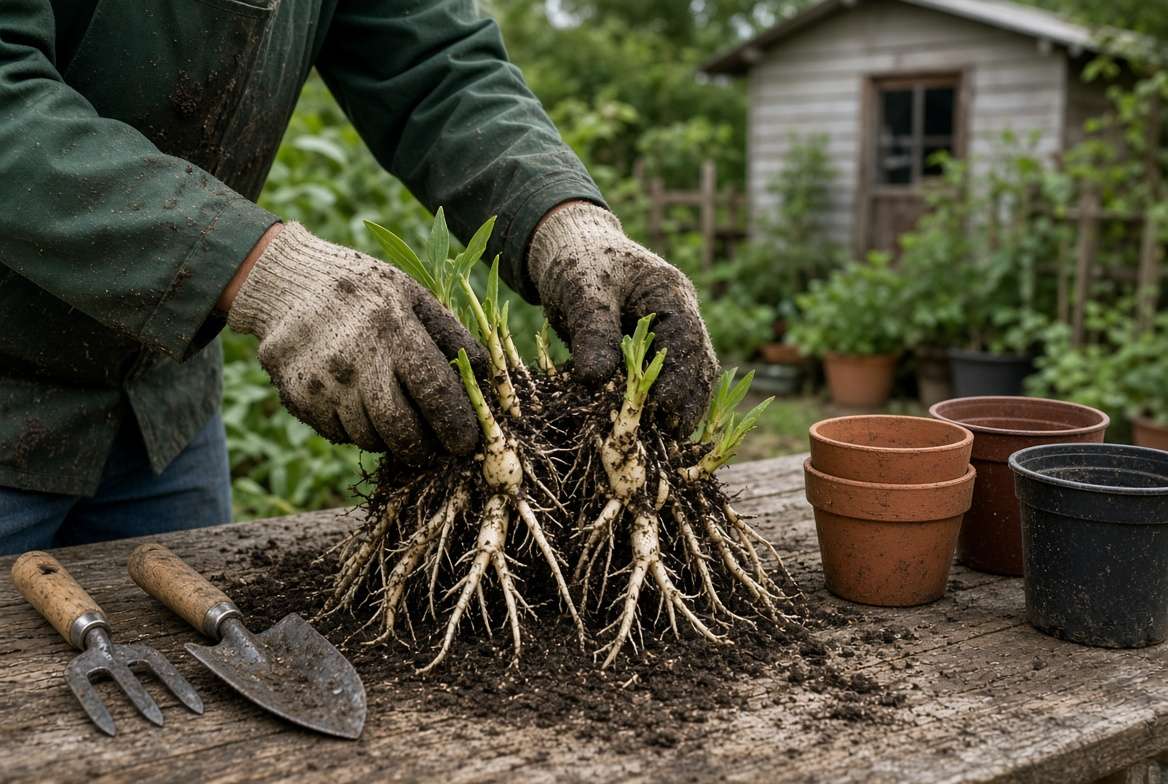
Lifting: Dig a wide circle around the plant to avoid slicing the long storage tubers. Carefully lift the entire root mass.
-
Separating: Gently tease the rhizomes apart with your hands. Try to ensure each division has at least a healthy piece of the white rhizome, several storage tubers, and 2 to 3 visible “eyes” (growth points).
-
Replanting: Pot up the new divisions immediately in a well-draining mix or plant them in prepared garden beds. Water them in well, but hold off on fertilizing until you see active new green growth.
10. Frequently Asked Questions (FAQ) ❓
Are Peruvian lily plants toxic to cats and dogs?
Unlike true lilies (Lilium species) which are highly toxic and often fatal to cats, Peruvian lilies (Alstroemeria) are generally considered non-toxic by the ASPCA. However, they do contain a compound called tulipalin A, which can cause mild stomach upset, vomiting, or skin irritation if ingested in large quantities. They are much safer for pet households, but it is still best to keep curious pets from grazing on them.
How many years do Peruvian lilies live?
When provided with proper drainage and winter protection, a healthy Alstroemeria plant can live for a decade or more in the garden, functioning as a long-lived perennial.
Can Peruvian lilies survive a hard freeze?
Yes, but it depends on the variety. Cultivars bred specifically for hardiness, like the ‘Inca’ series or ‘Sweet Laura’, can survive hard freezes down to -10°F (-23°C) if provided with an insulating layer of mulch. Greenhouse florist varieties will perish in a hard freeze.
Why did my Peruvian lily stop blooming in July?
This is a classic response to heat stress. When soil temperatures rise too high, the rhizome stops bud production to conserve energy. Keep the roots cool with mulch, ensure adequate water, and wait for the cooler days of late summer for blooming to resume.
Do Peruvian lilies spread aggressively in the garden?
While they do expand via creeping rhizomes, they are generally well-behaved clump-formers and are not considered highly invasive. They are easy to contain through routine division every few years.
11. Final Garden Checklist & Cultivation Summary 📋
To ensure your success, keep this seasonal cultivation checklist handy:
| Season | Essential Peruvian Lily Care Task |
| Early Spring | Remove winter mulch. Apply a balanced (5-10-10) fertilizer as new shoots emerge. |
| Late Spring | Begin harvesting blooms using the “pull and twist” method to stimulate new stems. |
| Summer | Apply cooling mulch over the root zone. Implement deep watering when the soil is dry to the second knuckle. Provide afternoon shade in hot climates. |
| Autumn | Stop fertilizing. Divide mature, overcrowded clumps if necessary. |
| Winter | Cut away dead, frost-killed foliage. Apply a thick 6-8 inch layer of dry mulch for frost protection in Zones 5-6. Move containers to an unheated garage. |
Growing Peruvian lily plants is deeply rewarding once you understand the hidden mechanics beneath the soil. By keeping the rhizomes cool, withholding excess nitrogen, and embracing the stem-pulling harvest method, you shift from hoping for flowers to actively directing the plant’s energy into continuous, vibrant color.











