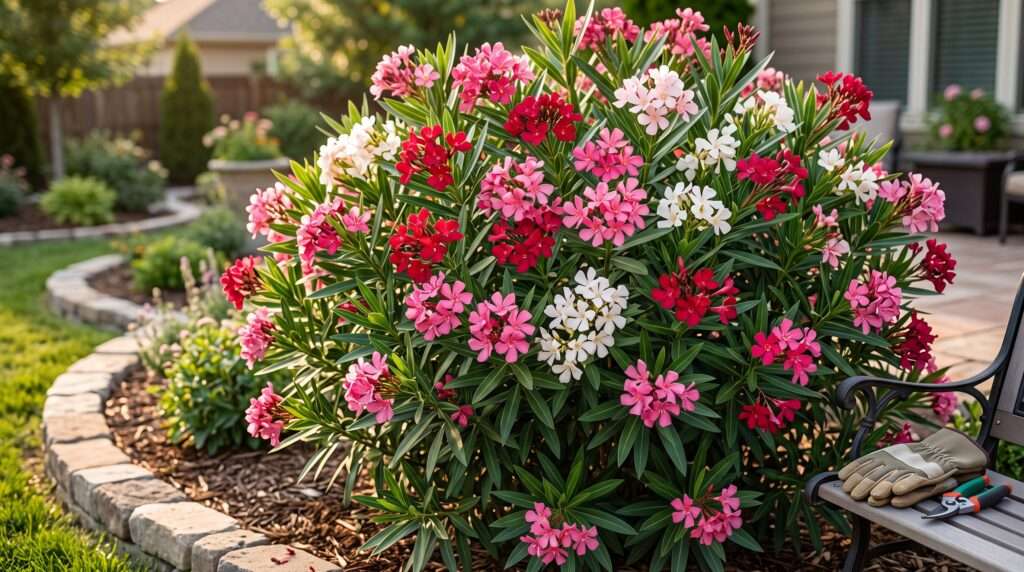
Imagine stepping into a Mediterranean paradise right in your own backyard. You are greeted by lush, evergreen foliage and a continuous explosion of vibrant, star-shaped flowers that paint your landscape in shades of pink, red, white, and apricot. This is the undeniable allure of oleander plants.
However, for many gardeners, this botanical beauty comes with a notorious reputation that causes immediate hesitation. The “elephant in the room” is their well-documented toxicity. As a responsible plant parent, you might wonder if it’s truly safe to bring such a plant into your garden. Does their toxic nature mean you have to banish them from your landscape design? Absolutely not!
Drawing on years of hands-on horticultural experience, this comprehensive guide is designed to cut through the fear-mongering and deliver the facts. Here, we will walk through practical, safe, and highly effective care strategies. By the end of this article, you will know exactly how to confidently cultivate these breathtaking, drought-tolerant shrubs without putting your family, children, or pets at risk. Let’s dive in and learn how to tame the most beautiful “beast” of the botanical world! 🌿
1. What Are Oleander Plants? A Botanical Overview 🌿
Before we can master their care, it’s vital to understand the biology and history of the plant. Known scientifically as Nerium oleander, this impressive specimen belongs to the dogbane family (Apocynaceae).
The Origin Story 🌍
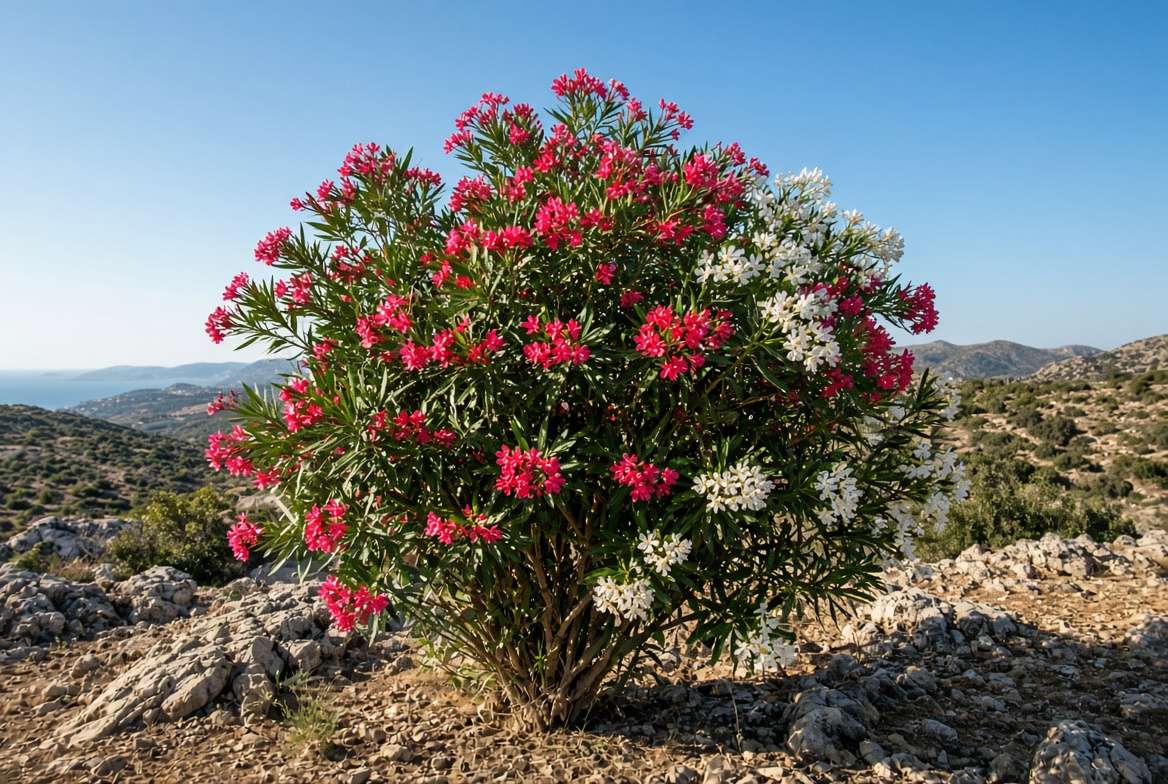
Oleanders are native to a broad stretch of the world, ranging from the Mediterranean basin to the Arabian peninsula and all the way into Southern Asia. In their natural habitat, they are frequently found growing in dry streambeds and rocky valleys. This evolutionary history perfectly explains why they thrive in warm, arid climates and possess an almost legendary ability to withstand intense heat and poor soil conditions.
Why Gardeners Love Them 💖
Despite the safety concerns, Nerium oleander remains a staple in landscaping across USDA Hardiness Zones 8 through 10. Why? Because their resilience is practically unmatched.
-
Extreme Drought Tolerance: Once established, their deep root systems allow them to survive long periods without rainfall, making them heroes of xeriscaping and water-wise gardens.
-
Salt-Spray Resistance: If you live near the ocean, you know how hard it is to find beautiful flowering shrubs that can handle coastal winds and salt. Oleanders scoff at salt spray, making them perfect for beachfront properties.
-
Deer and Rabbit Resistance: Thanks to their toxic sap, local wildlife instinctively leaves them alone. You won’t wake up to find your beautiful shrubs nibbled down to the stems!
-
Year-Round Greenery: As broadleaf evergreens, they provide structure and privacy to your garden 365 days a year, even when they aren’t actively blooming.
Growth Habits 📈
When planning your garden layout, you must respect the oleander’s natural vigor. A happy, unpruned standard oleander can easily skyrocket to heights of 15 to 20 feet, with a spread just as wide. They naturally grow as dense, multi-stemmed shrubs, which makes them highly effective for creating fast-growing privacy hedges or windbreaks. However, with careful pruning, they can also be trained into stunning, single-trunk small trees.
2. ⚠️ Safety First: Navigating Oleander Toxicity with Confidence 🛡️
Expert Insight: As a plant care professional, I believe that knowledge is the ultimate antidote to fear. We do not need to avoid toxic plants entirely; we simply need to respect them and handle them with the appropriate protocols.
Let’s address the most critical aspect of growing oleander plants: their toxicity. This is where E-E-A-T (Experience, Expertise, Authoritativeness, and Trustworthiness) matters most.
Just How Toxic Are They? 🧪
To put it plainly, oleanders are among the most toxic ornamental plants grown in domestic gardens. Every single part of the plant is poisonous—the leathery leaves, the woody stems, the delicate flowers, the roots, and especially the milky white sap.
The plant contains powerful compounds known as cardiac glycosides (specifically oleandrin and neriine). If ingested, these compounds directly affect the cardiovascular system, potentially causing irregular heart rates, gastrointestinal distress, and in severe cases, life-threatening emergencies.
The Golden Rules of Safe Handling 🧤
You can absolutely grow oleanders safely by adopting a strict set of handling protocols:
-
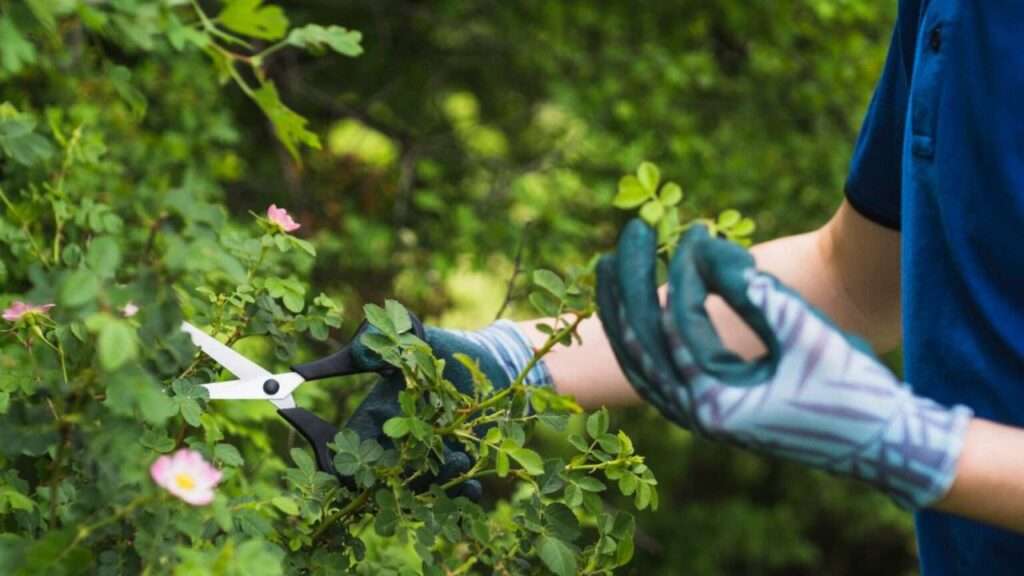
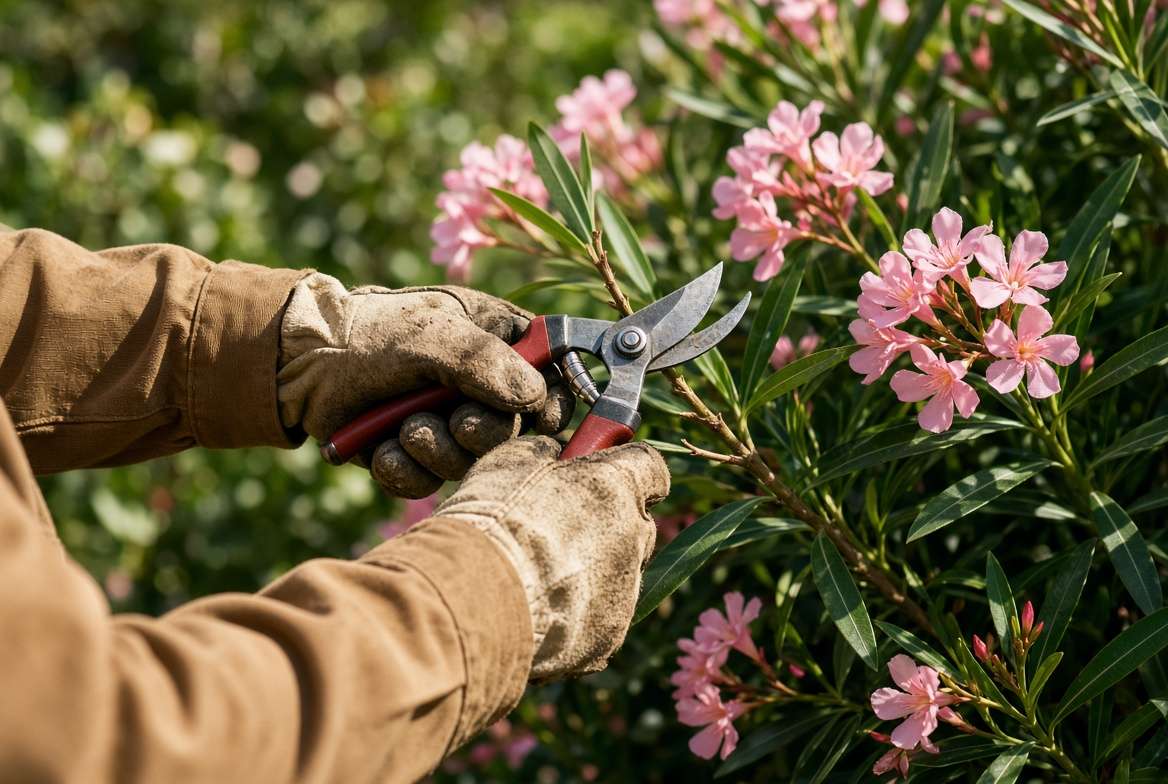
Dress for the Job: Whenever you are planting, pruning, or taking cuttings, wear thick, non-porous gardening gloves. Pair these with long sleeves and protective eyewear to ensure the milky sap never makes contact with your skin or eyes.
-
Never, Ever Burn Oleander Wood: This is a crucial rule. Burning oleander branches releases the toxic compounds into the smoke. Inhaling this smoke can cause severe respiratory irritation and systemic toxicity.
-
The Wash-Down Protocol: After working with your oleanders, immediately wash your hands with soap and water. Furthermore, disinfect all your gardening tools (pruners, loppers, saws) with rubbing alcohol to remove any sticky sap residue.
Protecting Pets and Children 🐾👶
If you have curious toddlers or pets that like to chew on foliage, placement is your best defense.
-
Strategic Landscaping: Plant oleanders in your front yard or in outer boundary areas rather than the enclosed backyard where children and pets play unsupervised.
-
Elevation: Use tall, heavy stone planters to elevate dwarf oleander varieties out of the reach of small dogs and toddlers.
-
Fencing: If creating a privacy screen, consider placing a low decorative fence in front of the hedge to act as a physical barrier.
💡 Expert Safety Tip: Create a dedicated “Tox-Kit” for your garden. Buy a cheap pair of bypass pruners and label them with a red marker or tape. Use these only for toxic plants like oleander, foxglove, or euphorbia. This completely eliminates the risk of cross-contaminating the tools you use to harvest your homegrown tomatoes or herbs!
3. Choosing the Perfect Oleander Variety for Your Space 🌸
Not all oleander plants are created equal! Plant breeders have developed numerous cultivars to suit different landscaping needs, from massive privacy walls to compact patio pots.
Standard vs. Dwarf Varieties 📏
-
Standard Varieties: These are the giants. They grow 10 to 20 feet tall and are aggressive growers. They are best utilized for property lines, highway medians, and large-scale windbreaks.
-
Dwarf Varieties: These top out at a much more manageable 3 to 6 feet tall. They are ideal for smaller residential gardens, foundation plantings, and container gardening.
Top Cultivars to Consider ⭐
When shopping at your local nursery, keep an eye out for these proven performers:
-
‘Petite Pink’ & ‘Petite Salmon’: These are highly sought-after dwarf varieties. They stay incredibly compact (around 3-4 feet) and bloom profusely. They are the absolute best choice for container gardening on a sunny patio.
-
‘Hardy Red’ (also known as ‘Calypso’): If you want a standard-sized shrub that demands attention, this is it. It produces deep, cherry-red single blooms and is noted for having slightly better cold tolerance than other varieties.
-
‘White Sands’ or ‘Sister Agnes’: For a more elegant, minimalist, or “moon garden” aesthetic, these pure white varieties are stunning. They grow vigorously and look incredibly sophisticated against dark green foliage or dark exterior home paint.
Container Planting vs. In-Ground Landscaping 🪴
-
In-Ground: Best for gardeners in USDA Zones 8-10. This allows the plant’s deep taproots to seek out water, making them truly drought-tolerant. Ensure the planting site has excellent drainage.
-
Containers: Best for gardeners in Zones 7 and below. Growing oleanders in large, heavy pots (like terracotta or glazed ceramic) restricts their size and allows you to wheel the plant indoors or into a greenhouse when winter frosts threaten. Ensure the pot has large drainage holes!
4. The Essential Care Guide: Cultivating Stunning Blooms ☀️
Now that you’ve selected the right variety and understand the safety protocols, it’s time to talk about day-to-day care. The beauty of oleander plants is that they are incredibly low-maintenance once established, but providing optimal conditions in the beginning will guarantee those explosive, Instagram-worthy floral displays.
Sun and Light Requirements 🌞
If there is one non-negotiable rule for growing spectacular oleanders, it is this: they crave full sun. To achieve maximum blooming potential, your shrub needs a minimum of 6 to 8 hours of direct, unfiltered sunlight every single day. While they can technically survive in partial shade, the results are often disappointing. Shaded oleanders tend to develop a “leggy” or lanky appearance as they stretch toward the light, and their flower production will drop dramatically. For the densest foliage and the most vibrant flowers, give them the sunniest spot in your yard.
Soil Preferences and Preparation 🌱
In their native Mediterranean and subtropical environments, oleander plants often grow in rocky, sandy, and nutrient-poor conditions. Because of this, they are highly adaptable to a wide range of soil types, from coastal sand to heavy clay, provided one crucial condition is met: excellent drainage.
They do not like to have “wet feet.” If planted in soil that retains too much water, they are susceptible to root rot. While they tolerate a wide pH range, they perform best in slightly alkaline soils (pH 6.5 to 7.5). If you are planting in heavy clay, it’s beneficial to amend the planting hole with perlite or coarse sand to improve aeration and drainage.
Watering Needs: Striking the Right Balance 💧
Understanding the watering lifecycle of an oleander is key to its resilience.
-
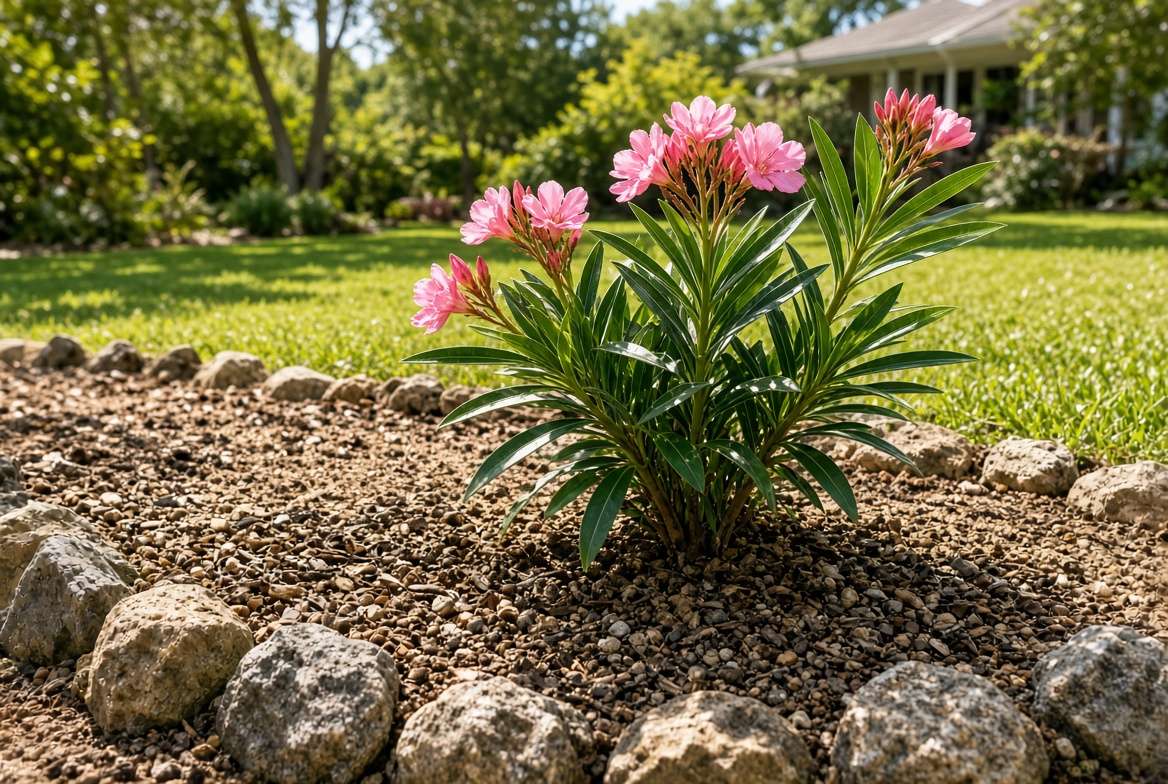
The Establishment Phase (Year 1): Newly planted oleanders need regular watering to establish their deep root systems. Water them deeply once or twice a week, allowing the top two inches of soil to dry out between waterings.
-
The Mature Phase: Once established (usually after the first year), your oleander becomes a drought-tolerant champion. You will only need to water them during prolonged dry spells. When you do water, soak the root zone deeply rather than giving it a shallow daily sprinkle. This encourages the roots to grow further down, making the plant even more drought-resistant.
Fertilizing for Explosive Growth ✨
Because they are adapted to poor soils, oleanders are exceptionally light feeders. In fact, over-fertilizing is a common mistake that leads to lush, rampant green foliage but very few flowers!
For in-ground plants, a single application of a balanced, slow-release granular fertilizer (like a 10-10-10 blend) in early spring is usually more than enough to kickstart the growing season. If your soil is reasonably fertile, you might not need to fertilize at all. Potted oleanders, however, will need slightly more frequent feeding—about once a month during the spring and summer—since nutrients wash out of containers quickly.
5. Pruning and Maintenance: Shaping Your Oleander ✂️
Pruning is where many gardeners feel intimidated, especially given the plant’s toxicity. But with your protective gear on, pruning is a simple, satisfying task that keeps your shrub vigorous and beautifully shaped.
Timing is Everything ⏱️
The absolute best time to prune your oleander is in late summer or early fall, right after the primary blooming season has finished. Oleander plants bloom on new wood (the growth produced in the current season). If you wait until late winter or spring to prune, you risk cutting off all the buds that would have become this year’s flowers!
Step-by-Step Pruning Guide 🌿
-
The Cleanup: Always start by removing any dead, damaged, crossing, or diseased branches. Make clean cuts at a 45-degree angle just above a leaf node.
-
Thinning for Health: Oleanders grow very densely, which can restrict airflow. Thin out some of the older, crowded interior branches right down to the base. Good air circulation is your best defense against fungal diseases and pest infestations.
-
Shaping: If you want a bushier shrub, pinch back the tips of young stems to encourage branching.
-
Creating a “Tree”: If you want to train your standard oleander into a single-trunk tree form, select the strongest central stem to be your trunk and aggressively prune away all other stems at the ground level. Continuously remove any new basal shoots (suckers) that pop up.
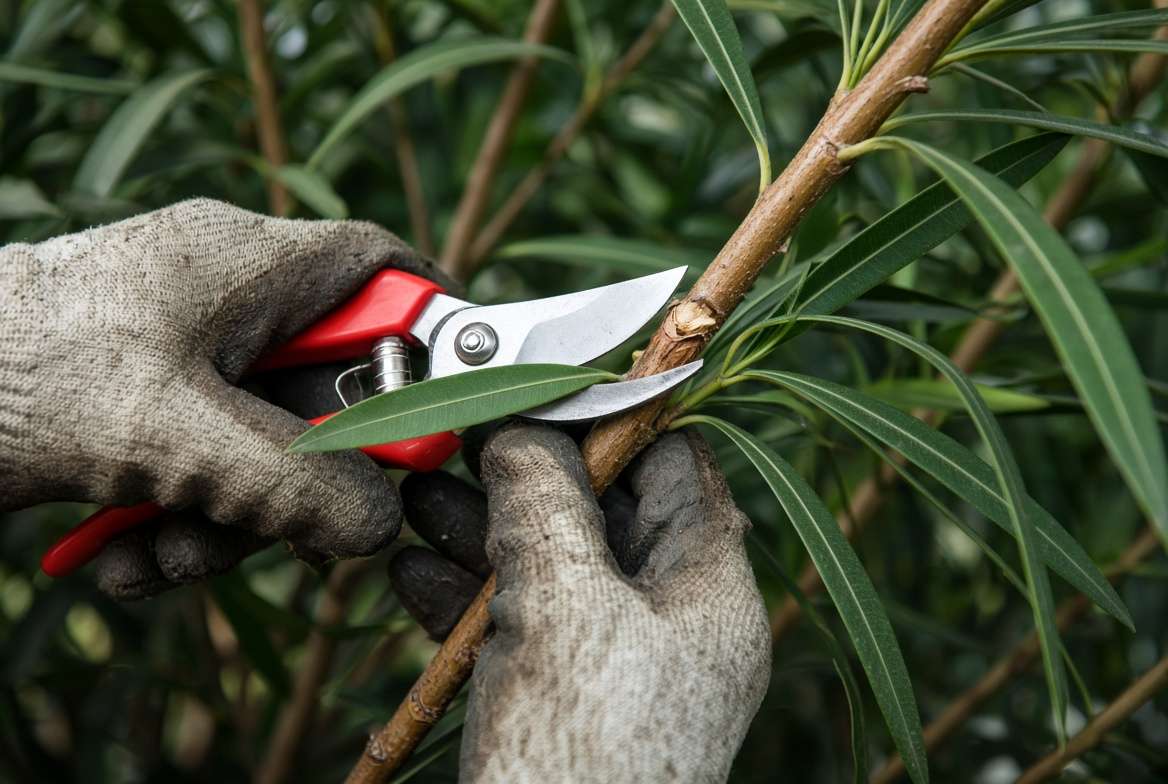
Safe Disposal of Cuttings 🗑️
We cannot stress this enough: do not burn your oleander clippings, and do not add them to your compost pile, especially if you use that compost on edible vegetable gardens. The safest disposal method is to place the cuttings into heavy-duty yard waste bags and put them out for municipal trash collection.
6. Troubleshooting Common Oleander Problems 🐛
Even the toughest plants encounter a few bumps in the road. Here is how to identify and resolve the most common oleander issues like a pro.
The Nemesis: The Oleander Aphid 🐞
If you see clusters of tiny, bright yellow insects swarming the tender new growth of your plant, you have oleander aphids. They suck the sap from the plant, causing leaves to curl and drop.
-
The Fix: Fortunately, they are easy to defeat. For minor infestations, simply blast them off with a strong jet of water from your garden hose. For heavier populations, spray the affected areas thoroughly with insecticidal soap or neem oil in the early morning or late evening.
Scale Insects and Mealybugs 🪲
These pests look like tiny cottony bumps or hard brown crusts on the stems and undersides of leaves. Like aphids, they drain the plant’s energy.
-
The Fix: Horticultural oils or a systemic insecticide are highly effective. You can also wipe minor scale infestations away with a cotton swab dipped in rubbing alcohol.
Oleander Leaf Scorch (OLS) 🍂
This is the most serious threat to oleander plants, particularly in regions like California, Texas, and the Southern US. OLS is a fatal bacterial disease (Xylella fastidiosa) spread by an insect called the glassy-winged sharpshooter.
-
Symptoms: Edges of the leaves turn yellow and then brown, looking as if they have been scorched by fire. The decline moves rapidly from a single branch to the entire plant.
-
The Fix: Sadly, there is no cure for OLS. If your plant is infected, it must be completely removed and destroyed (bagged and trashed) to prevent the sharpshooters from spreading the bacteria to neighboring plants.
Why Isn’t My Oleander Blooming? 🥀
If you have lush green growth but no flowers, run through this quick checklist:
-
Too much shade? (Move it to full sun).
-
Pruned too late? (You may have cut off the flower buds).
-
Too much nitrogen? (Switch to a bloom-boosting fertilizer higher in phosphorus, or stop fertilizing altogether).
7. Overwintering Strategies for Colder Climates ❄️
While they thrive in the heat, oleander plants are tender when it comes to frost. They are reliably hardy in USDA Zones 8-10, tolerating occasional brief dips down to 15°F (-9°C). But if you live in Zone 7 or below, you must intervene.
Potted Oleanders 🪴
If you grow dwarf varieties in containers, overwintering is straightforward. Before the first hard freeze, bring the pot indoors to a cool, bright location (like an unheated sunroom or a bright garage). During this winter dormancy, significantly reduce watering—only water when the soil is completely dry—and stop fertilizing entirely.
In-Ground Protection 🛡️
If you live in a borderline climate (like Zone 7) and have planted your oleander in the ground, you need to insulate it.
-
Apply a thick 3-to-4-inch layer of organic mulch around the base of the plant to protect the roots from freezing.
-
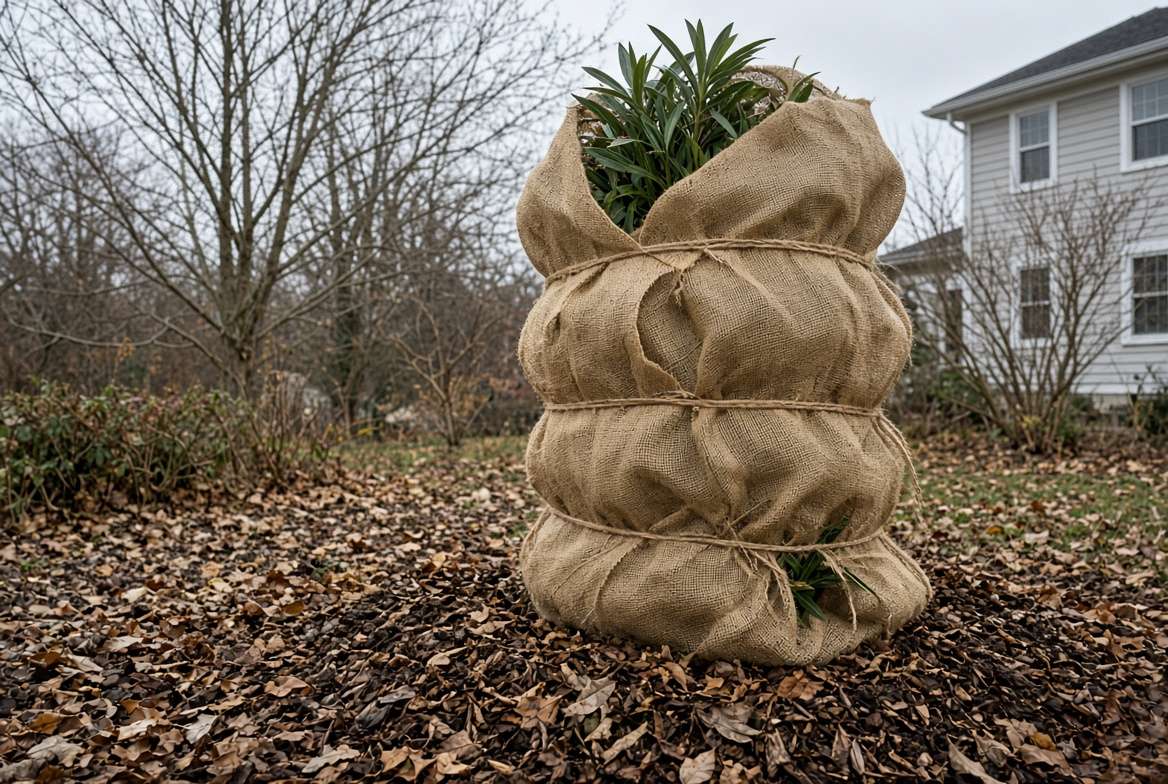
In the event of a severe cold snap, wrap the shrub in burlap or a specialized horticultural frost blanket. Never use plastic tarps, as they trap moisture and freeze the foliage.
8. Frequently Asked Questions (FAQs) ❓
Can I compost oleander leaves? No. While the toxins do eventually break down during the composting process, the risk of residual toxicity remaining—especially if the compost is applied to food crops—is not worth it. Always bag and discard oleander debris.
How long do oleander plants live? With proper care, good drainage, and a sunny location, oleanders are incredibly long-lived. It is not uncommon for them to live for 50 years or more in the landscape!
Do oleanders attract pollinators? Yes! Despite their toxicity, the vibrant flowers are highly attractive to certain pollinators, particularly large butterflies and hummingbirds, who are unaffected by the plant’s natural defenses.
Can oleander roots damage my foundation or pipes? Oleander root systems are aggressive and fibrous. While they aren’t as notoriously destructive as willow trees, it is best practice to plant standard varieties at least 10 feet away from home foundations, retaining walls, and underground plumbing to prevent structural interference over time.
What plants pair well with oleanders? Because oleanders require full sun and low water, pair them with other drought-tolerant Mediterranean or desert plants. Excellent companions include lavender, rosemary, lantana, bougainvillea, and ornamental grasses.
Embracing the Mediterranean Vibe Safely 🌅
Cultivating oleander plants does not have to be an anxiety-inducing experience. By understanding their biology, respecting their chemical defenses, and applying a few simple handling protocols, you can safely unlock the incredible landscaping potential of these resilient shrubs. They offer a rare combination of extreme drought tolerance, robust growth, and breathtaking, continuous blooms that few other plants can match. Equip yourself with a good pair of gloves, find the sunniest spot in your yard, and enjoy the dramatic Mediterranean flair that only a healthy, thriving oleander can provide.