Have you ever stared at the bottom of your fish tank and wished it looked like a rolling, vibrant green lawn instead of a barren gravel driveway? You are certainly not alone. Transforming a bare substrate into a breathtaking underwater meadow is the ultimate goal for many aquascapers, but it can also be an incredibly frustrating journey. Many beginners attempt to grow a dense aquarium carpet, only to watch their expensive tissue cultures melt away, float to the water’s surface, or get entirely smothered by nuisance algae. Usually, this happens because they chose demanding, high-tech species for a simple, low-tech setup.
The true secret to achieving a professional, magazine-worthy aquascape lies in choosing the right carpeting aquatic plants for your specific tank conditions. In our years of hands-on experience cultivating diverse freshwater biotopes, testing various nutrient-rich aqua soils, and experimenting with different lighting spectrums, we’ve learned that a dense foreground doesn’t automatically require an expensive CO2 injection system.
Whether you are building an elaborate Iwagumi-style layout or just want a cozy, natural habitat for your bottom-dwelling fish, this comprehensive guide will walk you through the top seven foreground species, step-by-step planting techniques, and expert troubleshooting tips to guarantee a thick, vibrant carpet.
What Are Carpeting Aquatic Plants? (And Why Your Tank Needs Them) 🌱💡
Carpeting plants are low-growing aquatic species that spread horizontally across the bottom of an aquarium via runners (stolons) or lateral stem growth. Instead of growing tall and reaching for the surface like background stem plants, these species form a dense, interconnected mat that covers the substrate.
The Aesthetic Appeal 🎨
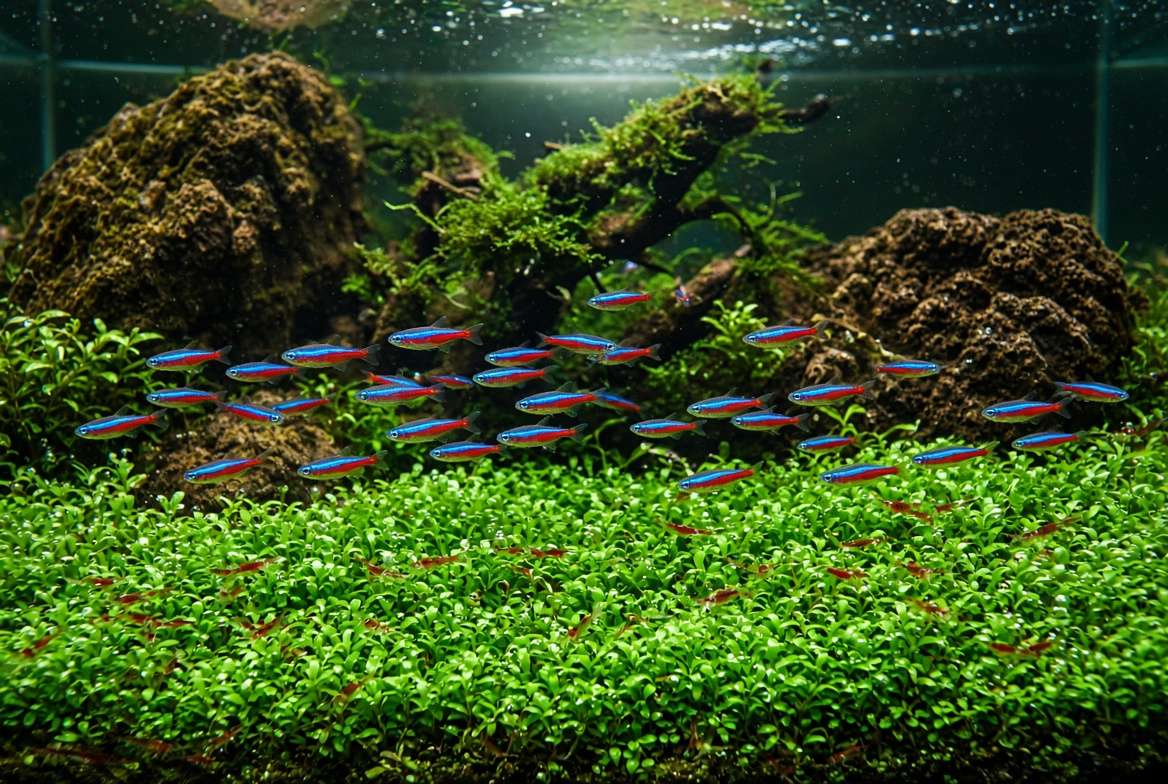
From a purely visual standpoint, a carpeted foreground completely changes the geometry of your aquascape. It creates a sense of scale and immense depth, making even a small 10-gallon nano tank look like a sprawling, expansive landscape. A lush green foreground provides a stunning visual contrast against dark hardscape materials like dragon stone or spider wood, tying the whole layout together into a cohesive, natural biotope.
Ecological Benefits for Your Aquarium 🐟
Beyond aesthetics, an underwater lawn provides massive ecological benefits to your closed ecosystem:
-
Superior Water Quality: Like all fast-growing aquatic flora, carpeting species act as a natural filtration system. They actively absorb excess nutrients like nitrates and phosphates from the water column and substrate, while simultaneously oxygenating the water during photosynthesis.
-
Crucial Habitat & Security: A dense carpet is a sanctuary for aquatic life. It provides essential grazing grounds and hiding spots for delicate ornamental shrimp (like Neocaridina), vulnerable fry (baby fish), and bottom-dwellers such as Corydoras catfish and loaches, allowing them to exhibit natural foraging behaviors.
-
Algae Control: Because they cover the substrate completely and consume heavy amounts of nutrients, a healthy carpet will actively outcompete nuisance algae, starving it of the resources it needs to bloom.
The 7 Best Carpeting Aquatic Plants for Every Skill Level 🏆🌿
Not all foreground plants are created equal. Some require intense lighting and pressurized CO2, while others will happily spread in a basic, low-tech tank. Here are the top seven species, ranked from beginner-friendly to advanced.
1. Monte Carlo (Micranthemum tweediei) – The Beginner’s Best Friend 🥇
-
Care Level: Easy
-
Lighting Needs: Medium
-
CO2 Requirement: Optional (but speeds up growth)
-
Growth Rate: Moderate to Fast
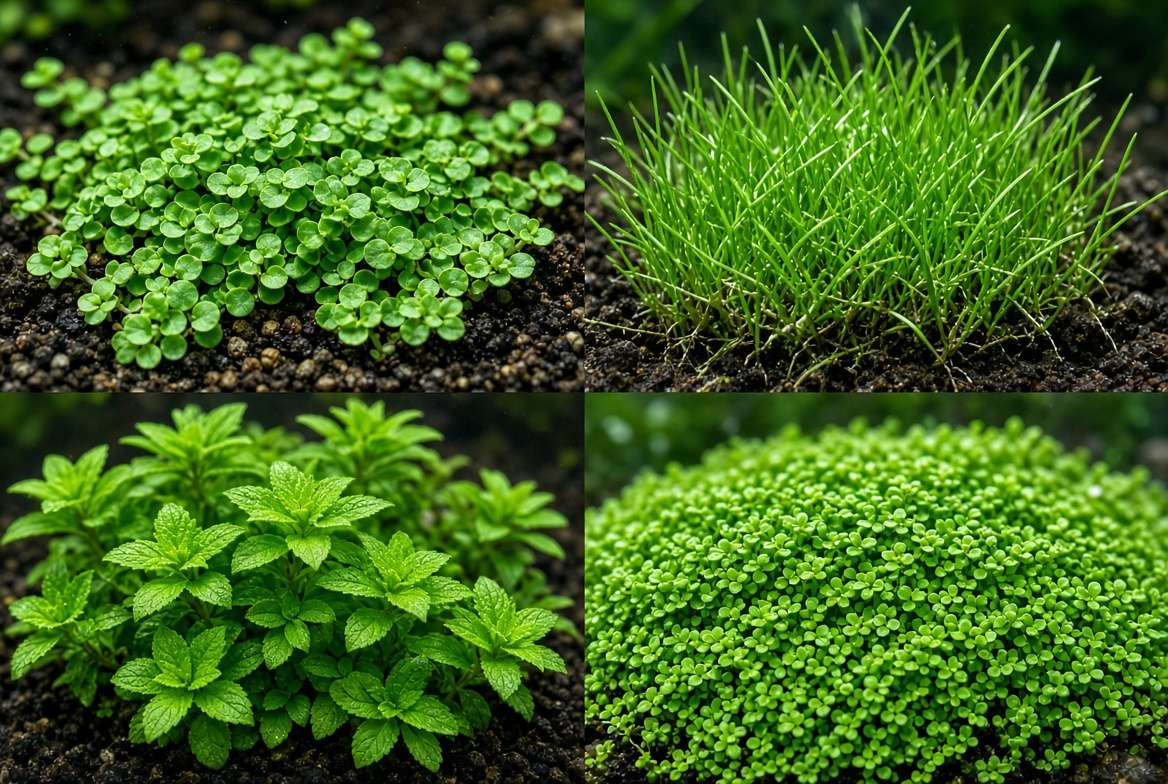
Why it rocks: If you want the classic, round-leafed carpet look without the headache of a high-tech setup, Monte Carlo is your ultimate solution. It closely resembles the notoriously difficult Dwarf Baby Tears, but is infinitely more forgiving. Monte Carlo roots easily, forms a dense, cascading mat, and can absolutely thrive without injected CO2 as long as it has decent lighting and a nutrient-rich substrate like ADA Aqua Soil or Fluval Stratum.
Expert Tip 💡: Once your Monte Carlo carpet reaches about an inch thick, you must trim it. If you let it grow too thick, the bottom layers will be starved of light, causing them to rot and uproot the entire carpet in one giant, floating mat!
2. Dwarf Hairgrass (Eleocharis parvula) – The Classic “Lawn” Look 🌾
-
Care Level: Easy to Moderate
-
Lighting Needs: Medium to High
-
CO2 Requirement: Optional (Highly recommended for dense growth)
-
Growth Rate: Moderate
Why it rocks: Dwarf Hairgrass looks exactly like submerged terrestrial lawn grass. Its fine, needle-like blades sway beautifully in the filter current, making it the undisputed champion of minimalist, Iwagumi-style aquascapes. It spreads by sending out lateral runners underneath the soil.
Care Note: This plant has a very fine, delicate root system. Attempting to grow Dwarf Hairgrass in chunky gravel is a recipe for failure. It requires a fine-grained, soft aqua soil so its runners can easily penetrate and spread horizontally.
3. Marsilea hirsuta (Water Clover) – The Ultimate Low-Tech Survivor 🍀
-
Care Level: Very Easy
-
Lighting Needs: Low to Medium
-
CO2 Requirement: Not Required
-
Growth Rate: Slow
Why it rocks: Marsilea hirsuta is arguably the toughest carpeting aquatic plant in the hobby. While it looks like a tiny four-leaf clover when grown out of water, its submerged leaves usually develop into charming, single-lobed teardrops. It is incredibly forgiving of beginner mistakes, tolerates low-light conditions, and demands very little in terms of fertilization.
Growth Habit: Because it is a slow grower, you won’t get instant gratification. However, the trade-off is fantastic: once it does form a carpet, it requires almost zero maintenance or trimming. It’s perfect for the “set it and forget it” aquarist.
4. Staurogyne repens (S. repens) – The Textured Bushy Carpet 🌿
-
Care Level: Moderate
-
Lighting Needs: Medium
-
CO2 Requirement: Optional
-
Growth Rate: Slow to Moderate
Why it rocks: If you want a rugged, textured foreground that looks a bit more wild and bushy, S. repens is a stellar choice. It features larger, pointed, bright green leaves and thick, sturdy stems. It’s highly versatile and is often used to create a seamless, natural transition between the low foreground and taller midground plants.
Aquascaper’s Tip ✂️: S. repens naturally wants to grow upward. To train it into a carpet, you need to cut off the vertical stems and replant them into the substrate right next to the mother plant. Planting the stems diagonally (at a 45-degree angle) physically encourages horizontal, creeping growth.
5. Dwarf Baby Tears (Hemianthus callitrichoides / HC Cuba) – The High-Tech Stunner 💎
-
Care Level: Advanced
-
Lighting Needs: High to Very High
-
CO2 Requirement: Strictly Required
-
Growth Rate: Moderate (when conditions are perfect)
Why it rocks: Discovered in Cuba, Hemianthus callitrichoides boasts the smallest leaves of any commonly used aquarium plant. When grown successfully, it creates an incredibly fine, velvety, bright green carpet that looks like a manicured golf course green. It is the crown jewel of high-end aquascaping competitions.
The Catch: We must establish a harsh truth here: HC Cuba is demanding. If you attempt to grow it without high-intensity lighting and a pressurized CO2 injection system, it will almost certainly melt away and die. It requires precise fertilization regimes (like the Estimative Index or ADA system) and pristine water conditions. If you are a beginner, stick to Monte Carlo; but if you are an advanced aquarist ready for a challenge, HC Cuba is unmatched in its beauty.
6. Cryptocoryne parva – The Slow & Steady Rooter 🐢
-
Care Level: Easy
-
Lighting Needs: Low to Medium
-
CO2 Requirement: Optional
-
Growth Rate: Very Slow
Why it rocks: Cryptocoryne parva is the smallest of all Cryptocoryne species. Unlike stem plants or runners, it grows in tiny, individual rosettes. It is practically indestructible once it acclimates to your water parameters and can thrive in heavily shaded areas where other foreground plants would perish.
Care Note: Be prepared for “Crypt melt.” When transitioning to a new environment, Cryptocoryne species often shed their existing leaves. Don’t panic and throw them away! Leave the healthy root structures planted in the substrate, and new, water-adapted leaves will sprout in a few weeks. Because it grows so slowly, you must buy multiple pots if you want a full carpet in your lifetime.
7. Glossostigma elatinoides (Glosso) – The Fast-Growing Classic 🚀
-
Care Level: Moderate
-
Lighting Needs: High
-
CO2 Requirement: Highly Recommended
-
Growth Rate: Very Fast
Why it rocks: Before Dwarf Baby Tears and Monte Carlo dominated the hobby, Takashi Amano popularized “Glosso” in his legendary Nature Aquarium layouts. Under the right conditions, it shoots out runners aggressively and can carpet a foreground faster than almost any other plant on this list.
Warning: Glosso is a notorious light-hog. If your aquarium lighting is even slightly too dim, it will completely abandon its creeping habit and grow straight up toward the surface in a leggy, unattractive stem. High PAR (Photosynthetically Active Radiation) lighting is mandatory to keep it pinned to the substrate.
How to Plant a Lush Aquarium Carpet (Step-by-Step) 🛠️🪴
Buying the right carpeting aquatic plants is only half the battle. How you plant them will dictate whether they thrive or rot. Follow these expert steps to ensure success.
Step 1: Choosing the Right Substrate 🪨
Do not attempt to grow an underwater lawn in plain epoxy-coated gravel or inert play sand. Carpeting species possess fine, delicate roots that need a soft medium to grip, and they are heavy root-feeders. You need a nutrient-rich, clay-based aqua soil (such as ADA Aqua Soil Amazônia, Fluval Stratum, or UNS Controsoil). These soils lower the pH, soften the water, and provide an immediate buffet of nutrients directly to the root zone.
Step 2: The “Divide and Plant” Technique ✂️
The biggest rookie mistake is taking a massive clump of Monte Carlo out of its pot and shoving the whole thing into the dirt. The bottom of the clump will suffocate, rot, and float away.
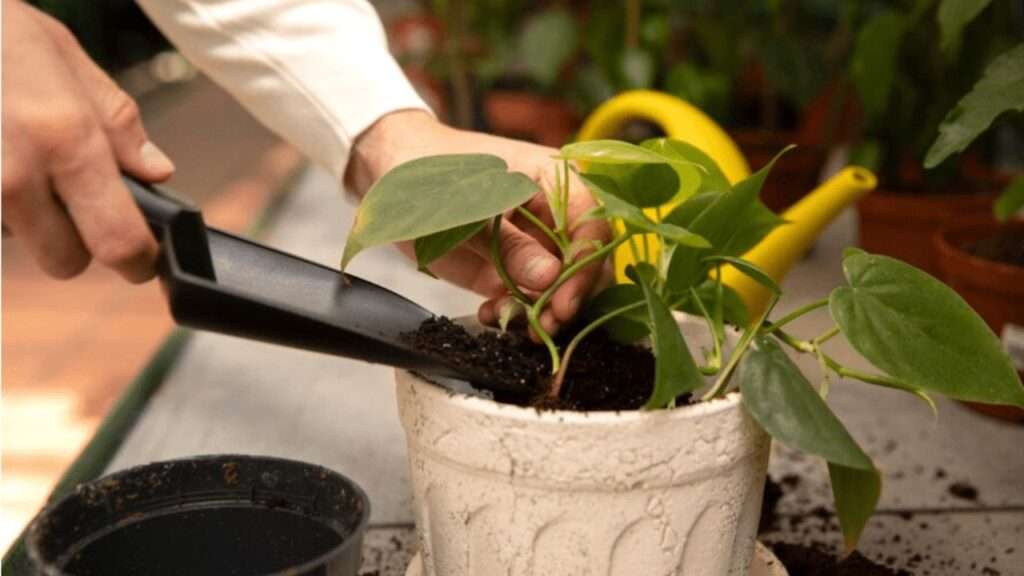
Instead, remove the rockwool or tissue culture gel. Using your fingers or scissors, carefully divide the plant mass into tiny, dime-sized “plugs” or portions. You will plant these tiny plugs in a grid pattern across your foreground, spaced about an inch apart. They will eventually send out runners and merge into a solid carpet.

Step 3: Planting with Aquascaping Tweezers 🥢
Using your thick fingers to plant tiny delicate stems will only lead to frustration and uprooted plants. Invest in a pair of long, fine-tipped aquascaping tweezers.
-
Grip the very bottom of the plant plug with the tweezers.
-
Push it deep into the soil—deeper than you think is necessary (leave just the top leaves exposed).
-
Insert it at a 45-degree angle.
-
Gently release the tweezers and pull them out at an angle so you don’t drag the plant back up with you.
Step 4: The Dry Start Method (DSM) vs. Submerged Planting 💧
If you are starting a brand-new tank without water or fish yet, consider the Dry Start Method (DSM). Instead of flooding the tank immediately, you plant your carpeting plugs into heavily misted, wet aqua soil and seal the top of the tank with plastic wrap to create a humid greenhouse. Leaving it like this for 4–6 weeks allows the plants to establish a massive, invincible root system with access to unlimited atmospheric CO2. Once the carpet has filled in completely, you flood the tank. This virtually eliminates the risk of algae blooms and floating plants during the fragile establishment phase!
Lighting, CO2, and Fertilizers: Fueling Your Underwater Lawn ☀️💨
To achieve that dense, vibrant growth, you need to balance the “Holy Trinity” of planted tanks: Light, Carbon, and Nutrients.
Getting the Lighting Right 🔦
Because carpeting aquatic plants sit at the very bottom of the tank, they are furthest away from the light source. Water depth significantly reduces light intensity. You need a full-spectrum LED light specifically designed for planted tanks with a high PAR rating at the substrate level. If you see your foreground plants growing tall and spindly (etiolation), they are begging for more light.
Do You Really Need Injected CO2? 🫧
As mentioned above, it depends on the species. High-tech plants like HC Cuba require a pressurized CO2 cylinder, regulator, and diffuser to pump gaseous CO2 into the water. However, if you are growing low-tech carpets like Marsilea hirsuta or Monte Carlo, you can skip the expensive gas systems. Using liquid carbon supplements (like Seachem Flourish Excel) can help, but patience and good soil are your best friends in a low-tech setup.
Root Tabs vs. Liquid Fertilizers 💊
While stem plants feed heavily from the water column, carpeting plants absorb the vast majority of their nutrients through their roots. While liquid fertilizers are great for overall tank health, pushing fertilizer root tabs deep into the substrate every 2–3 months will supercharge your foreground growth and keep the leaves looking lush and emerald green.
Common Carpeting Plant Problems (And How to Fix Them) 🛑🔧
Even the pros face issues. Here is how to troubleshoot the most common aquatic lawn problems:
My Plants Are Growing Upwards, Not Sideways ⬆️
-
The Diagnosis: This is classic etiolation. The plants aren’t getting enough light at the substrate level, so they are abandoning horizontal runner growth to stretch vertically toward the bulb.
-
The Fix: Increase your lighting intensity, increase the photoperiod (duration of light), or switch to a plant species better suited for low-light conditions.
The Bottom Leaves Are Yellowing or Rotting 🍂
-
The Diagnosis: Your carpet has grown too thick! When a carpet gets over an inch tall, the lush top layer completely blocks light from reaching the older, bottom layer. The bottom stems rot, severing the plant’s connection to the soil.
-
The Fix: Immediate, aggressive trimming. Don’t be afraid to give your carpet a severe “buzz cut.”
Algae is Smothering My Foreground 🦠
-
The Diagnosis: A nutrient imbalance. Usually, this means you have too much light and not enough CO2 or plant mass to outcompete the algae.
-
The Fix: Lower your light intensity slightly. Introduce a dedicated cleanup crew: Amano shrimp, Otocinclus catfish, and Nerite snails are excellent at meticulously picking algae off delicate foreground leaves without damaging the plant.
My Plants Keep Floating Up! 🎈
-
The Diagnosis: You either planted them too shallowly, or you have boisterous bottom-dwelling fish (like large Corydoras, Plecos, or Loaches) digging them up before the roots can take hold.
-
The Fix: Replant them much deeper using the 45-degree angle technique. If you have aggressive bottom-feeders, you may need to wait until the carpet is fully established (perhaps using the Dry Start Method) before introducing those specific fish.
Maintenance: How to Mow Your Underwater Lawn ✂️🌾
Maintaining carpeting aquatic plants requires a specific tool: curved spring scissors. Traditional straight scissors force you to contort your wrist at awkward angles inside the tank. Curved scissors allow you to easily slide parallel across the substrate, effortlessly trimming the carpet down to an even height.
Crucial Maintenance Tip: When you trim a carpet like Monte Carlo or Dwarf Hairgrass, thousands of tiny clippings will float to the surface. If left in the tank, they will get sucked into your filter, rot, and cause a massive ammonia spike. Always perform a water change immediately after trimming. Use a siphon hose to suck the floating trimmings directly out of the water column as you work.

Frequently Asked Questions (FAQs) ❓💬
Can I grow a carpet on a pure sand substrate? It is highly unlikely, though not impossible for advanced hobbyists. Sand is inert (contains zero nutrients) and can compact tightly, suffocating delicate roots. If you insist on sand, you must heavily supplement it with root tabs, but an active aqua soil will always yield dramatically better results.
How long does it take for an aquarium carpet to fill in? This depends heavily on your setup. A high-tech tank with intense light, CO2 injection, and fast growers like Glosso can carpet in 3 to 4 weeks. A low-tech tank with Monte Carlo or Dwarf Hairgrass might take 2 to 4 months to form a solid mat. Patience is key!
Can you grow a carpet with Goldfish or African Cichlids? Generally, no. Both Goldfish and African Cichlids are notorious for vigorously digging, sifting the substrate, and eating delicate plant matter. They will uproot or devour your expensive carpet in a matter of days. Stick to tough, heavy-rooted epiphytes (like Anubias or Java Fern) for these fish.
Are tissue culture plants better than potted plants? Tissue cultures (plants grown in sterile laboratory gel) are highly recommended for foreground plants. They are guaranteed to be 100% free of pest snails, algae, and pathogens. Plus, a single tissue culture cup yields dozens of tiny plant plugs, giving you more “bang for your buck” when covering a large foreground area.
Conclusion: Ready to Grow Your Dream Aquascape? 🏁🏆
Growing a lush, vibrant underwater meadow doesn’t have to be a frustrating game of trial and error. By choosing the right carpeting aquatic plants that align with your specific lighting and CO2 setup—and by utilizing nutrient-rich soils and the proper “divide and plant” techniques—you can achieve that magazine-worthy aesthetic in your own home.
If you are just starting out, do yourself a favor and begin with forgiving species like Monte Carlo or Marsilea hirsuta. Give them a quality substrate, be patient with their rooting process, and before you know it, you’ll be mowing your very own spectacular underwater lawn.
Do you have a favorite foreground plant, or are you currently battling a stubborn, floating carpet? Let us know your experiences and questions in the comments below! And if you are still setting up your tank, be sure to check out our ultimate guide on selecting the best aquascaping hardscape materials to pair with your new greenery!