You walk out to your patio or check your sunroom, only to find your lush, tropical statement piece looking limp, tired, and sad. If you are experiencing that sinking feeling right now, you are not alone. Cultivating colocasia plants (commonly known as Elephant Ears) is a highly rewarding experience, but their massive, dramatic foliage makes them highly susceptible to drooping. When a leaf the size of a dinner plate loses its structural integrity, it is impossible to ignore.
Don’t panic. While a drooping Colocasia is a clear distress signal, it is rarely a death sentence if you act quickly.
Field notes from years of cultivating tropical aroids in containers and landscape beds: The key to mastering Colocasia care isn’t just fixing problems as they arise; it is understanding their natural, swamp-loving habitat. By mimicking their wild environment, you can push past basic survival and cultivate true giants.
In this comprehensive guide, we will diagnose exactly why your plant is weeping, provide a step-by-step recovery blueprint, and reveal the nursery-level secrets to growing massive, show-stopping leaves that will transform your space into a tropical jungle. 🌴
📌 Key Takeaways for Quick Recovery
-
The Top Culprits: Under-watering (dehydration), insufficient sunlight, or sudden temperature drops are the most frequent causes of drooping stems.
-
The Ultimate Secret: Colocasia are hydrophilic (water-loving) and heavy feeders. Unapologetic moisture paired with a high-nitrogen fertilizer routine is the secret to gigantic foliage.
-
Immediate Action: Assess your soil moisture first. A simple “sponge test” will dictate whether your plant needs a deep soak or an emergency repotting due to root rot.
Immediate Triage: Diagnosing Your Drooping Colocasia 🩺
Before you can fix the droop, you need to identify the root cause. Elephant ears rely heavily on turgor pressure—the internal water pressure inside their cellular walls—to hold their heavy leaves upright. When that pressure drops, the stems buckle. Here is how to diagnose the disruption.
💧 The “Sponge” Test: Under-Watering vs. Over-Watering
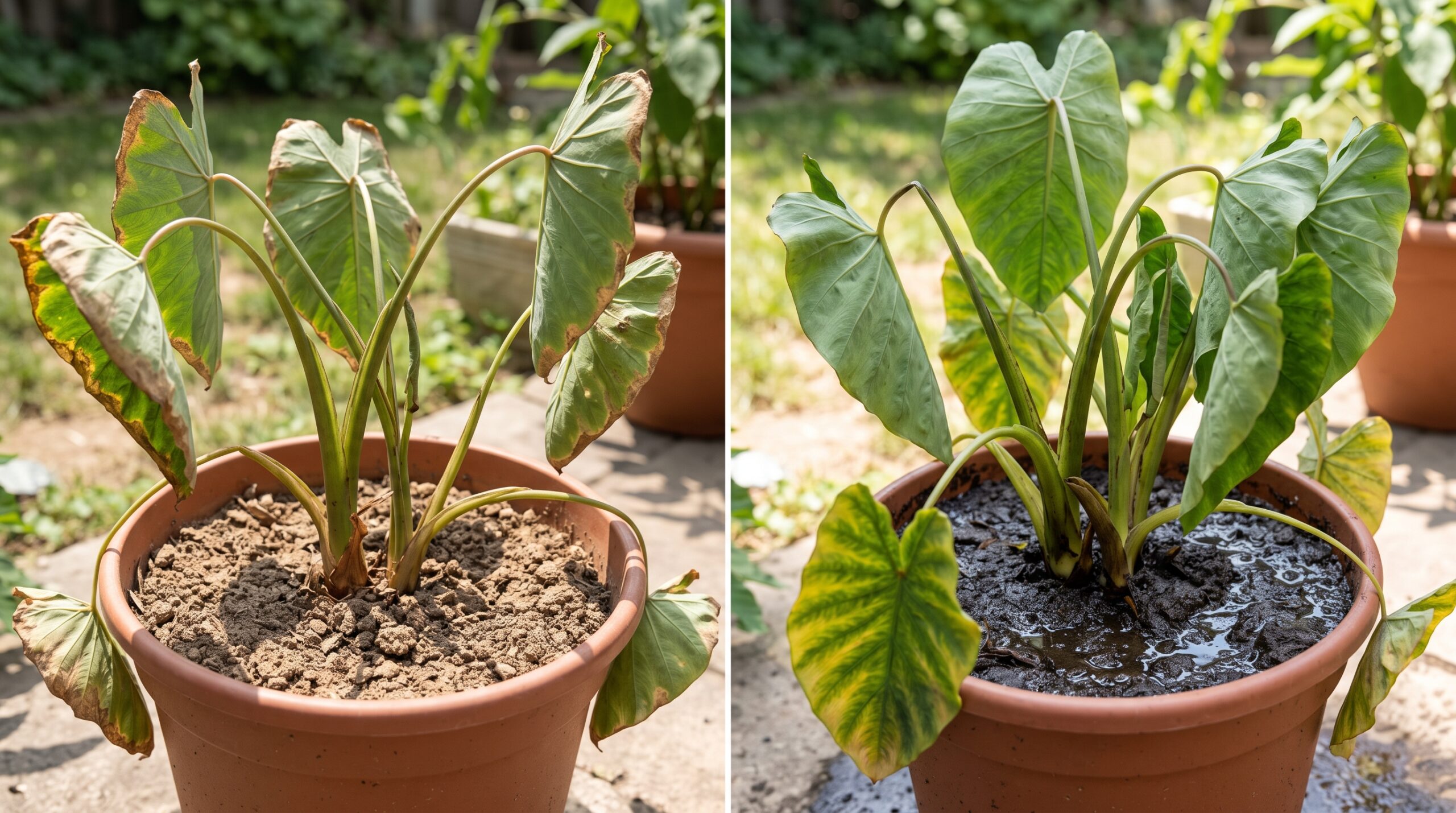
Watering issues account for 80% of all drooping Colocasia plants. However, the treatment for under-watering is the exact opposite of the treatment for over-watering, so getting this right is critical.
-
Under-Watering (The Most Common Issue): Colocasia plants are extraordinarily thirsty. If the top inch of the soil feels bone dry, and the stems feel somewhat hollow, pliable, or soft, your plant is severely dehydrated. You may also notice the edges of the leaves turning crispy and brown. Because these plants transpire rapidly through their massive surface area, they deplete soil moisture much faster than your average houseplant.
-
Over-Watering & Root Rot (The Silent Killer): Wait, aren’t these swamp plants? Yes, but there is a massive difference between a wild Colocasia esculenta growing in a moving, oxygenated stream, and a hybrid Colocasia sitting in dense, stagnant, waterlogged potting soil inside a plastic pot. If your soil smells foul (like sulfur or rotting vegetables), remains constantly muddy without draining, and the stems feel mushy right at the soil line, you are dealing with root rot. Yellowing that starts at the oldest, lowest petioles is a classic warning sign.
☀️ Sunlight Deficiency & Leggy Stems
Colocasia plants use sunlight to synthesize the energy required to support their massive canopies. If your plant is placed in a dark corner or heavy shade, it will experience etiolation.
When deprived of adequate light, the plant stretches out, searching for the sun. The petioles (stems) become excessively long, pale, and weak. Eventually, they stretch too far and buckle under the sheer weight of their own leaves.
-
The Fix: Colocasia thrive in bright, filtered sunlight. Outdoors, they love full morning sun with a bit of dappled shade during the harshest afternoon heat. Indoors, they require the brightest window available, ideally supplemented with a high-quality LED grow light. 💡
❄️ Temperature Drops & Cold Drafts
These are true tropicals. Colocasia plants do not just dislike the cold; they actively shut down when exposed to it.
If temperatures consistently dip below 55°F (13°C), the plant receives a biological signal that winter is coming. The foliage will naturally begin to droop, yellow, and die back as the plant pulls energy down into its underground tuber (corm) to prepare for dormancy.
-
Indoor Hazards: Even if your house is warm, placing your Elephant Ear directly in the path of a blowing air conditioning vent can simulate a cold snap, triggering sudden, shocking wilt. Keep them in stable, warm environments away from drafts.
🌱 Transplant Shock & Root Disturbance
Did you just bring your plant home from the nursery, or did you recently repot it? Post-repotting sulk is incredibly common.
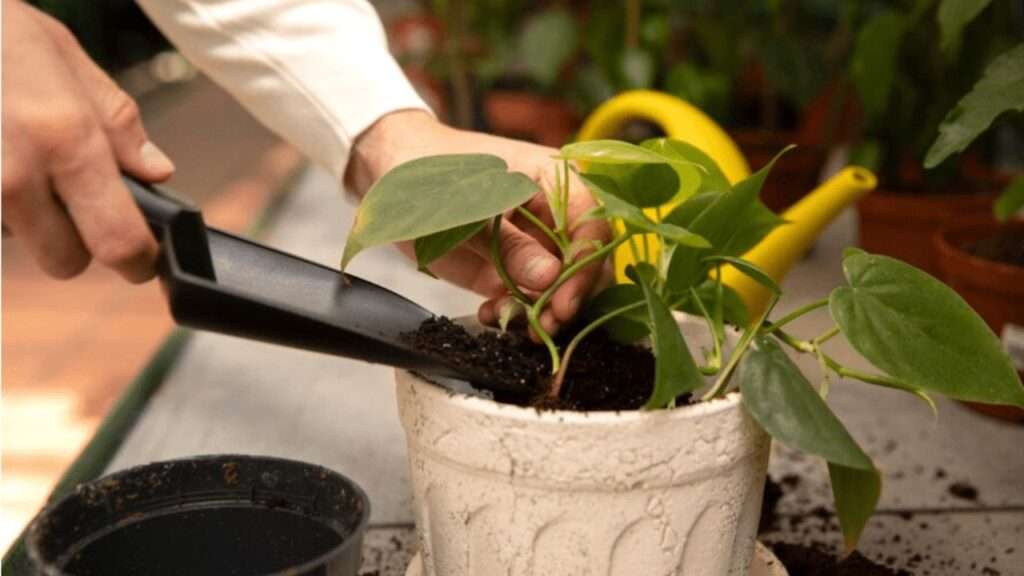
When you disturb the delicate root system of a Colocasia, the micro-roots responsible for drawing up water are temporarily damaged. Until the roots re-anchor themselves into the new substrate—a process that takes 7 to 14 days—the plant cannot draw up enough moisture to maintain its turgor pressure. The result is a temporary, but dramatic, droop.
The Diagnostics Matrix: Quick Symptom Checker 📊
Use this quick-reference table to cross-check your plant’s symptoms and determine your immediate next steps.
The Blueprint: Step-by-Step Fix for Drooping Stems 🛠️
Once you have identified the culprit using the matrix above, it is time to intervene. Follow this 48-hour rehabilitation protocol to restore your plant’s structural integrity.
Step 1: Inspect the Corm (Bulb) Integrity The corm is the heart of the Colocasia. Gently dig around the top inch of the soil to expose the top of the bulb. Press it gently with your thumb. It should feel rock-hard, like a fresh potato. If it is squishy, oozing, or papery and hollow, you are dealing with advanced rot or disease. You will need to dig it up, cut away the rotten tissue with a sterilized knife, dust the wound with cinnamon (a natural fungicide), and let it callous before replanting.
Step 2: Hydration Reset (The Deep Soak) If the problem is dehydration, top-watering will not work; the extremely dry peat moss in the soil will become hydrophobic, causing water to run down the sides of the pot. Instead, fill a basin or sink with 3 inches of room-temperature water. Place the pot directly into the basin and let it soak from the bottom up for 45 to 60 minutes. Once the topsoil feels damp to the touch, remove it and let it drain completely. You should see the stems begin to lift within a few hours! 🚿
Step 3: Prune the Dead Weight We naturally want to save every leaf, but a severely bent or creased stem will never heal. If a petiole has physically snapped or kinked, it is actively draining energy from the plant as it tries to repair an impossible wound. Using clean, sharp pruning shears, cut the drooping, damaged stem about two inches above the base. This redirects the plant’s energy down into the crown to push out a healthy new leaf. ✂️
Step 4: Stabilize Ambient Humidity Colocasia hail from humid, tropical jungles. When indoor air becomes too dry (below 40% relative humidity), the leaves lose moisture faster than the roots can supply it, leading to a weary, drooping appearance. During the recovery phase, group your Colocasia with other plants to create a microclimate, place a humidifier nearby, or set the pot on a pebble tray filled with water. Aim for at least 60% ambient humidity.

The Secret to Growing Massive, Show-Stopping Leaves 🏆
Reviving a drooping plant is only half the battle. If you want to elevate your gardening game and cultivate those prehistoric, architectural leaves that stop visitors in their tracks, standard houseplant care simply will not cut it. Cultivating giant Colocasia foliage requires a specific regimen tailored to their rapid growth cycle.
🧪 The Nutrient Secret: Feed Like a Monster
Colocasia are incredibly heavy feeders. Pushing out a three-foot leaf requires an immense amount of cellular energy, and if the soil is depleted of nutrients, the plant will stunt its own growth.
To maximize leaf size, you need a high-nitrogen fertilizer. Nitrogen is the primary macronutrient responsible for vigorous, green vegetative growth.
-
The Routine: During the peak summer growing season, adopt the “weakly, weekly” method. Instead of hitting the plant with a massive dose of fertilizer once a month (which can burn the roots), dilute a balanced, water-soluble fertilizer (like a 20-20-20) or a high-nitrogen blend (like a 10-5-5) to half-strength and apply it every single week.
-
Organic Boosters: To build long-term soil health, supplement your chemical fertilizers with organic matter. Top-dressing the soil with worm castings and watering with aerated compost tea introduces beneficial microbes that help the roots uptake nutrients more efficiently. 🪱
🌊 The Bog Method: Unlocking Hydrophilic Growth
Here is a secret most standard plant tags will not tell you: many Colocasia esculenta cultivars can grow directly in water. Unlike most tropical houseplants that suffocate in saturated soil, Colocasia have adapted to thrive in boggy, swamp-like conditions.
If you are growing your Elephant Ears in containers on a hot patio, keeping them adequately hydrated is a daily chore. Enter the “Bog Method.”
-
How to build a bog pot: Choose a heavy, sealed ceramic pot with no drainage holes (or plug the existing holes). Fill the bottom few inches with pea gravel, then add a rich, loamy potting mix heavily amended with compost. Plant your Colocasia and water it until the water pools slightly at the surface.
-
The Result: The roots will dive down into the constant moisture reservoir, completely eliminating the risk of dehydration-induced drooping. The plant will reward you with thicker, heavily reinforced stems and dramatically larger leaves. 🌧️

🥔 Corm Sizing: Starting with Massive Foundations
In the world of Elephant Ears, genetics and foundation matter. The ultimate size of your plant’s foliage is directly correlated to the size of its underground corm.
If you purchase a tiny, micro-propagated tissue culture plug online, it may take three years of careful cultivation to produce a large leaf. If you want massive leaves this season, source Grade-A, softball-sized (or larger) corms from a reputable nursery. A massive corm holds vast starch reserves, allowing it to push out incredibly thick petioles that are physically incapable of snapping under their own weight.
Colocasia vs. Alocasia: Don’t Treat Them the Same! 🔄
One of the most common pitfalls in Elephant Ear care is confusing Colocasia with their close botanical cousins, Alocasia. While they belong to the same aroid family and share the “Elephant Ear” moniker, treating them identically is a guaranteed recipe for failure. Here is the expert breakdown to ensure you are providing the right care.
-
Leaf Orientation (The Easy ID Test): Look closely at the foliage. Colocasia leaves point down, with the petiole attaching slightly down the back of the leaf (peltate), creating a heart-shaped shield. Alocasia leaves point upward or outward, acting as an extension of the stem. 🍃
-
Water Tolerance: As discussed, Colocasia love “wet feet” and thrive in boggy margins. If you attempt the Bog Method on an Alocasia, its roots will rot into mush within days. Alocasia require strict wet-to-dry cycles and highly aerated, chunky soil mixes.
-
Sun Requirements: Many Colocasia varieties (especially dark-leaved cultivars like ‘Black Magic’) can acclimate to intense, full outdoor sun, using the light to deepen their pigmentation. Most Alocasia are understory forest dwellers that will scorch severely under direct midday UV rays, preferring dappled, indirect light. ☀️

Seasonal Maintenance: Overwintering & Propagation 🍁✂️
Because of their rapid growth rate, Colocasia require seasonal intervention to keep them healthy and to expand your collection.
📦 How to Overwinter Corms in Cold Climates
If you live in USDA Hardiness Zones 8 through 11, you can generally leave your Colocasia in the ground year-round (often dying back in winter and returning in spring). However, if you live in Zones 3 through 7, they must be treated as tender annuals or overwintered indoors.
To save your corms for next year:
-
Wait for the first light frost to naturally kill back the foliage.
-
Cut the stems down to about 2 inches above the soil line.
-
Carefully dig up the root ball with a pitchfork, taking care not to pierce the central corm.
-
Brush off excess soil and let the corms “cure” (dry out) in a warm, well-ventilated garage for 7 to 10 days.
-
Once dry, wrap them loosely in newspaper or bury them in a cardboard box filled with dry peat moss. Store them in a cool, dark place (around 45°F to 50°F) until the threat of spring frost has passed. ❄️
🪴 Dividing Runners and Offsets
A happy, well-fed Colocasia will aggressively multiply. As the main mother plant matures, it sends out underground lateral stems (stolons or runners) that pop up as brand new baby plants (pups).
During your spring repotting session, you can multiply your collection for free. Simply unpot the plant, locate the fleshy runners connecting the baby corms to the mother plant, and sever them with a sterilized knife. Ensure the baby pup has at least a few of its own independent roots. Pot it up in rich soil, keep it constantly moist, and watch it explode with new growth. 🌱
Frequently Asked Questions ❓
Should I cut off drooping Colocasia leaves? Only cut the leaf if the petiole has physically snapped, heavily creased, or if the leaf itself is turning yellow or brown. If the stem is simply bending due to a lack of water, leave it alone; once you rehydrate the plant, the turgor pressure will restore the stem’s upright posture within hours.
How often should I water my Colocasia plants? During the peak summer growing season, outdoor potted Colocasia may need watering every single day—especially if they are in full sun. Indoor plants should be watered as soon as the top half-inch of soil feels barely dry. Never let the root ball dry out completely.
Can a drooping leaf bounce back? Yes! A leaf drooping purely from dehydration can perk back up in as little as 4 to 6 hours after a deep bottom-soak. However, a leaf drooping from cold damage or root rot is usually permanently compromised and should be pruned to redirect energy.
Why do Colocasia “weep” or drip water from leaf tips? This perfectly normal, healthy biological process is called guttation. When the plant takes up more water than it can transpire (often at night or in highly humid conditions), it expels the excess moisture through specialized pores at the leaf tips. It is a great sign that your plant is well-hydrated! 💧
Final Thoughts & Community Call to Action 💬
Mastering the care of Colocasia plants is a thrilling journey. By learning to read their visual cues—like the dreaded drooping stem—you can easily intervene before real damage occurs. Remember the golden rules: prioritize consistent, deep moisture, feed them heavily during the growing season, and ensure they receive adequate bright light to support their massive canopies.
Once you dial in this routine, those limp stems will be a thing of the past, replaced by thick, towering stalks holding up the jungle foliage of your dreams.
Now it’s your turn: Have you noticed your leaves drooping after a recent repotting, or are you actively experimenting with the bog method to grow giant leaves this season? Drop your experiences, struggles, and questions in the comments below—I read every single one! 👇