Few garden perennials command attention quite like the common rue plant (Ruta graveolens). With its powdery, silvery-blue foliage, delicate lacy texture, and clusters of bright chartreuse-yellow summer blooms, it looks like an ornamental masterpiece plucked straight from a sun-drenched Mediterranean hillside. Even better, it pulls double duty in the landscape by naturally deterring deer, roaming neighborhood cats, and stubborn garden pests.
Yet, despite its tough, drought-tolerant reputation, many gardeners run into two frustrating—and sometimes painful—roadblocks. The first is loving it to death with rich soil and frequent watering, which quickly triggers fatal root rot. The second is brushing against or pruning its stems bare-handed on a bright afternoon, only to wake up 24 hours later with red, blistering sap burns.
You don’t need to avoid this historic herb to stay safe. When you understand its lean-soil preferences and follow a few simple handling precautions, growing a common rue plant is remarkably low-maintenance and rewarding. In this complete guide, you will learn how to plant, prune, propagate, and safely manage Ruta graveolens so it thrives in your garden for years to come.
Quick Care Snapshot: Common Rue at a Glance 📋
What Is a Common Rue Plant? (The “Herb of Grace”) 🌿
Native to the rocky, sun-baked slopes of the Balkan Peninsula and the Mediterranean region, the common rue plant is a woody-based perennial subshrub in the citrus family (Rutaceae). Historically known as the “Herb of Grace,” rue was once woven into medieval strewing herbs, monastery gardens, and folklore for its pungent, musky aroma and reputed protective qualities.
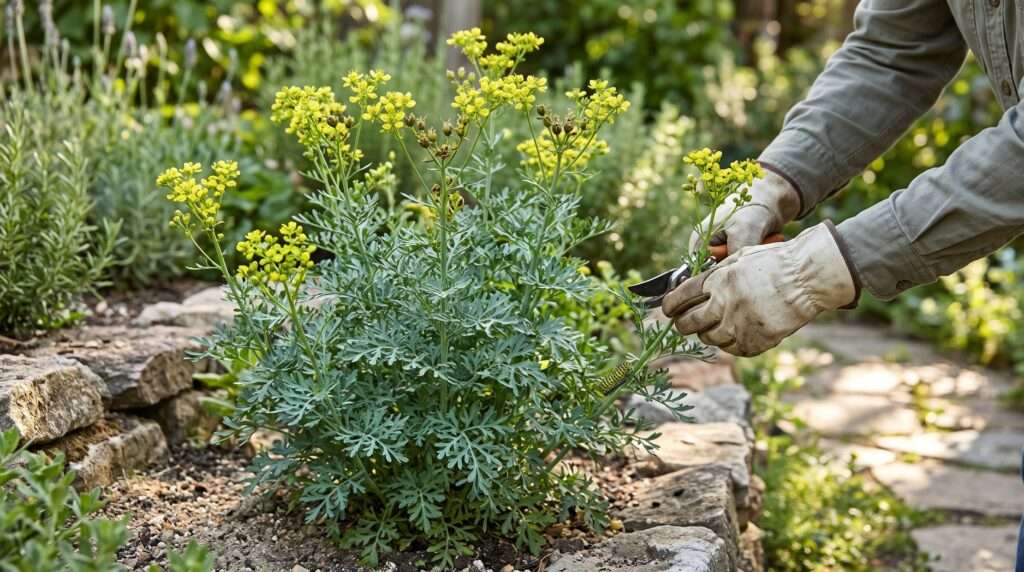
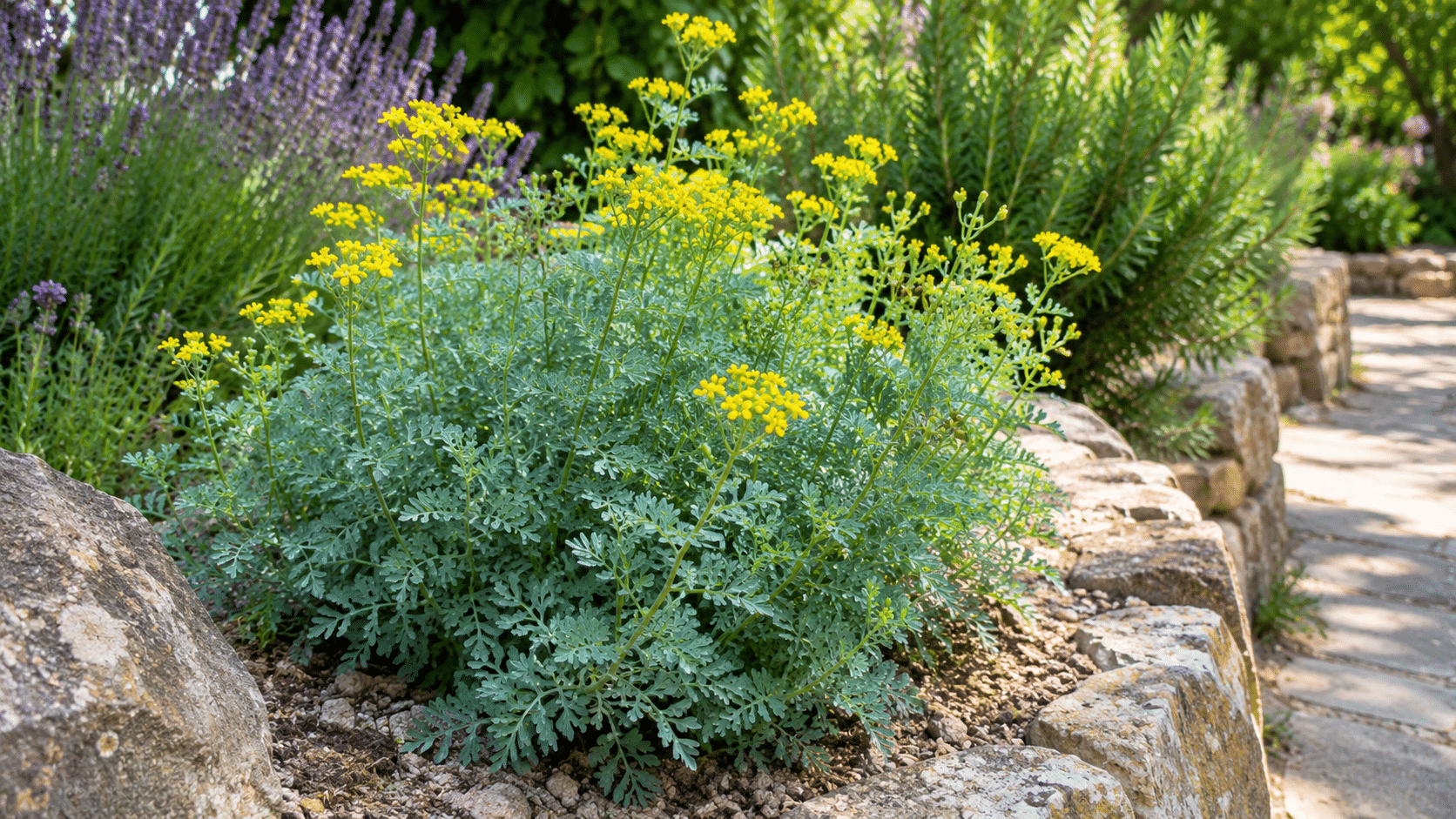
In modern gardens, rue is prized primarily for its ornamental structure and ecological value rather than culinary use. Its deeply divided, fern-like leaves carry a distinct blue-green cast that provides stunning visual contrast next to dark green shrubs, roses, or bright summer perennials. In late spring and summer, it sends up loose clusters of four-petaled, mustard-yellow flowers that eventually mature into interesting, four-lobed seed capsules.
💡 Expert Insight: Because Ruta graveolens evolved in lean, stony Mediterranean soils, it actually performs worse when pampered. Treat it like lavender or rosemary—give it blazing sun, gritty drainage, and a little benign neglect—and it will reward you with dense, vibrantly colored foliage.
⚠️ Safety First: How to Handle Common Rue Without Getting Burned 🧤
Before you dig a planting hole or pick up your pruning shears, it is essential to respect rue’s built-in chemical defense system. Understanding how it works ensures you never experience an unpleasant reaction.
What Is Phytophotodermatitis? ☀️
The stems and leaves of the common rue plant contain natural chemical compounds called furanocoumarins (specifically psoralens). On their own, these oils are relatively mild. However, when crushed rue sap touches bare skin and is subsequently exposed to ultraviolet (UV) sunlight, it triggers a phototoxic chemical reaction called phytophotodermatitis.
Unlike poison ivy, which causes an allergic rash, phytophotodermatitis acts like a severe, localized sunburn. Symptoms typically appear 24 to 48 hours after exposure and can include redness, intense itching, stinging, and painful, fluid-filled blisters that may leave temporary dark hyperpigmentation on the skin as they heal.
Safe Handling & Pruning Rules 🧤
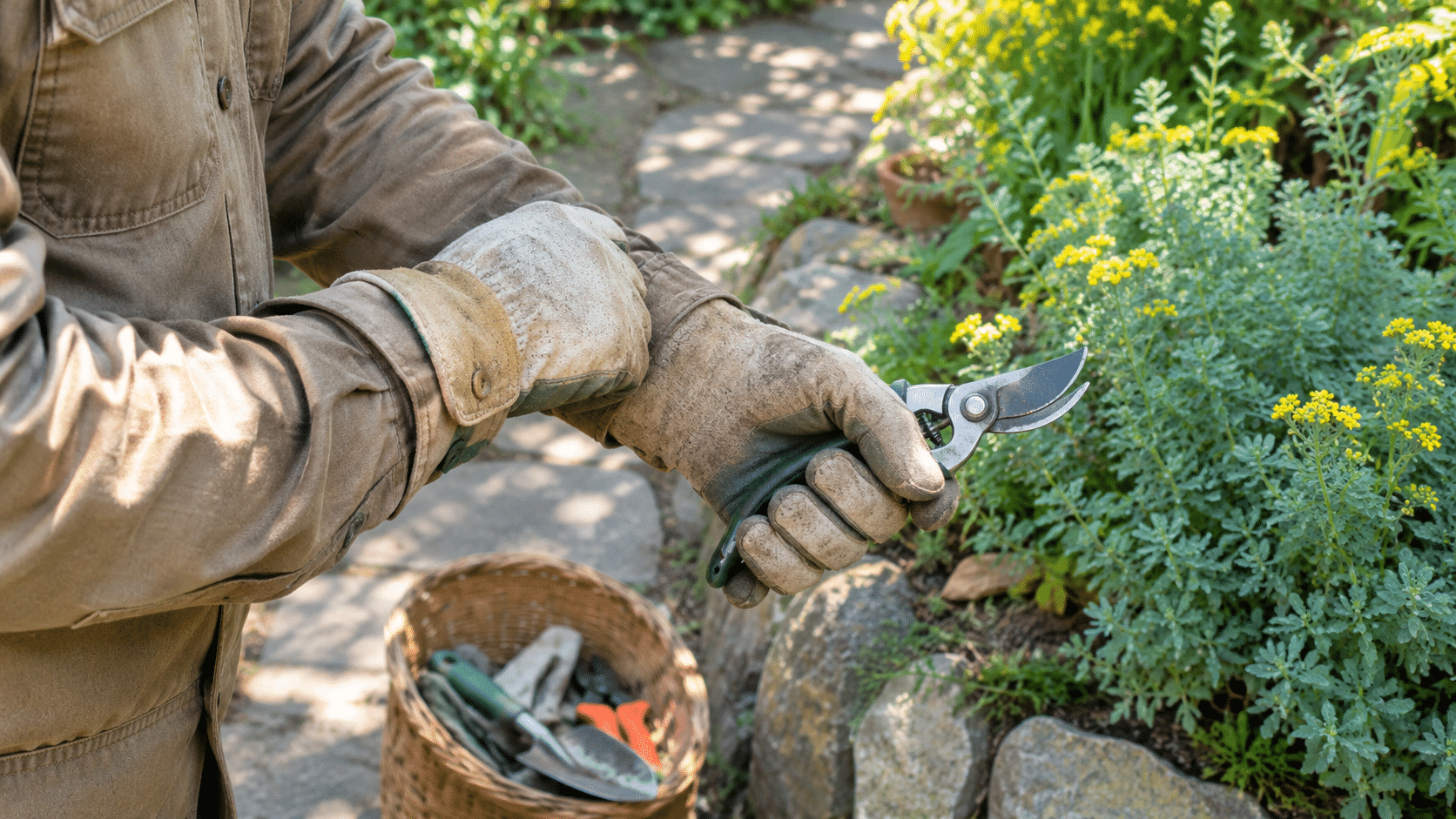
You can easily avoid sap burns by adopting a few non-negotiable habits whenever you work near your plant:
-
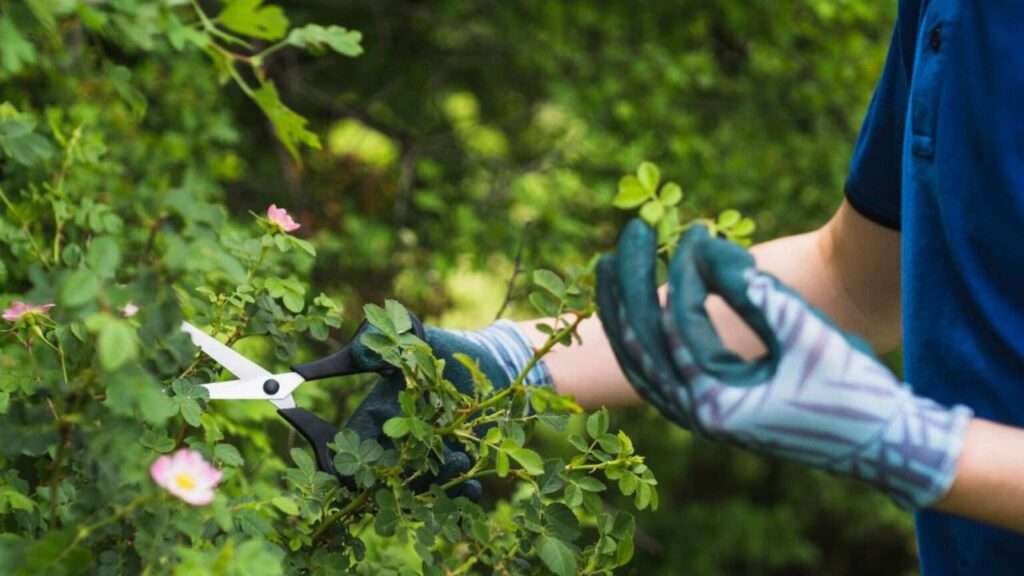
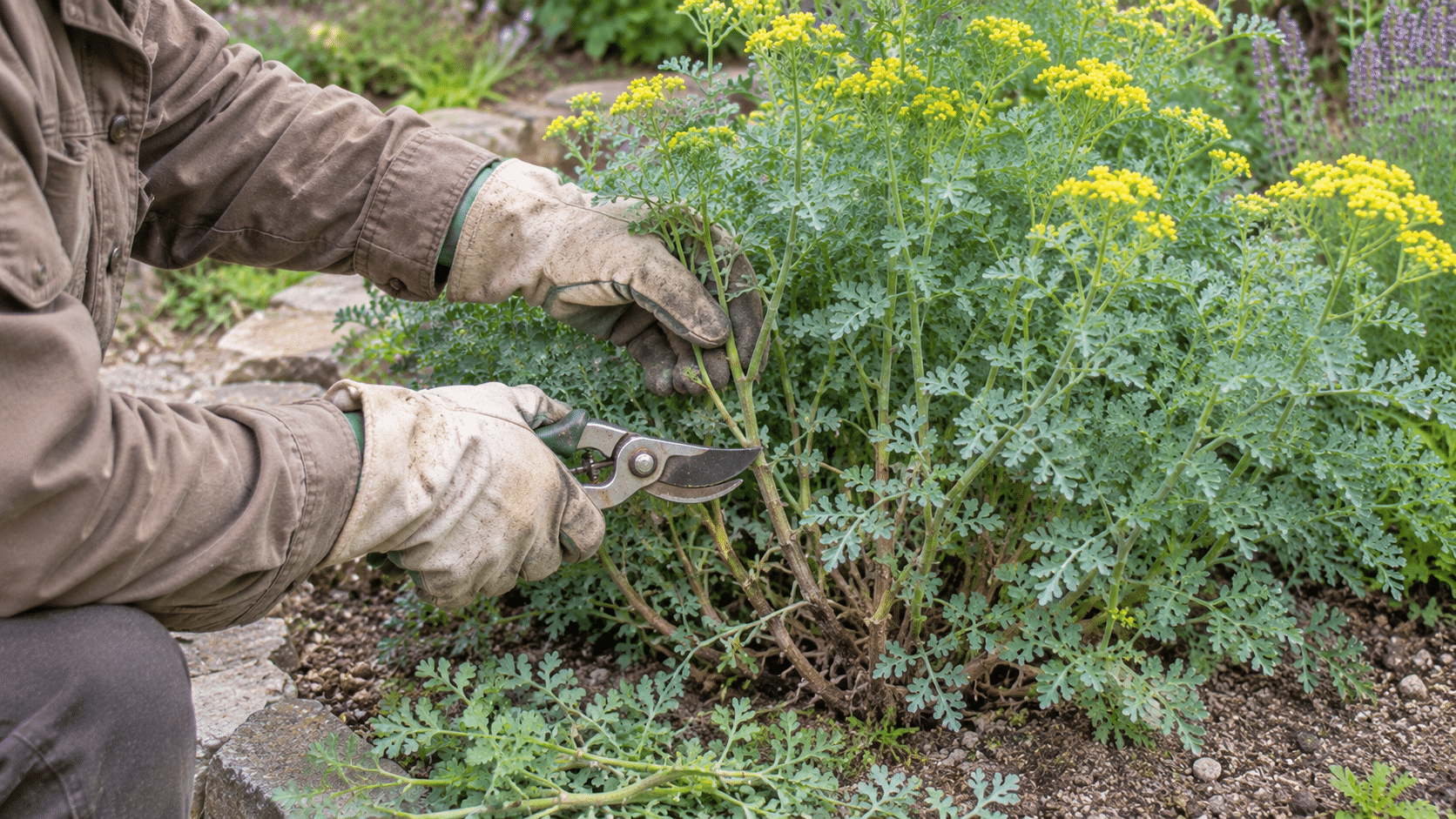
Gear up every time: Always wear thick gardening gloves (or nitrile gloves) and long sleeves when planting, weeding around, or pruning rue.
-
Time your maintenance: Only prune or handle the plant on overcast days or in the early evening once direct sunlight is off the foliage.
-
Keep it off high-traffic paths: Avoid planting rue directly along narrow walkways or patios where bare legs might accidentally brush against it on sunny afternoons.
-
Wash tools and hands immediately: Clean your pruners with rubbing alcohol or soapy water after cutting rue so sap doesn’t transfer to your hands later.
What to do if sap touches your skin: Immediately wash the affected area thoroughly with cool water and mild dish soap to break down the plant oils. Most importantly, keep that patch of skin completely covered from sunlight for at least 48 hours to prevent the UV reaction from activating.
Pet, Child, and Pregnancy Safety 🐾
Ruta graveolens is toxic to dogs, cats, and horses if ingested, causing gastrointestinal upset, vomiting, or mouth irritation. Fortunately, most pets find its sharp, bitter scent highly unpleasant and will steer clear of it on their own. Still, it is best to keep it out of reach of curious puppies or young children. Additionally, rue should never be consumed medicinally or during pregnancy, as its compounds can cause serious internal side effects.
Ideal Growing Conditions for a Thriving Common Rue Plant ☀️
Mimicking rue’s native Mediterranean climate is the secret to keeping it compact, healthy, and long-lived.
Sunlight Requirements 🌞
Common rue is a true sun-worshipper. It requires full sun—at least 6 to 8 hours of direct, unfiltered sunlight daily.
-
In full sun: Stems stay sturdy and upright, leaves develop their signature powdery blue-green hue, and flowering is abundant.
-
In partial shade: While the plant will survive, it quickly becomes leggy, floppy, and dull green, with sparse blooms and a much higher risk of fungal issues.
Soil & Drainage (The #1 Key to Survival) 🪨
If there is one golden rule for common rue plant care, it is this: sharp drainage is non-negotiable. Rue prefers lean, rocky, sandy, or slightly alkaline soil with a pH between 6.5 and 7.5.
Heavy, waterlogged clay soil is the fastest way to kill Ruta graveolens, especially during cold, wet winters when standing moisture suffocates the roots. If your garden has dense clay, amend the planting area generously with coarse builder’s sand, fine gravel, or perlite—or plant rue on a raised mound or rock garden slope where water sheds effortlessly.
Temperature, Humidity & Hardiness 🌡️
Hardy in USDA Zones 4 through 9, common rue handles both blistering summer heat and crisp winter freezes surprisingly well. In milder climates (Zones 7–9), it remains evergreen year-round. In colder northern zones (Zones 4–6), the foliage may die back partially in winter and rebound vigorously from the woody base in spring.
High summer humidity can be a minor challenge in the Deep South or humid coastal areas. If you garden in a muggy climate, give your plants extra spacing so breezes can dry the foliage quickly.
Step-by-Step Guide to Planting Common Rue 🌱
Whether you are tucking rue into a sunny perennial border or styling a Mediterranean patio pot, getting the initial setup right prevents 90% of future care headaches.
When to Plant 🗓️
The best time to plant nursery-grown common rue is in mid-to-late spring, after all danger of a hard frost has passed. In mild-winter regions (Zones 8–9), you can also plant in early autumn, allowing the roots to settle in during cool weather before the next summer’s heat arrives.
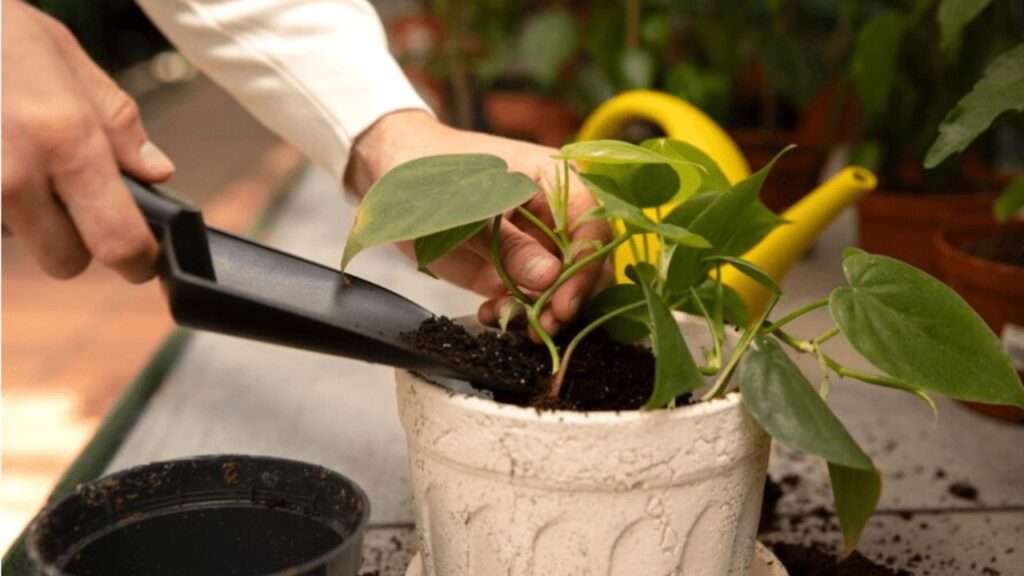
Planting in the Ground 🪴
-
Put on your gloves and choose a spot with full sun and fast-draining soil.
-
Dig a planting hole twice as wide as the nursery pot and just as deep.
-
Loosen the root ball gently with your fingers if the roots are tightly coiled.
-
Set the plant in the hole so the crown (where the stems meet the roots) sits level with—or slightly above—the surrounding soil line. Never bury the woody stem base.
-
Backfill with native soil mixed with a handful of grit or perlite if your soil is heavy. Avoid adding rich compost or manure to the planting hole.
-
Space multiple plants 18 to 24 inches apart to guarantee strong air circulation.
-
Water lightly to settle the soil around the roots, then hold off on watering again until the top 2 inches of soil dry out.
Growing Common Rue in Containers 🏺
Common rue thrives in pots, making it an excellent choice for patios, balconies, or gardens with heavy clay soil.
-
Choose the right pot: An unglazed terracotta or clay pot with a large drainage hole is ideal. Porous clay wicks excess moisture away from the roots, mimicking dry Mediterranean ground. Pick a container at least 10–12 inches wide to accommodate its deep taproot.
-
Use a gritty potting mix: Standard bagged potting soil holds too much water. Instead, blend 2 parts cactus/succulent mix with 1 part perlite, pumice, or coarse horticultural sand.
Ongoing Common Rue Plant Care & Maintenance ✂️
Once your common rue plant settles into its spot, it becomes one of the easiest perennials in the garden. In fact, the biggest secret to keeping it looking lush and tidy is knowing when to leave it alone.
Watering Schedule 💧
-
Newly planted rue: Water once or twice a week for the first 4 to 6 weeks to help the root system establish deeply.
-
Established rue: Once rooted, Ruta graveolens is fiercely drought-tolerant. Water only during prolonged dry spells when the top 2 to 3 inches of soil feel completely bone dry.
-
Container plants: Potted rue dries out faster than in-ground plants, especially in terracotta. Check the soil weekly in summer and water deeply only when the potting mix is dry halfway down, emptying the saucer afterward so the roots never sit in standing water.
Fertilizing (Why Less Is More) 🚫
Resist the urge to feed your rue with synthetic, high-nitrogen plant foods. Rich soil and excess fertilizer push rapid, weak, leggy growth that flops open in the wind and actually dilutes the aromatic oils that give the plant its pest-repelling power.
If your soil is extremely poor, a light top-dressing of finished compost around the base in early spring is all it needs for the entire year.
Pruning & Shaping ✂️
Because common rue is a woody-based subshrub, it naturally becomes bare and gnarled at the bottom if left unpruned for several years. A simple two-step pruning routine keeps it compact and bushy:
-
Spring Hard Prune: In early spring, just as fresh green buds begin to swell along the stems, put on your gloves and cut the entire plant back by one-third to one-half. Avoid cutting into old, leafless woody stems where no green buds are visible, as old wood is slow to regenerate.
-
Summer Deadheading: Once the chartreuse-yellow blooms fade in midsummer, snip off the spent flower stalks. Deadheading keeps the foliage dense and prevents the plant from self-seeding aggressively around your garden beds. (Always prune in the evening or on cloudy days while wearing gloves!)
Overwintering Care ❄️
In USDA Zones 7–9, common rue requires virtually no winter protection. In colder climates (Zones 4–6), where freezing temperatures and wet winter sleet can stress the crown, apply a light, airy layer of dry pine needles or straw around the base of the plant—keeping the mulch pulled a couple of inches away from the central woody stems to prevent rot.
If you grow rue in a container in Zone 5 or colder, move the pot to a bright, cool, frost-free location (like an unheated sunroom or sheltered garage window) and water sparingly—just enough to keep the roots from drying out completely—until spring returns.
How to Propagate Common Rue 🌿
Expanding your collection of Ruta graveolens is simple and budget-friendly. Remember to wear gloves and long sleeves during every step of the propagation process.
From Semi-Hardwood Cuttings (Fastest Method) ✂️
-
In late spring or early summer, snip 4- to 6-inch healthy, non-flowering stems from the parent plant.
-
Strip the leaves from the bottom half of each cutting.
-
Dip the cut ends into rooting hormone powder to speed up root development.
-
Insert the cuttings into small pots filled with a moist, gritty mix of half perlite and half peat-free seed starting mix.
-
Place the pots in bright, indirect light and mist lightly every few days. Roots typically form in 3 to 5 weeks, at which point you can gradually acclimate them to full sun.
From Seeds 🌱
-
Start seeds indoors 6 to 8 weeks before your last spring frost, or direct-sow outdoors once temperatures warm up.
-
Surface-sow the seeds: Rue seeds require light to germinate, so press them gently onto the surface of moist seed-starting mix without burying them.
-
Keep the soil lightly moist and warm (around 65–70°F / 18–21°C). Expect germination in 2 to 4 weeks.
By Root Division 🪴
Every 3 to 4 years, mature clumps can be divided in early spring just as new growth emerges. Dig up the entire root ball, use a sharp, clean spade or knife to split the crown into two or three sections—ensuring each piece has healthy roots and vigorous shoots—and replant immediately in well-draining soil.
Companion Planting & Garden Benefits 🦋
Beyond its striking blue-green foliage, the common rue plant is a powerhouse for organic pest management and pollinator support.
A Natural Pest & Animal Deterrent 🛡️
Rue’s pungent, musky scent acts as a natural boundary guard. Strategically planting it along garden edges or near vulnerable perennials helps deter:
-
Roaming cats and dogs (who dislike the bitter aroma)
-
Deer and rabbits (which rarely browse its toxic, strongly scented leaves)
-
Japanese beetles, slugs, and flies
Host Plant for Swallowtail Butterflies 🦋
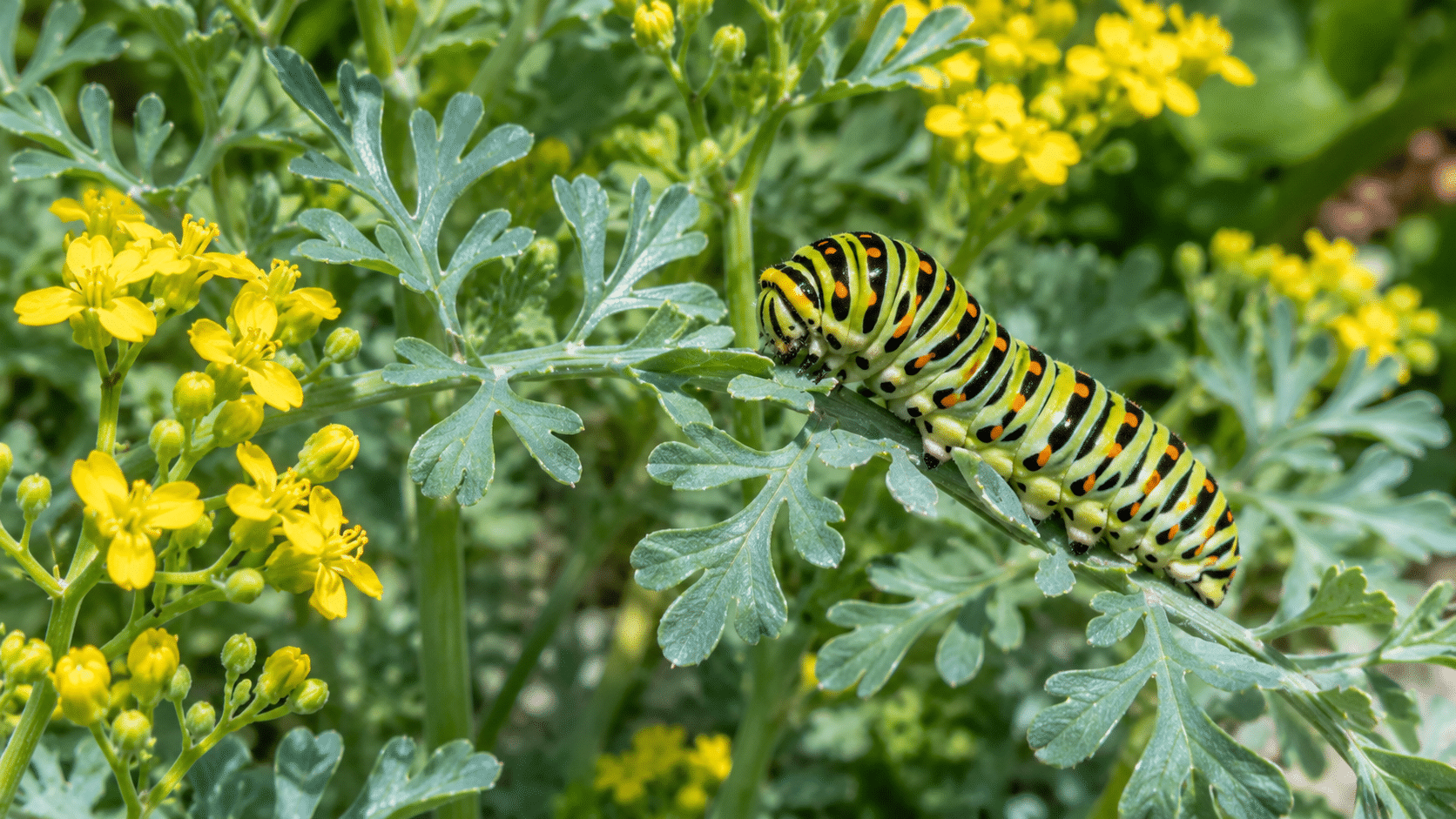
One of the most rewarding surprises of growing common rue is its role in supporting native pollinators. Because rue belongs to the citrus family (Rutaceae), it is a prized larval host plant for Black Swallowtail and Giant Swallowtail butterflies.
If you spot plump, green-and-black striped caterpillars (or bird-dropping lookalike caterpillars) munching on your rue leaves in summer, do not spray them! A healthy, mature rue plant can easily spare a few stems to nourish the next generation of butterflies and will quickly regrow fresh foliage.
Best & Worst Companion Plants 🤝
Rue releases natural allelopathic compounds from its roots that can inhibit the growth of certain nearby herbs and vegetables. Pair it wisely using this quick guide:
Troubleshooting Common Rue Problems 🔍
Even the toughest plants can hit a snag if their environment isn’t quite right. Use this quick diagnostic guide to fix common issues fast.
Yellowing Leaves & Mushy Stems 🍂
-
The Cause: Overwatering or heavy, poorly draining soil leading to fungal root rot (Phytophthora or Pythium).
-
The Fix: Stop watering immediately. Check the soil around the roots; if it is soggy, gently lift the plant, trim away any black or mushy roots (wearing gloves), and replant it in a raised mound or terracotta pot filled with gritty, fast-draining soil.
Leggy, Floppy Growth 🥀
-
The Cause: Too much shade or excessive nitrogen fertilizer.
-
The Fix: Relocate the plant to a spot receiving at least 6 to 8 hours of direct sun. In early spring, give it a rejuvenating hard prune by cutting it back by half to encourage dense, upright branching.
Pests & Diseases 🐛
Thanks to its strong essential oils, Ruta graveolens is remarkably resistant to most garden pests and diseases. However, stressed plants grown in stagnant, humid air may occasionally attract aphids, spider mites, or powdery mildew.
-
Organic Fix: Blast aphids or mites off with a sharp jet of water from the garden hose, or treat with insecticidal soap or neem oil in the evening. For powdery mildew, prune away affected stems to boost airflow and avoid overhead watering.
Popular Common Rue Cultivars to Try 🌸
While the straight species (Ruta graveolens) is widely available, several named cultivars offer even better color and compact habits for modern gardens:
-
‘Jackman’s Blue’: Widely considered the finest ornamental variety, prized for its intensely powdery, steel-blue foliage and tidy, compact 2-foot mounding habit.
-
‘Variegata’: Features eye-catching blue-green leaves splashed with creamy-white margins, brightening up sunny borders and rock gardens.
-
‘Blue Mound’: A dwarf, low-growing cultivar (reaching about 12–18 inches tall) that is ideal for small containers, herb spirals, and narrow border edges.
Frequently Asked Questions (FAQs) ❓
Is the common rue plant edible?
Historically, tiny pinches of rue were used as a bitter flavoring in traditional Ethiopian, Italian (grappa), and ancient Roman cuisine. However, modern herbalists and medical authorities strongly advise against ingesting common rue. Even small doses can cause stomach pain, vomiting, liver or kidney irritation, and severe complications during pregnancy. It is best enjoyed strictly as an ornamental and companion plant.
Does common rue come back every year?
Yes! The common rue plant is a hardy woody perennial in USDA Zones 4 through 9. It returns reliably every spring, staying evergreen in mild climates and regrowing from its woody base in colder northern regions.
Does rue really keep cats out of the garden?
Yes, for most cats. Felines strongly dislike the pungent, bitter citrus-musk scent of Ruta graveolens. Planting a border of rue around vegetable beds or flower gardens often encourages neighborhood cats to look elsewhere for a digging spot—without harming them.
Can you grow common rue indoors?
It is possible, though it performs best outdoors. To succeed indoors, place your plant in an unglazed terracotta pot filled with cactus mix right on a blazing-hot, south-facing windowsill that gets at least 6 hours of direct sun daily, and let the soil dry out thoroughly between waterings.
Final Thoughts 🌿
Growing a common rue plant is all about working with its wild Mediterranean nature rather than against it. Give it blazing full sun, lean and gritty soil, hands-off watering, and a quick spring trim—and always slip on your gardening gloves before you handle its stems. In return, you’ll be rewarded with a striking, drought-proof perennial that adds silvery-blue elegance to your landscape, keeps stubborn pests at bay, and welcomes swallowtail butterflies all summer long.
Have you grown common rue in your garden, or spotted swallowtail caterpillars feasting on its leaves? Share your experience and favorite companion pairings in the comments below! 👇✨