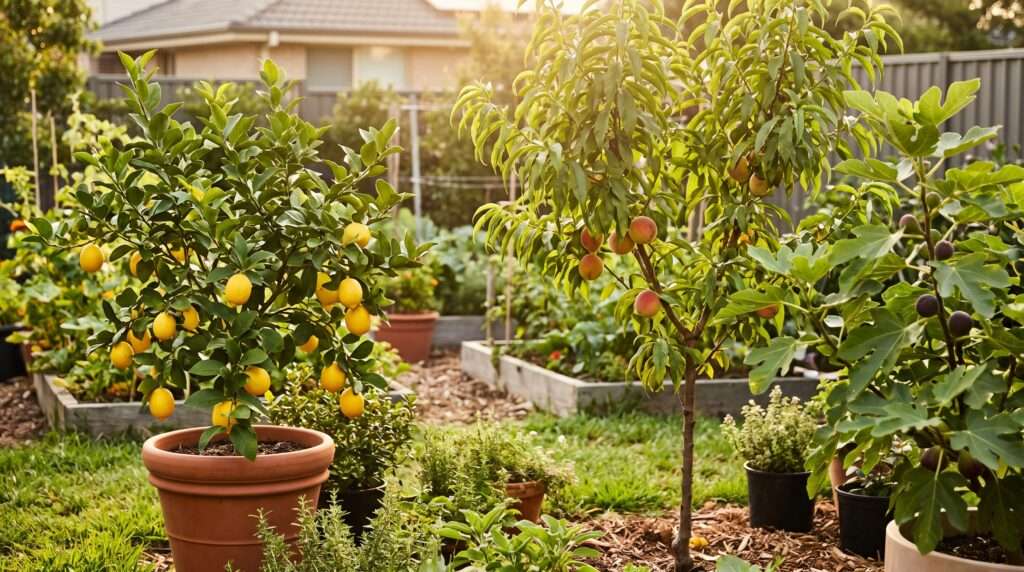
Planting a backyard orchard sounds like a dream—until you realize that a standard apple, pear, or cherry tree can make you wait five to ten years before handing over a single decent harvest. If you rent your home, garden on a small patio, or simply don’t want to wait a decade to taste sun-warmed fruit from your own yard, that timeline is a dealbreaker.
The good news is you don’t have to wait. By choosing the fastest producing fruit trees and starting with grafted nursery stock rather than seeds, you can realistically pick fresh, homegrown fruit in just 1 to 2 years—and in a few remarkable cases, during your very first growing season. 🌱✨
Whether you live in a chilly northern climate or a sunny tropical zone, this guide breaks down the 10 quickest-fruiting trees for home gardeners, complete with USDA hardiness zones, top-performing cultivars, and practical horticultural tips to help you get the biggest harvest in the shortest time.
📊 Quick-Comparison Table: 10 Fastest Producing Fruit Trees at a Glance
🍑 The 10 Fastest Producing Fruit Trees for Quick Harvests
Every timeline below assumes you are planting a 1- to 2-year-old grafted tree or rooted cutting from a reputable nursery. Growing these same species from seed resets the biological clock and adds years to your wait.
1. 🟣 Fig Trees (Ficus carica)
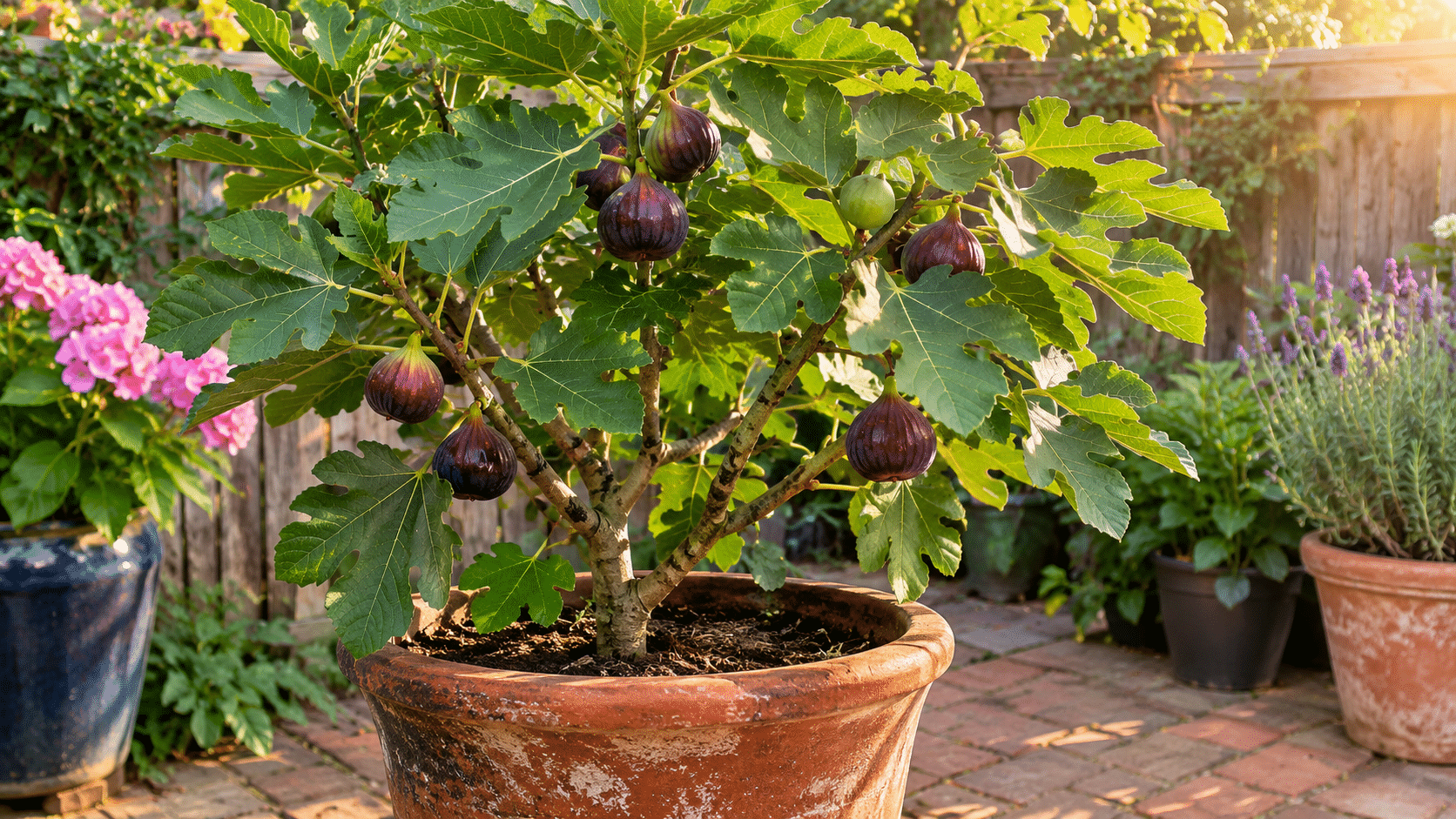
If you want the most reliable, low-maintenance, fast-fruiting tree in the temperate world, start with a fig. Fig trees are propagated from mature hardwood cuttings, meaning the plant already has the hormonal maturity to fruit immediately. It is very common for a healthy nursery fig to produce a handful of sweet, jammy figs in its very first summer.
-
Time to Fruit: 1–2 years (often first season)
-
USDA Hardiness Zones: 5–10 (depending on cultivar)
-
Best Fast-Fruiting Cultivars: ‘Chicago Hardy’ (cold-tolerant down to Zone 5 with root protection) and ‘Celeste’ (compact, sweet, and prolific in Zones 6–9).
-
Why It’s So Fast: Common figs are completely self-fertile and require zero insect pollination. Even better, figs actually fruit faster when their roots are slightly restricted.
🌱 Pro Grower Tip: If you live in Zone 5 or 6, grow your fig in a 15-gallon fabric pot or nursery container. Move it into an unheated garage once it goes dormant in late fall. Protecting the branches from winter dieback allows the tree to produce an early summer “breba” crop in addition to the main late-summer harvest.
2. 🫐 Dwarf Everbearing Mulberry (Morus nigra / Morus alba)
Dwarf everbearing mulberries are absolute powerhouses of early production. Unlike towering heritage mulberry trees that can reach 50 feet tall, dwarf cultivars stay a manageable 6 to 10 feet and can easily be kept smaller with light pruning. They root aggressively from cuttings and often arrive from the nursery already pushing out tiny green berries.
-
Time to Fruit: First season to 1 year
-
USDA Hardiness Zones: 5–9
-
Best Fast-Fruiting Cultivars: ‘Dwarf Everbearing’ (also sold as ‘World’s Best’) and ‘Illinois Everbearing’ (for slightly colder climates).
-
Why It’s So Fast: Mulberries flower on new season’s growth, and everbearing varieties produce continuous flushes of blackberry-like fruit from late spring right through late summer.
🌱 Pro Grower Tip: Think carefully about placement before digging a hole. Ripe mulberries drop easily and leave deep purple stains on concrete driveways, wooden decks, and patio furniture. Plant yours over lawn or mulch beds where birds and foot traffic won’t track the juice inside.
3. 🍋 Meyer Lemon (Citrus × meyeri)
A cross between a true lemon and a mandarin orange, the Meyer lemon is sweeter, less acidic, and far more cold-tolerant than grocery-store Eureka lemons. Because commercial nurseries graft Meyer lemon scions onto dwarfing citrus rootstocks, these compact trees (maturing at 4 to 6 feet in pots) frequently bloom and set fruit within 12 months of planting.
-
Time to Fruit: 1–2 years
-
USDA Hardiness Zones: 8–11 outdoors; Zones 4–7 as a patio/indoor container tree
-
Best Fast-Fruiting Cultivar: ‘Improved Meyer Lemon’ (a virus-free, vigorous selection).
-
Why It’s So Fast: Grafted dwarf citrus skips the 5-year juvenile stage entirely and can bloom multiple times per year whenever temperatures stay between 55°F and 85°F.
🌱 Pro Grower Tip: If you bring your Meyer lemon indoors for the winter and it bursts into fragrant white blooms, play the role of a bee. Gently swirl a small, dry paintbrush inside each flower to transfer pollen from blossom to blossom—this dramatically boosts your fruit set.
4. 🍑 Dwarf Peach Trees (Prunus persica)
Standard peach trees are already among the quickest stone fruits to mature, usually fruiting in 3 to 4 years. When you step down to a genetic dwarf or a peach grafted onto a dwarfing rootstock, you can shave that timeline down to just 1 to 2 years. Best of all, nearly all peach varieties are self-fertile, so you only need room for a single tree.
-
Time to Fruit: 1–2 years
-
USDA Hardiness Zones: 5–9
-
Best Fast-Fruiting Cultivars: ‘Bonanza’ (a true genetic patio dwarf reaching 5–6 feet) and ‘Dwarf Elberta’ (classic freestone flavor on a compact frame).
-
Why It’s So Fast: Dwarfing rootstocks restrict excessive woody growth, redirecting the tree’s carbohydrates directly into flower bud formation.
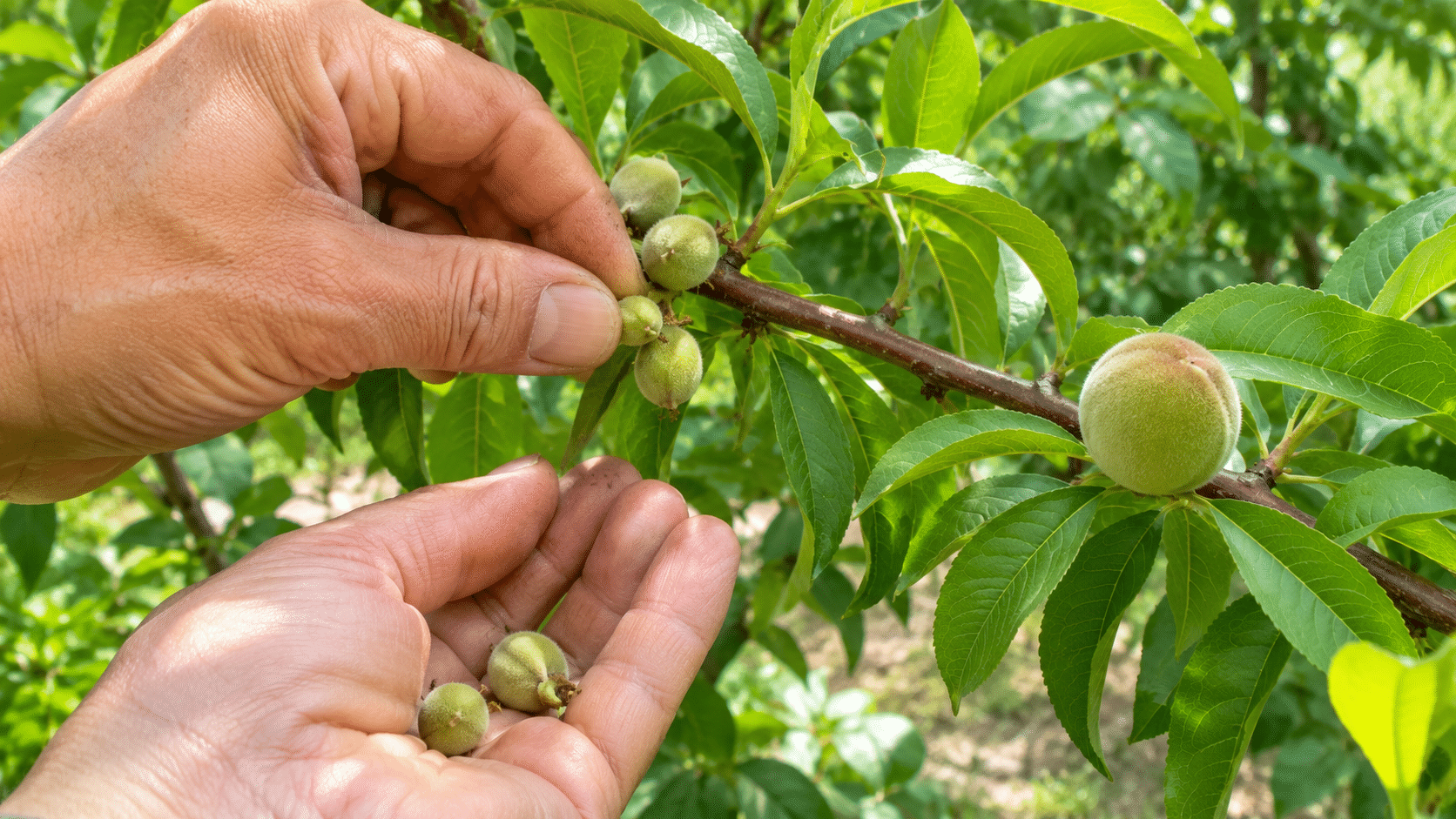
🌱 Pro Grower Tip: Young peach trees are notorious for overproducing. Once the developing peaches reach the size of a marble, thin them to one fruit every 6 inches along the branch. Leaving too many fruits on a young tree will give you small, bland peaches and can permanently snap developing limbs.
5. 🍎 Columnar & Dwarf Apple Trees (Malus domestica)
If you’ve ever been told that apples take 6 to 8 years to produce, that’s only true for standard, full-sized trees. Modern horticulture has transformed apple growing through dwarfing rootstocks (such as M9, Bud 9, or G.41) and columnar apple trees—narrow, pole-shaped trees that grow 8 to 10 feet tall but only 2 feet wide, fruiting heavily along the main trunk.
-
Time to Fruit: 1–2 years
-
USDA Hardiness Zones: 3–8
-
Best Fast-Fruiting Cultivars: ‘Urban Apple’ series (such as ‘Tasty Red’ and ‘Golden Treat’), ‘Early Harvest’, and ‘Honeycrisp’ on M9 rootstock.
-
Why It’s So Fast: Dwarfing rootstocks induce early “precocity,” forcing the tree to form fruiting spurs in its first or second year rather than spending half a decade building a massive canopy.
🌱 Pro Grower Tip: Unlike figs and peaches, almost all apple trees require cross-pollination. To get fruit, you must plant at least two different apple varieties (or have a blooming crabapple nearby) that flower during the same window.
6. 🍒 Dwarf Sweet Cherry (Prunus avium)
Sweet cherries have a reputation for taking 4 to 7 years to bear fruit, and traditionally they required two massive trees for pollination. That changed with the introduction of Gisela dwarfing rootstocks (like Gisela 5 and Gisela 12) paired with self-fertile cultivars. A grafted dwarf sweet cherry stays around 8 to 12 feet tall and routinely sets its first clusters of dark, juicy cherries in year 1 or 2.
-
Time to Fruit: 1–2 years (grafted on dwarf rootstock)
-
USDA Hardiness Zones: 4–7
-
Best Fast-Fruiting Cultivar: ‘Stella’ (the gold standard for self-fertile sweet cherries) or ‘Lapins’.
-
Why It’s So Fast: Gisela rootstocks dramatically accelerate flower bud induction compared to standard Mazzard rootstocks, giving backyard growers commercial-grade earliness.
🌱 Pro Grower Tip: Sweet cherries bloom early in the spring, which makes their delicate white flowers vulnerable to late frosts. Keep a lightweight frost cloth on hand during April—draping it over your compact dwarf tree overnight can save your entire first harvest.
7. 🌺 Pomegranate (Punica granatum)
Tough, drought-tolerant, and stunningly ornamental with its fiery orange-red summer blossoms, the pomegranate is one of the easiest fast-fruiting trees for warm, sunny yards. Because pomegranates are typically propagated from hardwood cuttings, they are biologically mature from day one and often flower in their very first summer after planting.
-
Time to Fruit: 1–2 years
-
USDA Hardiness Zones: 7–10
-
Best Fast-Fruiting Cultivars: ‘Kazake’ or ‘Salavatski’ (cold-hardy down to Zone 6b/7), ‘Wonderful’ (classic grocery-store variety), and ‘Nana’ (a 3-foot dwarf ideal for pots).
-
Why It’s So Fast: Pomegranates are self-fertile, heat-loving, and require very few chill hours (typically 100–200 hours) to break dormancy and set fruit.
🌱 Pro Grower Tip: Pomegranates are famous for surviving drought, but inconsistent watering during late summer causes the leathery skin to split open. Maintain deep, steady soil moisture while the fruit is sizing up, and mulch heavily around the base to keep roots cool.
8. 🥭 Papaya (Carica papaya)
If you live in a frost-free climate and want the absolute fastest turnaround in the plant kingdom, nothing beats papaya. Technically a giant, fast-growing herbaceous perennial rather than a woody tree, papaya is the rare exception that produces fruit in 9 to 12 months even when grown from seed.
-
Time to Fruit: 9–12 months
-
USDA Hardiness Zones: 9–11 (or heated greenhouses)
-
Best Fast-Fruiting Cultivars: ‘Red Lady’ (disease-resistant, sweet, and starts fruiting just 2 feet off the ground) and ‘TR Hovey’ (a compact dwarf suited for large containers).
-
Why It’s So Fast: Papayas have an explosive tropical growth rate, spiraling upward and producing flowers directly along the main trunk as soon as they reach 3 to 4 feet tall.
🌱 Pro Grower Tip: Papayas can be male, female, or bisexual (self-fertile). Always buy seeds or starts of bisexual varieties like ‘Red Lady’ so you are guaranteed fruit from a single plant without needing to guess which seedlings are male.
9. 🍌 Dwarf Banana (Musa acuminata)
Just like papaya, the banana “tree” is actually a massive tropical herb—and its growth speed is astonishing. Under warm temperatures, full sun, and rich soil, a healthy tissue-cultured pup or nursery plant can shoot up 6 to 8 feet and push out a giant purple flower stalk in just 12 to 18 months.
-
Time to Fruit: 12–18 months
-
USDA Hardiness Zones: 9–11 (or overwintered indoors in large wheeled planters)
-
Best Fast-Fruiting Cultivars: ‘Dwarf Cavendish’ (compact 6–8 ft height, grocery-store flavor) and ‘Dwarf Namwah’ (slightly more cold-tolerant and wind-resistant).
-
Why It’s So Fast: Bananas don’t waste energy building woody bark; all their energy goes straight into rapid leaf production and a single, massive fruiting stem.
🌱 Pro Grower Tip: Bananas are among the heaviest feeders in the garden. Feed them every 2 to 4 weeks during the warm growing season with a high-potassium fertilizer (look for a ratio like 8-10-8 or 6-2-12) and never let the soil dry out completely.
10. 🍐 Guava (Psidium guajava) or Asian Persimmon (Diospyros kaki)
For our tenth spot, your best choice depends on your climate:
-
Warm Climates (Zones 9–11): Tropical Guava (like ‘Tropical Pink’ or ‘Ruby Supreme’) grows rapidly from air-layered or grafted stock and routinely sets fragrant, vitamin-C-packed fruit in 1 to 2 years.
-
Temperate Climates (Zones 7–10): Asian Persimmon (specifically the non-astringent ‘Fuyu’ variety) is a standout performer. Grafted ‘Fuyu’ trees are self-fertile, virtually pest-free, and often hold their first bright orange, crisp-as-an-apple persimmons in year 2.
-
Time to Fruit: 1–2 years (grafted nursery stock)
-
Why They’re So Fast: Both species flower on current-season growth and respond exceptionally well to grafting, allowing young trees to channel energy into early fruit production rather than excessive canopy size.
🌱 Pro Grower Tip: For guava, lightly prune the tips of branches right after harvest to encourage branching and double your fruiting wood for next year. For young ‘Fuyu’ persimmons, stake the trunk firmly—their wood can be brittle when loaded with heavy autumn fruit.
🧬 The Secret Behind Speed: Why Some Fruit Trees Produce Faster
If you’ve ever wondered why one apple tree takes 8 years to fruit while another produces in 18 months, the answer comes down to three core horticultural principles. Understanding these will help you shop smarter at the nursery.
🌿 Grafted vs. Seed-Grown Trees
When you plant a fruit seed, the resulting seedling enters a biological juvenile phase that lasts anywhere from 5 to 12 years. During this time, the tree is hormonally incapable of flowering—it is solely focused on growing tall enough to compete for sunlight. Furthermore, most fruit trees (like apples, peaches, and citrus) do not grow “true to type” from seed, meaning the eventual fruit rarely tastes like the parent.
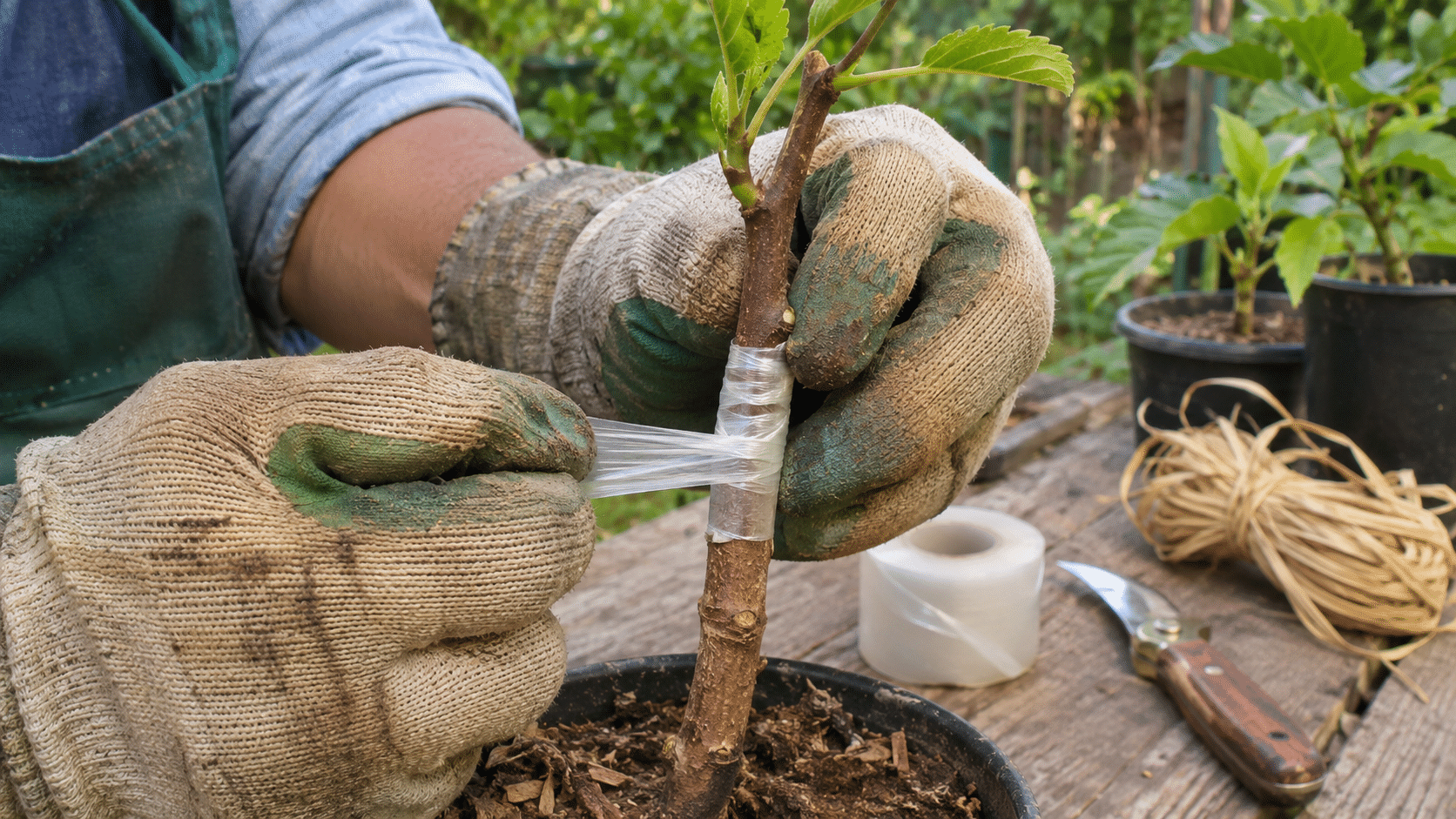
Grafted trees bypass this entirely. A nursery takes a cutting (scion) from a mature, already-fruiting tree and fuses it onto a root system (rootstock). Because the top half of the tree is already biologically mature, it can flower and fruit almost immediately.
📏 The Power of Dwarfing Rootstocks
The rootstock isn’t just an anchor—it acts like a thermostat for the tree’s growth hormones. Standard rootstocks push massive amounts of vigor into tall trunks and leafy branches. Dwarfing rootstocks (like M9 for apples or Gisela 5 for cherries) slightly restrict sap flow, which signals the tree to stop growing taller and shift its energy into reproduction (flowers and fruit). This trait is known in arboriculture as precocity.
🪴 Container Growing & Controlled Root Stress
Have you noticed that potted figs and Meyer lemons often fruit faster than the exact same varieties planted in the ground? When a tree’s roots have unlimited space in deep garden soil, the plant prioritizes expanding its root network and canopy. In a 15- to 25-gallon container, mild root restriction naturally nudges the tree into fruiting mode much earlier.
⚡ 5 Expert Tips to Get Your First Harvest Even Faster
Choosing the right variety is half the battle. Follow these five field-tested practices to shave months—or even a full year—off your wait time:
-
☀️ Maximize Direct Sunlight: Fruit production is an energy-intensive process. Almost every tree on this list requires 6 to 8+ hours of direct, unfiltered sunlight per day. Partial shade leads to leggy branches and sparse blossoms.
-
🧪 Watch Your Fertilizer Ratios (Avoid Nitrogen Overload): One of the biggest reasons healthy, green fruit trees refuse to bloom is too much Nitrogen (NN). High-nitrogen lawn fertilizers force lush leaf growth at the expense of flowers. Once your tree is established, use a balanced organic fruit tree fertilizer or one slightly higher in Phosphorus (PP) and Potassium (KK) to support flower buds and fruit quality.
-
✂️ Follow the Hardest Rule: Thin First-Year Fruit: It feels heartbreaking to pinch off baby fruit when you’ve been waiting for it, but thinning is essential. If a brand-new tree tries to ripen 25 peaches in its first year, it will stunt its own root system and struggle for the next two seasons. Leave just 2 to 4 fruits in year one so you can enjoy a taste, and remove the rest so the tree builds a powerhouse frame for a massive year-two harvest.
-
🐝 Double-Check Pollination Needs: Most trees on this list (figs, peaches, Meyer lemons, pomegranates, mulberries) are self-fertile. However, if you plant dwarf apples or non-self-fertile cherries, make sure you have a compatible cross-pollinating partner blooming within 50 feet—and avoid spraying broad-spectrum insecticides while blossoms are open so bees can do their job.
-
🛒 Buy 2- to 3-Year-Old Nursery Stock: If your budget allows, skip the tiny, pencil-thin “whip” trees and buy a well-branched 2- to 3-year-old potted or bare-root tree. You are essentially paying the nursery to handle the first two years of growth for you.
⚠️ 4 Common Mistakes That Delay Fruiting
Even the fastest producing fruit trees will stall out if they hit one of these four roadblocks:
-
❄️ Ignoring Chill Hours: Temperate trees (peaches, apples, cherries) need a specific number of winter hours between 32°F and 45°F—called chill hours—to wake up and bloom properly. Planting a high-chill apple (1,000+ hours) in Southern California or Florida will result in weak, erratic blooming and almost no fruit. Always match the cultivar’s chill-hour rating to your local climate.
-
💧 Overwatering & Poor Drainage: Soggy soil suffocates feeder roots and triggers root rot, causing trees to drop their blossoms before fruit can set. Always plant in well-draining soil, or build a 12-inch raised mound if you have heavy clay.
-
✂️ Pruning at the Wrong Time: Heavy summer pruning or accidentally heading back fruiting spurs on apples and cherries can remove next year’s flower buds before they even open. Learn whether your tree fruits on new wood (figs, mulberries) or old wood/spurs (apples, cherries) before making cuts.
-
🌱 Burying the Graft Union: Look for the slight bump or scar near the base of your tree’s trunk—that is the graft union. It must stay 2 to 4 inches above the soil line. If you bury it, the scion will send out its own roots, bypassing the dwarfing rootstock and resetting your fast-fruiting timeline back to standard tree speeds.
❓ Frequently Asked Questions (FAQs)
What is the absolute fastest producing fruit tree?
In warm, frost-free climates (Zones 9–11), papaya is the fastest, producing ripe fruit in just 9 to 12 months even from seed. For temperate climates (Zones 5–9), grafted fig trees and dwarf everbearing mulberries are the fastest, frequently yielding their first edible fruit during the very first growing season.
Can I grow fast-producing fruit trees in pots?
Yes! In fact, many of the fastest fruiting trees—including ‘Improved Meyer Lemon’, ‘Chicago Hardy’ Fig, ‘Bonanza’ Dwarf Peach, and columnar apples—thrive in 15- to 25-gallon containers. Just make sure the pot has large drainage holes and use a chunky, well-aerated potting mix rather than heavy garden soil.
Should I let my fruit tree produce fruit in its first year?
You can safely let a vigorous young tree hold 2 to 4 fruits in its first year so you can enjoy the reward of your work. However, you should thin off the rest of the blossoms or marble-sized fruits so the tree directs its energy into establishing deep roots and sturdy branches.
Do fast-producing fruit trees have shorter lifespans?
Herbaceous tropicals like papaya and banana are naturally shorter-lived (papayas typically produce heavily for 3–5 years, while bananas die back after fruiting and replace themselves with new pups). Woody grafted dwarf trees—such as figs, peaches, and dwarf apples—still live and produce abundantly for 15 to 30+ years with basic annual care.
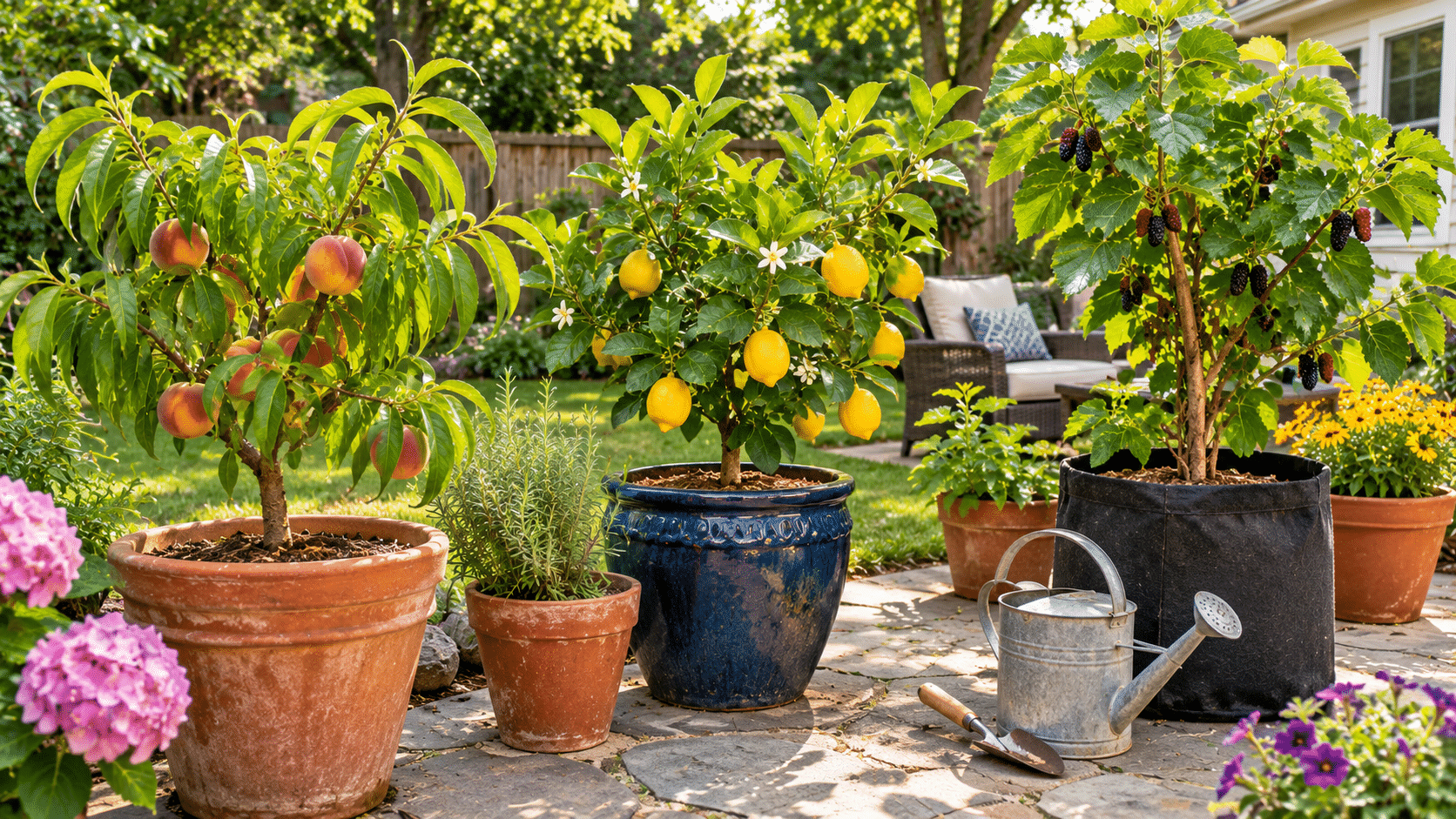
🌟 Plant Today, Harvest Next Year
You don’t need an acre of farmland—or a decade of patience—to enjoy fresh, sun-ripened fruit from your own backyard or patio. By choosing naturally precocious species, sticking to grafted dwarf stock, and giving your tree plenty of sun and balanced nutrition, you can turn a bare corner of your yard into a productive mini-orchard in just 12 to 24 months. 🍑🍋✨
Start simple: check your USDA Hardiness Zone, pick one self-fertile winner from this list (like a ‘Chicago Hardy’ Fig for colder zones or an ‘Improved Meyer Lemon’ for sunny patios), and get it in the ground or a roomy pot this season.
Which fast-producing fruit tree are you planning to plant first, and what growing zone are you in? Drop a comment below—I’d love to help you pick the best cultivar for your space! 🌱💬