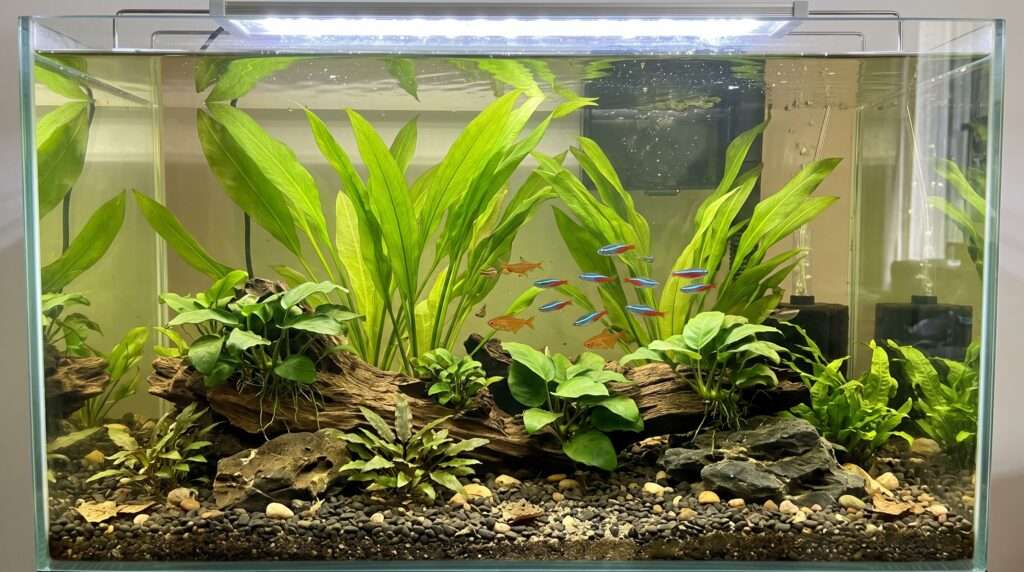
We’ve all been there: you spend your hard-earned money on stunning, vibrant green aquatic plants at the pet store, carefully place them in your new fish tank, and within a week, they have melted into a sad, brown mush. It is the universal frustration of the novice aquarist. But here is the truth—when it comes to building a thriving aquatic ecosystem, finding the right aquarium plants for beginners is the single most important step you can take. You don’t need a degree in botany or an expensive high-tech setup to create a beautiful underwater jungle.
After years of aquascaping and propagating hundreds of planted tanks, I have learned that success isn’t about perfectly balancing injected CO2 systems or buying $200 lighting rigs. It is simply about picking the right resilient species. If you are tired of wasting money on delicate flora that belongs in professional competition tanks, this guide is your blueprint. We are going to explore 10 bulletproof, low-maintenance aquatic plants that will not only survive but actively thrive in a standard, low-tech aquarium, saving you time, money, and heartache. 🌊✨
Why Live Aquarium Plants are Essential for New Tanks 🌿
Before diving into our list of unkillable aquatic flora, it is crucial to understand why live plants are far superior to plastic decorations. They are not just aesthetic upgrades; they act as the life support system for your entire aquarium.
-
Natural Filtration & Water Quality: Fish produce waste, which breaks down into toxic ammonia and eventually nitrates. Live plants act as a secondary biological filter, actively absorbing these harmful nitrogen compounds to fuel their own growth. This leads to cleaner water and significantly fewer water changes for you.
-
Fierce Algae Competition: Algae blooms are the bane of every beginner’s existence. Fast-growing aquarium plants outcompete nuisance algae for essential nutrients and light in the water column, starving out the green sludge before it can take over your glass.
-
Fish Health & Psychological Enrichment: Fish are naturally prey animals. Providing them with dense, living foliage gives them places to hide, establish territories, and even breed. Studies show that fish kept in heavily planted aquariums exhibit richer colors and lower stress levels.
Expert Insight: Placed in a brand-new setup, live plants bring beneficial bacteria along with them, helping your tank cycle faster and maintain much more stable water parameters than artificial, sterile setups. 🦠🐟
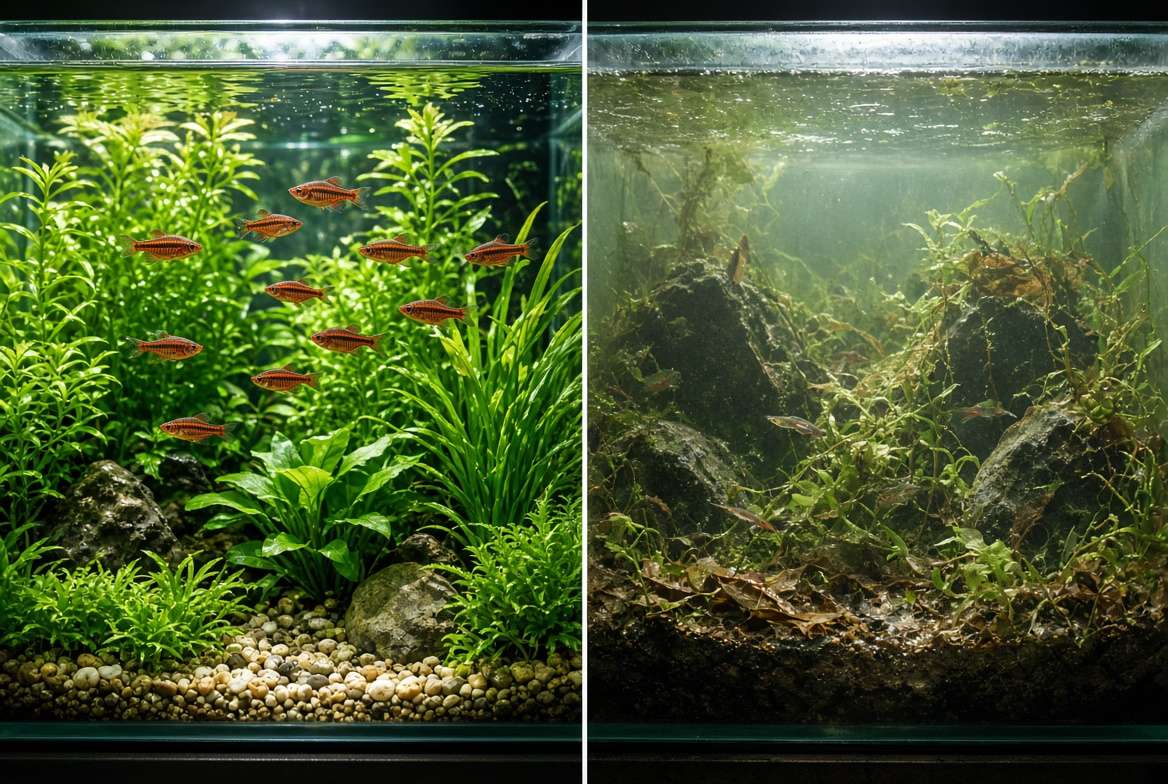
The “Low-Tech” Sweet Spot: What Makes a Plant Beginner-Friendly? 💡
In the aquascaping hobby, you will often hear the terms “high-tech” and “low-tech.” A high-tech tank uses pressurized carbon dioxide (CO2) injection, intense lighting, and strict fertilization schedules. As a beginner, you want to stay strictly in the low-tech sweet spot.
A genuinely beginner-friendly plant must check three boxes:
-
No CO2 Required: The plant must be able to breathe ambient carbon dioxide naturally dissolved in the water through surface agitation.
-
Low to Medium Lighting: It must survive under the standard LED light that came bundled with your starter aquarium kit. “Low light” typically means around 10 to 20 PAR (Photosynthetically Active Radiation), which translates to standard, non-adjustable hood lights.
-
Temperature & pH Tolerance: Beginner plants need a wide margin for error. They must be able to withstand the occasional skipped water change, minor pH swings, and standard tropical temperatures (72°F to 82°F). 🌡️
The Top 10 Foolproof Aquarium Plants for Beginners 🏆
Here is the definitive list of robust, beautiful, and forgiving aquatic plants that will transform your glass box into a thriving slice of nature.
1. Java Fern (Microsorum Pteropus) 🍃
-
Scientific Name: Microsorum pteropus
-
Growth Rate: Slow to Moderate
-
Lighting Needs: Low
-
Placement: Midground to Background
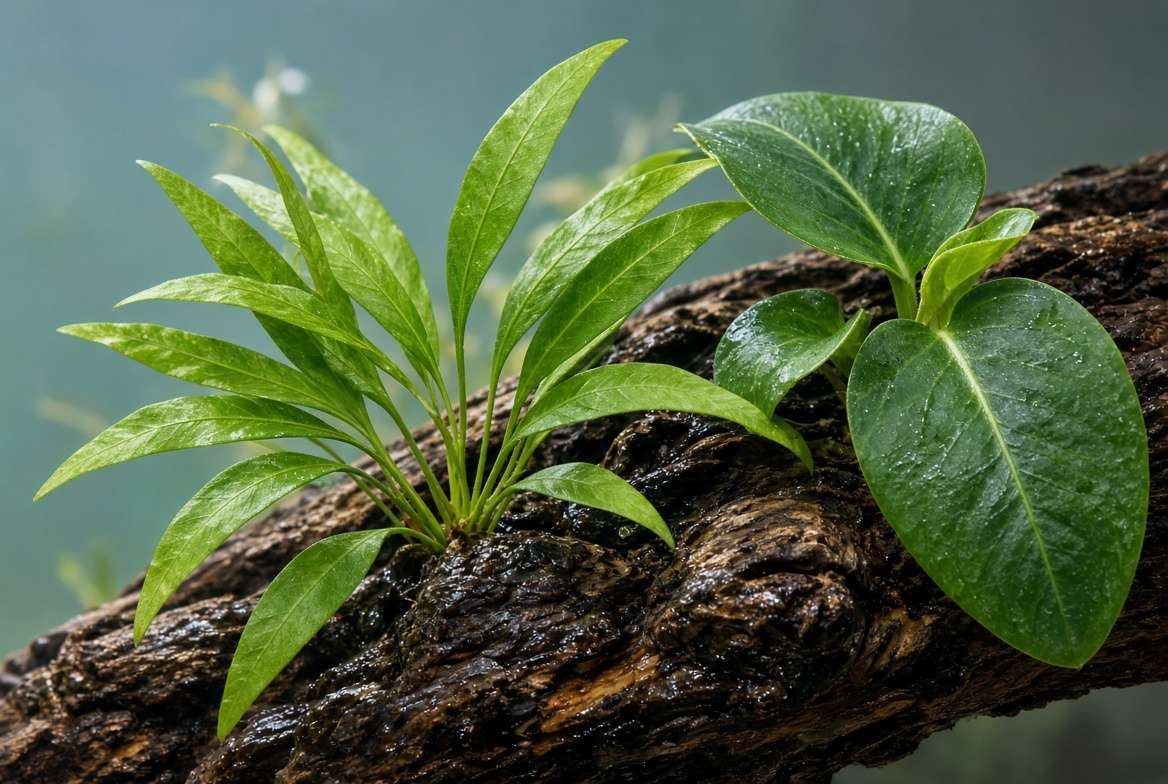
Why It’s Foolproof: Java Fern is practically indestructible. It features long, crinkled, vibrant green leaves that add incredible texture to any tank. It thrives in almost total shade, requires zero special substrates, and has thick, tough leaves that taste terrible to notoriously destructive herbivorous fish like Goldfish and Cichlids.
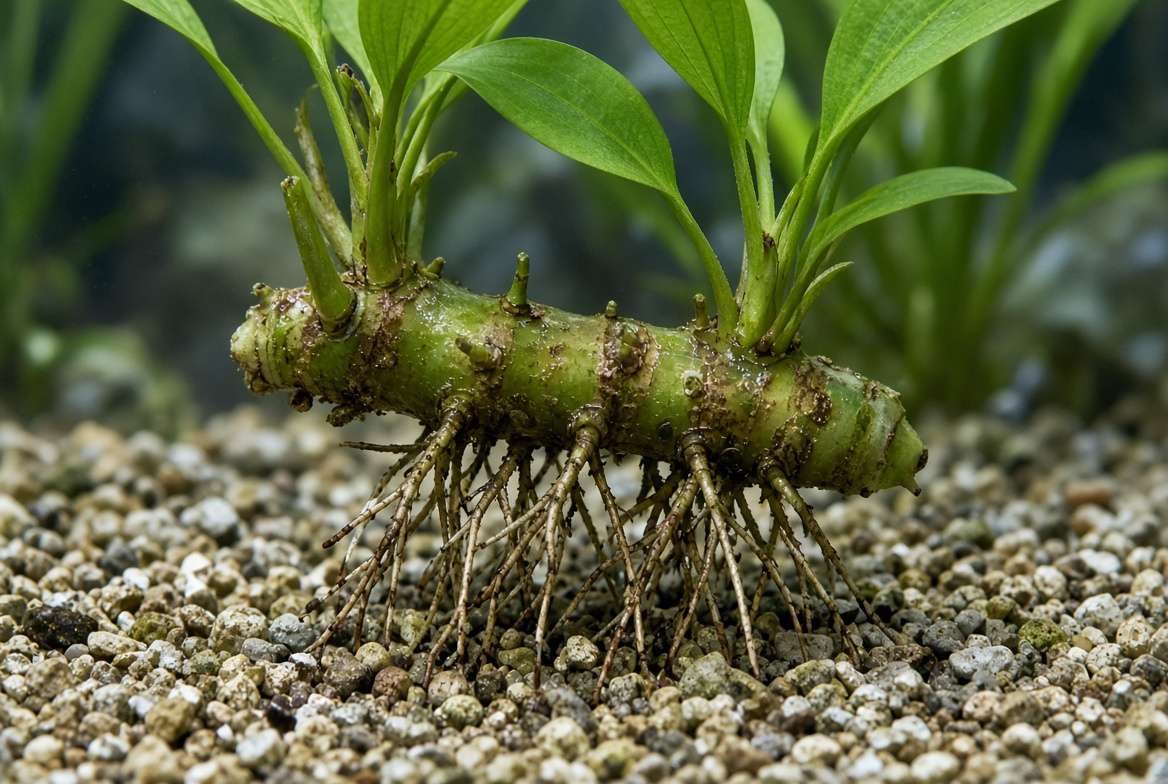
Expert Care Tip: The golden rule of Java Fern is to never bury the rhizome! The rhizome is the thick, green, horizontal stem at the base where the roots and leaves meet. If you bury it in gravel or sand, the plant will suffocate and rot. Instead, use a drop of cyanoacrylate superglue or some fishing line to attach it directly to a piece of driftwood or a rock. 🪵
2. Anubias Barteri (Anubias var. Barteri) 🐢
-
Scientific Name: Anubias barteri
-
Growth Rate: Very Slow
-
Lighting Needs: Low
-
Placement: Foreground to Midground
Why It’s Foolproof: If there is one plant that can survive an apocalypse, it is Anubias. Featuring broad, leathery, dark green leaves, Anubias looks almost like an underwater peace lily. Because it grows so slowly, it demands very few nutrients and actually prefers to be placed in the shaded, dimmer areas of your tank to prevent algae from settling on its broad leaves.
Expert Care Tip: Like the Java Fern, Anubias is an epiphyte and its rhizome must not be buried. When your Anubias grows too large, you can easily propagate it. Simply take a clean, sharp pair of aquascaping scissors and cleanly snap or cut the rhizome in half, ensuring both halves have at least 3-4 leaves attached. Presto—you now have two Anubias plants! ✂️🌿
3. Amazon Sword (Echinodorus Bleheri) 🗡️
-
Scientific Name: Echinodorus bleheri
-
Growth Rate: Fast (with nutrients)
-
Lighting Needs: Medium
-
Placement: Background Centepiece
Why It’s Foolproof: Looking for a massive, lush centerpiece to hide your ugly aquarium heater and filter intake tubes? The Amazon Sword is your best friend. Native to the Amazon River basin, this plant produces large, sword-shaped leaves that stretch all the way to the water’s surface, creating a stunning, bushy jungle aesthetic.
Expert Care Tip: Unlike epiphytes, Amazon Swords are heavy root feeders. They draw their nutrients directly from the substrate rather than the water column. If you are using plain aquarium gravel or sand, you must push fertilizer root tabs deeply into the substrate right beneath the plant’s base every couple of months. Do this, and your Sword will experience explosive, vibrant growth. 💊🌱
4. Marimo Moss Balls (Aegagropila Linnaei) 🟢
-
Scientific Name: Aegagropila linnaei
-
Growth Rate: Extremely Slow
-
Lighting Needs: Very Low
-
Placement: Foreground (scattered)
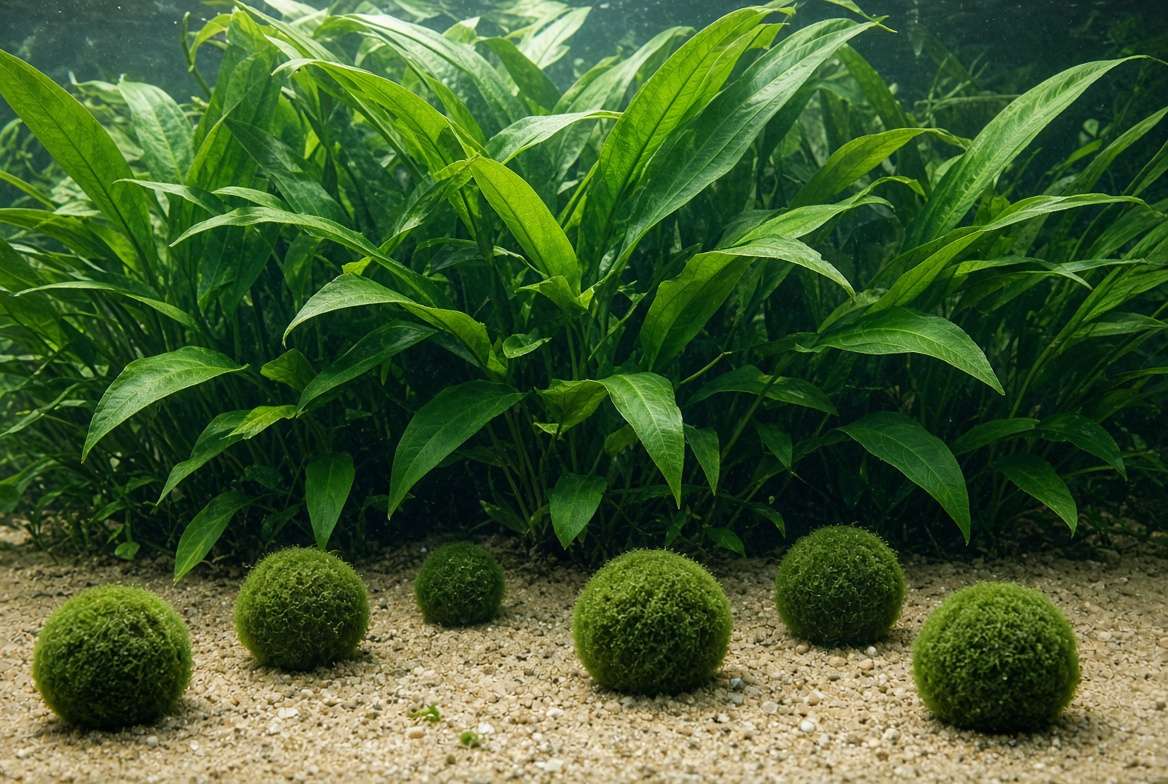
Why It’s Foolproof: Marimo Moss Balls are incredibly unique because they are technically not moss at all; they are a rare growth form of spherical green algae! They require zero planting, zero fertilizers, and virtually zero light. You simply drop them into your tank, and they sit on the bottom like fuzzy, green tennis balls. They are beloved by ornamental shrimp and bottom-dwelling Corydoras.
Expert Care Tip: In the wild, water currents roll these algae balls along the bottom of lakes, keeping them perfectly round and ensuring all sides receive light. In a home aquarium, you are the current. During your weekly water changes, take a moment to gently squeeze them out in a bucket of tank water (to remove trapped detritus) and gently roll them like meatballs between your palms to maintain their perfect spherical shape. 🧶👐
5. Java Moss (Taxiphyllum Barbieri) 🧶
-
Scientific Name: Taxiphyllum barbieri
-
Growth Rate: Fast
-
Lighting Needs: Low to Medium
-
Placement: Hardscape / Foreground
Why It’s Foolproof: Java Moss grows in a tangled, chaotic, and beautiful mess no matter where you put it. It can survive in floating clumps, carpeted on the floor, or attached to hardscape. Because of its dense, stringy structure, it is considered the absolute best plant in the hobby for breeding fish, as it provides a safe haven for microscopic baby fish (fry) and baby cherry shrimp to hide from hungry adults. 🦐
Expert Care Tip: To give your tank a naturally aged, ancient forest look, take small pinches of Java Moss and superglue them to the upper branches of spider wood or the crevices of dragon stone. Within a few weeks, the moss will attach itself naturally and creep along the wood, creating a breathtaking “underwater bonsai tree” effect. 🌳
6. Water Wisteria (Hygrophila Difformis) 🌿
-
Scientific Name: Hygrophila difformis
-
Growth Rate: Very Fast
-
Lighting Needs: Medium
-
Placement: Background
Why It’s Foolproof: If you are struggling with a cloudy, unbalanced new tank, Water Wisteria is your biological superhero. It acts as a rapid nutrient sponge, soaking up excess nitrates and phosphates at an incredible rate. Because it grows so aggressively, it is one of the best defensive plants to help prevent new-tank algae blooms. Its bright green, deeply lobed leaves look like underwater ferns, adding a lush, wild texture to your aquascape.
Expert Care Tip: Don’t be alarmed if the plant looks completely different when you first buy it! Commercial nurseries often grow Water Wisteria emersed (out of the water), resulting in solid, round leaves. Once completely submersed in your tank, those round leaves will shed, and the new growth will feature the stunning, feathery, split leaves the plant is famous for. 🍂➡️🌿
7. Cryptocoryne Wendtii (Crypt Wendtii) 🤎
-
Scientific Name: Cryptocoryne wendtii
-
Growth Rate: Moderate
-
Lighting Needs: Low to Medium
-
Placement: Midground
Why It’s Foolproof: While many beginner plants are strictly green, Cryptocoryne Wendtii brings gorgeous splashes of bronze, brown, and red to your low-tech tank. It is remarkably adaptable, thriving in both hard, alkaline water and soft, acidic water. Once established, its deep, extensive root system makes it incredibly resilient, forming dense, colorful bushes across the middle of your aquarium.
Expert Care Tip: I must warn every beginner about the dreaded “Crypt Melt.” When Crypts are moved to a new environment with different water parameters, they often panic and melt away their existing leaves, looking as though they have died. Do not throw the plant away! Leave the roots undisturbed in the substrate. Within two to three weeks, it will sprout brand-new leaves perfectly adapted to your specific tank conditions. Patience is key. ⏳🌱
8. Vallisneria (Jungle Val) 🌾
-
Scientific Name: Vallisneria spiralis / americana
-
Growth Rate: Fast
-
Lighting Needs: Low to Medium
-
Placement: Background
Why It’s Foolproof: Want to recreate the look of a flowing, underwater riverbed? Vallisneria (often called Jungle Val) is a tall, ribbon-like grass that shoots straight up to the surface and gracefully arches across the water’s flow. It is incredibly hardy and propagates rapidly by sending out horizontal runners beneath the substrate. Buy just three or four nodes, and within a few months, you will have a thick, natural background jungle.
Expert Care Tip: Jungle Val grows so tall that it will eventually block light from reaching your shorter plants. When it comes time to trim, never just rip or pinch the tops. Use sharp aquascaping scissors to trim the leaf at a slight angle. A clean cut prevents the rest of the leaf from rotting and turning translucent down to the base. ✂️🌾
9. Hornwort (Ceratophyllum Demersum) 🌲
-
Scientific Name: Ceratophyllum demersum
-
Growth Rate: Explosively Fast
-
Lighting Needs: Low to High
-
Placement: Floating or Background (weighted)
Why It’s Foolproof: Hornwort is a true survivalist. It doesn’t even possess true roots! You can either let it float freely at the surface—which provides incredible cover for breeding livebearers like Guppies and Mollies—or you can gently tuck the stems behind a rock to create a pine forest look. It is a legendary nitrate-consumer, purifying your water faster than almost any other plant on this list.
Expert Care Tip: Because Hornwort is so sensitive to sudden environmental changes, it has a defensive mechanism where it drops its rigid, pine-like needles if it gets stressed. The most common trigger for this is heat. Keep your aquarium water below 80°F (27°C) to prevent a massive needle-shedding event, which can be a nightmare to clean out of your filter! 🌡️🛑
10. Bucephalandra (Buce) ✨
-
Scientific Name: Bucephalandra spp.
-
Growth Rate: Very Slow
-
Lighting Needs: Low
-
Placement: Foreground/Midground (Hardscape)
Why It’s Foolproof: Usually, the most colorful and exotic plants require intense lighting and CO2, but “Buce” is the magical exception. Native to the fast-moving streams of Borneo, this rare, shimmering plant features dark, iridescent leaves that can flash shades of blue, purple, and red under standard LED lights. Despite its premium, exotic look, its care requirements are virtually identical to the unkillable Anubias.
Expert Care Tip: Bucephalandra is an epiphyte, meaning its rhizome must be glued or tied to rock or wood, never buried. Because it grows slowly, it is prone to getting smothered by debris or algae. Place your Buce in areas of your tank that receive higher water flow (near the filter output). The current keeps the leaves swept clean, allowing its iridescent colors to shine brilliantly. 🌊💎
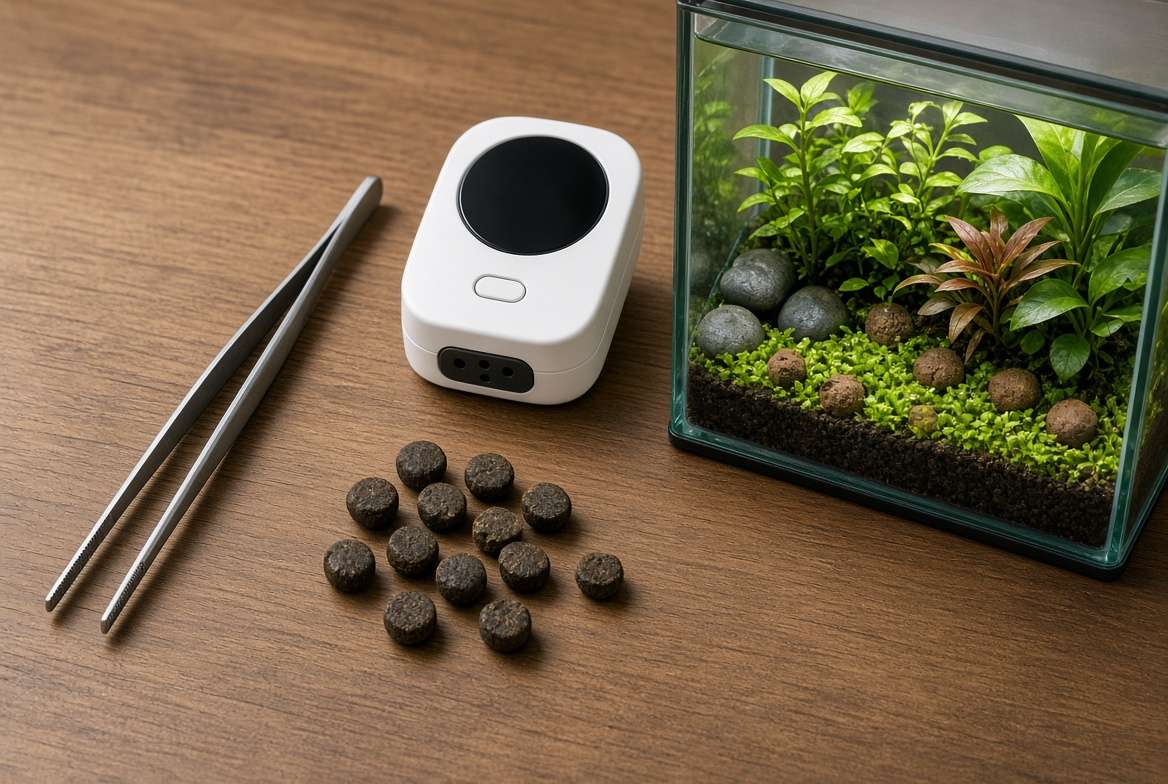
3 Essential Tools for Planted Tank Success 🛠️
You don’t need a massive budget to maintain these beginner-friendly species, but investing in three specific, inexpensive tools will drastically increase your success rate and make maintenance a joy rather than a chore.
-
Long Aquascaping Tweezers: Trying to push delicate plant stems into the gravel with your thick fingers usually results in crushed roots and floating plants. A $10 pair of stainless steel aquascaping tweezers allows you to grip the roots precisely and slide them deep into the substrate without disturbing the surrounding area. 🥢
-
Liquid Fertilizer vs. Root Tabs: Understanding how your plants eat is crucial. For epiphytes and floating plants (Java Fern, Anubias, Hornwort), use a comprehensive liquid fertilizer once a week to feed the water column. For heavy root-feeders (Amazon Sword, Crypts, Jungle Val), insert slow-release root tabs directly into the gravel. Using the right food for the right plant makes all the difference. 💧💊
-
A Simple Wi-Fi Smart Timer: If you take one piece of advice from this entire article, let it be this: put your aquarium light on a timer! Automating your light cycle to exactly 6 to 8 hours per day guarantees your plants get the consistent energy they need while effectively starving out algae. You can buy a smart plug for under $15 and control it right from your phone. 📱⏱️
Common Beginner Mistakes (And How to Fix Them) 🛑
Even with foolproof plants, there are a few common pitfalls that can derail a new aquascape. Avoid these, and your underwater garden will thrive.
-
Burying Epiphyte Rhizomes: We’ve mentioned it twice, but it bears repeating because it is the #1 cause of plant death for beginners. If a plant has a thick, green rhizome (Anubias, Java Fern, Buce), keep it above the soil! Only bury the thin, stringy roots.
-
Leaving on the Lead Weights and Rockwool: When you buy potted plants from the store, they often come wrapped in a fibrous material called rockwool, sometimes bundled with a toxic lead weight to keep them submerged. Remove all nursery packaging before planting. Rockwool holds immense amounts of nursery fertilizers that will cause a massive ammonia spike in your tank, and lead weights will slowly crush and rot the stems. 🗑️
-
The “More Light = Better” Myth: New hobbyists often leave their aquarium lights on for 12 to 14 hours a day, thinking it will make their plants grow twice as fast. In a low-tech tank without injected CO2, plants max out their photosynthesis around the 7-hour mark. Any light provided after that is basically a VIP invitation for black beard algae and green hair algae to take over your tank. Stick to an 8-hour maximum! 💡🚫
Frequently Asked Questions (FAQs) 💬
Do I need a special, expensive substrate for aquarium plants for beginners? Absolutely not! While specialized aqua-soils are great for high-tech setups, all 10 of the plants on this list will grow beautifully in standard aquarium gravel or pool filter sand. For the root-feeders on the list, just supplement your inert gravel with inexpensive root tabs. 🪨
How do I clean algae off my live plant leaves? If you notice brown diatoms or green spot algae forming on slow growers like Anubias, gently rub the leaves between your thumb and forefinger during a water change. To naturally combat the issue, reduce your lighting by one hour and consider adding a cleanup crew, such as a team of Amano Shrimp or a Nerite Snail. 🐌🦐
Can I use regular potting soil from my garden in my aquarium? There is an advanced technique called the “Walstad method” that uses organic potting soil capped with sand. However, I strongly advise absolute beginners to avoid this. Standard potting soils are packed with organic matter that will decompose underwater, causing massive, uncontrollable ammonia spikes and algae blooms that can easily wipe out your fish. Stick to gravel or sand for your first build! 🚫🌱
Final Thoughts & Next Steps 🚀
Creating a lush, vibrant underwater ecosystem doesn’t have to be intimidating, and it certainly shouldn’t involve watching your expensive foliage rot away. By choosing from this curated list of aquarium plants for beginners, you are stacking the deck in your favor. These resilient, low-tech species are specifically built to withstand the learning curve, purifying your water and providing a gorgeous, natural habitat for your fish.
If you are feeling overwhelmed, don’t try to buy all ten at once! Start small. I highly recommend picking up a hardy Java Fern to glue to a rock, and perhaps a lovely Amazon Sword to plant in the back corner. Master those two, watch them grow, and build your confidence.
Which of these beginner-friendly plants are you going to add to your tank first? Let me know down in the comments below—and if you have any questions about getting your new aquascape started, drop them there, too. Happy scaping! 🌿🐠✨