Few gardening moments match the disappointment of watching your fruit trees drop blossoms, turn pale yellow, or produce stunted, sour yields despite months of diligent watering and care. When an orchard underperforms, the culprit is rarely lack of effort—it is a depleted soil food web.
Fruit trees are heavy, seasonal feeders that steadily drain the earth of vital macro- and micronutrients. If you want vigorous canopy growth and heavy branches laden with sweet fruit, finding the best 10 food for fruit trees is the essential first step toward revitalizing your orchard from the roots up.
Why Fruit Trees Struggle: The Root of the Problem
A common misconception in home plant cultivation is that fertilizers simply act as direct “food” for the tree. In reality, a thriving tree relies on a symbiotic relationship with living soil biology.
                                    ┌───────────────────────┐
                                    │    Nutrient Depletion │
                                    │  (Heavy Annual Crops) │
                                    └───────────┬───────────┘
                                                ▼
┌───────────────────────┐           ┌───────────────────────┐           ┌───────────────────────┐
│     Pest & Disease    │ ◄──────── │  Weakened Root/Canopy │ ◄──────── │ Degraded Soil Biology │
│     Vulnerability     │           │       Structure       │           │   (Nutrient Lockout)  │
└───────────────────────┘           └───────────────────────┘           └───────────────────────┘
When you leave soil unamended season after season:
-
Organic matter declines: Soil loses moisture retention and beneficial microbial activity drops.
-
Nutrient lockout occurs: Trace minerals like zinc, iron, and boron become unavailable, leading to chlorosis (yellow leaves) and premature fruit drop.
-
Natural defenses break down: Stressed trees emit chemical signals that attract aphids, borers, and fungal leaf pathogens.
Feeding the Soil to Feed the Tree
To achieve consistent, heavy harvests, nutritional inputs must nourish the soil microbiome rather than just providing a short-lived synthetic spike. Beneficial mycorrhizae and soil bacteria break down raw nutrients into bioavailable forms, strengthening cellular walls and maximizing sugar accumulation in the developing fruit.
To take the guesswork out of your orchard management, we analyzed verified Amazon customer experiences, rigorous field results, and nutrient profiles to curate the best 10 food for fruit trees. Whether you are managing container-grown citrus or an established backyard apple orchard, the following recommendations will help you build long-term soil vitality and maximize your yield this season.
At a Glance: Top Picks for Every Orchard
If you are short on time, use this quick-reference guide to find the perfect match for your soil and tree type. We have categorized these based on real-world performance, nutrient availability, and user feedback.
III. The Best 10 Food for Fruit Trees: In-Depth Reviews
Here is our comprehensive breakdown of the best 10 food for fruit trees, analyzing exactly what makes each product effective, what real buyers are saying, and when you should use them.
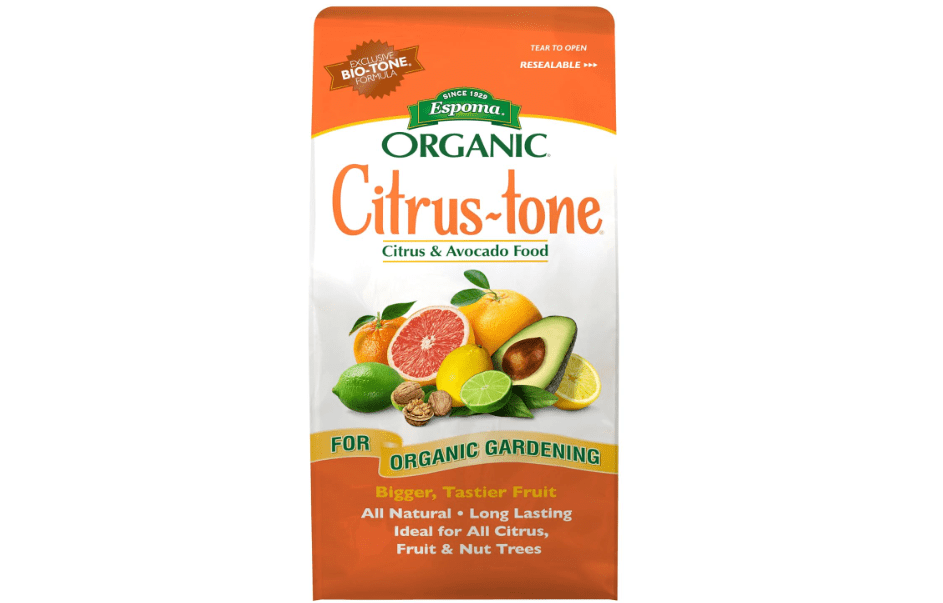
1. Espoma Organic Citrus-Tone (5-2-6)
Best Overall & Top Organic Pick
Product Description: Espoma Citrus-Tone stands out as the gold standard for home orchardists. Instead of relying on harsh synthetic chemicals that provide a fleeting burst of green growth at the expense of soil health, this organic granular feed focuses on the long game. It is packed with a proprietary blend of beneficial microbes (Bio-tone) that actively work to rebuild the soil’s natural food web. Over time, these microbes break down organic matter into highly bioavailable nutrients, ensuring your trees get exactly what they need, right when they need it.
Price: $31.40
Key Features & Benefits:
-
5-2-6 NPK Ratio: Elevated potassium (6) ensures larger fruit sizing and helps the tree resist environmental stress (like drought or cold snaps).
-
Bio-tone Microbes: Millions of beneficial bacteria and mycorrhizal fungi improve root mass and nutrient absorption.
-
OMRI Listed: 100% organic, containing no toxic sludges or harmful fillers—completely safe for edible landscaping.
Pros & Cons:
-
Pros: Exceptionally easy broadcast application, improves long-term soil structure, no risk of root burn, safe for children and pets.
-
Cons: As a slow-release organic, it takes 2 to 4 weeks for the microbes to break down the food before you see visual results in the canopy.
Amazon Ratings & Reviews: Boasting a stellar average rating, customers consistently praise this product for reviving “nearly dead” Meyer lemon trees. Users report heavier fruit sets, significantly less premature blossom drop, and deep green, waxy foliage returning after just one season of consistent use.
Why It’s a Good Choice: It removes the guesswork from fertilizing. You aren’t just feeding the tree; you are fundamentally improving the dirt it lives in, which prevents nutrient lock-out down the road.
Ideal Use Case / Who Should Buy It: Homeowners growing citrus (lemons, limes, oranges), avocados, and nut trees in backyard soil who want a safe, organic, set-it-and-forget-it granular solution.
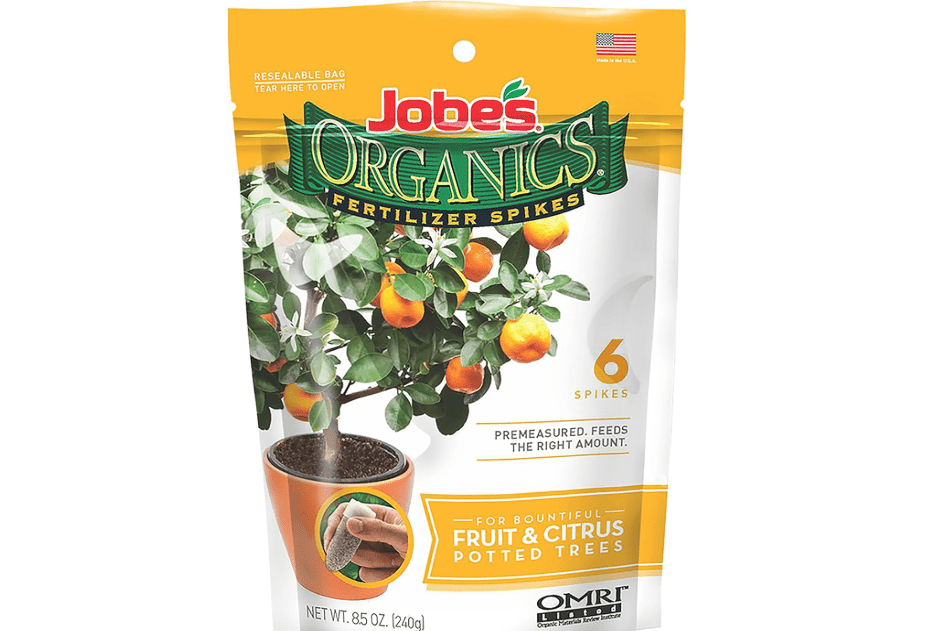
2. Jobe’s Organics Fruit & Citrus Fertilizer Spikes (4-6-6)
Best for Container and Potted Trees
Product Description: Managing the nutrition of potted fruit trees is notoriously difficult; liquid feeds wash out quickly, and granular feeds can sometimes sit on top of compact potting soil. Jobe’s Organics Fertilizer Spikes solve this by delivering nutrients directly to the root zone beneath the soil surface. Infused with their proprietary “Biozome” (a mix of healthy bacteria, Mycorrhizal fungi, and Archaea), these pre-measured spikes break down slowly over time to provide a steady, continuous drip of organic food.
Price:
Key Features & Benefits:
-
Sub-Surface Feeding: Delivers nutrients straight to the active feeder roots, preventing surface runoff.
-
4-6-6 NPK Ratio: The higher phosphorus (6) encourages vigorous blossom development, which is critical for potted trees trying to fruit in limited space.
-
Jobe’s Biozome: Aggressively breaks down materials to improve soil condition, even in confined pots.
Pros & Cons:
-
Pros: Completely mess-free, pre-measured (no over-feeding), no mixing required, OMRI listed for organic gardening.
-
Cons: Can be difficult to push into hard, compacted clay soils if you are using them in-ground rather than in pots.
Amazon Ratings & Reviews: Highly rated for convenience. Many urban gardeners note that these spikes are the only product that keeps their balcony Meyer lemons from turning yellow in the middle of summer. A few users mentioned needing a rubber mallet to drive them into harder outdoor soils.
Why It’s a Good Choice: Convenience is king here. There is no measuring cups, no dusty powders, and no mixing liquids. You simply push them into the soil at the drip line and let the watering do the rest.
Ideal Use Case / Who Should Buy It: Urban gardeners, balcony growers, and anyone cultivating dwarf fruit trees in large pots or half-barrels.
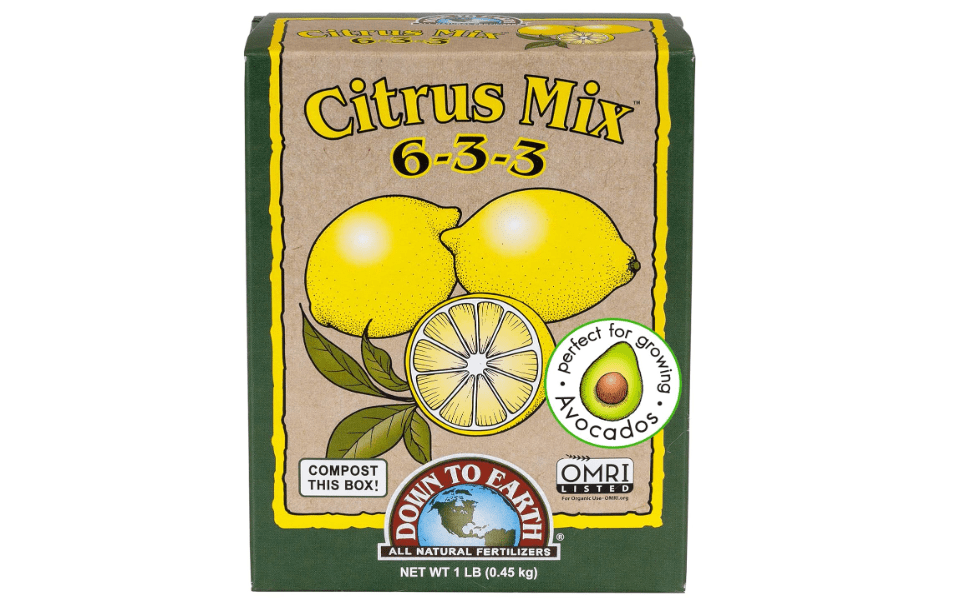
3. Down to Earth Organic Citrus Mix (6-3-3)
Best for Serious Organic Growers
Product Description: Down to Earth has built a massive following among master gardeners and permaculture enthusiasts for its transparent, high-quality ingredient sourcing. Their Citrus Mix (6-3-3) is a masterclass in organic blending, utilizing natural inputs like feather meal, fish bone meal, alfalfa meal, and kelp to provide a robust nutritional profile. This mix doesn’t just feed the tree—it heavily conditions the soil, adding vital micronutrients (like zinc and iron) that fruit trees rapidly deplete.
Price: $9.99
Key Features & Benefits:
-
6-3-3 NPK: A strong nitrogen push to establish a lush, leafy canopy early in the season, supported by phosphorus for root establishment.
-
Rich in Micronutrients: Includes kelp meal and basalt, which provide the trace minerals necessary to prevent yellowing leaves (chlorosis).
-
Eco-Friendly Packaging: Comes in a compostable cardboard box, aligning perfectly with sustainable gardening practices.
Pros & Cons:
-
Pros: Incredible ingredient transparency, supplies a broad spectrum of trace minerals, highly trusted brand by agricultural professionals.
-
Cons: It is a raw, granular mix that can have an earthy (sometimes fishy) odor when first applied, which might attract dogs or wildlife temporarily.
Amazon Ratings & Reviews: Reviewers frequently mention this product as a “miracle worker” for established, older trees that have stopped producing. The primary complaint is usually the smell immediately after watering it in, though most agree it dissipates within a few days.
Why It’s a Good Choice: If you want total control over what goes into your soil, Down to Earth offers the cleanest, most diverse organic ingredient list on the market.
Ideal Use Case / Who Should Buy It: Dedicated organic gardeners, permaculturists, and homeowners with established, in-ground orchards looking to rebuild heavily depleted native soils.
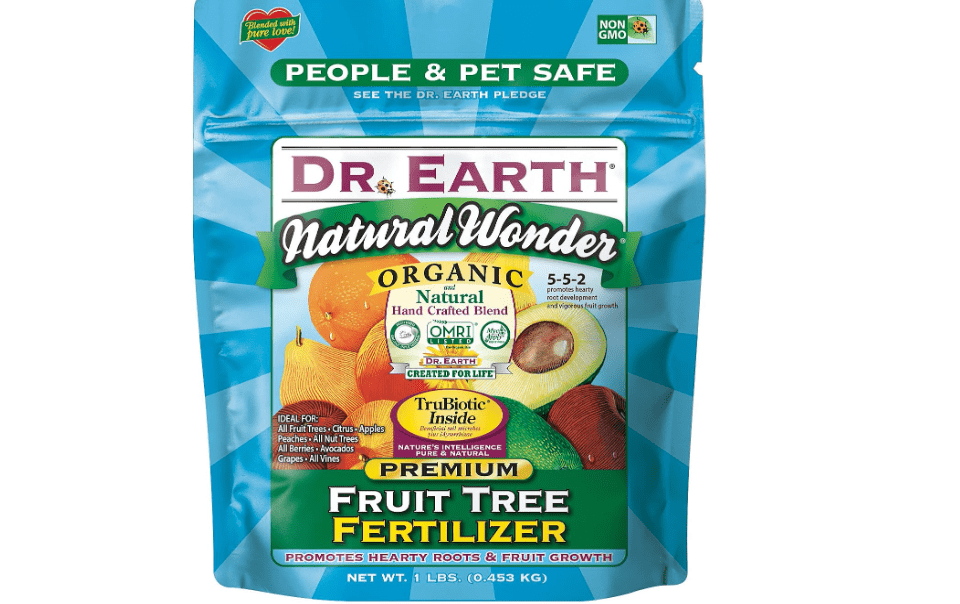
4. Dr. Earth Natural Wonder Fruit Tree Fertilizer (5-5-2)
Best Premium Small-Batch Organic
Product Description: Dr. Earth Natural Wonder is the artisan coffee of fruit tree fertilizers. Crafted in small batches, this non-GMO, organic blend is meticulously formulated with human-grade whole-food ingredients like fishbone meal, feather meal, and kelp. It is supercharged with “ProBiotic,” a broad-spectrum inoculant containing beneficial soil microbes and mycorrhizae that maximize root nutrient absorption and help the tree build immunity against disease.
Price: $11.96
Key Features & Benefits:
-
5-5-2 NPK: A balanced approach that provides equal parts nitrogen for leaf growth and phosphorus for robust blossoms and root health.
-
ProBiotic Enriched: Contains 7 champion strains of beneficial soil microbes and 8 strains of ecto and endo mycorrhizae.
-
Pet Safe: Completely safe to use around dogs and cats immediately after application.
Pros & Cons:
-
Pros: Exceptional purity, fast-acting for a granular organic, highly effective at reversing nutrient lock-out in poor soils.
-
Cons: Carries a higher price point per pound compared to standard organic granular feeds.
Amazon Ratings & Reviews: Users highly rate Dr. Earth for its rapid green-up effect. Many reviewers highlight that it saved their struggling peach and apple trees, praising its lack of harsh chemical odors common in other fish-based fertilizers.
Why It’s a Good Choice: It bridges the gap between the slow, steady feed of organics and the fast visual results of synthetics, all while maintaining the highest ecological standards.
Ideal Use Case / Who Should Buy It: Environmentally conscious gardeners who want premium, non-GMO ingredients and fast results for their prized backyard fruit trees.
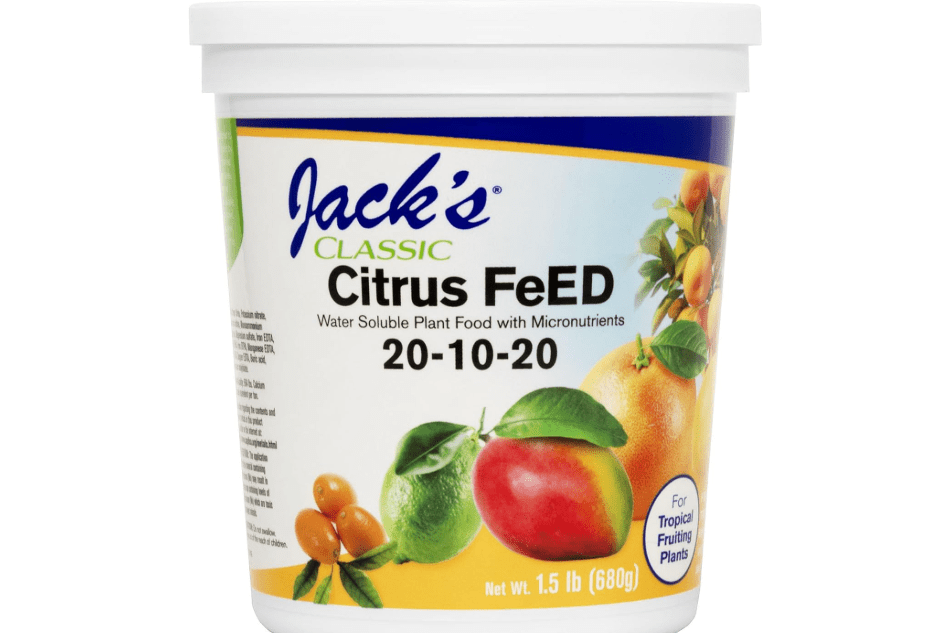
5. Jack’s Classic Citrus Feed (20-10-20)
Best for Rapid Synthetic Correction & Green-Up
Product Description: When a fruit tree is severely chlorotic (yellowing leaves with green veins) and needs immediate intervention, organic feeds are sometimes too slow. Jack’s Classic Citrus Feed is a powerful, water-soluble synthetic fertilizer that acts like an IV drip for starving trees. Formulated with an enhanced micronutrient package, it bypasses the soil digestion process to deliver instant, bioavailable nutrition directly to the root system.
Price: $23.87
Key Features & Benefits:
-
20-10-20 NPK: A heavy dose of nitrogen and potassium to force rapid canopy growth and correct severe deficiencies fast.
-
Water-Soluble: Dissolves completely in water for immediate root uptake or foliar feeding (spraying directly on the leaves).
-
Elevated Micronutrients: Specifically boosted with iron, zinc, and manganese to combat common yellowing in citrus.
Pros & Cons:
-
Pros: Instant results, fixes nutrient deficiencies in days rather than weeks, highly concentrated (a little goes a long way).
-
Cons: Synthetic nature does not build long-term soil health; incorrect measuring can easily burn roots.
Amazon Ratings & Reviews: Buyers frequently post dramatic before-and-after photos showing pale yellow trees turning deep, vibrant green within a week. The main caution in reviews is to strictly follow the dilution instructions to avoid burning the plant.
Why It’s a Good Choice: It is the ultimate emergency rescue tool. When you need to save a struggling tree immediately, this delivers guaranteed, fast-acting nutrition.
Ideal Use Case / Who Should Buy It: Growers dealing with severely nutrient-deficient trees, specifically citrus, that need immediate, fast-acting correction before the fruiting season ends.
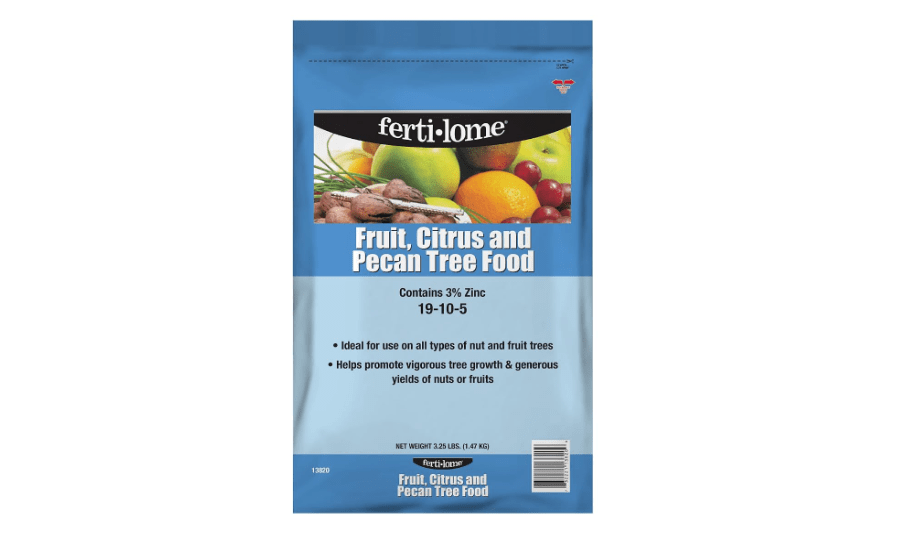
6. Fertilome Fruit, Citrus & Pecan Tree Food (19-10-5)
Best for Mature, Established Backyard Trees
Product Description: Large, mature fruit and nut trees have massive root systems and require serious nutritional volume to support hundreds of pounds of fruit. Fertilome has designed this high-nitrogen granular synthetic specifically to penetrate deep down to the feeder roots of large trees. It contains a unique trace mineral package, including a healthy dose of zinc, which is critical for pecan and large citrus tree development.
Price: $15.99
Key Features & Benefits:
-
19-10-5 NPK: High nitrogen to support the massive canopy of a mature tree, with solid phosphorus for heavy fruit sets.
-
Zinc-Enriched: Includes essential zinc to prevent the “rosette” leaf curling commonly seen in pecans and citrus.
-
Deep Penetration Formula: Granules are designed to be watered in deeply, reaching the expansive root systems of older trees.
Pros & Cons:
-
Pros: Excellent for very large trees, specific formulation for nut trees, heavy yield booster.
-
Cons: Synthetic salts can build up in the soil over time; not recommended for young, newly planted saplings.
Amazon Ratings & Reviews: Highly praised by pecan and orange tree owners in the southern US. Users report doubling their harvest size on older trees that had previously stopped producing.
Why It’s a Good Choice: Mature trees require heavy lifting that some organic fertilizers struggle to keep up with efficiently. This product provides the high-octane fuel a massive tree needs.
Ideal Use Case / Who Should Buy It: Owners of large, mature fruit and nut orchards who are focused on maximizing commercial-level yields.
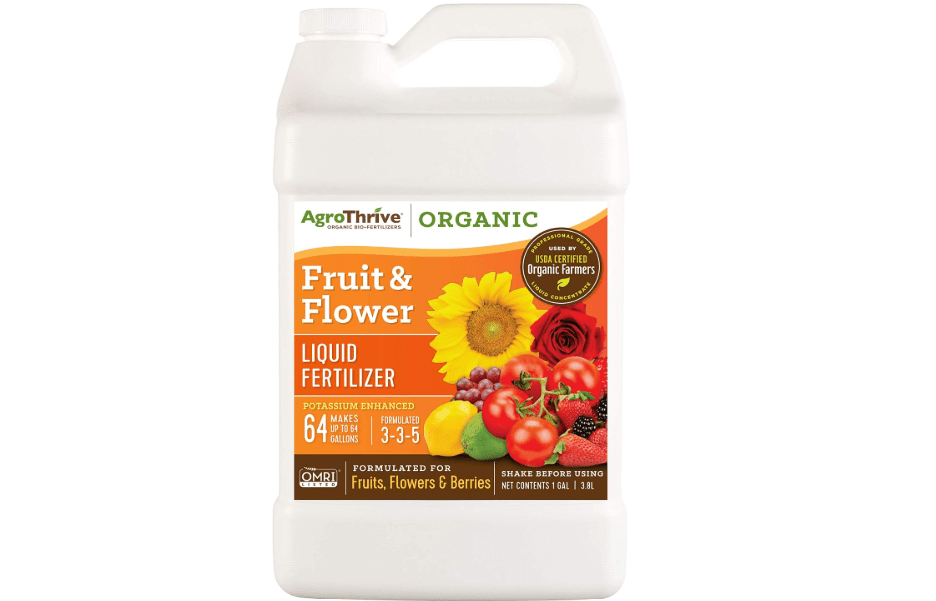
7. AgroThrive Fruit and Flower Liquid Fertilizer (3-3-5)
Best Fast-Acting Liquid Organic
Product Description: AgroThrive bridges the gap between organic soil building and fast-acting liquid feeds. Originally developed for commercial organic farms, this liquid fertilizer undergoes a proprietary “Progressive Digestion Process” that pre-digests the organic ingredients. This means the nutrients are immediately available to the tree the second they hit the soil, without waiting for soil microbes to do the work.
Price: $48.51
Key Features & Benefits:
-
3-3-5 NPK: Elevated potassium specifically targets larger, sweeter fruit development.
-
Pre-Digested Formula: Nutrient absorption begins in less than 24 hours.
-
Root & Soil Stimulant: Liquid form easily infiltrates the soil profile, instantly activating native soil microbes.
Pros & Cons:
-
Pros: Lightning-fast results for an organic product, easy to mix into watering cans or hose-end sprayers, won’t burn plants.
-
Cons: Requires more frequent application (every 2-4 weeks) compared to slow-release granulars.
Amazon Ratings & Reviews: Users love the convenience of a liquid organic feed and frequently note that it produces incredibly sweet fruit. Some users note the smell is quite pungent for the first day after application.
Why It’s a Good Choice: It offers the best of both worlds: the immediate gratification and ease of a liquid feed, coupled with the soil-building properties of an organic fertilizer.
Ideal Use Case / Who Should Buy It: Gardeners who prefer watering-in their fertilizer and want fast, organic results for fruiting container plants or small orchard setups.
8. Jobe’s Organics Fruit & Citrus Granular (3-5-5)
Best Budget-Friendly Organic Maintenance
Product Description: For gardeners managing multiple trees on a tight budget, Jobe’s Organics Granular offers an incredibly cost-effective way to maintain a healthy orchard. It features the same proprietary “Biozome” microbial package found in their spikes, but in a loose granular form that allows you to easily customize the dose based on the size of the tree.
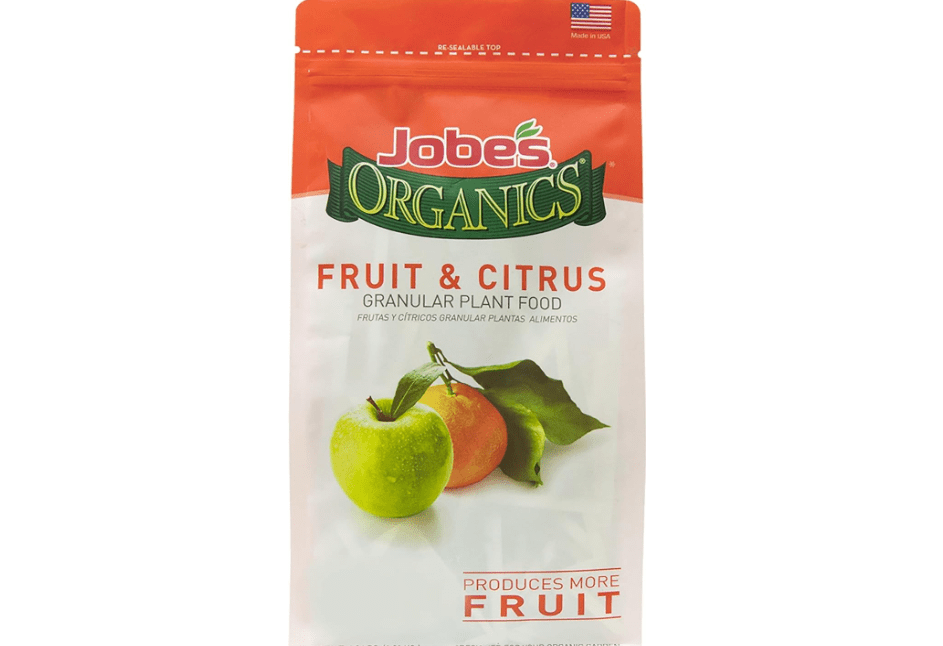
Price: $6.98
Key Features & Benefits:
-
3-5-5 NPK: Lower nitrogen prevents excessive leafy growth, forcing the tree to focus its energy on flowering and fruiting.
-
Biozome Technology: Aggressively breaks down soil compaction and improves drought resistance.
-
Economical: Provides excellent coverage per pound for larger orchard spaces.
Pros & Cons:
-
Pros: Highly affordable, excellent microbial package, easy to broadcast around the drip line.
-
Cons: Can have a strong odor that temporarily attracts digging pets (dogs especially).
Amazon Ratings & Reviews: A staple for budget-conscious gardeners. Reviews frequently highlight the unbeatable value and consistent, reliable fruiting it promotes season after season.
Why It’s a Good Choice: It is a reliable, no-nonsense organic feed that provides top-tier microbes at a fraction of the price of boutique brands.
Ideal Use Case / Who Should Buy It: Frugal gardeners managing multiple fruit trees who want to maintain organic practices without breaking the bank.
9. FoxFarm Happy Frog Fruit & Flower (4-9-3)
Best for Boosting Blossom Retention & Fruit Set
Product Description: FoxFarm has a cult following in the specialty gardening community, and Happy Frog Fruit & Flower showcases exactly why. This highly specific blend is formulated explicitly for the reproductive stage of the plant’s life cycle. By drastically increasing the phosphorus content, it triggers explosive blooming, reduces premature blossom drop, and helps the tree set more fruit.
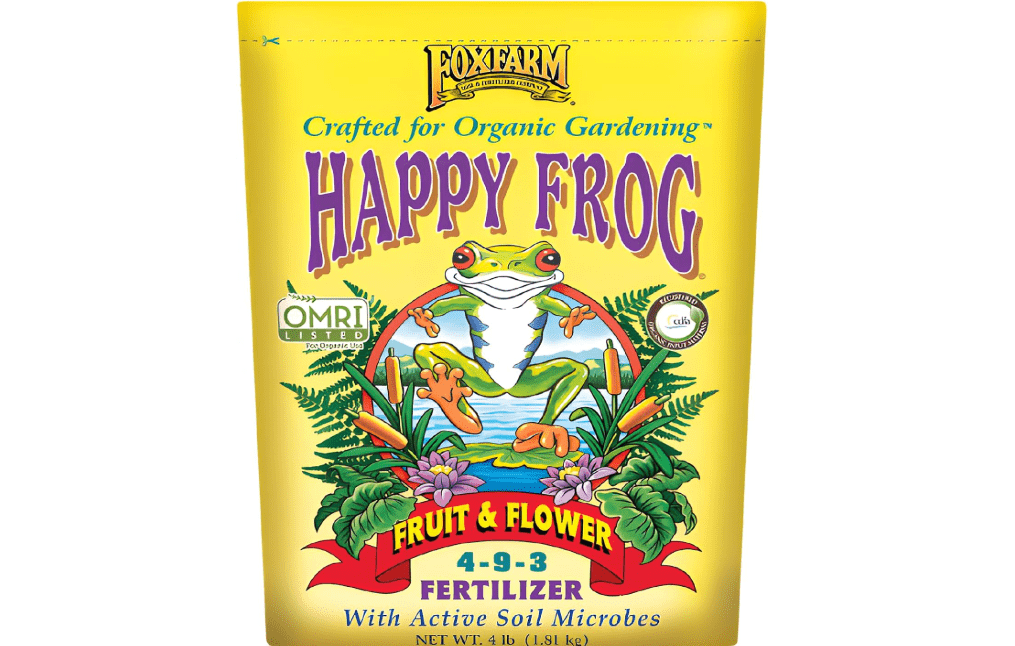
Price: $22.99
Key Features & Benefits:
-
4-9-3 NPK: The massive spike in phosphorus (9) acts as a heavy bloom-booster.
-
Premium Ingredients: Blended with bat guano, kelp meal, and bone meal.
-
Fungi Enriched: Loaded with humic acid and active fungi to maximize nutrient uptake during the stressful fruiting phase.
Pros & Cons:
-
Pros: Incredible for forcing stubborn trees to bloom, high-quality ingredients, excellent for all flowering plants.
-
Cons: Lower nitrogen means it isn’t ideal for young saplings that still need to build their primary branches and canopy.
Amazon Ratings & Reviews: Customers constantly mention this product in relation to difficult-to-fruit trees. Reviewers note that trees that hadn’t flowered in years suddenly produced heavy yields after a spring application of Happy Frog.
Why It’s a Good Choice: If your tree grows beautiful green leaves every year but stubbornly refuses to produce flowers or fruit, this is the exact nutritional shift it needs.
Ideal Use Case / Who Should Buy It: Gardeners with mature trees that struggle with low flower counts, poor fruit set, or dropped blossoms early in the season.
10. Miracle-Gro Fruit & Citrus Plant Food Spikes (15-5-10)
Best Synthetic Quick Boost for Slow Growth
Product Description: Miracle-Gro is a household name for a reason: their products provide rapid, undeniable growth. These synthetic plant food spikes are designed to force vigorous vegetative growth on slow-growing or stunted trees. They are driven into the soil along the drip line to provide a slow-release synthetic feed that bypasses surface runoff entirely.
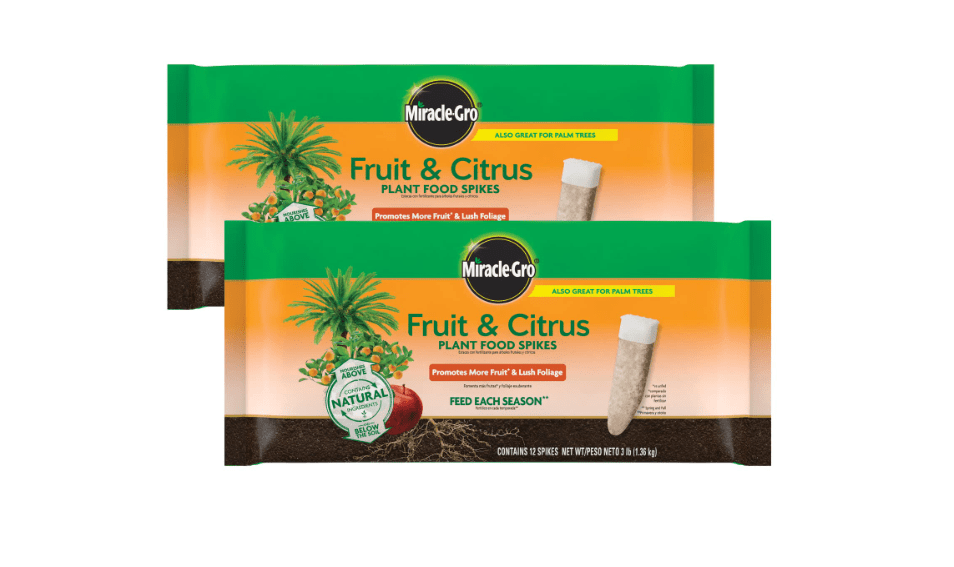
Price: $30.49
Key Features & Benefits:
-
15-5-10 NPK: A very high nitrogen and potassium ratio designed to force thick, green canopies and size up fruit quickly.
-
Seasonal Feed: Designed to release continuously for the entire spring and summer season.
-
Easy Application: Pre-measured spikes eliminate the risk of over-measuring and burning the tree.
Pros & Cons:
-
Pros: Very cheap, foolproof application, forces massive leafy growth on stunted trees.
-
Cons: High synthetic salt content does nothing to improve long-term soil biology; can promote leafy growth over fruit if used at the wrong time.
Amazon Ratings & Reviews: Users appreciate the sheer convenience and the undeniable “green-up” factor. Many reviews highlight how easily they revive yellowing, sad-looking yard trees with zero mixing or measuring.
Why It’s a Good Choice: It is a highly accessible, budget-friendly option for casual gardeners who want a greener tree with minimal effort and no messy powders.
Ideal Use Case / Who Should Buy It: Casual backyard gardeners who want a quick, easy, once-a-season application to boost the appearance and growth of stunted fruit trees.
IV. Buying Guide: How to Choose the Right Fertilizer
Selecting the best 10 food for fruit trees is only half the battle; understanding how and when to use them separates average gardeners from master orchardists.
Understanding NPK Ratios
Every fertilizer label displays three numbers (e.g., 5-2-6). This is the NPK ratio, representing the percentage of Nitrogen, Phosphorus, and Potassium:
-
Nitrogen (N): Drives leafy canopy growth and green color. Essential for young trees building structure.
-
Phosphorus (P): Critical for root establishment, flower development, and preventing blossom drop.
-
Potassium (K): Improves water regulation, disease resistance, and heavily influences the size, sugar content, and juiciness of the fruit.
Organic vs. Synthetic
-
Organic fertilizers (like Espoma or Down to Earth) feed the soil biology. They rely on microbes to break down ingredients (like kelp or bone meal) over time. They build long-term soil health, improve moisture retention, and cannot burn roots.
-
Synthetic fertilizers (like Jack’s or Miracle-Gro) are chemically derived salts. They bypass the soil microbes and feed the plant instantly. They are excellent for emergency rescue of severely deficient trees, but they do not improve soil structure over time.
Plant Diagnostics 101: Reading Your Tree
Your tree will tell you what it needs if you know how to look:
-
Yellowing older leaves with green veins: Magnesium or iron deficiency.
-
Pale green/yellow overall canopy: Nitrogen deficiency.
-
Heavy flower drop / poor fruiting: Phosphorus deficiency or lack of pollinators.
-
Small, cracked, or sour fruit: Potassium or water regulation issues.
Soil Health & pH Testing
Fruit trees generally prefer slightly acidic soil (pH 6.0 – 7.0). If your soil is highly alkaline (pH > 7.5), nutrients like iron and phosphorus become “locked up.” You can apply all the fertilizer in the world, and the tree will still starve. Always conduct a basic soil test before heavily amending your orchard.
Timing Your Application
Do not feed your trees year-round. Following a strict seasonal timeline is vital:
-
Early Spring (Bud Swell): Apply your main granular organic feed just as buds begin to swell, before they open.
-
Late Spring (Post-Petal Fall): Apply a secondary, lighter feed once the flowers have dropped and the tiny fruit begins to form.
-
Late Summer/Fall: Stop feeding! High nitrogen in late summer forces tender new growth that will be killed by the first winter frost.
Media Placeholder: Insert a highly visual Pinterest Pin graphic here. Design it with a clear, step-by-step “Seasonal Fruit Tree Feeding Timeline” featuring your top product picks so your audience can save it directly to their gardening boards.
V. Frequently Asked Questions (FAQ)
Can I use lawn fertilizer on my fruit trees? Absolutely not. Lawn fertilizers are extremely high in nitrogen (often 30-0-0) to promote grass blades. Applying this to a fruit tree will force it to produce massive amounts of leafy branches at the expense of flowers and fruit. It can also cause fertilizer burn on tree roots.
How often should I feed container-grown fruit trees? Trees in pots require a different approach. Because regular watering flushes nutrients out of the drainage holes, potted trees need to be fed more frequently but in lighter doses. Use organic spikes or apply a liquid feed every 4 to 6 weeks during the active growing season.
Should I use spikes, liquid, or granular fertilizer?
-
Granular: Best for long-term, in-ground soil building and seasonal feeding.
-
Liquid: Best for fast, targeted correction of deficiencies or frequent container feeding.
-
Spikes: Best for targeted root feeding in tight spaces, containers, or for gardeners prioritizing mess-free convenience.
VI. Conclusion & Final Recommendations
Growing your own fruit is one of the most rewarding experiences in gardening, but it requires giving back to the soil that sustains your harvest. Whether you are battling yellowing leaves on a patio lemon tree or trying to increase the yield of a massive backyard apple orchard, providing the right nutrition is non-negotiable.
By analyzing soil science and real-world results, we have identified the best 10 food for fruit trees. For a foolproof, organic approach that builds incredible soil vitality over time, you cannot go wrong with Espoma Organic Citrus-Tone. If you need an emergency rescue for a starving tree, Jack’s Classic Citrus Feed provides the rapid turnaround required.
Assess your tree’s symptoms, test your soil’s pH, and secure your fertilizer now so you are ready to feed your orchard the moment spring arrives.