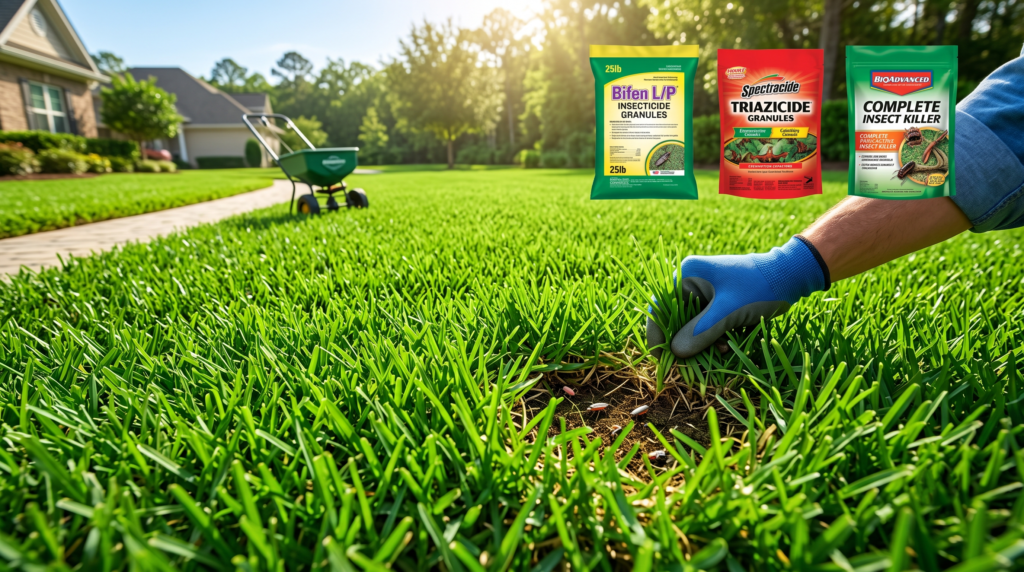
There is nothing quite as frustrating as pouring your time, money, and sweat into cultivating a lush, thick carpet of green, only to wake up to ugly, spreading brown patches. Your beautiful turf is under attack. The good news? You don’t have to just stand by and watch your yard die. By acting quickly with the right targeted treatment, you can absolutely save your lawn. To help you cut through the noise, we have created the ultimate guide to finding the best insecticide for st augustine grass to eradicate your pest problem for good.
While St. Augustine is beloved for its incredible heat tolerance and dense, barefoot-friendly growth, that thick thatch layer makes it highly susceptible to a host of destructive insects. The most notorious culprit is the Southern Chinch Bug. These tiny pests gather in the thatch and literally suck the life out of the grass stems, turning vibrant green lawns into crispy, yellowed wastelands in a matter of days.
However, chinch bugs aren’t the only threat to your yard’s survival. Sod webworms, armyworms, and root-munching white grubs are equally eager to destroy your turf. Reversing this damage requires more than just extra water and fertilizer; it requires a calculated counterattack. Based on rigorous research, deep analysis of real Amazon customer data, and expert turf grass advice, this guide will walk you through exactly what you need to make an informed decision and reclaim your yard.
Here is the complete, comprehensive skyscraper article, continuing from your introduction and fully expanding on the outline.
II. Quick Comparison: Top Picks at a Glance
To help you quickly navigate your options, here is a simplified breakdown of our top-rated products.
III. How to Choose the Right Insecticide (Buying Guide)
Before you add a product to your cart, it’s vital to understand what your lawn actually needs. Not all bugs require the same chemical, and applying the wrong product wastes money and time. Here is what you need to know to choose the best insecticide for st augustine grass:
1. Identify the Pest
-
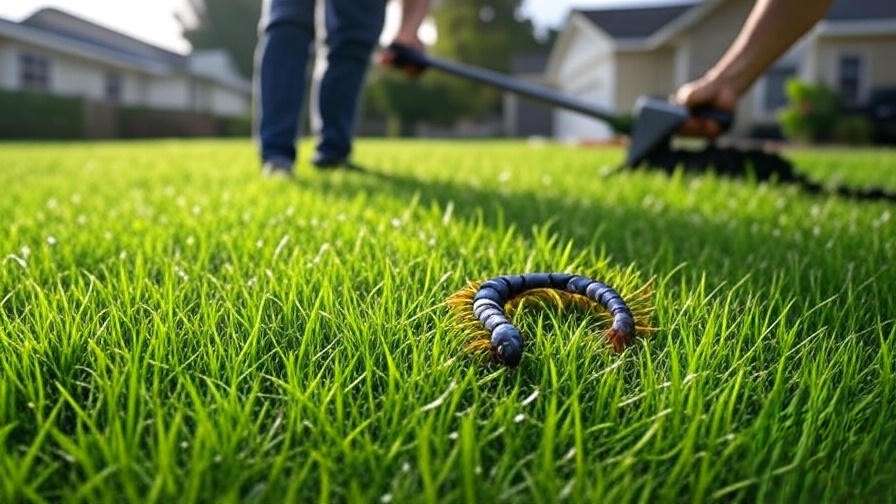
Chinch Bugs: Look for irregular, spreading yellow/brown patches in hot, sunny areas. The grass will look like it’s dying of drought. Part the grass at the edge of the dead zone and look for tiny black insects with white diamond wings.
-
Sod Webworms: You’ll notice small moths flying in a zigzag pattern over your grass at dusk. The damage looks like the grass blades have been chewed or “notched” along the edges.
-
White Grubs: Your lawn will feel spongy and lift up easily, like a loose carpet. You may also see armadillos, skunks, or raccoons digging up your yard to eat them.
2. Liquid vs. Granular Formats
-
Granular Insecticides: These are small, sand-like or clay-based pellets spread with a broadcast spreader. They excel at penetrating the thick thatch of St. Augustine grass to reach soil-dwelling pests. They provide excellent long-term residual control (often up to 3 months) but must be watered in heavily to activate.
-
Liquid Insecticides: These come as concentrates (mixed in a pump sprayer) or ready-to-spray (RTS) hose-end bottles. Liquids are perfect for fast “knockdown” of active surface pests like adult chinch bugs, sod webworms, and mosquitoes. They dry quickly but generally don’t last as long in the soil as granules.
3. Key Active Ingredients
Look for products containing synthetic pyrethroids (like Bifenthrin, Gamma-Cyhalothrin, or Zeta-Cypermethrin) for general pests and chinch bugs. If you have a severe grub problem, you need a systemic ingredient like Imidacloprid, which is absorbed by the grass roots.
4. Safety Considerations
Always allow liquid sprays to dry completely before letting pets or children onto the lawn. For granular treatments, keep pets off the lawn until after the granules have been heavily watered in and the grass has dried.
IV. The Top 10 Best Insecticides for St. Augustine Grass (Detailed Reviews)
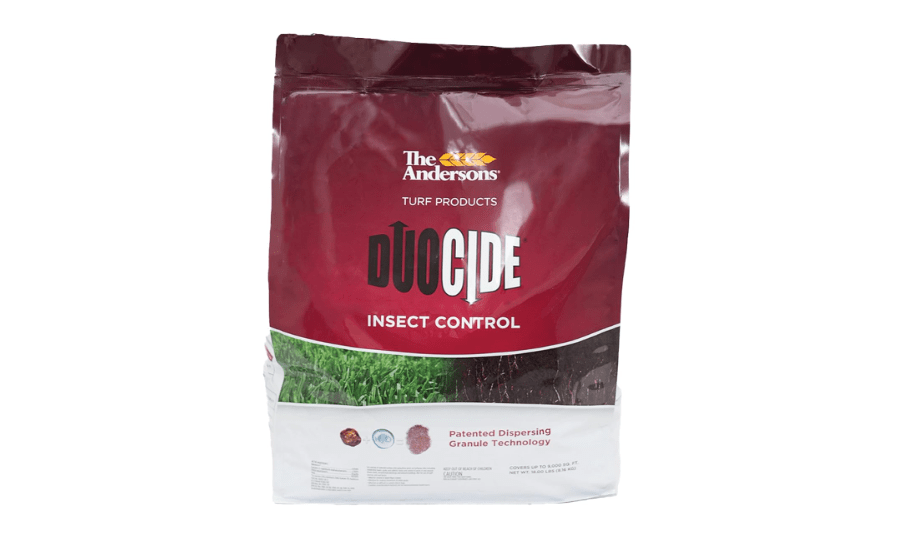
1. Best Overall: Bifen L/P Insecticide Granules
Product Description: Bifen L/P (Lawn & Perimeter) is a professional-grade granular insecticide. Unlike cheap clay-based granules that break down poorly, Bifen L/P uses a sand-core structure. This heavy granule easily drops straight through the thick, dense canopy of St. Augustine grass, bypassing the blades to rest deep in the thatch and soil where chinch bugs and ants actually live.
-
Price: $51.88
-
Key Features & Benefits: Contains 0.2% Bifenthrin. One 25 lb. bag treats up to 10,000 sq. ft. Offers long-lasting residual control, protecting the turf for 2 to 3 months as it slowly releases the active ingredient over time. Completely odorless.
-
Pros & Cons:
-
Pros: Professional strength; highly effective on chinch bugs, ticks, and fleas; low application rate; won’t wash away easily in heavy rain.
-
Cons: Requires a broadcast spreader; must be watered in heavily to activate the chemical.
-
-
Amazon Ratings & Reviews: 4.6/5 Stars. Reviewers consistently praise its ability to stop aggressive chinch bug damage in its tracks and note that it’s the exact product many professional pest control companies use.
-
Why It’s a Good Choice for St. Augustine: The sand-based carrier is the secret. St. Augustine thatch is notoriously thick, and lighter granules get caught in the blades. Bifen L/P sinks straight to the target zone.
-
Ideal Use Case / Who Should Buy It: Homeowners with medium-to-large lawns dealing with active, aggressive chinch bug infestations who want long-term, commercial-grade protection.
2. Best Budget Pick: Spectracide Triazicide Insect Killer for Lawns (Granules)
Product Description: A staple at big-box home improvement stores, Spectracide Triazicide is an aggressive, broad-spectrum granular insect killer designed for fast action. It creates a protective barrier over your lawn to stop over 100 surface and soil-dwelling pests.

-
Price: $33.72
-
Key Features & Benefits: Uses Gamma-Cyhalothrin as the active ingredient. Effectively kills chinch bugs, armyworms, crickets, and fleas on contact.
-
Pros & Cons:
-
Pros: Very affordable; readily available; fast-acting formula; easy to apply.
-
Cons: Shorter residual life compared to professional products; less effective on deep-soil grubs.
-
-
Amazon Ratings & Reviews: 4.3 – 4.5/5 Stars. Users love the price-to-performance ratio, often noting that it brings dead lawns back to life when applied at the first sign of yellowing.
-
Why It’s a Good Choice for St. Augustine: It offers an affordable, immediate rescue treatment for sudden chinch bug or webworm outbreaks without breaking the bank.
-
Ideal Use Case / Who Should Buy It: Cost-conscious buyers needing a quick, broad-spectrum fix for general lawn pests on a smaller budget.
3. Best for Grubs & Chinch Bugs: BioAdvanced Complete Insect Killer for Soil & Turf
Product Description: BioAdvanced Complete is a unique 2-way formula. Most insecticides either kill surface bugs or soil bugs. This product does both simultaneously by combining two powerful active ingredients.

-
Price: $31.98
-
Key Features & Benefits: Combines Beta-cyfluthrin (for fast contact kill of surface pests like chinch bugs) with Imidacloprid (a systemic insecticide that targets deep-root feeders like white grubs). Prevents new pest formations for up to 3 months.
-
Pros & Cons:
-
Pros: Excellent dual-action capability; targets both grubs and surface pests; 3-month protection.
-
Cons: Can be harsh on beneficial insects like earthworms; slightly pricier per square foot.
-
-
Amazon Ratings & Reviews: 4.6/5 Stars. Buyers rave about its effectiveness against grubs, with reviews stating, “within 1 hour they were coming out the ground… these grubs have wrecked havoc on my back lawn”.
-
Why It’s a Good Choice for St. Augustine: Because St. Augustine is susceptible to both chinch bugs (thatch) and grubs (roots), this 2-in-1 formula covers all bases to ensure total root-to-tip protection.
-
Ideal Use Case / Who Should Buy It: Homeowners whose lawns easily pull up like a carpet (indicating grubs) but who also want to ensure chinch bugs don’t move in.
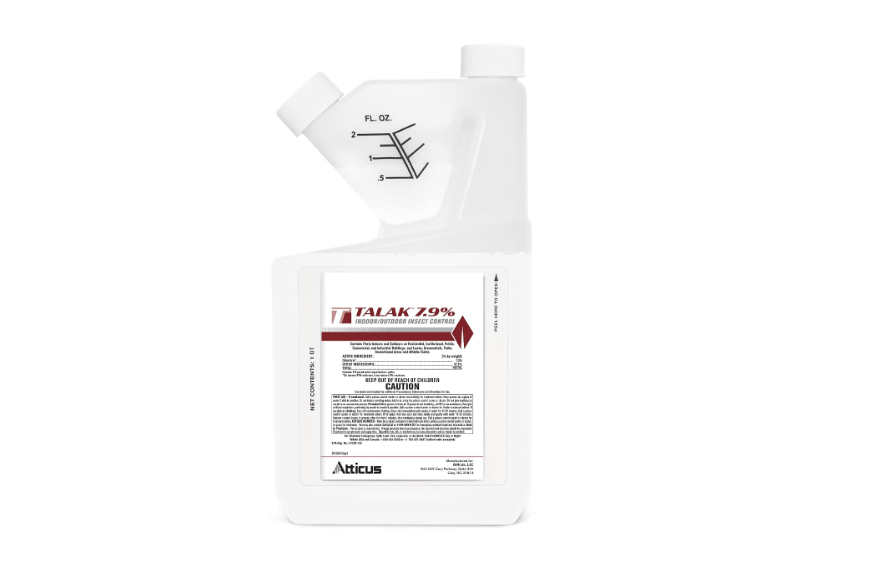
4. Best Liquid Concentrate: Bifen IT (Bifenthrin Insecticide)
Product Description: Bifen IT is the liquid equivalent of our top granular pick. It is a highly concentrated, professional-grade liquid insecticide that provides an immediate knockdown of over 75 lawn and perimeter pests.
-
Price:
-
Key Features & Benefits: Contains a potent 7.9% Bifenthrin. One bottle can yield up to 16 gallons of finished spray. Non-staining, dries clear, and leaves no odor.
-
Pros & Cons:
-
Pros: Extremely cost-effective per gallon; immediate knockdown; versatile (can be used on lawns, ornamentals, and home perimeters).
-
Cons: Requires the purchase of a separate pump sprayer; measuring and mixing is required.
-
-
Amazon Ratings & Reviews: 4.3/5 Stars. Widely praised as the “gold standard” for DIY pest control, with users noting it effectively eradicates massive mosquito, ant, and chinch bug populations.
-
Why It’s a Good Choice for St. Augustine: When chinch bugs are actively destroying your grass, you don’t have days to wait for granules to break down. A liquid application of Bifen IT coats the grass blades and thatch for an instant kill.
-
Ideal Use Case / Who Should Buy It: DIYers comfortable with mixing chemicals who want commercial-grade, instant-kill power for a large property.
5. Best Fast-Acting Hose-End Spray: Cyonara Lawn & Garden RTS
Product Description: Cyonara Ready-to-Spray (RTS) is the ultimate convenience product. There is no mixing, measuring, or heavy equipment required. You simply attach the bottle to your garden hose and spray.

-
Price: $33.83
-
Key Features & Benefits: Lambda-cyhalothrin active ingredient. One 32 oz. bottle covers an impressive 8,000 to 16,000 sq. ft. of lawn. Safe for use on ornamental plants and even vegetable gardens.
-
Pros & Cons:
-
Pros: Incredibly easy to use; excellent coverage area per bottle; fast knockdown.
-
Cons: Hose-end sprayers can sometimes distribute unevenly depending on your home’s water pressure.
-
-
Amazon Ratings & Reviews: 4.5/5 Stars. Users highly recommend it for its simplicity, frequently citing it as a “go-to choice” for massive outdoor spaces.
-
Why It’s a Good Choice for St. Augustine: Perfect for treating sudden outbreaks of sod webworms or armyworms that require immediate, wide-area foliage coating.
-
Ideal Use Case / Who Should Buy It: Homeowners who want the speed of a liquid insecticide but don’t want to deal with mixing concentrates in a pump sprayer.
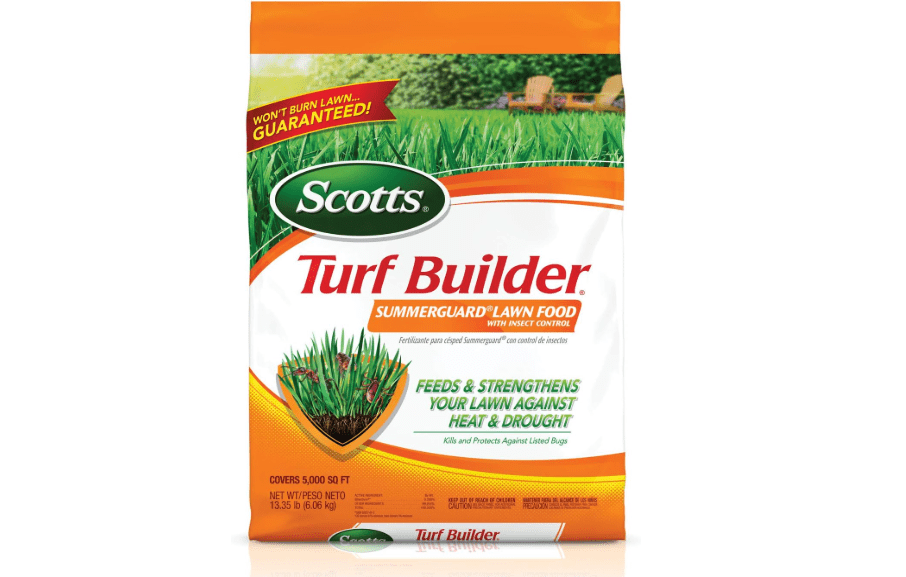
6. Best Weed & Feed Combo: Scotts Turf Builder SummerGuard with Insect Control
Product Description: When your St. Augustine lawn is stressed from summer heat and insect damage, it needs food to recover. Scotts SummerGuard solves two problems at once by feeding your lawn while laying down an insect-killing barrier.
-
Price:
-
Key Features & Benefits: Features a robust lawn fertilizer that improves water absorption against heat and drought, combined with an insecticide (Bifenthrin) to kill ants, armyworms, chinch bugs, and ticks.
-
Pros & Cons:
-
Pros: Feeds grass while killing bugs; strengthens roots against drought; guaranteed not to burn the lawn.
-
Cons: Cannot be used as a standalone bug killer if your lawn has already been recently fertilized (risks over-fertilizing).
-
-
Amazon Ratings & Reviews: 4.2 – 4.5/5 Stars. Over a thousand reviews highlight how it turns yellow, heat-stressed, bug-bitten grass back into a deep, vibrant green within weeks.
-
Why It’s a Good Choice for St. Augustine: St. Augustine requires high nitrogen to maintain its thick carpet, and it often suffers from summer chinch bugs simultaneously. This product handles both during the brutal southern summer.
-
Ideal Use Case / Who Should Buy It: Homeowners looking to simplify their summer lawn care routine by combining their feeding and pest-control schedules.
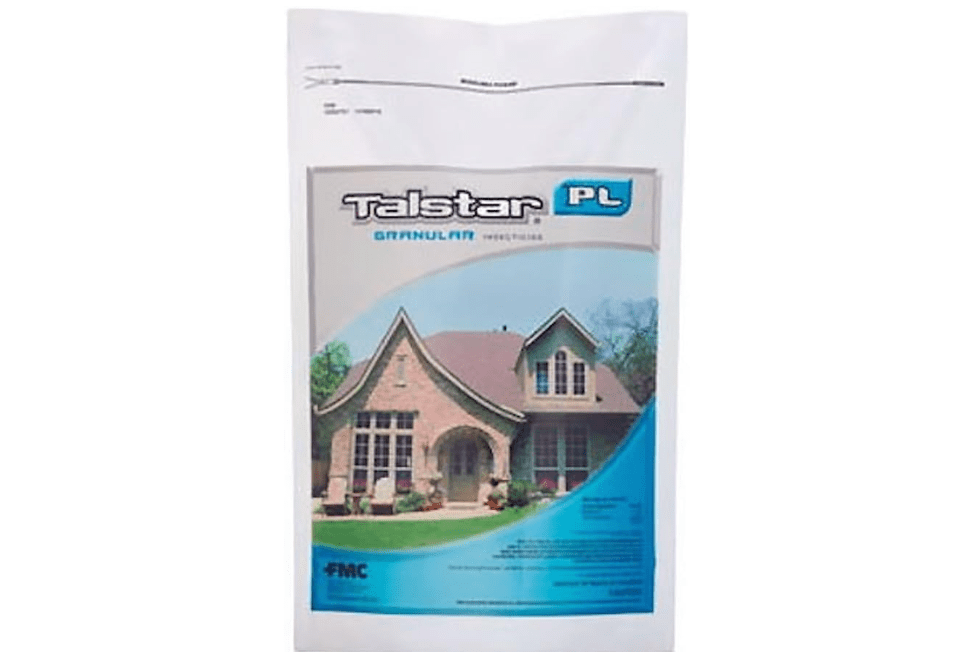
7. Best Professional-Grade Option: Talstar PL Granular Insecticide
Product Description: Talstar PL is effectively the premium twin to Bifen L/P. Manufactured by FMC, it is widely considered the industry standard for granular pest control among landscape professionals.
-
Price: $45.26
-
Key Features & Benefits: Features a unique, dust-free sand-core structure. Delivers 2 to 4 months of residual control against chinch bugs, fleas, and fire ants. Odorless and doesn’t technically require immediate watering in (though it’s highly recommended for turf pests).
-
Pros & Cons:
-
Pros: Zero dust; heavy granules easily penetrate mulch and thick grass; premium, reliable formulation.
-
Cons: More expensive than generic bifenthrin alternatives.
-
-
Amazon Ratings & Reviews: Consistently rated near 4.8/5 Stars across pest control retailers, known for its flawless consistency and lack of chemical dust during application.
-
Why It’s a Good Choice for St. Augustine: The heavy, perfectly uniform sand granules won’t get stuck in the wide blades of St. Augustine, ensuring 100% of the chemical reaches the soil.
-
Ideal Use Case / Who Should Buy It: Lawncarenuts and perfectionists who demand the exact premium products used by high-end golf courses and pest control technicians.
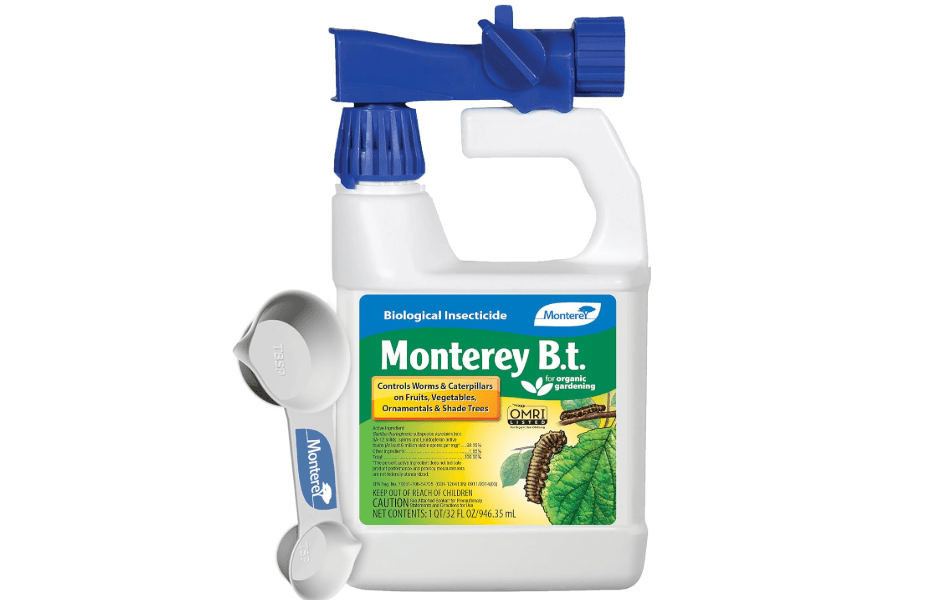
8. Best Organic/Natural Option: Monterey B.t. (Bacillus thuringiensis)
Product Description: If you are battling caterpillars, sod webworms, or armyworms, but absolutely refuse to use harsh synthetic chemicals, Monterey B.t. is your answer. It is an OMRI-listed biological insecticide.
-
Price: $37.27
-
Key Features & Benefits: Uses naturally occurring soil bacteria (Bacillus thuringiensis) that specifically targets the digestive system of caterpillars. Safe for pets, children, and beneficial insects like bees and earthworms.
-
Pros & Cons:
-
Pros: 100% organic and natural; preserves beneficial insects; highly effective on webworms.
-
Cons: Does not kill chinch bugs or grubs. Only works on caterpillar-type pests; must be ingested by the bug to work.
-
-
Amazon Ratings & Reviews: 5.0/5 Stars. Users love that it naturally obliterates caterpillars without destroying the ecosystem of their yard.
-
Why It’s a Good Choice for St. Augustine: Sod webworms frequently attack St. Augustine grass in the late summer. B.t. allows you to stop them without putting toxic chemicals on a lawn where your pets or kids play.
-
Ideal Use Case / Who Should Buy It: Organic gardeners and families with pets whose primary lawn issue is sod webworms or armyworms.
9. Best for Heavy Thatch Lawns: Sevin Insect Killer Lawn Granules
Product Description: Sevin is a classic, legacy brand in the lawn care space. Their newer granular formula provides excellent broad-spectrum control that is incredibly easy to source locally and apply.

-
Price: $25.66
-
Key Features & Benefits: Formulated with Zeta-Cypermethrin and Bifenthrin to kill over 100 insects on contact above and below the surface. A 20 lb bag covers up to 20,000 sq. ft.
-
Pros & Cons:
-
Pros: Massive coverage area per bag; trusted brand; fast-acting up to 3 months.
-
Cons: Can leave a slight dusty residue in the spreader compared to premium sand-core options.
-
-
Amazon Ratings & Reviews: 4.1/5 Stars. A reliable standby for many homeowners who appreciate its fast action and massive coverage area.
-
Why It’s a Good Choice for St. Augustine: Its dual-chemical approach easily handles the dense micro-environment of a St. Augustine thatch layer, controlling both the spiders on top and the chinch bugs underneath.
-
Ideal Use Case / Who Should Buy It: Homeowners looking for a highly recognizable, reliable brand that provides massive square-footage coverage per bag.
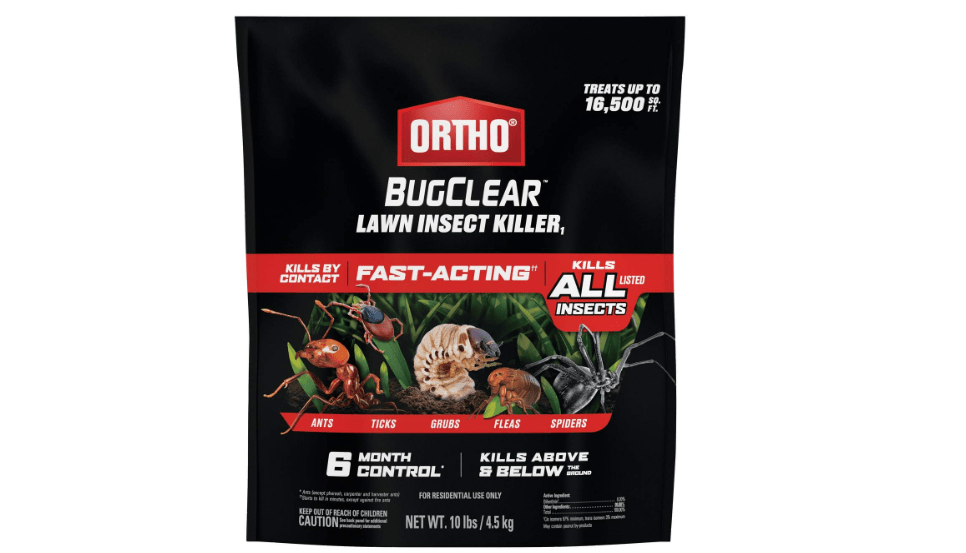
10. Best Preventive Treatment: Ortho BugClear Lawn Insect Killer
Product Description: Ortho BugClear is an accessible, effective residential insect killer designed to lay down a protective barrier around your home and across your lawn.
-
Price: $9.99
-
Key Features & Benefits: The liquid formula (Bifenthrin + Zeta-Cypermethrin) starts killing within minutes. It protects against 235 listed bugs and is safe to use across lawns, ornamentals, and home perimeters.
-
Pros & Cons:
-
Pros: Very affordable; dual active ingredients; fast-acting liquid format.
-
Cons: The 32 oz bottle only covers about 5,300 sq. ft. of lawn, meaning you may need multiple bottles for a large yard.
-
-
Amazon Ratings & Reviews: 4.3 – 4.4/5 Stars. Reviewers highlight the “ready-to-spray” convenience and rapid results, though some note the smaller coverage capacity per bottle.
-
Why It’s a Good Choice for St. Augustine: It makes for an excellent monthly or bi-monthly preventative spray to ensure chinch bugs never have the chance to establish a colony in your turf.
-
Ideal Use Case / Who Should Buy It: Homeowners with smaller St. Augustine lawns who want an easy, affordable, preventative maintenance spray.
V. Deep Dive: Common St. Augustine Grass Pests
To win the war, you have to know your enemy. St. Augustine grass is incredibly robust against foot traffic and heat, but its thick thatch is an insect paradise. Here are the “Big Three” you need to watch out for:
1. Southern Chinch Bugs
The undisputed #1 enemy of St. Augustine grass.
-
The Damage: They suck the sap out of the grass blades and inject a toxic saliva that stops water movement in the plant. The damage looks identical to severe drought stress—irregular yellow and brown patches in the hottest, sunniest parts of the yard.
-
How to Test (The Coffee Can Test): Cut both ends off a metal coffee can. Push it two inches into the soil at the edge of a dying patch of grass. Fill the can with water. If you have chinch bugs, they will float to the surface within 5 to 10 minutes.
2. Sod Webworms
-
The Damage: These caterpillars chew the edges of the grass blades, leaving them looking ragged, notched, and shorter than the rest of the lawn.
-
How to Spot Them: You will see small, tan moths flying low in a zigzag pattern over your lawn at dusk. The moths don’t damage the lawn, but they drop eggs that hatch into the destructive caterpillars.
3. White Grubs
-
The Damage: Grubs are beetle larvae that live in the soil and eat the root system of your grass. Without roots, the grass dies.
-
How to Spot Them: Your lawn will feel “spongy” underfoot. You can grab a handful of dead grass and pull it up easily, like lifting a loose piece of carpet. You may also notice an influx of raccoons or birds digging holes in your yard to eat them.
VI. Step-by-Step: How to Apply Insecticide on St. Augustine Grass
Applying the best insecticide for st augustine grass requires a bit of technique. Follow these steps to ensure total pest eradication:
-
Mow First: Cut your St. Augustine grass to its recommended height (usually 3 to 4 inches). This removes excess foliage and allows granular products to reach the thatch and soil more easily. Leave the clippings if you aren’t bagging weeds.
-
Check the Thatch: St. Augustine builds thick thatch (the dead organic layer between the soil and green blades). If your thatch is thicker than ¾ of an inch, insecticides will struggle to reach the soil. Consider liquid aeration or dethatching.
-
Apply Evenly:
-
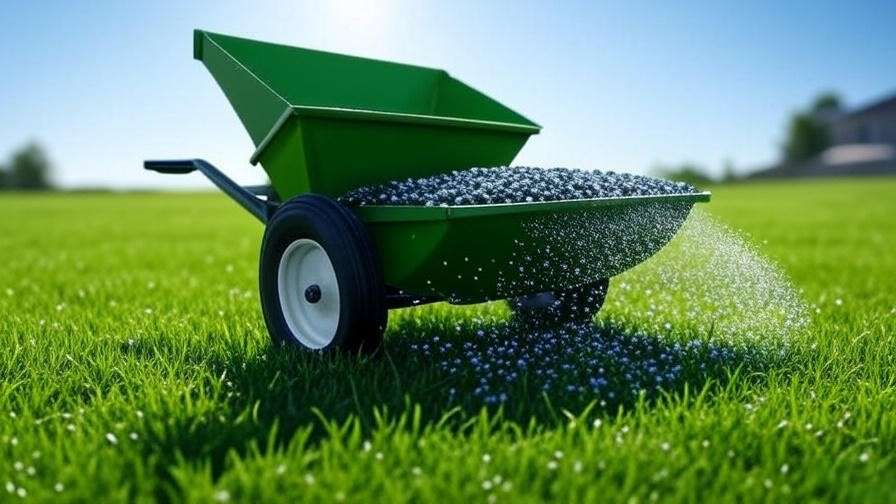
For Granules: Use a broadcast spreader. Walk at a steady pace and overlap your wheel tracks by a few inches to ensure there are no untreated “stripes” in the lawn.
-
For Liquids: Walk backward as you spray in a sweeping motion so you aren’t walking through the wet, chemically treated grass.
-
-
Water it In (Crucial): If you applied a granular insecticide, you must water the lawn immediately afterward with about 0.5 inches of water. This breaks down the granule and releases the chemical into the soil.
VII. Frequently Asked Questions
What is the best time of day to spray St. Augustine grass for bugs? The optimal time to apply liquid insecticides is either early in the morning or late in the evening. During these times, temperatures are cooler, wind speeds are lower, and the sun isn’t baking the chemicals off the grass blades. Spraying in the midday heat can cause the liquid to evaporate too quickly and may even burn your grass (phytotoxicity).
How long does it take for St. Augustine grass to recover from chinch bugs? It depends entirely on the severity of the damage. If caught early, slightly damaged, yellowing turf will recover within a few weeks with proper watering and a light fertilizer application. However, if the chinch bugs have turned the grass completely brown and crispy, that grass is dead. Because St. Augustine spreads via above-ground runners (stolons), healthy grass will eventually fill the dead patches back in, but massive dead zones may require fresh sod.
Can I apply insecticide and fertilizer at the same time? Yes, you can apply them at the same time, and many combination products (like Scotts SummerGuard) do exactly this. However, if applying them separately, ensure you check the labels. Generally, it is safe to put down a granular fertilizer and a granular insecticide on the same day, provided you water them both in properly.
VIII. Conclusion: The Final Verdict
Saving a St. Augustine lawn from a pest invasion can feel overwhelming, but with the right product, you can stop the damage almost immediately.
If you are dealing with a severe, active chinch bug infestation and want the absolute best professional-grade protection, the Bifen L/P Insecticide Granules are the undisputed winner. Its heavy sand-core formulation guarantees the chemical penetrates the thick St. Augustine thatch to kill pests where they hide.
If you are on a strict budget but still need reliable, broad-spectrum control, the Spectracide Triazicide Insect Killer provides incredible value and fast results.
Don’t wait until your beautiful green carpet turns into a brown wasteland. Choose the best insecticide for st augustine grass from our list above, follow the application steps, and reclaim your lawn today!