

You are having a peaceful morning, sipping your coffee and admiring your prized Echeveria or cascading Burro’s Tail, when suddenly, you spot it. Nestled deep within the tight crevices of the leaves are tiny, fluffy clusters that look exactly like bits of cotton candy or stray pieces of perlite. Panic immediately sets in.
If you are a houseplant parent, you already know that this white fluff spells trouble. You are looking at one of the most destructive and stubborn pests in the houseplant hobby. However, take a deep breath. When it comes to mealybugs on succulents: identification and removal are the two critical steps that will save your indoor garden from certain doom. In my years of tending to indoor jungles, rehabilitating nursery rescues, and battling every sap-sucking pest under the sun, I have learned that quick action is your best weapon.
This comprehensive guide will break down exactly what these invaders are, how to spot them before they multiply, and the exact, step-by-step expert protocols you need to banish them for good. Let’s save your succulents! 🦸♀️🪴
What Exactly Are Mealybugs? 🐛
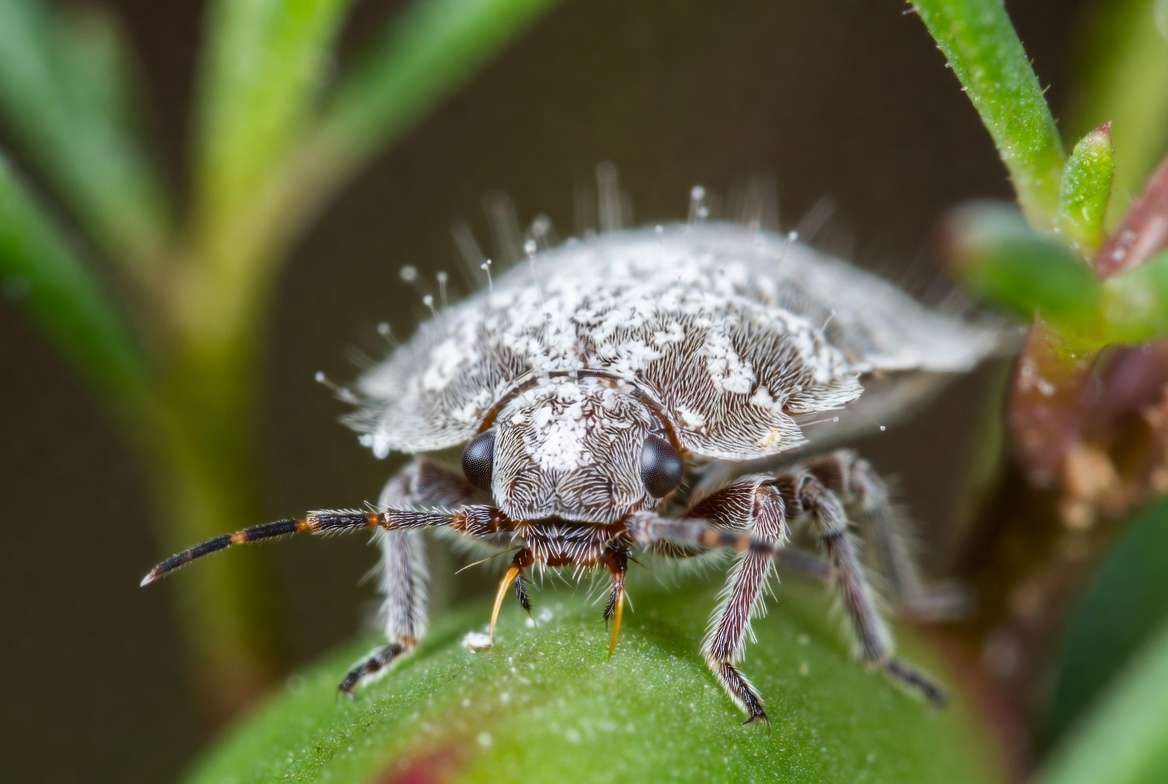
Before you can effectively destroy an enemy, you must understand it. Mealybugs belong to the Pseudococcidae family. Despite their fuzzy, innocuous appearance, they are highly destructive, unarmored scale insects that feed on the vital lifeblood of your plants: the plant sap.
The Anatomy of a Succulent Destroyer
Adult female mealybugs are small (about 1/16 to 1/8 inch long), oval-shaped, and incredibly slow-moving. What makes them so recognizable—and so difficult to eradicate—is their protective coating. As they mature, they secrete a powdery, waxy, white substance over their bodies. This waxy armor acts as a highly effective shield, making them naturally water-resistant and immune to many standard, weak chemical sprays.
Underneath that white fluff, they use specialized, syringe-like mouthparts to pierce the succulent’s plant tissue and drain its moisture and nutrients.
Why Do They Love Succulents So Much? 🤤
If you have a mixed collection of tropicals, aroids, and cacti, you might notice that these pests have a disproportionate obsession with your succulents. Why?
-
The All-You-Can-Eat Buffet: Succulents are evolved to store massive amounts of water and sugary sap in their fleshy leaves. To a sap-sucking pest, a plump Jade Plant (Crassula ovata) is practically a giant water balloon filled with food.
-
Perfect Hiding Spots: The tight rosettes of an Echeveria, the overlapping leaves of a Haworthia, and the dense stems of a Sedum provide the ultimate dark, protected crevices for these pests to lay their egg sacs (ovisacs) safely away from predators and the harsh sun.
Mealybugs on Succulents: Identification 🔍
Proper identification is the absolute foundation of our focus: mealybugs on succulents: identification and removal. Misidentifying a pest can lead to using the wrong treatment, which wastes time and allows the infestation to spread. Here is how to diagnose your plant with 100% accuracy.

Early Warning Signs You Shouldn’t Ignore ⚠️
By the time you see a massive colony of crawling white bugs, the infestation is already severe. Train your eyes to look for these early symptoms during your regular watering routine:
-
Cottony Webs in Leaf Nodes: Look at the exact point where the leaf meets the main stem. If you see tiny white wisps, you likely have a problem.
-
Honeydew and Stickiness: As these pests gorge on plant sap, they excrete a sticky, sugary waste product known as honeydew. If your succulent’s leaves or the pot itself feels inexplicably sticky, pests are present.
-
Sooty Mold: If honeydew is left on the plant, a black, powdery fungus called sooty mold will quickly colonize it. This mold blocks photosynthesis, further weakening the plant.
-
Distorted or Yellowing Leaves: New growth may emerge curled, stunted, or malformed. Older leaves may suddenly turn yellow, shrivel rapidly, or drop off at the slightest touch.
The “Cotton Swab” Test 🧪
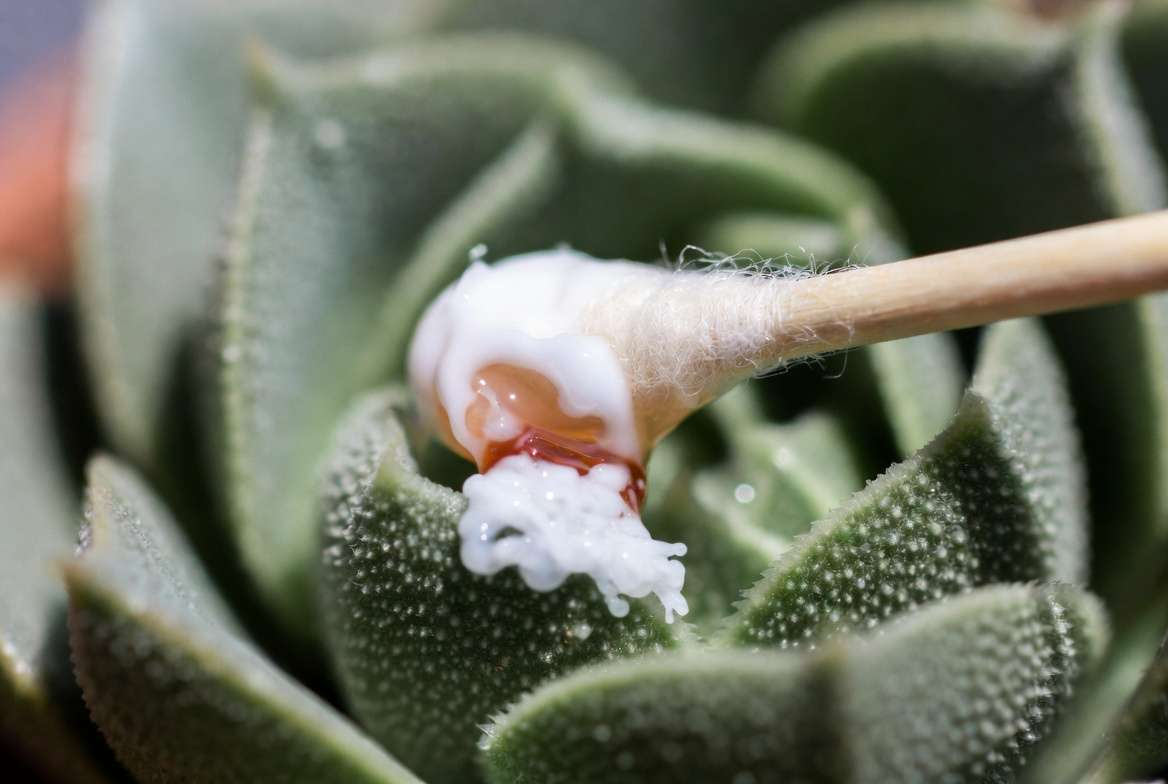
If you see white fluff but aren’t sure if it’s a pest, try the expert cotton swab test. Take a clean Q-tip or a wooden toothpick and gently poke or squish the white mass.
-
If it crumbles away like dust, it might be soil or perlite.
-
If it smears into a rusty-orange, reddish, or brownish color, it is a mealybug. That colored streak is the insect’s bodily fluid.
Look-Alikes: Is it Bugs, Mildew, or Natural Wax? 🕵️♀️
Do not immediately douse your plant in chemicals if you see white powder! Succulents have unique biological traits that can mimic pests.
-
Epicuticular Wax (Farina): Many succulents, such as Graptopetalum, Kalanchoe luciae, and various Echeveria species, produce a natural, chalky white powder called farina. This is a built-in sunscreen and water-repellent layer. Farina is evenly distributed across the leaf surface, whereas pests congregate in sticky, isolated, cotton-like clumps in the crevices.
-
Powdery Mildew: This fungal infection also looks like white powder, but it spreads in flat, circular, dusty patches across the flat surfaces of the leaves, rather than fluffy, three-dimensional cotton balls hidden in the joints.
How Do Succulents Get Mealybugs in the First Place? 🚪
A common frustration among indoor gardeners is the sudden appearance of pests in an otherwise closed environment. Where do they come from?
-
Nursery Hitchhikers (The #1 Culprit): The vast majority of indoor infestations begin the day you bring a new plant home. Greenhouses are perfect breeding grounds for pests. A single pregnant female hiding in the root system of a new purchase can quickly colonize your entire shelf.
-
Contaminated Tools and Pots: Reusing old, unsterilized soil or using the same pair of pruning shears on an infected plant and then a healthy one can transfer microscopic crawlers (juvenile mealybugs).
-
Summering Outdoors: If you give your succulents a summer vacation on your patio to soak up the sun, they are exposed to the natural ecosystem. When you bring them back indoors for winter, you bring nature inside with them.
The Ant Connection (A Symbiotic Nightmare) 🐜
Here is a vital piece of expert insight: if you see ants marching around your succulents, you almost certainly have a mealybug or aphid problem. Ants and mealybugs share a mutually beneficial, symbiotic relationship. The ants crave the sweet honeydew the pests secrete. In exchange, the ants act as bodyguards. They will fiercely protect the pests from natural predators (like ladybugs) and will actively carry mealybugs to new, healthy plants to start fresh “farms.” If you want to cure the succulent, you must also eliminate the ants!

Mealybugs on Succulents: Removal Guide (Step-by-Step) ⚔️
When it comes to effectively managing mealybugs on succulents, identification and removal go hand in hand. Once you have positively identified the white fuzz as an active pest colony, you must act immediately. Because mealybugs breed rapidly, a minor issue can become a lethal infestation in a matter of weeks.
Here is the exact, expert-tested protocol to safely and effectively eradicate these pests from your beloved plants.
Step 1: Immediate Quarantine 🛑
The very first thing you must do—before you even reach for a spray bottle—is isolate the infected plant. Move it to a separate room, far away from your other houseplants. Mealybug crawlers (the juvenile stage) are incredibly tiny and can easily travel across a windowsill or be blown by a ceiling fan to neighboring plants. Treat the infected succulent as highly contagious.
Step 2: The 70% Isopropyl Alcohol Method (The Gold Standard) 🧴
For mild to moderate infestations, rubbing alcohol is your absolute best friend. Remember that protective, waxy white armor mealybugs wear? Water and mild sprays simply bead up and roll right off it. Isopropyl alcohol, however, acts as a solvent. It instantly melts through their waxy coating, killing the insects on contact by drying them out.
-
For Spot Treatments: Dip a Q-tip or cotton swab into 70% isopropyl alcohol. Gently dab directly onto the white fuzz and the visible bugs. You will see them instantly turn a rusty brown/red color and die. Wipe them away.
-
For Heavy Infestations: Fill a fine-mist spray bottle with 70% isopropyl alcohol. Lightly spray the entire plant, making sure to get into the tight leaf nodes where the stem meets the leaves.
-
⚠️ Crucial Safety Warning: Never place a succulent in direct sunlight or under strong grow lights while the leaves are wet with alcohol. The liquid amplifies the light and will cause severe chemical burns to the plant tissue. Always treat your plants in the evening or in a shady spot and let the alcohol evaporate completely (which only takes a few minutes) before returning them to the light.
Step 3: Natural and Organic Sprays 🌿
If you prefer a more systemic organic approach, or if the infestation covers a large surface area, horticultural oils and soaps are excellent secondary defenses.
-
Neem Oil: Cold-pressed neem oil is a fantastic natural insecticide. It contains Azadirachtin, an active compound that disrupts the pest’s hormones, preventing them from feeding, molting, and reproducing. Mix neem oil with water and a tiny drop of pure castile soap (as an emulsifier) according to the bottle’s dilution rates. Spray the plant thoroughly in the evening.
-
Insecticidal Soap: These specially formulated potassium-salt soaps work by penetrating the insect’s outer shell and suffocating them. They are gentle on the plant but lethal to soft-bodied insects.
Expert Tip: You cannot treat just once! Mealybug eggs hatch over a period of days to weeks. You must repeat your alcohol or neem oil treatments every 5 to 7 days for at least a month to break their lifecycle entirely.
Step 4: Systemic Pesticides for Severe Infestations ☢️
Sometimes, despite your best organic efforts, a stubborn infestation keeps coming back. This is where systemic pesticides come into play as the “nuclear option.”
Unlike sprays that must touch the bug to kill it, systemic granules (often containing Imidacloprid) are sprinkled onto the potting mix and watered into the soil. The succulent’s root system absorbs the pesticide, drawing it up into the foliage. When the mealybug bites into the leaf to drink the sap, it ingests the poison and dies. Systemics provide long-lasting, internal protection, making them ideal for massive succulent collections where manual spraying is impossible. (Note: Avoid using systemics on plants that flower heavily outdoors, as they can harm beneficial pollinators like bees).
The Hidden Threat: Root Mealybugs 🪴
If your succulent is wilting, wrinkling, and refusing to take up water—even though you see no bugs on the leaves—you might be facing root mealybugs.
Root mealybugs are a subterranean nightmare. They live entirely beneath the soil, feeding on the delicate root hairs. If you unpot the plant, you will see a white, powdery, ash-like substance clinging to the roots and the inside of the nursery pot.
How to Treat Root Mealybugs:
-
Remove the plant from its pot and throw away all the contaminated soil immediately (do not compost it).
-
Wash the root system vigorously under running water until perfectly clean.
-
Dip the entire root system in a bath of warm water and insecticidal soap, or briefly swish them in a diluted rubbing alcohol solution.
-
Allow the plant to air-dry completely in a shady spot for a day or two.
-
Repot in a brand-new, sterilized pot using fresh, well-draining succulent soil.
Expert Plant Care Tips: How to Prevent Future Infestations 🛡️
Treating pests is exhausting. Preventing them is a breeze. Implement these expert habits to ensure your indoor garden remains a mealybug-free zone.
-
The 14-Day Quarantine Rule: Never trust a nursery! Whenever you buy a new succulent, isolate it in a separate room for at least 14 days. Inspect it closely multiple times before introducing it to your main collection.
-
Optimize Airflow and Watering: Pests thrive in stagnant, humid environments where plants are crammed too closely together. Succulents need excellent airflow. Furthermore, overwatering weakens the root system and causes cellular stress, making the plant a prime target for opportunistic pests. Let your potting mix dry out completely between waterings!
-
Routine Inspections: Catching pests early is half the battle. Make a habit of closely inspecting the leaf crevices, undersides of leaves, and flower stalks every time you water your plants.
-
Keep Your Plant Resilient: A robust, thriving plant is naturally less susceptible to severe pest damage. Provide ample bright light, proper drainage, and occasional balanced fertilizer during the growing season.
Frequently Asked Questions (FAQs) 🤔
Can mealybugs live without a host plant? Yes, but only for a short time. Mealybug crawlers can survive for a few weeks hiding in the crevices of windowsills, the undersides of pots, or in spilled soil while they search for a new host. This is why thoroughly washing the area where an infected plant sat with soapy water is a crucial step in eradication.
Are mealybugs harmful to humans or pets? No. While they are incredibly annoying and destructive to your houseplants, mealybugs do not bite humans, nor are they toxic or dangerous to cats, dogs, or other household pets.
Should I just throw away a succulent with a heavy mealybug infestation? Honestly, sometimes the answer is yes. If you have a severely infested, common succulent that only cost $5, and placing it next to your rare, $200 Monstera albo or prized Agave collection poses a massive risk, the most strategic choice is to throw the infested plant away. Pest management is about triage.
Will regular liquid dish soap kill mealybugs? While a drop of dish soap (like Dawn) mixed with water can technically break surface tension and suffocate pests, dish detergents are formulated to strip grease and oils. They can easily strip the protective natural wax (farina) right off your succulents, damaging the leaves permanently. It is much safer to use pure, organic castile soap or a commercial insecticidal soap designed specifically for plants.
Conclusion: Reclaiming Your Succulent Garden 🌻
Discovering white, sticky fuzz on your favorite plant is disheartening, but it is not a death sentence. By mastering the art of mealybugs on succulents: identification and removal, you are empowering yourself with the fundamental skills every true plant enthusiast eventually learns.
Remember: the keys to victory are catching the infestation early, isolating the plant immediately, utilizing the rubbing alcohol method to destroy the waxy adults, and repeating your treatments consistently to break the breeding cycle. It takes patience, but seeing your succulent bounce back with vibrant, pest-free new growth is incredibly rewarding.
You’ve got this! Don’t let these fuzzy little vampires ruin your indoor jungle.
💬 Now it’s your turn! Have you ever battled the dreaded mealybug? What was your go-to home remedy, or did you have to resort to the heavy-duty systemics? Share your plant rescue stories in the comments below to help out your fellow succulent lovers! And don’t forget to bookmark this page the next time you spot something suspicious in your plant’s leaves. Happy growing! ✨🪴











