
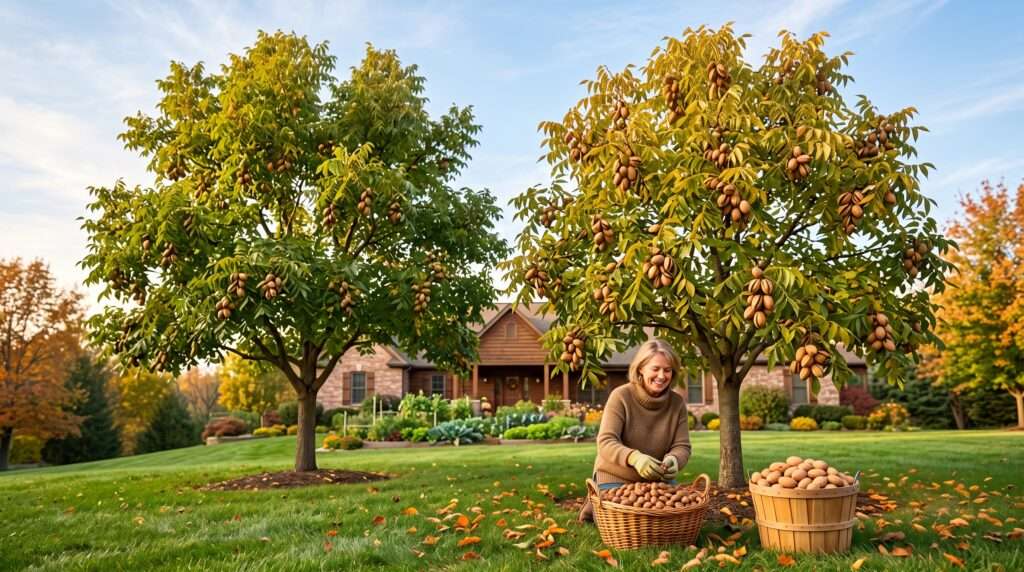
Planting a pecan tree is a generational investment that transforms your landscape and provides an abundance of nutrient-dense nuts for decades. However, the path to a thriving backyard orchard is filled with botanical pitfalls. Most homeowners unknowingly purchase standard commercial varieties from big-box stores, only to spend the next twenty years battling fungal diseases and experiencing barren harvests. Finding the best pecan tree for your specific yard requires looking beyond the glossy nursery tags and understanding the critical balance between genetic disease resistance and cross-pollination. You do not need to be a commercial farmer armed with industrial chemical sprayers to secure a massive harvest. By selecting the right high-yield, disease-resistant cultivars, your legacy tree will thrive with minimal intervention.
Why Choosing the Right Variety is Crucial for Backyard Growers 🌱
The difference between a frustrating lawn ornament and a highly productive nut tree comes down to genetics. Backyard growers face entirely different challenges than commercial orchards, making cultivar selection the single most important decision in your planting journey.
The Silent Killer: Pecan Scab
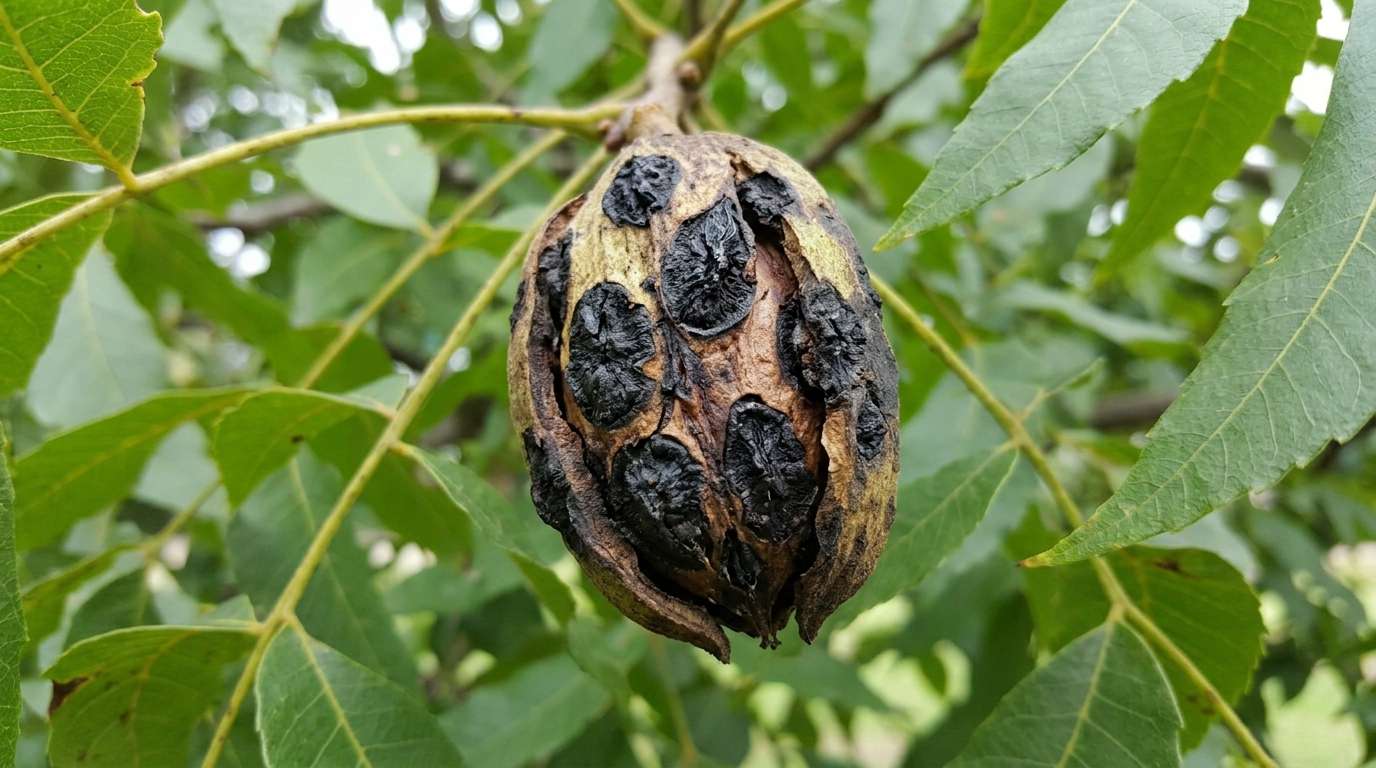
Pecan scab (Venturia effusa) is the most destructive disease affecting pecan trees across North America, particularly in humid regions like the Southeast. This aggressive fungus thrives in moisture, attacking rapidly growing tissues on leaves, twigs, and most importantly, the developing nut shucks. When a susceptible tree is infected early in the season, the nuts turn completely black, shrivel, and drop from the tree prematurely. Even late-season infections severely stunt nut growth and ruin the kernel quality.
Commercial pecan farmers routinely plant highly susceptible, large-nut varieties (like ‘Desirable’ or ‘Stuart’) because they possess massive, tractor-pulled air-blast sprayers. These commercial operations spray expensive, heavy-duty fungicides every 10 to 14 days throughout the growing season. A home grower with a 60-foot tree has no practical or safe way to achieve this canopy coverage. Therefore, genetic scab resistance is the absolute, non-negotiable priority for a backyard orchard. A highly resistant tree naturally repels the fungus, allowing you to harvest pristine, healthy nuts without toxic chemical regimens.
The Pollination Puzzle: Type I vs. Type II
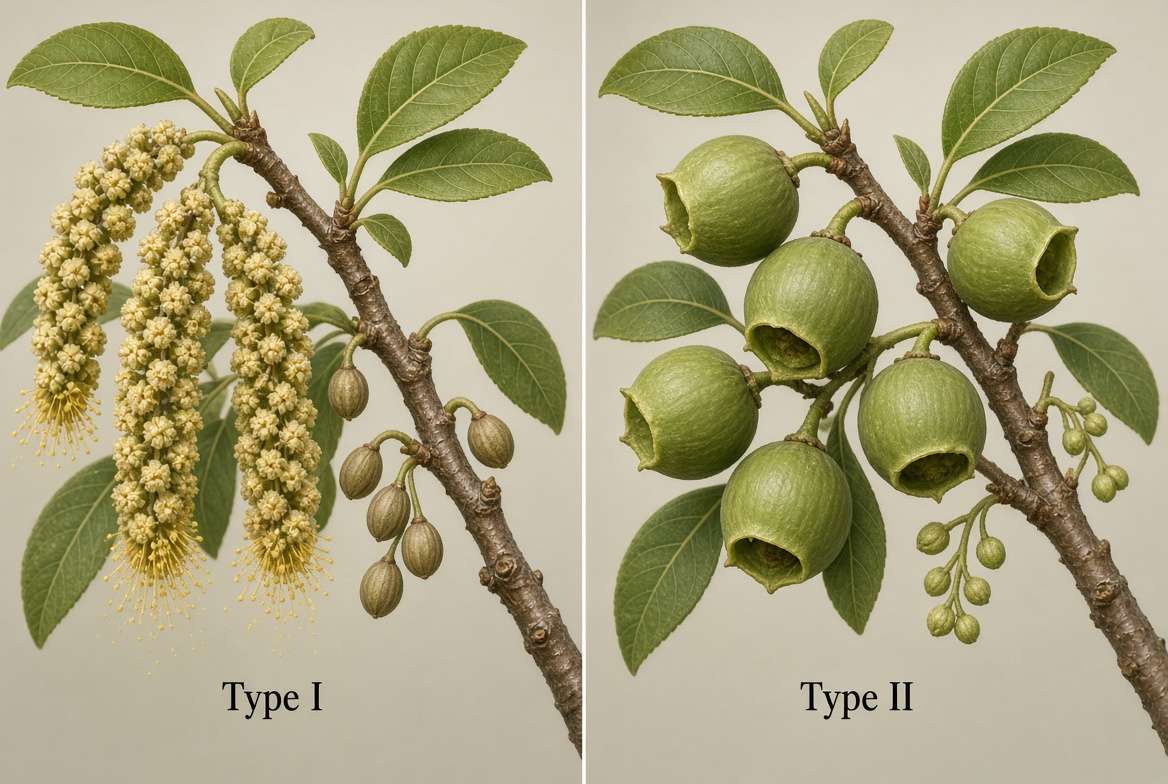
Pecan trees possess a fascinating botanical quirk that often leaves first-time growers confused when their healthy tree fails to produce nuts. Pecans are monoecious, meaning a single tree produces both male flowers (catkins, which shed pollen) and female flowers (nutlets, which receive pollen). However, they are also dichogamous—the male and female flowers on the same tree do not mature at the same time. This evolutionary trait prevents self-pollination.
To ensure a harvest, you must understand the two distinct flowering types:
-
Type I (Protandrous): These trees shed their pollen early in the spring before their own female flowers are receptive.
-
Type II (Protogynous): These trees produce receptive female flowers early, before their own male catkins shed pollen.
The Golden Rule of Pecan Planting: You must plant at least one Type I tree and one Type II tree within 150 feet of each other. Wind carries the pollen from the Type I catkins directly to the receptive Type II female flowers, and vice versa. Without a compatible cross-pollinator nearby, your tree will produce a fraction of its potential yield, often yielding empty shells or nothing at all.
Top Disease-Resistant Pecan Trees for Home Orchards 🛡️
When selecting trees for a low-maintenance, high-reward backyard setting, agricultural extension offices from universities like UGA and UF/IFAS heavily recommend the following scab-resistant cultivars.
Elliott (Type II)
Discovered in the Florida panhandle in the early 1900s, ‘Elliott’ remains the undisputed gold standard for pecan scab resistance. It is highly recommended for residential planting across the Deep South.
-
Pros: The ‘Elliott’ tree naturally shrugs off scab and other common leaf diseases, maintaining a lush, dark green canopy all summer. While the nuts are on the smaller side, they are teardrop-shaped and pack an exceptionally high oil content, resulting in a rich, buttery flavor that is highly sought after by culinary experts. Once established, it is remarkably drought-tolerant.
-
Cons: It is a slow starter. ‘Elliott’ can take 8 to 10 years to begin bearing significant fruit, testing the patience of eager growers. It is also susceptible to late spring freezes, making it best suited for USDA Hardiness Zones 7b through 9.
Excel (Type II)
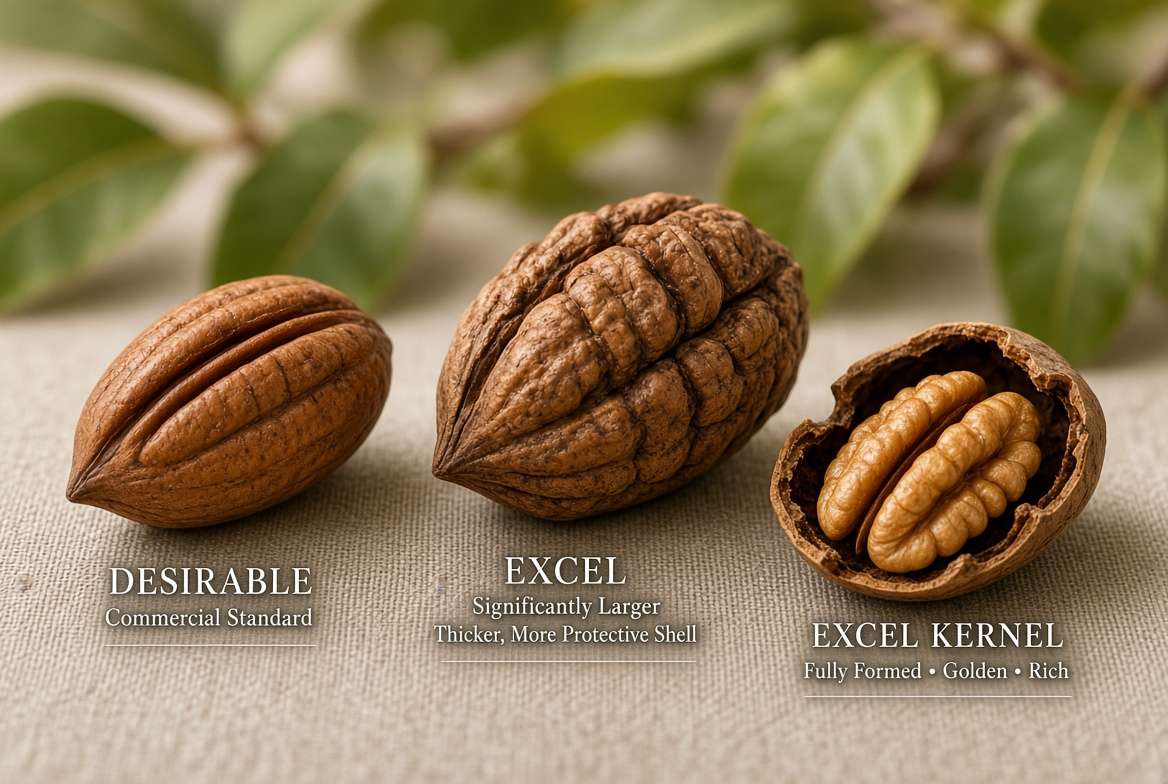
Patented in Georgia, ‘Excel’ is a powerhouse cultivar specifically bred to solve the problems of the modern home grower, offering a rare combination of large nut size and formidable disease resistance.
-
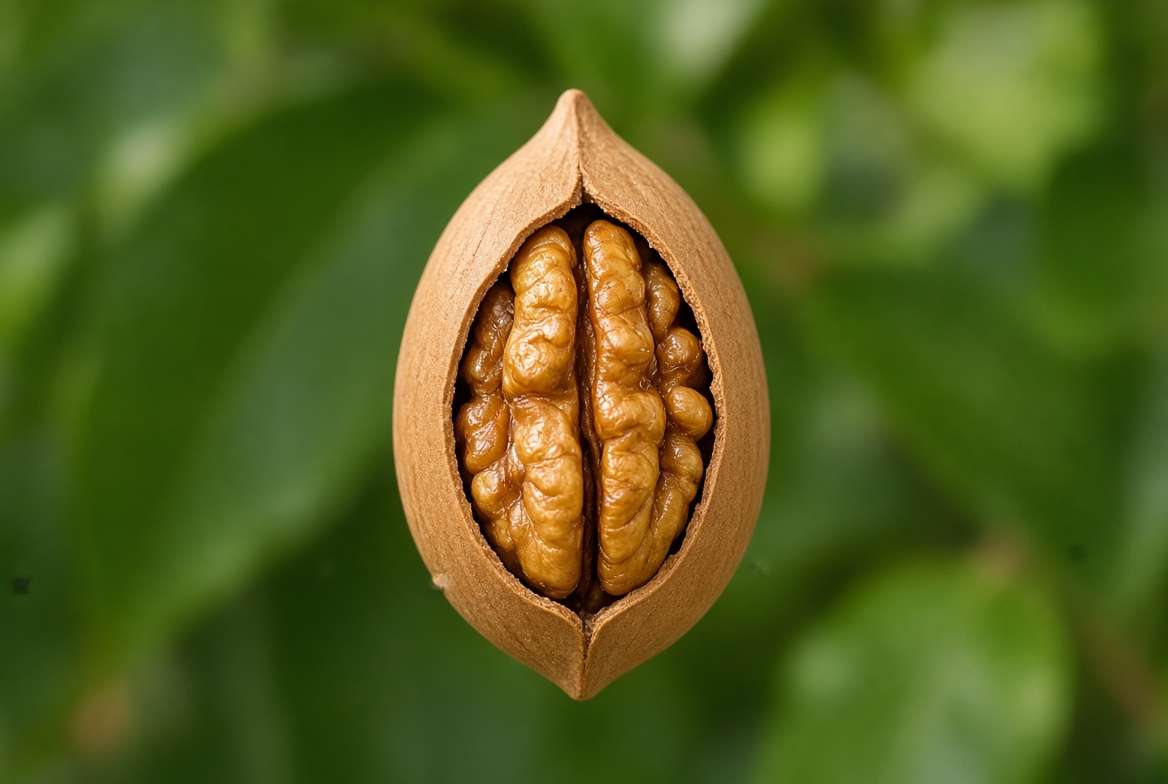
Pros: ‘Excel’ produces massive nuts that rival the biggest commercial varieties, yet it maintains exceptional, near-immune resistance to pecan scab. The tree forms a strong, visually appealing branch structure. Notably, the ‘Excel’ nut features a thicker outer shell, which acts as a natural armor against common pests like crows, blue jays, and pecan weevils, protecting your harvest until it drops.
-
Cons: The thicker shell means ‘Excel’ requires a sturdy nutcracker, making it slightly more laborious to shell by hand compared to paper-shell varieties.
Gafford (Type I)
Discovered as a chance seedling in Alabama, ‘Gafford’ has rapidly gained popularity in the nursery trade specifically for the backyard market due to its rugged adaptability.
-
Pros: ‘Gafford’ boasts outstanding, nearly bulletproof resistance to pecan scab and an array of foliage pests. It is a highly vigorous, fast-growing tree that establishes itself quickly in a variety of soil types. It serves as an exceptional, pollen-heavy Type I pollinator for prized Type II trees like ‘Elliott’ and ‘Excel’.
-
Cons: The nut yield is considered moderate compared to commercial giants, and the kernel quality can decline if the tree is subjected to severe, prolonged drought without supplemental irrigation.
Kanza (Type II)
Developed by the USDA breeding program, ‘Kanza’ is the ultimate problem-solver for growers living in colder, more northern climates who traditionally struggle to grow pecans.
-
Pros: ‘Kanza’ is extremely cold-hardy, thriving beautifully in USDA Zones 6 and 7 (reaching as far north as Pennsylvania and the Midwest). It exhibits phenomenal scab resistance and drops its nuts very early in the autumn season, which allows growers to harvest before late-season pests and early frosts can ruin the crop. The kernel is brilliantly golden and halves perfectly when cracked.
-
Cons: The nut size is strictly medium to small. However, what it lacks in size, it completely makes up for in shell-out percentage and impeccable flavor.
The High-Yield Heavyweights (Best for Maximum Nut Production) 🧺
While extreme disease resistance is the most critical factor for humid climates, some backyard growers live in drier, arid regions (like Texas, New Mexico, or Oklahoma) where pecan scab is naturally suppressed by low humidity. Other growers are simply willing to put in a little extra maintenance in exchange for massive, paper-shell nuts. For those prioritizing sheer size and heavy crop loads, these heavyweights are the top contenders.
Pawnee (Type I)
‘Pawnee’ is arguably the most famous modern pecan variety, renowned for revolutionizing early-season nut production. It is a staple in western commercial orchards and a favorite for eager home growers.
-
Pros: ‘Pawnee’ is highly precocious, meaning it begins bearing nuts at a much younger age than heirloom varieties (often within 4 to 5 years after planting). The nuts are famously huge, featuring a paper-thin shell that can easily be cracked by hand. Furthermore, the nuts mature and drop in late September or early October, allowing you to harvest well before the holiday baking season.
-
Cons: It is highly susceptible to pecan scab. If you live in the humid Southeast (Georgia, Alabama, Florida, Louisiana), do not plant ‘Pawnee’ unless you are prepared to hire a professional tree service for intensive fungicide spraying. However, if you live in a dry climate with low humidity, ‘Pawnee’ is an elite, high-yield choice.
Sumner (Type II)
Discovered in Tift County, Georgia, ‘Sumner’ is an excellent compromise tree for the homeowner who wants commercial-sized nuts without completely sacrificing disease resistance.
-
Pros: ‘Sumner’ offers a fantastic balance. It produces large, beautiful nuts with excellent kernel quality and yields consistently heavy crops year after year. Unlike many large-nut varieties, ‘Sumner’ holds its own relatively well against pecan scab, making it a viable option for Southern yards where the grower might only apply minimal, low-impact preventative sprays.
-
Cons: Its primary weakness is a susceptibility to black pecan aphids late in the summer. These pests can cause the tree’s foliage to develop yellow, blocky spots and drop prematurely if left completely unchecked. It also drops its nuts quite late in the season (often mid-to-late November).
Pairing Your Trees: The Ultimate Pollination Cheat Sheet 🐝
Choosing the best pecan tree is only half the battle; pairing it correctly guarantees the harvest. Remember, cross-pollination between a Type I and Type II tree increases your yield exponentially. To make your nursery shopping foolproof, here are the absolute best backyard combinations tailored to specific growing goals.
| Backyard Goal | Type I Pollinator (Male First) | Type II Pollinator (Female First) | Why This Pair Works |
| The Bulletproof Pair (Humid South) | Gafford 🌳 | Excel 🌳 | Both varieties boast near-immune scab resistance. Gafford’s heavy pollen drop perfectly overlaps with Excel’s receptive blooms, guaranteeing a robust harvest with zero fungicide. |
| The Cold-Hardy Pair (Zones 6-7) | Major ❄️ | Kanza ❄️ | ‘Major’ is a highly resilient, early-maturing Type I that thrives in northern climates. Paired with ‘Kanza’, this duo easily survives harsh winters and produces exceptional, round nuts. |
| The Heirloom Flavor Pair | Amling 🥧 | Elliott 🥧 | ‘Amling’ is a beautiful, scab-resistant Type I shade tree with high-quality kernels. Paired with the buttery, oil-rich ‘Elliott’, this combo produces the best-tasting nuts for culinary use. |
| The High-Yield Arid Pair (Texas/West) | Pawnee 🤠 | Wichita 🤠 | In dry, scab-free climates, this commercial-grade pairing produces an avalanche of massive, paper-shell nuts early in the season. (Not recommended for the Southeast). |
Essential Planting & Care Tips for Maximum Yield 🚜
Even the best genetics require proper horticultural care during their formative years. Setting your trees up for success in the first three seasons dictates their production capacity for the next century.
Space Them Out!
It is incredibly easy to underestimate the mature size of a grafted pecan tree when you bring it home in a 5-gallon bucket. Pecans are apex canopy trees that will eventually reach heights of 70 to 100 feet, with a canopy spread just as wide. If trees are planted too closely together, they will eventually shade each other out, severely reducing nut production on the lower branches. Plant your trees a minimum of 60 to 80 feet apart. If you have a smaller yard, plant your primary tree on your property and coordinate with a neighbor to plant the cross-pollinating variety in their yard.
The Secret Ingredient: Zinc
Pecan trees are notoriously heavy feeders of zinc, a micronutrient essential for their growth. A zinc deficiency manifests as “pecan rosette”—a condition where the new leaves become curled, yellowish, and stunted, forming tight clusters (rosettes) at the tips of the branches. A tree suffering from severe rosette will absolutely not produce nuts. Because soil alkalinity often locks up natural zinc, backyard growers must intervene. Apply foliar zinc sprays (sprayed directly onto the expanding leaves) during the early spring flush, or apply soil-based zinc sulfate if your soil pH allows for root uptake.
Watering Needs for Young Trees
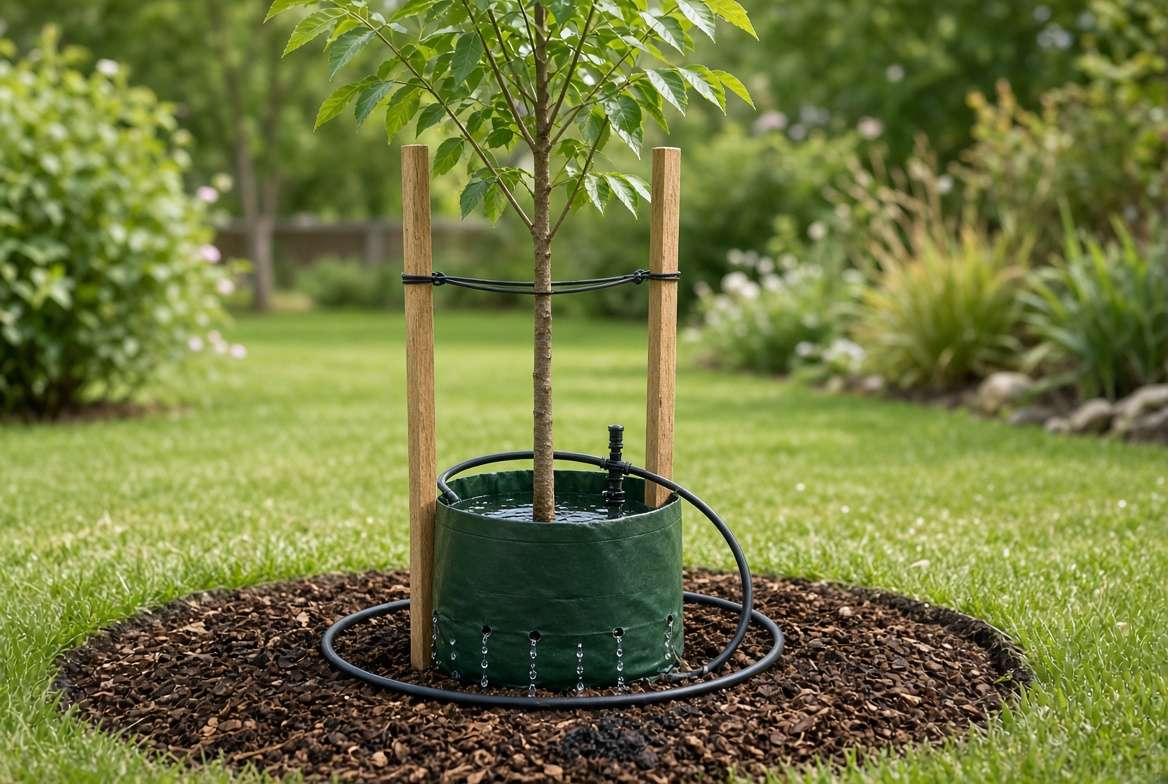
Drought is the enemy of a young orchard. A newly planted pecan tree has a highly compromised root system and requires deep, consistent hydration to establish its taproot. Young trees require 10 to 15 gallons of water per week during the heat of the summer. Do not rely on brief lawn sprinkler cycles, which only wet the top inch of soil. Use a slow-drip hose or a tree-watering bag to deliver deep hydration. Expert Tip: If a mature tree experiences severe drought in August (during the “water stage” of nut development), it will abort the crop and drop its nuts to save itself. Consistent late-summer watering equals full, plump kernels.
Frequently Asked Questions (FAQs) ❓
How long does it take for a pecan tree to produce nuts?
If you purchase a grafted tree from a reputable nursery, you can expect to see your first light crop in 6 to 10 years, depending on the cultivar (varieties like ‘Pawnee’ are faster; ‘Elliott’ is slower). Never plant a pecan from a seed (a seedling tree) unless you have extreme patience; seed-grown trees can take 15 to 20 years to produce, and the resulting nuts will be a genetic gamble, rarely matching the quality of the parent tree.
Can I plant just one pecan tree?
Yes, but it is highly discouraged. While a single tree will eventually produce a few nuts via minimal self-pollination or wind-blown pollen from a neighbor’s tree miles away, it will only yield about 15% to 20% of its true capacity. For a worthwhile harvest, always plant a Type I and a Type II tree.
When is the best time to plant a pecan tree?
The ideal window depends on the type of tree you purchase. Bare-root trees (which are entirely dormant and shipped without soil) must be planted in the dead of winter, typically January or February. Container-grown trees have a wider planting window and can be planted in early spring or late fall, allowing the roots to establish before the blistering summer heat arrives.
Why are the pecans on my tree turning black and dropping early?
If the shucks turn black and drop in early to mid-summer, your tree is heavily infected with pecan scab. If the nuts drop later in the summer and you notice a perfect, BB-sized hole drilled into the shell, you are dealing with the pecan weevil. Weevils lay their eggs inside the developing nut, and the grub eats the kernel before chewing its way out.
Your Legacy Tree Awaits 🍂
Selecting the best pecan tree for your property does not have to be a gamble. By prioritizing genetic disease resistance over sheer nut size, you eliminate the need for industrial chemical sprays and ensure a healthy, thriving canopy. Whether you choose the bulletproof ‘Excel’, the cold-hardy ‘Kanza’, or the rich, buttery ‘Elliott’, pairing your selection with the proper cross-pollinator guarantees a bountiful harvest. Before you dig your first hole, take the time to run a basic soil test through your local county extension office to check your pH and baseline zinc levels. With a little upfront planning, correct spacing, and diligent watering, you are not just planting a tree—you are anchoring a living legacy that will feed generations to come. What USDA hardiness zone are you planting in, and which variety are you leaning toward?











