
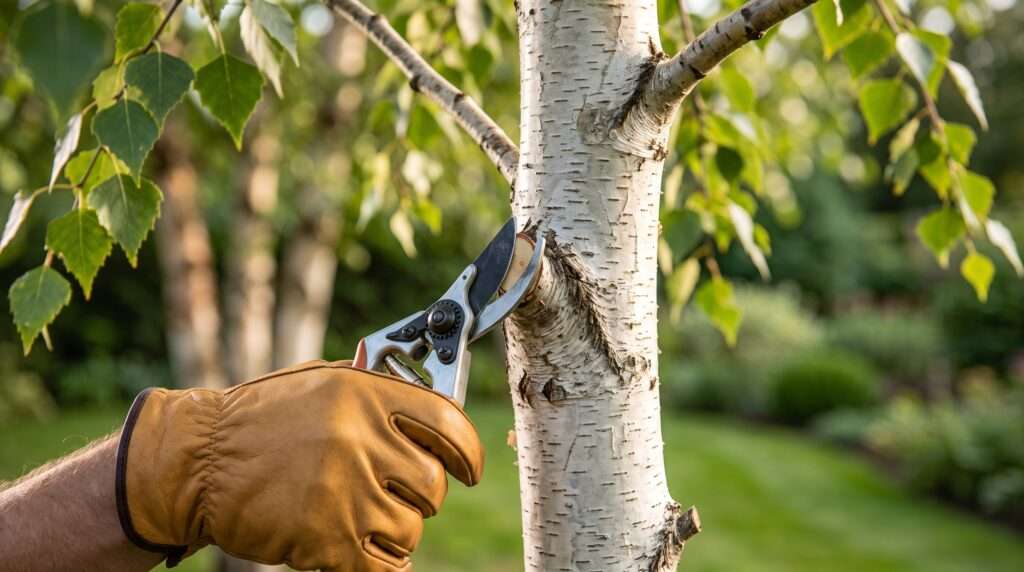
Imagine stepping into your landscape on a crisp, beautiful spring morning, armed with a freshly sharpened pair of pruning shears. You notice your beloved River Birch looks a bit unruly, so you decide to trim a few rogue birch tree branches to improve the canopy shape. You make the cuts, step back to admire your work, and suddenly notice something horrifying: the tree is “crying.” Gallons of sticky sap begin pouring from the wounds, running down the stunning peeling bark and pooling at the trunk’s base.
This is the nightmare scenario for many well-intentioned homeowners. Birch trees (Betula species) are uniquely majestic, prized for their papery bark, graceful structure, and vibrant autumn foliage. However, their internal biology makes them incredibly sensitive to pruning at the wrong time of year. Cutting into a birch during its active sap flow period doesn’t just create an unsightly, sticky mess; it severely stresses the tree, depletes vital energy reserves, and sends out a chemical distress signal that attracts deadly pests and fungal pathogens.
Drawing on certified arborist best practices and arboricultural science, this comprehensive guide will walk you through exactly how, when, and why to prune your birch trees. Whether you are dealing with a classic White Birch, a weeping variety, or a robust River Birch, mastering the correct timing and technique will keep your tree structurally sound, disease-free, and thriving for decades. 🍃
🩸 Why Do Birch Trees Bleed? Understanding Sap Pressure
To understand why timing is everything, you have to look beneath the bark. Unlike many common landscape trees that passively pull water upward through transpiration (water evaporating from the leaves), birches rely on a powerful mechanism called root pressure.
The Spring Upward Surge 🌊
Along with maples and walnuts, birch trees are classified as “bleeder” trees. In late winter and early spring, as the ground thaws and temperatures begin to rise, the tree’s root system actively pumps water and stored sugars upward through the xylem tissue. This high-pressure system is essential to push nutrients out to the branch tips, allowing the buds to swell and leaves to unfurl.
The Danger of Sap Loss ⚠️
When you sever a branch during this high-pressure window, the tree has no mechanism to immediately seal the wound. The sap simply pushes out of the open cut. While a healthy, mature birch rarely dies from sap loss alone, the secondary consequences are severe:
-
Energy Depletion: The sugars pouring out of the tree were meant to fuel spring growth. Losing them stunts the tree’s development for the entire growing season.
-
Pathogen Invitation: Sugary, wet sap is the perfect breeding ground for airborne fungal spores, particularly Botryosphaeria and Cytospora canker, which cause dieback and wood decay.
-
Pest Attraction: The scent of flowing sap alerts wood-boring insects that the tree is stressed and vulnerable.
💡 Arborist Insight: A single improper flush cut on a two-inch branch in April can literally leak for weeks, robbing the tree of critical carbohydrates and stunting its canopy growth for the entire year.
🍂 The Golden Rule: Exactly When to Prune Birch Tree Branches
If there is one takeaway from this guide, let it be this: timing dictates the survival of your birch.
🚫 The Absolute Worst Times to Prune: Late Winter to Late Spring
From February through June (depending on your specific hardiness zone), do not touch your birch tree with a pruning saw. During this time, the root pressure is at its absolute peak. Even small twig removal can trigger heavy bleeding. Wait until the tree is fully leafed out and the leaves have hardened off (matured and thickened) for the summer.
✅ The Safest Window: Late Summer to Early Autumn
The optimal time to prune your birch is late summer through early fall (typically mid-August through October). This window represents the “dormant paradox” of birch care. By late summer, the intense spring root pressure has subsided because the fully formed leaves take over the job of pulling water upward through transpiration. Furthermore, the tree is beginning to prepare for winter dormancy, naturally slowing its fluid transport. Wounds made during this time heal rapidly and dry cleanly without weeping.
🩹 The Exception: The 3 Ds (Dead, Damaged, Diseased)
There is exactly one exception to the seasonal pruning rule. If you identify branches that fall into the “3 Ds” category:
-
Dead: Branches that lack foliage, are brittle, or have peeling bark exposing brown wood.
-
Damaged: Branches broken by wind, ice storms, or heavy snowfall.
-
Diseased: Branches showing severe cankers, fungal brackets, or abnormal, stunted growth.
These branches pose an immediate safety risk to your property and the tree’s structural integrity. Because dead wood has no active vascular tissue, removing a completely dead branch will not cause sap bleed. Damaged branches must be removed promptly to prevent tearing the bark further down the trunk.
🛠️ Essential Toolkit for Safe Birch Pruning
Attempting to trim a birch with dull or improper tools will result in jagged, crushed cuts that the tree cannot easily compartmentalize (heal over). A clean, precise cut is your first line of defense against disease.
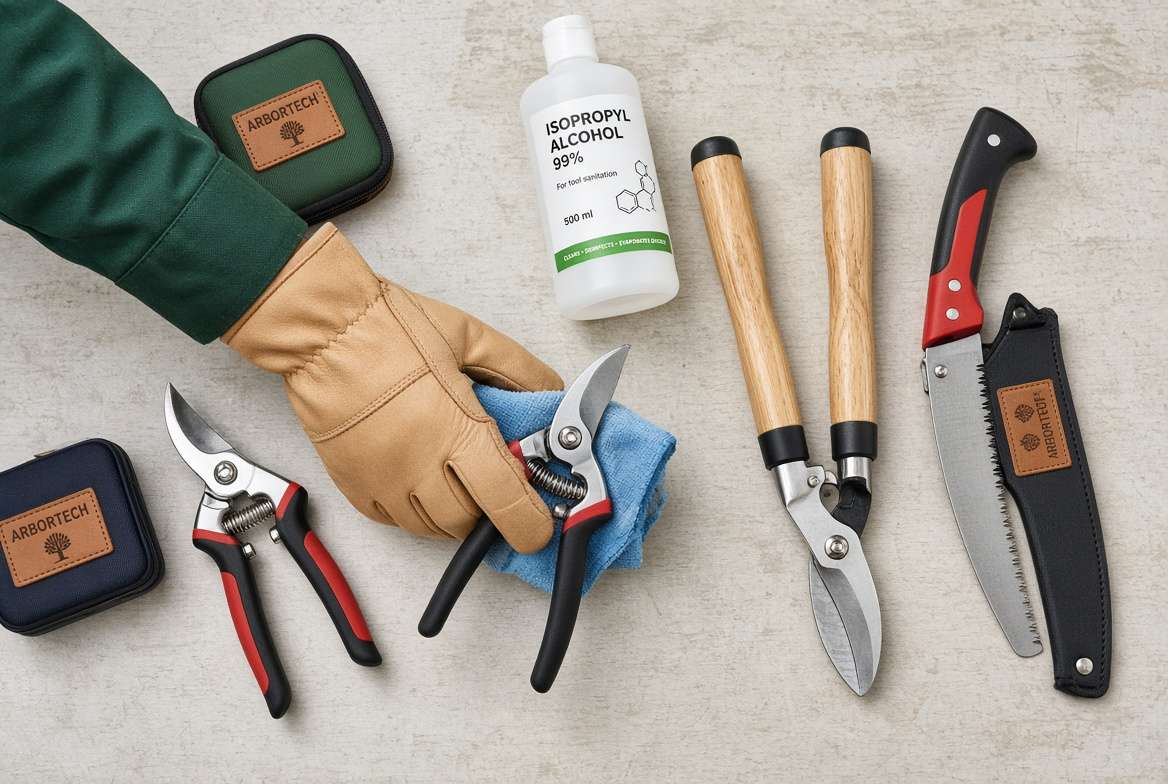
The Right Tools for the Right Branch 🧰
-
Bypass Pruners (Hand Shears): Essential for small twigs, water sprouts, and branches under ½ inch in diameter. Bypass pruners work like scissors, providing a clean slice. Avoid “anvil” style pruners, which crush the plant tissue.
-
Loppers: Designed for medium branches ranging from ½ inch to 1.5 inches. The long handles provide the leverage needed for a smooth cut.
-
Pruning Saw: A curved, sharp arboricultural pruning saw is mandatory for any branch thicker than 1.5 inches. Do not use standard carpentry saws, as their teeth are not designed to clear green, wet sawdust.
-
Pole Saw: For reaching high branches safely without a ladder.
The Importance of Sanitization 🧼
Birches are notoriously susceptible to the Bronze Birch Borer (Agrilus anxius), a devastating insect pest, as well as various fungal diseases. Moving from a diseased tree to a healthy tree—or even from a diseased branch to a healthy branch on the same tree—with dirty tools is a guaranteed way to spread infection.
Pro Tip for Tool Hygiene: Before making your first cut, and between every single tree you work on, sanitize your cutting blades.
-
Wipe the blades thoroughly with a cloth soaked in 70% isopropyl alcohol.
-
Alternatively, dip the tools in a solution of 1 part household bleach to 9 parts water for 30 seconds, then rinse and dry them to prevent metal corrosion.
✂️ Step-by-Step Guide: How to Cut Birch Tree Branches Like a Pro
Now that you have your sterilized tools and have waited for the perfect late-summer window, it is time to execute the cuts. Simply hacking away at the wood is a recipe for disaster. Trees do not “heal” the way human skin does; they compartmentalize wounds by sealing them off with specialized callous tissue. Your goal is to make cuts that help the tree seal itself as quickly as possible.
Step 1: Inspect and Plan Your Cuts 🧐
Before making a single cut, stand back and assess the tree’s overall architecture. Identify the branch collar and the branch bark ridge.
-
The Branch Collar: This is the slightly swollen, wrinkled area of bark at the base of the branch where it connects to the trunk. It contains specialized cells that will grow over the pruning wound.
-
The Branch Bark Ridge: This is the dark, raised line of bark where the branch and the main trunk meet.
Rule of Thumb: You must never cut flush against the trunk, as this destroys the branch collar and permanently damages the tree’s ability to seal the wound. Always cut just outside the collar.
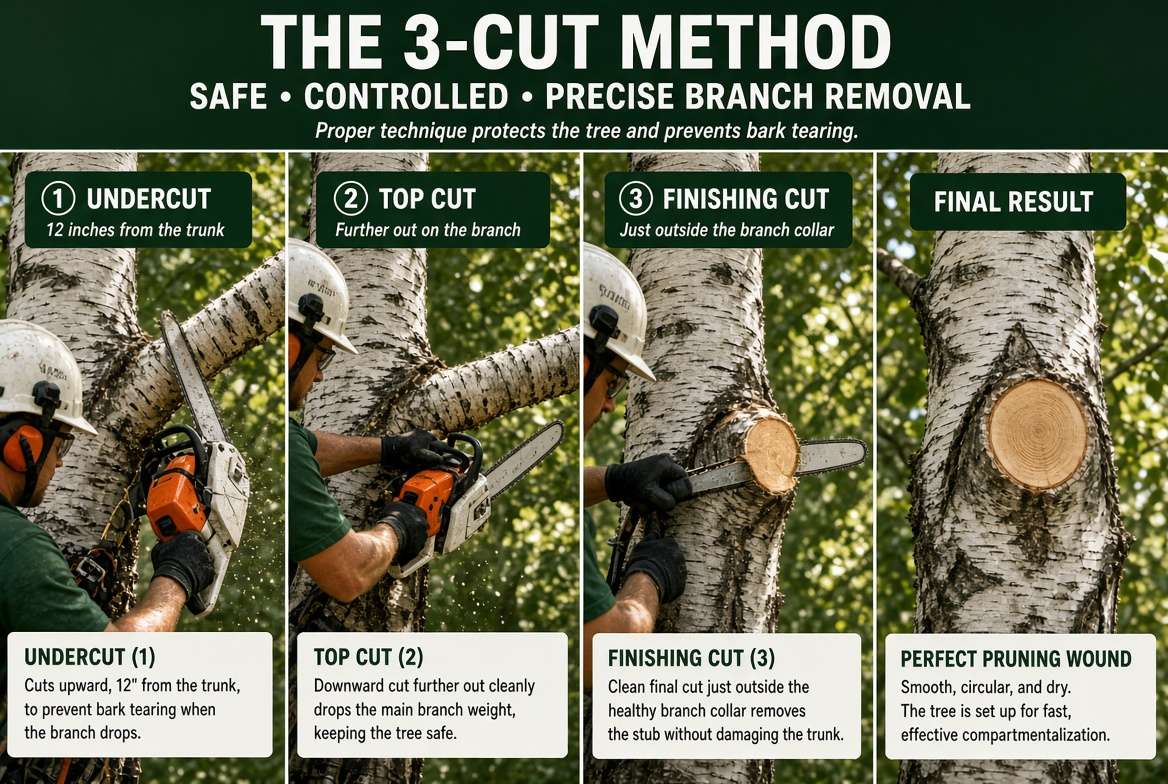
Step 2: The 3-Cut Method for Larger Branches (Crucial!) 🪵
For any birch tree branches larger than one inch in diameter, you cannot simply saw through them from the top down. As you cut, the heavy weight of the branch will snap it downward before you finish, ripping a long strip of healthy bark down the main trunk. This creates a massive wound that invites disease.
To prevent this, certified arborists use the foolproof 3-Cut Method:
-
Cut 1 (The Undercut): Measure about 12 to 15 inches away from the tree trunk on the branch you want to remove. Cut from the bottom of the branch upward, going about one-third of the way through the wood. This undercut stops the bark from peeling later.
-
Cut 2 (The Top Cut): Move another inch or two further out on the branch (away from the trunk). Saw from the top down, all the way through the branch. As the branch gets heavy and falls, the tear will stop cleanly at your undercut. You are now left with a lightweight stub.
-
Cut 3 (The Finishing Cut): Now that the heavy weight is gone, locate the branch collar again. Carefully make your final cut just outside the collar, sawing cleanly from top to bottom. This leaves a smooth, circular wound that the tree can easily compartmentalize.
Step 3: Shaping and Thinning for Canopy Health ✨
When pruning for aesthetic shaping or to let more sunlight through the canopy, keep the 25% Rule in mind. Never remove more than 25% of the tree’s live foliage in a single growing season. Over-pruning shocks the tree, forcing it to push out weak, spindly “water sprouts” (epicormic shoots) in a desperate attempt to gather sunlight.
Focus on removing crossing branches that rub against each other (which creates open friction wounds) and branches that grow sharply inward toward the central trunk. Increasing airflow through the canopy is one of the best ways to naturally prevent fungal issues!
🛡️ Managing Heavy Sap Bleed (If It Already Happened)
Perhaps you found this article because you already pruned your tree in April, and now it is dripping relentlessly. First and foremost: Take a deep breath. Do not panic. 🧘♀️
The Truth About Pruning Sealants (Myth Busting!) 🚫
Your first instinct might be to rush to the garden center and buy a can of black tree paint, tar, or wound dressing to “stop the bleeding.” Do not do this.
Modern arboricultural science has definitively proven that pruning sealants are actually harmful. Painting over a weeping wound traps the moisture, sugar, and existing airborne bacteria against the raw wood. This creates a perfect, dark, humid incubator for internal wood rot. The sap will simply build up pressure behind the paint and blister it off anyway. You must let the tree heal naturally.
Damage Control and Aftercare 🩹
While you cannot stop the flow of sap once it starts, you can support the tree through the stress:
-
Keep the Tree Hydrated: It sounds counterintuitive, but the tree is losing massive amounts of fluids. During dry spells, provide deep, slow watering at the base of the tree to help it replenish its reserves.
-
Wash the Trunk: Sugar-rich sap running down the bark can attract ants, wasps, and a black, powdery fungus called sooty mold. Gently hose down the trunk every few days to wash away the sticky residue.
-
Clean the Ground: Rake up any sap-soaked debris or mulch at the base of the tree to avoid attracting unwanted pests to the root zone.
🐛 Common Mistakes to Avoid When Trimming Birches
Beyond timing and tool hygiene, there are a few classic mistakes you must avoid to protect the structural integrity of your birch.
Topping the Tree ✂️
“Topping” is the archaic practice of cutting off the top vertical trunk (the central leader) to control a tree’s height. Never top a birch tree. It destroys the tree’s natural, graceful, pyramidal shape and replaces it with a hydra-like cluster of weak, poorly attached branches that are highly prone to snapping in wind or ice storms.
Leaving “Coat Hanger” Stubs 🧥
When you prune birch tree branches, do not leave 3-to-4 inch stubs sticking out from the trunk (often done because the pruner is afraid of cutting the main trunk). These dead stubs cannot heal over. They slowly rot, acting as a direct highway for decay fungi to travel straight into the heartwood of the tree.
Ignoring the Bronze Birch Borer 🪲
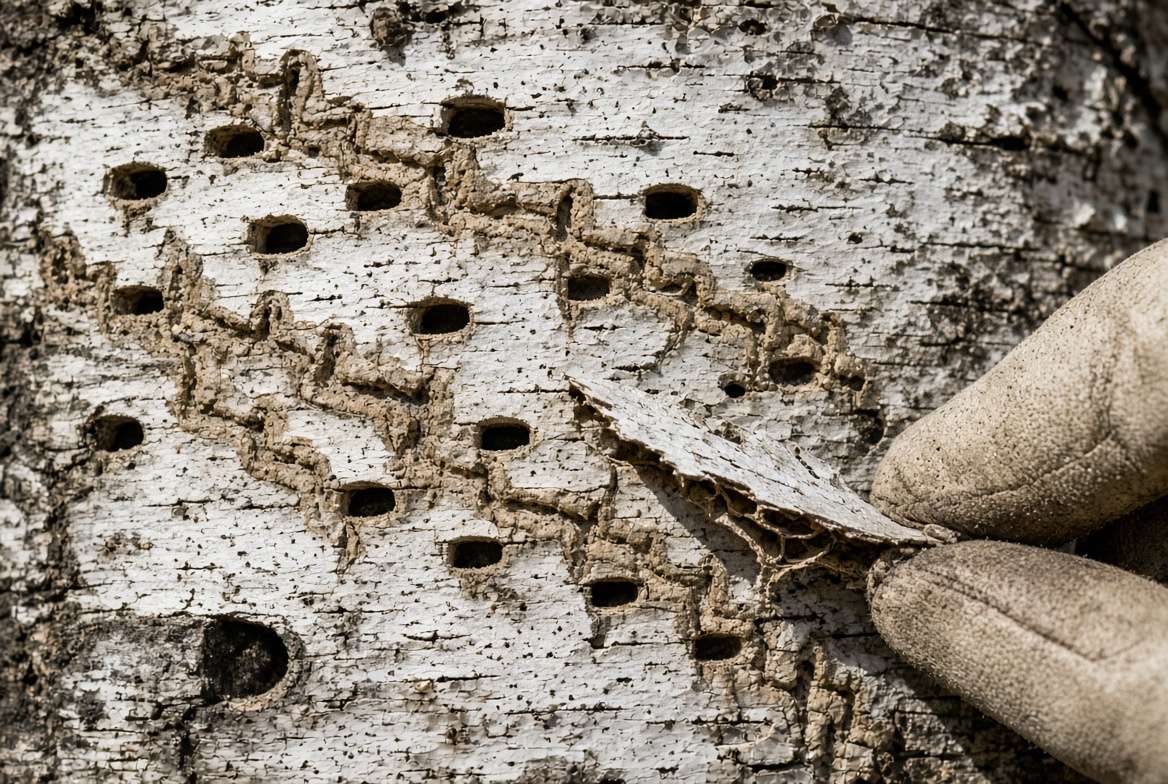
Improper pruning stresses a birch, and a stressed birch emits chemical signals that attract the Bronze Birch Borer. This metallic wood-boring beetle lays eggs under the bark, and the larvae aggressively feed on the tree’s vascular tissue, effectively strangling it. If you notice D-shaped exit holes in the bark, or if the canopy begins dying from the top down, contact a certified arborist immediately. Preventative care (like proper pruning) is the best defense against this lethal pest.
🤔 Frequently Asked Questions (FAQs)
Can I prune bottom birch tree branches so I can walk underneath the tree? Yes, this practice is called “crown raising.” However, you must do it gradually over several years. A tree’s trunk needs lower branches to shade the bark from sunscald and to help develop trunk taper (thickness and strength). Never remove so many lower branches that the live canopy makes up less than two-thirds of the tree’s total height.
Will a bleeding birch tree die? It is extremely rare for a mature birch to die directly from sap loss due to pruning. However, the energy depletion weakens its immune system, making it highly susceptible to the secondary infections and borers that can kill it.
Can I trim my River Birch in the winter? No. While many landscape trees benefit from dormant winter pruning, birches, maples, and walnuts are the exception. Winter pruning leads to heavy spring bleeding. Stick strictly to the late summer or early fall window (August through October).
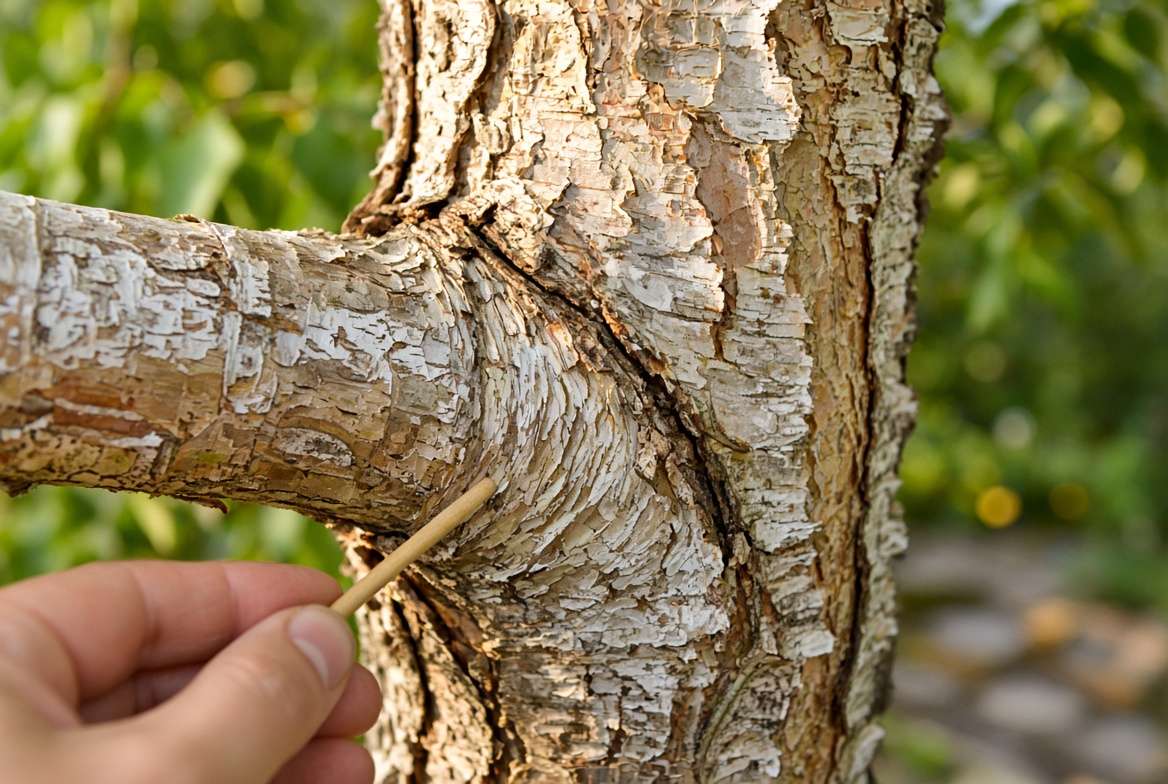
How do I know if a branch is dead during the winter when there are no leaves? Perform the “scratch test.” Use your fingernail or a small knife to gently scratch away a tiny sliver of the outer bark on the branch in question. If the tissue underneath (the cambium layer) is green and slightly moist, the branch is alive. If it is brown, hard, and dry, the branch is dead and can be safely removed anytime.
📝 Conclusion: A Little Patience Goes a Long Way
Caring for a birch tree is incredibly rewarding. Their striking bark, delicate leaves, and elegant weeping habits make them the undeniable crown jewels of any landscape. But keeping them healthy requires fighting our natural gardening instincts.
When it comes to cutting birch tree branches, remember that patience is your greatest tool. Resist the urge to tidy up your tree during the busy spring gardening season. Mark your calendar for late summer, sanitize your tools, respect the branch collar, and use the 3-cut method. By working in harmony with the tree’s natural biological rhythms, you will prevent stressful sap bleeds, block out dangerous pests, and ensure your beautiful birch thrives for generations to come.
Do you have a beautiful birch tree in your yard? What is your biggest challenge when caring for it? Let us know in the comments below, and happy pruning! 🌱✨











