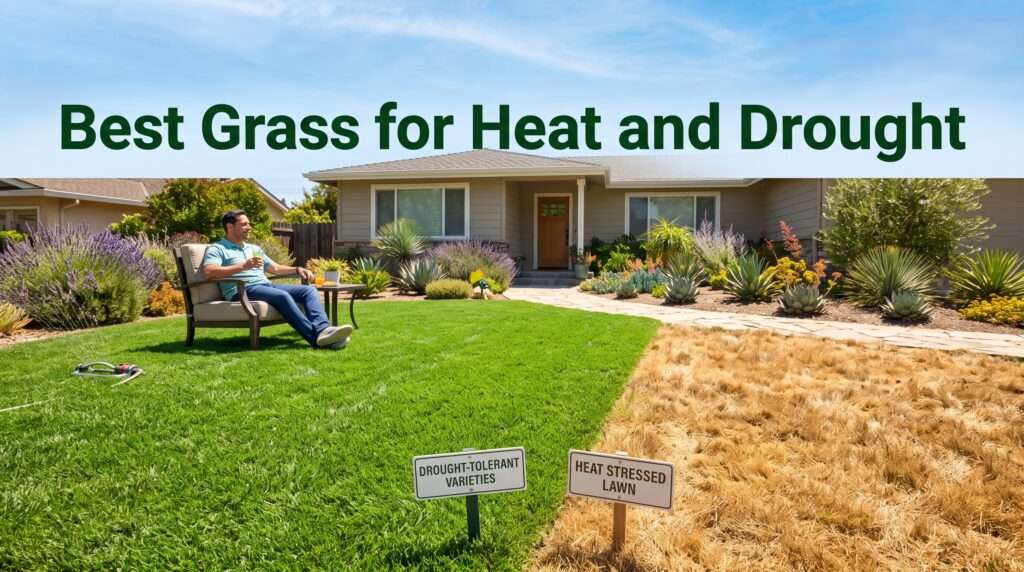
There is nothing quite as frustrating as watching your lush, vibrant spring lawn turn into a crispy, brown wasteland the moment summer arrives. As intense heatwaves roll in and strict municipal water restrictions take effect, standard turf varieties simply give up. These thirsty traditional grasses fail under extreme UV indexes and prolonged dry spells, costing you immense amounts of time, money, and neighborhood curb appeal. If you are tired of fighting a losing battle against the summer sun, it is time to explore the best 10 grass for heat and drought.
The permanent solution lies in transitioning to climate-resilient, drought-resistant turf. Whether naturally evolved in arid plains or scientifically engineered by modern agronomists, these specialized grasses are designed to thrive where traditional lawns fail. They develop exceptionally deep rhizomatous root systems to tap into hidden underground moisture reserves, requiring significantly less irrigation to stay green in scorching temperatures. By upgrading your lawn with the right drought-tolerant seed, you can dramatically lower your water bill, reduce your weekend maintenance, and maintain a resilient, beautiful yard through the toughest droughts.
II. How to Choose the Right Drought-Tolerant Grass (Expert Buying Guide)
Before you buy, it is critical to understand that not all drought-resistant grasses are created equal. The right choice depends entirely on your yard’s specific microclimate and your geographical location. Here is what you need to consider to make an informed decision:
-
Identify Your Climate Zone (Warm-Season vs. Transition vs. Cool-Season): If you live in the deep South (Zone 8-10), warm-season grasses like Bermudagrass and Zoysia are non-negotiable—they actually prefer temperatures over 90°F. If you live in the North or the difficult “Transition Zone” (where summers are boiling but winters are freezing), you need deep-rooting cool-season grasses like Tall Fescue that can survive the heat but won’t die in the winter snow.
-
Understanding Drought Tolerance Mechanisms: Grasses survive drought in two different ways. Varieties like Bermudagrass and Rhizomatous Tall Fescue (RTF) send deep, aggressive roots into the subsoil to find hidden moisture. Other grasses, like Zoysia or Fine Fescue, go into a protective, self-repairing dormancy. They may lose a bit of color, but the crown remains alive and bounces back immediately upon the first rain.
-
Sunlight and Shade Dynamics: Matching the grass to your yard’s canopy is crucial. Bermuda requires full, blazing, intense sun to thrive and will thin out in the shade. Tall Fescue, on the other hand, can handle the dappled shade of large oak trees while still enduring the summer heat.
-
Soil Compatibility and Prep: Soil health dictates water retention. Sandy soils drain too fast and bake roots, making deep-rooted grasses like Bahiagrass a must. Clay soils hold water but can suffocate roots if not aerated. Always amend your soil before planting.
-
Maintenance Profile: Factor in your lifestyle. Do you want a golf-course lawn that requires weekly mowing and fertilizing (Bermuda)? Or do you want a “lazy” eco-friendly lawn that barely needs mowing once a month (Buffalograss)?
III. At a Glance: Top Picks Comparison
Here is a quick snapshot of our top picks to help you find the perfect match for your yard.
IV. Detailed Product Reviews: The Best 10 Grass for Heat and Drought
1. Scotts Turf Builder Grass Seed Bermudagrass
Product Description: When southern heat turns up to triple digits, Scotts Turf Builder Bermudagrass doesn’t just survive—it thrives. This premium, aggressive Bermudagrass seed is enveloped in Scotts’ proprietary WaterSmart PLUS Coating. This unique coating is engineered to absorb twice as much water as an uncoated seed, feed it with essential nutrients, and protect it from disease. It takes the guesswork out of early establishment, ensuring your seeds don’t dry out and die before they sprout.

Price: $21.40
Key Features & Benefits:
-
Germinates incredibly fast (usually in 5-12 days).
-
Built-in nutrients jumpstart early root growth.
-
WaterSmart PLUS coating retains essential moisture around the seed.
Pros & Cons:
-
Pros: Exceptionally fast establishment, high traffic tolerance, rapid self-repair for bare patches.
-
Cons: Extremely poor shade tolerance; its aggressive spread can invade garden beds if not edged properly.
Amazon Customer Ratings & Reviews: ~4.3/5 Stars. Reviewers frequently praise its remarkable resilience in brutal southern heat. The negative reviews almost exclusively stem from homeowners trying to plant it under heavy shade trees.
Why it’s a good choice for heat and drought: Bermudagrass is the undisputed champion of the South. It recovers almost immediately from dry spells and actually grows best when temperatures exceed 90°F.
Ideal use case or who should buy it: Southern homeowners with 100% full-sun yards who need a durable, athletic-field-quality lawn that can withstand heavy traffic from kids and active pets.
2. Jonathan Green (10323) Black Beauty Ultra Mixture
Product Description: If you live in a northern or transitional zone where summers are getting hotter and drier, Jonathan Green Black Beauty Ultra is a game-changer. This top-tier blend of Tall Fescues, Kentucky Bluegrass, and Perennial Ryegrass possesses a unique genetic trait: a waxy leaf coating similar to an apple. This invisible shield preserves cellular moisture inside the grass blade, preventing evaporation during peak midday heat.

Price: $106.25
Key Features & Benefits:
-
Roots can grow an astonishing 4 feet deep.
-
Produces a stunning, uniform dark green color.
-
Genetically bred for superior heat tolerance in transitional climates.
Pros & Cons:
-
Pros: Incredible aesthetic appeal; excellent disease resistance; handles partial shade beautifully.
-
Cons: Premium price point; takes slightly longer to fully establish than pure ryegrass blends.
Amazon Customer Ratings & Reviews: ~4.5/5 Stars. Users consistently rave about the vibrant, deep green color and the lawn’s ability to survive July and August droughts without requiring daily irrigation.
Why it’s a good choice for heat and drought: The combination of the waxy leaf coating severely limiting moisture evaporation and the massive root system pulling water from deep subsoils makes this a drought-busting powerhouse.
Ideal use case or who should buy it: Homeowners in the Northern and Transitional US (such as the Midwest or Mid-Atlantic) who want a lush, traditional-looking lawn that won’t crisp up and die during summer heatwaves.
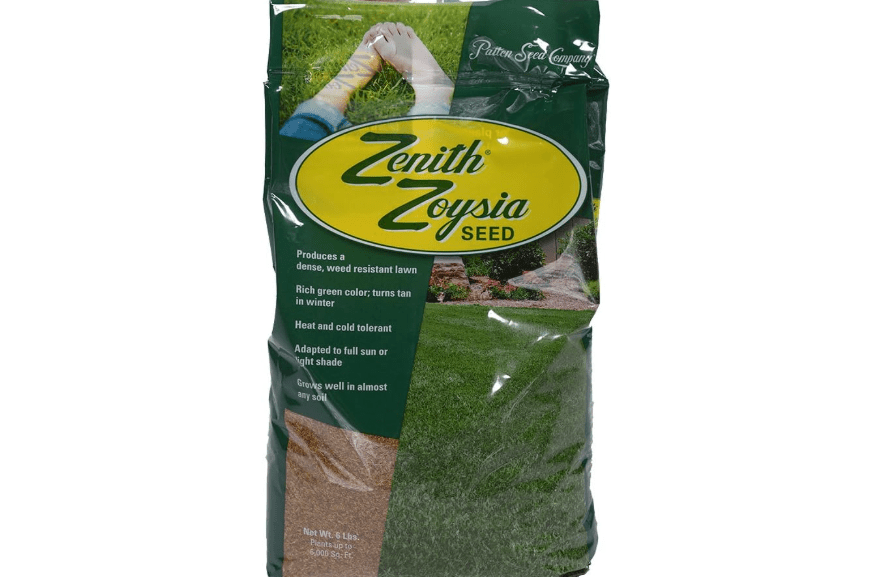
3. Outsidepride Zenith Zoysia Grass Seed
Product Description: Zoysia is famous for creating a barefoot-soft, thick, carpet-like lawn that naturally chokes out weeds. However, it is usually planted via expensive sod. Outsidepride’s Zenith Zoysia is one of the few premium Zoysia varieties that can be successfully grown from seed. Once established, it is one of the most water-wise warm-season grasses on the market, offering exceptional cold tolerance compared to Bermuda.
Price: $577.70
Key Features & Benefits:
-
Naturally chokes out crabgrass and broadleaf weeds due to extreme turf density.
-
Requires a significantly lower mowing frequency.
-
Excellent cold tolerance for a warm-season grass (great for the transition zone).
Pros & Cons:
-
Pros: Luxurious, barefoot-soft texture; highly weed-resistant; incredibly water-wise once established.
-
Cons: Very slow to germinate and establish; requires precise, warm soil temperatures to sprout successfully.
Amazon Customer Ratings & Reviews: ~4.0/5 Stars. Highly rated for the beautiful final result, though some buyers note the frustratingly slow germination process requires patience.
Why it’s a good choice for heat and drought: Zoysia is incredibly smart. It actually rolls its leaves inward to conserve water during extreme drought, safely going dormant. The moment it rains, it springs right back to a vibrant green.
Ideal use case or who should buy it: Patient homeowners who want a luxurious, low-maintenance, weed-free lawn and are willing to wait a full season for the slow-growing seed to completely fill in.
4. Barenbrug Water Saver RTF (Rhizomatous Tall Fescue)
Product Description: Barenbrug Water Saver RTF is a revolutionary, patented Tall Fescue that solves the biggest problem with cool-season grasses: bare spots. Unlike traditional clump-growing fescues, RTF sends out underground rhizomes (runners) to automatically repair bare patches—a self-healing feature normally reserved for southern warm-season grasses.

Price:
Key Features & Benefits:
-
Self-repairing underground rhizome technology.
-
Ultra-deep root system that mines for untapped water.
-
Endophyte-enhanced for natural insect and surface-feeder resistance.
Pros & Cons:
-
Pros: Heals its own bare spots over time; thrives in both full sun and moderate shade; delivers massive water savings.
-
Cons: Can be difficult to find in stock during peak planting seasons.
Amazon Customer Ratings & Reviews: ~4.4/5 Stars. Reviewers frequently highlight their significant water bill savings and the turf’s remarkable ability to stay green in 95°F+ heat when their neighbors’ lawns turn brown.
Why it’s a good choice for heat and drought: The roots reach deep into the soil profile to find untapped water reserves, allowing it to survive harsh heat with up to 30% less irrigation than standard fescue blends.
Ideal use case or who should buy it: Eco-conscious buyers in cooler or transitional climates looking to drastically cut their water bills without sacrificing the look of a traditional, green northern lawn.
5. Pennington Smart Seed Southern Bahiagrass
Product Description: If you live in a coastal area with poor, sandy soil that drains water almost instantly, most grasses don’t stand a chance. Pennington Smart Seed Southern Bahiagrass is a rugged, coarse grass engineered specifically for the deep South. It thrives in terrible, infertile soil where other grasses fail, utilizing a massive, deep root system to pull moisture from deep below the sandy surface.

Price: $60.73
Key Features & Benefits:
-
Requires almost zero supplemental fertilizer once established.
-
Incredibly deep root system perfectly adapted to sandy soils.
-
Coated with Pennington’s Penkoted technology to ensure better seedling survival.
Pros & Cons:
-
Pros: Very low maintenance requirements; thrives in sandy/infertile soil; highly heat and drought-resistant.
-
Cons: Coarse texture isn’t as “soft” as Zoysia or Bermuda; it grows tall, V-shaped seed heads quickly, requiring frequent mowing if you prefer a neat look.
Amazon Customer Ratings & Reviews: ~4.1/5 Stars. Praised extensively for growing in “impossible” sandy coastal yards. Criticized mostly for the aesthetic of the rapid-growing seed heads.
Why it’s a good choice for heat and drought: Bahiagrass is arguably the most resilient turf for sandy, coastal environments. Its vast root network allows it to survive incredibly long rainless stretches without irrigation.
Ideal use case or who should buy it: Homeowners in Florida, the Gulf Coast, or other sandy regions who want a functional, green yard with absolutely minimal chemical, fertilizer, and water input.
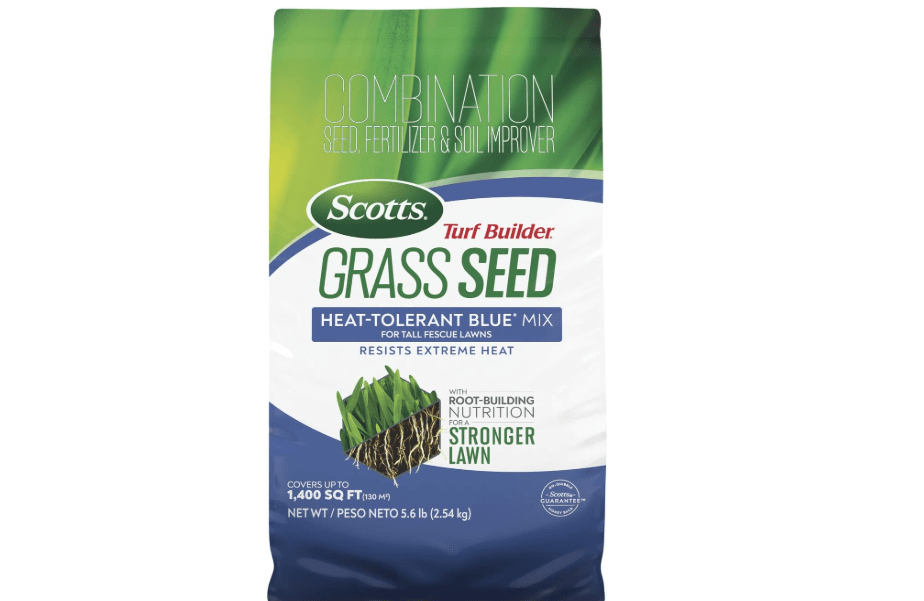
6. Scotts Turf Builder Grass Seed Heat-Tolerant Blue Mix
Product Description: Finding a grass that can survive a boiling August heatwave and a freezing January blizzard is a tall order. Scotts Turf Builder Heat-Tolerant Blue Mix is a brilliant hybrid blend that combines the rugged, deep-rooted heat resilience of Tall Fescue with the spreading, self-repairing beauty of Kentucky Bluegrass. It features Scotts’ 4-in-1 WaterSmart PLUS coating to keep seeds moist, protected, and fed during the crucial early growth stages.
Price: $35.97
Key Features & Benefits:
-
4-in-1 WaterSmart PLUS coating protects against disease and dehydration.
-
Designed specifically to stay green in extreme temperature fluctuations.
-
High disease and drought resistance once fully established.
Pros & Cons:
-
Pros: Gives you the best of both worlds (the durability of fescue combined with the aesthetic and repair capabilities of bluegrass); performs great in full sun or light shade.
-
Cons: Requires diligent, consistent watering during the first 3 weeks to ensure the slower-germinating bluegrass seeds establish properly.
Amazon Customer Ratings & Reviews: ~4.4/5 Stars. Users love how beautifully it holds up against the summer baking in transition states like Ohio, Pennsylvania, and Virginia.
Why it’s a good choice for heat and drought: Tall Fescue provides the deep-rooted drought survival necessary to endure dry spells, while the Kentucky Bluegrass steps in to naturally fill in any patches that might thin out during extreme, prolonged heatwaves.
Ideal use case or who should buy it: Transition zone residents wanting a premium-looking, bare-foot soft lawn that can confidently handle the bipolar swings of freezing winters and boiling summers.
7. Sunday Barefoot Buffalograss Seed
Product Description: Sunday Barefoot Buffalograss is the ultimate choice for the eco-conscious homeowner. As a North American native grass, it evolved naturally on the arid Great Plains. Because it is perfectly adapted to dry conditions, it requires almost zero supplemental watering once established, offering a soft, meadow-like aesthetic that tops out at just a few inches tall.
Price: $89.99
Key Features & Benefits:
-
Native and exceptionally eco-friendly.
-
Naturally maxes out at a low height, requiring minimal cutting.
-
Incredibly low water, fertilizer, and overall maintenance needs.
Pros & Cons:
-
Pros: The ultimate eco-friendly and sustainable choice; extremely soft underfoot; drastically reduces weekend mowing chores.
-
Cons: Does not handle high foot traffic or pet wear-and-tear well; goes dormant and turns brown very early in the fall.
Amazon Customer Ratings & Reviews: ~4.2/5 Stars. Beloved by eco-landscapers and xeriscape enthusiasts. Some users note that the seed actually struggles and fails if it is overwatered.
Why it’s a good choice for heat and drought: It is biologically native to regions with intense, dry summer heat and minimal rainfall. It survives droughts by naturally conserving energy and utilizing a deep root system designed for arid plains.
Ideal use case or who should buy it: Environmentally conscious homeowners in dry, arid climates (like the Midwest or Southwest) looking for a “lazy,” low-maintenance xeriscape lawn that requires almost no chemical inputs.
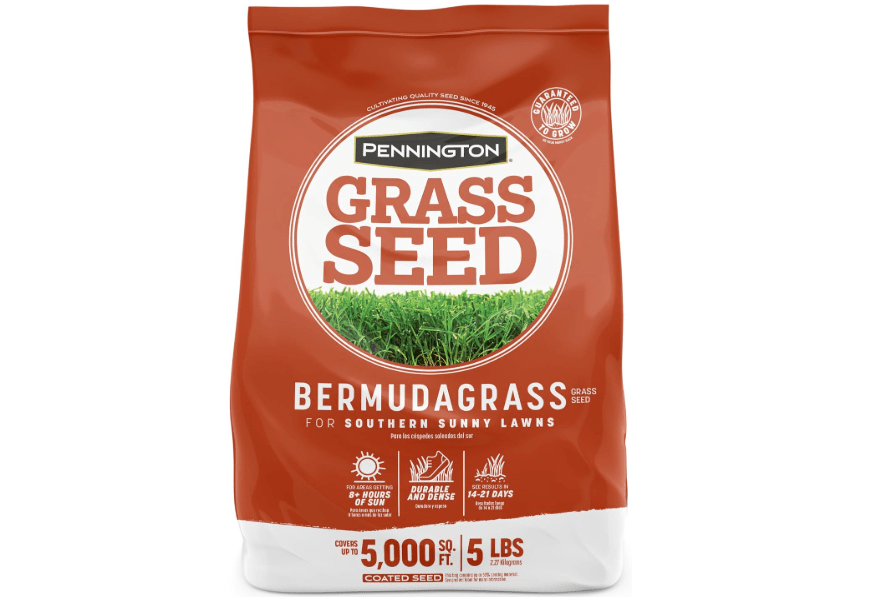
8. Pennington Smart Seed Texas Bermudagrass
Product Description: Everything is bigger in Texas, including the heat. Pennington Smart Seed Texas Bermudagrass is a specially tailored blend bred specifically to withstand the brutal, unrelenting heat and drought conditions characteristic of the American Southwest. It is scientifically engineered to use up to 30% less water year after year compared to ordinary grass seed while maintaining a thick, fine-bladed texture.
Price: $29.99
Key Features & Benefits:
-
Uses up to 30% less water than ordinary seed once established.
-
Penkoted technology for guaranteed growth and fungal protection.
-
Produces a lush, fine-bladed texture that is soft on the feet.
Pros & Cons:
-
Pros: Unmatched heat tolerance; creates a very dense turf canopy that crowds out crabgrass and weeds; exceptionally fast-growing.
-
Cons: Highly invasive—it will rapidly creep into driveways, sidewalks, and flower beds if you do not edge it regularly.
Amazon Customer Ratings & Reviews: ~4.3/5 Stars. Texas and Arizona buyers swear by it for pure summer survival. Typical complaints are usually regarding slow germination if planted during unseasonably cool spring weather.
Why it’s a good choice for heat and drought: It is biologically programmed to thrive when the thermometer crosses 100°F. It utilizes an aggressive root and above-ground stolon system to vigorously scavenge for scarce moisture.
Ideal use case or who should buy it: Homeowners in Texas, Arizona, and Southern California who are dealing with relentless summer sun, minimal rainfall, and strict municipal water restrictions.
9. Outsidepride Combat Extreme Southern Zone Grass Seed
Product Description: For southern homeowners who despise the brown, dormant winter look of warm-season grasses like Bermuda and Zoysia, Outsidepride Combat Extreme is the answer. This is a proprietary 3-way blend of Turf Type Tall Fescues specifically selected for their unique ability to survive the harsh, humid summers of USDA Zones 8-10, offering a year-round green lawn in the South.

Price: $54.99
Key Features & Benefits:
-
Maximum deep rooting capabilities for a cool-season grass.
-
Lower growth habit reduces mowing frequency.
-
Enhanced wear tolerance for high-traffic yards.
Pros & Cons:
-
Pros: Allows southern homeowners to finally have a “northern-style” fescue lawn; stays green straight through the winter months.
-
Cons: While drought-resistant, it will still require slightly more water than a native Bermudagrass in the dead heat of August to prevent dormancy.
Amazon Customer Ratings & Reviews: ~4.3/5 Stars. Users are thrilled to finally have beautiful green grass year-round in the South, though some experienced buyers note it may require a light overseeding every few years to keep it thick.
Why it’s a good choice for heat and drought: The specific cultivars in this mix were selectively bred by agronomists to push the southern boundary of where fescue can survive, featuring maximum root depth to access deep soil moisture.
Ideal use case or who should buy it: Southern transition zone homeowners (e.g., North Carolina, Tennessee, Northern Georgia) who want a lush, deep-green yard 365 days a year and are willing to water deeply during peak summer.
10. Eretz PRO Tall Fescue Turf Grass Seed
Product Description: Eretz PRO Tall Fescue is for the lawn care purist. This is a professional-grade seed that boasts a 0% weed seed guarantee and zero water-retention coatings. Because it is 100% raw seed, you get significantly more coverage per pound compared to coated alternatives. Grown in Oregon, it offers premium genetic quality for outstanding heat and drought endurance.

Price:
Key Features & Benefits:
-
Weed-free guarantee ensures no unwanted pests invade your yard.
-
100% raw seed provides maximum coverage and value per bag.
-
Naturally insect resistant and highly durable against foot traffic.
Pros & Cons:
-
Pros: Incredible value for your money (you aren’t paying for the weight of seed coatings); exceptionally high purity; stunning dark green hue.
-
Cons: Lacks a moisture-holding coating, meaning the homeowner must be meticulous with daily, light watering until full germination occurs.
Amazon Customer Ratings & Reviews: ~4.6/5 Stars. Highly rated by lawn care purists and professional landscapers who prefer working with raw, uncoated seed and deeply appreciate the absolute weed-free purity.
Why it’s a good choice for heat and drought: Tall Fescue naturally possesses the most heat tolerance of all cool-season grasses. This pure, high-quality cultivar establishes robust, deep roots quickly to prepare for impending summer droughts.
Ideal use case or who should buy it: Experienced DIY lawn care enthusiasts in the northern and transition zones who already have automatic irrigation timers set up and want maximum seed value without paying for artificial coatings.
V. Conclusion & Final Verdict
Choosing the right drought-tolerant grass seed is the most effective way to protect your landscaping investment from brutal summer temperatures and rising water costs. If you live in the deep South and need a lawn that laughs at 100°F days, Scotts Turf Builder Bermudagrass is the undisputed top choice for rapid, aggressive growth. For homeowners in the North or Transition Zones who want a lush, barefoot-soft lawn that survives drought without turning brown, Jonathan Green Black Beauty Ultra is an exceptional, scientifically advanced option.
Keep in mind that even the most rugged, drought-resistant grass seed is highly vulnerable during its infancy. Regardless of which seed you choose, you must commit to diligent, daily watering during the initial 2-3 week germination window. A seed that dries out before its roots dive deep into the soil will not survive. To give your new lawn the best possible start, consider picking up a rapid soil test kit to check your pH levels, and ensure you have a reliable oscillating sprinkler setup to keep the top layer of soil moist until your new, climate-resilient lawn is fully established.
VI. Frequently Asked Questions
What is the absolute most drought-tolerant grass? For warm-season climates, Bermudagrass and Buffalograss are the most drought-tolerant options available. Bermudagrass uses deep roots to find water, while Buffalograss evolved natively in arid climates to survive with almost no rainfall. For cool-season climates, Tall Fescue is the most drought-tolerant choice due to its extensive root system.
When is the best time to plant heat-tolerant grass seed? The planting window depends entirely on the type of grass. Warm-season grasses (Bermuda, Zoysia, Bahiagrass, Buffalograss) should be planted in late spring or early summer when the soil has warmed up. Cool-season grasses (Tall Fescue, Kentucky Bluegrass) should be planted in early fall, giving them time to establish strong roots over the winter and spring before the summer heat hits.
Can I plant drought-tolerant grass over my existing lawn? Yes, this process is called overseeding. Core aerating your lawn first will give the new seeds the best chance to reach the soil and germinate. However, it is generally not recommended to mix warm-season grasses (like Bermuda) with cool-season grasses (like Fescue), as they have different growth cycles, watering needs, and visual textures that can make a lawn look patchy and uneven.