

Have you ever brought home a lush, vibrant plant for your balcony, dreaming of endless homemade guacamole, only to watch it stretch into a lanky, flowering weed just a few weeks later? 😩 You are certainly not alone. It is the ultimate heartbreak of indoor and urban gardeners everywhere. But what if I told you that your “ruined” plant isn’t dying—it’s just transforming?
Welcome to the ultimate guide to cilantro vs. coriander container care. By understanding the fascinating dual nature of this incredible herb, you can stop early bolting, extend your leafy green harvest for months, and eventually collect your own spicy, citrusy seeds from the exact same pot.
Growing herbs in containers is vastly different from growing them in the ground. Potted plants face unique stressors like rapid soil temperature fluctuations and restricted root space, which directly impact their life cycle. As a plant care specialist who has spent years testing soil profiles, lighting setups, and pruning techniques on potted herbs, I am here to share the exact science and practical steps you need to master this process.
Get ready to turn your container gardening frustration into a double-harvest triumph! 🌿✨
The Botanical Double Life: Cilantro vs. Coriander Explained 🌿🔍
Before we dive into soil mixes and watering schedules, we need to clear up the biggest point of confusion for beginner gardeners. Are cilantro and coriander the same thing? Yes and no.
Scientifically, both come from the exact same plant: Coriandrum sativum. However, in the garden (and in the kitchen), we treat the different life stages of this plant as entirely separate ingredients.

What is Cilantro? 🥗
Cilantro refers to the vegetative stage of the plant. This is when the herb is actively growing its broad, flat, lacy green leaves.
-
Flavor Profile: Pungent, fresh, slightly citrusy, and vibrant.
-
Growing Preferences: Cilantro thrives in cool weather and shorter daylight hours.
-
Culinary Use: Used fresh as a garnish in Mexican salsas, Asian curries, and rich chutneys.
What is Coriander? 🌰
Coriander refers to the reproductive stage of the plant—specifically, the seeds that are produced after the plant blooms and drops its delicate white or pink flowers.
-
Flavor Profile: Earthy, warm, nutty, and distinctly spicy.
-
Growing Preferences: The plant shifts into this seed-producing phase when the weather gets hot and the days get long.
-
Culinary Use: Dried, toasted, and ground into a foundational spice for garam masala, rubs, and pickling brines.
The Global Naming Confusion 🤔
Expert Note: If you live outside of the Americas (such as in the UK, India, or Australia), you likely call the entire plant “coriander”—referring to the leaves as “coriander leaves” and the seeds as “coriander seeds.” In the US and parts of Latin America, the Spanish word “cilantro” was adopted for the fresh leaves, leaving “coriander” strictly for the dried seeds.
Whatever you call it, managing a single container to maximize the yield of both stages requires a strategic approach.
Setting Up for Success: Essential Cilantro vs. Coriander Container Care 🪴☀️
Setting up your pot correctly from day one is the most critical step in preventing early bolting. Coriandrum sativum is notoriously fussy about its root environment. Here is how to create the perfect home for it.
Choosing the Right Pot (The Taproot Rule) 📏
Most gardeners make the mistake of planting cilantro in shallow, decorative window boxes. This is a guaranteed recipe for failure.
Like carrots and parsley, cilantro grows a long, central taproot. If this taproot hits the bottom of a shallow pot too quickly, the plant receives a biological signal that it has run out of space. Panicking, the plant immediately goes into survival mode (bolting) to produce seeds before it dies.
-
The Rule: Choose a container that is at least 10 to 12 inches deep.
-
Material Matters: Terra cotta pots are beautiful but porous; they dry out incredibly fast in the summer heat. If you use terra cotta, be prepared to water more often. Glazed ceramic or thick fabric pots (grow bags) are excellent alternatives for maintaining consistent soil moisture.
-
Drainage: Ensure the pot has large drainage holes. This herb despises “wet feet” (soggy roots).
The Ideal Potting Soil Mix 🤎
Garden soil is far too dense for containers—it will compact, choke the taproot, and suffocate the plant. You need a fast-draining, lightweight, and nutrient-rich potting medium.
My Go-To DIY Container Herb Mix:
-
2 parts High-Quality Potting Soil: (Provides a light, peat or coco coir-based foundation).
-
1 part Perlite or Pumice: (Ensures rapid drainage and soil aeration).
-
1 part Organic Compost or Worm Castings: (Provides a slow-release, gentle source of nitrogen to fuel leafy green growth).
Sunlight Requirements (The Shifting Shade Trick) 🌤️
Cilantro is a cool-season crop that loves light but hates the heat that often comes with it.
-
In Spring and Fall: Place your container in full sun (6+ hours of direct sunlight).
-
In Late Spring and Summer: You must employ the “Shifting Shade Trick.” Move your container to a spot that receives morning sun but is shaded during the scorching afternoon hours (from 12 PM to 4 PM). Alternatively, tuck your cilantro pot behind taller potted plants—like tomatoes or peppers—to provide a natural canopy.
Watering Protocols for Potted Herbs 💧
Containers dry out exponentially faster than in-ground garden beds. However, overwatering leads to fungal diseases and root rot.
-
The Finger Test: Stick your index finger one inch into the soil. If it feels dry to the touch, water deeply until water runs out the drainage holes. If it still feels moist, wait another day.
-
Consistency is Key: Allowing the soil to go bone-dry and then flooding it causes extreme stress, which—you guessed it—triggers early bolting.
The #1 Container Gardener’s Enemy: How to Stop Early Bolting 🛑🌼
Bolting is the rapid elongation of the central stalk, followed by the appearance of lacy, fern-like leaves and clusters of white flowers. Once a plant bolts, the vegetative leaves turn incredibly bitter and soapy, effectively ending your cilantro harvest.
What Actually Causes Bolting? 📈
Bolting isn’t a disease; it is a physiological response to stress. For Coriandrum sativum, bolting is triggered by three main factors:
-
High Temperatures: Sustained soil temperatures above 75°F (24°C).
-
Long Photoperiods: More than 14 hours of sunlight per day (typical in mid-summer).
-
Root Stress: Being root-bound in a small pot or experiencing severe drought.
5 Proven Tactics to Delay the Bolt 🛡️
Since we can’t change the genetics of the plant, we have to manipulate its environment to trick it into staying in the leafy stage for as long as possible.
1. Succession Sowing (The Endless Supply Method) 🌱 Because cilantro is a fast-growing annual, it will eventually bolt no matter what you do. The secret to a non-stop harvest is planting new seeds every 2 to 3 weeks in the same container or an adjacent one. As one plant finishes its leafy stage, the next one is ready to harvest.
2. Mulching Your Containers 🍂 We often mulch garden beds, but we forget about pots! Add a 1-inch layer of organic straw, shredded bark, or even light-colored pebbles to the top of your container soil. This shields the soil surface from the sun, keeping the taproot cool and retaining crucial moisture.
3. Grow “Slow-Bolt” Varieties 🧬 Not all seeds are created equal. When shopping for seeds, completely ignore generic packets. Look specifically for cultivars bred to resist heat and delay flowering.
-
Expert Picks: ‘Calypso’, ‘Santo’, and ‘Cruiser’ are outstanding slow-bolting varieties perfect for container life.
4. The Ice Cube Watering Trick 🧊 On exceptionally hot summer days, place a few ice cubes on the surface of the soil (away from the main stem). As they melt, they provide a slow drip of ice-cold water that lowers the soil temperature, tricking the roots into thinking it is still spring.
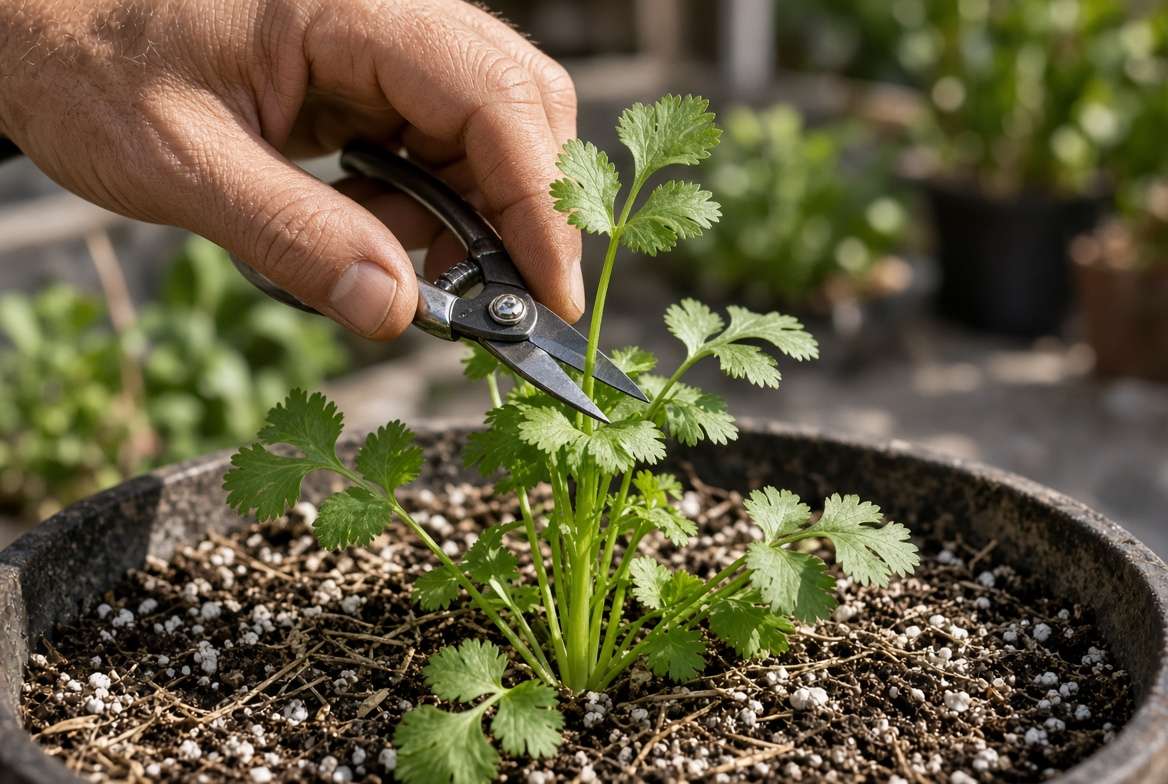
5. Aggressive Pinching and Pruning ✂️ If you see the central stalk beginning to thicken and stretch upward, pinch it off immediately. Removing the top growth redirects the plant’s energy back into producing lower, lateral leaves rather than flowers.
Phase 1: Harvesting Cilantro Leaves (Without Killing the Plant) ✂️🌿
Even with the best container care and slow-bolt seeds, the time will come to harvest your vibrant green leaves. How you harvest is just as important as how you grow. One wrong cut can shock the plant and accelerate the bolting process.
The “Cut-and-Come-Again” Method ✂️
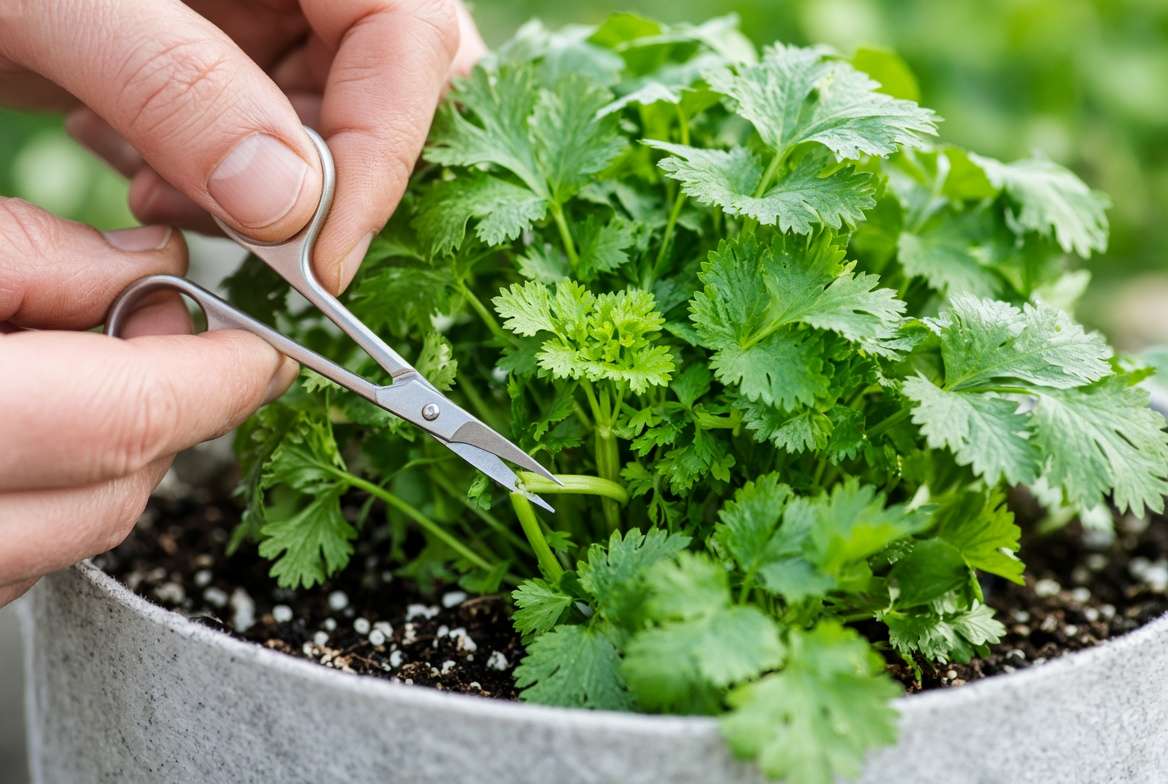
The golden rule of harvesting leafy herbs is to never take more than one-third of the plant at a time. For cilantro, you must use the “Cut-and-Come-Again” technique.
-
Target the Outer Leaves: Always snip the oldest, outermost leaves near the base of the stem.
-
Protect the Crown: Look closely at the center of the plant—this is the crown, where new, tiny leaves are actively forming. Never cut the center! By leaving the crown intact, the plant will continuously push out new growth, allowing you to harvest from the same container for several weeks.
-
Use Sharp Tools: Always use clean, sharp herb snips or scissors. Tearing the stems with your fingers creates ragged wounds that invite disease and stress the plant.
When is the Best Time to Harvest? ⏰
Timing matters when you want maximum flavor. The absolute best time to harvest your cilantro is early in the morning, just after the dew has dried but before the sun gets too hot. During the cool night, the plant replenishes its essential oils (the source of its intense flavor and aroma) and draws water up into its stems, making the leaves incredibly crisp.
Storing Fresh Cilantro 🧊
If you harvest more than you need for tonight’s tacos, don’t just throw it in the crisper drawer to wilt into green slime.
-
The Bouquet Method: Treat your fresh cilantro like a bouquet of flowers. Snip the very bottom of the stems, place them in a glass jar with an inch of fresh water, and loosely tent a plastic bag over the top of the leaves. Store the jar in the refrigerator. This method can keep your cilantro fresh and crispy for up to three weeks!
Phase 2: Embracing the Bolt & Harvesting Coriander Seeds 🏵️🌰
Eventually, despite your best efforts with shade, ice cubes, and pruning, Mother Nature will win. The days will get too long, the weather too hot, and your cilantro plant will bolt. Do not pull it out of the container! This is where the magic of the second harvest begins.
Knowing When to Let Go 🕊️
You will know the plant has officially transitioned when the central stalk thickens and shoots straight upward. The broad, flat leaves will suddenly transform into thin, lacy, fern-like foliage. Soon after, beautiful umbrella-shaped clusters of delicate white or pale pink flowers will bloom. At this point, the leaves will turn bitter, so stop harvesting them and let the plant do its thing.

Attracting Pollinators to Your Balcony 🐝
Cilantro flowers are an absolute ecological powerhouse. Because the flowers are tiny and shallow, they are the perfect shape for small beneficial insects. Leaving your bolted cilantro on your balcony or patio will attract predatory wasps, hoverflies, and ladybugs. These “good bugs” are nature’s pest control, hunting down aphids and spider mites that might be threatening your other container plants!
How to Harvest and Cure Coriander Seeds 🧺
Once the flowers fade, tiny, perfectly round green seeds will appear in their place. This is your coriander!
-
Wait for the Color Change: Do not harvest the seeds while they are green (they taste bitter and undeveloped). Wait until the seeds dry out on the stalk and turn a warm, light brown color.
-
The Paper Bag Trick: Coriander seeds drop very easily once dry. To avoid losing them in the soil, place a brown paper bag over the seed heads and snip the stalk right below the bag. Give the bag a good shake, and the mature seeds will fall right to the bottom.
-
Curing and Storage: Spread the seeds out on a paper towel in a cool, dry, well-ventilated room for a few days to ensure absolutely no moisture remains. Store them in an airtight glass spice jar in a dark cupboard. You can grind them fresh for cooking, or save them to plant in your containers next season!
Troubleshooting Common Container Problems 🐛🥀
Even experts run into issues when growing herbs in pots. If your Coriandrum sativum is looking sad, here is how to diagnose and fix the most common container gardening ailments.
Yellowing Leaves 🍂
Yellow leaves on the bottom of the plant usually indicate one of two things:
-
Overwatering/Poor Drainage: If the soil feels heavy and soggy, the roots are suffocating. Stop watering immediately, elevate the pot to let it drain, and consider drilling extra holes in your container.
-
Nitrogen Deficiency: If the soil moisture is perfect but the plant is turning a pale, sickly yellow, it is hungry. Container soil gets depleted of nutrients quickly as water washes them out the bottom. Apply a heavily diluted, organic liquid fertilizer (like fish emulsion or kelp extract) once every three weeks.
Powdery Mildew 🌫️
If you notice a white, dusty coating on your cilantro leaves, you are dealing with powdery mildew. This fungal issue thrives in damp, humid environments with poor airflow.
-
The Fix: Thin out the plants in your container so air can circulate between them. Water the soil directly at the base of the plant, keeping the leaves completely dry.
Pests (Aphids & Spider Mites) 🐞
Because container plants are often sheltered on balconies or patios, they can miss out on the natural rain and wind that usually wash away tiny pests.
-
Aphids: Look for tiny green or black bugs clustered near the new growth at the crown.
-
Spider Mites: Look for faint, dusty webbing underneath the leaves.
-
The Organic Solution: Blast them off with a sharp stream of water from a spray bottle. For severe infestations, spray the foliage with a mixture of water, a few drops of mild dish soap, and cold-pressed Neem oil. Always apply Neem oil in the evening so the sun doesn’t burn the coated leaves.
Expert Q&A: Your Top Cilantro & Coriander Questions Answered 🙋♀️💡
Q: Can I grow cilantro from grocery store coriander seeds? A: Yes! However, you must ensure you are buying whole, raw, unroasted coriander seeds from the spice aisle. If they have been roasted or crushed, they will not germinate. For a faster germination rate, gently crush the round seed pod with a rolling pin just enough to split it in half (each pod actually contains two seeds!).
Q: Does cilantro grow back after it flowers and drops seeds? A: No. Coriandrum sativum is an annual plant. Its entire biological purpose is to grow, flower, drop seeds, and die—all in a single season. Once it produces coriander seeds, the mother plant will turn brown and perish. You must plant new seeds to start the cycle over.
Q: Why does my homegrown cilantro taste like soap? A: If you think your beautiful, fresh cilantro tastes like dish soap, it isn’t your gardening skills—it’s your DNA! A specific genetic variation in olfactory receptor genes (specifically the OR6A2 gene) causes some people to strongly perceive the aldehyde chemicals present in cilantro leaves, which are the same chemicals found in soap making.
Q: Can I grow cilantro indoors on a windowsill year-round? A: Yes, but it can be challenging. Most windowsills do not provide enough direct, intense light to prevent the plant from growing long, weak, and leggy. To successfully grow cilantro indoors during the winter, you will likely need to invest in a full-spectrum LED grow light positioned 6 inches above the container.

Conclusion: Master Your Two-in-One Container Garden 🌟🎉
Mastering cilantro vs. coriander container care is one of the most rewarding journeys you can take as an urban or patio gardener. By choosing the right deep pot, managing the soil temperature, and succession sowing, you can enjoy a continuous harvest of fresh, zesty leaves for all your culinary needs.
And when the summer heat finally pushes the plant to bolt, you now know that you haven’t failed. You have simply unlocked the second act of this incredible botanical performer. Embrace the delicate flowers, welcome the pollinators to your balcony, and get ready to harvest your very own homegrown coriander seeds.
Do you have a favorite recipe that uses fresh cilantro or toasted coriander seeds? Have you tried the paper bag trick for harvesting? Let me know in the comments below, and don’t forget to subscribe to our newsletter for more expert container gardening hacks! 💌👇











