

Picture this: you have spent months nurturing a prized Monstera or a rare Philodendron. The foliage is glossy, the fenestrations are perfectly formed, and it seems to be thriving. Then, seemingly overnight, the lower leaves turn a sickly, translucent yellow. The stems feel slightly soft. By the time you pull the plant from its decorative ceramic home, you are hit with the unmistakable, swampy odor of decaying organic matter. You are staring at a tangled mess of brown, mushy roots.
This is the heartbreak of root rot—the invisible, silent killer of indoor jungles. As plant caregivers, we often rely on surface-level cues, but the truth lies entirely beneath the soil. This is exactly why switching your collection to clear plastic plant pots is the single most effective upgrade you can make for your indoor garden. By removing the guesswork from watering and root diagnostics, transparent containers transform how you interact with your plants, acting as an early warning system that stops rot before it claims another leaf.
Whether you are a casual hobbyist trying to keep a pothos alive or a dedicated botanist managing a highly specialized collection, understanding the mechanics of root health is non-negotiable.
🥀 The Silent Killer: Understanding Root Rot in Houseplants
To truly appreciate the value of a transparent container, you have to understand the enemy you are fighting. Root rot is not just a symptom of “too much water”—it is an active, aggressive infection that destroys a plant’s ability to sustain itself.
What Exactly is Root Rot? 🦠
When we talk about root rot, we are actually discussing a biological process driven by opportunistic fungal and oomycete pathogens, most notably Pythium, Phytophthora, and Rhizoctonia. These microscopic organisms exist dormant in many commercial potting soils. They pose zero threat until the environment perfectly aligns with their needs: excessive moisture and a total lack of oxygen.
When soil remains saturated for too long, the air pockets normally filled with oxygen collapse. The environment becomes anaerobic. Plant roots effectively drown, their cell walls weaken, and these water-loving pathogens invade. They consume the root tissue, turning firm, white, healthy roots into slimy, black strings that can no longer absorb water or nutrients. The tragic irony of root rot is that the plant often dies of dehydration because it no longer has a functioning root system to drink with.
Why Opaque Pots Hide the Warning Signs 🙈
The traditional method of potting houseplants involves heavy ceramic, terra cotta, or thick, colored plastic containers. While aesthetically pleasing, these opaque pots create a dangerous guessing game.
Water naturally follows gravity, pooling at the bottom of the container. The top two inches of soil might feel bone-dry to the touch, leading you to believe it is time to water again. Meanwhile, the bottom six inches of the root ball could be sitting in a stagnant puddle of mud. By the time the visible foliage shows signs of distress—drooping, yellowing, or dropping entirely—the root system has already suffered catastrophic damage.
Expert Insight 💡: When rescuing failing plants, I have found that smelling the drainage holes of an opaque pot is often the only way to detect anaerobic activity before unpotting. A healthy soil microbiome smells like a fresh forest floor; rot smells like a stagnant swamp. Switching to a transparent system eliminates this blind spot completely.
🌟 5 Reasons Clear Plastic Plant Pots Are a Game Changer
Transitioning your collection away from opaque nursery pots unlocks a level of precision in plant care that simply isn’t possible otherwise.
1. Unmatched Visual Root Inspection 🔍
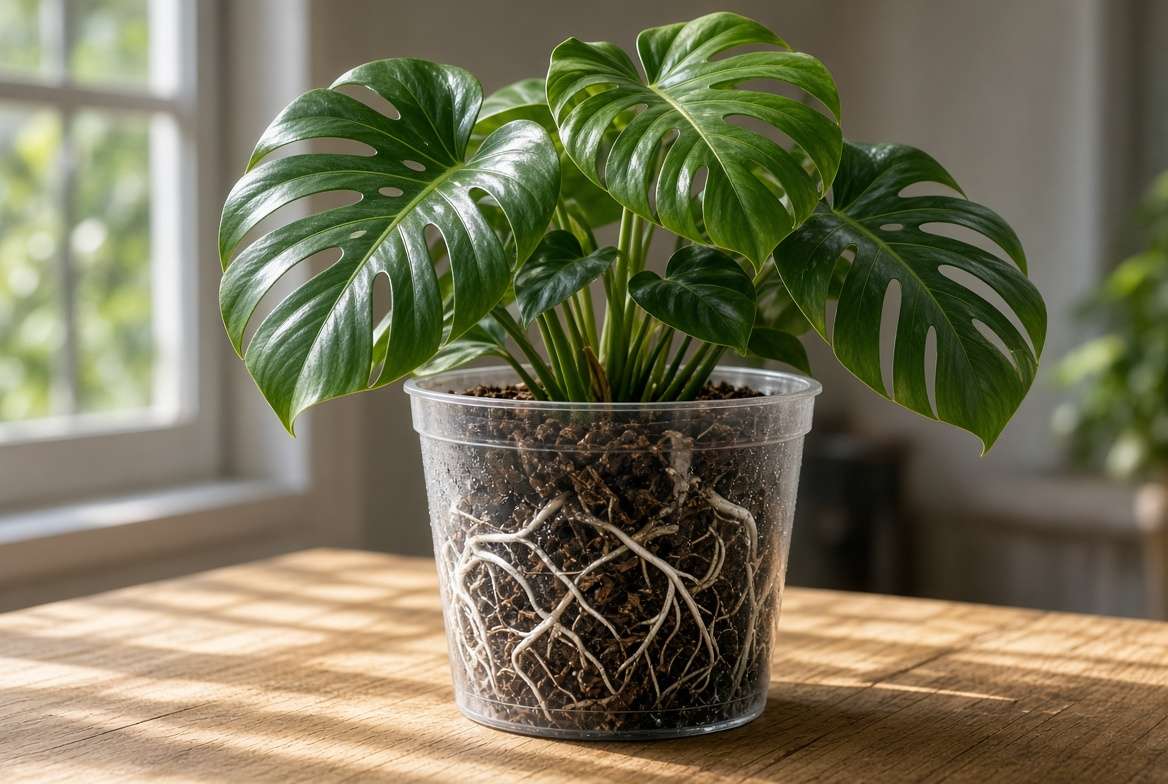
The most immediate and profound benefit of a transparent pot is x-ray vision into the heart of your plant’s ecosystem. Healthy roots are typically plump, firm, and white or light tan (depending on the species). When a root tip hits the side of a clear pot, you can actively watch it branch and travel.
More importantly, you can spot the very first sign of necrosis. If a single root strand begins to brown or turn mushy against the plastic, you can immediately adjust your watering schedule or airflow without ever disturbing the plant. Unpotting a plant to check its roots causes significant transplant shock, forcing the plant to halt foliage growth while it repairs micro-tears in the root hairs. Clear containers eliminate this trauma entirely.
2. Precision Watering (No More Moisture Meters!) 💧
Moisture meters are notoriously unreliable, especially in the chunky, well-aerated soil mixes that tropical houseplants demand. They often measure conductivity, not actual moisture, leading to false readings and accidental overwatering.
Clear containers offer a foolproof, visual moisture indicator: condensation. When you water a plant, condensation forms on the inside walls of the plastic. Over the next week, as the plant drinks and the soil dries, that condensation slowly vanishes. Once the plastic is entirely clear and no water droplets remain against the soil line, you know the substrate is evenly dry. This visual cue completely removes the anxiety of wondering if the center of the root ball is still wet.
3. Photosynthesis for Epiphytic Roots ☀️
Many of the most popular houseplants—including Phalaenopsis orchids, Monstera deliciosa, and various Hoya species—are epiphytes. In their natural jungle habitats, they do not grow in the ground. They climb the trunks of massive trees, exposing their root systems to dappled sunlight and frequent rain showers.
Because of this evolutionary history, the roots of many epiphytes possess chloroplasts and are fully capable of photosynthesis. Planting an orchid in a dark, opaque ceramic pot deprives its roots of light, hindering its natural energy production. Clear pots mimic their arboreal environment, allowing ambient light to reach the root zone, promoting more vigorous, resilient growth.
4. Spotting Pests Before They Spread 🐛
Foliage pests like spider mites and thrips are frustrating, but soil-borne pests are a true nightmare because they breed unseen. Root mealybugs and fungus gnat larvae thrive in the dark, damp center of root balls.
With a transparent barrier, you can easily inspect the soil profile during your weekly watering routine. If tiny white specks (root mealybugs) or small translucent worms (gnat larvae) are multiplying against the plastic, you can immediately quarantine the plant and apply systemic granules or a hydrogen peroxide soil drench before the infestation spreads to the rest of your collection.
5. Capturing Stunning Visual Progress 📸
If you document your botanical journey, the root zone offers some of the most compelling visual narratives. There is something deeply satisfying about watching a fresh cutting push out tiny white water roots, or seeing a mature plant establish a dense, spiraling root system.
For those creating educational plant care media, these visuals are gold. Snapping high-resolution progress shots of a thriving root system pressed against clear plastic creates incredibly clickable, engaging visual assets. A side-by-side comparison of a struggling cutting next to a fully rooted, transparent cup makes for the perfect highly optimized Pinterest pin or a striking, curiosity-inducing YouTube thumbnail. It visually proves that your propagation methods and soil recipes actually work, establishing instant credibility with your audience.
🔄 How to Transition Your Plants to Clear Pots Successfully
Moving your plants into transparent housing requires a slight adjustment in how you handle repotting. Because you will be able to see every watering dynamic, setting up the right physical environment from day one is critical.
Choosing the Right Size and Drainage 📏
The biggest mistake plant parents make when repotting is sizing up too drastically. A pot that is too large holds excess moisture that the root system cannot drink fast enough, creating the exact anaerobic conditions that lead to root rot. When transitioning to clear plastic, choose a pot that is only one to two inches larger in diameter than the current root ball.
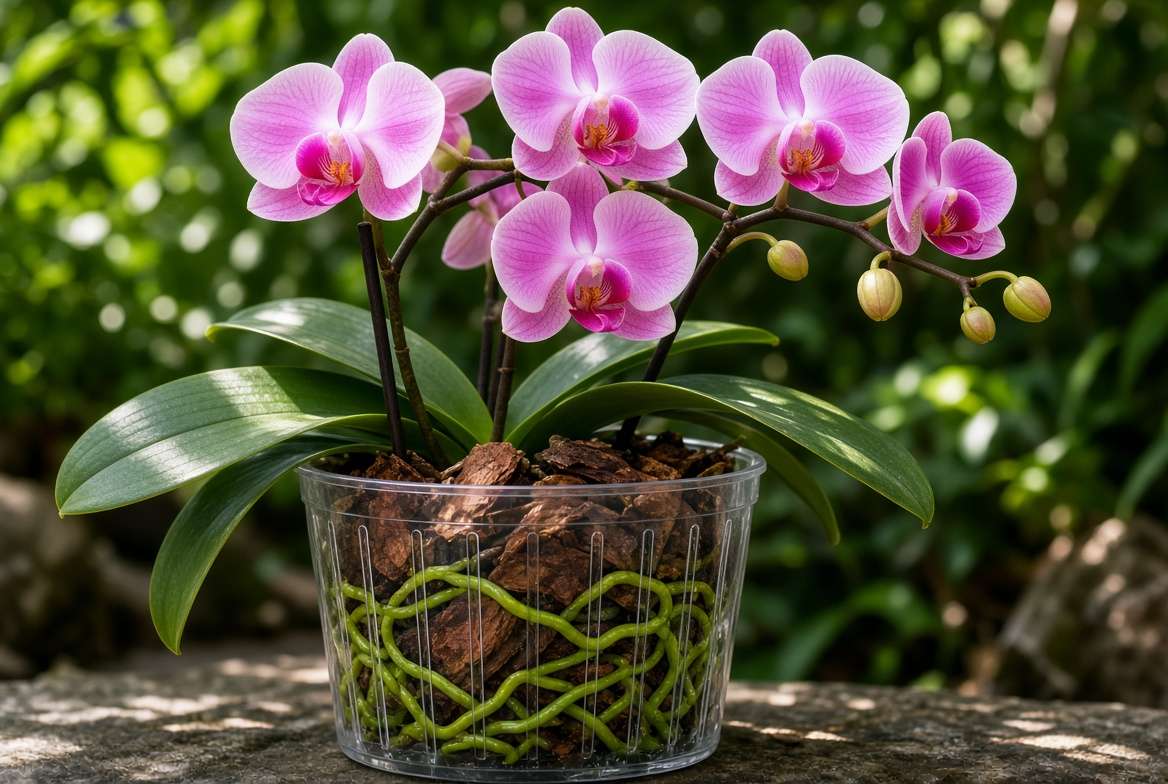
More importantly, drainage is non-negotiable. Look for clear heavy-duty nursery pots that feature multiple drainage holes at the bottom, and ideally, vertical slits along the sides. These side slits maximize airflow, drawing oxygen directly into the center of the root mass and drastically reducing drying times.

The “Cachepot” Method: Merging Health with Aesthetics 🏡
The most common objection to clear plastic pots is that they look unfinished or utilitarian. You do not have to sacrifice your interior design aesthetic for optimal plant health.
The cachepot method is the industry standard for indoor horticulturists. You simply pot your plant in a clear nursery pot, and then drop that clear pot directly into a slightly larger, decorative ceramic, terra cotta, or woven planter (the cachepot).
When it is time to water, you lift the lightweight clear pot out of the decorative shell. You carry it to the sink, visually inspect the roots, run water thoroughly through the soil so it flushes out completely, and then return it to the beautiful outer pot. This method gives you the aesthetic appeal of high-end ceramics with the superior diagnostic power of transparent plastic.
🪨 Best Soil Mixes to Use with Clear Nursery Pots
Pairing a clear container with standard, dense potting soil completely defeats the purpose. Dense peat moss compacts against the plastic walls, choking out oxygen and hiding the roots in a solid wall of black mud. To get the most out of your transparent pots, you need to rethink your substrate.
Chunky Aroid Mixes (The Holy Grail) 🥥
For tropical houseplants, optimizing soil health means mimicking the loose, airy debris found on a jungle floor. A chunky, well-draining aroid mix is essential.
A professional-grade recipe typically includes:
-
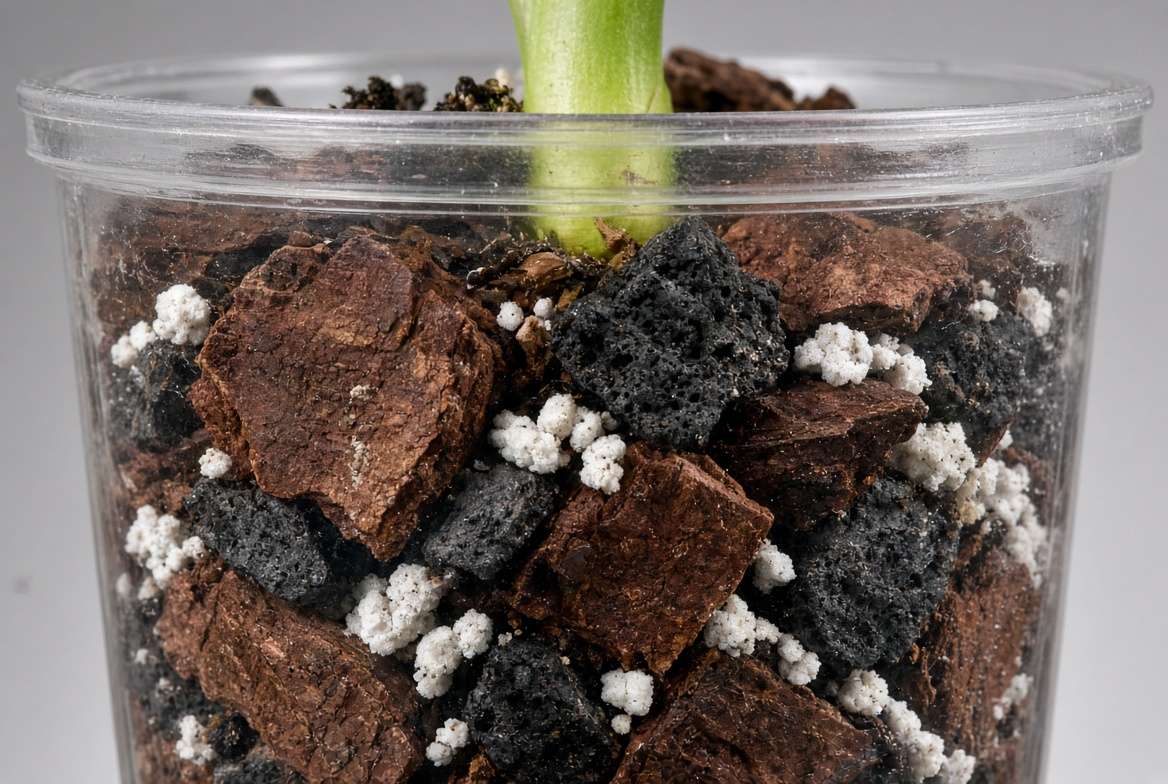
Orchid Bark: Provides structure and large air pockets.
-
Perlite or Pumice: Prevents compaction and aids in drainage.
-
Horticultural Charcoal: Filters impurities and prevents bacterial buildup.
-
Coco Coir or Premium Potting Soil: Retains just enough moisture to sustain the plant between waterings.
When you use a chunky mix in a clear pot, you can physically see the air pockets. You can watch the water cascade through the substrate rather than sitting in a dense puddle, ensuring excellent aeration for long-term root health.
Sphagnum Moss & Perlite for Propagation 🌱
If you are propagating rare plant cuttings, clear pots are an absolute necessity. Instead of a chunky soil mix, fill a small clear cup with a 50/50 blend of damp long-fiber sphagnum moss and coarse perlite.
This airy, highly humid environment encourages rapid root development. Because the pot is clear, you can monitor the exact length and thickness of the new roots without pulling the cutting out of the moss. Once you see a robust, secondary root system wrapping around the inside of the plastic, you know the cutting is strong enough to survive the transition into a permanent chunky soil mix.
🪴 Which Plants Thrive Best in Clear Containers?
While almost any plant can benefit from the cachepot method, certain species show explosive growth and dramatically improved health when their root systems are visible and exposed to ambient light.
The VIPs (Very Important Plants) 👑
Epiphytes and hemiepiphytes are the prime candidates for transparent planters. Their roots are evolutionary adapted to cling to tree bark and absorb moisture from humid air, making them highly susceptible to suffocation in dense, dark pots.
-
Orchids (Phalaenopsis, Dendrobium): Their roots actively photosynthesize and turn a bright, vibrant green when exposed to light and water.
-
Monsteras & Philodendrons: These aggressive climbers produce thick, fleshy aerial roots that thrive in the airy environment of a clear, slotted pot.
-
Anthuriums: Notoriously finicky about root rot, Anthuriums require the strict moisture monitoring that only clear plastic can provide.
-
Hoyas: With their fine, easily damaged root systems, Hoyas benefit immensely from the visual watering cues (condensation evaporation) clear pots offer.
Plants That Prefer the Dark 🌑
Deep-rooted terrestrial plants—such as Calatheas, Marantas, and Ferns—naturally grow on the dense, dark forest floor. While they do not benefit from light hitting their roots, they still benefit from being potted in clear plastic. Simply utilize the cachepot method to keep their roots in darkness while retaining your ability to lift them out and check for moisture levels and pests.
🟢 Pro Tips: Managing Algae Growth in Clear Pots
When you combine moisture, nutrients from fertilizer, and sunlight, you inevitably invite a common botanical hitchhiker: algae.
Is Algae Actually Harmful? 🦠
Seeing a thin green film develop on the inside walls of your clear pot can be alarming, but it is largely a cosmetic issue. Green algae does not infect or attack plant roots. It is simply a microscopic plant utilizing the available light and water. In minor amounts, it is entirely harmless. However, if allowed to grow into a thick, dense mat, it can begin to compete with your plant’s roots for oxygen and trace nutrients.
How to Prevent and Clean It 🧽
The easiest way to prevent algae is to limit direct light exposure to the root zone by using the cachepot method mentioned above. The decorative outer pot blocks the UV light algae needs to bloom.
If you prefer the look of standalone clear pots and want to manage the algae, you can periodically flush the soil with a mild hydrogen peroxide solution (one part 3% hydrogen peroxide to four parts water). This adds a flush of extra oxygen to the soil, killing the algae spores without harming your plant’s established root system.
❓ Frequently Asked Questions (FAQs)
Do clear plastic plant pots burn roots in the sun? ☀️ Ambient, indirect indoor light will never burn plant roots. However, if you place a clear plastic pot in direct, intense outdoor sunlight, the plastic can act like a magnifying glass, rapidly heating the soil and potentially scorching delicate root hairs. Always use clear pots in bright, indirect light or slip them into an opaque cachepot if placed in a south-facing window.
Can I reuse clear plastic cups as plant pots? 🥤 Absolutely! Upcycling sturdy plastic deli containers, boba tea cups, or clear takeout containers is a highly popular and eco-friendly practice in the plant community. The only strict requirement is that you must add drainage. Use a soldering iron or a power drill to create at least four to five holes in the bottom before adding soil.
How often should I check my plant’s roots in a clear pot? 👀 You do not need a separate routine for root inspections. Simply glance at the root system every time you water. Look for the disappearance of condensation to indicate it is time to water, and do a quick visual scan for crisp, healthy root tips versus any brown, mushy spots.
Where is the best place to buy heavy-duty clear nursery pots? 🛒 While big-box hardware stores are starting to catch on, the most reliable places to find specialized, heavy-duty clear pots (especially those with side-slits for aeration) are dedicated local plant nurseries, orchid supply retailers, or specialized online horticultural shops. Look for thick, rigid plastic that will not easily crush or warp when lifted.
🏁 Empowering Your Plant Parenthood
Successfully cultivating an indoor garden ultimately comes down to observation and proactive adjustments. Traditional opaque planters force us to react to problems only after they have manifested as dying foliage, which is often too late. By utilizing clear plastic plant pots, you flip the script entirely. You gain the ability to monitor the hidden half of your plant, optimizing soil health, perfecting your watering schedule, and stopping root rot in its tracks long before it causes irreversible damage.
The confidence that comes from visually confirming a healthy, vigorous root system is unmatched. It transforms plant care from a stressful guessing game into an engaging, scientifically grounded hobby.
Have you tried the cachepot method with clear nursery pots yet? Let me know down in the comments which plant you plan to transition first!











