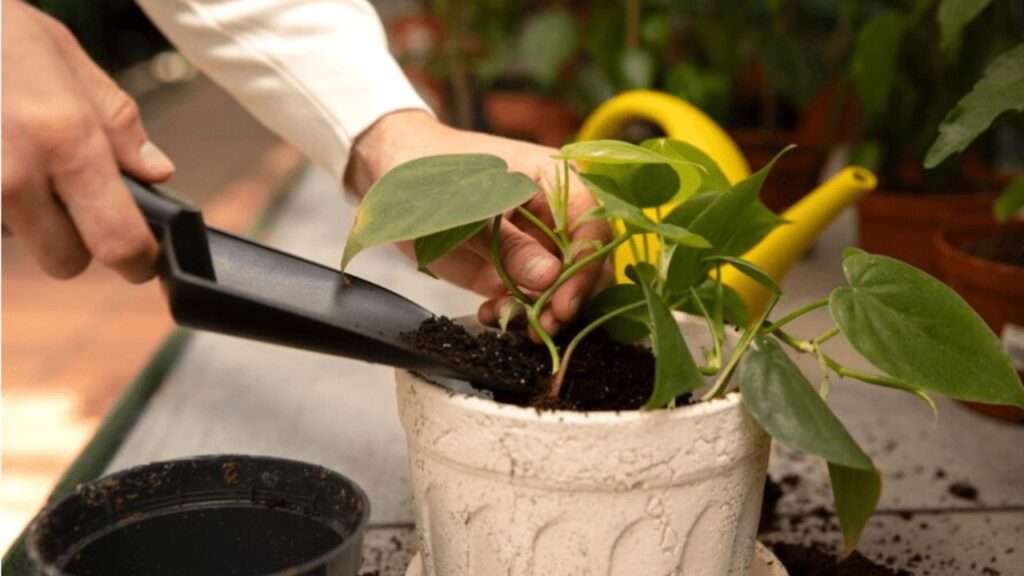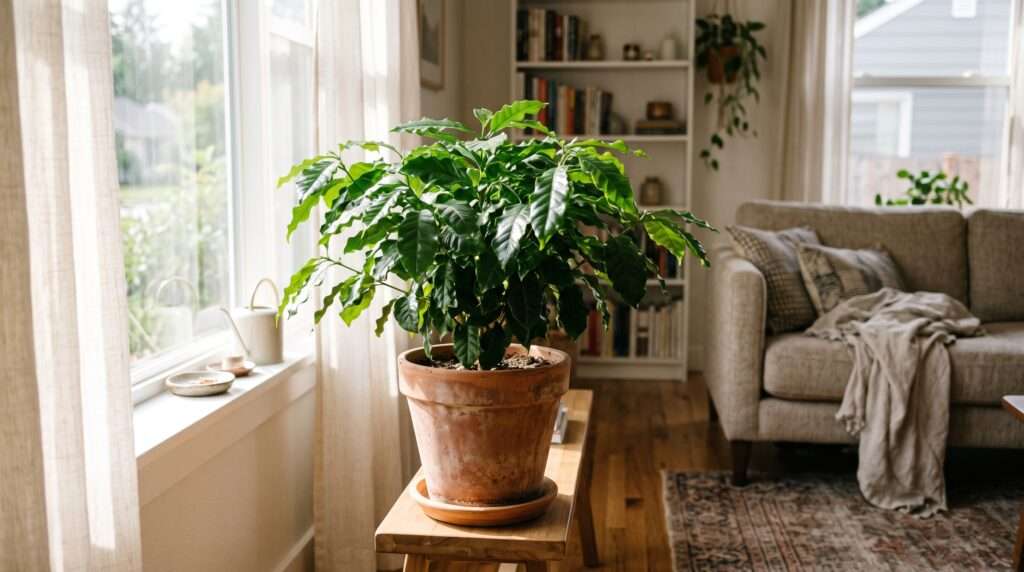
Imagine waking up, pouring a fresh cup of coffee, and looking over at a lush, glossy green shrub that actually grew those beans right in your living room. While most houseplant enthusiasts buy a coffee plant (Coffea arabica) for its vibrant, ruffled foliage rather than a morning brew, keeping this tropical beauty looking pristine can be surprisingly tricky. As a horticulturist who has spent years rehabilitating indoor trees, I frequently see plant parents struggling with crispy brown edges, sudden leaf drop, or stunted growth.
This guide is designed to move beyond basic watering tips. We are going to explore the botanical science of indoor tropical plant care, providing you with a skyscraper-level masterclass. We will cover foolproof daily routines, advanced troubleshooting for common diseases, and the realistic timeline for achieving those elusive, jasmine-scented indoor blooms.
Meet Your Coffee Plant (Coffea arabica): An Indoor Botanical Star 🌱
Before you can perfectly care for any houseplant, you have to understand where it comes from. The Coffea arabica is not a delicate, fussy hybrid created in a greenhouse; it is a robust, woody evergreen shrub native to a very specific environment.
Origins and Natural Habitat 🌍
In the wild, the coffee plant thrives in the tropical highlands of Ethiopia and South Sudan. It grows as an understory plant, meaning it lives beneath the protective canopy of towering forest trees. In this natural habitat, the plant receives dappled, filtered sunlight, consistent moisture from frequent tropical rains, and high ambient humidity. The temperatures in these high-altitude regions are comfortably warm but rarely scorching, with cool, refreshing evenings.
When we bring a coffee plant indoors, our goal is to mimic this Ethiopian highland environment as closely as possible. The secret to a thriving indoor coffee tree lies in balancing this need for high humidity and bright, indirect light against the often dry, stagnant air of modern, climate-controlled homes.

Is It Toxic to Pets? 🐾
Crucial Safety Warning: While the roasted coffee beans we grind for our morning espresso are perfectly safe for humans, the actual foliage of the plant is a different story. The leaves, stems, and unroasted green berries of the Coffea arabica plant contain caffeine and toxic saponins.
If ingested by cats, dogs, or other small pets, these compounds can cause severe gastrointestinal distress, vomiting, diarrhea, and in rare, extreme cases, central nervous system issues like tremors or abnormal heart rates. If you have curious pets who love to nibble on your indoor jungle, this plant must be elevated on a high shelf or placed in a room inaccessible to your furry companions.
The 5 Pillars of Coffee Plant Care ☀️💧
Mastering these five foundational elements will prevent 90% of the problems indoor gardeners face when raising a coffee plant.
1. Light Requirements: Finding the Sweet Spot 🌤️
Because coffee plants evolved under a forest canopy, they are perfectly adapted to absorb scattered, indirect sunlight. Direct, scorching midday sun—especially through a magnifying glass-like window pane—will rapidly bleach the leaves, causing irreversible sunburn and crispy, brown necrotic spots.
However, “indirect light” does not mean “low light.” If placed in a dark, forgotten corner, your coffee plant will stop growing, become leggy (stretching weakly toward the nearest light source), and will almost certainly drop its lower leaves.
The Ideal Setup:
-
East-Facing Windows: This is the holy grail for a coffee plant. It provides gentle, cool morning sun that energizes the plant without burning the foliage, followed by bright, indirect light for the rest of the day.
-
South or West-Facing Windows: If this is your only option, you must filter the intense afternoon light. Hang a sheer white curtain between the window and the plant, or pull the pot back 3 to 5 feet into the room to protect the leaves from harsh UV rays.
2. Watering Schedule and Technique 🚿
Coffee plants are notorious drama queens. If their soil dries out completely, the entire plant will wilt spectacularly, its leaves drooping flat against the stems. While they usually bounce back within a few hours of a good soaking, repeatedly putting the plant through this extreme drought stress will eventually cause permanent cellular damage, leading to brown tips and leaf drop.
The “Soak and Dry” Method:
-
When to Water: Do not water on a strict calendar schedule (e.g., “every Sunday”). Instead, test the soil. Insert your finger about two inches deep into the potting mix. If the top two inches are dry to the touch, but you can feel moisture below that, it is time to water.
-
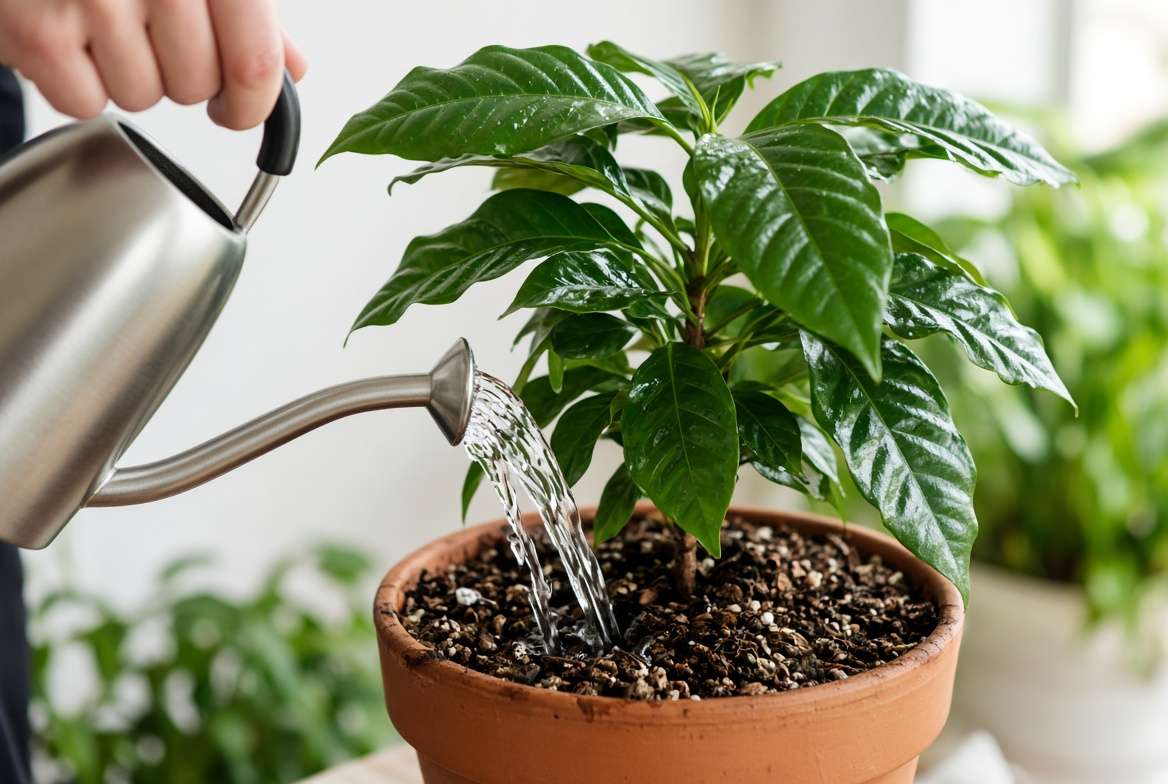
How to Water: Bring the plant to the sink or shower. Pour room-temperature water evenly over the soil surface until it flows freely out of the bottom drainage holes. This ensures the entire root ball is saturated and flushes out any built-up mineral salts from fertilizers.
-
Water Quality: Coffee plants can be sensitive to the chlorine, fluoride, and hard minerals found in municipal tap water. If your tap water is heavily treated, consider using rainwater, distilled water, or tap water that has been left out overnight in an open container to allow chlorine gas to dissipate.
3. Humidity and Temperature (The Jungle Factor) 🌡️
This is where most indoor gardeners fail. The average home has an ambient humidity level of 30-40% (and drops even lower in winter with the central heating on). Your coffee plant, however, craves humidity levels between 50% and 70%.
Mastering Humidity:
-
Misting is a Myth: Spritzing the leaves with a spray bottle only raises humidity for a few minutes and can encourage fungal diseases if the leaves stay wet at night.
-
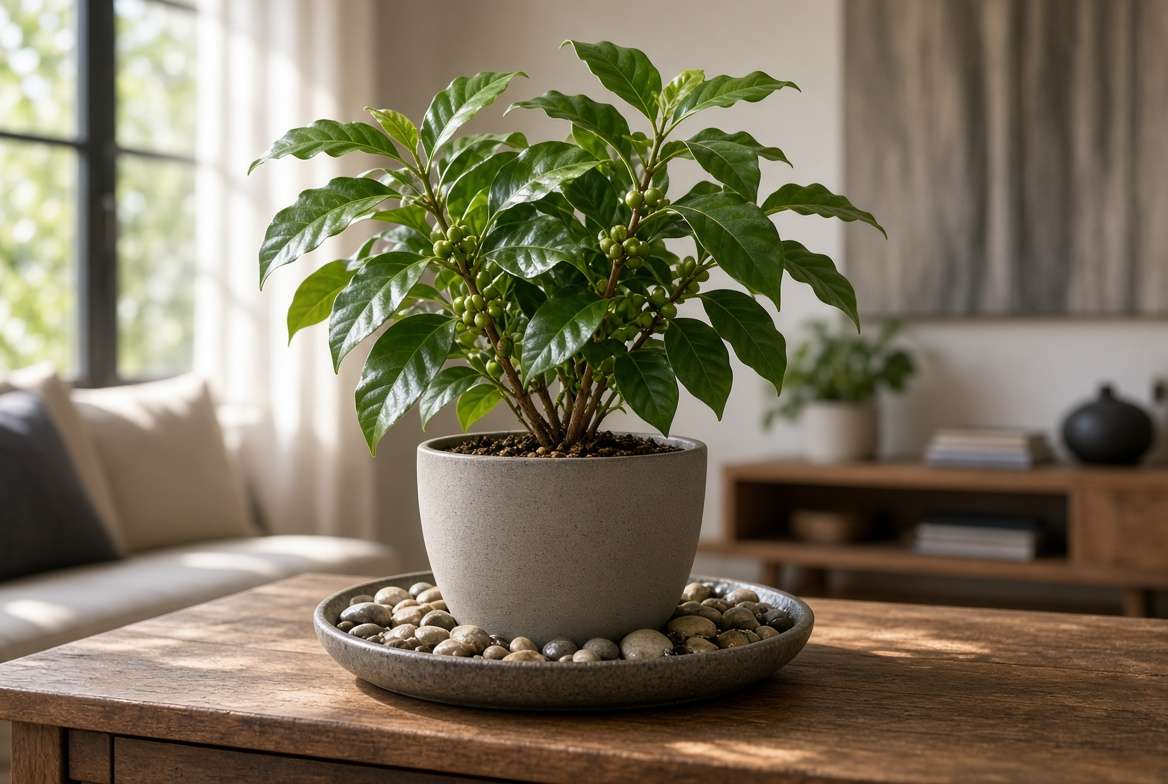
The Pebble Tray Solution: Fill a shallow tray with pebbles and pour water just below the top of the stones. Place the potted plant on top. As the water evaporates, it creates a micro-climate of moisture directly around the foliage.
-
Humidifiers: The most effective, professional-grade solution is to place a small ultrasonic humidifier near your plant collection.
-
Temperature: Maintain a comfortable range between 65°F and 80°F (18°C–26°C). Keep your plant far away from drafty winter windows, exterior doors, and direct blasts from air conditioning vents or space heaters.
4. Soil and Potting Mix Recipe 🪴
Coffee plants are acid-loving (ericaceous). They absorb nutrients most efficiently when the soil pH is slightly acidic, ideally hovering between 6.0 and 6.5. Standard, dense potting soil straight from the bag often stays too wet and lacks the acidity and aeration this plant needs to prevent root rot.
The Expert DIY Potting Mix: Create a well-draining, slightly acidic blend by mixing:
-
50% Peat Moss or Coco Coir: This provides the acidic base and retains just enough moisture.
-
30% Orchid Bark or Pine Bark Fines: This introduces chunky air pockets, allowing oxygen to reach the roots and preventing the mix from compacting.
-
20% Perlite or Pumice: Essential for rapid drainage, ensuring water flows through the pot quickly rather than suffocating the root system.
5. Feeding Your Coffee Plant 🍽️
During the active growing season (early Spring through late Summer), your coffee plant will expend a massive amount of energy pushing out new sets of glossy leaves.
Fertilization Strategy:
-
What to Use: Choose a high-quality, balanced liquid fertilizer (like a 10-10-10 NPK ratio). Alternatively, you can use a fertilizer specifically formulated for acid-loving plants (such as those meant for citrus, azaleas, or rhododendrons), which often contain chelated iron. Iron is crucial for coffee plants; an iron deficiency will cause the newer leaves to turn pale yellow while the veins remain starkly green (chlorosis).
-
How Often: Dilute the liquid fertilizer to half the recommended strength to prevent chemical root burn, and apply it every two weeks after a regular watering.
-
Winter Dormancy: Stop fertilizing entirely from late fall through winter. The plant’s metabolism slows down in response to shorter days, and excess fertilizer will just build up toxic salts in the soil.
Advanced Maintenance: Pruning and Repotting ✂️
Once you have mastered the daily environmental needs of your Coffea arabica, you will notice that this plant is a vigorous grower. In its natural habitat, a coffee tree can reach towering heights of 15 to 20 feet! Indoors, it can easily stretch to an impressive 6 feet tall under optimal conditions. To keep your indoor jungle looking manicured and to maintain the plant’s overall health, you will need to learn the arts of pruning and repotting.
How and When to Prune 🌿
Without regular pruning, an indoor coffee plant often develops a single, tall, leggy main stem with sparse foliage at the bottom. The goal of pruning is to encourage horizontal branching and a dense, bushy appearance.
-
The Best Time to Prune: Always do your heavy pruning in early spring, just as the plant is waking up from its winter dormancy and entering its active growth phase. This ensures the plant has maximum energy to heal its cuts and push out fresh leaves.
-
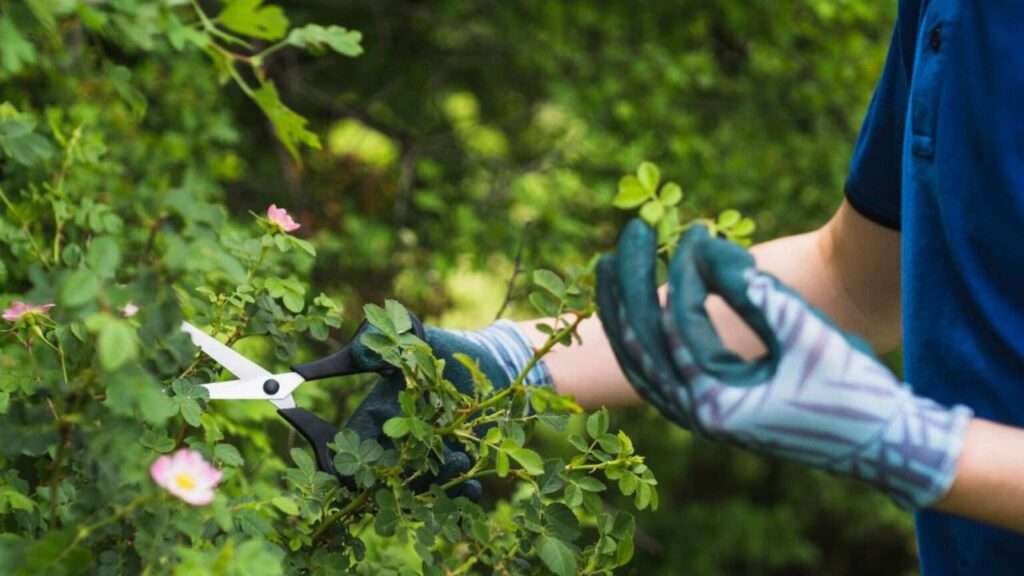
The Technique: Using clean, sterilized pruning shears (wiping the blades with rubbing alcohol prevents the spread of bacterial infections), cut the stem at a 45-degree angle about a quarter-inch above a leaf node (the little bump on the stem where leaves emerge).
-
Pinching Back: For younger plants, simply “pinching” off the newest, softest top growth with your fingers will force the plant to redirect its energy into lateral branches, resulting in a much fuller canopy. Never remove more than 25% of the plant’s total foliage at one time, as this can cause severe shock.
Repotting Guide 🔄
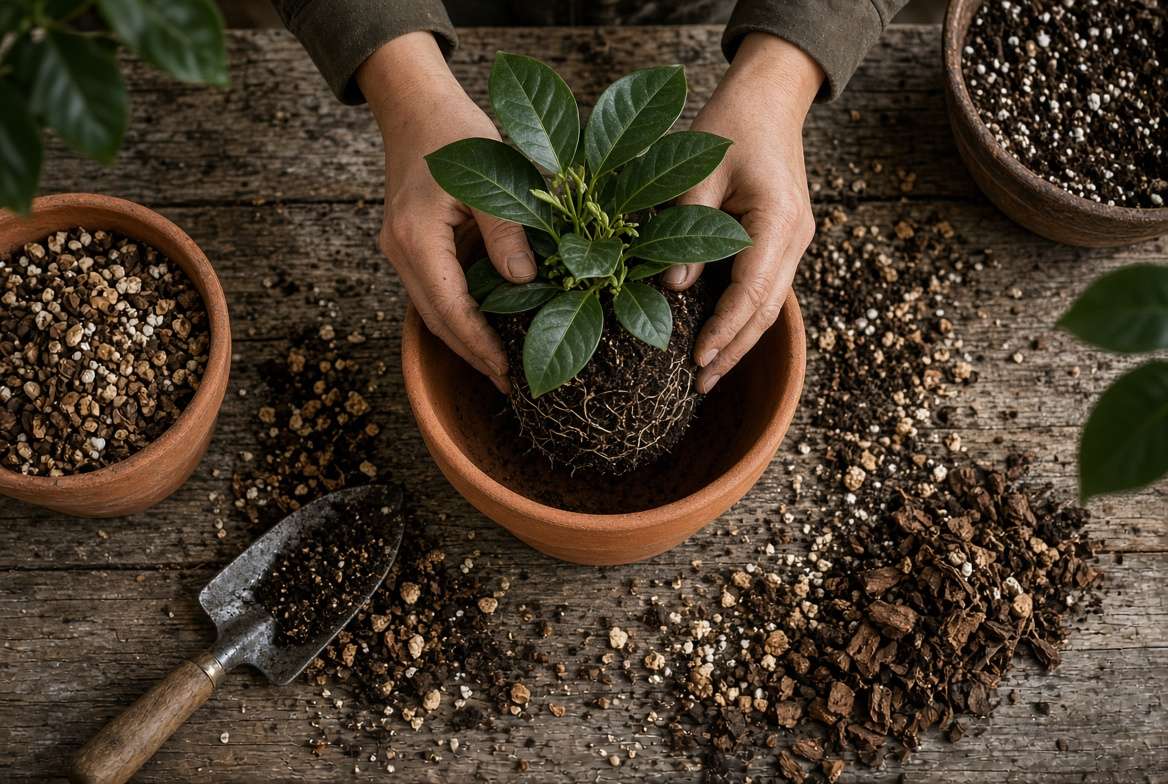
Coffee plants have robust, aggressive root systems. Depending on how fast yours is growing, you will likely need to repot it every two to three years.
-
Signs Your Plant is Rootbound: If you see roots escaping through the bottom drainage holes, roots circling the top of the soil, or if water runs instantly out of the bottom of the pot without absorbing (because the pot is 90% roots and 10% soil), it is time for an upgrade.
-
Choosing the Right Pot: Only increase the pot size by 1 to 2 inches in diameter. Moving a small plant into a massive pot is a recipe for disaster; the excess soil will hold too much water, leading to root rot. Terra cotta pots are excellent choices because the porous clay allows the roots to breathe and helps moisture evaporate more evenly.
-
The Process: Gently massage the root ball to loosen tightly coiled roots before placing it in the new container. Fill in the gaps with the acidic, chunky potting mix recipe mentioned earlier, water thoroughly, and keep it out of bright light for a few days to let it recover from transplant shock.
Coffee Plant Troubleshooting Guide: Fixing Common Problems 🚑
Even the most dedicated plant parents run into issues. The key to plant care is learning how to “read” your foliage. The leaves will tell you exactly what is wrong if you know what to look for.
Why Are My Coffee Plant’s Leaves Turning Brown? 🍂
Brown leaves are the most common complaint among indoor coffee plant growers. The location and texture of the browning will pinpoint the exact cause:
-
Crispy, Brown Edges and Tips: This is the classic symptom of low humidity. The dry air is literally sucking moisture out of the thinnest parts of the leaf faster than the roots can replenish it. Boost your humidity using a humidifier or pebble tray.
-
Dark, Mushy Brown Spots on the Leaf Center: This is a severe warning sign of overwatering and impending root rot. If the soil is soggy, you must immediately hold off on watering. In severe cases, you may need to un-pot the plant, trim away slimy, black, rotting roots, and repot in fresh, dry soil.
-
Bleached, Papery Brown Patches: If the brown spots look like dry, scorched parchment paper, your plant is suffering from sunburn. Move it further away from the harsh direct light.
Drooping and Yellowing Leaves 📉
-
The Dramatic Droop: As mentioned in the watering section, if the entire plant suddenly wilts and the leaves hang straight down, check the soil. If it is bone dry, the plant is just throwing a tantrum. Give it a deep soak, and it will perk back up within hours.
-
Yellowing Older Leaves (Lower on the Stem): It is perfectly natural for a plant to occasionally shed its oldest bottom leaves as it grows. However, if many lower leaves are turning yellow simultaneously, it often points to a nitrogen deficiency or chronic overwatering.
-
Yellowing New Leaves (Chlorosis): If the newest leaves at the top of the plant are pale yellow but the leaf veins remain dark green, your plant is struggling with iron chlorosis. This usually happens if the soil pH is too high (alkaline). Applying a chelated iron supplement and ensuring you are using an acidic potting mix will correct this.
Pests to Watch Out For 🐛
Indoor tropical plants can attract uninvited guests. A monthly inspection of the undersides of the leaves and the crevices where stems meet is vital for early detection.
-
Mealybugs: These look like tiny, fluffy white cotton balls hiding in the joints of the plant. They suck the sap from the stems, weakening the plant.
-
Spider Mites: These microscopic pests thrive in dry indoor air. You might not see the bugs themselves, but you will notice delicate, dusty webbing underneath the leaves, and the foliage will begin to look dull and stippled.
-
Scale: These look like small, hard, brown bumps stuck to the stems and leaves.
-
The Treatment Plan: Isolate the infected plant immediately. For light infestations, wipe the bugs away with a cotton swab dipped in rubbing alcohol. For larger outbreaks, treat the entire plant thoroughly with organic Neem oil or an insecticidal soap spray, repeating every 7 days until the lifecycle is broken.
Can You Actually Grow Coffee Beans Indoors? 🌸☕
Yes! While it requires patience and excellent care, cultivating your own coffee beans indoors is entirely possible and serves as the ultimate bragging right for an indoor gardener.
The Blooming Phase (White Flowers)
Don’t expect your baby coffee plant to start producing beans immediately. A Coffea arabica typically needs to reach maturity, which takes about 3 to 5 years, before it will flower. When it finally does bloom—usually in early spring—it is a spectacular event. The plant will produce clusters of delicate, star-shaped white flowers along its stems. The best part? These blossoms emit an intoxicating, sweet fragrance highly reminiscent of jasmine. To trigger blooming, ensure the plant gets plenty of bright, indirect light and experiences a slight, natural temperature drop in the winter months (down to about 60°F or 15°C at night), which mimics the seasonal shifts in its natural habitat.

Hand-Pollination and Fruiting (Coffee Cherries) 🍒
In a tropical highland, bees and insects take care of pollination. In your living room, you have to play the role of the bee.
-
How to Pollinate: When the flowers open, take a soft, clean makeup brush or a small paintbrush and gently dab the center of each flower, moving from blossom to blossom. This transfers the pollen and ensures fruit development.
-
The Fruiting Cycle: If pollination is successful, the flowers will drop, and small green berries will form in their place. Over the course of several months, these berries will slowly ripen, turning a deep, glossy red. These are called “coffee cherries.”
-
The Harvest: Once the cherries are dark red and slightly soft to the touch, they are ready to harvest. Inside the sweet, fruity pulp of each cherry, you will find two green seeds—these are your raw coffee beans! While one indoor plant won’t yield enough for your daily pot of French press, harvesting and roasting a tiny, symbolic batch of your own homegrown beans is a deeply rewarding botanical achievement.
Frequently Asked Questions (People Also Ask) ❓
How fast does an indoor coffee plant grow? During its active growing season (spring and summer), a healthy coffee plant is a relatively fast grower, capable of adding 12 to 24 inches of height per year. Growth will slow down significantly or pause completely during the low-light winter months.
Can I put my coffee plant outside in the summer? Absolutely, and they love the fresh air! However, you must “harden them off” first. Never move a plant from your living room directly into the summer sun; it will suffer severe shock and sunburn. Place the plant in full, deep shade outside for a week, slowly transitioning it to dappled morning light. Always bring it back indoors well before nighttime temperatures drop below 55°F (12°C).
Can I grow a coffee plant from a roasted coffee bean? No, you cannot. The roasting process involves extreme heat that completely destroys the embryo inside the seed. To grow a coffee plant from scratch, you must purchase viable, raw, unroasted “green” coffee seeds, soak them in water for 24 hours, and germinate them in warm, moist soil.
Final Thoughts for the Plant Parent Growing an indoor coffee plant is a dynamic, rewarding journey. By understanding its tropical origins—providing it with bright indirect light, consistent moisture, high humidity, and acidic soil—you are setting yourself up for decades of success. Don’t be discouraged by a few dropped leaves or brown tips; use this guide to troubleshoot, adjust your care routine, and watch as your Coffea arabica transforms into the lush, flowering centerpiece of your indoor garden!