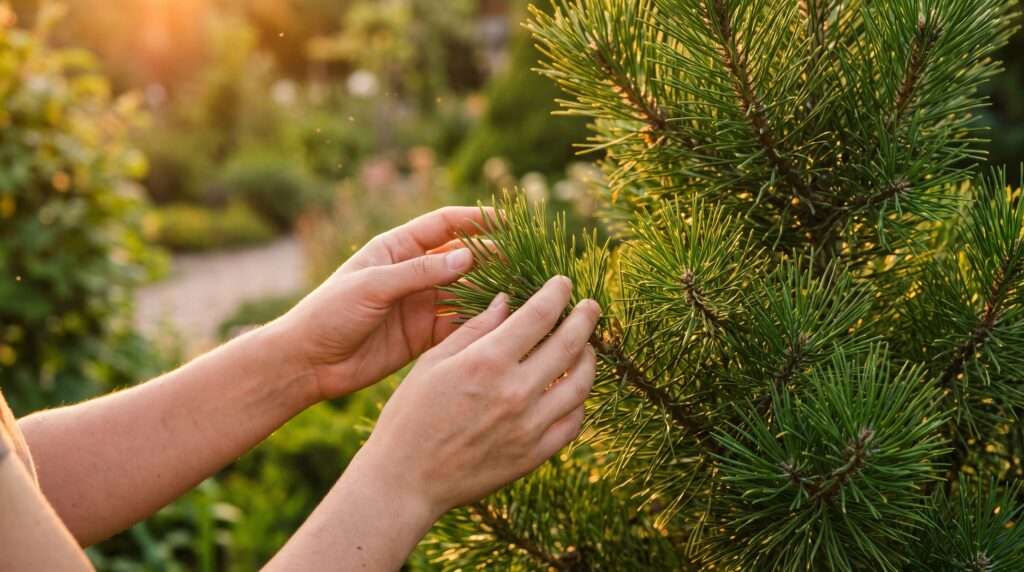
There is an undeniable, timeless charm to the vibrant, evergreen silhouette of a healthy conifer. However, few things are as frustrating to a gardener as watching the lush, green foliage of their prized pine tree plants turn a crispy, lifeless brown. 🍂 Whether you are cultivating a majestic landscape centerpiece or nurturing a potted indoor conifer, understanding the unique biology of these resilient trees is the key to lasting success. As a certified plant care specialist with years of hands-on experience in arboriculture, I have diagnosed countless evergreens suffering from environmental stress, improper soil conditions, and hidden pests. 🧑🌾 This comprehensive guide will equip you with the exact techniques, preventative measures, and expert troubleshooting strategies required to keep your evergreens thriving year-round.
Understanding Your Pine Tree Plants: Not All Pines Are the Same 🌿
Before diving into watering schedules and soil amendments, it is crucial to recognize that the term “pine” represents a vast and diverse genus (Pinus). Treating a rugged alpine species the same way you would treat a tropical imposter is a guaranteed recipe for failure.

Popular Varieties for Home Gardens and Indoors
Selecting the right species for your climate and space is the foundation of conifer care. Some of the most common varieties cultivated by home gardeners include:
-
Mugo Pine (Pinus mugo): A compact, bushy variety perfect for rock gardens, foundation plantings, and outdoor containers. It is incredibly cold-hardy and drought-tolerant once established.
-
Eastern White Pine (Pinus strobus): A towering, fast-growing landscape tree prized for its soft, feathery needles. It requires ample space and well-draining soil.
-
Norfolk Island Pine (Araucaria heterophylla): While highly searched and commonly sold as an indoor “pine tree,” this is actually a tropical plant native to the South Pacific. It requires high humidity, bright indirect light, and strictly frost-free environments, making its care completely different from true pines. 🌴
The Anatomy of a Pine: Needles, Roots, and Bark
True pines are gymnosperms, meaning they produce “naked seeds” housed within protective cones. Their needles are essentially modified leaves designed to minimize moisture loss through specialized stomata and a waxy coating called the cuticle. Beneath the soil, most pine tree plants develop a taproot (a deep, central root) alongside a sprawling, shallow lateral root system that captures surface moisture and nutrients. Because these lateral roots sit so close to the surface, they are highly susceptible to soil compaction, heavy foot traffic, and aggressive digging.
💡 Expert Insight: The number one secret to conifer success is respecting hardiness zones. A true pine requires a period of winter dormancy. Attempting to keep a cold-hardy Pinus indoors year-round will slowly starve it of its natural biological cycles, leading to inevitable decline.
Why Are My Pine Tree Needles Turning Brown? (The Ultimate Troubleshooting Guide) 🍂
Needle browning is a symptom, not a disease in itself. Diagnosing the root cause quickly is the difference between a minor cosmetic issue and losing the tree entirely. Here is how to decode what your plant is trying to tell you.
1. Seasonal Needle Drop (The Normal Kind)
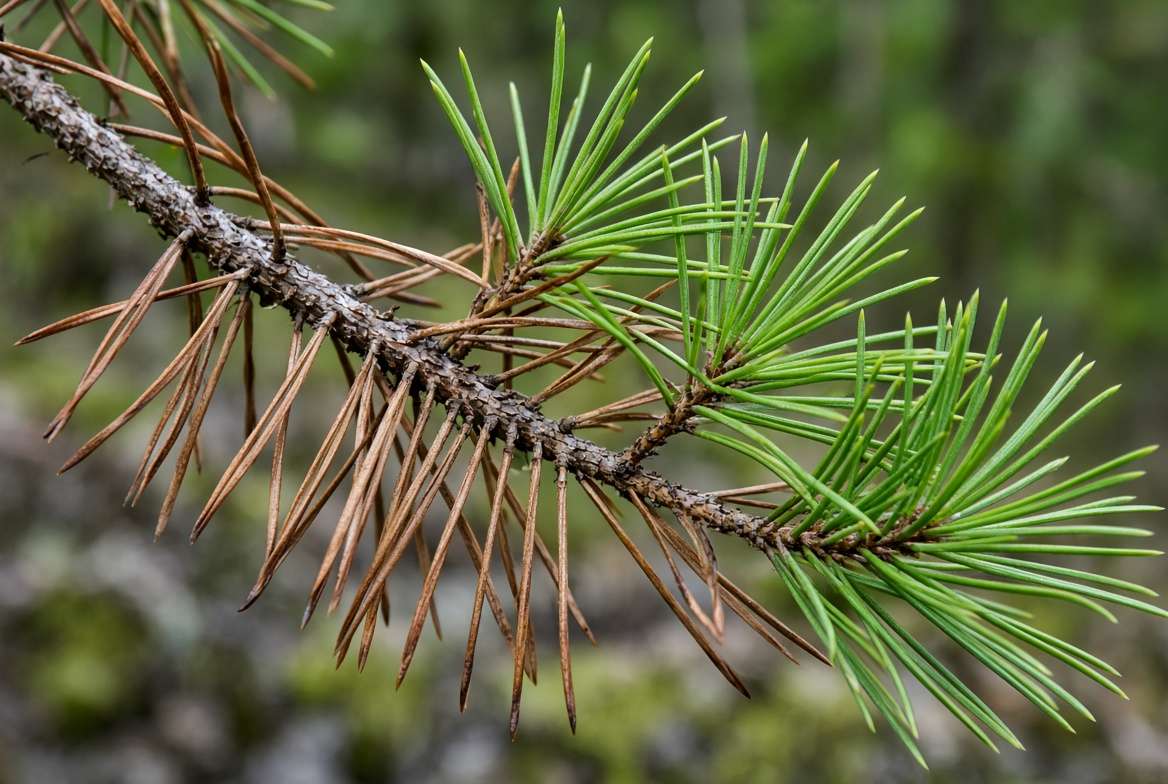
Not all browning is a cause for panic. Pine tree plants naturally shed their oldest needles to redirect energy to new growth. This typically occurs in late summer or autumn. You will notice the inner needles—those closest to the trunk—turning yellow, then brown, before dropping off. As long as the needles on the tips of the branches (the current year’s growth) remain vibrant and green, your tree is simply going through its natural shedding cycle.
2. Underwatering vs. Overwatering 💧
Moisture mismanagement is the leading cause of premature browning.
-
Underwatering: When a pine is severely dehydrated, its needles will turn a uniform, dull green before fading to brown. The needles will feel dry, brittle, and will snap easily when bent.
-
Overwatering: Pines loathe “wet feet.” Soil that remains constantly boggy suffocates the roots, leading to root rot. Overwatered needles often turn yellow and then a muddy brown, but they will feel soft, limp, or mushy rather than brittle. The soil may also emit a sour, swampy odor.
3. Environmental Stress and Transplant Shock
If you have recently planted a new pine or moved a potted specimen, it may experience transplant shock. Disturbed root systems struggle to uptake enough water to support the canopy, causing the needle tips to brown. Similarly, sudden environmental shifts—such as extreme heatwaves, unseasonable frosts, or exposure to harsh, drying winds—can scorch the needles.
4. Soil pH and Nutrient Deficiencies
True pines are acid-loving plants. They thrive in soil with a pH ranging from 5.5 to 6.5. If your soil is too alkaline (pH above 7.0), the tree cannot absorb essential micronutrients like iron and manganese, even if those nutrients are present in the ground. This condition, known as chlorosis, causes the needles to turn pale green or yellow while the veins (or needle bases) remain dark. Over time, these nutrient-starved needles will brown and die.
The Complete Care Routine for Thriving Pine Tree Plants ☀️
Proactive care is infinitely easier than reactive troubleshooting. By mimicking a pine’s natural habitat, you can cultivate vigorous growth and robust immunity against pests and diseases.
Perfecting the Soil and Drainage 🪴
Whether planting in the ground or in a container, excellent drainage is non-negotiable. Pines naturally grow in sandy, rocky, or loamy soils that dry out moderately between rains.
-
In the Landscape: If you have heavy clay soil, do not simply dig a hole and fill it with potting soil; this creates a “bathtub effect” where water pools around the roots. Instead, amend the entire planting bed with organic compost and coarse sand, or plant the tree on a slight mound to encourage runoff.
-
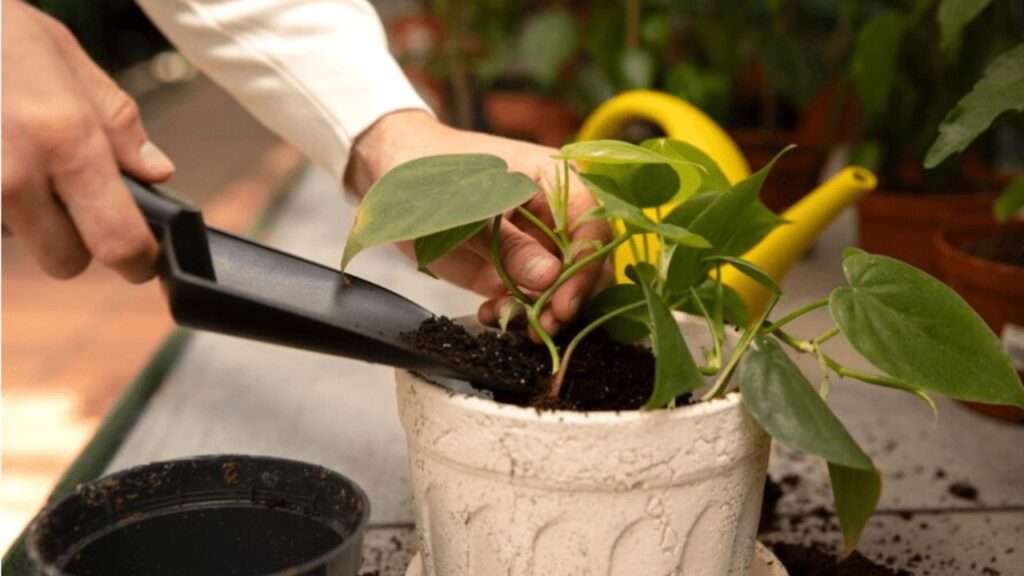
In Containers: Use a well-draining conifer mix. A blend of 50% high-quality potting soil, 25% perlite or pumice, and 25% pine bark fines provides the perfect balance of moisture retention and aeration.
Watering Guidelines: Finding the Sweet Spot 🚿
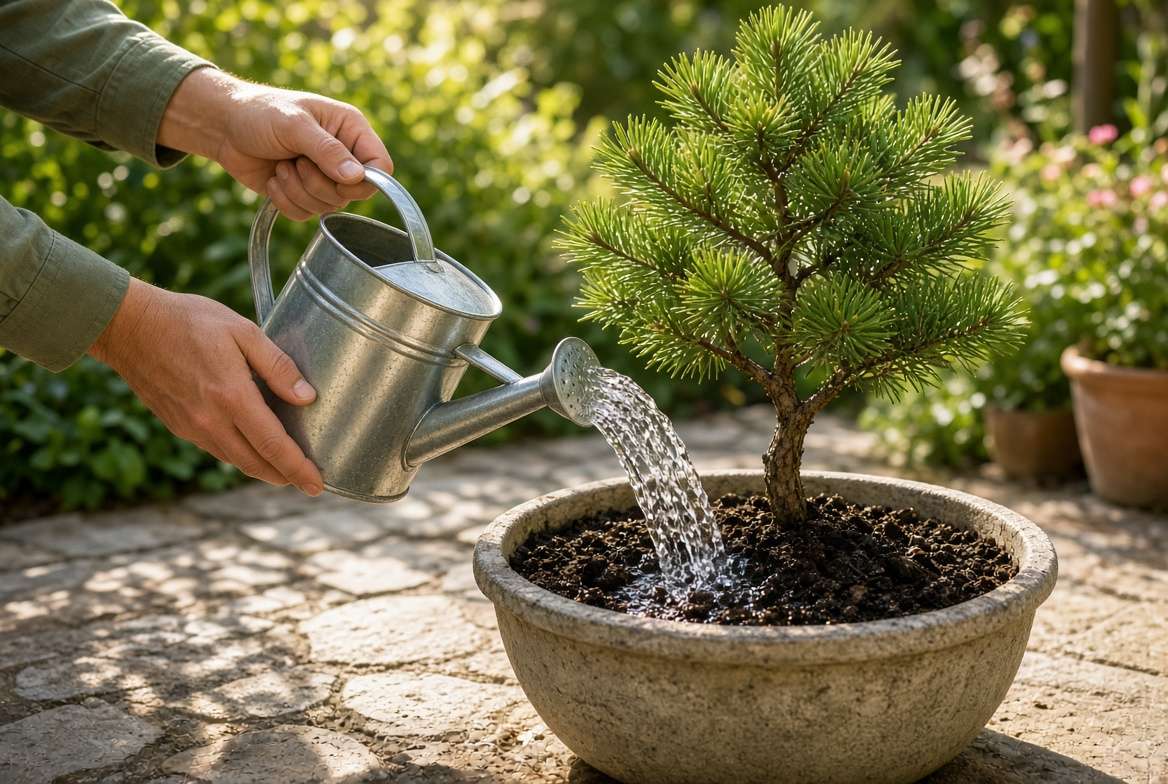
Newly planted pine tree plants require consistent moisture to establish their root systems. For the first year, water deeply once a week, providing about 10 gallons of water per inch of trunk diameter. Once established, most landscape pines are highly drought-tolerant and only require supplemental watering during extended dry spells.
🛠️ Pro Tip: Use the “knuckle test.” Dig your finger into the soil up to your second knuckle (about 2-3 inches deep). If it feels dry, it is time to water. If it feels moist, wait a few more days. Deep, infrequent watering encourages strong, deep root systems, whereas shallow, frequent watering creates weak, surface-level roots.
Sunlight Requirements for Lush Greenery 🌞
Pines are sun-worshippers. Most true Pinus species require full sun, meaning a minimum of 6 to 8 hours of direct, unfiltered sunlight daily. Insufficient light will cause the tree to become leggy and sparse, with bare lower branches as the tree sheds needles that aren’t receiving enough light to photosynthesize efficiently.
Feeding and Fertilizing: Less is More!
Pines are incredibly efficient at extracting nutrients from poor soils. Over-fertilizing can actually harm them, causing rapid, weak growth that is highly susceptible to pests, or even burning the roots. If a soil test indicates a deficiency, apply a slow-release, granular fertilizer formulated for acid-loving plants (such as Holly-tone) in early spring, just before new growth begins. Never fertilize a stressed, dehydrated, or newly transplanted tree.
Essential Pruning and Maintenance ✂️
Unlike deciduous trees, pines do not possess dormant buds along their older, woody branches. This makes pruning a delicate art; one wrong cut can result in a permanent bare spot.
How to Prune Without Harming the Tree
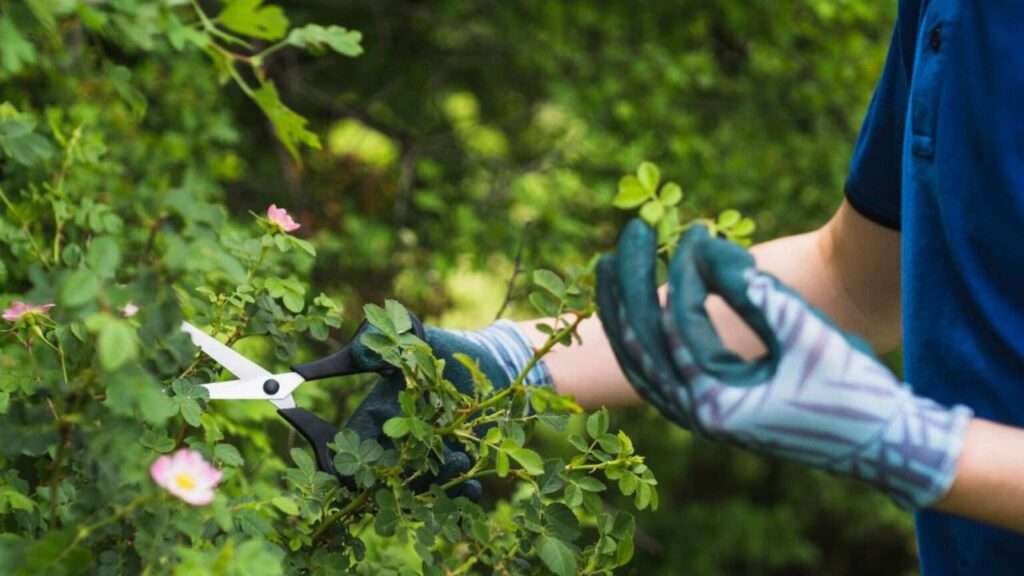
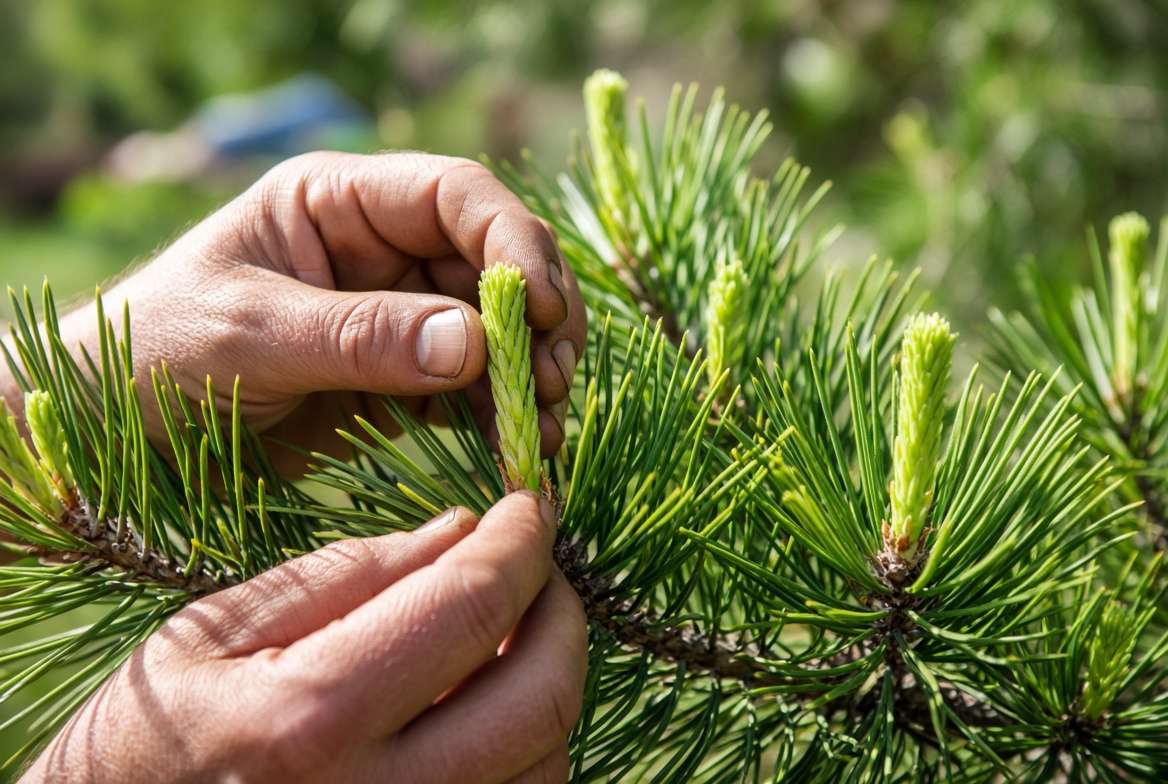
To control the size and increase the density of your pine tree plants, utilize the “Candle Pruning” method. In mid-to-late spring, pines produce new growth at the tips of their branches, resembling elongated, waxy candles.
-
The Technique: Using your thumb and forefinger, snap the candles in half. Do not use shears, as cutting the needles will cause their tips to turn brown and unsightly. Pinching the candles forces the tree to push energy into lateral buds, resulting in a bushier, more compact plant.
-
The Golden Rule: Never prune back into the “dead zone” (the older wood where no green needles are present). A pine branch will not generate new growth from old wood. If you cut past the active green needles, that branch will die permanently.
Mulching Best Practices 🪵
Mulch is a pine’s best friend. It regulates soil temperature, suppresses weeds, and retains moisture. Apply a 2-to-3-inch layer of organic mulch, such as shredded pine bark or dried pine needles (pine straw), extending to the tree’s drip line (the outermost edge of the canopy).
Warning: Avoid “volcano mulching”—the harmful practice of piling mulch directly against the tree trunk. This traps moisture against the bark, inviting fungal rot and burrowing insects. Always leave a 3-to-4-inch gap between the mulch and the trunk.
Protecting Pine Tree Plants from Pests and Diseases 🐛
Even the healthiest evergreens can fall victim to opportunistic insects and pathogens. Early detection is your greatest weapon.
Common Pine Pests to Watch For
-
Pine Bark Beetles: These tiny, destructive beetles bore into the trunk to lay eggs, disrupting the tree’s vascular system. Look for small holes in the bark accompanied by “pitch tubes”—small clumps of sap the tree produces to try and flush the beetles out. Heavy infestations often require professional arborist intervention or tree removal.
-
Sawflies: The larvae of sawflies look like caterpillars and feed voraciously on older pine needles in clusters. A severe infestation can strip a branch bare in days.
-
Spider Mites: These microscopic arachnids thrive in hot, dry conditions. They suck sap from the needles, causing them to look stippled, dusty, or yellowed.
-
Treatment: Knock mites off with a strong blast of the hose. For sawflies and persistent mites, apply insecticidal soap, Neem oil, or a targeted horticultural oil, ensuring thorough coverage.
Fungal Infections and Diseases 🍄
-
Dothistroma Needle Blight: A fungal disease that causes dark green, water-soaked bands on needles, which quickly turn brown or reddish-brown. The tips of the needles die while the base remains green.
-
White Pine Blister Rust: A fatal fungal disease primarily affecting five-needle pines. It presents as cankers on the trunk or branches that ooze white, blister-like spores in the spring.
-
Treatment: Fungal diseases thrive in stagnant, humid air. Improve airflow by ensuring adequate spacing between plants. Copper-based fungicides applied in spring can protect new growth from blight, but infected branches must be pruned out and destroyed.
🩺 Plant Clinic Example: A client recently contacted me regarding an Eastern White Pine with rapidly browning inner foliage in early summer. Upon close inspection using a magnifying glass, we discovered a severe spider mite infestation masked by neighborhood dust. By implementing a routine of bi-weekly high-pressure water sprays and a single application of Neem oil, the mite population plummeted, and the tree successfully pushed healthy new growth by autumn. Early intervention saved a $500 landscape centerpiece!
Winter Care: Preparing Your Pine for the Cold ❄️
Winter poses a unique threat to evergreens. While deciduous trees drop their leaves and shut down, pines continue to transpire (lose moisture through their needles) all winter long. If the ground is frozen, the roots cannot replace the lost moisture, leading to a condition known as “winter burn.”
Hydrating Before the Freeze
The most critical step in winterizing pine tree plants is ensuring they are deeply hydrated before the ground freezes solid. In late autumn, water the root zone thoroughly. A well-hydrated tree acts like a radiator, resisting rapid temperature fluctuations much better than a dehydrated one.
Wrapping and Wind Protection 🧣
Young, newly planted pines, or those exposed to harsh, prevailing winter winds and road salt spray, benefit from physical barriers. Do not wrap the tree directly in plastic, which traps moisture and bakes the needles on sunny days. Instead, drive stakes into the ground around the tree and wrap burlap around the stakes to create a windbreak. This allows the tree to breathe while shielding it from desiccation.

Frequently Asked Questions (FAQs) About Pine Tree Plants ❓
Can you save a dying pine tree plant once it turns completely brown? Unfortunately, no. Evergreens are notoriously slow to show symptoms of severe stress. By the time a pine tree turns completely brown, the root system and vascular tissues have usually been dead for weeks or even months. If the tree is entirely brittle and brown, it cannot be revived.
Do pine tree plants do well in pots? Yes, certain dwarf varieties like the Mugo Pine or Japanese Black Pine thrive in containers, provided they have excellent drainage, proper soil, and are overwintered correctly. However, containerized pines require more frequent watering and root insulation during freezing weather.
How fast do pine tree plants grow? Growth rates vary wildly by species. Dwarf varieties may only grow 1 to 3 inches per year, while large landscape species like the Eastern White Pine can grow up to 2 to 3 feet annually under optimal conditions.
Are coffee grounds good for pine trees? ☕ Yes! Because true pines prefer acidic soil, incorporating a moderate amount of used coffee grounds into the soil or mulch can help gently lower the pH and provide a mild nitrogen boost.
Can I use tap water for my indoor pines? If you are caring for a tropical Norfolk Island Pine indoors, municipal tap water heavily treated with chlorine and fluoride can cause the needle tips to turn brown. It is best to use filtered water, rainwater, or allow tap water to sit uncovered for 24 hours to let the chemicals dissipate.
Final Thoughts: Patience is Key for Evergreen Beauty 🌟
Caring for pine tree plants requires a shift in perspective. Unlike fast-growing annuals that wilt and recover in an afternoon, conifers respond slowly to both stress and intervention. Master the three pillars of conifer care—maintaining proper soil drainage and pH, ensuring adequate full-sun exposure, and watering deeply but infrequently—and your evergreens will reward you with decades of vibrant, structural beauty.
Remember that a few brown needles in autumn are perfectly natural, but proactive observation is your best defense against pests and environmental shock. Armed with the expert techniques in this guide, you are now fully equipped to cultivate stunning, healthy pines.
Have a question about a stubborn brown patch on your favorite conifer? Share a photo of your pine tree plants in the comments below, or subscribe to our newsletter for a free seasonal plant care checklist! 📩