You’ve invested time, money, and careful planning into your landscape. Whether you planted them to create a lush, natural privacy screen, block out a noisy road, or simply add Mediterranean elegance to your garden, cypress trees are usually the resilient, fast-growing heroes of the yard. That is, until the unthinkable happens.
You walk outside one morning, and instead of a vibrant, towering pillar of emerald green, you are greeted by crispy, rust-colored, brown needles.
For any homeowner or gardener, seeing a prized evergreen rapidly turning brown is terrifying. It feels like a landscaping emergency. But before you panic, reach for the fertilizer, or pull out the chainsaw, take a deep breath. While conifers are famously hardy, they are also highly communicative. Those brown needles are your tree’s SOS signal—a distress flare indicating that its environment, root system, or daily care routine is fundamentally out of balance.
A browning evergreen isn’t necessarily a dead one. In this comprehensive guide, we will uncover the 5 most common mistakes homeowners make that cause foliage dieback, teach you how to properly diagnose the real issue like an arborist, and provide the exact step-by-step recovery plan you need to save your tree.
Let’s get your landscape back to green. 🌿
First Steps: How to “Read” Your Cypress Tree’s Brown Needles 🔍
To fix the problem, you must first become a plant detective. You cannot treat a tree if you don’t know what it’s trying to tell you. Before you change your watering schedule or spray pesticides, closely observe where the browning is occurring on the canopy.
Interior vs. Exterior Needles
Where the dead foliage is located is your biggest clue.
-
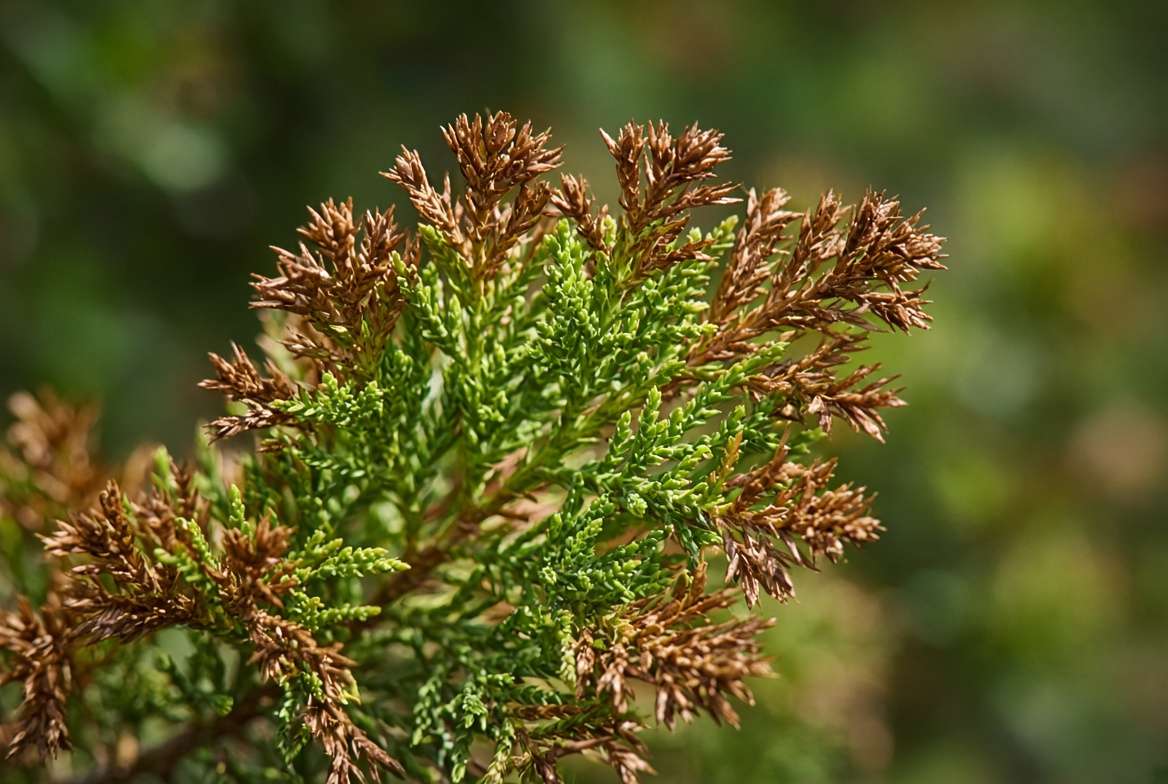
Interior Browning: If the brown needles are localized entirely on the inside of the tree, near the trunk, while the outer tips remain soft and green, you can likely relax. This is often a natural part of the conifer life cycle (which we will cover in Mistake #5).
-
Exterior Browning: If the brown, brittle needles are at the very tips of the branches, on the outer edge of the canopy, this is a massive red flag. Exterior tip browning always indicates active environmental stress, root damage, or disease.
Top-Down vs. Bottom-Up Dieback
-
Top-Down: When a tree begins dying from the uppermost leader branch and works its way down, it is usually a sign of severe root suffocation, deep drought stress, or a fungal canker disease that has girdled the main trunk.
-
Bottom-Up: Browning that starts at the base of the tree and creeps upward is typically linked to poor airflow, a lack of sunlight reaching the lower branches, or soil-borne fungal pathogens splashing up onto the lower foliage during heavy rain.
Now that you know how to read the symptoms, let’s explore the critical mistakes that cause them.
Mistake #1: The “Shallow Watering” Trap (Under & Overwatering) 💧
Water stress is the undisputed number-one culprit behind yellowing and browning foliage in Leyland, Italian, and Lemon varieties. However, the mistake isn’t usually a total lack of water—it’s how the water is being delivered.
The Underwatering Error
Many gardeners rely on standard lawn sprinklers to water their large evergreens. This is a massive mistake. Sprinklers only wet the top inch of the soil. This “shallow watering” trains the tree to keep its roots right at the surface. When a summer heatwave hits, that top layer of soil bakes dry in hours. The shallow root system panics, and the tree aggressively sheds its exterior needles to preserve its core hydration.
The Overwatering Error
Surprisingly, an overwatered tree looks almost identical to an underwatered tree. Why? Because roots need oxygen just as much as they need H2O. When you heavily saturate the ground, or run a drip hose constantly, the water displaces all the oxygen in the soil pores. The roots literally suffocate, rot, and die. Once the roots are dead, they stop transporting moisture to the canopy—meaning your overwatered tree is paradoxically dying of thirst. You will see drooping, brittle brown tips that snap when you bend them.
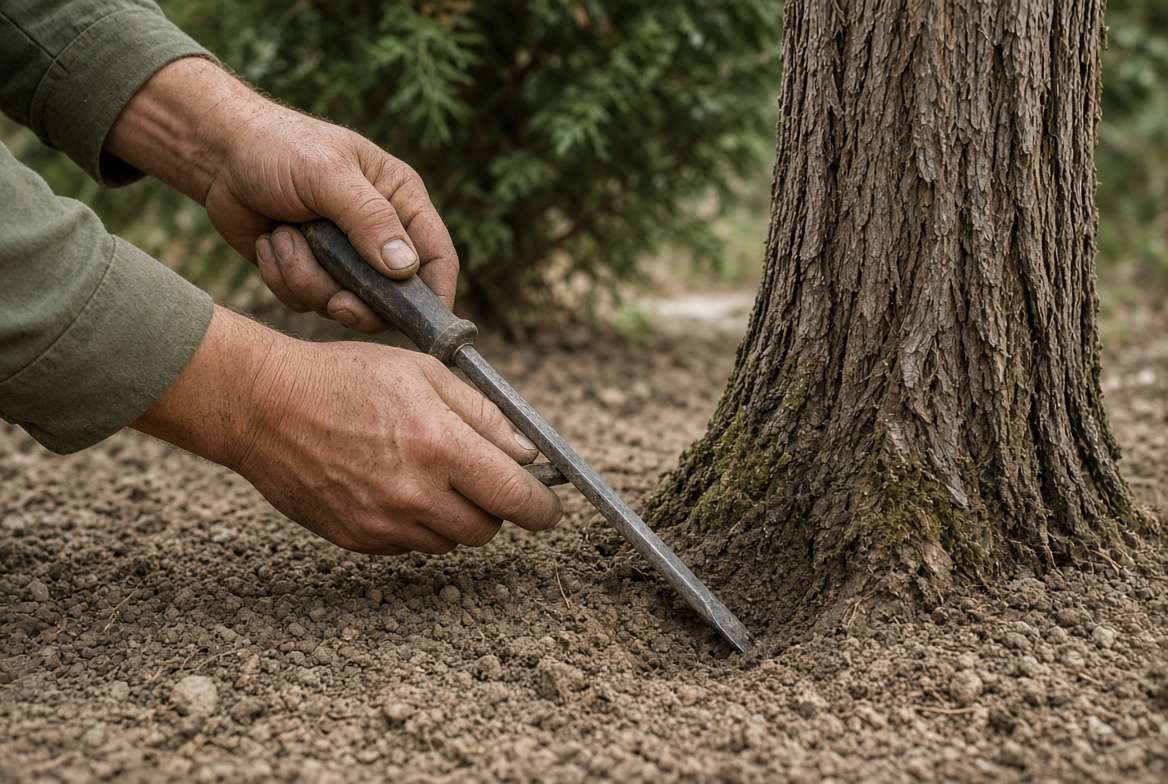
🌟 Expert Pro Tip: The “Screwdriver Test” Never guess if your tree needs a drink. Take a long, flathead screwdriver (at least 6-8 inches long) and push it into the ground near the tree’s drip line (the outer edge of the branch spread).
-
If the screwdriver pushes in easily and comes out with cool, moist earth clinging to it, do not water.
-
If you have to force the tool into the ground and it comes out dusty and dry, it’s time to water deeply at the base using a slow-trickle hose.
Mistake #2: Ignoring Soil Drainage & Planting Depth 🕳️
These evergreens are highly adaptable to various soil pH levels, but they have one strict rule: they absolutely cannot tolerate “wet feet.”
The Root Rot Trap
If you have heavy clay soil, or if you planted your tree in a low-lying dip in the yard where rainwater pools, you are accidentally creating a toxic environment. Stagnant water breeds Phytophthora root rot, a deadly and aggressive fungal pathogen that destroys the root system from the bottom up. Once root rot takes hold, the entire canopy can turn a sickly, pale yellow-green before rapidly shifting to a rusty brown. By the time the whole tree is brown, it is usually too late.
The Transplant Shock & Burial Mistake
Did your tree turn brown just a few weeks or months after planting? The mistake likely happened on planting day. First, nursery trees often come root-bound in plastic pots. If you didn’t score or tease the roots apart before placing it in the ground, the roots will continue to grow in a tight circle, eventually strangling the tree. Second, many landscapers bury the tree far too deep. The “root flare”—the widened area where the trunk transitions into the root system—must be visible right at the soil line. If you pile dirt or heavy mulch up against the trunk, the bark will rot, choking off the tree’s vascular system.
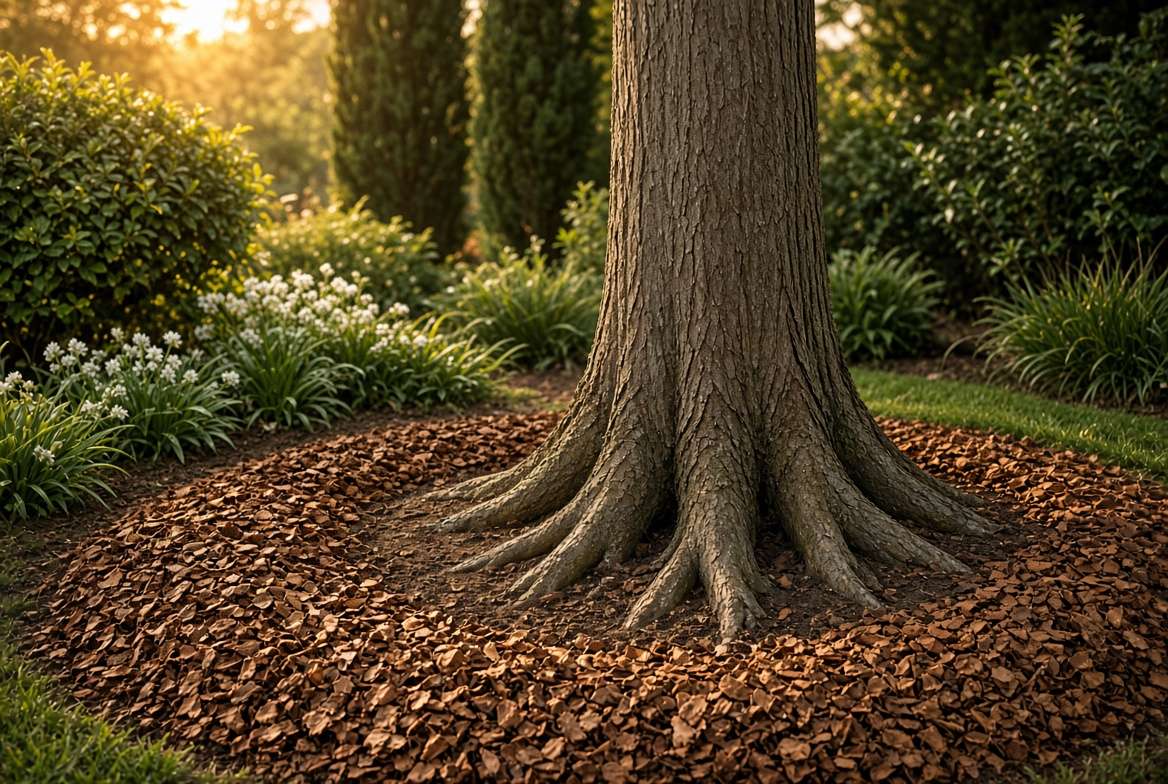
The Fix: Always amend heavy clay soil with compost and expanded shale to improve aeration. Ensure nearby gutter downspouts aren’t flooding the tree’s perimeter. And keep mulch pulled back at least 3 inches from the actual trunk of the tree!
Mistake #3: Missing the Early Signs of Fungal Canker 🦠
While environmental stress is the leading cause of brown foliage, disease is a close second. Fungal canker diseases—specifically Seiridium canker and Botryosphaeria canker—are notorious cypress killers. Leyland and Italian varieties are particularly susceptible to these aggressive pathogens when they are already stressed by drought or poor root health.
The Symptoms of Canker Disease
Canker doesn’t usually turn the whole tree brown at once. Instead, it causes a symptom known in arboriculture as “flagging.” You will notice isolated, scattered branches turning a bright, sickly yellow or reddish-brown while the rest of the canopy remains perfectly green.
If you trace that dead branch back toward the main trunk, you will likely find the canker itself. Look for sunken, dark, or discolored patches on the bark. In many cases, these lesions will ooze a sticky, dark amber sap or resin. This resin is the tree desperately trying to flush out the fungal infection.
The Careless Pruning Mistake
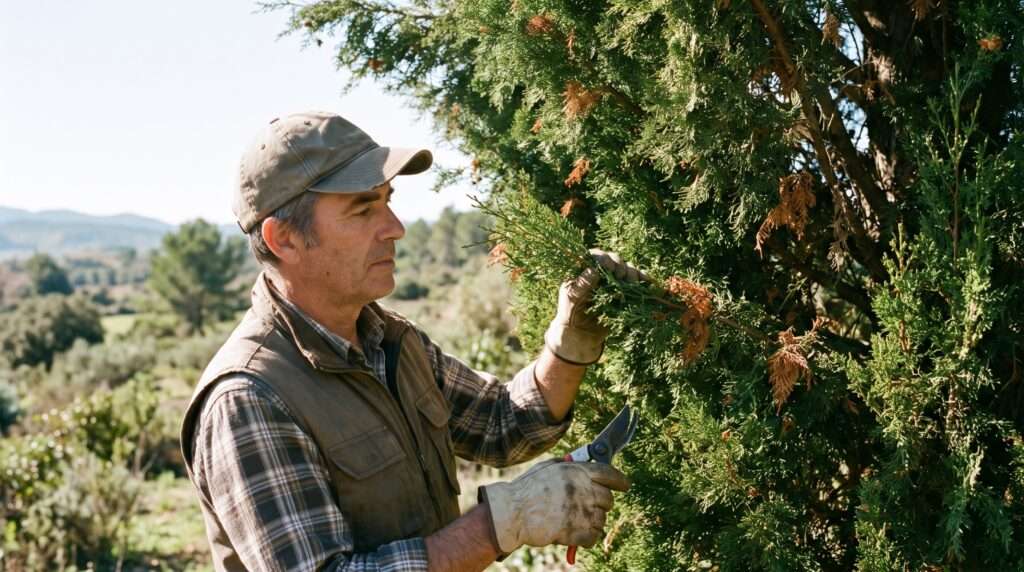
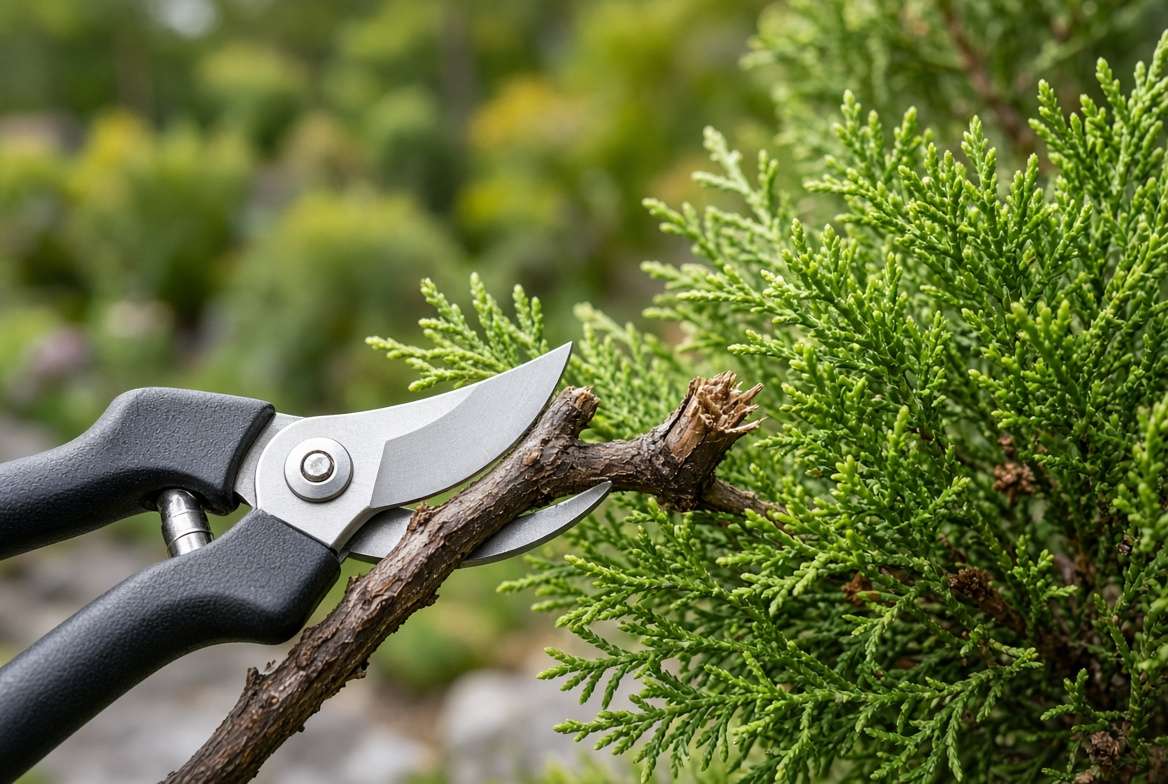
Fungal spores travel through the wind and splashing rain, but they need an open wound to enter the tree. The most common way homeowners accidentally infect their own landscape is by pruning with dirty tools. If you trim a diseased branch and then move on to a healthy tree without sanitizing your shears, you are directly inoculating your healthy tree with fatal fungi.
✂️ Actionable Arborist Advice: Canker cannot be cured with chemical fungicide sprays; it must be physically removed.
-
Sanitize: Dip your pruning shears or loppers in rubbing alcohol (70% isopropyl) or a 10% bleach solution between every single cut.
-
Prune Deep: Cut the infected branch off at least 3 to 4 inches below the visible canker lesion to ensure you remove all the microscopic fungi inside the wood.
-
Destroy the Wood: Never put diseased evergreen branches in your compost pile. Bag them and throw them in the trash, or burn them if local laws permit, to stop the spores from spreading.
Mistake #4: Letting Microscopic Pests Go Unchecked 🐛
Pests work incredibly fast, especially during periods of hot, dry weather. Because cypress foliage is dense, harmful insects can build massive populations before you even notice them.
Spider Mites: The Invisible Sap-Suckers
Spider mites are arachnids, not insects, and they are incredibly tiny—only about 1/64 of an inch long. They congregate in the thousands on the foliage, piercing the plant cells and sucking out the sap. A severe spider mite infestation will strip the chlorophyll from your tree, giving the needles a dusty, dull yellow or bronze cast. If you look closely, you might also see fine, wispy webbing between the twigs.
Bagworms: The Camouflaged Caterpillars
Bagworms are a plague upon conifers. These caterpillars build 2-inch, spindle-shaped “bags” around themselves using silk and the tree’s own dead brown needles. Because their bags look exactly like tiny pinecones, homeowners often ignore them until it’s too late. Bagworms will aggressively strip a tree bare, and a defoliated evergreen will rarely recover.
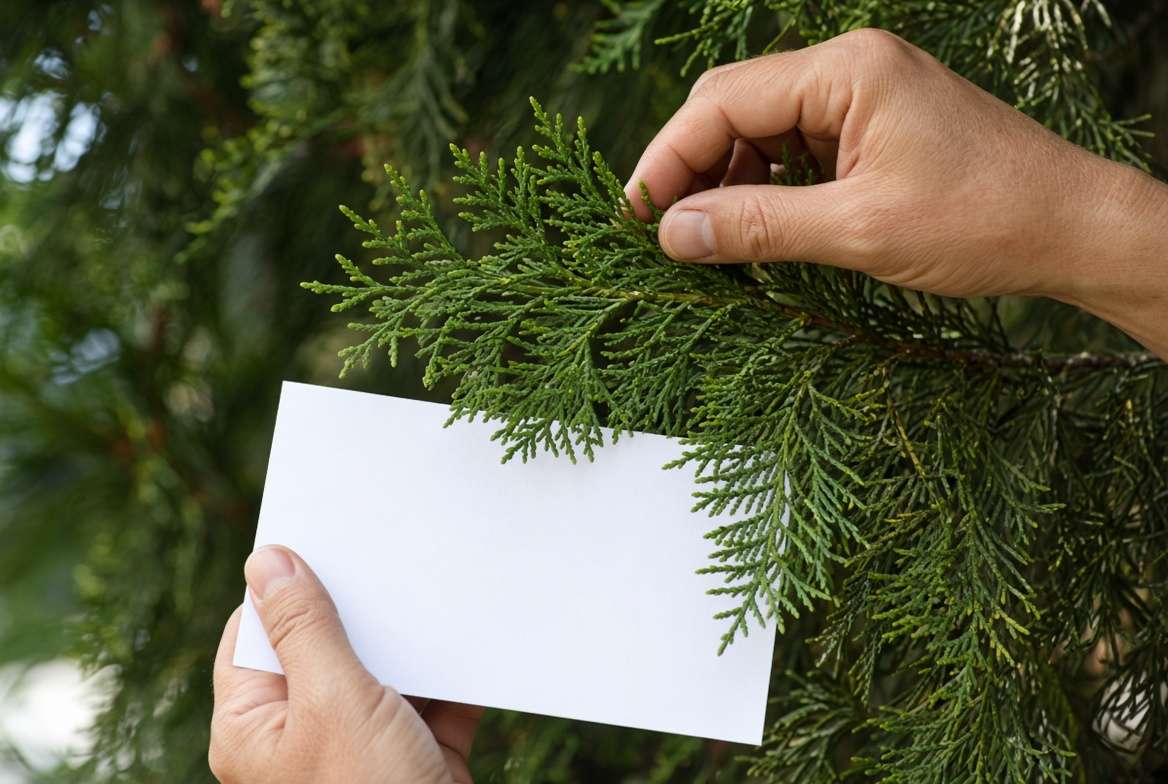
🌟 Expert Pro Tip: The “White Paper Test” Because spider mites are nearly invisible to the naked eye, arborists use this simple trick: Hold a clean sheet of white printer paper underneath a suspect, browning branch. Tap the branch sharply a few times with your hand or a stick. If tiny red, brown, or green specks fall onto the paper and begin crawling around, you have an active spider mite infestation!
-
The Fix: Knock mites off with a strong blast of water from the hose every few days, or treat the tree with an organic horticultural oil (like Neem oil) in the early evening. For bagworms, the most effective method is hand-picking them off in late winter or spring before they hatch, or using a targeted Bacillus thuringiensis (Bt) spray.
Mistake #5: Panicking Over Normal Fall Shedding 🍂
Sometimes, the biggest mistake you can make is trying to “fix” a tree that is perfectly healthy. This leads to unnecessary panic and fatal over-care.
The Science of Evergreen Shedding
There is a common misconception that evergreens keep their needles forever. They do not. Conifers are not immortal; they naturally shed their oldest, innermost foliage. Depending on the species, a needle might live for 2 to 5 years before its life cycle ends.
In late summer and early autumn, you may suddenly notice the interior of your Hinoki or Leyland canopy turning brown and dropping to the ground. This happens because the tree has grown so dense that sunlight can no longer penetrate to the inner branches. The tree efficiently shuts down those shaded needles and drops them to conserve energy for new tip growth.
The Panic Mistake
Homeowners see a pile of brown needles inside the canopy, assume the tree is dying, and panic. They dump high-nitrogen fertilizer onto the root zone, or flood the tree with excessive water.
-
Panic-fertilizing causes chemical burn on the roots and forces the tree to push out tender new growth right before winter freezing.
-
Panic-watering leads directly to the suffocating root rot we discussed in Mistake #2.
🌲 The “Scratch Test” If you see brown needles but aren’t sure if the branch is dead, lightly scratch a tiny bit of bark off the twig with your thumbnail. If the layer underneath (the cambium) is moist and bright green, the branch is alive and healthy! The shedding is totally normal. Just rake up the fallen needles, ensure the soil moisture is balanced, and leave the tree alone.
The Rescue Mission: Step-by-Step Cypress Recovery Plan 🚑
If your tree is suffering from active tip dieback, drought stress, or disease, you need a methodical recovery plan. Follow this scannable checklist to nurse your stressed evergreen back to health:
-
Step 1: Identify & Isolate Do not guess. Use the Screwdriver Test, the White Paper Test, and the Scratch Test to positively identify whether you are fighting a water issue, a pest issue, or a disease.
-
Step 2: Correct the Moisture & Mulch If the soil is bone dry, initiate deep, slow-trickle watering at the drip line. Once watered, apply a 2-to-3-inch layer of natural wood mulch (like pine bark) around the base of the tree. Mulch regulates soil temperature and prevents rapid moisture evaporation. Crucial: Keep the mulch at least 3 inches away from the trunk to prevent bark rot.
-
Step 3: Prune for Airflow Using sanitized shears, carefully prune out any completely dead, diseased, or crossing branches. Opening up the interior canopy allows wind to blow through, drying out damp foliage and dramatically reducing the risk of fungal spores taking root.
-
Step 4: Protect Against Winter Burn Harsh winter winds strip moisture from evergreen needles. If the ground is frozen, the roots cannot replace that lost moisture, resulting in severe brown “winter burn” by spring. Protect your trees by giving them one final, deep watering in late autumn before the ground freezes. For young, exposed trees, consider applying an anti-desiccant spray or wrapping them in a burlap windbreak for their first few winters.
Frequently Asked Questions (FAQs) 🙋♂️
Can a brown cypress tree turn green again?
It depends on the severity. If a branch is entirely brown, brittle, and snaps easily, it is dead wood. Dead conifer wood will never turn green or regenerate needles. You must prune it out. However, if the browning is mild and the underlying cambium layer is still green, resolving the stressor (like watering properly) will allow the tree to survive and push out lush new growth to fill in the gaps over the next few seasons.
Should I fertilize a browning cypress tree?
No. This is a widespread myth. Never apply fertilizer to a stressed, diseased, or drought-stricken tree. Fertilizer is not medicine; it is plant food that triggers rapid growth. Forcing a sick tree to expend energy on new foliage when its root system is compromised will exhaust the tree and often kill it. Wait until the tree is fully recovered and actively growing in the spring before feeding it.
Why is my Italian cypress turning brown from the bottom up?
Bottom-up browning on narrow, columnar trees like the Italian cypress usually points to three things:
-
Severe lack of sunlight (often caused by taller companion plants shading the base).
-
Chronic overwatering that is suffocating the lowest roots.
-
Soil-borne fungal diseases that splash up onto the lowest branches during heavy rain or sprinkler use.
Final Thoughts on Cypress Tree Care 🪴
Keeping your landscape evergreens vibrant and healthy doesn’t require a degree in horticulture—it simply requires observant, proactive care. The biggest takeaway from diagnosing brown needles is to never act on impulse. Don’t guess and throw water, chemicals, or fertilizer at a struggling tree.
By taking the time to inspect the soil, test the moisture, check for microscopic pests, and sanitize your pruning tools, you can easily avoid the 5 most common mistakes that ruin these beautiful plants. Your cypress trees are an investment in your property’s beauty and ecology; with the right E-E-A-T backed care routine, they will stand tall and green for decades to come.
Have you noticed brown tips on your evergreens this season? Drop a comment below describing your tree’s symptoms—I’d love to help you troubleshoot! Or, check out our related guides on “The Best Fertilizers for Evergreens” and “How to Fix Clay Soil in Your Garden” to keep your landscape thriving.