

Do you dream of harvesting crisp, fresh salads but feel limited by a tiny balcony, a narrow windowsill, or absolutely zero yard space? You are definitely not alone. The frustration of wanting to cultivate your own food without the luxury of a backyard is common, but it doesn’t have to stop your gardening journey. The fantastic news is that you don’t need massive raised beds or acres of land to enjoy a daily, homegrown harvest. In fact, growing lettuce in small pots is the ultimate, highly rewarding solution that transforms the tightest of spaces into a productive green oasis.
Having spent years cultivating plants in tight urban environments and studying the intricacies of soil health, I can assure you that leafy greens are incredibly forgiving when given the right foundational care. This comprehensive guide will walk you through the exact steps to succeed. We will cover how to select the right containers, curate a nutrient-dense soil recipe, choose the most productive varieties, and harvest your greens for maximum yield. Let’s get your personal salad bar growing! 🌱
Why Lettuce is the Ultimate Container Crop 🥇
When it comes to container gardening, leafy greens are the undisputed champions. While crops like tomatoes or squash demand deep soil and heavy feeding, lettuce is beautifully adapted to compact living.
Shallow Root Systems 📏
Unlike deep-rooted vegetables, lettuce has a very shallow and fibrous root system. The majority of a lettuce plant’s roots reside in the top 4 to 6 inches of soil. This biological trait makes small pots, window boxes, and even repurposed shallow containers perfectly suitable for a thriving crop.
Fast Growth Cycle ⏱️
Gardening requires patience, but lettuce offers nearly instant gratification. From the day you sow the seeds, you can often harvest baby greens in as little as 30 to 45 days. This rapid turnaround allows for succession planting—sowing a new pinch of seeds every two weeks—so you have a continuous, rolling harvest all season long.
Shade Tolerance ☁️
Many urban dwellers struggle with limited direct sunlight due to surrounding buildings or north-facing balconies. While fruiting plants need 6 to 8 hours of full, blasting sun, lettuce actually prefers a gentler environment. It thrives in partial shade, requiring only about 4 hours of sunlight, making it the perfect candidate for less-than-ideal lighting situations.
The Best Lettuce Varieties for Small Pots 🥬
Not all lettuces are created equal when it comes to small-space gardening. As a rule of thumb, avoid large “heading” varieties (like standard Iceberg) that take months to mature and require wide spacing. Instead, focus on “loose-leaf” and compact varieties.
Cut-and-Come-Again Favorites ✂️
These varieties grow as a loose rosette of leaves. You can harvest the outer leaves while the center continues to grow, providing multiple harvests from a single pot.
-
Black-Seeded Simpson: A classic, incredibly fast-growing heirloom variety with light green, crinkled leaves that are exceptionally tender.
-
Lollo Rosso: A stunning Italian variety featuring heavily frilled, deep burgundy and magenta edges. Visual tip: The vibrant contrast of Lollo Rosso against a terracotta pot is incredibly photogenic—perfect for snapping highly shareable photos or creating beautiful pins for your gardening boards! 📸
-
Salad Bowl (Green or Red): Deeply lobed leaves that are slow to bolt (go to seed) and highly heat-tolerant.
Compact Romaine & Butterheads 🧈
If you prefer the crunch of a romaine or the buttery texture of a bibb lettuce, look for miniature cultivars specifically bred for tight spaces.
-
Tom Thumb: A remarkable miniature butterhead that maxes out at the size of a baseball. One entire head fits perfectly in a 6-inch pot.
-
Little Gem: A tiny, crisp romaine that grows upright and dense, taking up very little horizontal space.
Choosing the Perfect Pot (Size & Drainage Matter) 🪴
Setting your plants up for success starts with the right hardware. A small pot is great, but it must meet a few basic requirements to keep the root zone healthy.
What Qualifies as a “Small Pot”? 📐
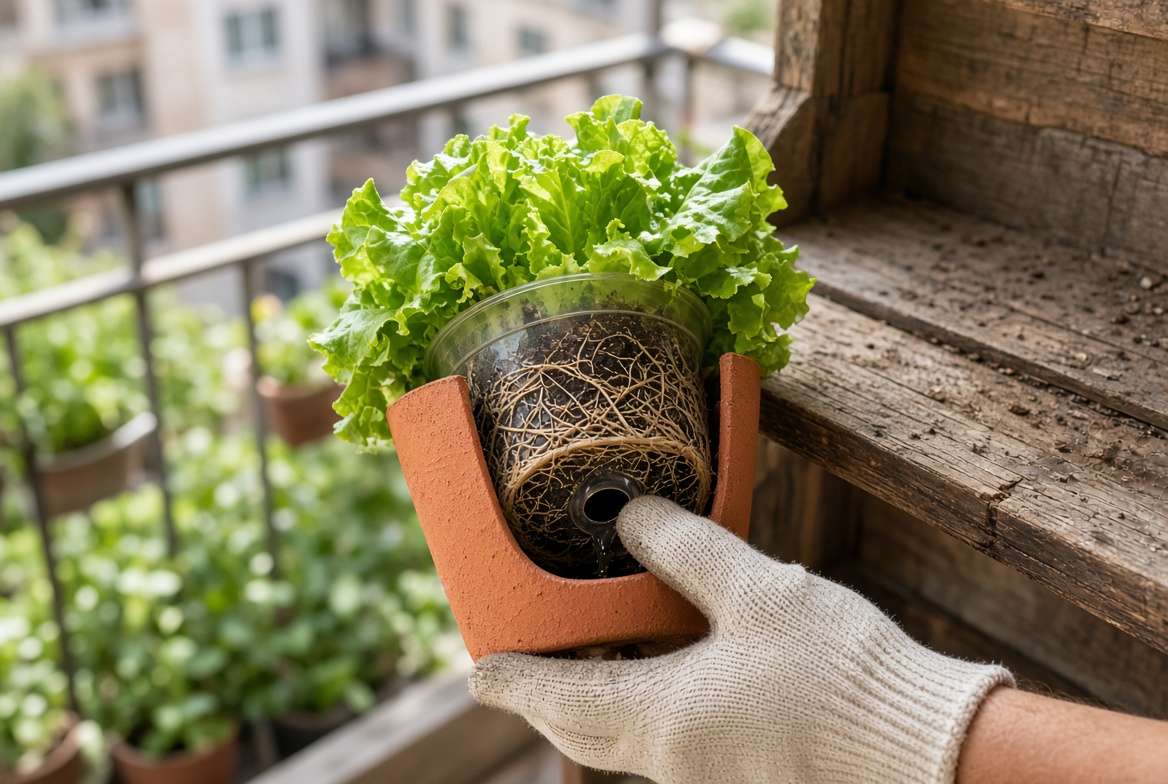
For individual lettuce plants, a pot that is 6 to 8 inches in diameter and at least 6 inches deep is ideal. If you are planting a small cluster of loose-leaf lettuce, a window box that is 6 inches deep and 12 inches long will easily support three to four plants.
The Golden Rule of Drainage 🚰
If there is one absolute rule in container gardening, it is this: your pot must have drainage holes. Lettuce roots require oxygen just as much as they require water. If water pools at the bottom of a sealed decorative pot, the soil becomes anaerobic, leading to root rot and inevitable plant death. If you have a beautiful cachepot without holes, simply plant your lettuce in a cheap plastic nursery pot and nestle it inside.
Material Showdown: Plastic vs. Terracotta vs. Fabric 🥊
-
Terracotta/Clay: Breathable and beautiful, but porous. It wicks moisture away from the soil, meaning you will need to water your shallow-rooted lettuce much more frequently, especially in warm weather.
-
Plastic/Resin: Excellent for retaining moisture, which lettuce loves. They are lightweight and easy to move if you need to chase the sun (or hide from the afternoon heat).
-
Fabric Grow Bags: Incredible for root health due to “air-pruning,” but like terracotta, they dry out very quickly in small sizes.
The Foundation: Building a Nutrient-Rich Soil Mix 🪱
This is where the magic happens. The secret to explosive growth in a small container isn’t just about watering; it is entirely dependent on soil health. Because the roots are confined to a tiny volume of earth, that earth must be exceptionally high-quality.

Why Garden Soil Fails in Pots 🚫
Never scoop topsoil from a yard into a small pot. Natural garden soil is too heavy, lacks adequate aeration for a container environment, and will compact into a concrete-like brick after a few waterings, suffocating the delicate lettuce roots.
The Ultimate Container Recipe for Lettuce 🧪
Lettuce is a heavy nitrogen feeder (since we are growing it for its leaves). To create a living, highly productive soil mix, combine the following:
-
The Base (60%): High-quality, organic potting soil. Look for mixes based on coconut coir or peat moss, which are lightweight and retain moisture beautifully.
-
The Aeration (20%): Perlite or pumice. These porous white rocks create essential air pockets in the soil, allowing delicate roots to push through easily and preventing waterlogging.
-
The Nutrition (20%): Pure worm castings (vermicompost) or aged, rich compost. Worm castings act as a slow-release, organic nitrogen powerhouse that also introduces beneficial microbes to the root zone, maximizing nutrient uptake.
Moisture Retention Tricks 💧
Because small pots dry out incredibly fast, maintaining consistent moisture is the biggest challenge. Adding a thin layer of organic mulch (like finely shredded straw, leaf mold, or even a layer of sphagnum moss) to the top of the soil helps trap moisture, keeping the root zone cool and damp exactly how lettuce prefers it.
Step-by-Step Guide to Growing Lettuce in Small Pots 📝
Now that your container and soil are perfectly prepped, it is time to get your hands dirty. Planting lettuce is straightforward, but paying attention to a few critical details during the sowing phase will dictate the success of your entire crop.
Seed Sowing vs. Nursery Transplants 🌱
You have two primary avenues to start your indoor or balcony garden: seeds or young nursery plants (transplants).
-
Starting from Seed: This is highly recommended for lettuce. Seeds are incredibly cost-effective, offer vastly more variety options, and allow you to sow tightly for cut-and-come-again harvesting. Plus, lettuce seeds germinate rapidly, usually within 7 to 10 days.
-
Nursery Transplants: Buying small plant plugs or “starts” saves you about two weeks of growing time. However, lettuce transplants can suffer from transplant shock due to their delicate, shallow roots. If you choose this route, handle the root ball with extreme care and water immediately after planting.
How to Plant (The Perfect Depth) 📏
One of the most common mistakes beginners make is burying lettuce seeds too deeply. Lettuce seeds require light to germinate.
-
Fill your small pot with your pre-moistened soil mix, leaving about half an inch of space below the rim.
-
Sprinkle your lettuce seeds sparingly across the surface of the soil.
-
Instead of burying them, simply press them gently into the surface with the flat of your hand so they make good contact with the damp earth.
-
Alternatively, you can dust a microscopic layer (barely 1/8th of an inch) of fine vermiculite or coir over them—just enough to hold moisture but thin enough to let light penetrate.
-
Mist the surface heavily with a spray bottle. Do not use a watering can at this stage, as a heavy stream of water will wash the tiny seeds away or bury them too deeply.
Thinning the Seedlings ✂️
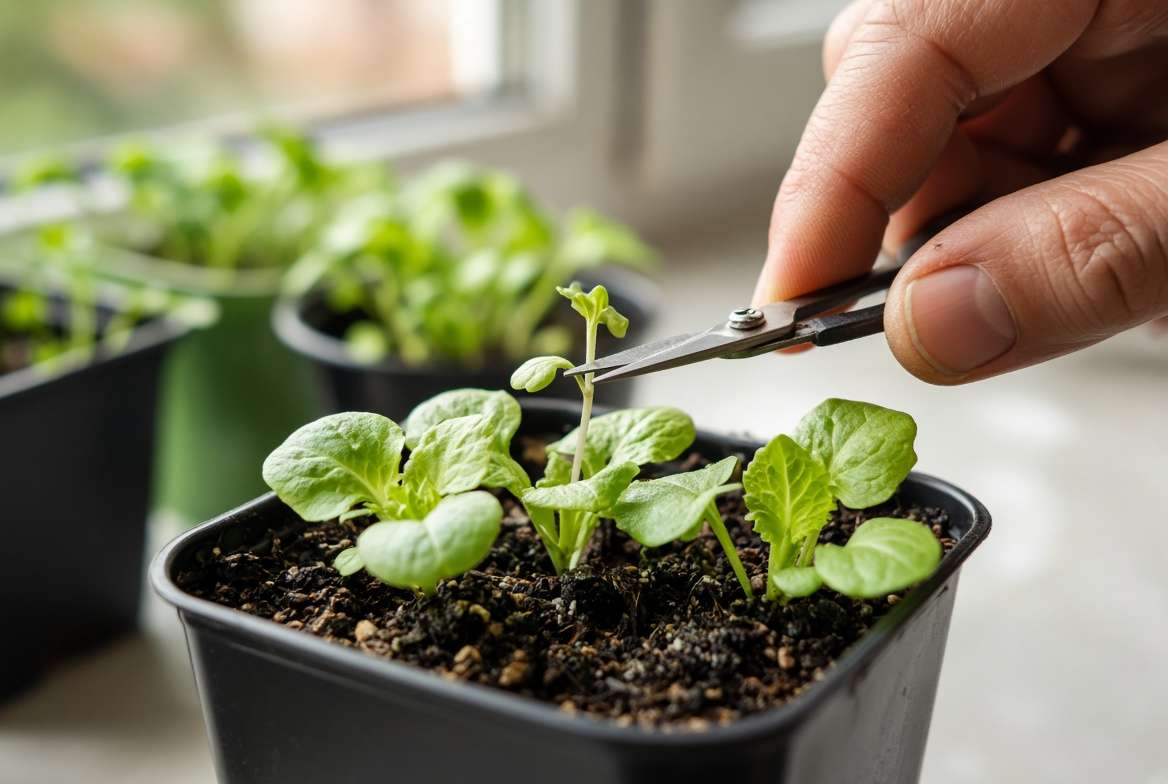
If you sowed from seed, you will likely end up with dozens of tiny sprouts clustered together. While it breaks a gardener’s heart to remove healthy seedlings, thinning is non-negotiable. If plants are overcrowded in a small pot, they compete for the limited water and nutrients, resulting in stunted, weak growth. Once your seedlings are about 2 inches tall with their first “true leaves,” use a small pair of scissors to snip the weakest seedlings at the soil line. For a 6-inch pot growing a heading variety (like Tom Thumb), thin it down to one single, robust plant. For loose-leaf varieties, leave about 3 to 4 well-spaced plants. (Bonus: The tiny seedlings you snipped off are essentially microgreens—wash them and eat them!) 🥗
Essential Care for Container-Grown Lettuce ☀️💧
Lettuce is famously low-maintenance, but because it is living in a confined environment, you are completely responsible for its microclimate.
Mastering the Watering Schedule 🚿
Consistent moisture is the secret to sweet, crisp lettuce leaves. If the soil completely dries out, the plant gets stressed; if it stays soggy, the roots rot.
-
The Finger Test: This is the most reliable method for container gardening. Poke your index finger about an inch into the soil. If it feels dry, it is time to water. If it feels damp, wait another day.
-
The Weight Test: Lift your small pot right after you water it fully. Notice how heavy it feels. Check it again a few days later; when the pot feels noticeably light, the soil has dried out and needs a soak.
-
Always water at the base of the plant to keep the foliage dry, which prevents fungal diseases.
Light Requirements for Balcony & Indoor Growers 🌤️
Lettuce requires a careful balance of light. While it needs energy to grow, it despises the blazing midday heat.
-
Outdoor/Balcony Growers: Aim for a spot that receives gentle morning sun (4 to 5 hours) and is shaded during the harsh afternoon hours. East-facing balconies are lettuce heaven.
-
Indoor Growers: A sunny, south-facing windowsill can work during the cooler winter months. However, if your indoor lighting is poor, a basic LED grow light suspended a few inches above your small pots will guarantee thick, lush foliage rather than stretched, weak stems.
Feeding Your Greens 🍽️
Because you are growing lettuce for its leaves, nitrogen is the primary macronutrient you need to replenish. The limited soil volume in a small pot means nutrients are quickly washed out through the drainage holes. Once your lettuce has been growing for about three weeks, begin feeding it every 10 to 14 days with a diluted, liquid nitrogen-rich fertilizer. Organic fish emulsion or a liquid kelp fertilizer works wonders. Always apply fertilizer to damp soil to prevent burning the delicate roots.
Beating the Heat: How to Prevent Bolting 🌡️
If there is a nemesis to the lettuce grower, it is heat. When temperatures consistently rise above 75°F (24°C), lettuce enters survival mode. It triggers a process called bolting, where the plant stops producing edible leaves, shoots up a tall central flower stalk, and prepares to drop seeds.
Recognizing the Signs of Bolting 🔍
You need to catch bolting before it ruins your harvest. The first physiological change is a bitter taste in the leaves, caused by a milky sap the plant produces as a defense mechanism. Visually, the leaves will transform from rounded and tender to elongated, pointed, and tough, and the center stem will begin to visibly stretch upward.
Cooling Strategies for Small Pots 🧊
The beauty of growing lettuce in small pots is mobility! If a heatwave is forecasted, you can easily intervene:
-
Move Them to the Shade: Simply physically relocate your pots to a cool, shaded corner of your patio or bring them indoors to an air-conditioned room until the heatwave passes.
-
Mulch Heavily: Keep the root zone insulated with a thick layer of light-colored mulch to deflect heat.
-
Frequent Shallow Watering: A light splash of cool water on the soil surface during the hottest part of the day can lower the soil temperature through evaporation.
The Harvest: How to Maximize Your Yield 🥗
The moment of truth! Harvesting correctly ensures you get the absolute most out of your container garden.
The “Cut-and-Come-Again” Technique ✂️
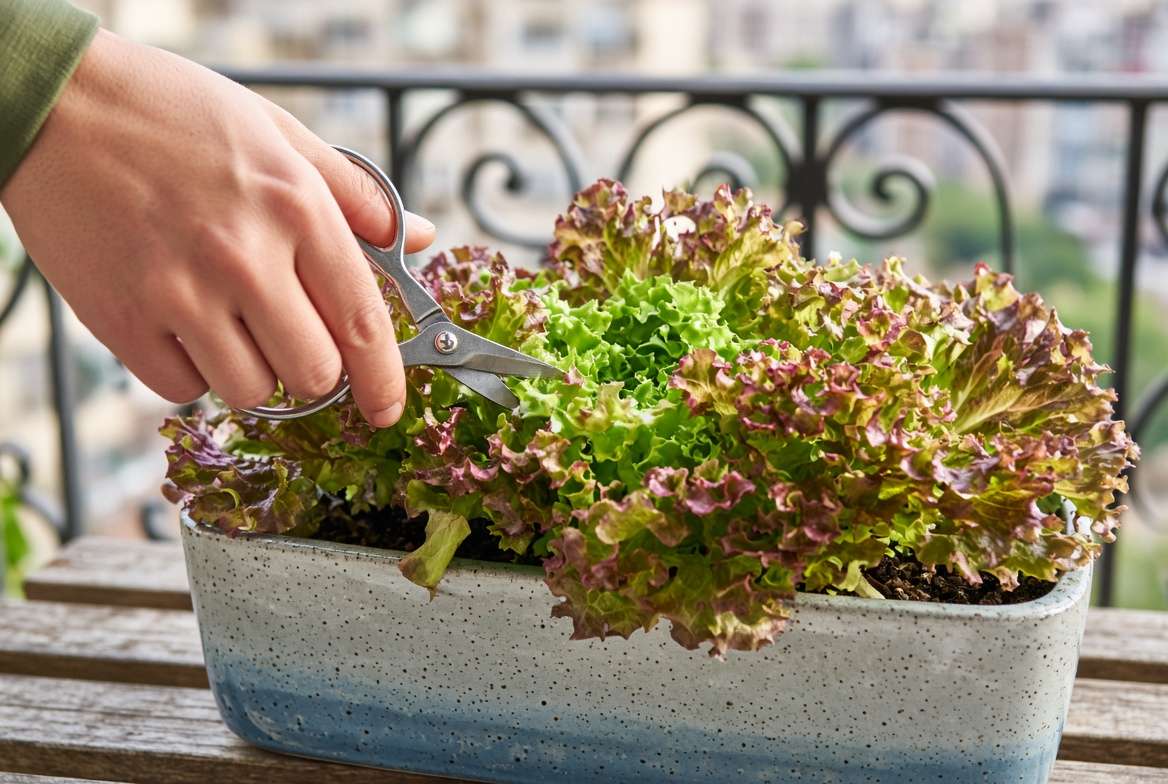
For loose-leaf varieties planted in small pots, this technique is a game-changer. Rather than pulling the whole plant out of the soil, you harvest continuously over several weeks.
-
Wait until the outer leaves are about 4 to 6 inches long.
-
Using sharp, clean scissors, snip the outermost leaves about an inch above the base of the plant.
-
Leave the tiny inner leaves (the crown) completely intact.
-
The plant will direct all its energy into growing those inner leaves. In about a week, you can return to the exact same pot and harvest again!
When to Do a Final Harvest 🛑
Lettuce is an annual plant; it will not live forever. After three or four successful “cut-and-come-again” harvests, you may notice the plant slowing down, the new leaves becoming smaller, or the stem elongating slightly. At this point, it is best to cut the entire plant at the soil line, toss the root ball in the compost, and sow a fresh batch of seeds in your perfect little pot.
Troubleshooting Common Pests & Problems 🐛
Even in the controlled environment of a balcony or windowsill, nature sometimes finds a way in. Diagnosing plant issues early is crucial for container gardening, as small pots leave less room for error. Here is a quick-reference guide to keeping your greens healthy and pest-free.
Aphids & Spider Mites 🕷️
Because lettuce leaves are tender and packed with water, they are a magnet for sap-sucking insects.
-
The Symptoms: Curling, distorted new leaves (aphids) or tiny yellow speckles and fine webbing on the undersides of leaves (spider mites).
-
The Fix: Avoid harsh chemical pesticides, as you will be eating these leaves soon! Instead, use a firm spray of water to knock the pests off, followed by a light application of organic neem oil or insecticidal soap applied in the early evening (to prevent the sun from burning the treated leaves).

Leggy Seedlings 🦒
This is the most common issue for indoor growers.
-
The Symptoms: Seedlings develop long, pale, frail stems and flop over rather than growing compact and sturdy.
-
The Fix: This is entirely a lighting issue. The plants are stretching desperately to find adequate light. Lower your grow lights so they are only 2 to 3 inches above the top of the seedlings, or move the pot to a significantly brighter, south-facing window.
Bitter Leaves 👅
There is nothing more disappointing than taking a bite of your homegrown harvest only to find it terribly bitter.
-
The Symptoms: Leaves taste sharp, medicinal, or unpleasant.
-
The Fix: Bitterness is caused by plant stress—usually extreme heat, inconsistent watering, or over-maturity (bolting). Ensure your watering schedule is consistent so the soil never dries out completely, shade the pots during heatwaves, and always harvest leaves while they are young and tender.
Expert FAQs: Growing Lettuce in Small Pots ❓
To wrap up this guide, let’s address the most common questions I hear from urban and container gardeners looking to maximize their leafy green yields.
Can you grow lettuce indoors year-round? 🗓️ Absolutely! Because indoor climates are temperature-controlled, you can bypass the blazing heat of summer and the freezing frost of winter. As long as you provide a high-quality full-spectrum LED grow light (mimicking about 12 to 14 hours of sunlight a day) and maintain good airflow to prevent fungal issues, you can harvest fresh salads in December.
How many lettuce plants can I fit in one pot? 🤔 It depends heavily on the pot size and the variety. In a standard 6-inch round pot, plant exactly one heading variety (like Tom Thumb) or up to three loose-leaf plants spaced evenly. For a 12-inch rectangular window box, you can comfortably fit 3 to 4 plants. Resist the urge to overcrowd; airflow and root space are vital.
Will lettuce regrow after you cut it? 🔄 Yes, if you use the correct harvesting technique! By utilizing the “cut-and-come-again” method—snipping only the mature outer leaves and leaving the central crown intact—the plant will push new growth from the center. You can generally get 3 to 4 solid harvests from a single plant before it exhausts its energy.
Does lettuce need direct sunlight? 🌞 While it needs bright light to photosynthesize, lettuce actually struggles in intense, direct, all-day sunlight, particularly in warm climates. It prefers about 4 to 6 hours of gentle morning sun followed by dappled shade in the afternoon. If you are growing indoors, it requires bright, indirect light or direct exposure to a grow light.
Conclusion: From Pot to Plate 🍽️
The transition from a barren balcony or empty windowsill to a lush, productive mini-farm is incredibly rewarding. As we have explored, growing lettuce in small pots requires minimal space, a small investment in high-quality soil, and just a few minutes of daily care. By choosing the right compact varieties, mastering your watering technique, and utilizing smart harvesting methods, you are well on your way to becoming a successful container gardener.
Remember, even with just a single 6-inch pot, you are actively cultivating food and participating in the joy of gardening. Don’t be afraid to experiment with different varieties and soil blends to find exactly what works best for your unique microclimate.
Ready to show off your container garden? Snap a vibrant photo of your potted lettuce! A beautifully styled shot of Lollo Rosso or bright green Salad Bowl in a terracotta pot makes for a stunning Pinterest pin or a captivating YouTube thumbnail for your own gardening journey. Pin this guide to your favorite gardening boards for quick reference, and enjoy your homegrown, hyper-local salads! 📌🥗











