

We have all been there. You are walking through the grocery store or a local nursery, and a lush, perfectly manicured basil plant catches your eye. You bring it home, envisioning a future filled with fresh homemade pesto and vibrant garnishes. You place it proudly on your kitchen counter. Yet, within a week, the leaves start to droop, the stems turn brown, and your beautiful plant is reduced to a withered, tragic husk.
If this sounds familiar, take a deep breath: you do not have a black thumb. The problem isn’t you; it is the environment. Most traditional culinary herbs originate in the Mediterranean, requiring scorching heat and a minimum of six to eight hours of direct, unfiltered sunlight every single day. The average kitchen or living room simply cannot provide that level of solar energy. But do not abandon your indoor gardening dreams just yet! The secret to year-round greenery is not fighting your environment, but choosing the right herbs that thrive indoors despite it.
By shifting our focus away from sun-worshipping divas and turning toward adaptable, shade-tolerant botanicals, a thriving indoor culinary garden is entirely within your reach. In this comprehensive guide, we are going deep into the botany and care requirements of seven specific herbs that laugh in the face of low light. We will also explore the critical importance of soil health and proper potting techniques to ensure your indoor garden flourishes for years to come. Grab your favorite watering can, and let’s grow! 🌱
II. Decoding Indoor Lighting: What Does “Low Light” Actually Mean? 🌤️
Before we introduce our star plants, we must define our terms. In the world of horticulture and indoor plant care, “low light” does not mean a windowless bathroom or a dark closet. Plants need light to photosynthesize; without it, they simply cannot survive.
When botanists and expert growers talk about “low light” for indoor herbs, we are referring to bright, indirect light.
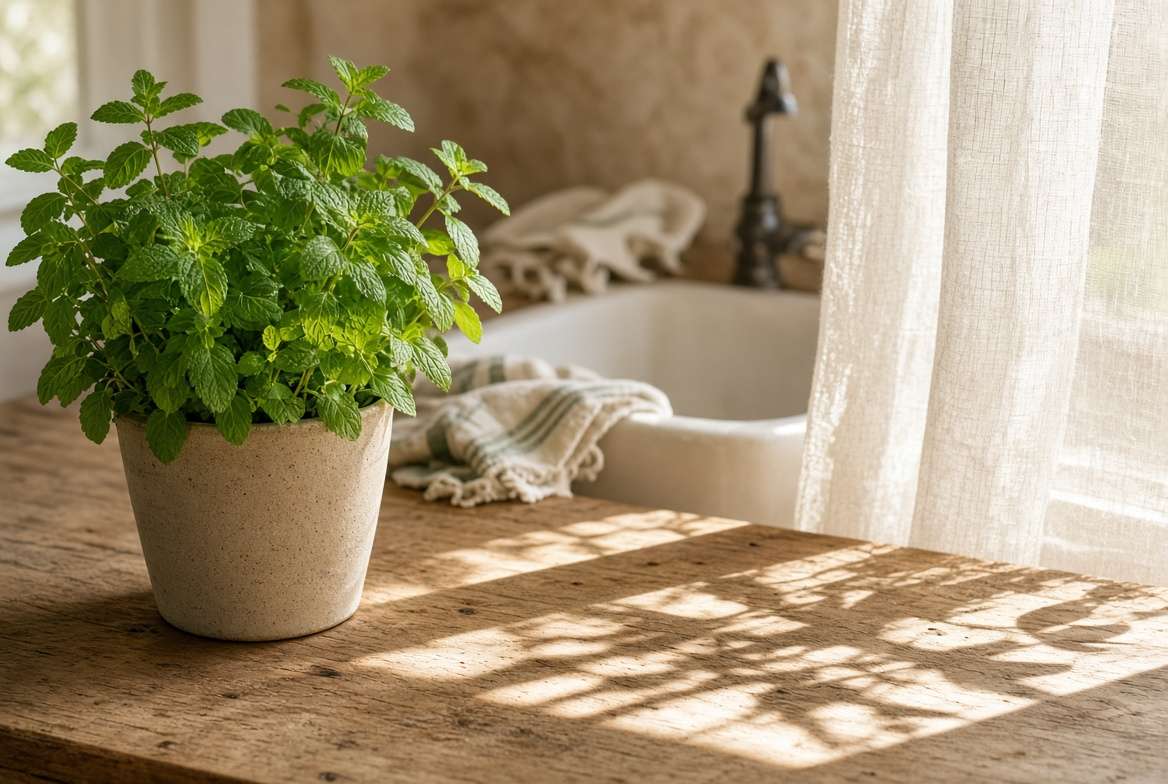
Direct vs. Indirect Light 🪟
-
Direct Light: The sun’s rays hit the plant’s leaves directly without any obstruction. Think of a South-facing window in the middle of summer. Only a few indoor herbs can handle this without their leaves scorching.
-
Bright, Indirect Light: The plant is in a bright room, perhaps near an East-facing or North-facing window, but the sun’s harsh, direct rays do not touch the foliage. The light is diffused, perhaps by a sheer curtain or by bouncing off a light-colored wall.
The “Shadow Test” 👤
How do you know what kind of light your kitchen counter actually receives? Use this simple, actionable trick: The Shadow Test.
-
Place a piece of white paper where you intend to put your herb pot.
-
Hold your hand about a foot above the paper during the brightest part of the day.
-
Analyze the shadow: If the shadow is sharply defined with crisp edges, you have bright/direct light. If the shadow is fuzzy, soft, and lacks a distinct outline, you have bright, indirect light—perfect for the herbs on this list. If you can barely see a shadow at all, the spot is too dark, even for shade-tolerant plants.
A Quick Word on Grow Lights 💡
If your home is incredibly dark, or if you live in a region with long, gloomy winters, supplemental lighting can be a game-changer. A simple, full-spectrum LED grow light placed 12 to 18 inches above your plants can bridge the gap, providing the exact light waves your herbs need to photosynthesize without generating excessive, damaging heat.
III. The Core: 7 Foolproof Herbs That Thrive Indoors 🌿
Now that we have established the environmental baseline, let’s explore the seven most resilient, adaptable, and forgiving herbs you can grow indoors.
1. Mint: The Unstoppable Invader 🍃
Mint (Mentha) is notorious in outdoor gardening circles for being an aggressive spreader. It sends out underground runners called rhizomes that can quickly take over an entire garden bed. However, the exact robust vitality that makes it a nuisance outdoors makes it an absolute champion for the indoor gardener.
-
Why it works indoors: Mint is highly adaptable. While it prefers sun, it naturally grows along stream banks and in dappled forest sunlight. It will happily tolerate the lower light levels of an East or West-facing window.
-
Optimal Soil & Watering: Because of its natural habitat, mint prefers consistently moist, rich, and well-draining soil. Do not let the pot dry out completely, but ensure it isn’t sitting in a puddle of water, which leads to root rot.
-
Pro Tip: Always keep your indoor mint in its own dedicated, isolated pot. If you attempt to plant it in a mixed container with other herbs, its vigorous root system will quickly outcompete and choke out its neighbors.

2. Parsley: The Shade-Tolerant Staple 🍲
Parsley (Petroselinum crispum) is far more than just a ubiquitous restaurant garnish; it is a nutritional powerhouse loaded with Vitamin C, Vitamin K, and antioxidants. It is also surprisingly well-suited for indoor cultivation.
-
Why it works indoors: Parsley is a biennial plant (meaning it has a two-year life cycle before flowering and dying) that naturally thrives in the understory of taller plants. It actually prefers cooler temperatures and will suffer if exposed to the baking afternoon sun, making your temperature-controlled, indirectly lit kitchen its ideal habitat.
-
Optimal Soil & Watering: Parsley grows a deep taproot, so it requires a pot that is taller than it is wide (at least 8 inches deep). It demands nutrient-rich, loamy soil that retains moisture but drains excess water efficiently.
-
Pro Tip: When you are ready to harvest for your soups or pastas, always snip the stems from the outside of the plant, near the base. The new growth emerges from the center rosette; harvesting the outer leaves encourages the plant to continually push out fresh, new foliage.
3. Lemon Balm: The Aromatic Antidote 🍋
If you want an herb that immediately makes your kitchen smell like a pristine summer day, Lemon Balm (Melissa officinalis) is the answer. This herb has been used for centuries in teas and tinctures to reduce stress and promote restful sleep.
-
Why it works indoors: Lemon balm is a close relative of the mint family. Just like its peppermint and spearmint cousins, it shares that robust, incredibly resilient, shade-tolerant DNA. It thrives in ambient room temperatures and handles artificial home heating and cooling better than most plants.
-
Optimal Soil & Watering: Unlike mint, lemon balm prefers its soil to dry out slightly between waterings. Wait until the top inch of the soil feels dry to the touch before giving it a thorough soak.
-
Pro Tip: You don’t even need to cook with this herb to enjoy it. Simply walk by and bruise a single leaf between your thumb and forefinger to instantly release a burst of natural citrus oils, freshening up the entire room.
4. Chives: The Grassy Garnish 🧅
Chives (Allium schoenoprasum) are the smallest species of the edible onion genus. Their mild, onion-like flavor makes them a versatile culinary staple, perfect for topping baked potatoes, folding into omelets, or garnishing soups.
-
Why it works indoors: Chives are incredibly resilient and highly forgiving of less-than-optimal lighting. While they will grow faster with more sun, they can survive and yield modest harvests on just four to six hours of bright, indirect light per day. They are also remarkably unfussy about ambient humidity.
-
Optimal Soil & Watering: Chives prefer slightly sandy, well-draining soil. Because their roots are shallow and bulb-like, they are susceptible to rotting if left sitting in waterlogged potting mix. Water them thoroughly, but ensure the pot drains completely.
-
Pro Tip: When you need chives for a recipe, do not just snip off the top tips. Gather the grassy blades into a bunch and cut straight across the base, leaving about an inch or two of growth above the soil line. Much like a lawn, they will shoot right back up with vigorous new growth.
5. Thyme (Creeping Varieties): The Drought-Tolerant Survivor ⏳
Most woody, Mediterranean herbs like rosemary and sage despise indoor environments because they crave intense sun and dry outdoor winds. Thyme (Thymus vulgaris), however, is the exception to the rule, provided you select the right variety.
-
Why it works indoors: While traditional upright thyme demands full sun, trailing or “creeping” varieties of thyme are far more adaptable. They can settle beautifully into bright, indirect light near an East-facing window. Their small, delicate leaves transpire (lose water) slowly, making them highly resilient to the dry air of modern, air-conditioned homes.
-
Optimal Soil & Watering: Thyme actually thrives in poor, sandy, and rocky soils. The only real enemy of indoor thyme is a heavy watering hand. You must let the soil dry out significantly between waterings.
-
Pro Tip: Because of its trailing nature, creeping thyme is highly visually appealing. Plant it in a hanging basket or place its pot on a tall bookshelf, allowing the delicate, aromatic stems to cascade over the edges like a living piece of home decor.
6. Cilantro (Coriander): The Cool-Weather Champion 🌮
Cilantro (Coriandrum sativum) is a polarizing herb—people generally love it or hate it—but from a botanical standpoint, it is a fascinating plant.
-
Why it works indoors: In an outdoor summer garden, cilantro is notorious for “bolting.” When exposed to intense heat and prolonged daylight, the plant panics, stops producing tasty leaves, and rapidly shoots up a flower stalk to produce seeds (coriander). Therefore, the stable, cooler, and artificially regulated temperatures of an indoor kitchen are actually the ideal environment to keep cilantro in its leafy, vegetative state for much longer.
-
Optimal Soil & Watering: Like parsley, cilantro has a long, delicate taproot. It requires a deep pot and excellent drainage. It also benefits from regular feeding with a diluted, organic liquid fertilizer every few weeks.
-
Pro Tip: Cilantro has a relatively short lifespan, even in ideal conditions. To ensure a continuous harvest, practice “succession planting.” Sow a few cilantro seeds in a pot every two to three weeks so you always have a fresh batch ready to harvest for your taco Tuesdays.
7. Bay Laurel: The Slow-Growing Classic 🍲
Bay Laurel (Laurus nobilis) is not a soft-stemmed herb; it is actually a woody, evergreen shrub or small tree native to the Mediterranean. However, it adapts surprisingly well to life as an indoor potted plant.
-
Why it works indoors: As an evergreen, Bay Laurel is remarkably forgiving of low humidity and less-than-ideal light. It grows incredibly slowly, meaning it will not outgrow its pot or your kitchen anytime soon.
-
Optimal Soil & Watering: Bay trees need a chunky, well-aerated potting mix. Adding extra perlite or orchid bark to your standard soil mix will prevent the roots from suffocating. Water deeply, but allow the top few inches of soil to dry out completely before watering again.
-
Pro Tip: This is an excellent plant for long-term cultivation. The thick, leathery leaves can be harvested at any time and either used fresh or dried naturally to flavor long-simmering stews, soups, and braises.
IV. The Secret to Indoor Success: Soil Health & Potting Mastery 🪱
Many beginner gardeners make the fatal mistake of focusing entirely on watering schedules while completely ignoring the foundation of all plant life: the soil. Demonstrating expertise in indoor plant care means recognizing that potting soil is a living ecosystem.
Ditching Garden Dirt 🛑
Never, under any circumstances, dig up dirt from your outdoor garden to use in your indoor pots. Outdoor soil is incredibly dense. When placed in a container, it compacts, suffocating plant roots. Furthermore, outdoor soil is teeming with microscopic pests, weed seeds, and fungal pathogens that will wreak havoc in an enclosed indoor environment lacking natural predators.
The Ultimate Indoor Herb Mix 🧪
For herbs that thrive indoors, you need a potting medium that balances moisture retention with rapid drainage. Here is a foolproof, expert-level soil recipe:
-
60% High-Quality Organic Potting Soil: Provides the peat or coco coir base for moisture retention.
-
20% Perlite or Pumice: These volcanic rocks create tiny air pockets in the soil, allowing oxygen to reach the roots and water to drain swiftly.
-
20% Worm Castings: An organic, slow-release powerhouse of nutrients and beneficial microbes that will feed your herbs safely without burning their delicate roots.
Drainage is Non-Negotiable 🚰
The quickest way to kill an indoor herb is to plant it in a cute, decorative pot that lacks a drainage hole at the bottom. Without drainage, excess water pools at the bottom of the pot, creating an anaerobic (oxygen-starved) environment. This leads directly to root rot—a fungal disease that turns healthy white roots into brown, foul-smelling mush. Always use nursery pots with drainage holes, and simply slip them inside your decorative cover pots (cachepots).
V. Plant Diagnostics: Troubleshooting Common Indoor Herb Problems 🩺
Even with perfect soil and the best intentions, indoor plants can occasionally run into trouble. Being able to “read” your plants and diagnose issues early is the hallmark of an experienced grower. Use this quick reference guide to troubleshoot common symptoms.
| Symptom 🥀 | Likely Cause 🔍 | The Fix 🛠️ |
| Yellowing lower leaves | Overwatering / Poor drainage | Stop watering immediately. Allow the soil to dry out completely. Check the roots for rot. |
| White powdery spots on leaves | Powdery mildew (Poor airflow) | Increase ventilation around the plant (use a small fan). Prune away the heavily affected leaves. |
| Leggy, stretched stems with pale leaves | Insufficient light (Etiolation) | The plant is reaching for the sun. Move it closer to a brighter window or supplement with an LED grow light. |
| Tiny webs under leaves & stippling | Spider mites (Dry, stagnant air) | Take the plant to the sink and gently spray off the foliage. Wipe leaves with a damp cloth and increase ambient humidity. |

VI. Harvesting Rules: How to Trim Without Killing ✂️
Harvesting your indoor herbs isn’t just about getting ingredients for your dinner; it is a critical pruning practice that dictates the future shape and health of the plant.
-
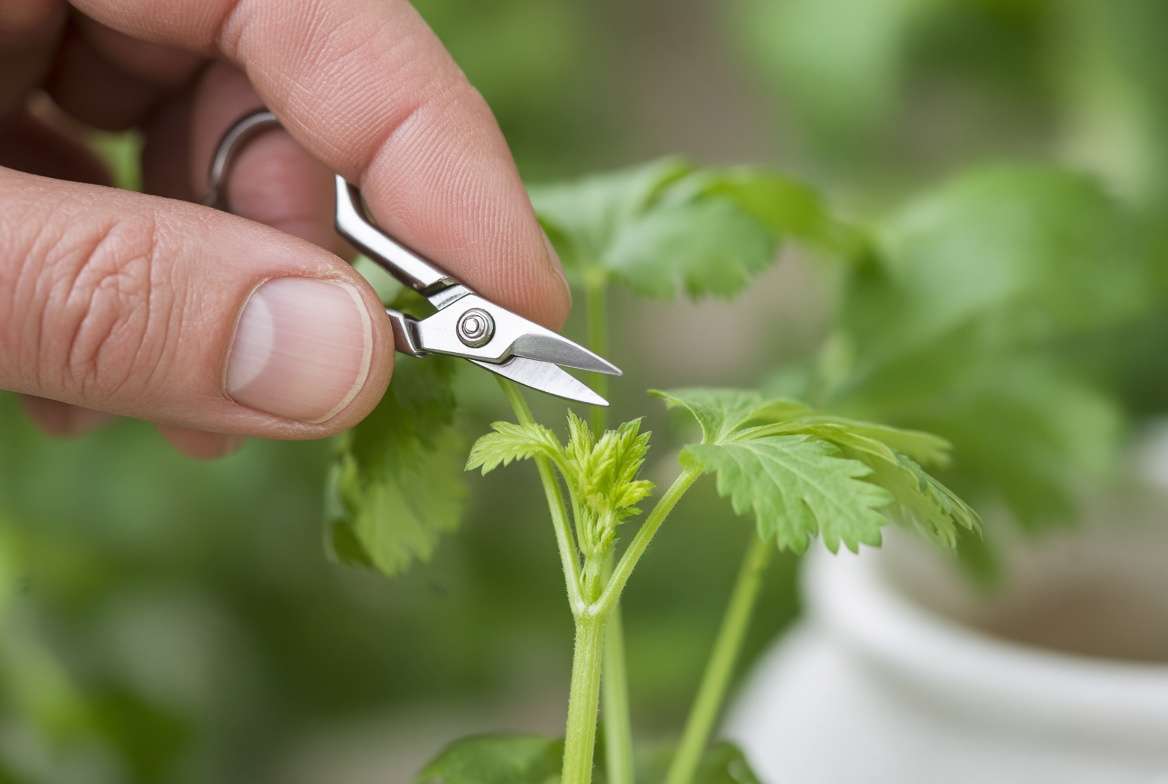
The 1/3 Rule: Never harvest more than one-third of the plant’s total foliage at one time. Plants need their leaves to photosynthesize and generate energy. Removing too much at once will send the plant into shock, stunting its growth or killing it outright.
-
Where to Cut (The Node): Do not randomly chop stems in half. Look closely at the stem for a “node”—the little joint where leaves attach to the main stem. Always make your cut just above a node. This signals the plant’s hormones to push out two new branches from that exact spot, resulting in a bushier, fuller herb rather than a tall, spindly one.
VII. Frequently Asked Questions (FAQs) ❓
Can I grow indoor herbs from grocery store cuttings?
Yes! Soft-stemmed herbs like mint and basil are incredibly easy to propagate. Simply take a fresh cutting, remove the lower leaves, and place the stem in a glass of clean water. Change the water every few days, and within a week or two, you will see fresh white roots sprouting. Once the roots are two inches long, plant them in soil.
Do indoor herbs need fertilizer?
Yes, but you must proceed with caution. Because indoor herbs grow much slower than their outdoor counterparts (due to lower light levels), they require significantly less food. Use a balanced, organic liquid fertilizer diluted to one-quarter of the recommended strength on the bottle. Feed them only during the active growing season (Spring and Summer).
Why do my indoor herbs lack flavor?
The intense flavor and aroma of herbs come from their essential oils. Plants produce these oils largely as a defense mechanism against intense sunlight and heat. Because indoor environments are highly regulated and dimmer, indoor herbs may have a slightly milder flavor profile than outdoor-grown herbs. Maximizing their light exposure (even with indirect light) and avoiding over-fertilization will help concentrate their natural oils.
VIII. Conclusion & Next Steps 🌟
Transforming a corner of your home into a thriving indoor garden is a deeply rewarding experience that brings fresh flavors, vibrant colors, and life into your living space. By understanding that “low light” doesn’t mean “no light,” and by selecting adaptable, shade-tolerant species—like the unstoppable mint, the fragrant lemon balm, or the resilient chive—you can bypass the frustrations that plague many indoor gardeners.
Remember, the secret to longevity lies in the foundation: prioritize excellent soil drainage, master the 1/3 rule of harvesting, and pay attention to what your plants are telling you.
Are you ready to bring a touch of green into your kitchen? Leave a comment below letting us know which of these seven foolproof herbs you are going to try first! Happy planting! 🪴











