

You’ve spent months carefully watering, fertilizing, and coaxing your patio tomato plant to life. The foliage is lush, the blossoms have dropped, and you finally see the fruits of your labor. But all too often, container gardeners watch their potted plants yield one underwhelming harvest before the plant simply gives up for the season. It is incredibly frustrating, but the solution is surprisingly simple. If you want to transform your small-space garden into a continuous food factory, you need to master specific harvesting tips for container-grown produce.
Over my years of designing, tending, and experimenting with urban container gardens, I’ve seen firsthand how treating a potted plant like a ground-planted crop leads to stunted growth and disappointing yields. Container gardening requires a completely different approach to plant care. Your pots are isolated micro-ecosystems, and every time you snip, pull, or pick, you drastically alter that plant’s delicate balance.
In this comprehensive guide, we are going to dive deep into the science and strategy of picking potted fruits, vegetables, and herbs. By tweaking your timing and technique, you can unlock massive, season-long yields from even the smallest balcony gardens. Let’s dig in! 🧤🌱
🔍 Why Harvesting Container Produce is Radically Different
To understand why specialized harvesting techniques matter, we first need to look beneath the soil surface. When you plant a vegetable in a traditional raised bed or directly in the ground, its root system has nearly unlimited space to forage for water, minerals, and nutrients. If you stress the plant by harvesting improperly, it has the underground infrastructure to quickly recover.
Potted plants do not have this luxury.
The Root-Bound Reality 🪴
In a container, a plant’s root system is physically restricted. Because the roots cannot stretch deep into the earth to find untapped energy reserves, the plant relies entirely on the finite amount of potting soil within the container—and, more importantly, on you. When a plant has limited root space, it has limited energy to spend on recovering from physical damage or excessive pruning. A harsh harvest can send a potted plant into a state of shock that lasts for weeks.

The Nutrient Drain 💧
Every leaf, stem, and fruit your plant produces is packed with nutrients pulled directly from the potting mix. When you harvest, you are physically removing nitrogen, phosphorus, potassium, and trace minerals from that closed ecosystem. In ground soil, the surrounding earth slowly replenishes these elements. In a pot, those nutrients are gone forever unless you manually replace them. Understanding this relationship between harvesting and nutrient depletion is the key to achieving a continuous, skyscraper-level yield.
💡 Expert Visualization: Imagine your container plant’s energy as a checking account. Watering and fertilizing are your deposits. Growing fruit and leaves are expenses. Harvesting is a massive withdrawal. If you withdraw too much at once without depositing nutrients back in, your plant’s “account” will go bankrupt, halting production entirely.
🚀 The 7 Expert Harvesting Tips for Container-Grown Produce
Now that we understand the delicate biology of our potted companions, let’s look at the highly actionable, expert-approved methods for picking your produce without stalling your plant’s growth.
Tip 1: Master the “Morning Pick” for Maximum Crispness 🌅
Timing is everything in gardening, and when it comes to container-grown crops, the time of day you harvest can dramatically impact both the flavor of your food and the health of your plant. You should always aim to harvest in the early morning, just after the dew has dried but before the sun hits its peak heat.
The Science Behind the Morning Pick: During the cool night hours, your plants undergo a period of recovery. They draw up moisture from the potting soil, filling their cells with water. This creates high turgor pressure, which is what makes leafy greens snap, cucumbers crunch, and herbs burst with essential oils. As the sun rises and temperatures climb, plants begin to transpire (sweat), losing that moisture to the air to keep themselves cool.
Best For: Leafy greens (lettuce, spinach, arugula), cucumbers, zucchini, and all culinary herbs.
Expert Insight: Harvesting a potted plant in the mid-afternoon when it is actively fighting the heat is a recipe for disaster. The produce will be limp, slightly bitter, and devoid of its peak nutritional value. Furthermore, cutting a plant while it is heat-stressed forces it to expend precious energy healing its wounds rather than defending itself against the sun. Stick to your morning coffee-and-harvest routine! ☕🌿

Tip 2: The “Cut-and-Come-Again” Method for Endless Greens ✂️
If you are growing lettuce, kale, spinach, or Swiss chard in containers, pulling the whole plant out of the soil is a massive waste of precious patio real estate. Instead, you need to employ the “cut-and-come-again” method, which turns a single potted seedling into a continuous salad bar that lasts for months.
How It Works: Rather than waiting for a head of lettuce or a bunch of kale to fully mature, you selectively harvest only the oldest, outermost leaves. Using clean snips, cut these outer leaves about one inch above the soil line.
The Container Advantage: The secret here is preserving the apical meristem—the central crown or growing point of the plant. By leaving the center intact, along with a few small inner leaves to continue photosynthesizing, the plant will push its energy into generating new outer leaves. In a small pot, this means you can harvest a side salad every few days from the exact same plant, maximizing your yield per square inch.
Actionable Step: Never cut more than a third of the outer leaves at one time. Always leave at least 1-2 inches of growth at the base of the stem so the plant has enough structural integrity to regenerate. 🥗
Tip 3: Pick Early and Often to Trigger the “Survival Response” 🍅
One of the biggest mistakes beginner container gardeners make is leaving fruit on the vine for too long, waiting for it to look exactly like the giant, uniform produce at the grocery store. If you want a massive yield, you need to trick the plant’s biology.
The Botanical Secret: A plant’s ultimate biological goal is not to feed you; it is to produce mature seeds and reproduce. Once a tomato, pepper, or cucumber reaches full maturity and begins to overripen on the vine, the plant receives a hormonal signal that its life’s mission is complete. It will then stop producing new flowers and focus entirely on ripening that existing seed.
How to Trick Your Plant: If you harvest the fruit just as it ripens—or even slightly before—the plant panics. Its survival response kicks in. Because you have removed its seeds before they could fall to the ground, the plant will frantically push out new blossoms and set new fruit to try again.
Application: This tip is absolutely vital for container tomatoes, jalapeños, bush beans, eggplants, and snap peas.
Pro Tip: Never let a cucumber turn yellow or a bean pod get lumpy and tough on the plant. Check your pots every single day. The more frequently you harvest, the more aggressively the plant will produce. 🌶️🥒
Tip 4: Always Use Sanitized Micro-Snips (Never Pull!) 🧤
When you are standing on your patio, staring at a perfectly ripe bell pepper, it is incredibly tempting to just grab it and give it a quick yank. In a traditional garden, a deeply rooted plant might withstand this rough treatment. In a container garden, pulling your produce by hand is one of the fastest ways to destroy your crop.
The Danger of the “Yank and Pull”: Container potting mix is intentionally light and fluffy to ensure proper drainage. Because the soil is so loose, a container plant’s root system isn’t anchored as firmly as it would be in dense, heavy ground soil. If you pull a stubborn tomato or yank on a thick pepper stem, you risk uprooting the entire plant, tearing vital feeder roots, or snapping the main stem entirely.
The Tool of Choice: Always use a sharp, clean pair of bypass pruners, floral snips, or micro-tip pruning shears to cut the fruit away from the stem. Leave a small piece of the pedicel (the stem attached to the fruit) intact.
Expert E-E-A-T Element: Disease management in tight container spaces is critical. When you move from pot to pot, your shears can easily spread soil-borne diseases, fungal spores, or bacterial infections (like tomato blight). Keep a small spray bottle of 70% isopropyl alcohol or a pack of sanitizing wipes in your gardening caddy. Give your snips a quick wipe down before moving on to the next pot. It takes two seconds but can save your entire patio harvest! 🧽✂️
Tip 5: Harvest Based on Flavor, Not Grocery Store Size 📏
One of the most difficult habits for new urban gardeners to break is waiting for their homegrown produce to match the giant, flawless vegetables stacked in supermarket aisles. Commercial produce is bred for size, shelf-life, and transportability—often at the expense of flavor.
The Container Size Reality: Plants grown in pots, even large half-barrels, will naturally produce slightly smaller fruits and root vegetables than their field-grown counterparts. This is a normal adaptation to a restricted root zone. If you wait for a container-grown eggplant to get as massive as a grocery store eggplant, it will become dull, heavily seeded, and incredibly bitter.
Indicators of Readiness (What to Look For): Instead of focusing on size, use sensory cues to know exactly when your potted vegetables are at their absolute peak:
-
Cucumbers and Zucchini: Harvest when they are firm, heavy for their size, and the skin is glossy. If the skin turns dull or yellowish, they are past their prime.
-
Eggplants: Look for a deep, mirror-like shine on the skin. A gentle squeeze should leave a slight indentation that quickly bounces back.
-
Root Vegetables (Carrots, Radishes): Gently brush away the top half-inch of potting mix. If the “shoulder” of the carrot looks broad and vibrantly colored, pull it! Potted root veggies left in the soil too long become woody and split. 🥕🍆
Tip 6: Observe the One-Third Rule for Herbs 🌿
Growing herbs in containers is incredibly popular because they thrive in tight spaces and require minimal maintenance. However, harvesting them incorrectly can turn a lush, bushy basil plant into a sad, spindly stick in a matter of weeks.
The Golden Rule: Never remove more than 33% (one-third) of a container-grown herb’s foliage at any single time.
The “Why”: Foliage acts as the solar panels for your plant. If you strip a potted thyme, mint, or parsley plant of all its leaves for a massive recipe, you completely remove its ability to photosynthesize. Because the root system is confined to a pot, the plant lacks the stored underground energy to bounce back from such severe defoliation, and it will often simply die of shock.
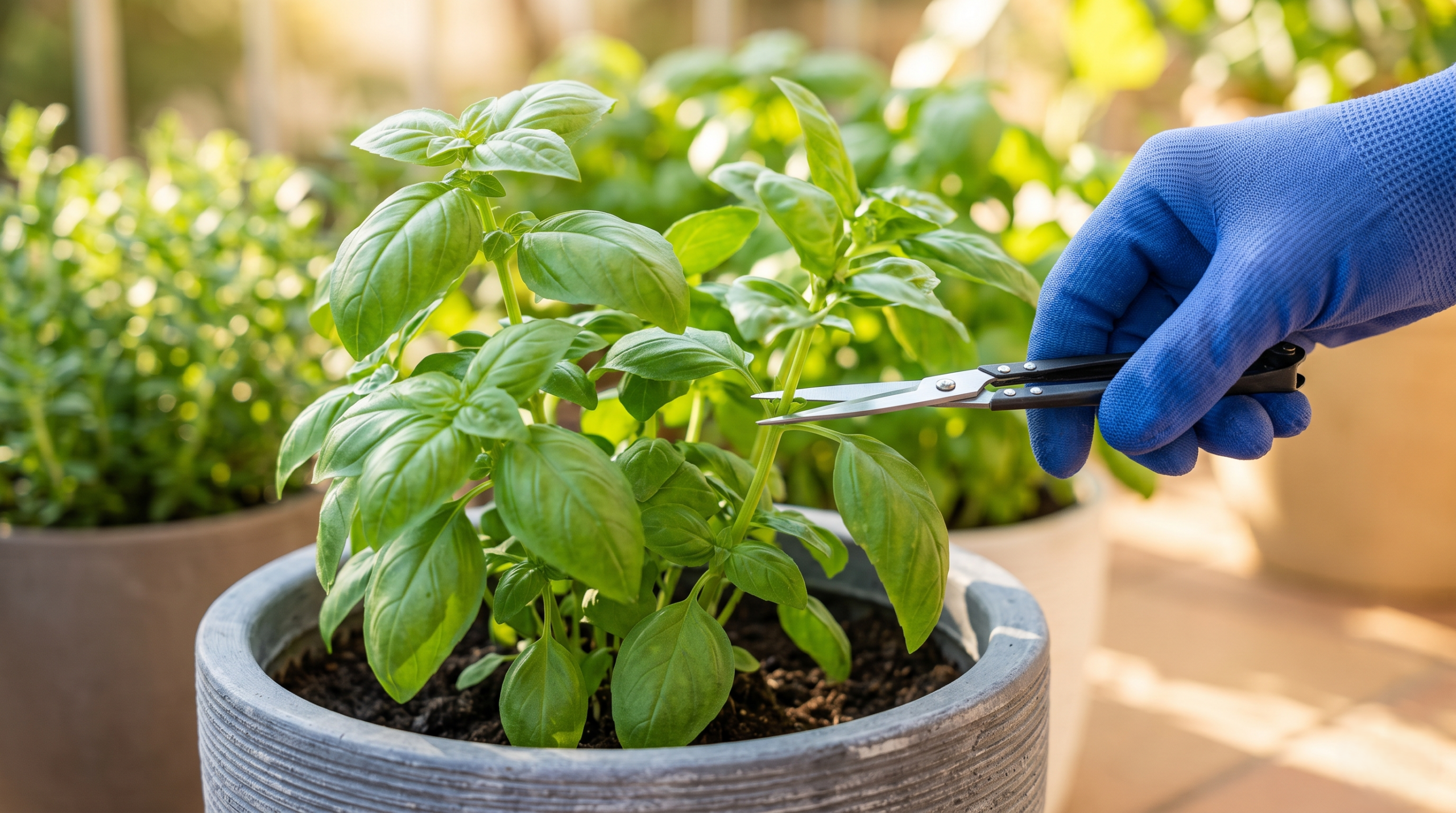
Pruning for Bushiness: When harvesting herbs, do not just pluck single leaves from the bottom of the stem. Instead, trace the stem down from the top to where it meets a lower set of leaves (a node) and snip just above that junction. This process, called “pinching,” stops vertical growth and forces the plant to send out lateral (side) shoots. By harvesting correctly, you actually train your potted herbs to grow wider, bushier, and vastly more productive. 🌿🪴
Tip 7: The “Post-Harvest Replenish” is Mandatory 💧
We touched on this in the introduction, but it is the single most important secret to unlocking bigger, continuous yields from container plants. Harvesting is a highly extractive process. You are physically taking nutrients out of the pot. To keep the harvest rolling, you must close the loop.
Closing the Loop: The moment you pull a heavy harvest of cherry tomatoes, snip a massive bowl of salad greens, or harvest a flush of jalapeños, your plant is left depleted. It needs immediate fuel to start the process of flowering and fruiting all over again.
The Replenishment Recipe: Within 24 hours of a major harvest, feed your container plants with a high-quality, liquid organic fertilizer. Look for water-soluble options like fish emulsion, liquid kelp, or a compost tea formulation. Because potting soil flushes out nutrients quickly due to frequent watering, liquid fertilizers are absorbed rapidly by the roots, providing an instant energy boost.
Expert Watering Note: Mix the fertilizer at half the recommended strength to avoid burning the roots, and always water the pot deeply. A deep watering not only delivers the nutrients evenly but also helps relieve the physical stress the plant endured during the harvesting process. 🚿🐟
🌟 Bonus E-E-A-T Section: Overcoming Common Container Harvest Fails
Even with the best harvesting techniques, container microclimates can present unique challenges. Here is how to troubleshoot the most common issues that pop up right around harvest time:
-
Blossom End Rot Just Before Picking: If your tomatoes or peppers develop a black, sunken, leathery spot on the bottom just as they are ready to harvest, you have Blossom End Rot. This isn’t a disease; it’s a calcium deficiency caused by inconsistent watering. Potted plants dry out quickly. Establish a strict, even watering schedule so the roots can properly absorb the calcium already present in the soil.
-
The “Woody Radish” Syndrome: Radishes and carrots grown in pots often become tough, spicy, and woody. This happens when the potting mix fluctuates wildly between soaking wet and bone dry. Consistent moisture is the secret to tender root veggies. Also, harvest them early—baby root vegetables are significantly sweeter!
-
Pest Hitchhikers on Your Produce: Patios and balconies create sheltered microclimates that aphids, spider mites, and whiteflies absolutely love. Always give your freshly harvested container produce a thorough soak in a bowl of cool water with a splash of white vinegar to naturally detach any hidden pests before bringing them into your kitchen. 🐞🥬
❓ Frequently Asked Questions (FAQs)
How often should I harvest my container garden? During the peak of summer, you should be checking your container garden daily. Fast-growing crops like cucumbers, beans, and zucchini can double in size in just 24 hours. Plan to harvest something from your patio garden at least every 2 to 3 days to keep the plants producing.
Can I harvest from my potted plants in the middle of summer heat? While you can, you ideally shouldn’t. Mid-day harvesting stresses an already heat-exhausted plant and yields wilted, less flavorful produce. If you must harvest in the afternoon, immediately submerge the produce in an ice-water bath to restore its crispness, and give the potted plant a gentle drink of water.
Why did my container plant stop producing after the first harvest? This is usually caused by one of three things: waiting too long to harvest (letting the fruit overripen and go to seed), failing to replenish the soil nutrients after the first flush of fruit, or the plant becoming severely root-bound in a pot that is simply too small.
What are the best vegetables for continuous harvesting in pots? For the highest return on investment in a small space, focus on “cut-and-come-again” crops and prolific fruiting plants. The best choices are loose-leaf lettuce, Swiss chard, indeterminate cherry tomatoes, bush beans, shishito peppers, and culinary herbs like basil, mint, and chives.
🎉 Conclusion: Your Potted Garden Awaits
Growing your own food on a balcony, patio, or sunny windowsill is a deeply rewarding experience, but it requires a slightly different playbook than traditional gardening. By mastering these expert harvesting tips for container-grown produce, you are no longer just guessing—you are working in harmony with your plant’s biology.
Remember to harvest early in the morning, use sharp snips to protect fragile roots, pick frequently to trigger new growth, and always replenish your potting soil with liquid nutrients after a big haul. Container gardening is highly forgiving once you understand how to manage plant energy, and with these strategies, you are well on your way to unlocking the biggest, most delicious yields you’ve ever had.
Happy harvesting, and may your pots always be overflowing! 🌱🍅✨











