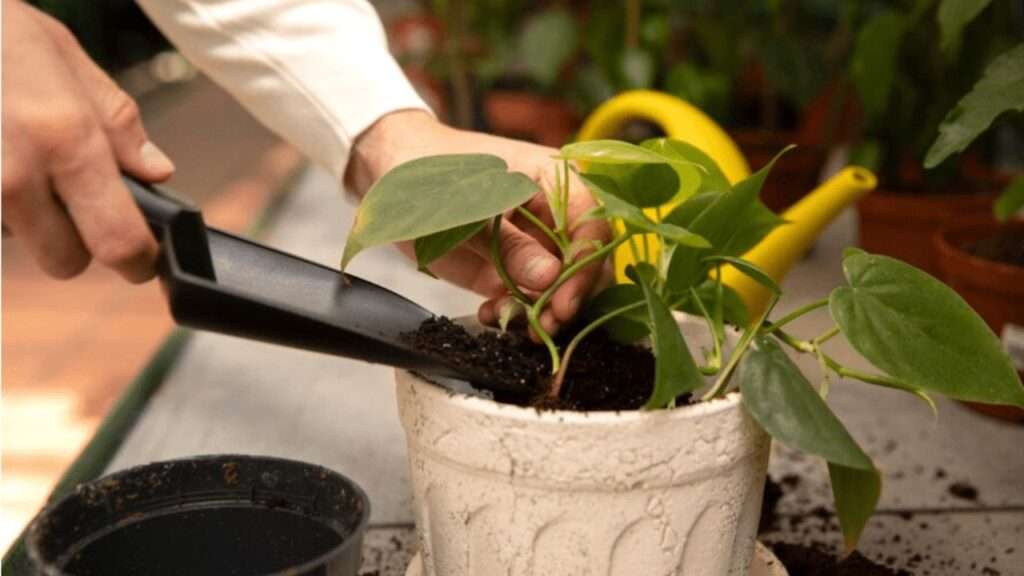
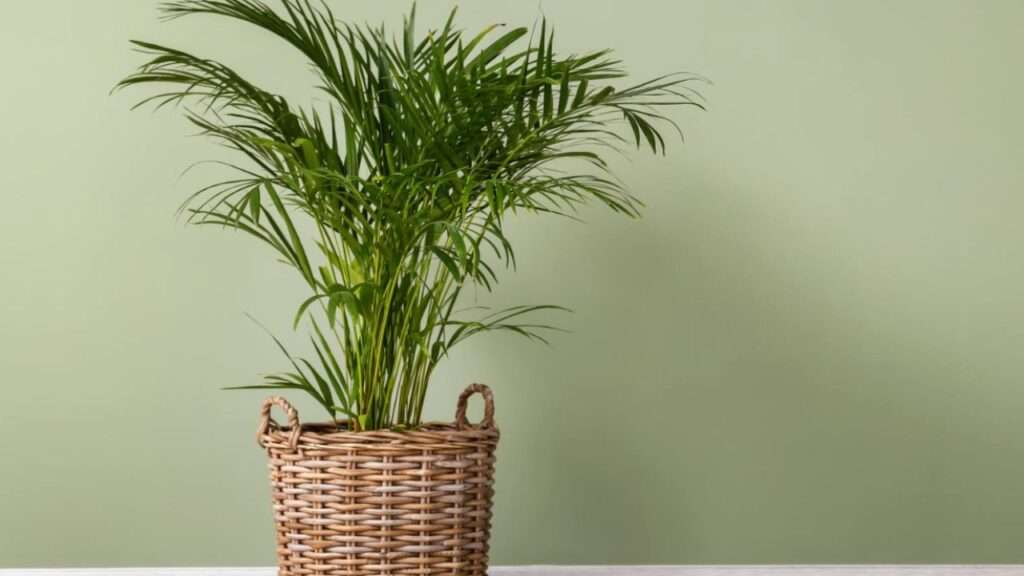
If you have been a plant parent for a while, you likely know the creeping anxiety of watching a flimsy plastic hanger stretch dangerously under the weight of a mature, freshly watered Boston Fern or a sprawling 5-year-old Golden Pothos. When your beloved trailing vines outgrow their nursery pots, upgrading to large hanging planter baskets isn’t just about refreshing your indoor jungle’s aesthetic—it is a structural necessity to prevent a catastrophic crash.
As an experienced horticulturist and indoor landscaping consultant, I’ve seen too many gorgeous, decades-old plants destroyed by snapped S-hooks and degraded plastic rims. To prevent this, we need to look beyond pretty macramé and focus on structural integrity. For this guide, I evaluated dozens of oversized hanging pots based on rigorous criteria: load-bearing hardware analysis, material degradation under UV light, and safe soil volume capacity. I’ve also factored in weight distribution principles to ensure these recommendations keep your heavy foliage safe, secure, and thriving.
If you’re in a hurry to secure your heavy vines, the bottom line is this: The Double-Walled Resin Wicker Basket takes our top spot for its unbeatable strength-to-weight ratio and galvanized steel suspension, offering commercial-grade security for your heaviest botanical investments.
Buying Guide: What Makes a Hanging Planter Truly “Heavy-Duty”? 🛠️
Before diving into the top recommendations, it is crucial to understand what separates a genuinely sturdy hanging pot from a decorative piece that will fail under pressure. Upgrading a mature trailing plant involves significant weight, especially after watering. Here is exactly what you need to look for.
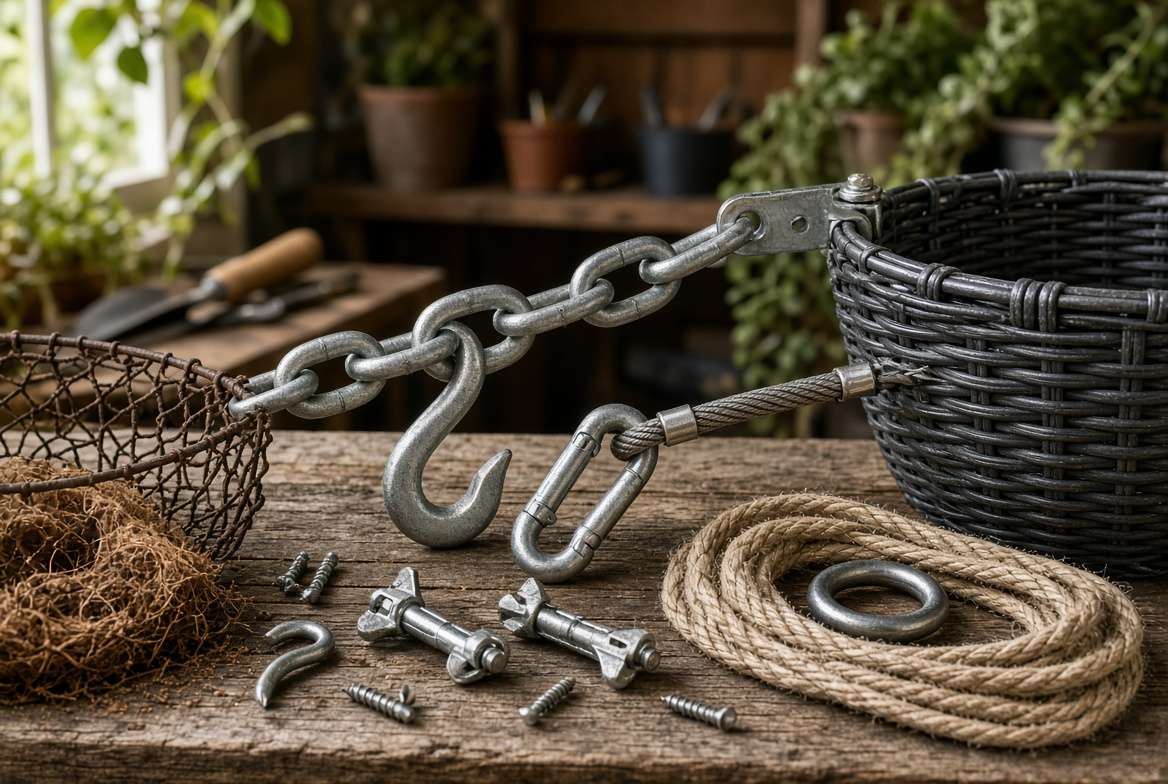
Load-Bearing Hardware: Chains, Cables, and Cords 🔗
The pot itself rarely breaks first; the point of failure is almost always the suspension system.
-
Stainless Steel Cables: Offering the highest tensile strength, aircraft-grade braided cables are the gold standard for oversized planters. They do not stretch or rust.
-
Coated Metal Chains: Galvanized or powder-coated chains are excellent for heavy outdoor baskets. However, inspect the “S-hook” at the top and the clips attaching to the pot’s rim—these must be thick, closed-loop metal, not pliable aluminum.
-
Macramé and Ropes: While beautiful, natural fibers like cotton and jute degrade rapidly when exposed to humidity, water runoff, and UV light. If you must use rope for a heavy plant, ensure it features reinforced metal O-rings at all anchor points to prevent friction snapping.
Material Science: Resin, Wire, Ceramic, and Plastic 🧱
When dealing with large root systems, the weight of the container matters immensely.
-
Double-Walled Resin & Fiberglass: These offer the absolute best strength-to-weight ratio. They provide the visual heft of ceramic or stone but weigh 70% less, reserving your ceiling hook’s weight capacity for the plant and soil.
-
Wire with Coir Liners: Excellent for outdoor setups. The heavy-gauge iron frames can hold tremendous weight, while the coconut coir liner allows for superior root aeration.
-
Ceramic and Terracotta: Proceed with extreme caution. A 12-inch ceramic pot can weigh 10 pounds empty. Once filled with wet potting soil and a mature plant, it can easily exceed 30-40 pounds, making it incredibly dangerous to hang without structural ceiling reinforcements.
The Water Weight Factor & Drainage Solutions 💧
Never underestimate water weight. One gallon of water weighs approximately 8.3 pounds. When you thoroughly water a large hanging plant, the soil absorbs and holds this weight. For oversized hanging baskets, a built-in self-watering reservoir or a secure drain plug is a structural necessity, not just a convenience. Reservoirs allow you to water less frequently and help distribute the water weight evenly at the base of the pot, preventing the basket from tilting dangerously to one side and unbalancing the hanging chains.
The 7 Best Large Hanging Planter Baskets 🏆
Based on durability, weight capacity, and plant health optimization, here are the safest and most stylish options for your heavy trailing plants.
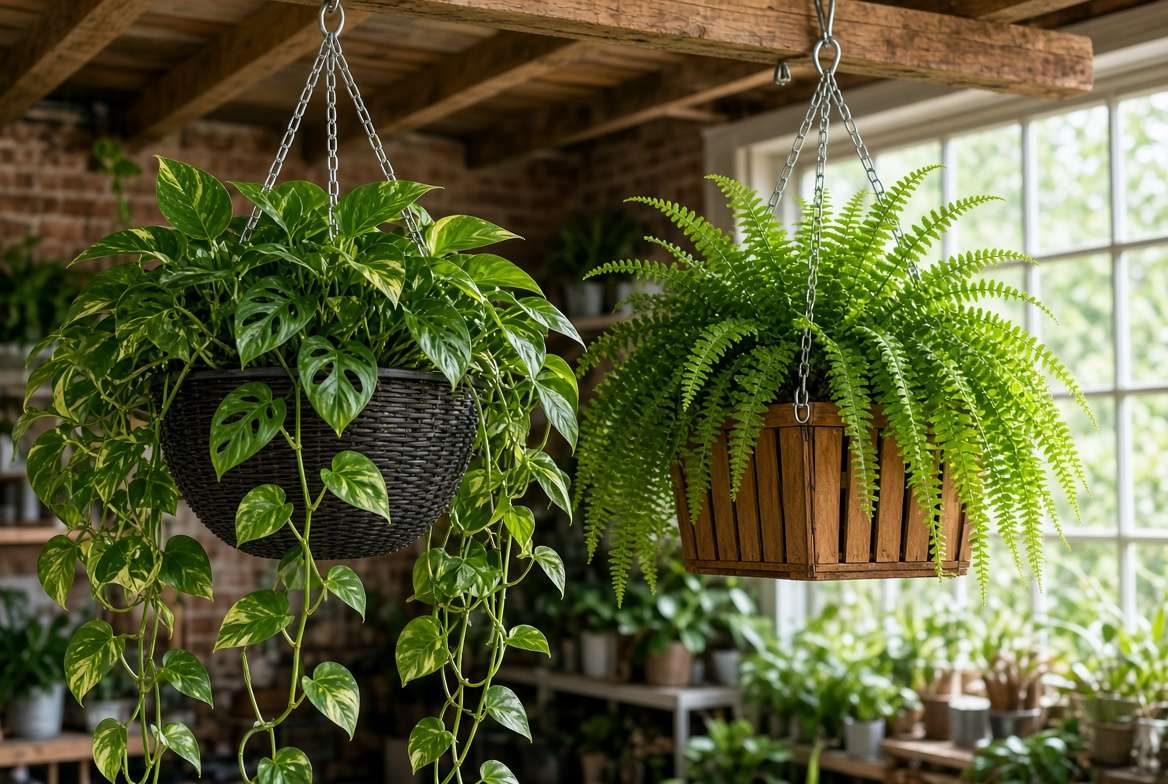
1. Best Overall for Heavy Loads: Double-Walled Resin Wicker Basket 🌟
When you need to house a massive, unruly Monstera Adansonii or a giant fern, this is the ultimate safeguard.
-
Specs: 14-inch diameter / High-density polyethylene (HDPE) resin / Triple-chain galvanized steel suspension.
-
Pros: The double-walled construction acts as insulation for the roots and adds immense structural rigidity. It will not warp under the pressure of expanding root balls. The weather-resistant exterior handles intense sun without becoming brittle.
-
Cons: The traditional faux-wicker look might not suit ultra-modern interior decors.
-
Best For: Massive indoor or outdoor trailing plants that require a deep soil reservoir and unbreakable suspension.
2. Best for Outdoor Patios: Commercial-Grade Wire Basket with Thick Coir Liner 🥥
This is the workhorse of outdoor landscaping, often seen hanging from municipal street lamps.
-
Specs: 16-inch diameter / Rust-proof heavy-gauge iron / Extra-thick molded coconut coir liner.
-
Pros: Offers incredible depth for extensive root systems. The coir liner provides perfect drainage and 360-degree oxygen flow, which prevents root rot even during heavy rainy seasons.
-
Cons: Dries out much faster than plastic or resin pots; requires frequent watering or the addition of a plastic moisture-retention barrier inside.
-
Best For: Heavy outdoor arrangements, trailing petunias, and large creeping jennys that need maximum airflow.
3. Best Self-Watering System: High-Capacity Minimalist Reservoir Pot 🚰
Lugging a step stool and a heavy watering can to drench a ceiling-high plant is a chore, and inconsistent watering can stress mature foliage.
-
Specs: 12 to 15-inch options / UV-stabilized polypropylene / Hidden water reservoir with a level indicator / Stainless steel wire hangers.
-
Pros: Radically reduces watering frequency for hard-to-reach, heavy plants. The sub-irrigation system draws moisture up through capillary action, preventing the soil surface from becoming a breeding ground for fungus gnats. Most importantly, the water weight sits perfectly flat at the bottom, keeping the basket perfectly balanced.
-
Cons: Not suitable for drought-loving plants like trailing succulents (Burro’s Tail) that require the soil to dry out completely.
-
Best For: Thirsty, fast-growing vines like Philodendron Hederaceum or demanding Calatheas that require consistent, even moisture.
4. Best Modern Aesthetic: Fiberglass/Stone Composite with Steel Cables 🤍
You shouldn’t have to sacrifice your minimalist, contemporary interior design just because you have a heavy plant.
-
Specs: 14-inch diameter / Crushed stone and fiberglass blend / Aircraft-grade braided steel suspension cables.
-
Pros: It provides the luxurious, high-end look of concrete or terrazzo but weighs up to 70% less. The sleek steel cables are nearly invisible from a distance, creating a floating effect. It is completely shatterproof.
-
Cons: Typically more expensive than standard plastic or resin options, and often lacks a drainage hole (requiring you to drill one or use a nursery pot insert).
-
Best For: Modern living rooms, offices, and indoor jungles where aesthetic cohesion is just as important as structural safety.
5. Best for High Humidity (Aroids & Ferns): Premium Slatted Teak or Cedar Basket 🪵
Epiphytes—plants that naturally grow on other trees in the wild—often despise sitting in dense, wet soil. Wooden slatted baskets mimic their natural habitat.
-
Specs: 10 to 14-inch square or octagonal designs / Rot-resistant Teak or Western Red Cedar / Heavy-duty 4-point galvanized chain hanger.
-
Pros: Incredible aeration. The slats allow thick, aerial roots of orchids, Hoyas, and Aroids to literally grasp the structure, securing the plant naturally over time. The wood is naturally resistant to decay and fungal growth.
-
Cons: Soil can wash out through the slats unless lined with sphagnum moss or mesh. They drip heavily when watered.
-
Best For: Giant Staghorn ferns, mature Hoyas, Orchids, and Anthuriums grown in humid greenhouses or shower rooms.
6. Best Heavy-Duty Macramé: Steel-Ring Reinforced Cotton Hanger 🧶
Many plant lovers adore the bohemian aesthetic of macramé but have learned the hard way that cheap cord snaps under heavy loads.
-
Specs: 40 to 60-inch length / 5mm thick braided cotton rope / Welded steel O-rings at the ceiling anchor and basket base.
-
Pros: The steel rings take the friction off the cotton fibers, eliminating the most common point of failure. The thick 5mm cord is incredibly strong when woven tightly, easily supporting oversized fiberglass or plastic pots.
-
Cons: You still need to provide your own lightweight, durable pot. Prone to staining if dirty water overflows.
-
Best For: Plant parents who want a soft, boho look but need the peace of mind that a 20-pound Marble Queen Pothos won’t come crashing down.
7. Best Budget Option: Thick-Rimmed Nursery-Grade Plastic Hanger 💰
Sometimes, commercial simplicity is the best route, especially if you have a massive collection of hanging plants.
-
Specs: 10 to 12-inch diameter / Injection-molded UV-resistant plastic / Thick, snap-in multi-strand plastic hangers.
-
Pros: Extremely affordable, allowing you to bulk-upgrade your collection. The rolled rim reinforces the structural integrity, preventing the plastic from cracking under the outward pressure of thick roots.
-
Cons: Utilitarian appearance. The plastic hangers, while strong, can degrade if left in direct, blistering outdoor sun for multiple years.
-
Best For: Greenhouses, sunrooms, and large indoor collections where function and cost-efficiency are prioritized over decorative flair.
Safe Installation: How to Anchor Heavy Planters (Without Tearing the Ceiling) ⚓
Finding the right large hanging planter baskets is only half the battle. A commercial-grade pot is entirely useless if it is anchored directly into weak drywall. A thoroughly watered 14-inch basket can easily weigh 25 to 40 pounds.
Locating Ceiling Joists and Wall Studs 🪵
Drywall cannot support the dynamic weight of a swinging, watered hanging plant. Over time, the moisture and gravity will pull a standard anchor straight through the ceiling, leaving a massive hole and a destroyed plant.
-
Use a Magnetic Stud Finder: Scan the ceiling until you locate a solid wood joist.
-
Mark the Center: Use a pencil to mark the exact center of the joist to ensure your hook bites deeply into the wood, not just the edge.
-
Pre-Drill the Hole: Use a drill bit slightly smaller than your hook’s thread. This prevents the old wood in your ceiling from splitting when you twist the heavy-duty hook in.

Choosing the Right Hardware 🪝
-
Joist-Mounted Swag Hooks: These are the gold standard. When driven deeply into a wooden joist, a heavy-duty swag hook can comfortably hold 50+ pounds.
-
Toggle Bolts (For Drywall Only Scenarios): If you absolutely cannot find a joist and your plant is under 20 pounds, use heavy-duty steel toggle bolts (also known as butterfly anchors). These open up behind the drywall to distribute the weight over a wider surface area. However, they are never recommended for maximum-weight pots.
-
Wall-Mounted Forged Brackets: If ceiling hanging isn’t viable, mount a heavy cast-iron or forged steel bracket directly into a wall stud. This offers incredible shear strength.
💡 Expert Insight: “Always calculate your required weight capacity based on the plant immediately after a deep soaking, not when the soil is dry. When in doubt, over-engineer your hanging hardware. A hook rated for 50 pounds gives you a crucial safety margin for a 25-pound plant.”
Top Trailing Plants That Thrive in Large Baskets 🌱
Upgrading to large hanging planter baskets opens up incredible possibilities for your indoor jungle. Here are the species that truly benefit from the extra root space and support:
-
Mature Monstera Adansonii (Swiss Cheese Vine): To produce larger, highly fenestrated (holey) leaves, this plant needs deep root space. Confining it to a small pot often leads to stunted, bare vines.
-
Boston Ferns (Nephrolepis exaltata): These moisture-loving classics require the wide diameter of a large basket to accommodate their rapidly spreading stolons and massive, arching fronds.
-
Trailing Philodendrons (Micans, Brasil, Heartleaf): With adequate soil volume to retain consistent nutrients and moisture, these resilient plants can easily push out lush vines exceeding 6 to 10 feet in length.
-
Hoya Carnosa: Their thick, waxy leaves make them inherently heavy. A large, highly stable, and securely anchored pot ensures they don’t tip or swing dangerously when bumped.

Pro Tips for Maintaining Oversized Hanging Plants ✂️
Managing a massive hanging plant requires slightly different care techniques than tending to a small succulent on your windowsill.
Weight Distribution Pruning ⚖️
Plants naturally grow toward the primary light source (phototropism). Over time, this causes all the heavy foliage to cascade over one side of the basket, pulling the hanger off balance. To counter this, rotate your large hanging planter baskets 90 degrees every two weeks. Additionally, aggressively prune back overly dominant, heavy vines to encourage bushier growth at the crown and keep the weight evenly distributed across all suspension chains.
Soil Amendments for Weight Reduction 🪨
You can drastically reduce the overall hanging weight of your pot by optimizing your soil recipe. Instead of using 100% dense, peat-based potting soil, blend your own lightweight mix:
-
40% Potting Soil
-
30% Orchid Bark
-
30% Perlite or Pumice This chunky, airy mix not only shaves up to 30% off the total weight but also provides superior drainage and oxygenation, which large root systems crave.
Mess-Free Watering Techniques 🚿
Watering a massive pot indoors can be messy. If you don’t have a self-watering reservoir, invest in deep, clip-on plastic drip trays that attach directly to the bottom of the basket. Alternatively, use a pressurized pump sprayer with a long wand to direct water precisely at the soil level without disturbing the cascading vines or spilling water over the edge.
Frequently Asked Questions (FAQs) ❓
How much weight can a standard ceiling hook actually hold?
A standard adhesive hook or small drywall anchor should never hold more than 5 to 10 pounds. However, a heavy-duty steel swag hook driven at least 2 inches directly into a solid wooden ceiling joist can easily support 50 to 70 pounds of vertical pull.
How do I know it is time to upgrade my hanging plant to a larger basket?
Look for three key indicators: roots aggressively pushing out of the bottom drainage holes, the plant requiring water more than twice a week (indicating the roots have consumed all the soil), or the pot becoming severely top-heavy and difficult to balance on its current chains.
Are metal chains better than macramé ropes for outdoor hanging plants?
Yes. Outdoor plants face heavy rain, UV radiation, and wind. Natural fibers like cotton or jute macramé will inevitably dry rot, weaken, and snap under these conditions. Galvanized or powder-coated steel chains are impervious to UV damage and offer infinitely more security for outdoor gardening.
Upgrading your mature trailing vines to sturdy, large hanging planter baskets is a milestone in your plant parenthood journey. It means you’ve successfully cultivated a plant long enough that it demands premium real estate. By prioritizing structural hardware, lightweight but durable materials like double-walled resin, and proper joist-anchored installation, you can safely transform your living space into a lush, dynamic canopy. Whether you opt for a sleek fiberglass bowl or a high-capacity self-watering system, your heavy plants—and your floors—will thank you.