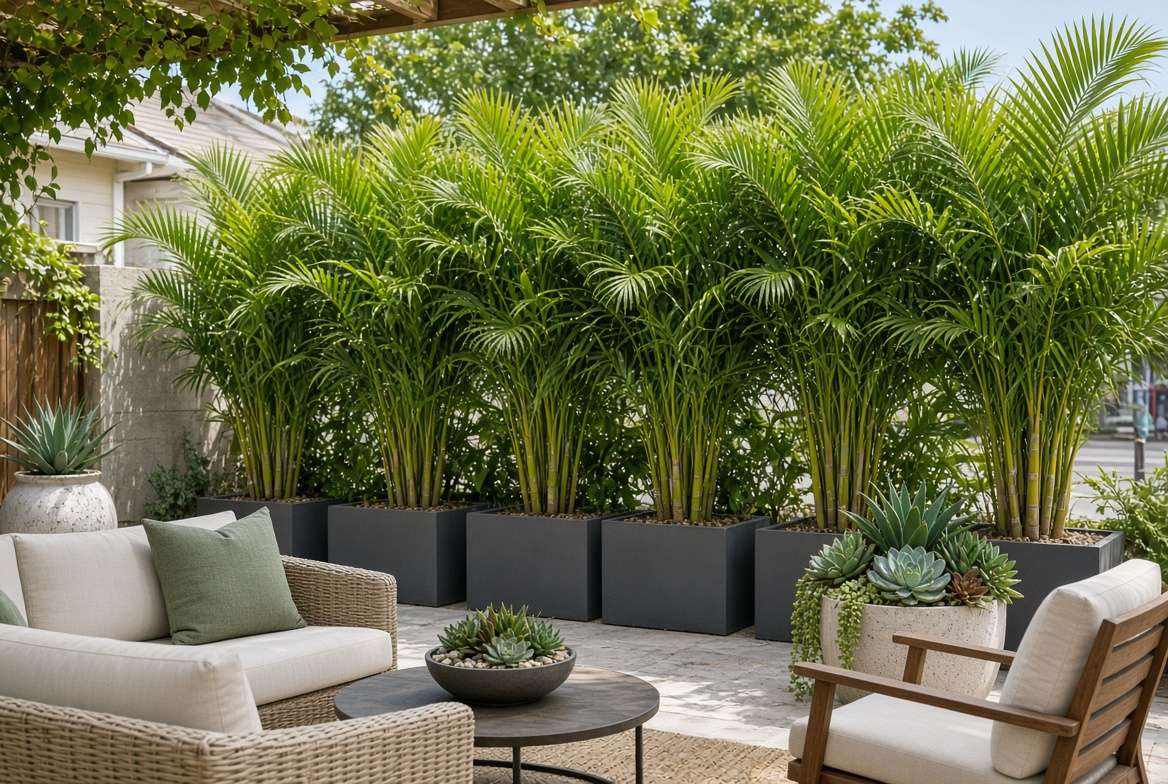
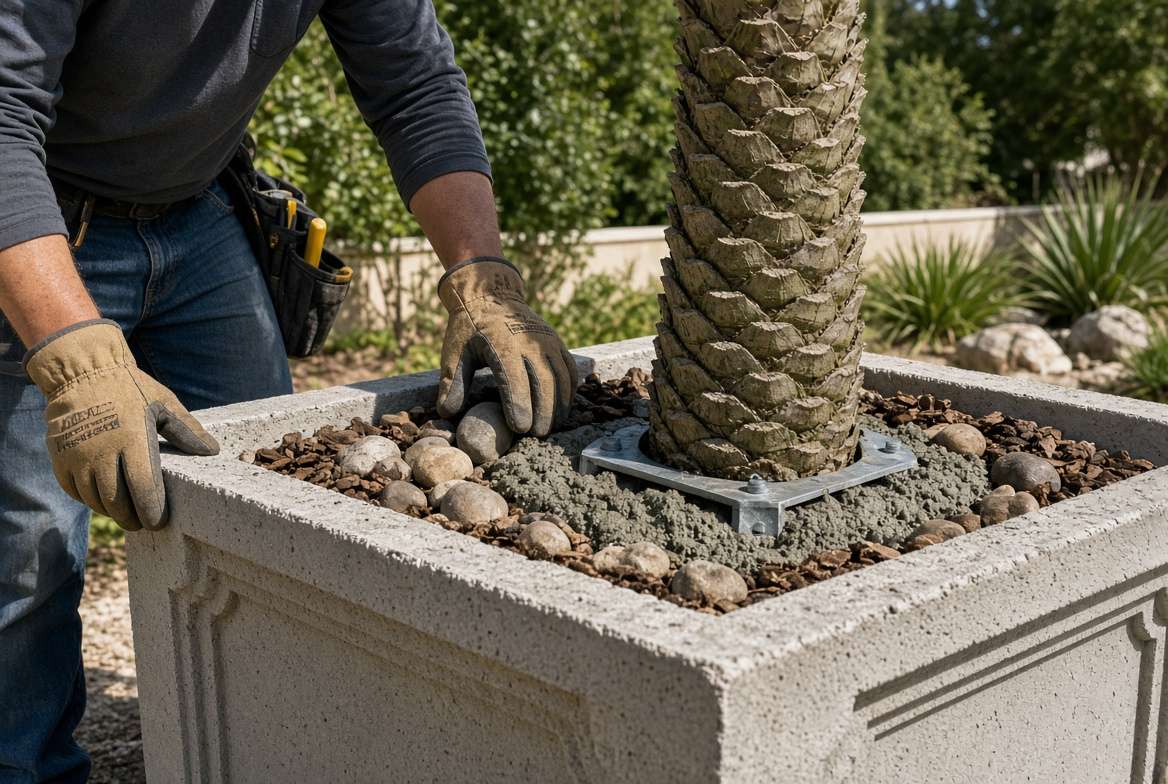
Have you ever spent hundreds of dollars and countless hours trying to cultivate a lush, tropical oasis in your backyard, only to watch your prized palms wither away after the first winter freeze or scorch in the arid summer sun? You are not alone. The heartbreak of fighting your natural climate is a frustrating, expensive reality for many homeowners and landscaping enthusiasts. But what if you could bypass the climate constraints, exorbitant water bills, and endless maintenance entirely?
The secret lies in investing in commercial-grade outdoor artificial palm trees.
Forget everything you know about the flimsy, obvious plastic plants of the past. Today’s premium synthetic palms are a strategic, permanent landscaping hack utilized by luxury resorts, commercial properties, and savvy homeowners. They offer a way to achieve that highly coveted Miami or Balinese aesthetic regardless of your zip code. In this comprehensive guide, we will break down exactly how to source, install, and style these fade-proof botanical investments so seamlessly that even your neighbors won’t know the difference.
⚖️ Why Go Faux? The Real vs. Artificial Palm Tree Showdown 🥥
Choosing faux botanicals for your exterior landscape is no longer considered a compromise; for many property owners, it is the superior choice. Here is why the landscaping industry is seeing a massive shift toward high-end synthetics.

Bypassing Hardiness Zones
Living in New York, Ohio, or the dry deserts of Nevada usually means kissing your dreams of a tropical courtyard goodbye. Real palm trees are notoriously finicky, requiring specific USDA hardiness zones (typically Zones 9-11) to survive year-round outdoors. An artificial outdoor palm completely eliminates geographical limitations. Whether you are dealing with blizzards, sub-zero temperatures, or bone-dry desert heat, a premium faux tree remains vibrant and structurally sound, allowing you to curate a tropical landscape in any environment.
The True Cost of “Zero-Maintenance”
When evaluating your landscaping options, it is vital to look at the total return on investment (ROI). While a commercial-grade artificial tree comes with a higher upfront price tag than a live nursery plant, the long-term savings are staggering.
Real tropical palms require continuous financial investment:
-
Specialized sandy, well-draining palm soil and fertilizers
-
Astronomical summer water bills
-
Winterizing wraps or greenhouse structures for colder months
-
Professional pruning for towering fronds
-
The inevitable replacement cost when the tree succumbs to disease, pests, or a hard freeze
Faux palms require zero watering, zero pruning, and zero expensive soil amendments, easily paying for themselves within the first two seasons.
Water Conservation & Eco-Friendly Landscaping
In regions plagued by droughts and strict water restrictions, such as California and Arizona, maintaining a lush lawn and tropical plants is both ecologically irresponsible and financially draining. Artificial trees play a pivotal role in modern xeriscaping—a landscaping philosophy designed to eliminate the need for supplemental watering. By swapping thirsty live palms for synthetic alternatives, you drastically reduce your household water footprint while maintaining immense curb appeal.
☀️ Demystifying Materials: What Actually Makes a Fake Palm “Fade-Proof”? 🛡️
The most critical mistake homeowners make is purchasing an indoor fake plant and placing it on their patio. Within a single summer, the sun’s harsh ultraviolet rays will bleach the green fronds into a sickly, unnatural blue or yellow, while wind and rain rot the base. Understanding exterior-grade materials is non-negotiable.
Inherently UV Protected (IUV) vs. Topically Treated
Expert Insight: There is a massive difference between a plant sprayed with a topical UV protectant and one that is Inherently UV Protected (IUV). Cheap imitations are sprayed with a protective clear coat after manufacturing, which quickly washes away in the rain or bakes off in the heat. True outdoor longevity requires IUV technology. In IUV products, the UV-blocking chemicals are mixed directly into the liquid polyblend before the leaves are molded. This means the sun protection is baked into the very DNA of the plastic, preventing fading for years.
Silk vs. PE (Polyethylene) Plastic
Never put “silk” or fabric plants outdoors. Fabric leaves will quickly bleed dye when it rains, absorb moisture, and develop mold or mildew. For outdoor applications, the foliage must be constructed from high-grade Polyethylene (PE) plastic or polyurethane. These materials are completely waterproof, retain their flexibility in freezing temperatures (so they won’t snap in the cold), and offer a realistic, slightly waxy texture that mimics natural palm fronds perfectly.
Trunk Construction
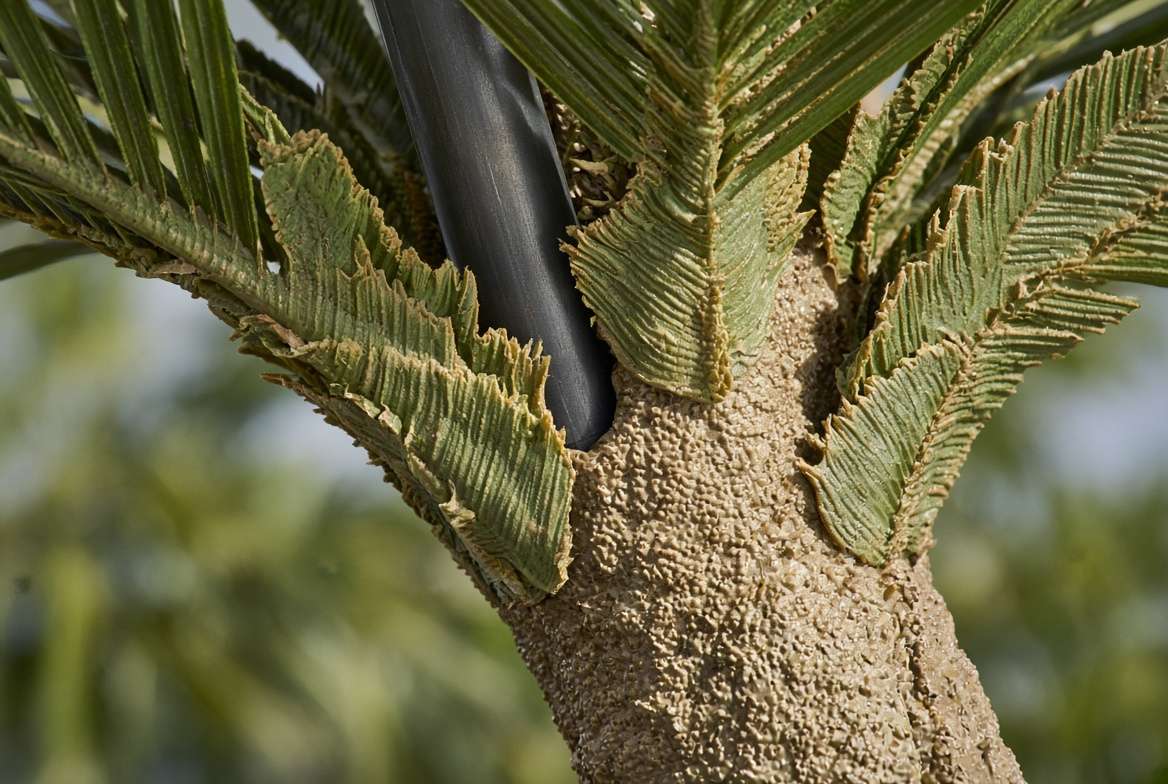
The trunk is the structural anchor of your tree. Avoid faux palms with hollow plastic trunks or real wood bark that hasn’t been heavily treated, as natural wood will eventually rot when exposed to ground moisture and rain. The gold standard for outdoor artificial palms is a heavy-duty, reinforced steel or iron core trunk, heavily coated in a weather-resistant molded resin that perfectly mimics the rough, textured bark of a real palm tree.
| Feature | Cheap “Indoor/Outdoor” Palms | Commercial-Grade Outdoor Palms |
|---|---|---|
| Material | Silk fabrics or standard plastic | IUV Polyblend (Polyethylene) |
| Trunk | Hollow plastic or untreated wood | Reinforced steel core with molded resin |
| Longevity | 1–2 seasons before fading/cracking | 5–10+ years in direct sunlight |
| Wind Resistance | Snaps or tips over easily | Engineered metal core to flex with gusts |