

Take a drive through almost any tropical or subtropical neighborhood, and you will likely spot them: palm trees that have been ruthlessly stripped of their majestic, arching leaves, leaving only a tiny tuft of green at the very top. This “feather duster” or “hurricane cut” look is incredibly popular. It’s also one of the fastest ways to slowly starve your expensive landscaping to death.
Many homeowners want a tidy, low-maintenance yard, but unknowingly invite pests, structural weakness, and fatal diseases by pruning their trees incorrectly. If you are gearing up for palm tree trimming this season, the most important tool you can arm yourself with isn’t a sharp saw—it’s knowledge.
In this comprehensive guide, we are going to walk you through a scientifically backed, step-by-step approach to pruning your palms safely. Based on professional arboriculture guidelines (specifically the ANSI A300 pruning standards), this article will show you exactly how to protect your landscaping investment, avoid costly arboriculture mistakes, and keep your tropical oasis thriving for decades.
H2: Why Palm Trees Are Unique: The Science Behind the Fronds 🧪🌿
Before we dive into the mechanics of making the perfect cut, it is crucial to understand why palms respond to pruning differently than the oak or maple trees in your yard. Establishing this foundational plant science will completely change how you view your tropical canopy.
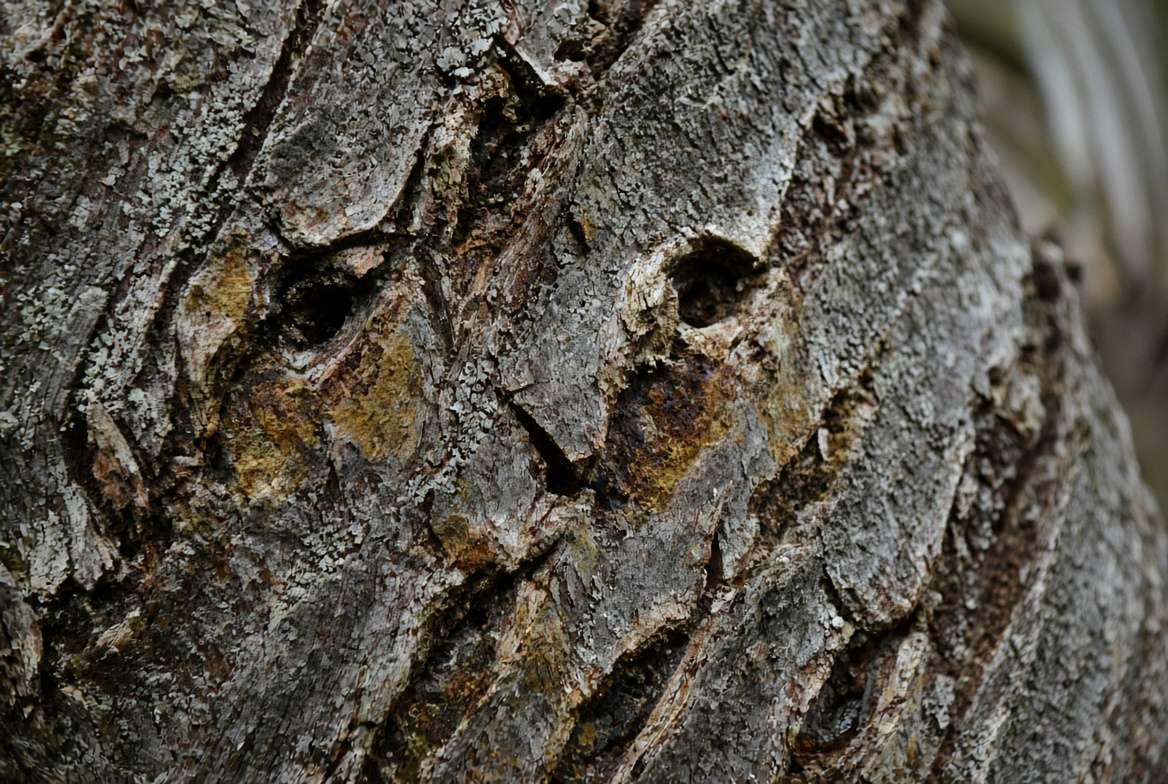
H3: Palms Aren’t True Trees (And Why That Matters) From a botanical standpoint, palm trees are not actually trees at all. They are large, woody monocots—making them closer relatives to the grass on your lawn or a stalk of corn than to a true hardwood tree.
True trees (dicots) have a layer of tissue just under their bark called the cambium. When you cut a branch off an oak tree, the cambium creates “wound wood” (callus tissue) that eventually grows over and seals the cut, protecting the inner wood from rot. Palms do not have this regenerative cambium layer.
Because palms lack bark and cambium, any wound inflicted on the trunk of a palm tree is completely permanent. If you accidentally gouge the trunk with a chainsaw or use climbing spikes to scale the tree, those holes will never heal. They remain open wounds for the rest of the palm’s life, serving as a permanent entry point for fungal pathogens, bacteria, and wood-boring insects.
H3: How Palms Recycle Nutrients from Dying Leaves ♻️ Understanding nutrient mobility is the secret to perfect palm care. Palms are incredibly efficient survivalists. When a palm tree needs to grow a new frond at the crown (the top bud), it requires massive amounts of nutrients like potassium, magnesium, and nitrogen.
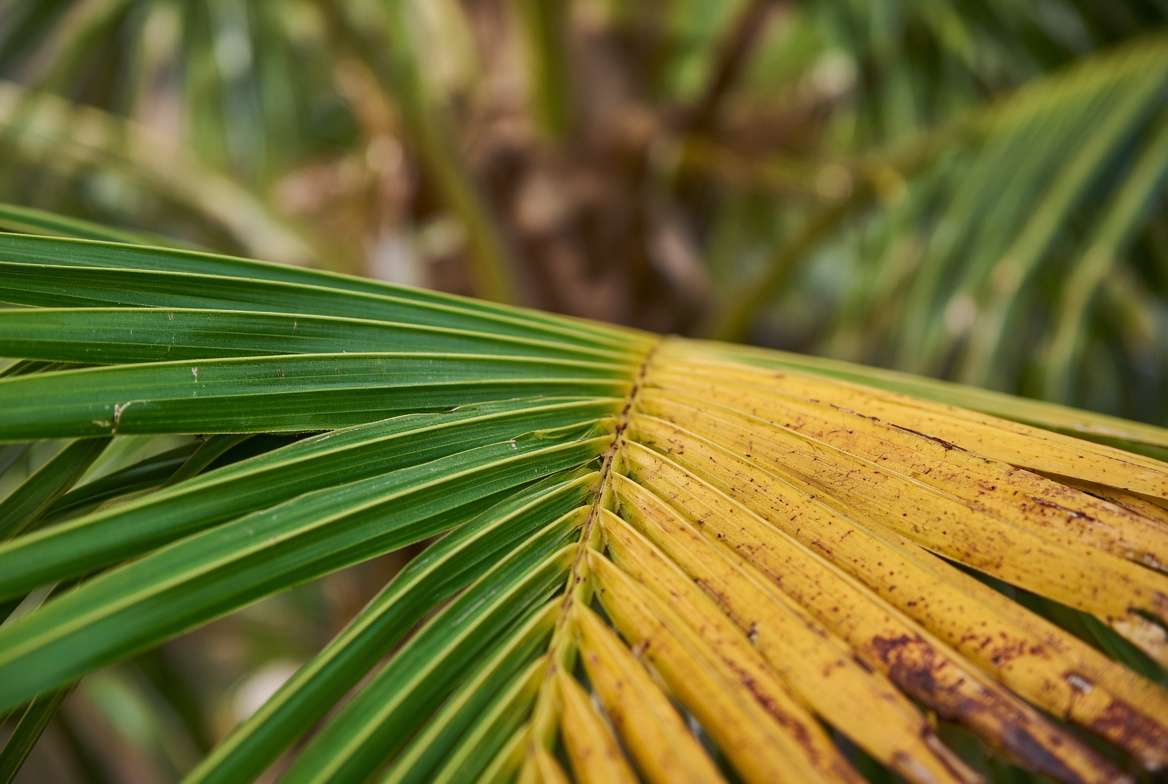
If the soil is lacking these nutrients, the palm will actively pull them out of its oldest, lowest leaves. As the tree extracts these mobile nutrients, the older frond slowly transitions from bright green to yellow, and finally to brown.
If you cut off a frond while it is still yellow or partially green, you are physically robbing the tree of its food supply. The palm will panic and immediately begin cannibalizing the next green leaf up the trunk to replace the lost nutrients. This leads to a vicious cycle of premature yellowing and a progressively weaker, thinner tree.
H2: Exactly When to Trim Your Palm Tree 🗓️☀️
Timing is everything in landscaping. Trimming your trees at the wrong time of year can shock the plant and stall its growth for an entire season.

H3: The Ideal Season for Palm Pruning The absolute best time to prune your palm trees is during the spring and early summer. During these warm months, the tree is in its active growing phase. The warm weather ensures the palm has plenty of energy to quickly recover from the stress of pruning, push out fresh new growth, and maintain a robust canopy.
Avoid pruning in the late fall or winter, especially if you live in a region prone to cold snaps or frost.
H3: Trimming Before a Storm: Fact vs. Fiction 🌪️ One of the most pervasive myths in tree care is that you must aggressively trim your palm before hurricane season to prevent wind damage. The logic seems sound: fewer leaves mean less wind resistance, right?
False.
A palm tree’s canopy is designed by nature to act as a protective shock absorber. In high winds, a full, healthy canopy of fronds will bend and cluster together, forming a tight shield around the “terminal bud” (the fragile, living heart of the palm located at the very top). If you strip the tree of its lower fronds, you expose that delicate bud to the full, devastating force of gale winds. Furthermore, an over-pruned palm becomes top-heavy and structurally weak, making the trunk much more likely to snap in half under pressure.
[Expert Insight Callout]: 🥶 Winter Warning! Never prune your palms right before a cold front. A full skirt of older fronds acts like a blanket, trapping heat near the trunk and protecting the vital crown from frostbite. If you trim right before a freeze, the exposed heart of the palm can easily freeze and die, killing the entire tree.
H2: What to Cut: The “9-to-3 O’clock” Rule ⏰✂️
When you finally have your tools ready, how do you know which leaves stay and which leaves go? Professional arborists rely on a simple visual framework.
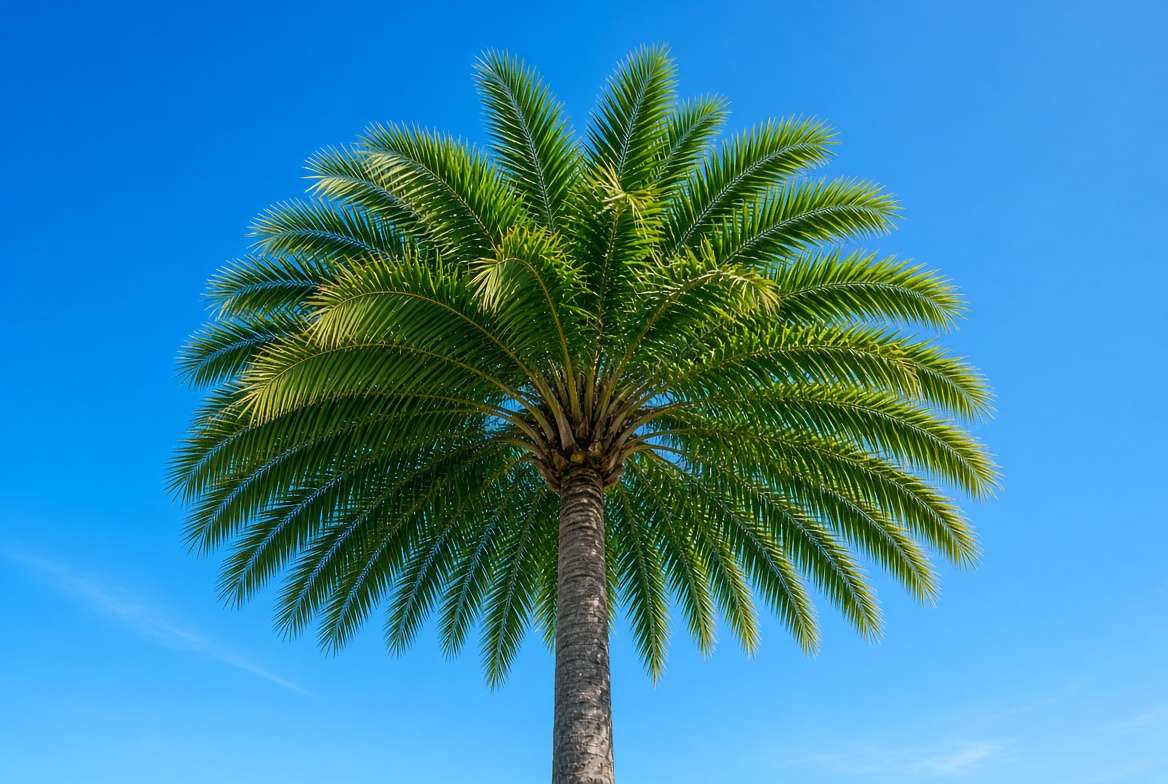
H3: The “9-to-3” Visual Guide Imagine the circular canopy of your palm tree as the face of a clock. Draw an imaginary horizontal line straight through the center of the canopy, connecting the 9:00 and 3:00 positions.
-
Never cut anything above this horizontal line.
-
Only fronds that droop below the 9:00 and 3:00 line should even be considered for removal, and even then, only if they are completely dead.
[Visual Asset Placeholder: This is the perfect spot to embed one of your custom Pinterest pins or infographics visually demonstrating the 9-to-3 clock face rule to your readers! 📌]
H3: Brown vs. Yellow vs. Green Fronds 🤎💛💚 Even if a leaf is sitting below the 9-to-3 line, you must check its color before making a cut:
-
Completely Brown and Crispy (🤎): Safe to cut! The tree has extracted 100% of the nutrients from this leaf. It is now just dead weight and a potential home for pests.
-
Yellow, Orange, or Spotted (💛): Leave it alone! The tree is actively using this leaf as a nutrient bank. It may look slightly unsightly, but cutting it now will starve the tree. Wait until it is entirely brown.
-
Bright Green (💚): Never cut! Green fronds are the tree’s solar panels, actively photosynthesizing and creating food. The only exception to cutting a green frond is if it is severely broken, blocking a walkway, or creating a legitimate safety hazard.
H3: Dealing with Flowers, Fruit, and Seed Pods 🥥 While you must be conservative with the leaves, you can be aggressive with the reproductive parts of the palm. Producing heavy seed pods, flowers (inflorescences), and fruit takes a massive amount of energy.
By pruning off these flower stalks and seed pods early in their development, you redirect all that vital energy back into the tree’s root system and leaf production. Furthermore, removing heavy seed pods prevents them from dropping on cars, staining your driveway, or sprouting hundreds of unwanted palm seedlings in your garden beds.
H2: Essential Tools and Safety Gear for DIY Trimming 🧤🛠️
Before you step foot into the yard, you need to ensure your tool kit is properly equipped. Using the wrong tools not only makes the job infinitely harder, but it can also cause severe damage to the tree’s vascular system.
H3: Choosing the Right Pruning Tools Match your tool to the size of your palm and the thickness of the frond stems (petioles).
-
Bypass Hand Pruners: Ideal for miniature or dwarf palms (like the Pygmy Date Palm). Use these for stems less than half an inch thick.
-
Heavy-Duty Loppers: Perfect for medium-sized palms. The long handles provide the leverage needed to slice through tough, fibrous stems up to 1.5 inches thick.
-
Manual Pole Saw: The safest choice for taller palms. A high-quality pole saw allows you to cleanly slice through high fronds and heavy seed pods while keeping your feet firmly planted on the ground.
-
Avoid Chainsaws: Unless you are a trained professional, avoid using chainsaws for routine frond removal. They often create jagged, messy cuts on fibrous palm tissue and pose a massive safety risk for DIYers.
H3: The Crucial Step: Sanitizing Your Equipment 🧼 If you take away just one piece of advice from this guide, let it be this: always sterilize your pruning blades before making a single cut.
Palms are highly susceptible to lethal, incurable vascular diseases like Fusarium Wilt and Ganoderma Butt Rot. These pathogens are most commonly spread from tree to tree via contaminated pruning saws.
Before trimming, wipe down your blades thoroughly with rubbing alcohol (70% isopropyl) or a solution of 1 part bleach to 3 parts water. If you are trimming multiple trees, take the extra five minutes to re-sanitize your tools between each tree. This simple habit can save your entire landscape from a devastating outbreak.
H3: Safety First: Gear Up 🥽 Palm fronds are shockingly heavy, and many species feature vicious, needle-like thorns along their stems. Always wear thick, puncture-resistant leather gloves. Safety glasses are non-negotiable to protect your eyes from falling debris and sawdust, and if you are working with tall trees, a standard hard hat is highly recommended.
H2: Step-by-Step Palm Tree Trimming Guide 🪜🌴
Now that you understand the science and have your sterilized tools ready, it is time to get to work. Follow these steps for a flawless, arborist-approved trim.
Step 1: Assess the Tree and Set a Goal 🔍 Stand back from the tree and visually map out the 9-to-3 o’clock line. Identify only the brown, dead fronds hanging below this line, along with any heavy seed pods or flower stalks.
Step 2: Position Your Equipment Safely 🪜 If you must use a ladder, ensure it is on completely flat, stable ground. Never lean an extension ladder directly against the trunk of a palm tree. The fibrous exterior can be slippery, and the weight of the ladder can crush the trunk’s outer tissue. Whenever possible, use an A-frame stepladder or a pole saw to reach high areas.
Step 3: Make the Cut ✂️ Position your blade about 2 to 3 inches away from the trunk. You want to leave a small “boot” (the base of the petiole) attached to the tree. Make a clean, swift cut.
Never flush-cut a frond right up against the trunk. Cutting too close drastically increases the risk of slicing into the trunk tissue, creating a permanent wound that invites pests and disease. Over time, that small 2-inch boot will naturally dry up, loosen, and fall off on its own.
Step 4: Proper Cleanup and Disposal 🗑️ Gather the heavy fronds and carefully dispose of them. Because palm fronds are extremely tough and fibrous, they do not break down quickly in standard compost bins and can dull standard wood chippers. Check with your local municipality for specific yard waste guidelines regarding palm debris.
[Pro Tip Callout]: Always work from the bottom up! Start by removing the lowest hanging dead fronds, working your way in a circle around the “skirt” of the palm before moving higher. This prevents upper fronds from getting tangled in the lower ones as they fall.
H2: The 3 Deadliest Palm Trimming Mistakes (Avoid at All Costs!) 🛑☠️
Even well-meaning gardeners can accidentally ruin a beautiful tree. Avoid these catastrophic errors to ensure your palm’s longevity.
H3: 1. The Infamous “Hurricane Cut” (Over-Pruning) As mentioned in the introduction, stripping the tree down to just 3 or 4 vertical fronds is the absolute worst thing you can do. Not only does this starve the tree, but it alters the trunk’s growth pattern. A severely over-pruned palm will begin growing a much narrower trunk, creating a weak “pencil point” bottleneck. In the next major windstorm, the tree is highly likely to snap exactly at that weak point.
H3: 2. Using Climbing Spikes on the Trunk 🚫👟 Tree services often use spiked shoes (gaffs) to quickly scale pine or oak trees. This is acceptable for trees with thick, regenerative bark, but it is a death sentence for palms. Spikes punch deep, permanent holes directly into the palm’s vascular system. These gaping wounds are a beacon for the Palmetto Weevil, a deadly pest that burrows into stressed palms and kills them from the inside out.
H3: 3. Tearing or Ripping Fronds by Hand ✋ If a dead frond looks loose, it is tempting to just grab it and rip it off. Resist the urge! Pulling on a frond can tear away long strips of the trunk’s protective outer layer along with it. Always use a sterilized blade to make a clean sever.
H2: When to Call a Certified Arborist 🧑🌾📞
While DIY palm tree trimming is perfectly safe for smaller, manageable species, there is a strict limit to what a homeowner should tackle.
You must call a professional tree care service if:
-
The palm canopy is higher than 15 feet off the ground.
-
The tree is located anywhere near overhead power lines (palm fronds are excellent conductors of electricity, and electrocution is a severe risk).
-
The tree is leaning dangerously, showing signs of severe decay, or dropping green fronds unexpectedly.
When hiring a professional, always verify that they are an ISA-Certified Arborist who explicitly follows ANSI A300 pruning standards. Do not be afraid to ask them how they clean their tools and verify that they strictly forbid the use of climbing spikes on palms.

H2: Frequently Asked Questions (FAQs) About Palm Tree Trimming ❓🌴
H3: Does trimming a palm tree make it grow faster? No, this is a common misconception. Trimming actually slows down a palm tree’s growth. Because green leaves are responsible for producing the tree’s food (photosynthesis), removing them deprives the tree of energy, forcing it to stall its vertical growth while it recovers.
H3: How much does it cost to have a palm tree professionally trimmed? Prices vary heavily based on your geographic location and the height of the tree. For small palms (under 15 feet), you might pay $50 to $100 per tree. For massive, towering palms (like 50-foot Washingtonias or Date Palms) that require bucket trucks or specialized climbing gear, costs can range from $150 to $500+ per tree.
H3: Can a palm tree survive if all the green fronds are cut off? If absolutely all green fronds are removed but the fragile terminal bud (the crown) remains intact, the tree might survive, but it will be severely stunted and highly vulnerable to disease. If the terminal bud itself is cut off, the tree will immediately die. Palms cannot grow new crowns once the main growing point is destroyed.
Proper maintenance doesn’t have to be intimidating. By respecting the 9-to-3 rule, keeping your tools meticulously clean, and leaving the green fronds alone, you are doing more than just tidying up your yard. You are actively ensuring your tropical landscape remains healthy, resilient, and beautiful for generations to come.











