Imagine walking into your kitchen or sunroom and being greeted by a sweet, nutty, almost vanilla-like aroma—completely natural and wafting right from a vibrant, green houseplant. What if you could harvest this prized culinary ingredient straight from your own windowsill or patio?
Cultivating the highly sought-after pandanus amaryllifolius plant at home is entirely possible, though it often intimidates indoor gardeners. Because it is a tropical native, recreating the lush, humid, and warm conditions it craves in non-tropical zones can feel like a daunting puzzle. Many plant enthusiasts buy a beautiful, fragrant pandan only to watch its leaves turn crispy and brown within a few months.
But don’t worry! In my years of cultivating tropicals outside of their native hardiness zones, I’ve learned that successfully growing pandan isn’t about having a magic green thumb; it’s about understanding the science of its native habitat and replicating it. With the right soil mix, a few clever humidity hacks, and a disciplined watering schedule, growing this plant is incredibly rewarding.
In this comprehensive skyscraper guide, we’ll dive deep into everything you need to know. We will cover the ideal environmental conditions, how to safely harvest leaves for your next culinary masterpiece, step-by-step propagation techniques, and how to troubleshoot common issues so your plant doesn’t just survive—it thrives. 🌟
📖 Get to Know Your Pandanus Amaryllifolius Plant
Before we get our hands dirty, it’s vital to understand exactly what we are growing. Understanding the botanical background of your plant provides major clues about how to care for it.
🌴 Botanical Background and Origins
Native to the lush, tropical regions of Southeast Asia, the Pandanus amaryllifolius (commonly known as Pandan or the Fragrant Screw Pine) has been a staple in Asian households for centuries. In countries like Thailand, Malaysia, Indonesia, and the Philippines, it grows abundantly in the wild and in local gardens, flourishing in warm, highly humid, and partially shaded environments.
🧬 What Makes It So Unique?
The Pandanus genus is massive, containing hundreds of different species of palm-like, dioecious trees and shrubs. However, the Pandanus amaryllifolius plant is a rare anomaly. Unlike its cousins, this specific species rarely, if ever, produces flowers or fruits in cultivation. It is entirely sterile in the horticultural world and is grown exclusively for one magnificent reason: its fragrant, sword-shaped foliage.
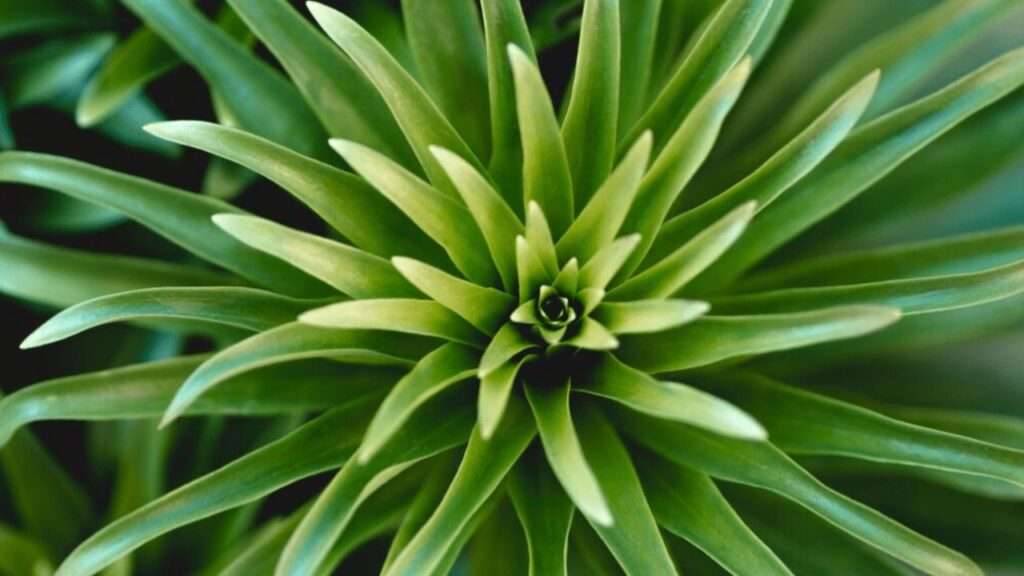
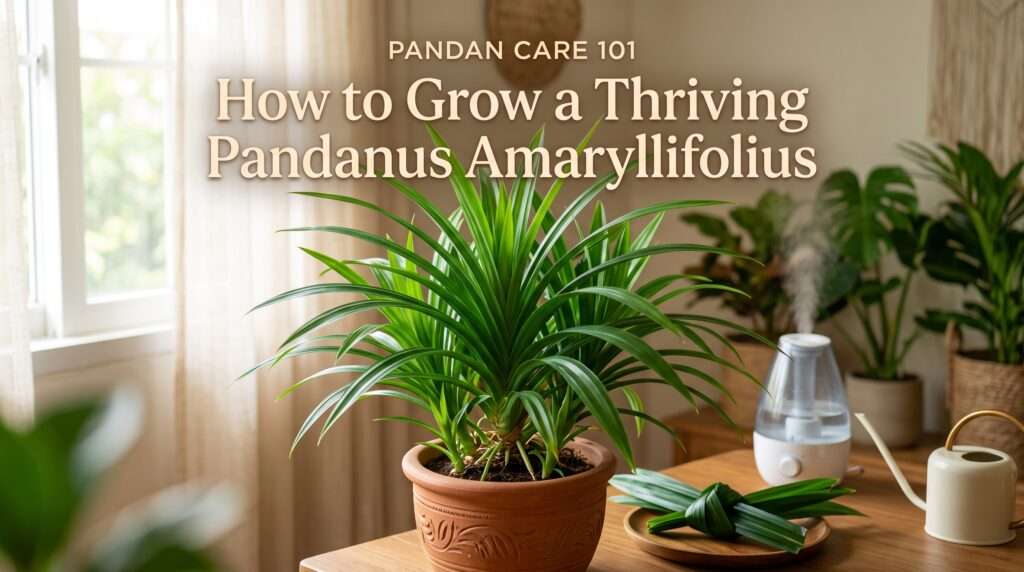
The leaves grow in a beautiful, spiraling rosette pattern (hence the name “Screw Pine”), giving it a stunning architectural look that rivals popular structural houseplants like the Snake Plant or Dracaena.
🍲 Culinary Magic vs. Ornamental Elegance
Pandan effortlessly bridges the gap between a stunning ornamental houseplant and a highly functional kitchen herb.
-
As an Ornamental: Its vibrant, emerald-green, glossy leaves arch gracefully, making it a fantastic statement piece for a bright living room or a shaded summer patio.
-
As a Culinary Herb: Bruising or crushing the leaves releases 2-acetyl-1-pyrroline, the exact same naturally occurring chemical compound that gives basmati rice and jasmine tea their signature comforting aromas. Whether you are wrapping chicken, infusing coconut milk for desserts, or just keeping a bundle in your car as a natural air freshener, the uses are endless.
☀️ Core Care Guide: Building the Perfect Environment
To achieve lush, fragrant growth, we need to mimic the understory of a Southeast Asian rainforest. Let’s break down the foundational pillars of pandan plant care.

🌤️ Light Requirements: Balancing Sun and Shade
When it comes to light, the pandanus amaryllifolius plant is a bit of a Goldilocks—it wants things just right.
The Sweet Spot In its natural habitat, pandan grows under the canopy of larger tropical trees, receiving dappled, filtered sunlight. Therefore, bright, indirect sunlight is absolutely crucial.
-
Too much direct sun: The harsh, scorching rays of the afternoon sun will rapidly cause leaf burn, bleaching the vibrant green leaves into a sickly pale yellow with crispy brown edges.
-
Too little light: If placed in a dark corner, the plant will become “leggy” (stretching desperately for light), its growth will stunt, and most importantly, it will lose its signature aroma.
Indoor vs. Outdoor Placement
-
Indoors 🏡: Place your plant near an East-facing or South-facing window. If your South-facing window gets intense afternoon rays, soften the light using a sheer white curtain.
-
Outdoors 🌳: If you move your plant outside for the summer, place it on a covered patio, under the canopy of a larger tree, or in an area that receives gentle morning sun and full shade during the heat of the afternoon.
Expert Tip 💡: The concentration of the aromatic compound (2-acetyl-1-pyrroline) is directly linked to the plant’s photosynthesis rate. A pandan grown in optimal, bright indirect light will smell significantly sweeter and stronger than one struggling in low light!
💧 Watering Routine: Moist, Never Soggy
Watering is where many indoor gardeners make their fatal mistake. Because it’s a tropical plant, people assume it wants to be treated like an aquatic lily. It does not!
The Golden Rule of Watering Your goal is to keep the soil consistently moist, but never soggy or waterlogged. The best way to measure this is the “finger test.” Insert your index finger about 1 to 2 inches deep into the soil.
-
If it feels dry to the touch, it is time to water thoroughly until liquid runs out of the drainage holes.
-
If it still feels damp, wait another day or two.
Seasonal Adjustments
-
Spring and Summer (Active Growing Season): Your plant is actively pushing out new leaves and guzzling water. You may need to water it 1-2 times a week depending on the heat.
-
Fall and Winter (Dormancy): Growth slows down considerably. The soil will take much longer to dry out. Scale your watering back significantly—sometimes to just once every 10 to 14 days.
E-E-A-T Note 🛡️: In my early days of growing tropicals, I lost a beautiful pandan to root rot. Root rot is the #1 killer of the pandanus amaryllifolius plant. It occurs when the roots sit in stagnant water, suffocating them and inviting fungal pathogens. Always err on the side of slightly underwatering rather than overwatering, and NEVER let your plant’s pot sit in a saucer full of drained water.
🪴 The Ideal Soil Mix for Pandan
Because root rot is the primary enemy of the fragrant screw pine, your choice of potting medium is the most critical decision you will make. Standard, straight-out-of-the-bag indoor potting soil is generally too dense and retains too much moisture for this tropical native.
Drainage is King 👑 To keep your pandanus amaryllifolius plant thriving, you need a chunky, airy, and well-draining soil mix that allows oxygen to reach the root system.
Here is my go-to, E-E-A-T approved DIY tropical soil recipe for pandan:
-
50% High-Quality Indoor Potting Soil: This acts as the nutrient-rich base.
-
30% Perlite or Pumice: These volcanic rocks prevent the soil from compacting and ensure water drains rapidly.
-
20% Orchid Bark or Coco Coir: Bark adds excellent aeration, while coco coir retains just enough essential moisture without becoming waterlogged.
pH Levels Pandan is relatively adaptable but naturally prefers a slightly acidic to neutral soil environment. Aim for a pH level between 6.0 and 7.0. If you are using a peat-based potting soil or adding coco coir, your pH will naturally fall right into this sweet spot.

🌡️ Temperature & Humidity: Recreating the Tropics
If light and soil are the engine of your plant’s growth, temperature and humidity are the fuel. This plant is a true tropical perennial, meaning it completely lacks cold hardiness.
Temperature Range 🌡️
-
The Ideal Range: Your pandan will experience its most explosive, lush growth when ambient temperatures sit between 70°F and 85°F (21°C – 29°C).
-
The Absolute Minimum: Never expose your plant to temperatures below 55°F (13°C). Frost will kill a pandan plant almost overnight, and prolonged exposure to chilly drafts will cause severe cellular damage to the leaves.
Humidity Hacks for Dry Homes 💧 In Southeast Asia, humidity regularly hovers between 70% and 90%. Most modern homes, especially those with central air conditioning or winter heating, sit around 30% to 40% humidity. If you want those pristine, blemish-free leaves, you must raise the humidity around the plant to at least 60%.
Here are the most effective ways to boost local humidity:
-
The Pebble Tray Method: Fill a shallow tray with pebbles and water, placing the plant pot on top (ensure the bottom of the pot isn’t touching the water). As the water evaporates, it creates a micro-climate of moisture around the foliage.
-
Humidifiers: Investing in a small, cool-mist room humidifier is the absolute best, most reliable way to keep your tropical plant care routine on track.
-
Grouping Plants: Plants naturally release moisture through transpiration. Grouping your pandan with other humidity-loving tropicals (like Calatheas or Monsteras) creates a humid jungle canopy effect.
-
Avoid Drafts: Keep your plant far away from AC vents, radiators, and drafty windows.
✂️ Advanced Care: Feeding, Pruning, and Harvesting
Once your environmental foundation is set, you can focus on maximizing growth and utilizing those highly prized, aromatic leaves!
🍽️ Fertilizing for Lush Foliage
Because the pandanus amaryllifolius plant is grown exclusively for its leaves, it requires a diet heavy in nitrogen. Nitrogen is the primary macronutrient responsible for developing strong, green, leafy growth.
-
What to Use: I recommend a balanced, water-soluble liquid houseplant fertilizer (like a 10-10-10 NPK ratio), diluted to half-strength to prevent root burn. Alternatively, fish emulsion or a nitrogen-heavy organic fertilizer works beautifully.
-
Frequency: Feed your plant once a month during the active growing season (Spring and Summer).
-
When to Stop: Completely pause all fertilizing during the Fall and Winter when the plant enters its natural dormancy period. Feeding a dormant plant leads to a buildup of toxic mineral salts in the soil.
🌿 How to Harvest Leaves Without Harming the Plant
Harvesting is where the magic happens, but doing it incorrectly can stunt your plant or introduce disease.
The Harvesting Technique
-
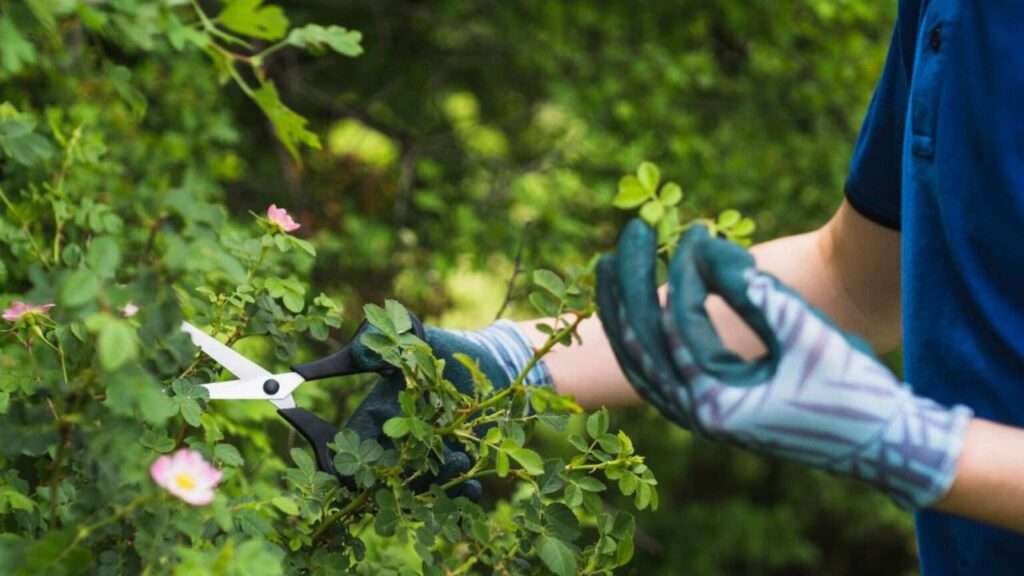
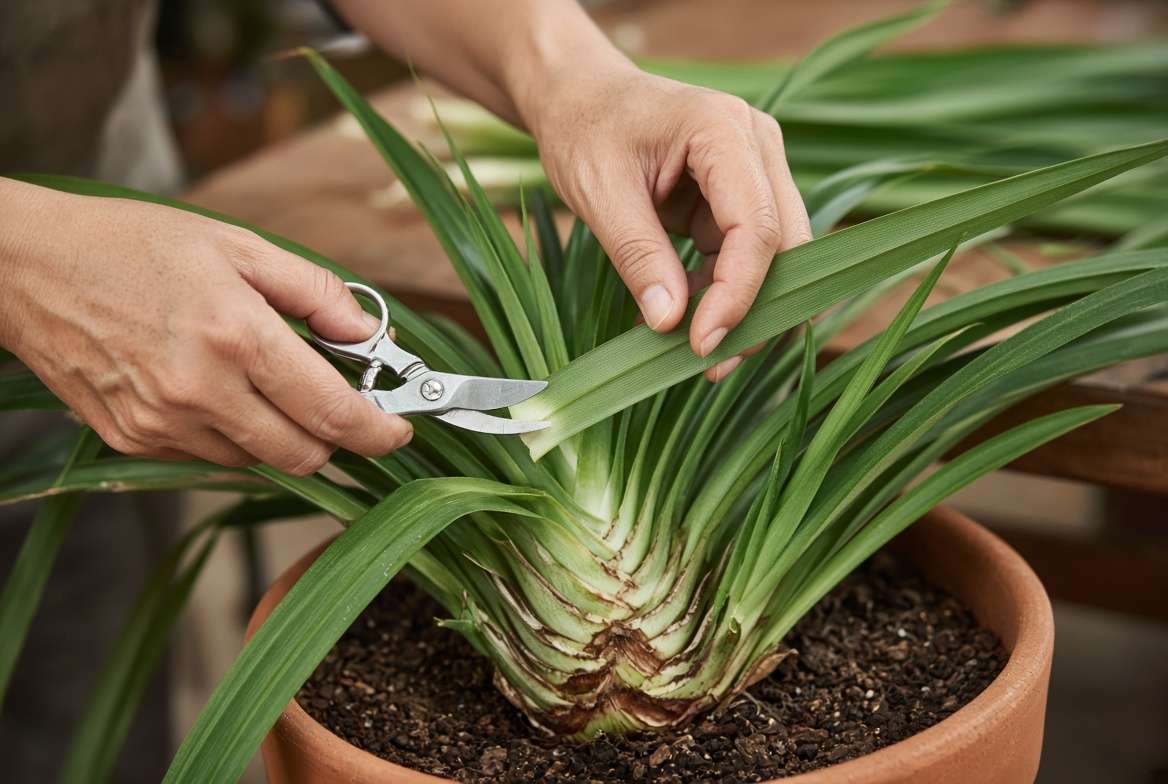
Always sterilize your tools: Wipe down your pruning shears or scissors with rubbing alcohol. This prevents the spread of fungal and bacterial infections.
-
Cut from the bottom: Always harvest the older, mature leaves at the very base of the plant.
-
The cut: Snip the leaf as close to the main stem as possible without cutting into the stem itself.
Why Proper Harvesting Matters Regularly harvesting the lower leaves isn’t just great for your cooking; it actually benefits the plant! Removing the older, heavier foliage prevents the plant from becoming excessively top-heavy and encourages it to push its energy into fresh, bushy, upward growth.
Culinary Bonus 🍲: 3 Ways to Use Fresh Pandan!
Pandan Rice: Tie 2-3 fresh leaves into a tight knot and toss them into your rice cooker with jasmine rice for a heavenly aroma.
Pandan Extract: Blend chopped leaves with a little water and strain the vivid green juice to flavor chiffon cakes, waffles, or sweet sticky rice.
Natural Deodorizer: Leave a bundle of slightly bruised leaves in your car or bathroom. As they dry out over a few weeks, they will naturally deodorize the space!
🌱 Propagation: Multiplying Your Pandan Collection
One of the greatest joys of pandan plant care is propagation. Because this plant rarely flowers or seeds, the only reliable way to multiply your collection (or share it with friends!) is by propagating its side shoots, commonly referred to as “pups” or suckers.
👶 Identifying and Separating “Pups”
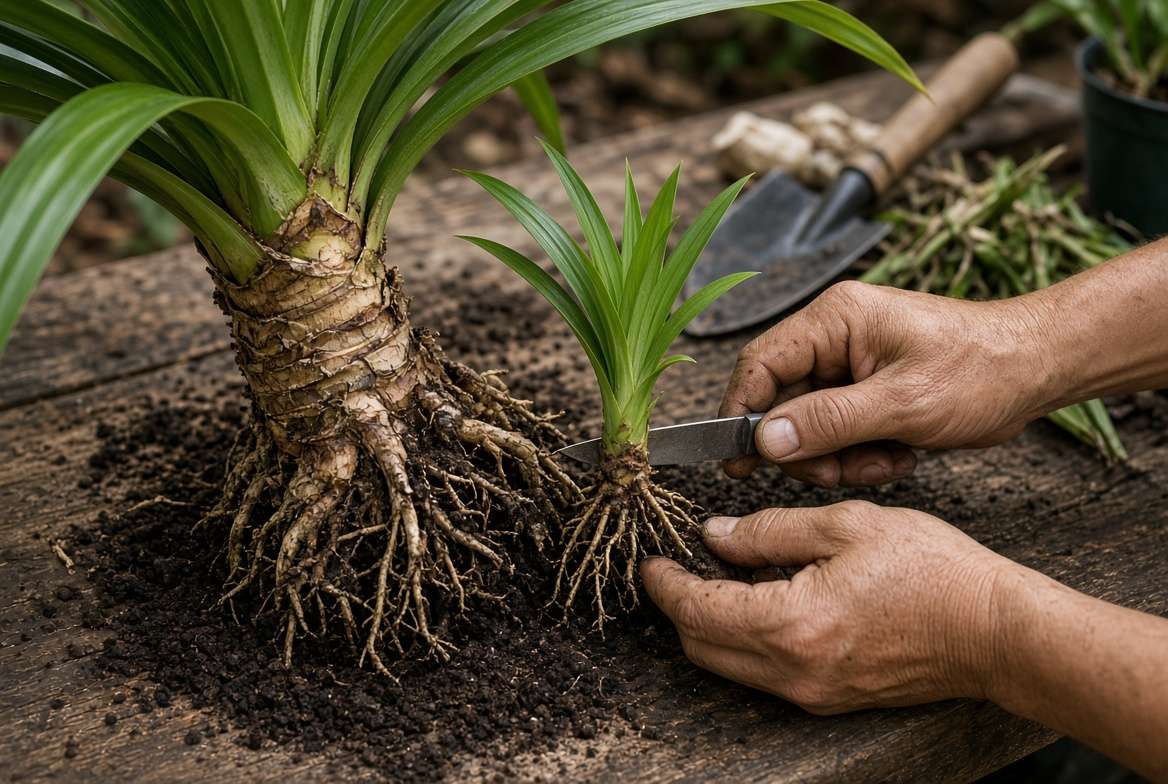
As your mature pandanus amaryllifolius plant grows, you will notice miniature versions of the plant sprouting out from the base of the main stem or just beneath the soil line.
Step-by-Step Separation Guide:
-
Patience is Key: Do not rush! Wait until the pup is at least 4 to 6 inches tall and has developed a few of its own small aerial roots. Removing a pup too early drastically reduces its survival rate.
-
The Cut: Carefully unpot the mother plant if necessary, and use a sterile, sharp knife to cleanly slice the pup away from the main stem, ensuring the pup retains its tiny roots.
-
Rooting Mediums: You have two great options for rooting. You can place the pup in a glass of warm, filtered water (changing the water weekly) until roots are 2 inches long. Alternatively, you can plant the pup directly into a small pot filled with lightly moist sphagnum moss or an airy perlite mix.
-
The Timeline: Keep the new pup in high humidity and bright, indirect light. Root establishment typically takes 3 to 5 weeks. Once it resists a gentle “tug,” it is fully rooted and ready for regular care!
🚑 Troubleshooting Common Pandan Problems
Even with the best intentions, tropical plants can throw a fit. Here is how to diagnose and fix the most common issues based on expert experience.
Problem 1: Brown, Crispy Leaf Tips 🍂
-
The Cause: This is almost always a sign of low humidity, severe underwatering, or sensitivity to the chemicals in hard tap water (like fluoride and chlorine).
-
The Fix: Immediately increase the ambient humidity. Switch from tap water to distilled, reverse osmosis, or collected rainwater. Snip off the dead brown tips for aesthetic purposes, leaving a tiny margin of brown so you don’t cut into the live green tissue.
Problem 2: Yellowing Leaves (Chlorosis) 🤒
-
The Cause: If the lower leaves are turning a mushy yellow, you are dealing with overwatering, poor soil drainage, or the dreaded root rot.
-
The Fix: Pull the plant from its pot and inspect the roots. Healthy roots are firm and pale; rotted roots are dark, mushy, and smell foul. Trim away any rot, repot the plant in a fresh, chunky soil mix, and drastically reduce your watering frequency.
Problem 3: Pale, Leggy, or Stretched Growth 📉
-
The Cause: Insufficient light. The plant is stretching its stem to find the sun, and the leaves are losing their deep green hue.
-
The Fix: Move the plant closer to a bright, indirect light source. If you don’t have enough natural light, invest in a full-spectrum LED grow light.
Pest Watch 🐛 While relatively pest-resistant, stressed pandan can attract sap-sucking insects like spider mites (look for fine webbing) and mealybugs (look for white, cottony masses). Treat infestations immediately by wiping the leaves with a gentle insecticidal soap or a diluted organic neem oil spray.
❄️ Winter Survival Guide: Overwintering Pandan Indoors
If you keep your pandan outdoors during the summer, the transition back indoors for winter is a critical period.
The Transition Bring your plant inside well before nighttime temperatures dip below 55°F (13°C). To avoid shocking the plant, transition it gradually over a week, moving it to progressively shadier spots outside before bringing it into the lower-light environment of your home.
Winter Dormancy Care Winter indoor air is notoriously dry due to central heating.
-
Keep the plant far away from heating vents.
-
Maximize humidity using a humidifier.
-
Scale back watering significantly.
-
Do not apply any fertilizer until spring.
-
If your home is very dark in the winter, supplement with a grow light to prevent the leaves from drooping and losing their intense aroma.
❓ Frequently Asked Questions (FAQs)
Can I grow a pandanus amaryllifolius plant from seed? It is incredibly rare and highly impractical. Because this specific species is effectively sterile in cultivation, it does not produce viable seeds. Vegetative propagation via pups is the only standard, successful method.
Is the pandan plant toxic to cats and dogs? Great news for pet owners! The pandan plant is entirely non-toxic and pet-safe. While you still don’t want your cat chewing on your prized culinary leaves, it will not cause them any medical harm.
How fast does a pandan plant grow? Under ideal summer conditions with high heat and humidity, growth is moderate. However, as an indoor houseplant, growth is generally quite slow. Expect it to push out a few new leaves a month during the growing season.
Why doesn’t my pandan plant smell? The aromatic compound development requires bright light and maturity. If your plant is very young, or if it is sitting in a dark corner, the leaves will lack their signature vanilla-nutty scent. Move it to a brighter location!
💚 Conclusion
Mastering the care of the pandanus amaryllifolius plant is a badge of honor for any indoor gardener. While it certainly demands a bit of tropical pampering—requiring bright indirect light, a meticulously well-draining soil mix, and a commitment to high humidity—the payoff is unparalleled.
There is nothing quite like the satisfaction of snipping fresh, incredibly aromatic leaves from a healthy, thriving plant that you nurtured yourself, instantly elevating your home cooking with the authentic “Vanilla of the East.”
Now it’s your turn! I’d love to hear from you. What is your absolute favorite recipe to make using fresh pandan leaves? Drop a comment below, or share a photo of your beautiful thriving plant on social media and tag us! Happy growing! 🌱✨