
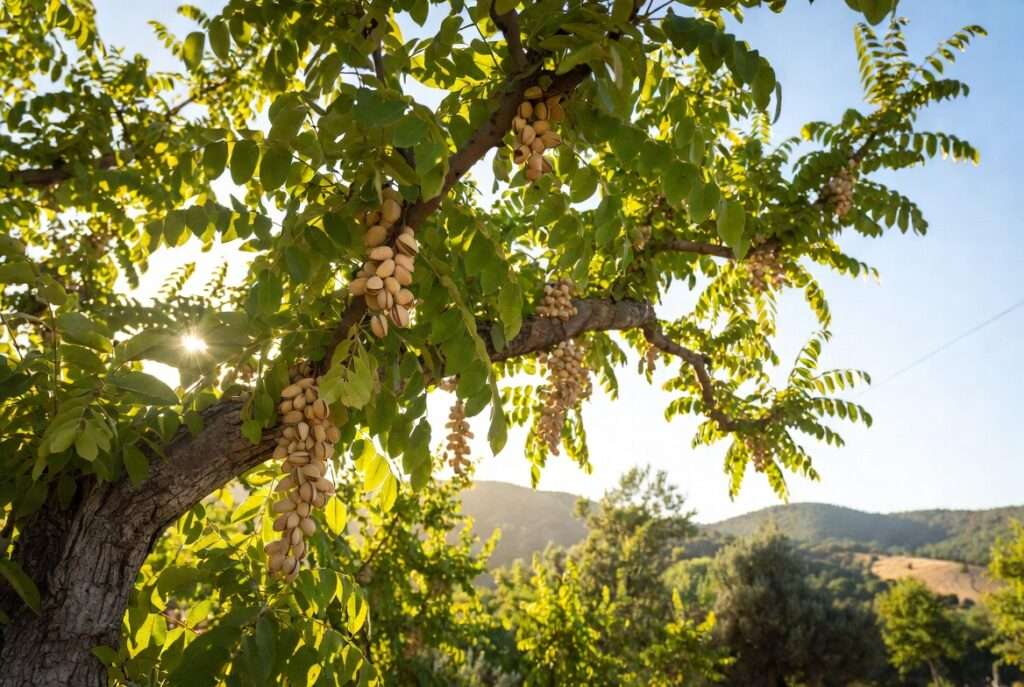
Imagine harvesting your own vibrant, buttery, emerald-green nuts right from your backyard—a luxury crop often referred to in agricultural circles as “green gold.” While the idea of picking fresh nuts is highly alluring, adding a pistachio tree (Pistacia vera) to your home orchard isn’t as simple as dropping a seed into the dirt and waiting for nature to take its course. In fact, hundreds of passionate gardeners fall into the same heartbreaking trap every single year: they invest hard-earned money and years of patient waiting into a beautiful sapling, only to discover a decade later that it will never produce a single nut.
The pistachio tree is an ancient, incredibly resilient desert survivor capable of thriving for centuries, but it operates on a highly specific set of biological rules. If you don’t account for its unique reproductive traits, precise winter rest requirements, and deep underground architecture, your tree will remain stubbornly barren.
This comprehensive, master-level guide is designed to eliminate the guesswork. Whether you are an ambitious home gardener, a homesteader aiming for self-sufficiency, or a small-scale orchardist looking to diversify your crops, these 5 non-negotiable rules of pistachio tree care will give you the blueprint you need to secure a bountiful, heavy harvest. Let’s dive into the fascinating world of growing pistachios! 🌳✨
🧑🤝🧑 Rule 1: Master the “Gender Equation” (Cracking the Dioecious Code)
To successfully harvest pistachios, you must first understand that these trees do not behave like self-fertile backyard fruit trees, such as peaches or citrus. If you plant just one solitary pistachio tree, your harvest yield will be exactly zero. To fix this common problem, you have to master the orchard’s gender equation.
♀️♂️ Understanding Dioecious Plants: Males vs. Females
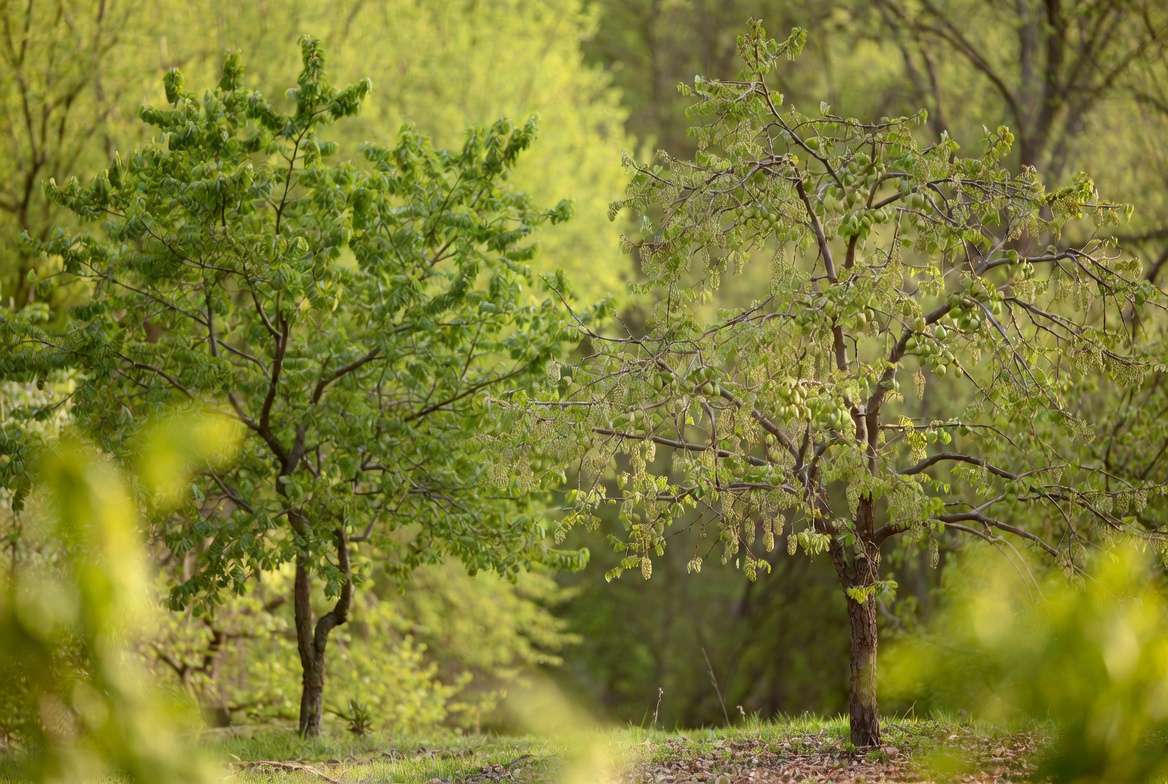
In the botanical world, a vast majority of common orchard trees are monoecious (bearing both male and female flowers on the same plant) or have perfect flowers containing both reproductive parts. The pistachio tree, however, is strictly dioecious. This means that individual trees are distinctly gendered: a tree is either entirely male or entirely female.
-
The Female Tree: This is the only tree that actually flowers, sets fruit, and develops the delicious kernels we eat.
-
The Male Tree: This tree produces no nuts whatsoever. Instead, its sole biological purpose is to produce massive clouds of pollen during the early spring to fertilize the female blossoms.
Because young, non-bearing saplings look completely identical regardless of their gender, you should never attempt to grow pistachios from random seeds or unverified rootstocks. You must purchase certified, grafted trees from a reputable nursery that explicitly labels the sex of each plant.
🧮 The Golden Orchard Ratio: Balancing the Sexes
Because male trees take up valuable real estate without directly yielding a crop, you don’t need a 1:1 ratio in your orchard. A single, healthy male tree produces more than enough pollen to service multiple female partners.
For home gardens and small-scale homesteads, the industry-standard recommendation is a 1:8 to 1:10 ratio—meaning one male tree can easily pollinate up to 8 or 10 surrounding female trees. If you only have space for two trees, you will still need one male and one female.
🌬️ The “Upwind Advantage” for Wind Pollination
Here is a critical piece of expert insight that often separates successful growers from disappointed hobbyists: pistachio trees are entirely wind-pollinated. Showy garden pollinators like honeybees, bumblebees, and butterflies have absolutely no interest in pistachio flowers because the blossoms do not produce nectar or attract insects.
To ensure the pollen successfully travels from the male to the females, you must harness the power of the wind.
-
Research the dominant, prevailing wind directions in your specific microclimate during the early spring months (typically March and April).
-
Plant your lone male tree on the upwind side of your orchard block.
-
Position your female trees downwind, directly in the path of the drifting pollen currents.
☀️ Rule 2: Decode the Climate Math (Chill Hours & Sizzling Summers)
Pistachios are tough characters. They can withstand blistering desert heat and freezing winter winds that would kill lesser trees. However, they are highly sensitive to climatic nuances. If your local climate doesn’t hit specific thermal targets, your trees will suffer from poor leaf development, uneven blooming, and a massive percentage of “blank” nuts (shells completely devoid of edible kernels).
❄️ The Winter Rest: Meeting the 700–1,000 Hour Chill Requirement
Before a pistachio tree can awaken uniformly in the spring, it must experience a deep, uninterrupted winter dormancy. This dormancy is triggered and maintained by chill hours—which are the cumulative number of hours your local environment spends between 32°F and 45°F (0°C to 7°C) during the late autumn and winter months.
| Cultivar Variety | Required Winter Chill Hours (32°F – 45°F) | Ideal USDA Hardiness Zones |
| ‘Kerman’ (Female) | 700 to 1,000 Hours | Zones 7 – 11 |
| ‘Peters’ (Male) | 700 to 1,000 Hours | Zones 7 – 11 |
If your winters are too mild and your climate fails to hit these numbers, the tree’s internal hormonal clock gets confused. Buds will break late or not at all, the flower clusters will emerge weak, and the pollination window between the male and female trees will fall out of sync.
🔥 Sizzling Summers: The Need for Extreme Heat
While winter requires cold, the summer requires intense, unyielding heat. A pistachio tree needs long, hot, arid days to drive photosynthesis and successfully fill the interior of the shell with a plump, oil-rich nut kernel.
Ideally, your climate should feature summer temperatures that consistently exceed 95°F (35°C). Without this prolonged summer baking period, the hard outer shells will form, but the internal nut inside will remain stunted, flat, and hollow.
🌧️ The Humidity Trap: Keeping the Air Dry
If there is one fatal weakness that the pistachio tree possesses, it is an intense hatred for high atmospheric humidity and late-summer rainfall. These trees evolved in dry, arid, and semi-arid Mediterranean and desert climates.
High humidity creates a breeding ground for devastating fungal pathogens, such as Alternaria late blight and Botryosphaeria panicle blight, which can turn your leaves black and rot your nut clusters overnight. Additionally, cool, damp weather during the spring pollination window will weigh down the airborne pollen, causing it to fall harmlessly to the ground instead of drifting to the female flowers.
🏜️ Rule 3: Accommodate the Deep Root Architecture
What happens above the ground is only half the story. The true engine of a long-lived, high-yielding pistachio tree lies hidden deep beneath the surface of the soil.
⛏️ Breaking the Hardpan: Soil Prep for a Massive Taproot
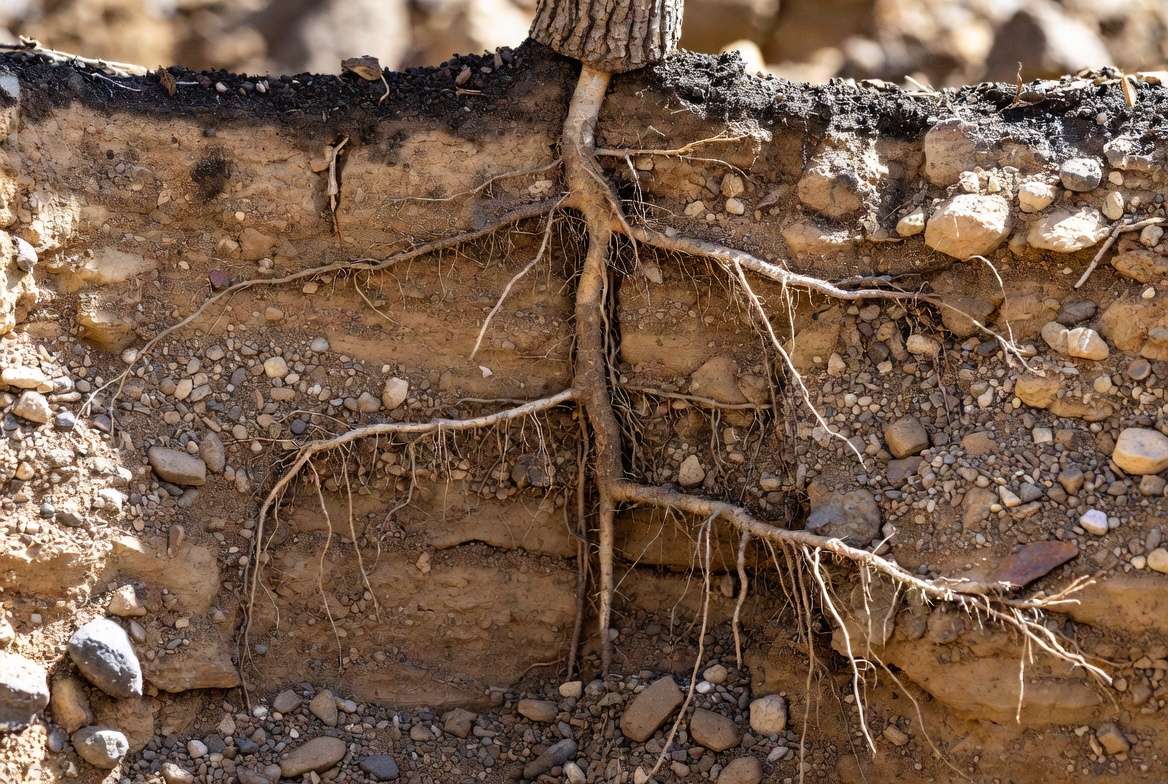
From the moment a pistachio seed germinates, its primary biological objective is to send a powerful, unbranched taproot straight down into the earth. In mature trees, this taproot can dive down over 10 to 15 feet to tap into deep, underground moisture reserves.
Because of this architectural design, planting pistachio trees in shallow soils or over solid bedrock is a recipe for disaster. Before planting, it is highly recommended to use a soil auger or deep spade to check your planting site. If you hit a dense, compacted layer of clay or rock (known as a hardpan), you must break through it to ensure the taproot can establish its downward path without bending or girdling itself.
🪨 Drainage Over Fertility: Why Lean Soil Wins
Many gardeners make the mistake of treating their nut trees to ultra-rich, highly amended potting soils packed with heavy organic compost. With pistachios, this kind of pampering can backfire. In their native environments, they grow out of rocky, sandy loams and lean, alkaline soils.
Pistachios can tolerate poor fertility and even highly saline soils with impressive ease, but they absolutely will not tolerate standing water around their root zones. If you plant them in heavy clay that retains water like a sponge, oxygen is cut off from the roots, triggering swift, lethal root rot (Phytophthora). The golden rule of pistachio soil prep is simple: prioritize rapid drainage above all else.
🧪 The Sweet Spot: Soil pH Targets
Pistachio trees prefer soils that skew slightly alkaline. They reach their peak performance when the soil pH hovers happily between 7.0 and 8.0. If your soil is highly acidic (below 6.0), you will need to incorporate agricultural lime into the planting area well in advance to nudge the pH upward into the sweet spot.
💧 Rule 4: Master the Art of Deep, Infrequent Irrigation
Because the pistachio tree is famously drought-resistant, many growers assume they can plant it in the desert and never water it at all. While the tree will technically survive on minimal moisture, a drought-stressed tree will protect itself by dropping its fruit, resulting in a disappointing, empty harvest. To get a heavy crop of plump nuts, you must use a smart strategy of deep, infrequent irrigation.
📈 Year One Survival vs. Mature Tree Drought Tolerance
Your watering strategy must change as your tree grows:
-
Young, Newly Planted Trees (Years 1–3): A young tree has not yet established its legendary deep taproot system. It relies on a relatively shallow root ball. During the first few growing seasons, provide consistent moisture. Water the tree deeply whenever the top 3–4 inches of soil feel completely dry.
-
Established, Mature Trees (Years 4+): Once the root system mines the deep subsoil, you can back off the frequency drastically. Shift to deep waterings every 2 to 4 weeks during the peak heat of summer, soaking the ground down to a depth of several feet. This encourages the roots to stay deep, keeping them cool and resilient against heatwaves.
💧 The Drip Irrigation Blueprint
Never use overhead sprinklers or impact rotors to water your orchard. Wetting the trunk, branches, and leaves of your trees invites fungal diseases and stains the developing nut shells. Instead, install a dedicated drip irrigation system or lay out porous soaker hoses directly on the soil surface beneath the tree’s canopy drip line. Keep the water emitters a few inches away from the direct base of the wood to prevent trunk rot.
❄️ The Fall Shutdown Strategy
This is one of the most critical, highly necessary care tips for anyone growing pistachios in regions prone to early winter freezes. As the summer winds down into October and November, you must completely shut off your irrigation.
By withholding water in the autumn, you send a clear environmental signal to the tree that it is time to stop pushing out tender new green leaves and instead focus on hardening its wood for the winter. A tree kept lush and hydrated by late-season watering will remain tender and susceptible to devastating frost damage when the first hard freeze hits.
✂️ Rule 5: Train for an “Open-Vase” Canopy
Left completely to its own devices, a young pistachio tree can grow into a messy, sprawling, and tangled bush. To optimize light interception, streamline your harvest, and prevent disease, you need to actively shape your tree using structural pruning techniques.
🏗️ Structural Training in the Early Years
The ideal structural blueprint for a domestic pistachio tree is a single, clean, robust trunk that rises roughly 4 to 5 feet off the ground before branching out.
-
During the tree’s first dormant winter season after planting, select the strongest central shoot to serve as your main trunk and head it back to stimulate lateral bud growth.
-
Remove all low-growing side branches along the bottom 4 feet of the trunk to create a clean, highly accessible workspace beneath the tree.
🫖 The Modified “Open-Vase” Shape
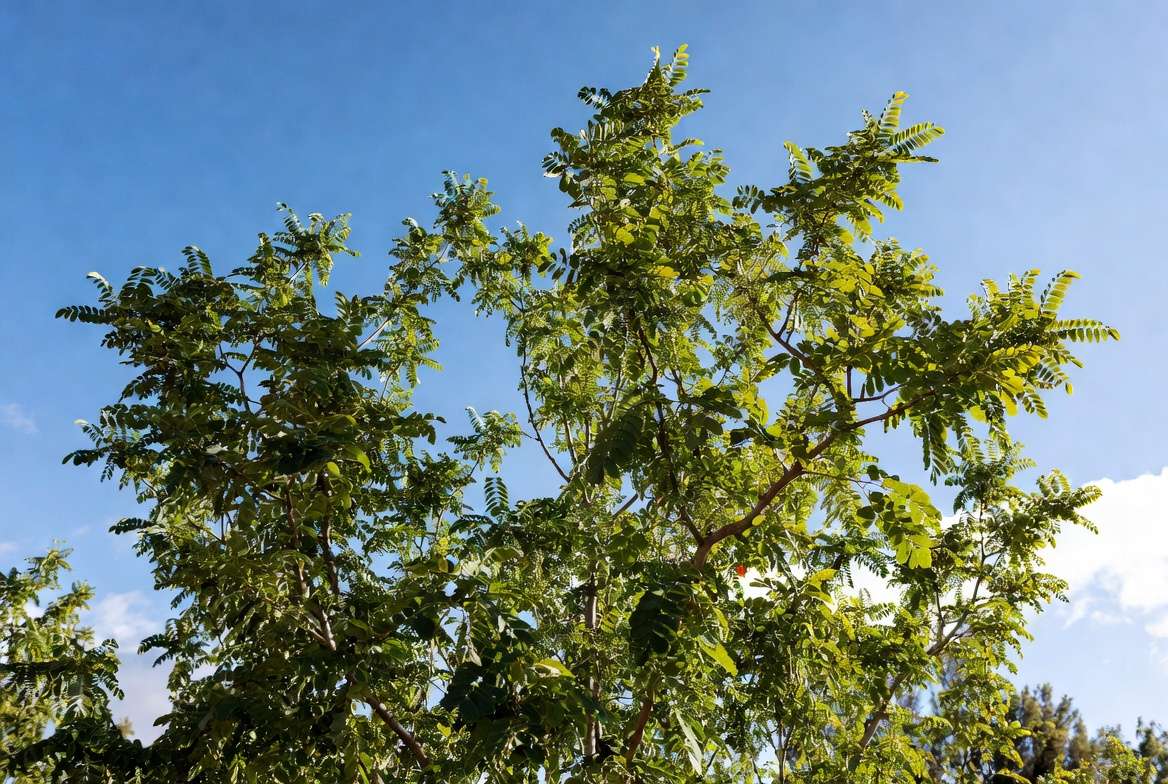
As your primary scaffolding branches begin to develop from the upper trunk, prune them to form an open-vase (or open-center) canopy shape. This means you will systematically remove any aggressive upward-growing branches that attempt to fill in the absolute center of the tree’s crown.
Why is the open-vase shape so essential for a heavy harvest?
-
Sunlight Penetration: Pistachio flower buds require direct contact with bright sunlight to mature and develop high-quality nut clusters. An open center ensures that sunlight can reach deep into the interior branches of the tree.
-
Airflow: By thinning out the congested interior wood, you allow summer breezes to pass freely through the canopy. This rapid air movement quickly dries out dew and moisture, preventing fungal spores from settling on your valuable crop.
❄️ Annual Winter Pruning Checklist
Every single year, while the tree is deeply asleep in January or February, grab your sharpest, sterilized pruning shears and execute this quick maintenance routine:
-
[ ] The 3 D’s: Remove any wood that is Dead, Damaged, or Diseased.
-
[ ] Crossed Branches: Cut out branches that cross over or rub against one another to prevent bark wounds.
-
[ ] Water Sprouts: Snip away aggressive vertical water sprouts and root suckers pulling energy away from the main structure.
-
[ ] Light Tipping: Gently tip the ends of long, leggy outer branches to stimulate the growth of new lateral wood, which will become the primary fruiting wood for the following season.
🗓️ Your Pistachio Tree Timeline: From Bare-Root to Bountiful Harvest
Growing a nut orchard requires a long-term vision. Unlike annual vegetables that sprint from seed to plate in a single summer, your pistachio tree operates on a multi-year timeline. Understanding this timeline is essential for managing your expectations and planning your seasonal orchard tasks.
🧤 Step-by-Step Bare-Root Planting Process (January–March)
The absolute best time to plant your young pistachio saplings is during their deepest state of winter dormancy, usually between January and early March. Most high-quality nurseries sell them as “bare-root” trees—meaning they arrive dormant, without soil, and with their root systems exposed.
Here is the expert protocol for getting them into the ground without inducing transplant shock:
-
Hydrate Immediately: As soon as your bare-root trees arrive, soak their roots in a bucket of cool water for 2 to 4 hours to rehydrate them before planting.
-
Dig Wide, Not Deep: Dig a hole that is twice as wide as the root system, but exactly the same depth. Never plant a tree deeper than it sat in the nursery field; the “root flare” (the swelling where the trunk meets the roots) must remain visible just above the soil line.
-
Skip the Fertilizer: Do not add heavy compost, raw manure, or synthetic fertilizers directly into the planting hole. This can severely burn the fragile new feeder roots. Use only the native soil to backfill the hole.
-
Stake for Support: Because young pistachio trees are notoriously lanky, gently tie the trunk to a sturdy wooden or bamboo stake to prevent strong spring winds from snapping the sapling.
⏳ Managing Expectations: The Multi-Year Waiting Game
Patience is arguably the most important tool in your gardening shed when dealing with nut trees. Here is what you can realistically expect:
-
Years 1 to 3 (Structural Establishment): During these formative years, you will see zero nuts. The tree is funneling 100% of its energy into driving its massive taproot deep into the earth and developing its primary open-vase scaffolding branches.
-
Years 5 to 7 (The First Taste): If your climate is ideal and your male/female pollination window aligned perfectly, you will finally see your first small, sample harvest.
-
Years 10 to 12+ (Peak Production): Welcome to the heavy harvest! By its tenth year, a well-cared-for mature female tree can confidently yield anywhere from 20 to 50 pounds (9 to 22 kg) of dry, hulled nuts every single autumn.
🌰 How to Identify a Ripe Pistachio
Harvest time typically arrives between late August and early October. But how do you know exactly when the nuts are ready?
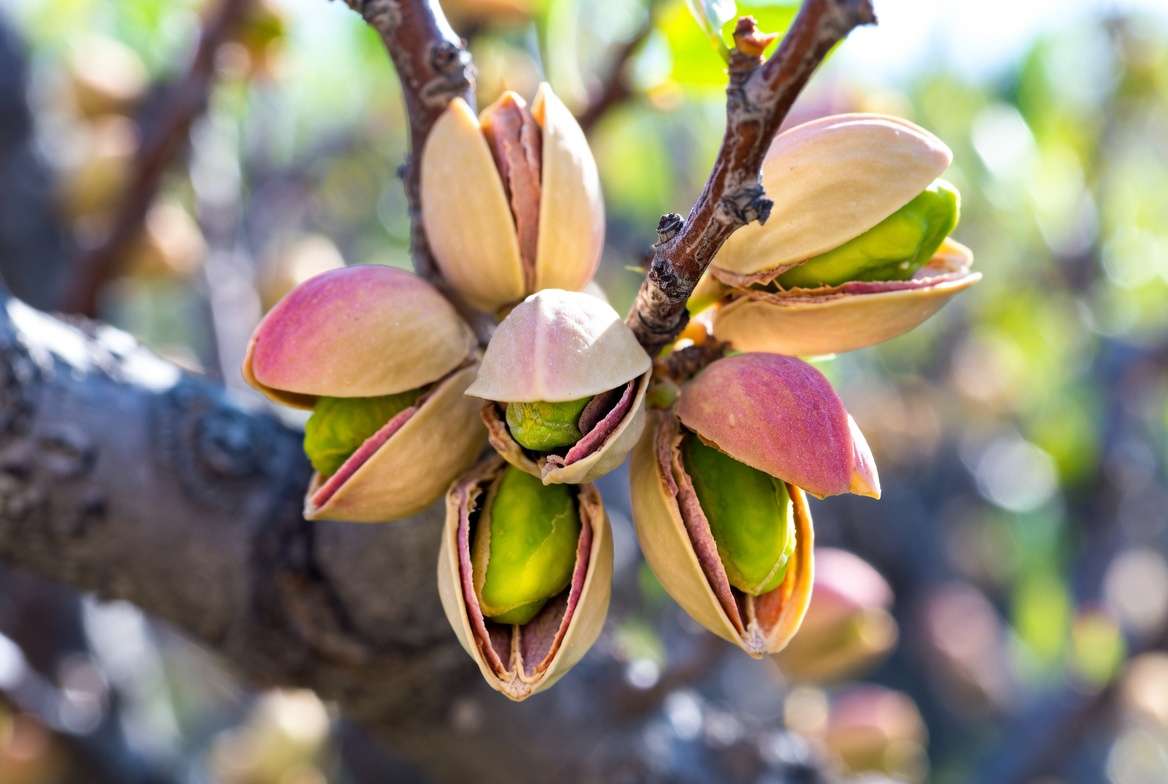
Watch the “hull”—the fleshy, protective outer casing that covers the hard pistachio shell. As the nut matures, this hull will change color, shifting from a bright, vibrant green to a blushing pinkish-yellow.
-
The Squeeze Test: Gently squeeze the hull. If it feels loose, papery, and easily separates from the hard inner shell, the nut is fully ripe.
-
The Natural Split: The hallmark of a perfect pistachio is the natural split of the hard inner shell.
-
Actionable Tip: The moment the hulls split, you must harvest immediately. Leaving split nuts on the tree is an open invitation for opportunistic birds, insects, and toxic molds (like aflatoxin) to ruin your crop. Lay a tarp under the tree and shake the branches vigorously; ripe nuts will rain down easily.
🐛 Protecting Your Investment: Troubleshooting Common Pitfalls
Even the most robust, deeply rooted desert trees face environmental challenges. A seasoned grower anticipates these threats before they can take hold. By practicing proactive orchard hygiene, you can keep your heavy harvest safe from the most common pests and diseases.
🍄 Fungal Nemeses: Alternaria Blight and Verticillium Wilt
Fungi are the sworn enemies of the pistachio tree.
-
Alternaria Late Blight: This fungal pathogen strikes during periods of late-summer humidity. It manifests as small, black, circular spots on the leaves and can quickly spread to the nut clusters, turning them black and rendering them inedible. The Fix: Prune aggressively for your open-vase shape to maximize airflow. Never use overhead sprinklers.
-
Verticillium Wilt: A devastating, soil-borne fungus that attacks the vascular system of the tree, causing entire branches to suddenly wilt and die back in the middle of summer. The Fix: Prevention is the only cure. Ensure flawless soil drainage and never plant a pistachio tree in soil that previously housed tomatoes, peppers, potatoes, or eggplants, as these nightshades are notorious carriers of the Verticillium pathogen.
🪲 Insect Invaders: Pistachio Psylla & Leafrollers
While generally pest-resistant, your orchard might occasionally attract unwanted visitors.
-
Pistachio Psylla: These tiny, sap-sucking insects can stunt tree growth and cover the leaves in sticky honeydew. Encourage natural predators like ladybugs and lacewings, or use targeted applications of organic neem oil during the early spring.
-
Leafrollers (Moth Caterpillars): These hungry caterpillars wrap themselves inside the leaves and aggressively chew through the foliage. The Fix: Apply a highly targeted, organic spray of Bacillus thuringiensis (Bt). This naturally occurring soil bacterium only targets caterpillars, leaving your beneficial garden insects completely unharmed.
❓ Frequently Asked Questions About Pistachio Tree Care
To wrap up our masterclass on pistachio cultivation, let’s address the most common, highly searched questions from home growers.
Can I grow a pistachio tree from a store-bought, roasted pistachio?
Absolutely not. The commercial roasting process completely kills the embryo inside the seed, rendering it sterile. Even if you manage to source a raw, unroasted, and unsalted seed, growing from seed is highly discouraged. Seed-grown trees are genetically unpredictable, meaning you won’t know if the tree is male or female until it finally matures up to 7 to 10 years later. Always invest in verified, grafted nursery stock.
Can pistachio trees be grown in pots or containers?
Only temporarily. A young, newly grafted sapling can live happily in a large container for its first year or two. However, the pistachio tree is genetically programmed to send down a massive, deep vertical taproot. A container will quickly restrict this root system, eventually stunting the tree’s growth, preventing it from bearing fruit, and ultimately causing its premature death. They must be transplanted into deep ground soil to thrive.
How long do pistachio trees live and produce nuts?
Centuries! When provided with excellent drainage, long hot summers, and sufficient winter chill hours, the pistachio tree is an incredibly resilient, legacy-building plant. There are documented, cultivated trees in parts of the Middle East and the Mediterranean that are well over 300 years old and still reliably dropping a heavy harvest of nuts every single autumn.
🌳 Conclusion: A Legacy Worth the Wait
Growing a pistachio tree is not for the impatient, overnight gardener. It is an exercise in long-term vision, strategic planning, and profound respect for botanical science.
By mastering the five essential rules—balancing the gender equation with a male and female pair, ensuring you have the right mix of winter chill and summer heat, providing deep, well-draining soil, mastering the art of infrequent irrigation, and maintaining an open-vase canopy—you are doing far more than just planting a tree. You are establishing a living, bearing legacy that will provide your family with bowls of freshly roasted, green gold for generations to come.
Before you head to your local specialist nursery to pick out your ‘Kerman’ and ‘Peters’ saplings, take a quick walk around your yard. Check your soil drainage, count your winter chill hours, and map out your prevailing spring winds. If everything aligns, you are officially ready to embark on one of the most rewarding journeys in home horticulture! 💚











