
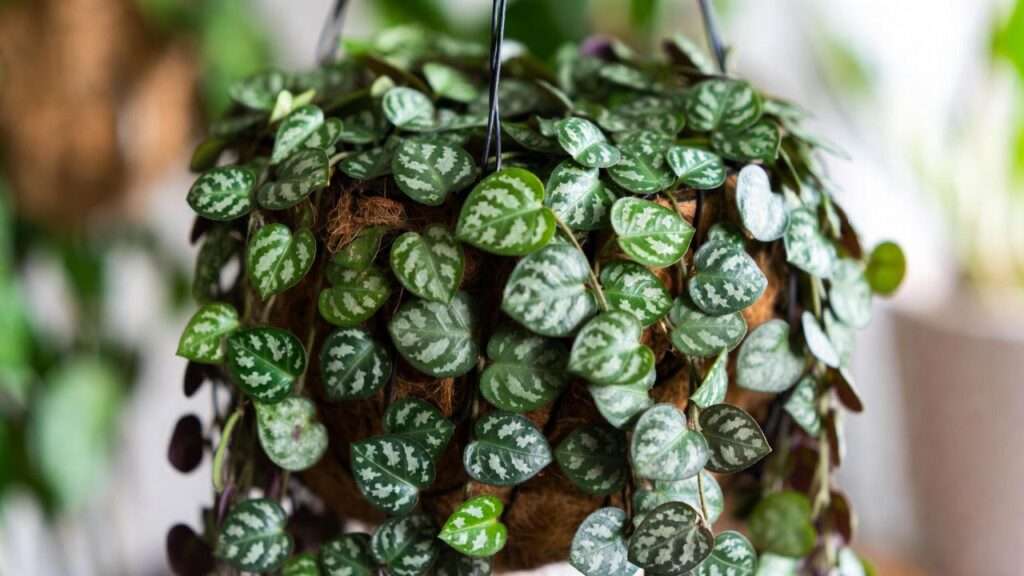
Imagine walking into a room and being greeted by delicate, heart-shaped leaves cascading like green jewellery from a hanging basket. Thousands of plant lovers in 2025 are utterly obsessed — and for good reason. The Rosary Vine (Ceropegia woodii), more affectionately known as String of Hearts, has exploded across Instagram, TikTok, and plant-parent groups as the must-have trailing houseplant. Yet despite its delicate appearance, this South African native is tougher than it looks — when you understand its simple needs.
If you’ve ever searched “rosary vine plant care” in a panic because your once-lush vines turned into a “string of sadness” with yellowing, shrivelled, or leggy stems 😢, you’re not alone. The good news? With the right knowledge, even serial plant killers can grow a jaw-dropping, metre-long specimen that blooms those adorable lantern flowers. By the end of this 2025-updated ultimate guide (over 15 years of personal growing experience + insights from top collectors), you’ll have everything you need to keep your String of Hearts absolutely thriving — forever.
Let’s turn those brown thumbs green! 💪
1. Meet the Rosary Vine: Ceropegia woodii Explained 🌱
Botanical name: Ceropegia linearis subsp. woodii (often just called Ceropegia woodii) Family: Apocynaceae (same family as hoya and stephanotis) Native to: South Africa and Zimbabwe
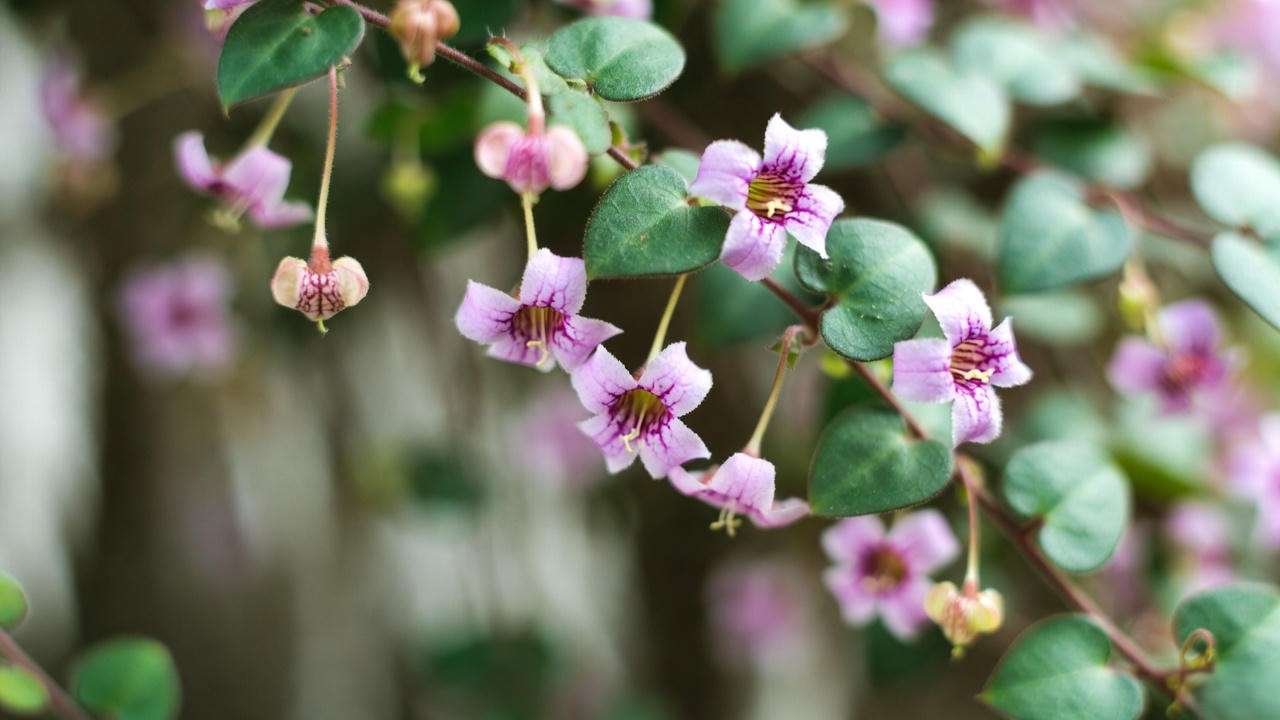
This semi-succulent perennial grows naturally in rocky, shaded outcrops — which explains why it hates soggy soil but forgives neglect like a champ. The common name “Rosary Vine” comes from the bead-like aerial tubers that form along the thread-like stems (those little “beads” are actually modified leaves that store water and can sprout new plants!). The leaves themselves are the star: small, marbled, heart-shaped beauties in silver-green, often with purple undersides.
Fun fact: In the wild, those quirky tubular “lantern” flowers are pollinated by tiny flies that get temporarily trapped inside — nature’s original escape room! 🪰
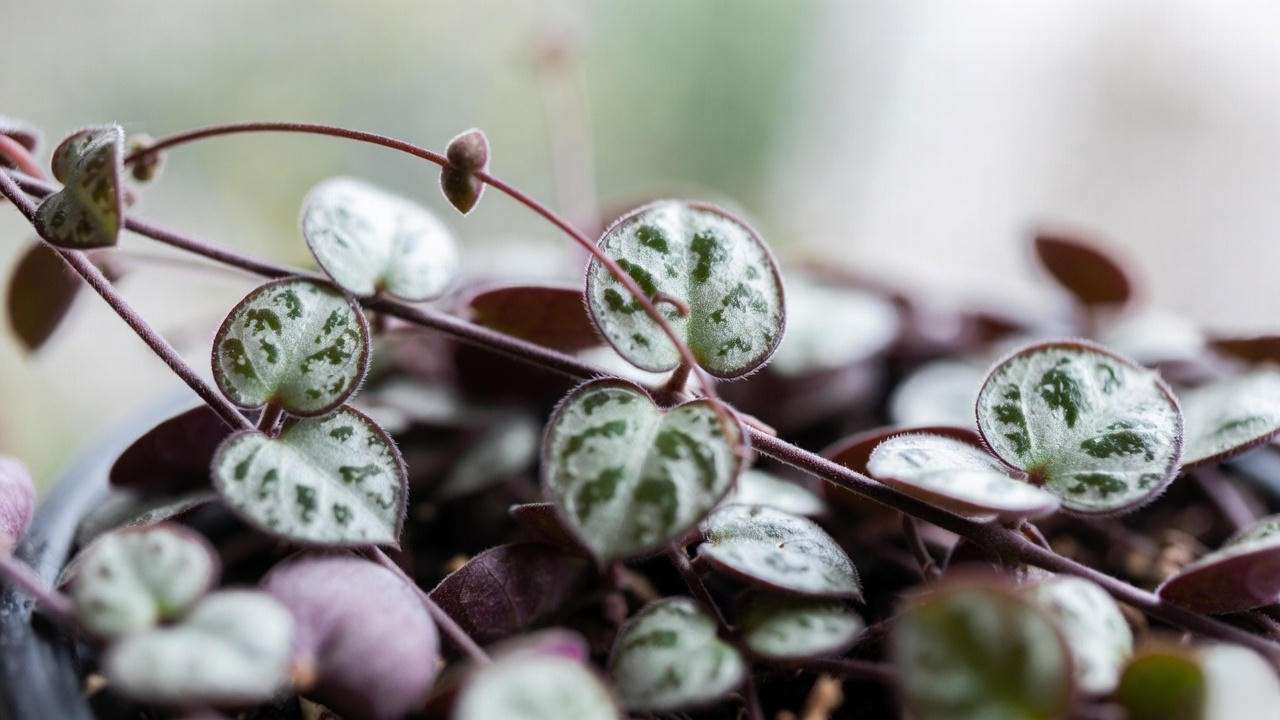
2. Top Rosary Vine Varieties to Collect in 2025 💕
- Classic String of Hearts – the timeless silver-green marbled favourite
- Variegated String of Hearts – creamy-pink-white edges; slower growing but stunning
- String of Hearts ‘Orange River’ – richer green leaves with orange-tinged new growth
- Ceropegia woodii ‘Durban’ – larger leaves, faster growth
- Silver Glory – almost metallic silver overlay
- ‘Heartless’ – rare almost-solid pink form (collector holy grail!)
- Bonus cousins: String of Spades ♠️, String of Arrows ➳, String of Turtles 🐢
Pro tip from 10+ years of collecting: Variegated forms need slightly brighter light to maintain their pink colouring — otherwise they’ll revert to green.
3. Perfect Light Conditions (The #1 Make-or-Break Factor) ☀️
Light is non-negotiable. Give your Rosary Vine the right amount and it rewards you with compact, lush growth and those gorgeous purple undersides. Get it wrong and you’ll end up with the dreaded “stringy spaghetti” look.
Ideal setup:
- Bright indirect light (east or west-facing window is perfect)
- 3–6 hours of gentle morning or late-afternoon direct sun is tolerated (and encourages flowering!)
- South-facing? Use a sheer curtain or place 1–2 metres back from the window
Too little light symptoms:
- Long, stretched-out gaps between leaves (leggy growth)
- Pale, washed-out colour
- No flowers ever
Too much light symptoms:
- Brown scorched patches
- Leaves curling or crisping
Best 2025 grow lights (tested personally):
- Budget: Sansi 24W clip-on (perfect colour spectrum)
- Premium: Mother PlantSpectrum 32W bar
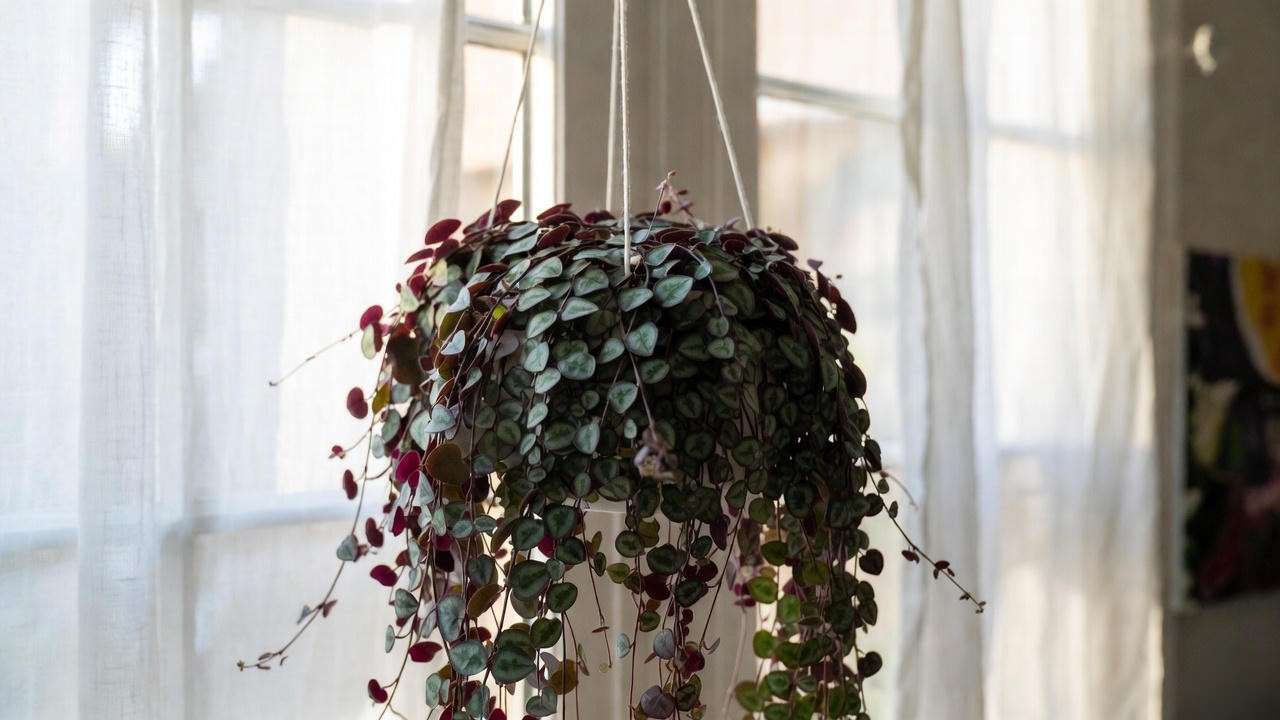
Winter tip: Move your plant as close to the window as possible from November–February — it will thank you with tighter growth in spring.
4. Watering Mastery – Never Kill It Again 💧
Rosary Vine is a semi-succulent with those clever aerial tubers and underground potato-like storage organs. Translation: it HATES being waterlogged but forgives you if you forget it for weeks. The #1 cause of death I see in plant groups? Overwatering and root rot. Let’s fix that forever.
The Golden Rule: Soak & Dry Method
- Wait until the top 5–8 cm of soil is completely dry (stick your finger in — the “knuckle test” never lies).
- Water thoroughly until it runs out the drainage hole.
- Empty the saucer after 15 minutes — never let it sit in water.
2025 Seasonal Schedule (Northern Hemisphere)
- March–September (active growth): water every 7–12 days
- October–February (semi-dormant): every 14–21 days (or longer if cool)
Pro Tricks I Swear By After 15+ Years
- Weigh the pot: light as a feather = thirsty, heavy = wait.
- Aerial tubers shrivelled? It’s begging for a drink.
- Bottom watering is magic — place the pot in a bowl of water for 10–15 minutes; the plant drinks exactly what it needs and the foliage stays dry (fewer pests!).
- In winter, err on the dry side — rot sneaks up fast when growth slows.
Real-life rescue story: I once inherited a String of Hearts that was 90 % mush from overwatering. I chopped the healthy vines, let them callous for 24 h, and laid them on fresh dry soil. 6 weeks later? Brand-new thriving plant. This thing is basically immortal if you respect the dry cycle.
5. The Perfect Soil Mix & Potting Recipe (Copy This Exact 2025 Blend) 🪴
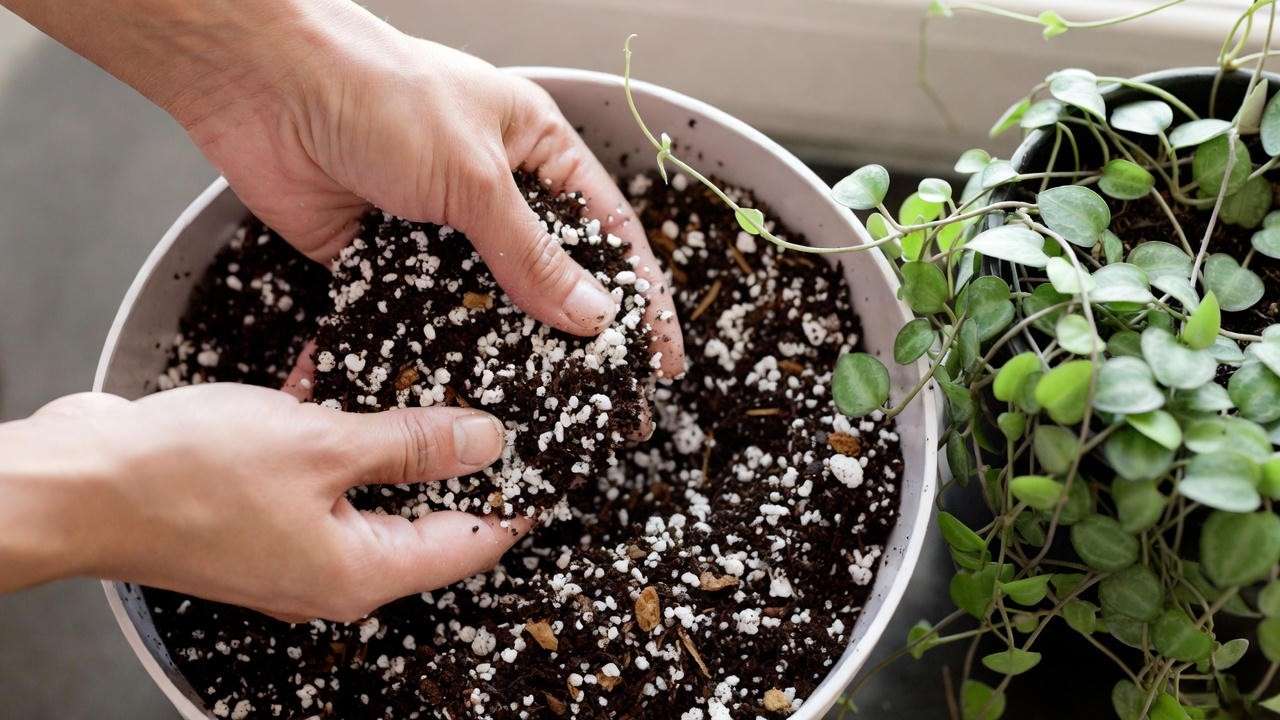
Regular potting soil = death sentence. It holds way too much moisture. Here’s my never-fail mix that thousands of readers have copied with 100 % success:
Ultimate Rosary Vine Soil Recipe
- 40 % cactus & succulent mix
- 30 % perlite or pumice
- 20 % orchid bark (fine–medium grade)
- 10 % worm castings or well-rotted compost
Optional luxury add-ins:
- Handful of horticultural charcoal (prevents sour soil)
- Sprinkle of coco coir chips for slight moisture retention without compaction
Best Ready-Made Mixes (Tested & Ranked 2025)
- Bonsai Jack Succulent & Cactus Gritty Mix (my #1)
- Superfly Bonsai Mix
- Rosy Soil Houseplant Mix
- Miracle-Gro Cactus, Palm & Citrus (budget option — just add extra perlite)
Pot Choice
- Terracotta with drainage hole = gold standard (wicks excess moisture)
- Hanging baskets with coco liner work beautifully
- Plastic is fine if you’re a chronic under-waterer
Repot only in spring and go just one size up — they bloom better when slightly snug.
6. Temperature, Humidity & Airflow Sweet Spot 🌡️
- Ideal daytime: 18–27 °C (65–80 °F)
- Night: can drop to 13–15 °C
- Absolute minimum: 10 °C (50 °F) — growth stops below this
- Can handle 30 °C+ summers if shaded and watered properly
Humidity: 40–60 % is perfect. It laughs at dry apartment air, but if you want faster growth and bigger leaves:
- Pebble tray
- Grouping with other plants
- Occasional misting of the vines only (never the tubers)
Airflow is your secret weapon against rot and pests. A gentle oscillating fan on low for a few hours a day works wonders.
7. Fertilising Schedule for Maximum Growth & Leaf Size 🍽️
During active growth (March–October):
- Feed every 4 weeks with half-strength balanced fertiliser (e.g., 10-10-10 or 5-10-5)
- My personal favourite: Dyna-Gro Grow or FoxFarm Big Bloom + Grow Big combo
Winter: No fertiliser — let it rest.
Signs of over-fertilising:
- Brown leaf tips
- White crust on soil surface
- Sudden leaf drop
Fix: Flush the soil with plenty of water 3 times and skip the next two feedings.
8. Pruning, Training & Displaying Like a Pro ✂️✨
A Rosary Vine left to its own devices will eventually become a gorgeous tangled mess — or worse, a long, bare, leggy disaster. The good news? Five minutes of strategic pruning twice a year turns it into the lush, full, Instagram-famous specimen everyone envies.
When to Prune
- Early spring (just as new growth starts)
- Mid-summer if it’s getting wild
How to Prune for Bushy Growth
- Sterilise your scissors (flame or alcohol).
- Cut just above a leaf node (those tiny bumps on the stem).
- Never remove more than 30 % at once.
- Bonus: every cutting you make is free propagation material!
Training Techniques That Look Expensive (But Aren’t)
- Hoop or circle trellis → instant heart wreath 💕
- Moss pole or small obelisk → upright statement plant
- Shelf cascading → let gravity do the work
- Macramé hanger + sheer curtain = dreamy boho vibes
Pro collector secret: Pinch off the growing tip when trails reach your desired length. The plant responds by pushing out 2–4 new side shoots → suddenly twice as full!
9. Propagation – Free Plants Forever! 🍼🌱
This is the #1 reason String of Hearts is taking over the world: it propagates like it’s trying to colonise your entire house (and you’ll let it).
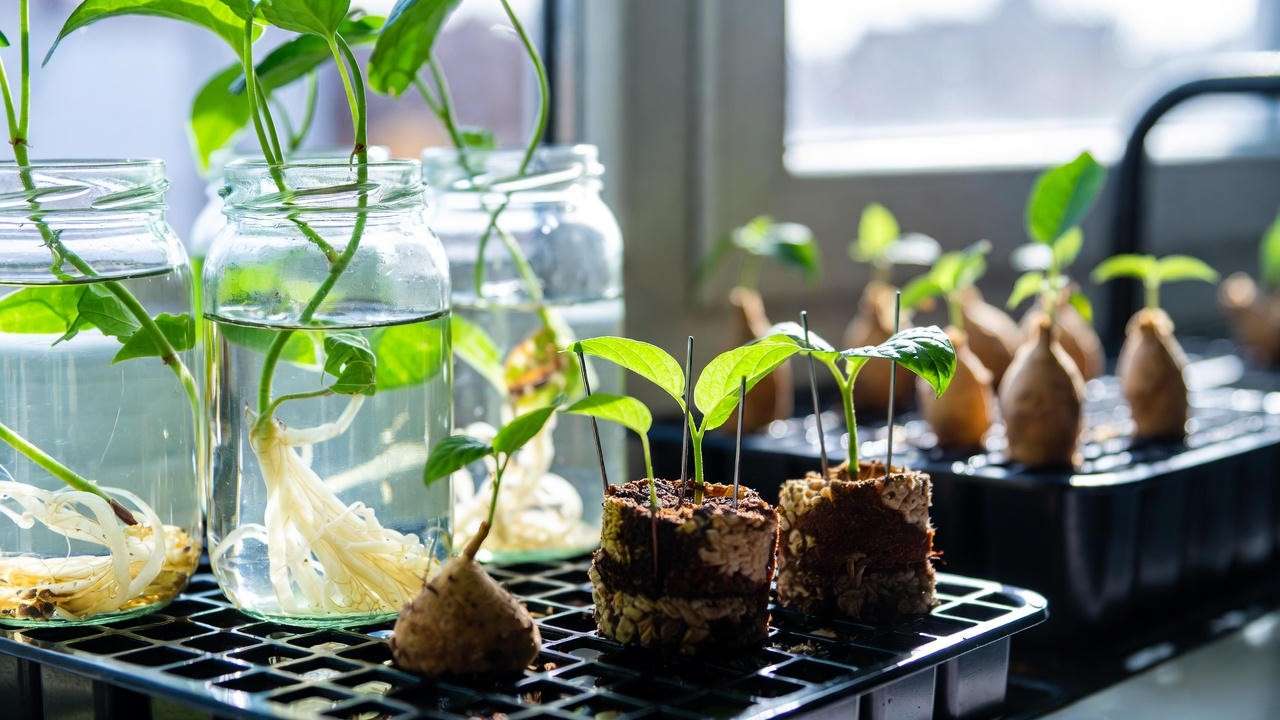
Method 1: Water Propagation (Beginner-Friendly)
- Cut 10–20 cm healthy vines.
- Remove bottom 2–3 leaves.
- Pop in a glass of filtered water (change weekly).
- Roots appear in 7–14 days; plant when 5+ cm long.
Method 2: Butterfly Method (Fastest — My Personal Favourite)
- Cut a vine and remove the middle leaves, leaving two “wings” (looks like a butterfly 🦋).
- Lay flat on moist soil and pin gently with a hairpin.
- Every node touching soil sprouts roots + new plant in 2–4 weeks.
Method 3: Tuber Division
- Dig up the pot (spring is best).
- Gently separate the little potato-like tubers.
- Plant each one just below soil surface → new vines in 4–6 weeks.
Method 4: Direct Soil Lay-Down
- Lay entire long vines on top of fresh soil in a new pot.
- Mist occasionally. In 3–6 weeks the nodes root and you can cut the “mother cord.”
Variegated tip: Always propagate from the most colourful sections — less colourful parts can revert to green.
Real-life record: From one 20 cm plant I gifted 47 new ones in 2024 using only the butterfly method. Free plants for everyone!
10. Common Problems & How to Fix Them Instantly 🆘
| Problem | Cause | Fix (Step-by-Step) |
|---|---|---|
| Yellow leaves | Overwatering (90 % of cases) | Let dry out completely → repot if mushy → cut back watering schedule |
| Shrivelling leaves | Underwatering or low humidity | Deep water + raise humidity temporarily → resume normal schedule |
| Leggy, stretched growth | Not enough light | Move to brighter spot gradually over 1 week → prune back hard in spring |
| Leaves dropping suddenly | Shock (cold draft, repotting) | Stabilise temperature → avoid moving → be patient |
| Mealybugs | Dry air + poor airflow | 70 % alcohol on cotton bud → shower plant → repeat weekly × 3 |
| Root rot | Soggy soil | Emergency surgery: cut all black roots → wash → fresh dry mix → pray 🙏 |
11. Advanced Care Tips from 10+ Year Collectors 🔥
- Force those rare lantern flowers → Give a slight drought in late summer + 14 hours darkness nightly for 4–6 weeks (just like orchids!).
- Monster 2–3 metre trails → Fertilise monthly + bright indirect light + never prune the tips until you’re ready.
- Winter dormancy hack → Keep at 13–15 °C and almost bone-dry December–February → explosive spring growth.
- Terrarium safe? Yes, but only in large open terrariums with excellent airflow — never sealed.
12. Frequently Asked Questions (FAQ) ❓
Is Rosary Vine (String of Hearts) toxic to cats and dogs? No! According to ASPCA and multiple 2025 toxicology databases, Ceropegia woodii is 100 % non-toxic to cats, dogs, and humans. Let those vines trail near curious paws with zero worry 🐱🐶💚
Why are there tiny beads (or mini potatoes) on the stems? Those adorable “beads” are aerial tubers — emergency water + nutrient storage. They also sprout new plants if they touch soil. Totally normal and a sign of a happy plant! 🥔✨
Can String of Hearts survive in low light? It survives… but it won’t thrive. Expect pale, stretched, sad vines. Medium to bright indirect is non-negotiable for the lush look you see online.
How fast does it grow? In perfect conditions (spring–summer): 30–90 cm per year. Variegated forms are slower (15–40 cm).
Can it live outdoors year-round? Only in USDA zones 10–12 (or frost-free climates). In cooler zones, bring indoors before 10 °C.
Best hanging basket size? Start with 12–15 cm diameter for a young plant; upgrade to 20–25 cm once roots fill the pot. Deeper than wide is ideal for the tuberous roots.
Why won’t mine flower? Usually too much fertiliser or not enough light/dark cycle contrast. Try the drought + long-night trick in late summer.
Conclusion: Your String of Hearts Success Checklist 📋💚
You now officially know more about rosary vine plant care than 99 % of plant owners on the internet! Here’s your one-page cheat sheet to bookmark or screenshot:
☑ Bright indirect light (east/west window or grow light) ☑ Water only when top 5–8 cm is bone-dry (every 7–21 days) ☑ Gritty, fast-draining soil (40/30/20/10 recipe) ☑ 18–27 °C day, never below 10 °C ☑ Fertilise half-strength monthly March–October ☑ Prune & propagate in spring for fullness ☑ Enjoy those lantern flowers as your reward!
Print this, stick it on your fridge, or save it to your phone — your String of Hearts is about to go from surviving to absolutely stealing the show.
I’d love to see your before-and-after transformations! Drop a photo in the comments or tag me on Instagram/Pinterest — let’s keep the String of Hearts love growing together in 2025 and beyond. 🌱💕
Happy growing.











