Waking up to find a pile of healthy-looking green leaves on the floor beneath your beloved indoor jungle is a plant parent’s worst nightmare. 😱 If there is one species that perfectly captures this specific heartbreak, it’s the rubber plant. Known scientifically as Ficus elastica, this striking houseplant is famous for its architectural beauty and hardy reputation—which makes sudden leaf drop incredibly frustrating.
As a horticulturist who has spent years diagnosing, rescuing, and rehabilitating temperamental aroids and ficus species, I can tell you exactly why this happens. You are not a bad plant parent; you are simply missing a few subtle environmental cues. In this comprehensive guide, you will learn how to diagnose the root cause of leaf drop, master the core care essentials, and unlock the horticultural secrets to achieving massive, glossy, vigorous growth. 🚀 Let’s bring your plant back to life.
1. Meet Your Rubber Plant (Ficus elastica) 🌿
Before we can fix the problems, we have to understand the plant. Originating from the dense, tropical rainforests of Southeast Asia—specifically India and Malaysia—the Ficus elastica is not naturally a compact houseplant. In the wild, it is a towering banyan tree that can reach up to 100 feet tall, with aggressive aerial roots and a sprawling canopy.
When we bring them indoors, we are trying to replicate a micro-climate of that tropical environment. Understanding its native habitat is the cheat code to flawless indoor plant care. It craves warmth, dappled sunlight, and excellent drainage.
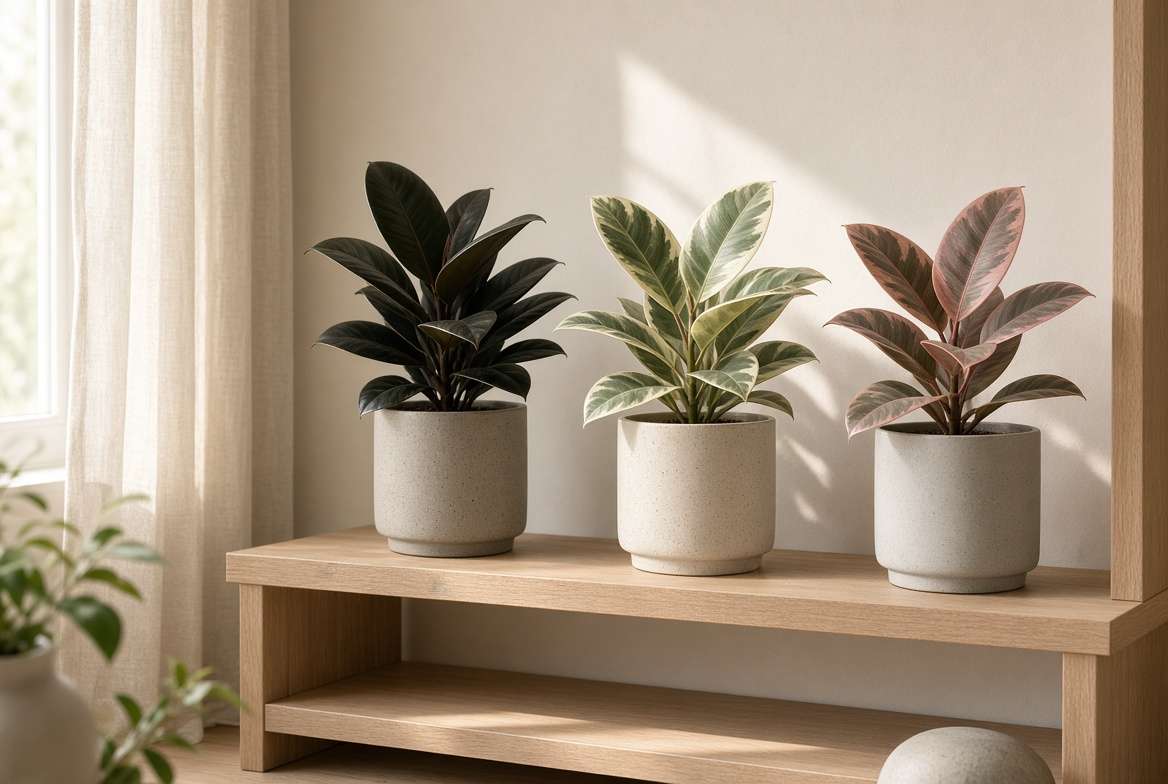
Popular Varieties
Identifying your specific cultivar is crucial, as variegated types have slightly different light requirements than their solid-green cousins.
-
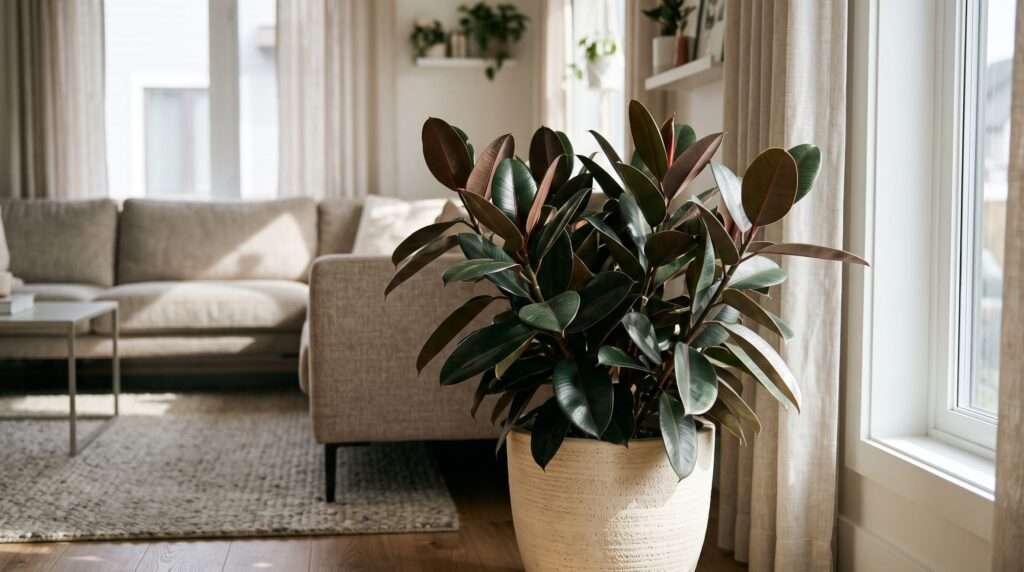
Ficus elastica ‘Burgundy’: Features deep, near-black foliage with striking red center veins. It is incredibly tolerant of lower light but thrives and produces the darkest, glossiest leaves when given ample indirect sun.
-
Ficus elastica ‘Tineke’: A stunning variegated variety boasting green, gray-green, and creamy white edges. It requires significantly more light to maintain its variegation and prevent the white edges from browning.
-
Ficus elastica ‘Ruby’: Similar to the Tineke but with a breathtaking pink or reddish flush on new growth. The intensity of the pink hue is directly tied to the amount of bright light it receives.
2. The #1 Emergency: Why Is My Rubber Plant Dropping Leaves? 🚨
Let’s address the elephant in the room. Ficus elastica has a dramatic stress response: it sheds its foliage to conserve energy. If your plant is dropping leaves, it is a cry for help. Here is the expert diagnostic breakdown of the four most common culprits.
Overwatering vs. Underwatering (The Soil Check) 💧
Watering issues account for 85% of all rubber plant fatalities. These plants have thick, fleshy roots that are highly susceptible to root rot if left sitting in soggy soil.
-
The Overwatering Symptoms: If the lowest leaves on the stem are turning a sickly, pale yellow before dropping off, and the soil feels perpetually damp, you are overwatering. The roots are suffocating from a lack of oxygen in the potting medium.
-
The Underwatering Symptoms: If the leaves are curling inward, feeling paper-thin, or developing crispy brown edges before snapping off, the plant is severely dehydrated.
-
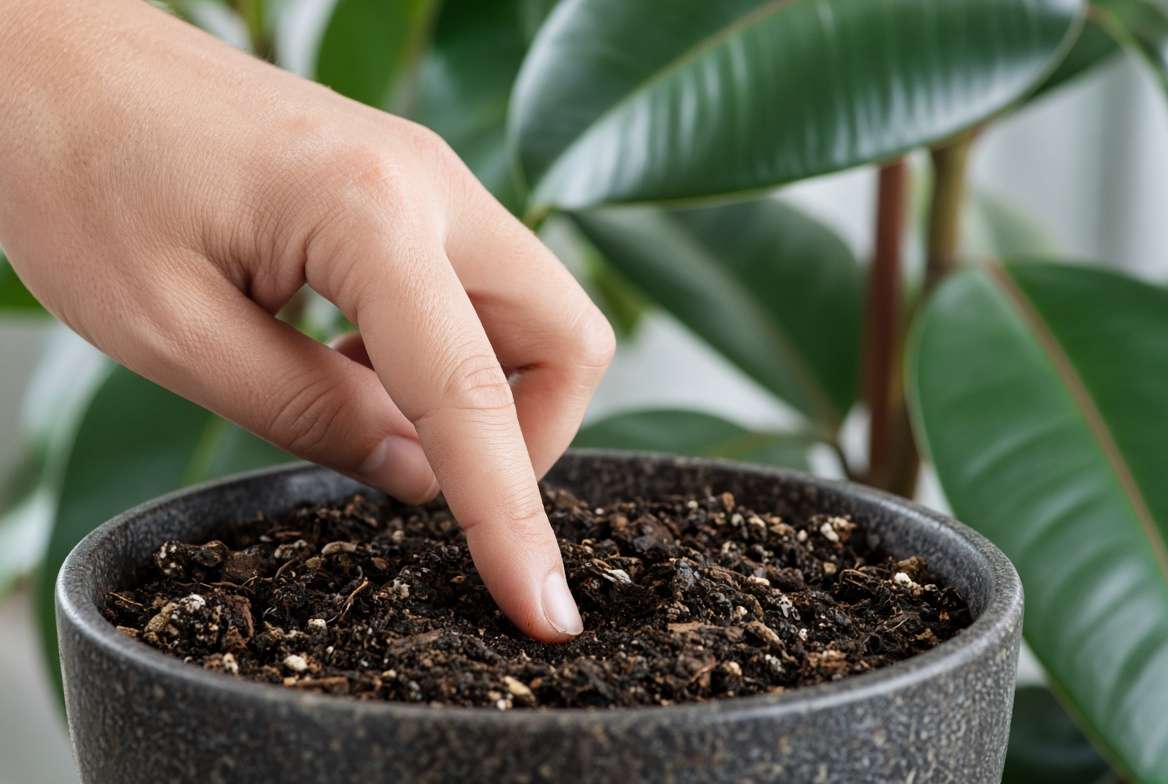
The Expert Fix: Stop relying on a calendar (e.g., “watering every Sunday”). Instead, use the “finger test.” Push your index finger two inches deep into the topsoil. If it feels moist, wait. If it is completely dry, saturate the pot until water runs freely out of the drainage holes. Alternatively, invest in a digital moisture meter and only water when the reading hits the “dry” zone.
The Shock Factor: Light & Temperature Changes 🌡️
Ficus trees are notorious creatures of habit. They despise being moved. If you recently brought your plant home from the nursery, moved it to a new room, or repotted it, it is experiencing environmental shock.
-
Drafts and Vents: Placing your plant near an AC vent, a drafty winter window, or a heating radiator will cause immediate physiological stress. They prefer stable temperatures between 65°F and 85°F (18°C – 29°C).
-
The Fix: Find a bright, stable location and leave it there. If the leaf drop is due to a recent move, be patient. Maintain consistent watering and light, and the dropping will cease once the plant acclimates (usually within 2 to 4 weeks).
Root Bound Distress 🪴
If your watering routine is flawless but the plant looks sad, droopy, and is dropping lower foliage despite good light, check the root system. When a rubber plant outgrows its container, the roots circle the bottom tightly, leaving no room for soil to hold moisture or nutrients.
-
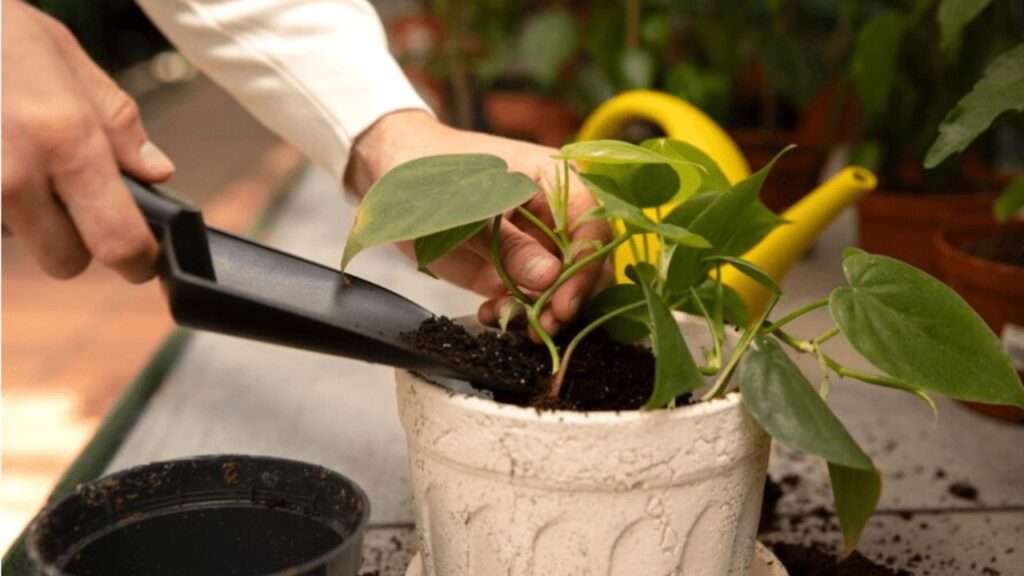
The Fix: Gently slide the plant out of its nursery pot. If it looks like a dense brick of swirling roots with little soil left, it’s time to repot. Upgrade to a container just 2 inches wider in diameter and use a chunky, well-draining soil mix.
Pest Invasions (Spider Mites & Scale) 🕷️
Pests are the silent killers. Because rubber plant leaves are so broad and thick, they become prime real estate for sap-sucking insects.
-
Spider Mites: Look for tiny, dust-like webbing where the leaf meets the stem, accompanied by a dull, stippled appearance on the foliage.
-
Scale: These look like small, raised brown bumps on the stems or the undersides of leaves. They secrete a sticky honeydew that can lead to sooty mold.
-
The Fix: Isolate the plant immediately. Wipe down every single leaf (top and bottom) with a microfiber cloth dipped in a diluted neem oil solution or insecticidal soap. Repeat this process every 5 to 7 days for a month to break the pest life cycle.
3. Master the Core Care Essentials (To Prevent Future Issues) ☀️💧
Once you’ve stopped the leaf drop, it’s time to optimize the environment. Proper care isn’t just about survival; it’s about pushing your plant to its maximum genetic potential.
The Perfect Light Formula 🌞
Light is plant food. Fertilizer is just a vitamin supplement. To get those massive, architectural leaves, you need to master lighting.
-
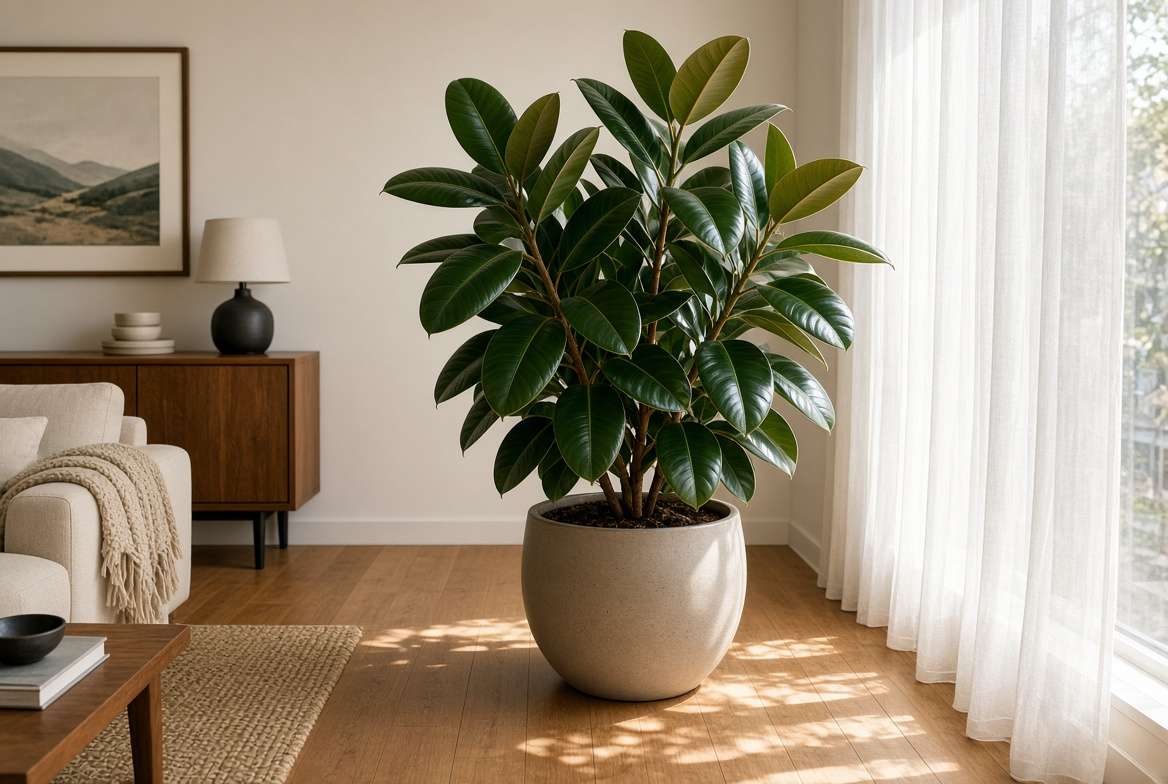
Bright, Indirect Light: This is the golden rule. Place your plant directly in front of an East-facing window, or a few feet back from a South- or West-facing window. The sky should be visible from the plant’s perspective, but the sun’s harsh midday rays shouldn’t hit the leaves directly.
-
The Variegation Rule: Cultivars like ‘Tineke’ and ‘Ruby’ possess less chlorophyll (the green pigment responsible for photosynthesis) because of their white and pink variegation. Therefore, they require significantly more light than a ‘Burgundy’ to survive and keep their colors vibrant.
-
Sunburn Warning: If you notice large, bleached, or scorched brown patches in the center of the leaves, your plant is getting cooked by direct, hot afternoon sun. Pull it back or filter the light with a sheer curtain.
Watering Mastery & Drainage 🚰
We have already discussed how to identify overwatering and underwatering, but true watering mastery involves understanding the physics of your pot. When it is time to hydrate your rubber plant, you must water deeply and thoroughly.
-
The Flush Technique: Take the plant to the sink or shower and pour room-temperature water evenly over the soil until it cascades out of the bottom. This flushes out built-up mineral salts from tap water and fertilizers, which can otherwise burn the delicate root tips.
-
The Non-Negotiable Rule: Your pot must have drainage holes. Putting a Ficus elastica in a decorative cachepot without drainage is a guaranteed death sentence via root rot. Always keep the plant in a plastic nursery pot that slides in and out of your decorative container, allowing you to easily drain excess water.
Soil Science: The Ideal Potting Mix 🪴
Most commercial, off-the-shelf indoor plant soils are far too dense and peat-heavy for a rubber plant. They retain moisture for too long, suffocating the root system. Ficus roots need oxygen just as much as they need water.
-
The Expert DIY Aroid/Ficus Recipe: To create the ultimate well-draining environment, mix your own soil. Combine:
-
50% High-quality indoor potting soil (provides a nutrient-rich base)
-
25% Perlite or Pumice (creates vital air pockets for oxygenation)
-
25% Fine Orchid Bark (mimics the natural, chunky organic matter of the forest floor, allowing water to flow through quickly) This chunky, aerated mix practically guarantees you will never accidentally overwater your plant again.
-
Humidity & Temperature 🌡️
While they hail from the tropics, rubber plants are surprisingly adaptable to standard indoor humidity levels (typically around 30% to 50%). However, if you want to push for massive, rapid growth, boosting the ambient humidity to 60% will make a noticeable difference.
-
The Misting Myth: Let’s debunk a common houseplant myth right now. Misting your rubber plant with a spray bottle does not effectively raise the humidity. The water evaporates in minutes, and leaving the leaves perpetually wet can actually invite fungal and bacterial leaf spot diseases.
-
The Real Solution: If your home is very dry (especially in winter with the central heating on), invest in a small ultrasonic humidifier and place it a few feet away from your indoor jungle.
4. How to Boost Growth and Get Massive, Glossy Leaves 🚀✨
Your rubber plant is surviving, the leaves have stopped dropping, and the soil is perfect. Now, let’s talk about optimization. How do you get those enormous, shiny, magazine-cover leaves?
The Art of Cleaning the Leaves 🧽
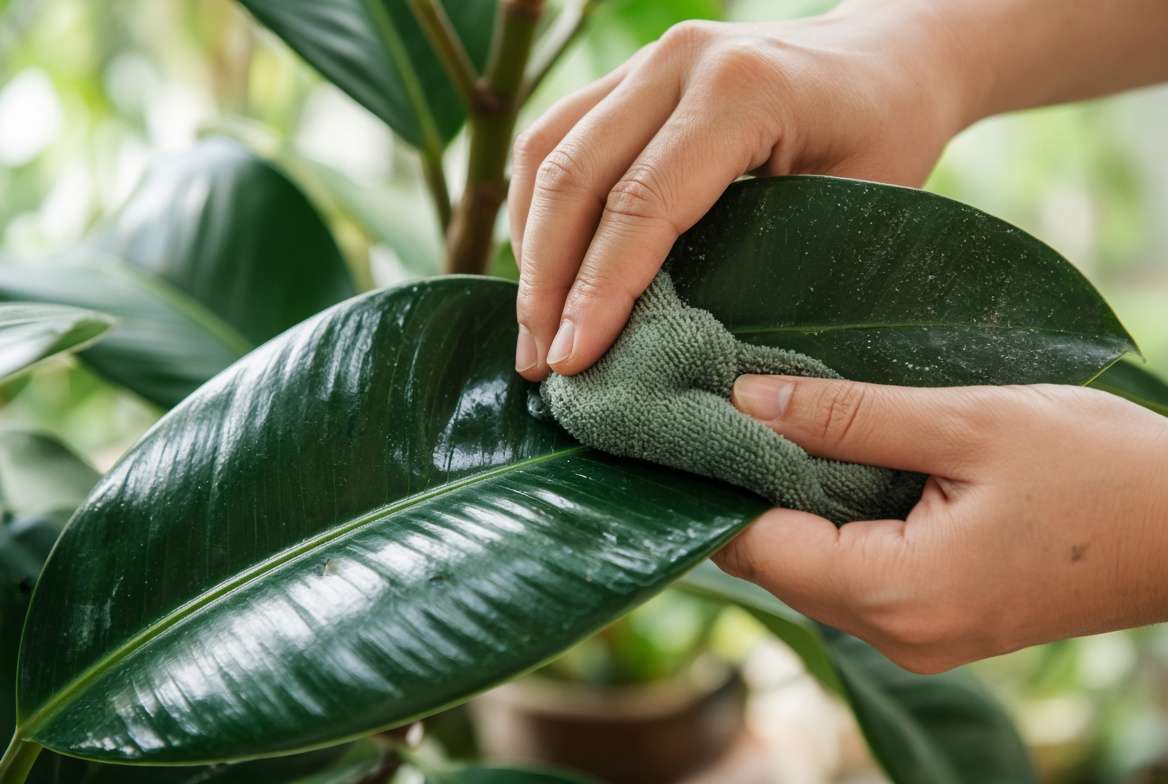
Because Ficus elastica features broad, flat foliage, the leaves act like giant dust magnets. A thick layer of household dust blocks light from reaching the chloroplasts, effectively suffocating the plant and halting photosynthesis.
-
The Spa Treatment: Every two weeks, take a damp microfiber cloth and gently support the underside of the leaf with one hand while wiping the top with the other. You can add a single drop of mild dish soap or a splash of lemon juice to the water to help cut through grease.
-
Avoid Commercial Leaf Shines: Never use aerosol leaf shine products. They contain oils and waxes that clog the plant’s stomata (the microscopic pores on the leaves used for gas exchange). A clean leaf is naturally glossy! ✨
Strategic Fertilization 🧪
Rubber plants are heavy feeders during the active growing season (spring and summer). Without the right nutrients, new leaves will emerge smaller than the older ones.
-
The Nutrient Ratio: Choose a high-quality, balanced liquid fertilizer (look for an N-P-K ratio like 10-10-10 or 3-1-2, which promotes lush foliage).
-
The Feeding Schedule: Dilute the fertilizer to half the recommended strength on the label to prevent root burn, and apply it every time you water from March through September. During the dormant winter months, stop fertilizing entirely.
Pruning for a Bushier Plant ✂️
Left to its own devices, a rubber plant will often grow straight up as a single, towering stalk until it hits the ceiling. If you prefer a bushier, tree-like aesthetic with multiple branches, you have to overcome its “apical dominance” through pruning or notching.
-
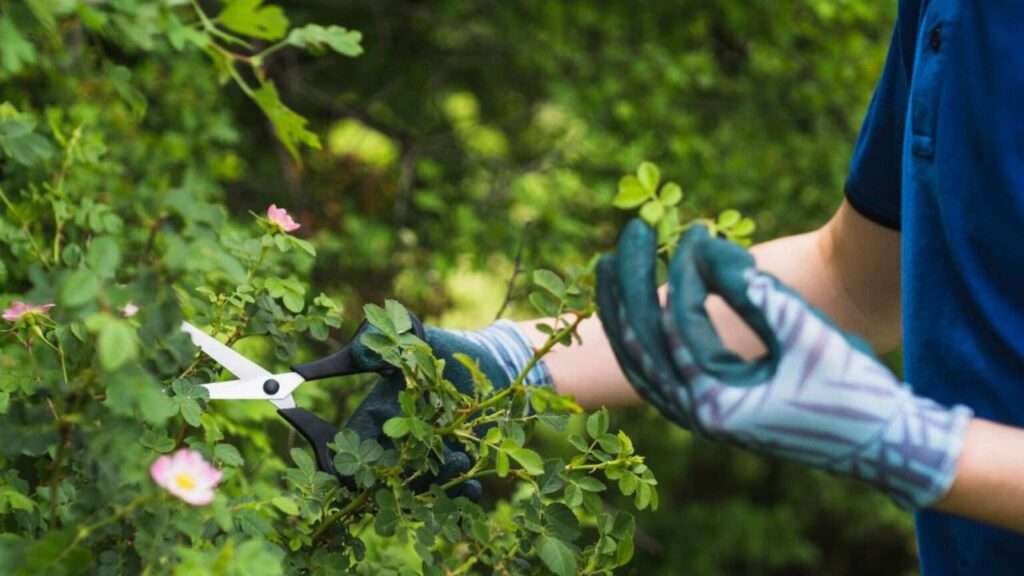
The Big Chop: Using sterilized pruning shears, cut the main stem down to your desired height, ensuring you make the cut just above a leaf node. This forces the plant to activate dormant buds lower down on the trunk, creating multiple new branches.
-
Safety Warning: When you cut a Ficus elastica, it will bleed a milky white latex sap. This sap is mildly toxic and a known skin irritant. Always wear gardening gloves, protect your floors with newspaper, and dab the wound with a damp paper towel until the sap stops flowing. 🧤
5. Propagation 101: Create More Rubber Plants 🌱
Once you prune your plant, don’t throw away the top! You can easily propagate those cuttings to create entirely new plants to keep or gift to friends.
Stem Cuttings in Water vs. Soil 💧
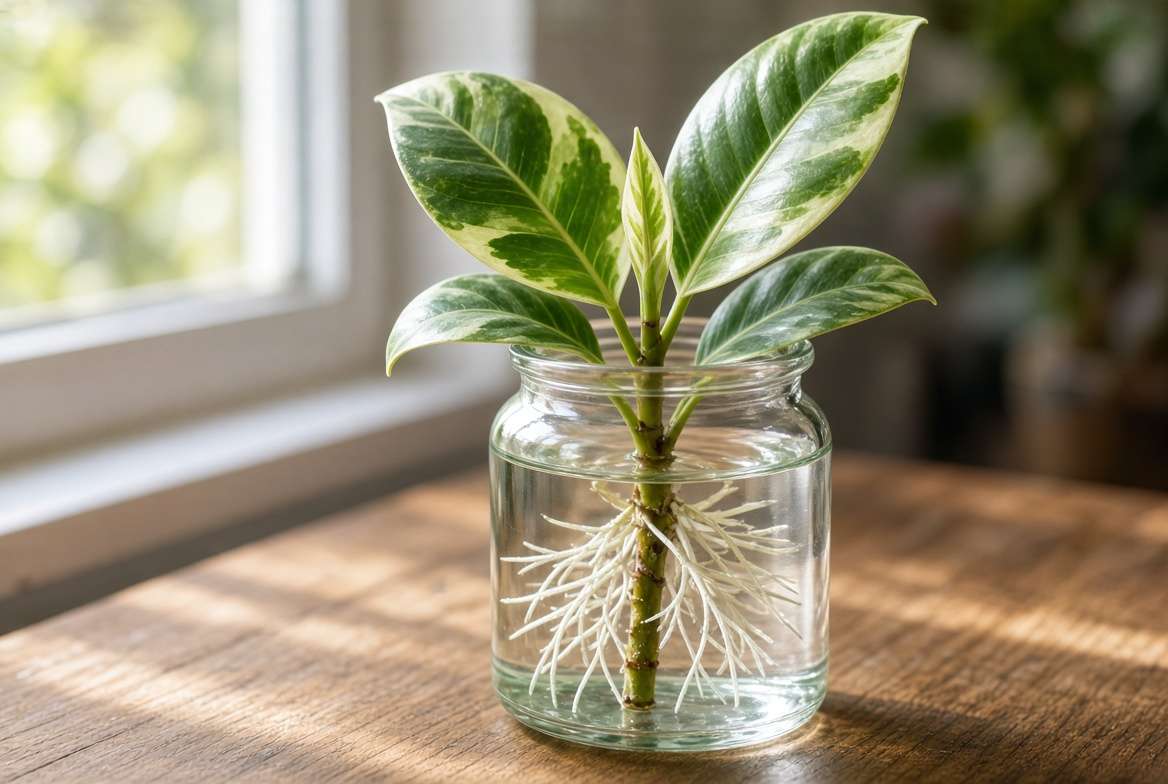
For beginners, water propagation is the most rewarding method because you get to watch the roots develop.
-
Take the Cut: Ensure your cutting is about 4 to 6 inches long and includes at least one node (the bumpy part of the stem where a leaf attaches). Roots will only grow from a node.
-
Prep the Cutting: Remove the bottom leaf to expose the node. Let the cutting sit out for an hour so the sap can dry and callous over.
-
Rooting: Place the stem in a glass of room-temperature water. Change the water weekly to prevent bacterial growth. In 4 to 6 weeks, you will see delicate white roots emerging. Once the roots are two inches long, transplant the cutting into your chunky soil mix.
Air Layering (For Advanced Growers) 🌳
If you are dealing with a massive, woody stem that won’t easily root in water, air layering is the professional horticulturist’s secret weapon. This involves making a small upward cut into the stem while it is still attached to the mother plant, wedging it open with a toothpick, wrapping the wound in damp sphagnum moss, and sealing it in plastic wrap. Over several months, roots will grow directly into the moss. You can then cut the stem below the new root ball and plant it immediately!
6. Troubleshooting Other Common Rubber Plant Problems 🔍
Even with the best care, minor issues can pop up. Here is how to decode what your plant is trying to tell you.
Curling Leaves 🍂
If the edges of your rubber plant’s leaves are curling inward like a taco, the plant is trying to minimize its surface area to reduce moisture loss. This is a classic sign of severe underwatering, incredibly low humidity, or root bound distress. Check the soil moisture immediately.
Fading Variegation 📉
Did you buy a stunning, tricolor ‘Tineke’ only to watch the newest leaves emerge completely solid green? This is the plant reverting. White and pink foliage cannot photosynthesize effectively. When the plant is placed in low light, it panics and produces purely green leaves to survive. Move it closer to a bright window to restore the variegation on future growth.
Brown Spots 🤎
Not all brown spots are created equal.
-
Crispy, dry brown spots in the center: Sunburn from harsh, direct afternoon light.
-
Mushy, dark brown or black spots with yellow halos: A fungal or bacterial infection, almost always triggered by overwatering and poor air circulation. Remove the affected leaves with sterile shears and adjust your watering routine.
7. Frequently Asked Questions (FAQs) ❓
Are rubber plants toxic to cats and dogs? Yes. The milky white sap (latex) contains compounds that are toxic to both pets and humans if ingested. It can cause severe oral irritation, drooling, and vomiting in cats and dogs. Keep this plant out of reach of curious nibblers. 🐾
How fast do rubber plants grow indoors? In optimal conditions (bright light, proper fertilization, and warm temperatures), a healthy Ficus elastica is a vigorous grower. You can expect 24 inches or more of new vertical growth per year during the spring and summer seasons.
How big of a pot does my rubber plant need? Never put a small plant in a massive pot. The excess soil will hold too much water and cause root rot. When repotting, only increase the pot size by 1 to 2 inches in diameter.
Taking care of a rubber plant is a deeply rewarding journey. While they can be slightly dramatic when their routine is disrupted, their resilience is unmatched. By mastering their need for bright, indirect light, implementing a strict finger-test watering strategy, and providing a well-draining soil mix, you will completely eliminate sudden leaf drop. Remember that plant care is an ongoing conversation between you and nature. Pay attention to the subtle cues your Ficus elastica gives you, adjust your environment accordingly, and you will be rewarded with a spectacular, glossy indoor tree that commands attention in any room. 💚