
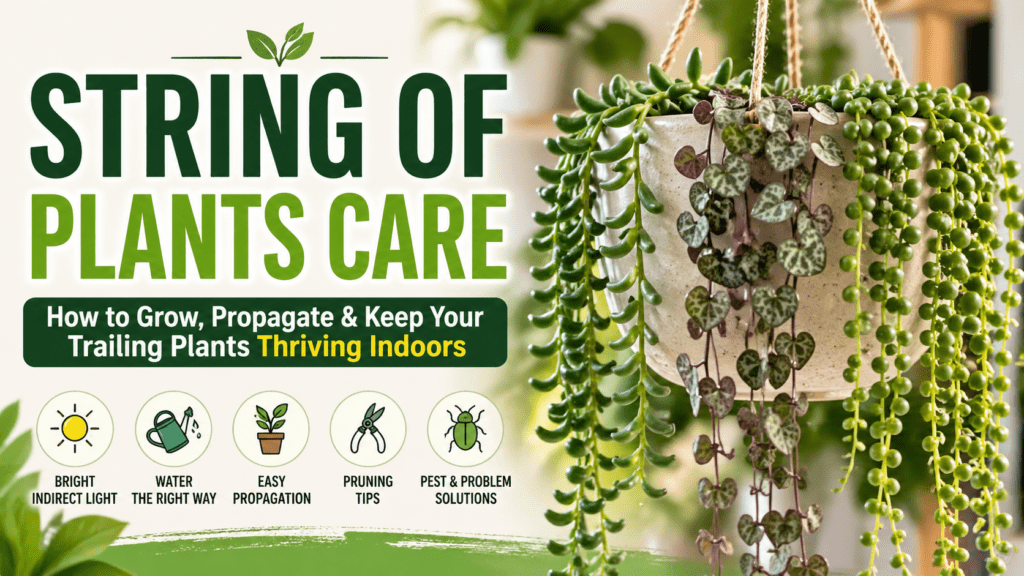
Imagine walking into a room where delicate green strands spill gracefully from shelves and hanging pots—instantly transforming your space into a calming indoor jungle 🌿. That’s the magic of string of plants.
These trailing beauties—like string of pearls, hearts, and bananas—have become a favorite among plant lovers for their unique appearance and relatively low maintenance. But here’s the truth: while they look effortless, many beginners unknowingly struggle with issues like overwatering, poor lighting, and leggy growth 😢.
This string of plants care guide is designed to solve those problems. Whether you’re just starting out or trying to revive a struggling plant, you’ll learn exactly how to grow, propagate, and maintain healthy trailing succulents indoors—with expert-level tips that actually work.
🌿 What Are String of Plants? (Beginner-Friendly Overview)
🌱 Common Types of String Plants You Can Grow Indoors

“String of plants” is a general term used for trailing succulent plants that grow long, cascading vines. Here are the most popular varieties:
- 🌿 String of Pearls – Round bead-like leaves, iconic and elegant
- 💚 String of Hearts – Heart-shaped leaves with purple tones
- 🍌 String of Bananas – Banana-shaped foliage, beginner-friendly
- 🐬 String of Dolphins – Leaves shaped like tiny jumping dolphins
- 🐢 String of Turtles – Small patterned leaves resembling turtle shells
Each has its own charm, but their care requirements are surprisingly similar.
🌵 Key Characteristics of String Plants
Understanding their nature is the first step to success:
- 🌱 Trailing Growth Habit – Perfect for hanging baskets and shelves
- 💧 Succulent Leaves – Store water, making them drought-tolerant
- ⚡ Variable Growth Rates – Some grow quickly (bananas), others slowly (pearls)
👉 Because they are succulents, overwatering is the #1 killer—a crucial point we’ll revisit often.
☀️ Ideal Growing Conditions for String of Plants
🌞 Light Requirements (The #1 Success Factor)

If there’s one thing that determines success with string plants, it’s light.
✅ Ideal Light:
- Bright, indirect sunlight (near a window)
- 4–6 hours of filtered light daily
⚠️ Signs of Light Problems:
- Too little light: long, sparse vines (leggy growth)
- Too much direct sun: scorched or yellow leaves
💡 Expert Tip: A south- or east-facing window works best. If natural light is limited, use a grow light to supplement.
🌡️ Temperature & Humidity Needs
String plants thrive in typical indoor conditions:
- 🌡️ Ideal temperature: 18–27°C (65–80°F)
- ❄️ Avoid: cold drafts or temperatures below 10°C
- 💧 Humidity: Low to moderate (they don’t need misting)
👉 Unlike tropical plants, these succulents prefer dry air, making them perfect for indoor environments.
🪴 Choosing the Right Pot & Soil Mix

🪴 Best Pot:
- Terracotta pots (help absorb excess moisture)
- Always ensure drainage holes
🌱 Best Soil:
- Well-draining cactus or succulent mix
🧪 DIY Soil Mix:
- 2 parts potting soil
- 1 part perlite
- 1 part coarse sand
👉 Good drainage prevents root rot—the most common cause of plant death.
💧 Watering String of Plants the Right Way (Avoid Root Rot!)
🚿 How Often Should You Water?

Forget strict schedules—watering depends on conditions.
✅ Best Method: Soak and Dry
- Water thoroughly until it drains out
- Let soil dry completely before watering again
⏳ General Guideline:
- Summer: every 1–2 weeks
- Winter: every 3–4 weeks
⚠️ Common Watering Mistakes
- ❌ Watering too frequently
- ❌ Letting the plant sit in water
- ❌ Using dense, moisture-retaining soil
👉 Overwatering leads to root rot, which is often irreversible.
🔍 How to Check If Your Plant Needs Water
- Stick your finger 2 inches into the soil
- Leaves look slightly shriveled
- Soil feels completely dry
💡 Pro Tip: It’s always safer to underwater than overwater.
🌱 How to Propagate String of Plants Successfully
✂️ Step-by-Step Propagation Methods
Propagation is one of the most rewarding parts of plant care 🌱.
🌊 Water Propagation:
- Cut a healthy vine
- Place nodes in water
- Wait for roots (1–2 weeks)
🌱 Soil Propagation:
- Lay cuttings on soil
- Lightly cover nodes
- Mist occasionally
🦋 Butterfly Method (String of Hearts):
- Cut individual nodes
- Place flat on soil
- Creates fuller plants faster
⏳ How Long Does Propagation Take?
- Roots: 1–3 weeks
- Visible growth: 4–6 weeks
Patience is key—but results are worth it 🌿✨
💡 Expert Tips for Faster Rooting
- Propagate during spring/summer
- Provide bright indirect light
- Keep environment warm
🌿 Fertilizing and Feeding Your String Plants
🌼 Do String Plants Need Fertilizer?
Yes—but sparingly.
- Feed during growing season (spring/summer)
- Avoid fertilizing in winter
🧪 Best Fertilizers to Use
- Diluted liquid succulent fertilizer
- Organic options like compost tea
📅 Frequency:
- Once a month during active growth
👉 Over-fertilizing can damage roots—less is more.
✂️ Pruning, Training & Styling Your Trailing Plants
🌿 How to Prune for Fuller Growth

- Trim long vines to encourage branching
- Remove dead or weak strands
- Use clean, sharp scissors
👉 Pruning helps create a fuller, more compact plant.
🪴 Creative Display Ideas
- Hanging baskets 🧺
- Floating shelves
- Wall-mounted planters
💡 Let vines cascade naturally for maximum visual impact.
🐛 Common Problems and How to Fix Them (Troubleshooting Guide)
⚠️ Yellowing Leaves: What It Means and How to Fix It
Yellow leaves are one of the most common warning signs—and they usually point to watering issues.
🔍 Causes:
- Overwatering (most common)
- Poor drainage
- Low light conditions
✅ Solutions:
- Allow soil to dry completely before watering
- Switch to a well-draining soil mix
- Move plant to brighter indirect light
💡 Expert Insight: If stems feel mushy along with yellow leaves, root rot may already be developing—act quickly by propagating healthy cuttings.
🌵 Shriveling or Mushy Leaves
This can be confusing because both overwatering and underwatering can cause similar symptoms.
🔍 How to Tell the Difference:
- Shriveled & dry: underwatered
- Soft & mushy: overwatered
✅ Fix:
- Adjust watering frequency
- Always check soil before watering
🐜 Pests (Mealybugs, Spider Mites, Aphids)

Even indoor plants aren’t immune to pests 😬
🐛 Common Pests:
- Mealybugs (white cotton-like clusters)
- Spider mites (tiny webs)
- Aphids (small green/black insects)
🌿 Natural Treatment:
- Wipe with alcohol-soaked cotton
- Spray neem oil weekly
- Isolate affected plants
💡 Prevention is easier than cure—always inspect new plants before bringing them home.
🧠 Expert Care Tips Most Beginners Don’t Know
🌟 Insider Secrets for Thriving String Plants
These small adjustments can make a huge difference:
- 🔄 Rotate your plant weekly for even growth
- 🚫 Avoid misting—succulents prefer dry conditions
- 🪴 Repot every 1–2 years to refresh soil
- 🌦️ Adjust care seasonally (less water in winter)
💡 Pro Tip: Keep vines on top of the soil occasionally—this encourages rooting and fuller growth.
❌ Biggest Mistakes to Avoid with String of Plants
🚫 Learn From These Common Failures
Avoiding these mistakes will save you months of frustration:
❌ Overwatering
- The #1 killer of string plants
- Leads to root rot and plant collapse
❌ Poor Lighting
- Causes leggy, weak growth
- Reduces overall plant health
❌ Wrong Soil Mix
- Retains too much moisture
- Suffocates roots
❌ Ignoring Early Warning Signs
- Yellow leaves, drooping, or pests
- Early action can save your plant
🌟 Best String of Plants for Beginners (Quick Recommendations)
🌿 Easy & Low-Maintenance Options
If you’re just starting out, choose forgiving varieties:
🥇 Top Beginner Picks:
- 🍌 String of Bananas – Fast-growing and resilient
- 💚 String of Hearts – Adapts well to indoor conditions
- 🐢 String of Turtles – Compact and decorative
👉 These are more tolerant of minor care mistakes compared to string of pearls.
❓ Frequently Asked Questions (FAQ)
💬 Why is my string of pearls dying?
Most likely due to overwatering or insufficient light. Check soil moisture and move it to a brighter spot.
💬 Can string plants grow in low light?
They can survive, but not thrive. Expect slow, leggy growth in low light conditions.
💬 How fast do string plants grow?
Growth varies:
- Fast: String of bananas 🍌
- Moderate: String of hearts 💚
- Slow: String of pearls 🌿
💬 Do string plants need direct sunlight?
No—bright, indirect light is ideal. Direct sun can scorch leaves.
💬 How do I make my string plant fuller?
- Prune regularly ✂️
- Use propagation to fill gaps
- Ensure proper lighting
🧾 Final Thoughts: Grow Stunning String of Plants With Confidence
Caring for string of plants doesn’t have to be complicated—but it does require understanding their unique needs 🌿.
If you remember just a few key principles, you’ll already be ahead of most plant owners:
- ☀️ Give them bright, indirect light
- 💧 Follow the soak and dry watering method
- 🌱 Use well-draining soil
- ✂️ Prune and propagate for fuller growth
With these fundamentals, your trailing plants won’t just survive—they’ll thrive, cascade beautifully, and transform your indoor space ✨











