
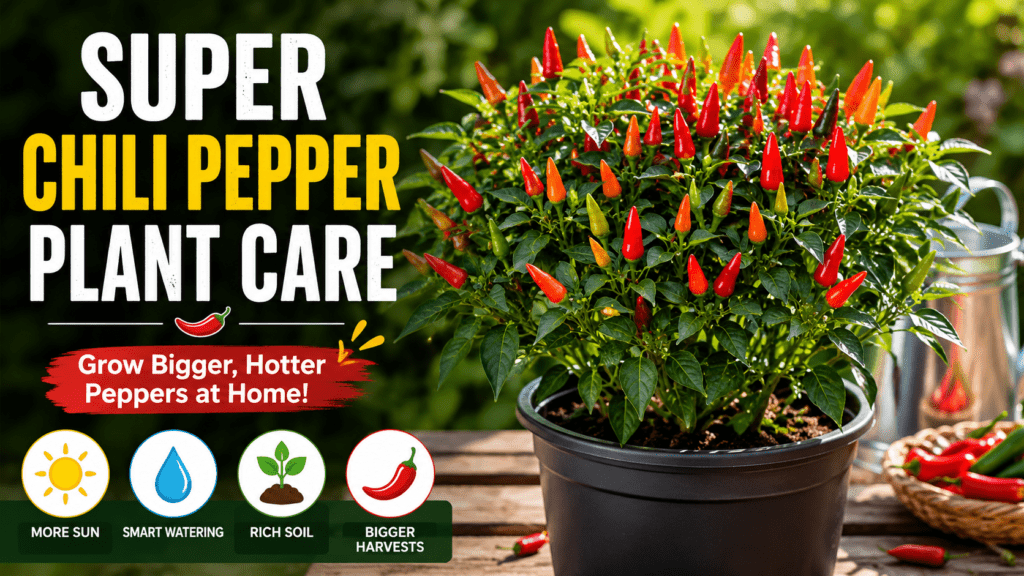
Have you ever seen a super chili pepper plant loaded with dozens of bright red peppers and wondered why yours looks weak, yellow, or barely produces fruit? 🌱 Many gardeners struggle with leggy plants, falling flowers, tiny peppers, or leaves turning yellow — even when they water regularly.
The good news? Growing a thriving super chili pepper plant is much easier once you understand what this fiery little plant actually needs. With the right sunlight, watering schedule, soil, and fertilizer, your chili plant can become one of the most productive plants in your garden. 🌶️🔥
Super Chili peppers are loved for their compact size, ornamental beauty, and explosive production. Whether you’re growing them indoors on a sunny windowsill or outdoors in containers, these peppers reward good care with continuous harvests all season long.
In this complete expert guide, you’ll learn:
- How to grow healthier and bushier pepper plants 🌿
- The best soil and fertilizer for maximum yields
- Common chili plant problems and how to fix them
- Proven tricks for hotter, bigger peppers 🔥
- Indoor and outdoor care tips for beginners and experienced gardeners alike
Let’s turn your pepper plant into a thriving chili-producing machine! 🌶️✨
🌱 What Is a Super Chili Pepper Plant?
The Super Chili pepper plant is a compact ornamental chili variety known for producing large clusters of colorful, upright peppers. Unlike many traditional pepper varieties, Super Chili peppers grow quickly, produce heavily, and thrive well in containers.
These peppers usually mature from:
🟢 Green → 🟠 Orange → 🔴 Bright Red
Not only are they visually stunning, but they also pack serious heat. Super Chili peppers typically range between 40,000–50,000 Scoville Heat Units, making them significantly hotter than jalapeños. 🌶️🔥
🌿 Characteristics of Super Chili Pepper Plants
Here’s what makes this pepper variety so popular among home gardeners:
| Feature | Details |
|---|---|
| Plant Size | 18–24 inches tall |
| Pepper Size | 2–3 inches long |
| Heat Level | Medium-hot to hot |
| Growth Habit | Compact and bushy |
| Best Growing Method | Containers or garden beds |
| Sunlight Needs | Full sun |
Their compact structure makes them perfect for:
- Balconies 🏡
- Patios
- Small gardens
- Indoor growing setups
- Decorative edible landscaping
❤️ Why Gardeners Love Super Chili Peppers
There are many reasons this pepper variety has become a favorite among beginner and experienced gardeners.
🌶️ Extremely Productive
One healthy plant can produce dozens — sometimes hundreds — of peppers during the growing season.
🪴 Great for Containers
Because the plants stay compact, they grow beautifully in pots and raised beds.
🌈 Ornamental Beauty
The colorful peppers create a stunning display that looks decorative even before harvesting.
👩🌾 Beginner-Friendly
Unlike some difficult pepper varieties, Super Chili plants are relatively easy to maintain when basic needs are met.
☀️ Best Climate for Growing Super Chili Pepper Plants
Super Chili peppers thrive in:
- Warm temperatures
- Plenty of sunlight
- Moderate humidity
- Long growing seasons
🌡️ Ideal Temperature Range
The perfect temperature for healthy growth is:
- Daytime: 70–85°F (21–29°C)
- Nighttime: Above 60°F (15°C)
Cold temperatures can severely stunt growth and reduce fruit production.
⚠️ Important Tip
Pepper plants dislike frost. Always wait until temperatures warm consistently before planting outdoors.
🌱 How to Grow a Super Chili Pepper Plant Successfully
Growing healthy chili plants starts with proper planning. Small mistakes during planting often lead to weak plants later.
🌾 Choosing Healthy Seeds or Seedlings
If starting from seed:
- Buy from reputable seed suppliers
- Check packaging dates
- Avoid old or damaged seeds
If purchasing seedlings:
✅ Look for:
- Dark green leaves
- Thick stems
- Compact growth
❌ Avoid:
- Yellow leaves
- Wilted plants
- Root-bound seedlings
Healthy plants establish faster and produce better yields.
📅 Best Time to Plant Super Chili Peppers
Timing matters greatly with peppers because they love warmth.
🌱 Starting Seeds Indoors
Start seeds:
- 8–10 weeks before the last frost date
Use:
- Seed trays
- Heat mats
- Bright grow lights
Pepper seeds germinate best in warm soil around:
🌡️ 80–90°F (27–32°C)
🌿 Transplanting Outdoors
Move plants outdoors only when:
- Frost danger is gone
- Soil temperatures stay above 60°F
- Nights remain consistently warm
Hardening off seedlings for 7–10 days helps prevent transplant shock.
☀️ Choosing the Perfect Growing Location
Sunlight is one of the most important factors for pepper production.
🌞 How Much Sunlight Do Super Chili Pepper Plants Need?
These plants need:
✅ 6–8+ hours of direct sunlight daily
More sunlight generally means:
- More flowers 🌼
- Better fruit production 🌶️
- Hotter peppers 🔥
Indoor Growing Tip 🏡
If growing indoors:
- Use south-facing windows
- Supplement with LED grow lights during cloudy seasons
🌱 Best Soil for a Super Chili Pepper Plant
Soil quality directly affects:
- Root health
- Nutrient absorption
- Pepper production
Poor soil is one of the biggest reasons chili plants fail.
🌿 Ideal Soil Conditions
Super Chili pepper plants prefer:
- Well-draining soil
- Loose texture
- Nutrient-rich organic matter
Best Soil pH
Ideal pH range:
🧪 6.0–6.8
Soil that is too acidic or too alkaline can block nutrient uptake.
🍂 How to Improve Soil Naturally
Healthy soil creates healthier plants.
Add Organic Compost
Compost helps:
- Improve drainage
- Feed beneficial microbes
- Retain moisture properly
Use Mulch Around Plants
Mulching provides:
- Cooler roots
- Better moisture retention
- Weed suppression
Good mulch options:
- Straw
- Shredded leaves
- Grass clippings
🪴 Best Potting Mix for Container-Grown Chili Plants
Container gardening works exceptionally well for Super Chili peppers.
🌱 Ideal Potting Mix Recipe
Mix:
- 40% high-quality potting soil
- 30% compost
- 20% coco coir or peat moss
- 10% perlite
This blend promotes:
✅ Drainage
✅ Root aeration
✅ Nutrient retention
🪴 Best Pot Size
Use containers:
- At least 3–5 gallons
- With drainage holes
Small pots dry out too quickly and restrict root growth.
💧 Watering Super Chili Pepper Plants the Right Way
Improper watering is the #1 mistake most pepper growers make.
Too much water causes:
- Yellow leaves
- Root rot
- Fungus problems
Too little water leads to:
- Blossom drop
- Wilting
- Tiny peppers
🌊 How Often Should You Water?
There’s no universal schedule because weather and container size affect moisture levels.
General Watering Guidelines
🌿 Garden beds:
- 1–2 deep waterings weekly
🪴 Containers:
- Often every 1–2 days in hot weather
Always check soil moisture first.
The Finger Test ✋
Insert your finger 1–2 inches into the soil:
- Dry = Water
- Moist = Wait
🚿 Best Watering Techniques
🌅 Water Early in the Morning
Morning watering:
✅ Reduces disease risk
✅ Helps roots absorb moisture before heat arrives
Avoid watering late at night because constantly wet soil encourages fungal diseases.
💦 Water Deeply
Shallow watering creates weak roots.
Instead:
- Water slowly
- Soak deeply
- Encourage roots to grow downward
Deep roots produce stronger plants.
☀️ Hot Weather Watering Tips
During heat waves:
- Container plants may need daily watering
- Mulch becomes extremely important
- Afternoon wilting may occur temporarily
⚠️ Important
Never let pepper plants sit in soggy soil. Good drainage is critical.
🌶️ Fertilizing for Bigger and Hotter Peppers
Fertilizer dramatically influences:
- Plant size
- Flowering
- Fruit production
- Pepper heat
But using the wrong fertilizer can actually reduce yields.
🌿 Best Fertilizers for Super Chili Pepper Plants
Early Growth Stage
Use fertilizers slightly higher in nitrogen to encourage leafy growth.
Example ratio:
🧪 5-3-3
Flowering and Fruiting Stage
Switch to fertilizers higher in:
- Phosphorus
- Potassium
Example ratio:
🧪 3-5-7
This encourages:
🌼 More flowers
🌶️ Larger peppers
🔥 Better flavor and heat
🍌 Excellent Organic Fertilizer Options
Many experienced gardeners prefer organic feeding methods.
Top choices include:
- Compost tea
- Fish emulsion
- Worm castings
- Bone meal
- Kelp fertilizer
Organic fertilizers improve soil health long-term while feeding plants naturally.
🍂 Nutrient Deficiency Symptoms to Watch For
Yellow Leaves
Possible causes:
- Nitrogen deficiency
- Overwatering
- Poor drainage
Purple Leaves
Usually linked to:
- Phosphorus deficiency
- Cold soil temperatures
Blossom End Rot
Often caused by:
- Calcium deficiency
- Inconsistent watering
Calcium supplements and steady moisture usually solve this issue.
⭐ Expert Trick for Hotter Peppers
Want spicier peppers? 🔥
As fruits mature:
- Slightly reduce watering frequency
- Increase sunlight exposure carefully
Mild stress can increase capsaicin production — the compound responsible for heat.
⚠️ Avoid severe stress, which damages plants.
☀️ Sunlight Requirements for Maximum Growth
Super Chili peppers are sun-loving plants.
Without enough sunlight, plants become:
- Weak
- Leggy
- Poor producers
🌞 Ideal Sunlight Conditions
Best results occur with:
☀️ 8+ hours of direct sunlight daily
The more sunlight peppers receive:
- The bushier the plant
- The larger the harvest
- The hotter the peppers
😟 Signs Your Plant Needs More Light
Watch for:
- Thin stems
- Pale leaves
- Slow growth
- Few flowers
Indoor growers often underestimate how much light peppers need.
Using full-spectrum grow lights can dramatically improve indoor harvests.
🚑 Common Super Chili Pepper Plant Problems and Solutions
Even healthy pepper plants sometimes struggle. The key is identifying problems early before serious damage occurs.
🍂 Yellow Leaves on Pepper Plants
Yellow leaves are one of the most common complaints among gardeners.
Common Causes:
- Overwatering
- Nutrient deficiencies
- Poor drainage
- Root stress
Quick Fixes:
✅ Let soil dry slightly
✅ Improve drainage
✅ Feed balanced fertilizer
✅ Check roots for rot
🌼 Why Flowers Keep Falling Off
Flower drop can be frustrating because fewer flowers mean fewer peppers.
Common Causes:
- Extreme heat
- Sudden temperature swings
- Overfertilization
- Inconsistent watering
Prevention Tips:
- Keep watering consistent
- Avoid excessive nitrogen
- Protect plants during heat waves
🐛 Common Pepper Plant Pests
Super Chili plants can attract destructive insects.
Most Common Pests:
- Aphids
- Spider mites
- Whiteflies
- Thrips
These pests suck plant juices and weaken growth.
🌿 Natural Pest Control Methods
Avoid harsh chemicals whenever possible.
🌱 Neem Oil Spray
Effective against:
- Aphids
- Spider mites
- Whiteflies
🧼 Insecticidal Soap
Safe for edible gardens when used correctly.
🌼 Companion Planting
Helpful companions include:
- Marigolds
- Basil
- Garlic
These plants naturally repel some pests.
🦠 Common Diseases and Prevention
Pepper plants are vulnerable to fungal and bacterial diseases under poor conditions.
Root Rot
Usually caused by:
❌ Overwatering
❌ Poor drainage
Prevention:
- Use well-draining soil
- Avoid soggy containers
Powdery Mildew
Appears as:
⚪ White powdery spots on leaves
Prevention:
- Improve airflow
- Avoid wet foliage
- Space plants properly
🏡 Growing Super Chili Pepper Plants Indoors
Indoor pepper gardening has become increasingly popular because Super Chili plants stay compact and productive.

Indoor growing allows you to:
- Extend the growing season 🌱
- Protect plants from harsh weather
- Grow peppers year-round in warm conditions
However, indoor plants require slightly different care than outdoor plants.
☀️ Best Indoor Conditions for Super Chili Pepper Plants
Indoor pepper plants thrive when you recreate their natural warm, sunny environment.
🌡️ Ideal Indoor Temperature
Maintain temperatures around:
- Daytime: 70–80°F (21–27°C)
- Nighttime: Above 60°F (15°C)
Cold drafts from windows or air conditioners can stress plants and reduce flowering.
💡 Grow Light Recommendations
Natural sunlight alone may not be enough indoors, especially during winter.
For best growth:
✅ Use full-spectrum LED grow lights
✅ Provide 12–14 hours of light daily
✅ Keep lights 12–18 inches above plants
Proper lighting prevents:
- Leggy stems
- Weak growth
- Flower drop
🌼 How to Pollinate Indoor Pepper Plants
Outdoor plants rely on:
🐝 Bees
💨 Wind
🦋 Insects
Indoors, you may need to help pollinate flowers manually.
✋ Simple Hand Pollination Method
Gently:
- Shake the plant daily
OR - Use a small paintbrush to transfer pollen between flowers
This significantly improves pepper production indoors.
🪴 Best Containers for Indoor Chili Plants
Choose containers that:
- Have excellent drainage
- Are at least 3 gallons
- Allow root expansion
Fabric grow bags are excellent because they:
✅ Improve airflow
✅ Prevent root circling
✅ Reduce overwatering problems
🌶️ How to Increase Pepper Yield Naturally
Every gardener wants one thing from their super chili pepper plant: more peppers! 🌿 Fortunately, boosting production is not complicated when you understand how pepper plants grow.
The biggest secret? Healthy plants produce heavy harvests.
Small improvements in pruning, feeding, sunlight, and airflow can dramatically increase both pepper quantity and heat level. 🔥
✂️ Pruning Tips for Bigger and Bushier Plants
Many beginner gardeners skip pruning entirely, but proper pruning encourages:
✅ More branching
✅ Stronger stems
✅ Better airflow
✅ Increased fruit production
🌱 When to Prune Super Chili Pepper Plants
The best time to start pruning is when the plant reaches:
📏 8–12 inches tall
At this stage, the plant is mature enough to handle trimming without stress.
✂️ The “Topping” Technique
One of the most effective pepper-growing methods is called topping.
How to Do It:
- Locate the main central stem
- Cut just above a leaf node
This encourages:
🌿 Side branches
🌶️ More flowering points
🌱 Bushier growth
Instead of one tall weak stem, your plant becomes compact and highly productive.
🍂 Remove Damaged or Yellow Leaves
Pruning away unhealthy foliage helps the plant redirect energy toward fruit production.
Remove:
- Yellow leaves
- Diseased leaves
- Leaves touching the soil
- Weak lower growth
This also improves air circulation and reduces disease risk.
🌿 Companion Plants That Help Chili Peppers Thrive
Companion planting is an excellent organic gardening strategy.
Certain plants naturally:
- Repel pests 🐛
- Improve pollination 🐝
- Enhance soil health 🌱
🌼 Best Companion Plants for Super Chili Peppers
🌿 Basil
- Repels aphids
- Improves garden biodiversity
- May improve pepper flavor
🌼 Marigolds
- Deter nematodes and harmful insects
- Attract beneficial pollinators
🧄 Garlic and Onions
- Help repel spider mites and aphids
🥕 Carrots
- Loosen soil around pepper roots
Avoid planting peppers near fennel because it can inhibit growth.
🔥 How to Grow Hotter Super Chili Peppers
Many gardeners want maximum heat from their peppers.
Capsaicin — the compound responsible for spiciness — increases under certain growing conditions.
☀️ Give Plants Maximum Sunlight
More sunlight generally means:
🌶️ Hotter peppers
🌱 Better growth
🔥 Higher capsaicin levels
Aim for:
☀️ 8+ hours of direct sunlight daily
💧 Slight Water Stress Technique
Experienced pepper growers sometimes slightly reduce watering during fruit ripening.
This mild stress can:
- Increase heat intensity
- Concentrate pepper flavor
⚠️ Important:
Never severely dehydrate the plant. Extreme stress damages roots and reduces yields.
🌡️ Warm Temperatures Increase Heat
Peppers naturally grow hotter in:
- Warm climates
- Long sunny seasons
- Stable temperatures
Cool weather often produces milder peppers.
🧺 When and How to Harvest Super Chili Peppers
Harvest timing affects:
- Flavor
- Heat
- Texture
- Future production
The good news? Super Chili plants often continue producing for months when harvested regularly.
🌈 Signs Super Chili Peppers Are Ready to Pick
Super Chili peppers change colors as they mature.
Typical color stages:
🟢 Green → 🟠 Orange → 🔴 Red
🌶️ For Maximum Heat
Harvest peppers when fully red.
Fully mature peppers usually:
✅ Taste better
✅ Have stronger heat
✅ Contain more nutrients
✂️ Best Harvesting Techniques
Avoid pulling peppers directly off the plant because this can damage stems.
Instead:
- Use pruning shears or scissors
- Cut peppers carefully above the stem cap
Gentle harvesting protects future flowers and fruit production.
📦 How to Store Fresh Chili Peppers
After harvesting, proper storage keeps peppers fresh longer.
🧊 Refrigeration
Fresh peppers stay good:
📅 1–2 weeks in the refrigerator
Store in:
- Paper towels
- Breathable containers
☀️ Drying Peppers
Drying concentrates flavor and heat.
Methods include:
- Air drying
- Dehydrators
- Oven drying
Dried peppers can be:
🌶️ Crushed into flakes
🌶️ Ground into powder
🌶️ Stored for months
❄️ Freezing Peppers
Freezing is one of the easiest preservation methods.
Simply:
- Wash peppers
- Dry thoroughly
- Freeze whole or sliced
Frozen peppers work well in cooked dishes later.
❄️ Overwintering Super Chili Pepper Plants
Did you know pepper plants can survive for multiple years? 🌱
In warm climates, peppers behave like short-lived perennials.
Even in colder climates, you can overwinter them indoors and save mature plants for next season.
🌡️ Can Super Chili Pepper Plants Survive Winter?
Yes — but only with protection from frost.
Pepper plants suffer damage below:
❄️ 50°F (10°C)
Frost can kill them quickly.
🏡 How to Overwinter Pepper Plants Indoors
✂️ Step 1: Prune the Plant
Before bringing indoors:
- Remove most peppers
- Cut back leggy branches
- Remove damaged foliage
This helps the plant conserve energy.
🪴 Step 2: Bring Indoors Before Frost
Place the plant near:
☀️ A sunny south-facing window
OR
💡 Under grow lights
💧 Step 3: Reduce Watering
During winter:
- Growth slows significantly
- Water needs decrease
Keep soil slightly moist but never soggy.
🚫 Beginner Mistakes to Avoid
Many pepper-growing problems come from a few common mistakes.
Avoiding these errors can dramatically improve your results.
💦 Overwatering the Plant
This is the biggest mistake beginner gardeners make.
Too much water causes:
- Yellow leaves
- Root rot
- Fungus growth
- Weak roots
✅ Better Strategy
Water deeply but less frequently.
Always check soil moisture before watering.
🌱 Using the Wrong Fertilizer
Too much nitrogen creates:
🌿 Huge leafy plants
❌ Few peppers
During flowering:
- Reduce nitrogen
- Increase phosphorus and potassium
Balanced nutrition is key for heavy production.
☀️ Ignoring Sunlight Needs
Pepper plants are not shade-loving plants.
Insufficient sunlight leads to:
- Small harvests
- Thin stems
- Weak growth
If necessary, supplement indoor plants with grow lights.
🪴 Choosing Containers That Are Too Small
Small pots:
- Dry out quickly
- Restrict root growth
- Limit production
Use containers:
✅ At least 3–5 gallons
✅ With drainage holes
Larger containers grow healthier plants.
🌡️ Planting Outdoors Too Early
Cold soil stunts pepper growth badly.
Always wait until:
🌡️ Soil warms consistently
☀️ Frost risk disappears
Patience early in the season leads to stronger plants later.
🌟 Expert Growing Tips for Healthier Pepper Plants
Professional gardeners often use small techniques that make a huge difference.
These advanced tips help maximize growth naturally.
🍂 Add Epsom Salt Carefully
Epsom salt provides magnesium, which helps:
- Chlorophyll production
- Leaf health
- Fruit development
Simple Method:
Mix:
🧪 1 tablespoon per gallon of water
Apply once monthly during active growth.
⚠️ Do not overuse.
🌱 Rotate Crops Every Season
Avoid planting peppers in the same location every year.
Crop rotation reduces:
- Soil diseases
- Pest buildup
- Nutrient depletion
Good rotation improves long-term garden health.
🐝 Encourage Pollinators Naturally
More pollinators often mean:
🌼 Better flower pollination
🌶️ More peppers
Plant flowers nearby:
- Lavender
- Marigolds
- Zinnias
Avoid pesticide overuse whenever possible.
🌧️ Protect Plants During Extreme Weather
Heavy rain and intense heat can stress pepper plants.
During Heat Waves:
- Mulch heavily
- Water early morning
- Provide afternoon shade if temperatures become extreme
During Storms:
- Stake plants if heavily loaded with peppers
- Move containers to protected areas
❓ Frequently Asked Questions About Super Chili Pepper Plants
🌶️ How hot are Super Chili peppers?
Super Chili peppers range around:
🔥 40,000–50,000 Scoville Heat Units
That makes them significantly hotter than jalapeños.
🏡 Can I grow Super Chili peppers indoors year-round?
Yes! With enough:
☀️ Light
🌡️ Warmth
💧 Proper care
Indoor plants can produce year-round.
🌱 How long does a Super Chili pepper plant live?
With proper care and overwintering:
📅 2–5 years or longer
Many gardeners keep productive plants for multiple seasons.
💧 How often should I water my pepper plant?
Water when:
- The top 1–2 inches of soil feel dry
Frequency depends on:
- Temperature
- Pot size
- Humidity
- Sun exposure
🌼 Why is my pepper plant flowering but not producing peppers?
Common causes include:
- Poor pollination
- Temperature stress
- Excess nitrogen
- Insufficient sunlight
Indoor plants often benefit from hand pollination.
🌿 Do Super Chili pepper plants need staking?
Usually not, but heavily loaded plants may benefit from support to prevent branches from bending or snapping.
🌶️ Final Thoughts: Grow Healthier, More Productive Super Chili Pepper Plants
Growing a thriving super chili pepper plant is incredibly rewarding once you understand the plant’s basic needs. 🌱
By focusing on:
☀️ Proper sunlight
💧 Consistent watering
🌿 Healthy soil
🌶️ Balanced fertilization
—you can enjoy months of vibrant, spicy peppers right at home.
Remember, successful pepper gardening is less about perfection and more about consistency. Small daily improvements lead to stronger plants and bigger harvests over time. Even beginner gardeners can grow beautiful, productive chili plants with the right approach. 🌟
Whether you grow your peppers:
🪴 In containers
🏡 Indoors
🌿 In raised beds
☀️ Or directly in the garden
Super Chili peppers reward patience and care with stunning color, fiery flavor, and nonstop production.











