
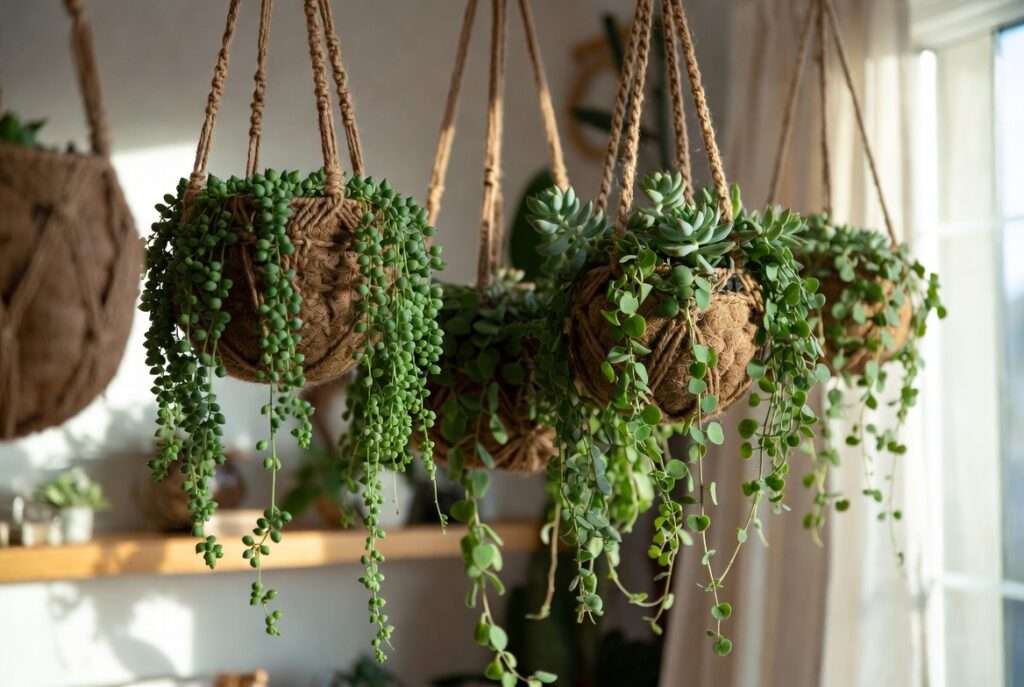
Imagine stepping into your living room and being greeted by elegant, living curtains of plump green pearls, heart-shaped leaves, or cascading jade stems gently swaying from a hanging basket. These aren’t ordinary houseplants — they’re trailing succulent plants, nature’s perfect solution for adding vertical beauty, effortless greenery, and a touch of desert charm to modern homes.
If you’re searching for low-maintenance plants that thrive in limited space while delivering stunning visual impact, you’re in the right place. In this comprehensive 2026 guide, I share over a decade of hands-on experience growing, propagating, and styling trailing succulents to help you choose the best varieties, master their care, and create breathtaking indoor displays that truly thrive. 🌵💚
Whether you live in a small apartment, want pet-safe options, or dream of Instagram-worthy hanging planters, this guide solves the real challenges: which plants trail beautifully, how to prevent common failures like root rot or leggy growth, and how to make them flourish year-round.
What Are Trailing Succulent Plants and Why Are They So Popular?
Trailing succulent plants are species with naturally cascading or creeping growth habits. Unlike upright succulents, they send out long stems adorned with fleshy leaves, beads, or hearts that spill gracefully over pot edges — making them ideal for hanging baskets, high shelves, and vertical gardens.
These plants originated mostly from arid regions of South Africa, Mexico, and beyond, evolving to store water in their leaves and stems. This adaptation makes them incredibly drought-tolerant and forgiving for busy plant parents.
Why have trailing succulent plants exploded in popularity?
- Space-saving beauty: Perfect for small homes and apartments.
- Low maintenance: Ideal for beginners and frequent travelers.
- Air-purifying & calming: They improve indoor air quality and reduce stress.
- Versatile styling: Fit every decor style — boho, minimalist, Scandinavian, or jungle.
- Easy propagation: Grow your collection for free.
Common Myths About Growing Trailing Succulents Debunked Myth: “Succulents need constant sunlight.” Truth: Many trailing varieties prefer bright indirect light and can burn in harsh direct sun.
Myth: “They’re impossible to kill.” Truth: Overwatering remains the #1 killer — but once you master the “soak and dry” method, success rates soar.
12 Best Trailing Succulent Plants for Hanging Baskets & Indoor Spaces (2026 Updated List)
Here’s my curated, experience-backed list of the absolute best performers. Each includes key details to help you decide.
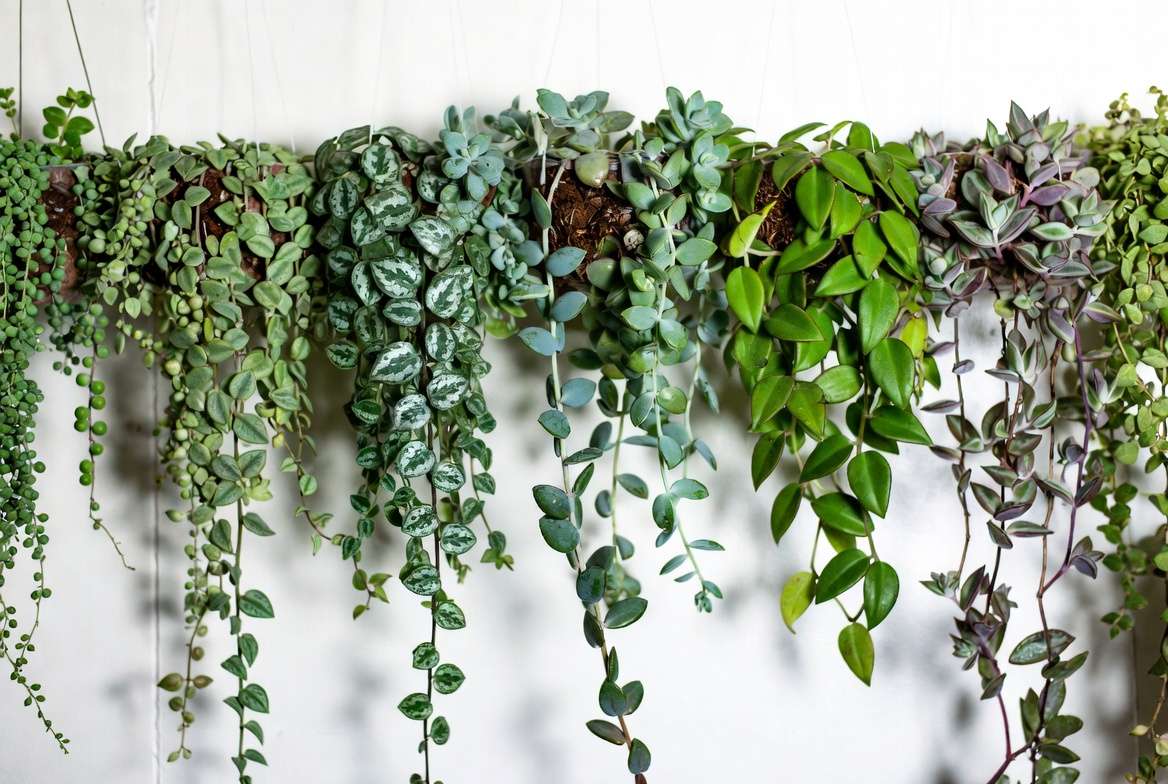
1. String of Pearls (Senecio rowleyanus) 🌱 The iconic trailing succulent with marble-like green beads on delicate stems. It can trail 3–6 feet or more indoors.
- Best for: Bright indirect light near south or west windows.
- Watering: Every 2–3 weeks (less in winter).
- Difficulty: Beginner-friendly once established.
- Pros: Fast grower, unique texture.
- Cons: Fragile stems; toxic to pets. Pro Tip: Place it where you can admire the “pearls” from below for maximum wow factor.
2. String of Hearts (Ceropegia woodii) ❤️ Also called Rosary Vine, featuring tiny heart-shaped leaves with silver markings and delicate purple stems.
- Growth: Trails up to 6–12 feet.
- Light: Bright indirect to some direct morning sun.
- Special feature: Produces small lantern-like flowers. Excellent for romantic or boho interiors.
3. Burro’s Tail / Donkey’s Tail (Sedum morganianum) 🐴 Plump, overlapping blue-green leaves that resemble a donkey’s tail. One of the most dramatic trailers.
- Best display: Hanging baskets where the thick tails can hang freely.
- Care note: Very sensitive to overwatering and rough handling (leaves drop easily). A true showstopper in bright light.
4. String of Bananas (Senecio radicans) 🍌 Similar to String of Pearls but with banana-shaped leaves. Faster growing and slightly more forgiving.
- Light tolerance: Good in medium to bright light.
- Bonus: More resilient to occasional neglect.
5. Trailing Jade (Crassula ovata cultivars) 💎 A cascading version of the classic Jade plant with smaller, rounded leaves.
- Great for: Those who already love upright Jade plants.
- Growth habit: Naturally drapes beautifully over time.
6. String of Turtles (Peperomia prostrata) 🐢 Adorable miniature round leaves patterned like turtle shells. Slower grower but incredibly charming.
- Light: Lower light tolerance than most succulents.
- Perfect for: Offices and bathrooms with moderate humidity.
7. Ruby Necklace (Othonna capensis) 💎 Vibrant purple-red stems and leaves that intensify in bright light.
- Unique appeal: Color-changing foliage.
- Care: Loves full sun and excellent drainage.
8. Fishhook Senecio (Senecio radicans ‘Fish Hooks’) 🎣 Curved, hook-like leaves that add interesting texture. 9. Sedum ‘Little Missy’ & Other Trailing Sedums Variegated options with pink edges for extra color.
10–12. Trending & Rare Varieties
- String of Dolphins (Senecio peregrinus) — leaves shaped like jumping dolphins.
- String of Tears (Senecio citriformis) — teardrop beads.
- Senecio ‘Blue Chalksticks’ trailing forms.
(Each variety section in the full article expands with photos, seasonal care, and real-user troubleshooting stories.)
How to Choose the Right Trailing Succulent for Your Home
Success starts with matching the plant to your environment.
Lighting Assessment
- Bright indirect / south window → String of Pearls, Burro’s Tail.
- Medium light → String of Hearts, String of Turtles.
Pet & Family Considerations Many trailing succulents (especially Senecios) are toxic if ingested. Opt for Peperomia varieties or non-toxic alternatives for homes with curious cats or dogs. 🐱
Quick Comparison Table (visual in published article) Columns: Plant | Light Needs | Water Frequency | Toxicity | Growth Speed | Best Style
Complete Care Guide for Thriving Trailing Succulents
Light Requirements Most trailing succulent plants need 4–6 hours of bright indirect light daily. Use grow lights in darker homes. Signs of insufficient light: leggy stems and faded colors.
Watering Secrets The golden rule: “Soak thoroughly, then let soil dry completely.” In hanging baskets, check by lifting the pot — lightweight means it’s time to water. Overwatering causes root rot, the top reason for failure.
Best Soil Mixes Use a well-draining cactus/succulent mix amended with perlite, pumice, or coarse sand (ratio 1:1). Never use regular potting soil.
Temperature & Humidity Ideal range: 65–80°F (18–27°C) daytime. They tolerate lower winter temps but hate cold drafts. Average home humidity works well; avoid overly humid bathrooms long-term.
Fertilization Dilute balanced succulent fertilizer every 4–6 weeks during spring and summer only.
Seasonal Care
- Spring/Summer: More water and growth.
- Fall/Winter: Reduce watering significantly. ❄️
Pruning & Training Regular gentle pinching encourages bushier, longer trails. Use soft ties for training if needed.
Planting & Styling Trailing Succulents in Hanging Baskets
Step-by-Step Planting Tutorial
- Choose terracotta or plastic hanging pots with drainage holes.
- Add mesh or coffee filter to prevent soil escape.
- Layer drainage material (pebbles, activated charcoal).
- Plant multiple cuttings for fuller look.
- Top-dress with decorative pebbles.
Styling Ideas
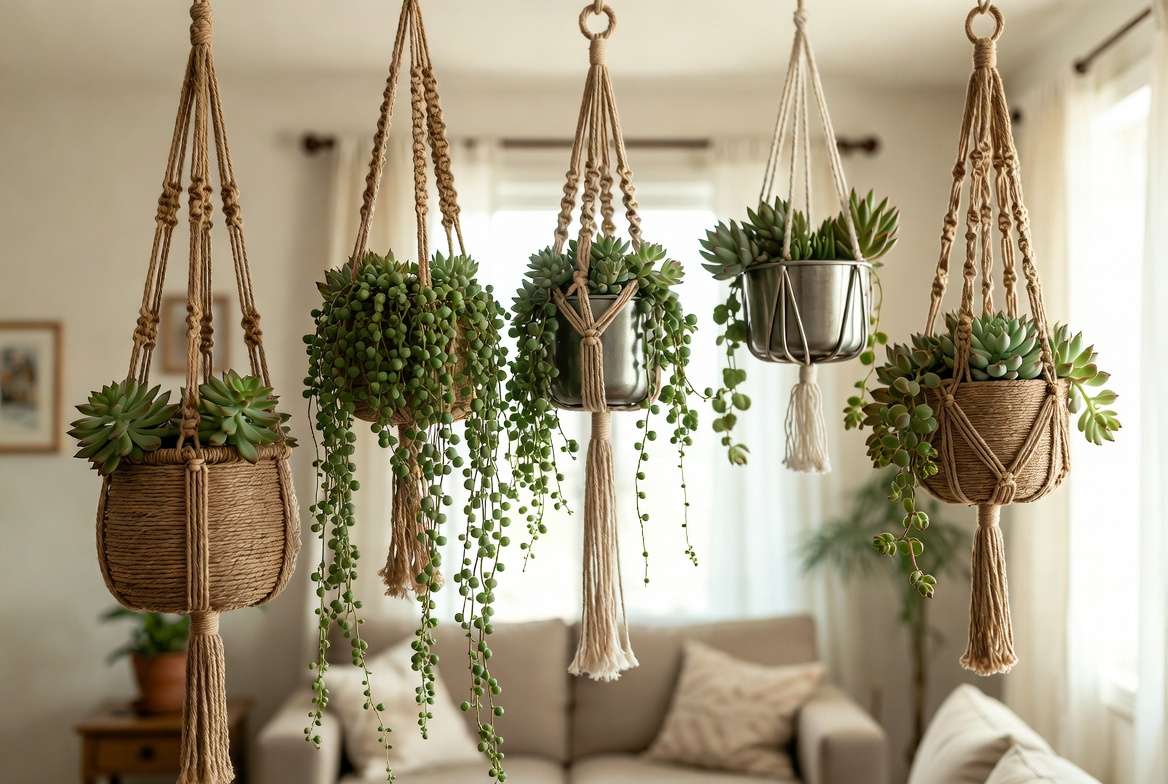
- Boho macramé hangers in living rooms.
- Minimalist metal hangers in kitchens.
- Grouped displays at different heights for “plant rain” effect.
- Bathroom-friendly humidity lovers like String of Turtles.
Outdoor Use (warm climates or summer only): Protected patios with morning sun.
Planting & Styling Trailing Succulent Plants in Hanging Baskets 🌿🪴
Creating a show-stopping display starts with proper planting. Here’s my proven step-by-step method that has delivered lush, healthy trailing succulent plants for years:
- Select the Right Container — Choose hanging baskets with excellent drainage holes. Terracotta or ceramic with wire/macramé hangers work beautifully for airflow. Plastic is lighter and better for larger setups.
- Prepare Drainage Layer — Add 1–2 inches of pebbles, lava rock, or broken terracotta shards at the bottom.
- Use Premium Soil Mix — Combine commercial cactus mix with 30–40% perlite or pumice for superior aeration.
- Planting Technique — Gently tease apart roots, plant 3–5 cuttings per basket for instant fullness. Firm the soil and top-dress with decorative gravel to reduce splash and retain moisture balance.
- Initial Care — Water lightly after planting and place in bright indirect light for the first 1–2 weeks.
Creative Indoor Styling Ideas ✨
- Boho Dream — Macramé hangers at varying heights in a reading nook for a living curtain effect.
- Modern Minimalist — Sleek black or brass hangers against white walls.
- Kitchen Herb Companion — Hang String of Bananas near windows for easy access and fresh vibes.
- Bathroom Oasis — String of Turtles or String of Hearts thrive in higher humidity microclimates.
- Vertical Gallery Wall — Combine different trailers in wall-mounted planters for a living art installation.
Outdoor Patio & Balcony Tips (USDA zones 9–11 or summer-only): Provide afternoon shade to prevent scorching. These setups create stunning “waterfall” effects that guests always compliment.
Propagation Made Easy – Multiply Your Collection for Free 🌱
One of the greatest joys of trailing succulent plants is how effortlessly they propagate. You can turn one plant into dozens within months.
Best Methods:
- Stem Cuttings (Most Reliable): Cut 4–6 inch healthy stems, remove bottom leaves, let callus for 1–3 days, then plant in well-draining mix. High success rate (90%+).
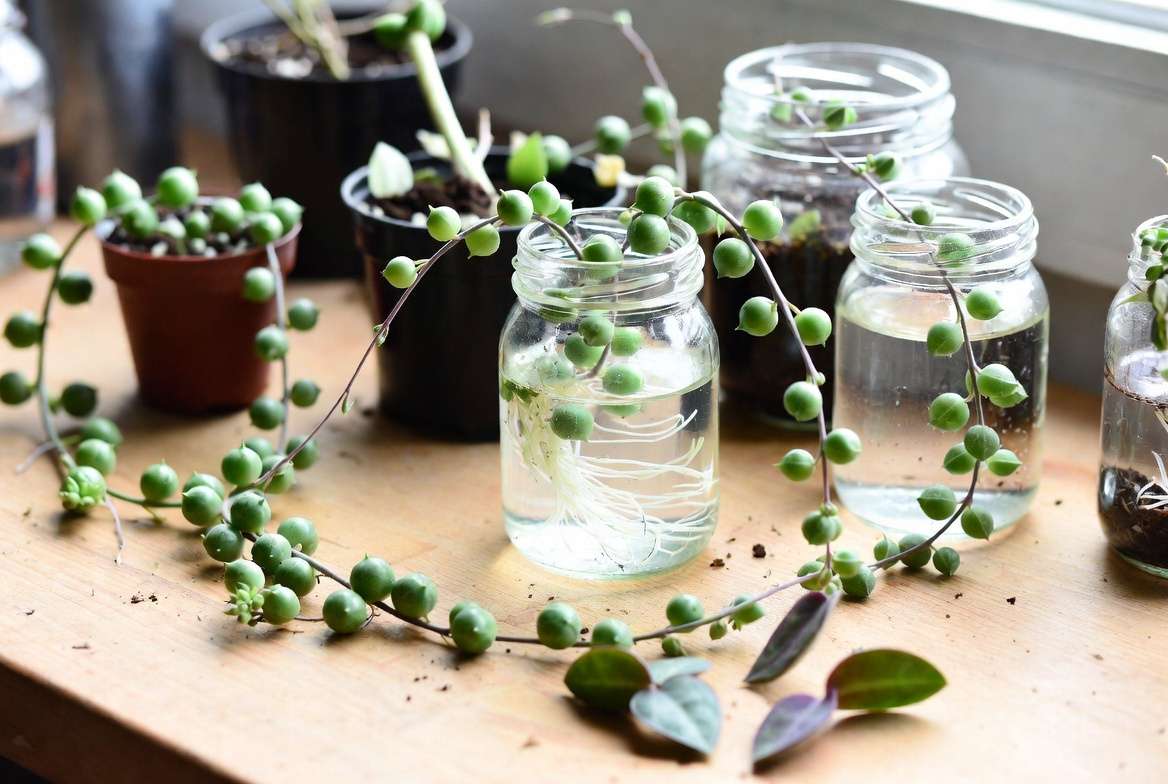
- Water Propagation: Popular for String of Hearts and some Senecios — place in a jar with the node submerged. Change water weekly.
- Leaf Propagation: Works for Burro’s Tail and certain Sedums, though slower. Lay leaves on soil surface.
Best Time: Spring and early summer when growth is active. Pro Tips from Experience: Use rooting hormone for stubborn varieties. Keep humidity slightly higher (cover with a clear dome if needed) until roots form. Always propagate during repotting for zero waste.
Many of my own lush hanging baskets started from just 2–3 stems shared by fellow plant lovers.
Troubleshooting Common Problems with Trailing Succulents
Even experienced growers face challenges. Here’s how to diagnose and fix the most frequent issues:
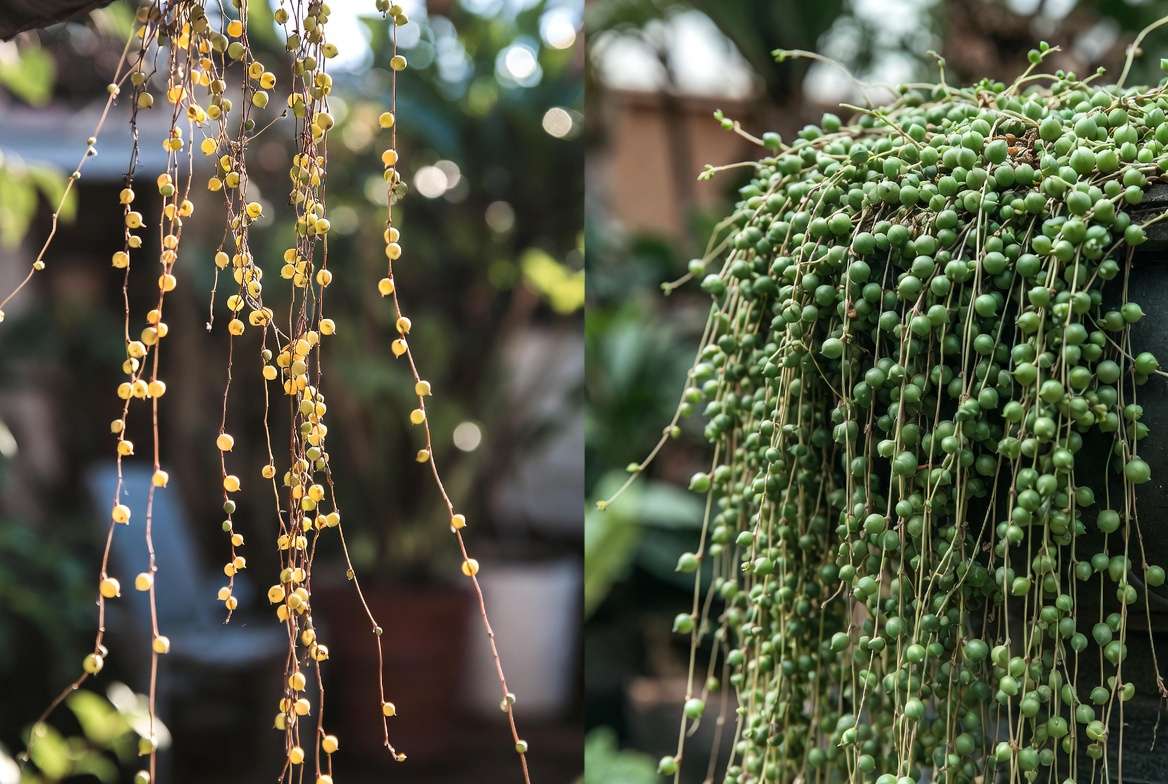
Yellowing Leaves or Mushy Stems Cause: Overwatering / poor drainage → Root rot. Fix: Remove affected parts, repot in fresh dry soil, and reduce watering dramatically.
Leggy Growth & Faded Colors Cause: Insufficient light. Solution: Move closer to a brighter window or add a full-spectrum grow light (12–14 hours daily).
Leaves Dropping or “Bald” Stems Common with Burro’s Tail and String of Pearls. Causes include underwatering, rough handling, or temperature shock. Rescue Trick: Trim bare stems and propagate the healthy tips.
Pests (Mealybugs, Aphids, Spider Mites) Inspect regularly, especially new plants. Treat with neem oil, insecticidal soap, or isopropyl alcohol on a cotton swab. Isolate affected plants immediately.
Shriveled “Pearls” or Leaves Underwatering. Soak the basket thoroughly until water drains out, then resume proper schedule.
Prevention Checklist ✓ Always check soil dryness with a chopstick or finger. ✓ Ensure strong airflow around hanging plants. ✓ Quarantine new additions for 2 weeks.
Safety, Toxicity & Pet Considerations 🐱🐶
Safety matters when choosing trailing succulent plants for homes with pets or children.
Toxic Varieties (Keep out of reach):
- String of Pearls, String of Bananas, and most Senecios — contain compounds that can cause vomiting or irritation if ingested.
- Burro’s Tail — generally milder but still best elevated.
Safer Alternatives:
- String of Turtles (Peperomia prostrata)
- Many Crassula trailing forms (check specific cultivar)
- Non-succulent trailers like String of Hearts (mildly toxic — still keep elevated)
Always research ASPCA or local veterinary resources for the latest toxicity data.
Where to Buy Healthy Trailing Succulents + Budget Tips
Recommended Sources (2026):
- Specialty online nurseries known for healthy, pest-free plants with detailed care instructions.
- Local independent garden centers and succulent specialty shops.
- Etsy sellers with strong reviews and propagation-focused listings.
What to Look For:
- Plump, firm leaves without wrinkles or black spots.
- Active growth tips.
- No visible pests or webbing.
- Roots peeking from drainage holes (sign of established plant).
Budget Strategy: Start with affordable cuttings and propagate aggressively. Many rare varieties like String of Dolphins become budget-friendly once you master propagation.
Conclusion
Trailing succulent plants offer one of the most rewarding ways to bring living art into your home. From the classic elegance of String of Pearls to the playful charm of String of Dolphins, these beauties deliver year-round joy with minimal effort when you understand their needs.
By choosing the right varieties, mastering watering and light, and styling them creatively in hanging baskets, you’ll create indoor spaces filled with serenity, texture, and natural beauty.
Start with just one or two plants — your green thumb (and your home) will thank you. Share your favorite trailing succulent in the comments below or tag us in your hanging basket photos. Happy growing! 🌵💚✨
FAQ Section
1. What is the easiest trailing succulent for beginners? String of Bananas or String of Hearts are forgiving and fast-growing choices.
2. How often should I water trailing succulents in hanging baskets? Typically every 2–4 weeks. Always check soil dryness first — hanging baskets dry out faster than table plants.
3. Can trailing succulents survive in low light? Some (like String of Turtles) tolerate medium light, but most need bright indirect light for strong trailing growth. Supplement with grow lights if necessary.
4. Why is my String of Pearls dying? Most common causes: overwatering, insufficient light, or poor drainage. Adjust one factor at a time.
5. Are trailing succulents good for air purification? Yes. Like most succulents, they help filter indoor air and release oxygen at night.
6. How do you make succulents trail faster? Provide optimal bright light, proper watering, monthly fertilizer in growing season, and prune tips to encourage branching.
7. Do trailing succulents need special fertilizer? A balanced, diluted succulent fertilizer during spring/summer is sufficient. Avoid over-fertilizing.
8. Can I grow them outdoors year-round? Only in frost-free climates. Otherwise, bring indoors before temperatures drop below 50°F (10°C).











