There is something undeniably striking about the Eastern White Pine (Pinus strobus). With its soft, sweeping, blue-green needles and towering canopy, it stands as a cornerstone of North American landscapes. Whether you are establishing a sweeping windbreak on a sprawling property or creating a dense privacy screen for your backyard, white pine trees are fast-growing, evergreen powerhouses that offer unparalleled year-round beauty.
However, despite their vigorous growth and hardy reputation, these majestic conifers frequently send homeowners into a panic. The sudden onset of yellowing needles in the fall, or a newly planted sapling that mysteriously wilts, often leads to unnecessary worry and drastic, harmful interventions.
As a dedicated caretaker of your landscape, understanding the exact needs of your pines is the difference between a struggling sapling and a generational centerpiece. In this comprehensive, arborist-backed guide, we will break down the science of planting, establishing, and maintaining these magnificent trees. From optimizing soil pH and mastering root flare depth to distinguishing harmless seasonal shedding from dangerous fungal infections, this is your ultimate blueprint for white pine success. 🌟
🌱 1. Understanding the Eastern White Pine (Pinus strobus)
Before breaking ground, it is essential to understand the biological profile and environmental preferences of the tree you are introducing to your landscape.
Tree Profile & Characteristics 📏
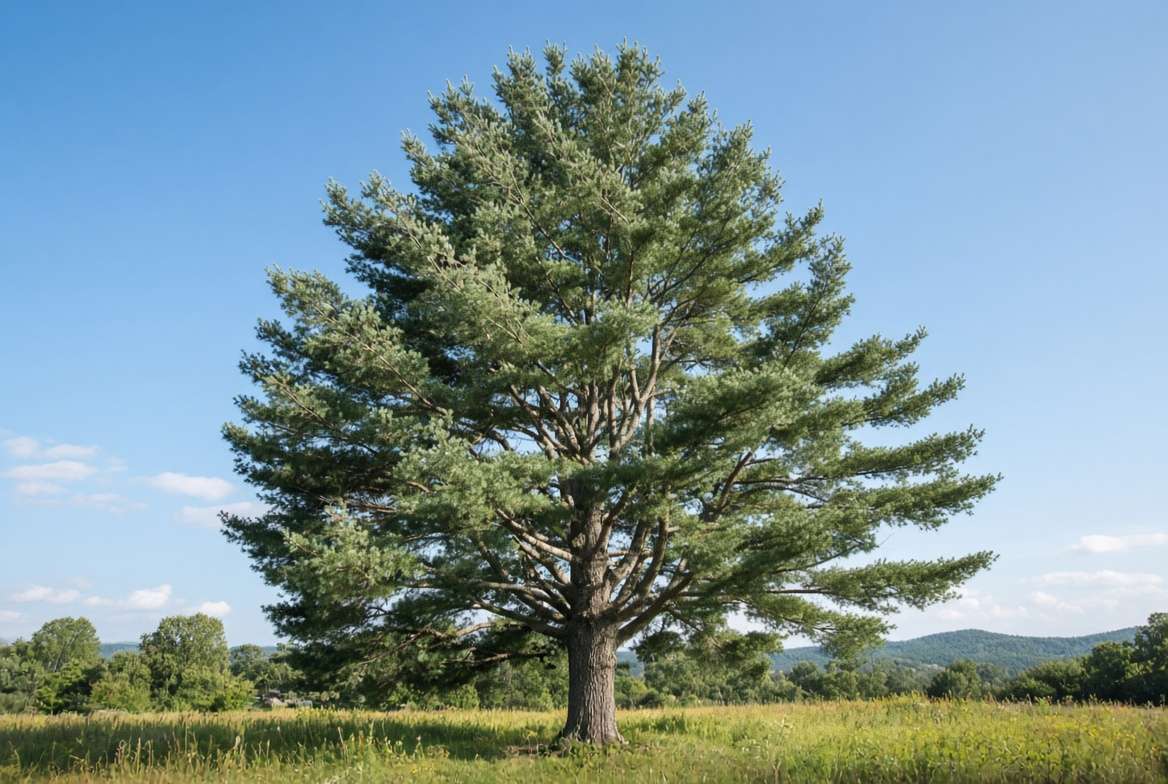
The Eastern White Pine is celebrated for its rapid growth rate. Under optimal conditions, a healthy sapling can shoot up 2 to 3 feet per year. At full maturity, these trees easily reach heights of 50 to 80 feet in residential landscapes, with a canopy spread of 20 to 40 feet. In their natural forest habitats, they can live for over 200 years and grow well past 100 feet. Unlike the stiff, sharp needles of spruces, white pine needles grow in bundles of five and are incredibly soft and flexible to the touch.
Ideal Climate & Hardiness Zones 🗺️
White pines are incredibly cold-hardy, thriving across USDA Hardiness Zones 3 through 8. They are particularly well-suited to the moderate climates found in Zones 6 and 7, where the transition between crisp winters and warm summers aligns perfectly with their natural dormancy cycles.
However, they do have their limits. White pines are sensitive to extreme heat, prolonged drought, and urban pollution. They are not the best candidates for heavy industrial areas or right next to high-traffic roadways where winter road salt is heavily applied, as salt spray can easily scorch their delicate foliage.
Expert Insight 💡: The Eastern White Pine is considered a “successional” species in North American arboriculture. In the wild, they quickly colonize open spaces, establishing a canopy that eventually shelters shade-loving hardwoods. In your garden, leveraging their fast growth rate is an excellent strategy for establishing rapid structural shade.
🪴 2. Expert Planting Tips for White Pine Trees
The vast majority of tree failures occur not from disease, but from improper planting techniques. Setting a strong foundation during the first day in the ground dictates the health of your pine for the next century.
Selecting the Perfect Site ☀️
-
Sunlight Requirements: White pines are adaptable but perform best in full sun to partial shade, requiring at least 4 to 6 hours of direct sunlight daily. Morning sun is highly beneficial; it quickly dries the dew from the dense foliage, significantly reducing the risk of fungal infections like blister rust.
-
Soil Conditions: This is where many gardeners make critical errors. White pines demand well-draining, slightly acidic soil with a pH ranging from 5.5 to 6.5. They despise “wet feet.” Planting a white pine in heavy, compacted, poorly draining clay without proper soil amendment is a guaranteed recipe for root rot and early decline.

Step-by-Step Planting Guide 🛠️
-
Digging the Hole: Follow the golden rule of arboriculture—dig the hole two to three times as wide as the root ball, but no deeper. You want to loosen the surrounding soil to encourage lateral root spread, but digging too deep causes the tree to settle over time.
-
Locating the Root Flare: The root flare (where the trunk widens at the base and transitions into the root system) must remain visible above the soil line. Planting too deep suffocates the cambium layer and invites stem-girdling roots.
-
Root Ball Management: If planting from a nursery container, inspect the roots. Gently tease apart any tightly wound, pot-bound roots with your fingers or a sterile knife. If left bound, these roots will continue to grow in a circle, eventually strangling the tree.
-
The “Puddle Method” for Backfilling: Place the tree in the hole, ensuring it is perfectly straight. Backfill half the soil, then flood the hole with water to create a muddy slurry. This forces out hidden air pockets that can dry out delicate feeder roots. Once the water drains, add the remaining soil and tamp it down gently.
Pro Tip 🏆: Do not add heavy synthetic fertilizers into the planting hole. High-nitrogen fertilizers can burn fragile new roots and encourage top-heavy foliage growth at the expense of root establishment. For the first year, focus entirely on deep watering and organic compost.
💧 3. Essential White Pine Tree Care & Maintenance
Once your tree is in the ground, transitioning it from a pampered nursery sapling to an independent, resilient landscape feature requires precise cultural care.
Watering Schedules for Young vs. Mature Trees 🚿
-
The Establishment Phase (Years 1-3): Newly planted pines have limited root systems and are highly susceptible to drought stress. Water deeply and infrequently—about once a week, providing 1 to 2 inches of water. Shallow, daily watering encourages weak, surface-level roots.
-
Mature Trees: Once established, white pines are remarkably drought-tolerant. However, during severe late-summer droughts, providing a slow, deep soak at the drip line (the outer edge of the canopy) ensures the tree does not enter winter in a dehydrated state, which can lead to severe winter burn.

Mulching Best Practices 🍂
Mulch is a tree’s best friend, acting as an insulator and moisture retainer, but it must be applied correctly.
-
The Donut Method: Apply a 2- to 3-inch layer of organic mulch (pine needles, shredded bark, or wood chips) in a wide circle around the base of the tree.
-
Avoid the Volcano: Never pile mulch directly against the trunk. “Volcano mulching” traps moisture against the bark, rotting the trunk and inviting pests and fungal diseases. Keep a 3-inch gap of bare soil directly around the base of the trunk.
Pruning and Shaping ✂️
Unlike deciduous trees, conifers require very specific pruning techniques.
-
When to Prune: The best time to prune is late winter or early spring before the new growth begins.
-
Pinching the Candles: In spring, white pines produce elongated new shoots called “candles.” To encourage a denser, bushier canopy and control the tree’s height, you can snap or cut these candles in half while they are still soft.
-
Safety Warning ⚠️: Never prune a white pine back into the old, brown wood that has no green needles. Unlike a yew or a boxwood, pine branches do not have dormant buds on old wood. If you cut past the green growth, that branch will remain permanently bare and eventually die.
🍂 4. The Big Issue: Why Is My White Pine Dropping Needles?
Of all the concerns landscape owners bring to arborists, the phenomenon of the yellowing white pine is perhaps the most common. Every autumn, a wave of panic sets in as homeowners notice their prized evergreens turning brown from the inside out. Understanding the difference between a natural life cycle and a tree in distress is the ultimate key to preventing needle drop-related anxiety.
Natural vs. Unnatural Needle Drop 🔍
It is a common misconception that “evergreen” means a tree never loses its foliage. In reality, evergreens simply shed their leaves gradually rather than all at once like deciduous trees.
-
Fall Shedding (Normal Senescence): Eastern White Pines naturally shed their older, inner needles every year. A healthy white pine holds onto its needles for about two to three years. In late September and October, the needles closest to the trunk (the oldest ones) will turn a uniform, bright yellow and eventually drop to the ground. This creates a gorgeous, natural mulch layer underneath the canopy. If the yellowing is confined to the interior of the tree and happens in the fall, your tree is perfectly healthy. Take a deep breath! 😮💨
-
Environmental Stress & Disease (Abnormal Drop): Unnatural needle drop is characterized by where and when it happens. If the needles at the very tips of the branches (the newest growth) are turning yellow or brown, or if the tree is dropping needles in the middle of spring or summer, you have a problem. Similarly, if an entire branch turns completely brown while the rest of the tree remains green (a symptom known as “flagging”), it is a strong indicator of root issues, fungal infection, or pest damage.

How to Prevent Unwanted Needle Drop 🛡️
While you cannot (and should not) stop natural fall senescence, you can absolutely prevent stress-induced needle loss through proactive landscape management:
-
Late Summer Hydration: Drought stress is a primary culprit for severe, out-of-season needle drop. Ensure your pines receive deep root watering during late summer dry spells. A tree that enters the winter freeze fully hydrated is vastly more resilient against winter burn and desiccation.
-
Avoid Salt Damage: If your pines are planted near a driveway or street, winter road salt can cause severe needle browning on the side facing the road. Consider erecting a burlap physical barrier in winter or flushing the soil heavily with water in early spring to dilute accumulated sodium.
-
Soil Drainage Assessments: Yellowing, drooping needles across the entire canopy can signal root rot caused by standing water. Ensure irrigation systems are not pooling around the root flare and adjust your watering schedule if the soil feels permanently waterlogged.
🐛 5. Common Pests and Diseases (and How to Treat Them)
Even the hardiest conifer can fall victim to local pests and pathogens. Catching these issues early is vital for preserving the structural integrity and health of your white pine trees.
White Pine Weevil 🪲
The white pine weevil is perhaps the most frustrating pest for this species, as it directly attacks the tree’s structural aesthetics.
-
Identification: The classic symptom of a weevil infestation is a drooping, wilted central leader (the topmost, vertical branch of the tree). The leader will curl over, resembling a shepherd’s crook, before turning brown and dying. This happens because the weevil larvae bore into the terminal shoot, cutting off the vascular flow.
-
Treatment: If you spot the shepherd’s crook, act fast. Prune the dead leader completely out, cutting just below the visible larval damage into healthy green wood. Burn or dispose of the infected cutting off-site. To restore the tree’s vertical growth, you can gently tie one of the upper lateral branches to a splint, training it upward to become the new central leader. In areas with high weevil pressure, a certified arborist can apply targeted systemic insecticides in early spring before the adults lay their eggs.
White Pine Blister Rust 🍄
This is a devastating fungal disease that requires a very specific environment to spread.
-
Identification: Look for rough, sunken cankers on branches and the main trunk. In the spring, these cankers often rupture, releasing powdery, bright orange blister spores. Branches above the canker will typically die back completely.
-
Prevention: Blister rust is unique because it requires an “alternate host” to complete its life cycle. It cannot spread directly from pine to pine. Instead, it jumps between white pines and Ribes species (gooseberries and wild currants). The most effective E-E-A-T recognized prevention method is to eradicate all wild gooseberry and currant bushes within a 900-foot radius of your white pines.
-
Arborist Advice 📋: If the infection is limited to a single lateral branch, aggressively prune it out 6 to 8 inches below the canker. However, if the canker has reached the main trunk, the tree is structurally compromised and will eventually die. In these cases, removal by a professional is unfortunately the safest option.
🏡 6. Landscaping Ideas: Making the Most of Your Pines
Beyond their biological care, integrating Eastern White Pines into your property requires strategic landscape design. Because they grow so rapidly and broadly, planning for their mature size is critical.
Privacy Screens & Windbreaks 🌬️
White pines are the ultimate living fence. Their dense, sweeping branches effectively block harsh winter winds and nosy neighbors.
-
Spacing Recommendations: It is incredibly tempting to plant saplings 5 feet apart for instant privacy. Do not do this. Overcrowding leads to poor air circulation (increasing fungal disease risks) and severe root competition. Space your white pines 15 to 20 feet apart. For a denser, faster-filling screen, plant them in two staggered, zigzag rows.
Companion Planting in Acidic Soil 🌿
Because white pines naturally drop acidic needles and cast dense, dappled shade, the environment directly beneath their canopy requires specific companion plants. Turfgrass generally struggles under mature pines. Instead, embrace a woodland garden aesthetic!
-
Acid-Loving Shrubs: Rhododendrons, azaleas, and hydrangeas thrive in the exact same slightly acidic soil pH (5.5 to 6.5) that white pines love.
-
Groundcovers and Perennials: Hostas, ferns (like the Japanese Painted Fern or Ostrich Fern), creeping phlox, and wintergreen are excellent choices that provide beautiful textural contrast against the soft pine needles.

❓ 7. Frequently Asked Questions (Expert Q&A)
To round out your conifer education, here are the most common questions our tree care experts receive regarding white pine stewardship.
How fast do white pine trees grow? ⏱️ Under optimal conditions—meaning full sun, well-draining soil, and adequate moisture—Eastern White Pines are considered fast growers. You can expect a healthy sapling to add 24 to 36 inches of vertical growth per year until it reaches maturity.
Can you keep a white pine tree small? 🤏 Yes, but it requires strict annual maintenance. By “candling” (pinching or cutting back the soft, new growth shoots by half in the early spring), you can significantly slow the tree’s vertical spread and force it to grow denser and bushier. However, if you skip a year or two, the tree will rapidly attempt to revert to its massive natural size. If you truly want a small tree, consider a dwarf cultivar like Pinus strobus ‘Nana’.
Why are the tips of my white pine needles turning brown? 🤎 Brown tips are almost exclusively a sign of environmental stress, not natural fall shedding. The most common culprits are winter burn (caused by freezing winds drying out the foliage while the roots are locked in frozen soil), drought stress during the summer, or root burn from over-fertilization or road salt.
Do white pines have deep taproots? 🌳 Unlike oak trees, white pines do not typically develop a massive, deep taproot. Instead, they rely on a wide, spreading, laterally extensive root system that stays relatively close to the soil surface (usually within the top 12 to 24 inches). This makes them excellent at capturing rainfall but slightly more vulnerable to high wind uprooting in highly saturated, swampy soils.
🌟 Final Thoughts on White Pine Stewardship
Caring for white pine trees does not have to be an intimidating process. While their massive size and sudden seasonal needle drop can seem alarming to the uninitiated, these majestic evergreens are actually incredibly resilient and low-maintenance once properly established.
By starting with a meticulously prepared planting site, respecting the root flare, offering deep hydration during droughts, and learning to read the visual cues of their foliage, you can ensure your pines thrive for generations. They are more than just trees; they are living architecture that provides shelter for local wildlife, blocks biting winter winds, and adds profound year-round beauty to your home.
📣 Over to You: Have you recently planted an Eastern White Pine, or are you currently battling a case of mysterious needle drop? Drop your questions, experiences, or a photo of your landscape setup in the comments below! Don’t forget to bookmark this guide for your spring and fall tree-care routines, and share it with a fellow gardening enthusiast who loves conifers just as much as you do. Happy planting! 🌲💚