
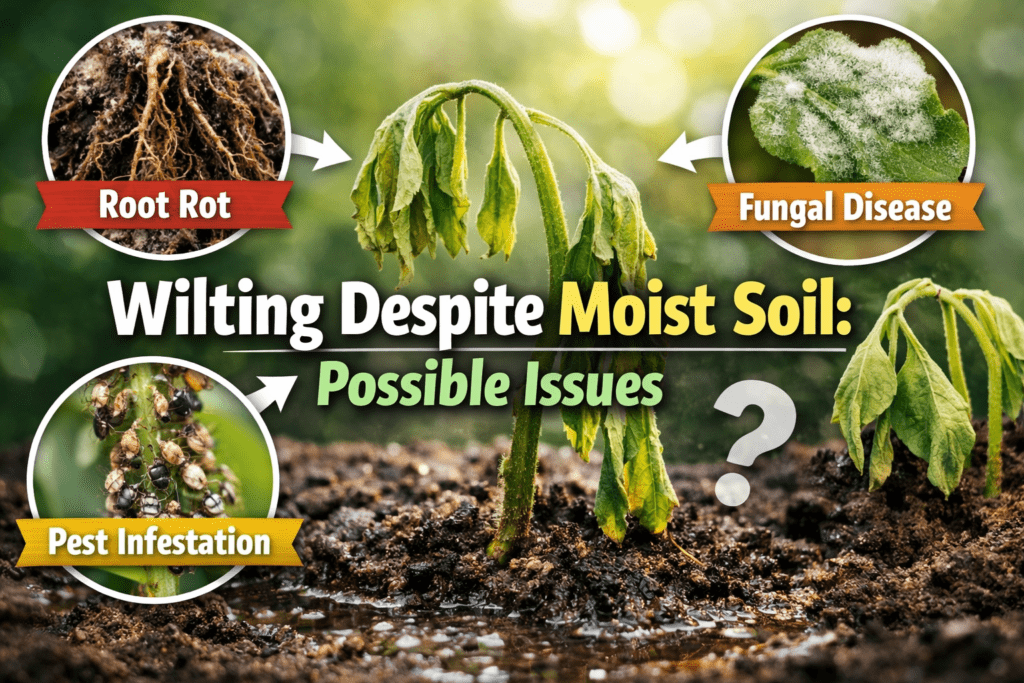
Have you ever stared at your favorite houseplant or beloved garden tree, puzzled and a little heartbroken? The soil feels perfectly moist—maybe even a bit too wet—yet the leaves hang limp, drooping like they’ve lost all hope. 😩 You’re watering diligently (or so you think), but instead of perking up, the plant looks more miserable by the day. This frustrating paradox—”wilting despite moist soil”—is one of the most common yet misunderstood problems in plant care. Many gardeners instinctively reach for the watering can again, only to make things worse.
You’re not alone, and it’s not your fault. Overwatering-related issues, including root problems, actually cause more houseplant deaths than underwatering, pests, or neglect combined (backed by insights from university extension services like those from Cornell and the Royal Horticultural Society). The good news? This symptom is almost always fixable once you identify the real culprit.
In this in-depth guide, we’ll dive deep into the possible issues behind wilting despite moist soil, explain the plant science, provide a step-by-step diagnosis checklist, share tailored rescue plans, and arm you with prevention strategies that work for houseplants, outdoor gardens, and trees alike. Whether you’re troubleshooting a droopy Peace Lily, a heat-stressed tomato plant, or a young mango tree in your Dhaka balcony garden 🌴, you’ll walk away with expert-level knowledge to revive your green friends and keep them thriving. Let’s turn that wilt into wonderful! 🌱✨
Why Do Plants Wilt? The Science Behind It 🧪
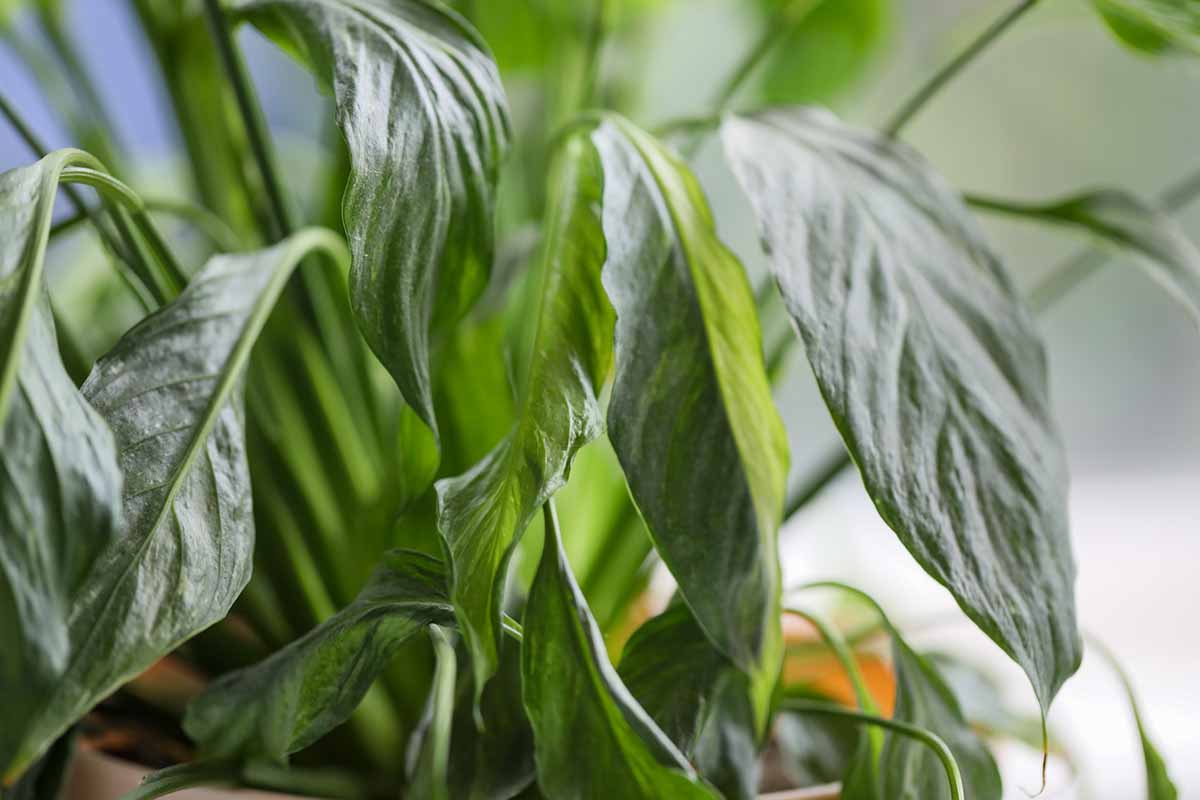
Wilting happens when a plant loses turgor pressure—the internal water pressure that keeps cells firm and leaves upright. Normally, roots absorb water from the soil, transporting it upward through the xylem while leaves release moisture via transpiration (think of it as plant sweating). When water loss outpaces uptake, leaves droop to reduce surface area and conserve water.
But here’s the key twist: moist soil doesn’t guarantee roots can deliver that water. Issues like oxygen-starved roots, damaged vascular tissue, or extreme environmental conditions block the process. Even with soggy soil, the plant can “drought” from the inside. Understanding this mismatch is crucial for proper diagnosis—it’s why simply adding more water often backfires, leading to further root damage or fungal growth.
LSI terms like “plant turgor pressure,” “transpiration rate,” “root oxygen deprivation,” and “vascular wilt” naturally tie into searches for overwatering symptoms, root rot recovery, and heat stress in plants.
The Most Common Culprits: Possible Issues Ranked by Likelihood 🔍
After years of observing thousands of plants (and consulting horticultural research from sources like the American Phytopathological Society), here’s the ranked list of causes for wilting despite moist soil.
1. Overwatering Leading to Root Rot (The #1 Suspect) 🦠
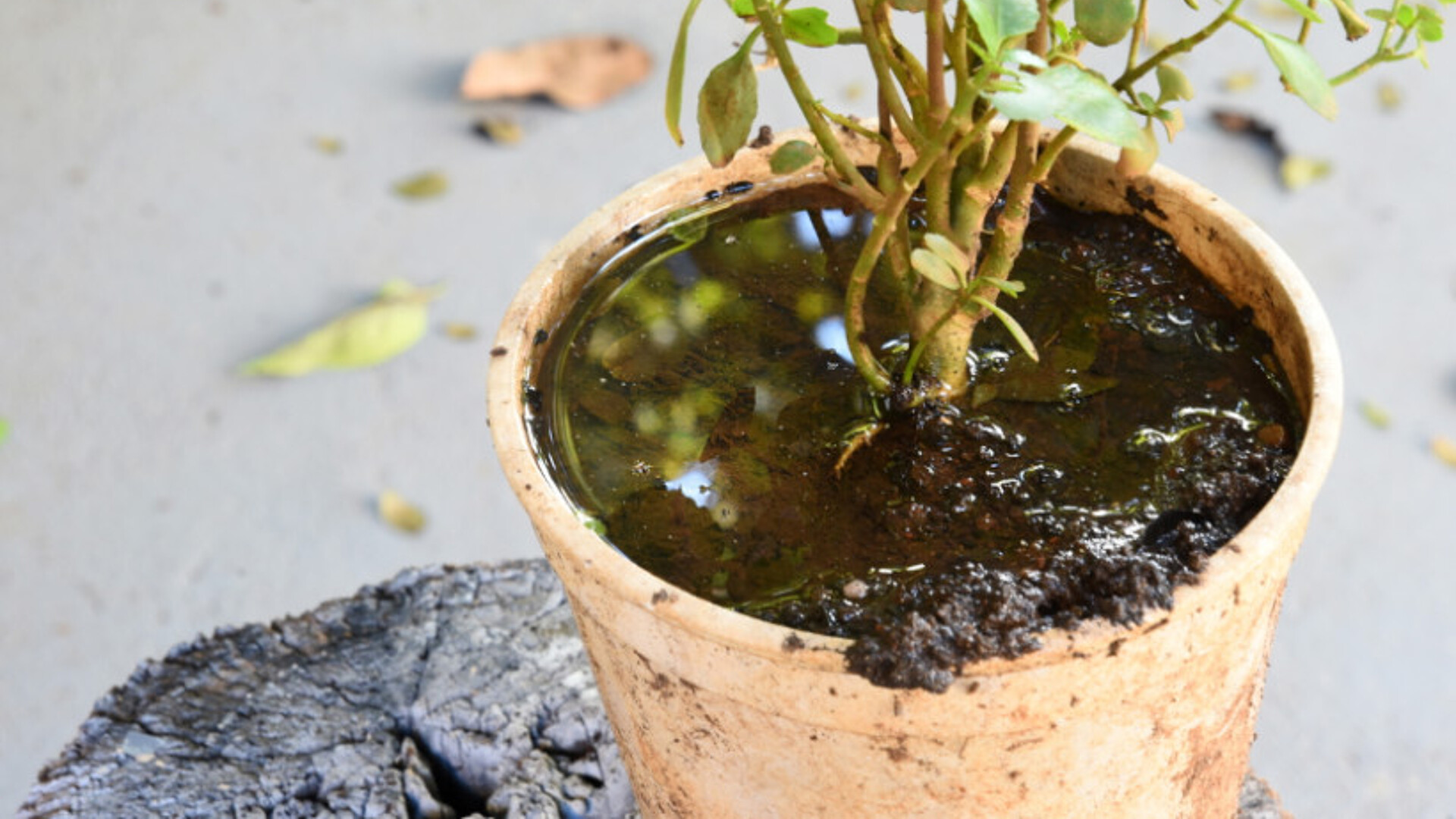
This is hands-down the most frequent reason. Constantly wet soil creates anaerobic (low-oxygen) conditions, inviting pathogens like Pythium, Phytophthora, and Fusarium to attack roots. Damaged roots can’t absorb water or nutrients, so the plant wilts even though the soil is saturated.
Classic symptoms:
- Soft, mushy stems at the base
- Yellowing or browning lower leaves
- Foul, earthy-rot smell from the soil
- Black, brown, or mushy roots (healthy ones are firm and white)
Common in dense potting mixes without drainage, non-porous pots, or cool, low-light indoor environments—very relevant in humid climates like Dhaka.

How to diagnose — Gently lift the plant; if roots look dark and slimy, it’s root rot.
Fixes:
- Stop watering immediately.
- Remove the plant, trim away rotten roots with sterilized scissors.
- Repot in fresh, well-draining mix (e.g., add perlite, orchid bark, or coco coir).
- Apply a fungicide like hydrogen peroxide solution (1:4 with water) or neem-based product if severe.
- Water sparingly until new growth appears.
Prevention: Always use pots with drainage holes; let the top 2–3 inches of soil dry before watering; choose airy soil mixes.
2. Heat Stress / Transpirational Wilt (Especially in Hot Weather) ☀️🔥
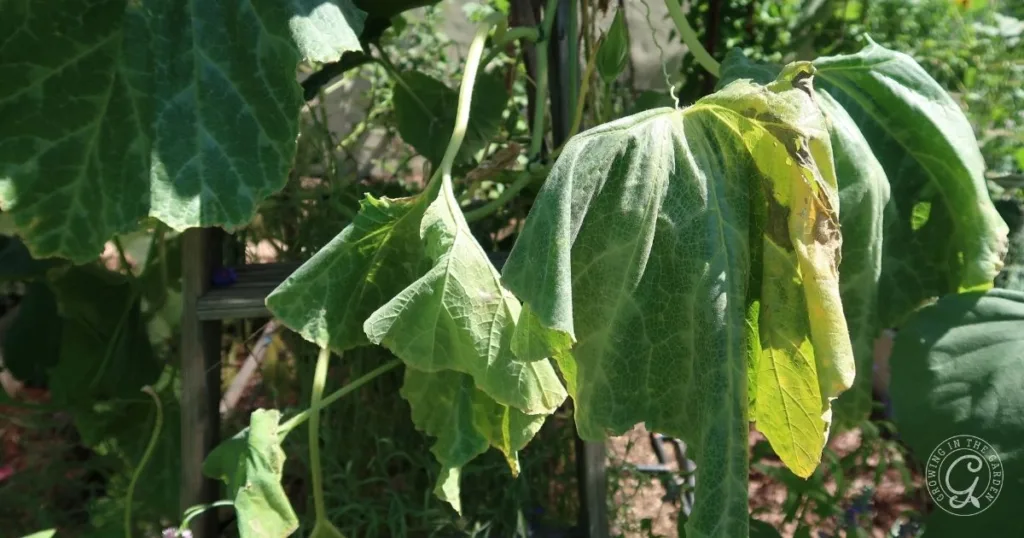
In high temperatures or intense sun, plants transpire faster than roots can replenish moisture—even from moist soil. This causes temporary wilting that often recovers in the evening when temperatures drop.
Signs:
- Wilting peaks in midday/afternoon
- Leaves feel soft but not mushy
- Recovery at night or in shade
Very common for outdoor vegetables, fruit trees, or indoor plants near hot windows during summer heatwaves.
Fixes:
- Move to partial shade or use shade cloth
- Mist leaves in the morning
- Mulch garden beds to cool roots
- Water deeply in early morning
Prevention: Group plants to increase humidity; select heat-tolerant varieties; mulch heavily around trees.
3. Poor Drainage or Compacted Soil (Waterlogged Roots) 🚰
Even if you’re not technically overwatering, heavy or compacted soil can trap water around roots, leading to the same oxygen deprivation as root rot. In Dhaka’s often clay-rich garden soils or dense commercial potting mixes, this is surprisingly common.
Symptoms overlap heavily with overwatering: slow wilting, stunted growth, fungus gnats buzzing around, and a heavy pot that never seems to lighten.

Fixes:
- Repot into a lighter, aerated mix (50% potting soil + 30% perlite + 20% orchid bark works wonders).
- Add drainage holes if the pot lacks them (drill carefully!).
- Gently aerate the topsoil with a chopstick to improve air flow without damaging roots.
Prevention: Refresh soil every 1–2 years; avoid packing soil too tightly when repotting; elevate pots on feet or saucers to allow excess water escape.
4. Underwatering in Disguise (“Silent Drought”) 🌵
Yes—it’s possible! You water frequently but only shallowly, so the top inch stays moist while deeper roots stay bone-dry. Large pots, garden beds with mulch crust, or fast-draining sandy soils in hot weather exacerbate this.
Signs:
- Wilting that doesn’t fully recover after watering
- Crispy, brown leaf edges/tips
- Soil pulling away from pot sides
- Leaves feel papery rather than soft
Fixes:
- Water deeply and slowly until it drains out the bottom.
- Soak the pot in a bucket for 10–15 minutes if severely dehydrated.
- Use a long-spout watering can to reach deeper zones.
Prevention: Always check soil 4–6 inches deep (use a wooden skewer or moisture meter); water less frequently but more thoroughly.
5. Other Sneaky Causes (Less Common but Critical) ⚠️
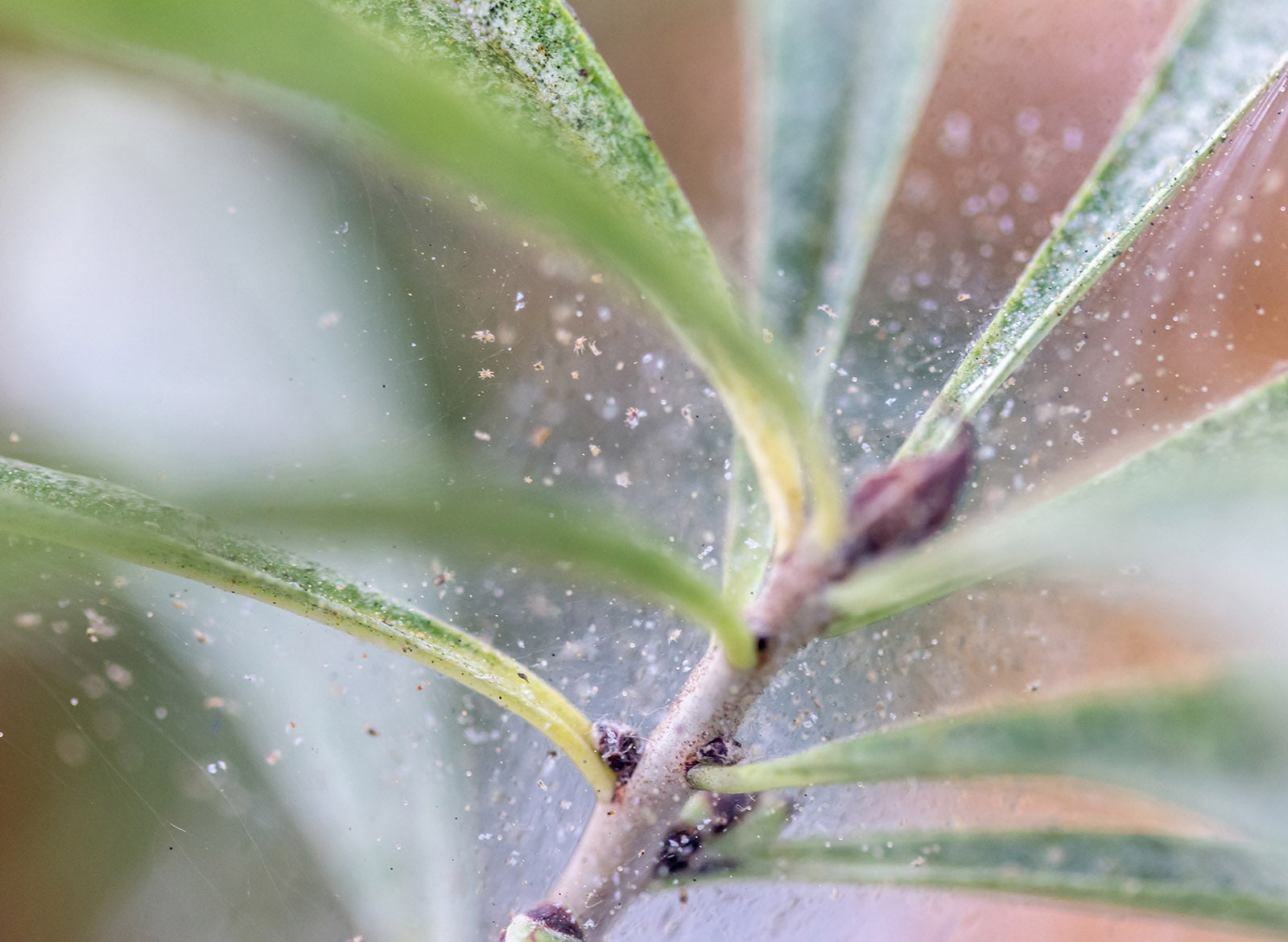
- Pests & Diseases: Spider mites suck sap (causing stippled, wilting leaves); fungal wilts like Fusarium or Verticillium block vascular tissue in trees and perennials.
- Nutrient Imbalance / Salt Buildup: Over-fertilizing burns roots → poor water uptake. White crust on soil surface is a giveaway.
- Root-Bound Plants: Roots circle tightly → limited absorption even in moist soil.
- Environmental Shock: Sudden moves, cold drafts, low humidity, or transplant stress.
Quick Comparison Table (for easy reference):
| Cause | Leaf Texture | Soil Feel | Other Clues | Recovery Time |
|---|---|---|---|---|
| Root Rot | Soft/mushy | Always wet | Foul smell, black roots | Weeks–months |
| Heat Stress | Soft, temporary | Moist | Midday only, recovers at night | Hours–days |
| Poor Drainage | Soft/yellowing | Heavy/wet | Fungus gnats | 1–3 weeks |
| Silent Drought | Crispy/brittle | Top moist | Soil shrinks from pot | Days |
| Pests/Disease | Spotted/stippled | Variable | Webbing, spots, wilting spread | Varies |
Step-by-Step Diagnosis Guide: What to Check First 📋
Don’t guess—follow this logical checklist (used by professional horticulturists worldwide):
- Observe timing — Does it wilt midday and recover by evening? → Likely heat/transpirational stress ☀️
- Test soil depth — Insert finger or skewer 4–6 inches down. Soggy throughout? → Drainage/root rot issue. Dry deeper? → Underwatered.
- Feel leaves — Soft & limp = possible overwatering/rot. Dry & crispy = underwatered or heat.
- Inspect roots (if possible) — Gently slide plant out; healthy = white/firm. Rotten = dark/mushy/sloughing off.
- Check for extras — Pests (use magnifying glass), recent changes (fertilizer? repot? weather shift?), salt crust, insects.
- Tools that help — Digital moisture meter, hygrometer for humidity, thermometer for temp swings.

Pro tip: Take photos daily to track progress—super helpful for spotting patterns!
How to Revive Your Wilting Plant: Actionable Rescue Plans 🛠️
Once you’ve used the diagnosis checklist and identified the most likely cause, act quickly but calmly—most plants can bounce back with the right intervention. Here are tailored rescue plans for the top causes.
For Root Rot / Overwatering / Poor Drainage (most urgent cases):
- Immediately stop all watering.
- Gently remove the plant from its pot and rinse roots under lukewarm water to remove soggy soil.
- Use clean, sharp scissors to trim away all mushy, dark, or foul-smelling roots (cut until you reach healthy white tissue).
- Dust cut ends with cinnamon powder (natural antifungal) or dip in 3% hydrogen peroxide solution.
- Repot into a clean pot with fresh, well-draining mix (example: 40% coco coir + 30% perlite + 30% pine bark for excellent aeration).
- Place in bright, indirect light (avoid direct sun for 1–2 weeks) and hold off watering for 5–10 days—let roots callus and dry slightly.
- Resume watering only when the top 3–4 inches are dry; use a diluted rooting hormone or seaweed extract to encourage new root growth.
For Heat / Transpirational Wilt:
- Move the plant to a shadier spot immediately (50–70% shade cloth for outdoor plants works wonders in Dhaka summers).
- Mist leaves gently in early morning or evening to raise humidity temporarily.
- Water deeply in the early morning so foliage dries before night (reduces fungal risk).
- Apply a 5–8 cm layer of organic mulch (coconut coir, straw, or dried leaves) around the base to keep roots cooler and retain even moisture.
- Monitor for the next 2–3 days—most plants perk up within hours once heat stress is relieved.
For Silent Drought / Shallow Watering:
- Submerge the entire pot in a bucket of room-temperature water for 10–20 minutes (until bubbles stop) so the root ball fully rehydrates.
- Let excess drain completely, then place on a saucer to avoid standing water.
- For garden beds/trees: Use a soaker hose or slow-drip watering for 30–60 minutes to penetrate deeply.
- Follow up with consistent deep watering every 4–7 days (adjust for season and plant type).
General Revival Boosters (safe for almost all cases):
- Prune off severely wilted or dead leaves/ stems with sterilized tools to reduce stress.
- Maintain 60–75% humidity (use a pebble tray or humidifier indoors).
- Keep temperatures stable (avoid cold drafts or hot AC blasts).
- Hold fertilizer for 4–6 weeks—let the plant focus on root recovery first.
When to Propagate Instead of Revive If more than 70% of roots are gone or the main stem is mushy from the base up, propagation may be your best bet. Take healthy stem cuttings, dip in rooting hormone, and place in water or moist perlite. Many plants (Pothos, Monstera, Philodendron, even some fruit tree softwood cuttings) root readily this way.
Prevention Tips: Stop Wilting Before It Starts 🛡️
The best cure is prevention. Adopt these habits and you’ll rarely see wilting despite moist soil again.
- Water wisely: Use the “finger test” or moisture meter—water only when top 2–4 inches are dry (deeper for trees/large pots). Water early morning, never at night in humid climates.
- Choose the right soil & pot: Always drainage holes. Use chunky, airy mixes for aroids, succulents, and most houseplants; loamy but well-draining for garden veggies and trees.
- Seasonal adjustments: Reduce watering in Dhaka’s cooler, drier winter months (Nov–Feb); increase slightly but monitor closely during monsoon (Jun–Sep) to avoid waterlogging.
- Plant selection: Match plants to your conditions—ZZ plants, Snake plants, and Ponytail palms forgive overwatering better; tomatoes, basil, and young mango trees need excellent drainage in pots.
- Routine checks: Inspect roots/soil yearly when repotting; flush pots with plain water monthly to prevent salt buildup.
Real-Life Examples & Case Studies 🌳
- Indoor Peace Lily drama: A reader in Dhaka noticed wilting despite “always moist” soil. Diagnosis: classic root rot from no drainage holes + daily misting. Fix: root trim, repot in airy mix, now thriving with weekly deep soaks only.
- Tomato garden after monsoon: Heavy rains left soil soggy; plants wilted badly. Solution: improved raised-bed drainage + mulch. Plants recovered in 10 days and produced heavily.
- Young mango tree heat stress: Midday droop every sunny day. Added shade net + deep weekly watering → no more wilting, healthy new flush.
These stories show that accurate diagnosis + prompt action = success 90% of the time.
Frequently Asked Questions (FAQ) ❓
Is temporary wilting always a problem? No—midday wilt that recovers by evening is usually just heat/transpiration protection and normal in hot climates.
Can an underwatered plant have moist top soil? Yes—very common with shallow watering habits. Always check deeper soil moisture.
How long does it take to recover from root rot? 2–8 weeks depending on severity. New growth is the best sign of success.
How do I tell overwatering vs. underwatering wilting apart? Overwatering = soft, limp, yellowing leaves + wet soil smell. Underwatering = crispy, dry edges + soil pulling from pot.
When should I call an arborist for a tree? If a large tree shows sudden widespread wilting, branch dieback, or oozing cankers—could be vascular disease like Verticillium or root damage.
Final Thoughts & Expert Insight
Wilting despite moist soil is your plant’s SOS signal—not a call to water more, but a plea to investigate deeper. By understanding turgor pressure, root health, and environmental factors, you can stop guessing and start solving. Most cases are 100% reversible with the steps above.
You now have a complete toolkit—diagnosis checklist, rescue plans, prevention strategies, and real examples—to confidently care for your houseplants, balcony garden, or backyard trees. Your green companions are lucky to have you! 🌱💚
If your plant is showing these symptoms right now, drop a photo or description in the comments—I’d love to help diagnose it personally. And don’t forget to subscribe for more practical plant care guides tailored for Dhaka’s unique climate.
Happy gardening











