
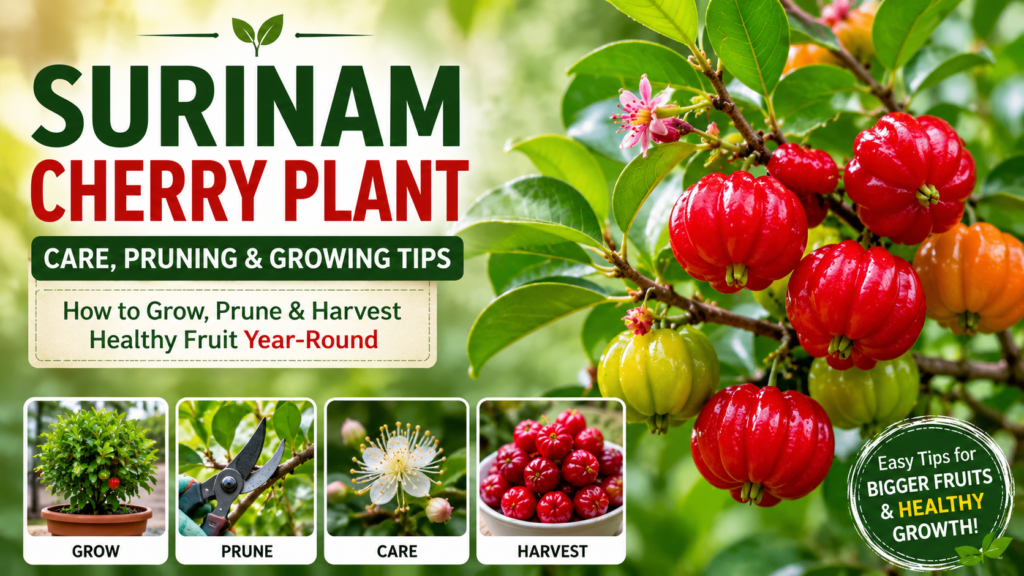
Imagine stepping into your garden and picking glossy, vitamin-rich tropical cherries straight from a beautiful evergreen shrub 🌿🍒. The surinam cherry plant is quickly becoming a favorite among home gardeners because it combines ornamental beauty, fast growth, and delicious fruit in one easy-to-grow package.
But here’s the challenge many gardeners face: yellowing leaves, poor fruit production, leggy growth, or fruits that never fully ripen. Without proper care, even healthy plants can struggle to thrive.
The good news? Growing a healthy, productive surinam cherry plant is much easier when you understand its specific needs. Whether you want to grow it as a fruiting tree, privacy hedge, patio container plant, or tropical landscape feature, this expert guide will walk you through everything you need to know — from soil and watering to pruning, propagation, pest control, and harvesting juicy fruit year-round ☀️
By the end of this article, you’ll know exactly how to keep your plant thriving in every season.
🌳 What Is a Surinam Cherry Plant?

The surinam cherry plant (Eugenia uniflora) is a tropical to subtropical evergreen shrub or small tree known for its deeply ribbed cherry-like fruits and glossy green foliage 🌿
Despite its name, it is not a true cherry. It belongs to the myrtle family (Myrtaceae) and is closely related to guava and jaboticaba.
🌎 Native Origin
This fruiting plant originates from:
- Brazil 🇧🇷
- Suriname
- Paraguay
- Uruguay
Today, it is widely grown in:
- Florida
- Hawaii
- Southeast Asia
- Tropical and subtropical home gardens worldwide
🍒 Why Gardeners Love the Surinam Cherry Plant
The plant offers multiple benefits in one compact package:
🌿 Ornamental Beauty
- Glossy evergreen leaves
- Attractive red new growth
- Dense hedge-like appearance
🍓 Edible Fruit
- Sweet-tart tropical flavor
- Rich in antioxidants and vitamin C
- Great for jams, juices, and desserts
🏡 Landscaping Versatility
- Works as:
- Privacy hedge
- Patio plant
- Bonsai specimen
- Small fruit tree
🌞 Heat Tolerance
- Excellent for warm climates
- Handles humidity surprisingly well
🌱 Growth Habit and Size
A mature surinam cherry plant can reach:
- 6–15 feet tall
- 4–10 feet wide
With pruning, it can stay compact and bushy.
Growth rate:
- Moderate to fast in warm climates
- Slower in containers
☀️ Ideal Growing Conditions for a Healthy Surinam Cherry Plant
Understanding the ideal environment is the secret to producing lush foliage and heavy fruit harvests 🍒
🌞 Sunlight Requirements
The surinam cherry plant thrives best in:
- Full sun (6–8 hours daily)
Although it tolerates partial shade, insufficient sunlight often causes:
- Fewer flowers
- Poor fruiting
- Sparse growth
💡 Expert Tip
Morning sun with afternoon protection works well in extremely hot climates.
🌡️ Temperature and Climate Needs
Best growing temperatures:
- 70°F–90°F (21°C–32°C)
Ideal USDA Zones:
- Zones 9–11
The plant enjoys tropical and subtropical weather but dislikes freezing temperatures ❄️
Cold Sensitivity Warning
Temperatures below:
- 28°F (-2°C)
can damage:
- leaves
- flowers
- young branches
🧣 How to Protect It From Frost
If you live in cooler areas:
- Grow in containers
- Bring indoors during winter
- Use frost cloth overnight
- Add mulch around roots
💨 Humidity Preferences
The surinam cherry plant naturally prefers:
- Moderate to high humidity
Dry indoor air may cause:
- leaf drop
- browning edges
Indoor Humidity Tips 🌿
- Use pebble trays
- Mist occasionally
- Place near humidifiers
🪴 Best Soil for Surinam Cherry Plant Growth

Healthy roots are the foundation of a productive plant 🌱
The biggest mistake many gardeners make is planting in poorly draining soil.
🌱 Ideal Soil Type
The best soil should be:
✅ Well-draining
✅ Rich in organic matter
✅ Slightly acidic to neutral
Recommended soil pH:
- 5.5–7.0
🌿 Perfect Soil Mix for Containers
For potted surinam cherry plants, use:
- 40% quality potting soil
- 30% compost
- 20% pine bark
- 10% perlite or coarse sand
This mix improves:
- drainage
- airflow
- nutrient retention
🚫 Soil Problems to Avoid
Avoid:
- Heavy clay soil
- Waterlogged ground
- Compacted soil
Poor drainage can quickly cause:
- root rot
- fungal disease
- stunted growth
🍂 Why Mulching Helps
Apply organic mulch around the base:
- wood chips
- bark
- straw
- leaf compost
Benefits:
- Retains moisture 💧
- Regulates soil temperature
- Reduces weeds
- Improves soil quality over time
Keep mulch 2–3 inches away from the trunk.
💧 How Often to Water a Surinam Cherry Plant

Proper watering is one of the most important factors for healthy growth and fruit production 🍒
Too much water is often more dangerous than too little.
🚿 Watering Young Plants
Newly planted surinam cherry plants need:
- Consistently moist soil
Water:
- 2–3 times weekly during establishment
The first year is critical for root development.
🌳 Watering Mature Plants
Established plants are moderately drought tolerant.
General rule:
- Water deeply once weekly
Increase watering during:
- extreme heat
- flowering
- fruit development
☀️ Summer Watering Tips
During hot weather:
- Check soil moisture frequently
- Water early morning
- Avoid wetting foliage late evening
Deep watering encourages stronger roots.
❄️ Winter Watering Adjustments
Reduce watering in winter because plant growth slows naturally.
Overwatering during cold weather often leads to:
- root rot
- fungal issues
⚠️ Signs of Overwatering
Watch for:
- Yellow leaves 🍂
- Mushy stems
- Leaf drop
- Sour-smelling soil
🚨 Signs of Underwatering
Symptoms include:
- Wilting
- Dry leaf tips
- Small fruit
- Curling leaves
🌸 How to Fertilize Surinam Cherry Plant for Better Fruit Production
If your surinam cherry plant looks healthy but refuses to fruit well, nutrition is often the missing piece 🌿
🌱 Best Fertilizer Types
Use a balanced fertilizer such as:
- 8-8-8
- 10-10-10
Organic options work wonderfully:
- Compost tea
- Fish emulsion
- Worm castings
- Aged manure
📅 Fertilizing Schedule
Spring 🌸
Apply fertilizer as new growth begins.
Summer ☀️
Feed every 6–8 weeks during active growth.
Fall 🍂
Reduce feeding gradually.
Winter ❄️
Avoid heavy fertilization during dormancy.
🍒 Nutrients That Improve Fruiting
Potassium
Supports:
- flower production
- fruit size
- sweetness
Phosphorus
Encourages:
- strong roots
- healthy blooms
Magnesium
Prevents yellow leaves and improves vigor.
🚫 Avoid Overfertilizing
Too much nitrogen causes:
- excessive leafy growth
- fewer fruits
A balanced approach always works best.
✂️ How to Prune a Surinam Cherry Plant Properly

Pruning keeps your plant attractive, productive, and disease-free ✂️🌿
Without pruning, the plant may become:
- overcrowded
- leggy
- less productive
🌳 Benefits of Pruning
Proper pruning:
✅ Improves airflow
✅ Encourages bushier growth
✅ Increases sunlight penetration
✅ Boosts fruit production
✅ Reduces disease risk
📅 Best Time to Prune
The ideal time:
- After fruiting season
Avoid heavy pruning during flowering.
✂️ Step-by-Step Pruning Guide
1️⃣ Remove Dead Branches
Cut away:
- damaged stems
- diseased wood
- weak growth
2️⃣ Thin Crowded Areas
Improve airflow inside the canopy.
3️⃣ Shape the Plant
Maintain:
- hedge form
- tree shape
- compact container size
4️⃣ Sterilize Tools
Always clean pruning shears to prevent disease spread.
🌿 Hedge vs Tree Form
Hedge Style
- Dense
- Great for privacy
- Easy to maintain
Small Tree Form
- More ornamental
- Easier harvesting
- Better airflow
🍒 Flowering and Fruiting: What to Expect
One of the most rewarding parts of growing this tropical plant is harvesting its colorful fruit 🍓
🌸 Blooming Season
The surinam cherry plant typically flowers:
- Spring
- Early summer
- Sometimes multiple times yearly in tropical climates
Flowers are:
- small
- white
- fragrant
- highly attractive to pollinators 🐝
🍒 When Will It Produce Fruit?
From Seed 🌱
- 2–5 years
From Nursery Plant 🪴
- Often fruits within 1–2 years
Warm weather and proper sunlight dramatically speed up fruiting.
🐝 Pollination Tips
- Attract bees with flowering plants
- Avoid pesticide overuse
- Hand-pollinate indoors if needed
🍓 How to Tell When Fruit Is Ripe
Ripe fruits become:
- Deep red
- Dark crimson
- Nearly black in some varieties
Texture:
- Slightly soft
- Juicy
Avoid harvesting too early because flavor develops fully when ripe.
🍹 Flavor Differences Between Varieties
Some varieties taste:
- Sweet and fruity 🍒
Others may have:
- Resinous or tart notes
Improved cultivars usually offer better sweetness.
🪴 Growing Surinam Cherry Plant in Containers

Container growing is an excellent option for gardeners with limited space 🏡
It also allows easier winter protection in cooler climates.
🪴 Choosing the Right Pot
Use:
- Large containers with drainage holes
Best materials:
- Terracotta
- Plastic
- Fabric pots
Minimum size:
- 15–20 gallons for mature plants
🌱 Best Potting Practices
Ensure:
- Excellent drainage
- High-quality soil mix
- Regular feeding
Repot every:
- 2–3 years
to refresh soil and prevent root crowding.
☀️ Container Placement
Place pots where they receive:
- Full sun
- Good airflow
Rotate containers occasionally for even growth.
🌱 How to Propagate Surinam Cherry Plant
Gardeners often love propagating this beautiful fruit plant to expand their collection 🌿🍒
🌱 How to Propagate Surinam Cherry Plant
Propagating your own surinam cherry plant is rewarding, cost-effective, and surprisingly simple when done correctly 🌿
You can grow new plants from:
- Seeds 🌰
- Stem cuttings ✂️
- Air layering (advanced method)
Each method has advantages depending on your gardening goals.
🌰 Growing Surinam Cherry Plant From Seeds
Seed propagation is the most common method for home gardeners.
🌱 Step-by-Step Seed Propagation
1️⃣ Harvest Fresh Seeds
Use fully ripe fruits because fresh seeds germinate best.
Remove:
- fruit pulp
- sticky residue
Wash seeds thoroughly before planting.
2️⃣ Prepare the Soil
Use a lightweight seed-starting mix:
- peat moss
- coco coir
- perlite
The soil should remain:
- moist
- airy
- well-draining
3️⃣ Plant the Seeds
Plant seeds:
- ½ inch deep
Keep containers in:
- warm temperatures
- indirect bright light
Ideal germination temperature:
- 70°F–85°F (21°C–29°C)
4️⃣ Maintain Moisture
Do not let the soil dry out completely.
Mist lightly when needed 💧
⏳ Germination Time
Most seeds sprout within:
- 3–6 weeks
Some may take longer depending on:
- temperature
- humidity
- seed freshness
✂️ Propagating From Cuttings
Cuttings are faster if you want fruit-producing plants sooner 🍒
🌿 Best Time for Cuttings
Take cuttings during:
- spring
- early summer
✂️ How to Take Cuttings
Choose:
- healthy semi-hardwood stems
- 4–6 inches long
Remove:
- lower leaves
- flowers or fruits
Dip the base in rooting hormone for better success.
🌱 Rooting Process
Place cuttings into moist rooting mix:
- perlite
- peat moss
- sand blend
Cover loosely with:
- plastic dome
- humidity bag
Roots typically develop within:
- 6–10 weeks
🌿 Which Propagation Method Is Better?
| Method | Pros | Cons |
|---|---|---|
| Seeds 🌰 | Easy & inexpensive | Slower fruiting |
| Cuttings ✂️ | Faster fruit production | Requires humidity control |
For most gardeners:
- Seeds are easiest
- Cuttings provide quicker results
🐛 Common Problems and Solutions

Even hardy tropical plants occasionally develop issues. The key is identifying problems early before they spread 🌿
🍂 Why Are the Leaves Turning Yellow?
Yellow leaves are one of the most common complaints.
Possible causes include:
💧 Overwatering
The most common issue.
Symptoms:
- soggy soil
- drooping leaves
- fungal smell
🌱 Nutrient Deficiency
Especially:
- magnesium
- nitrogen
- iron
☀️ Insufficient Sunlight
Low light can weaken foliage.
🪴 Root Stress
Caused by:
- compacted roots
- poor drainage
- transplant shock
🐜 Common Pests on Surinam Cherry Plants
Aphids
Tiny insects that suck plant sap.
Symptoms:
- sticky leaves
- curled new growth
Spider Mites
More common in dry weather.
Signs:
- webbing
- speckled leaves
Scale Insects
Look like small brown bumps on stems.
🛡️ Organic Pest Control Methods
Neem Oil Spray 🌿
Excellent natural treatment for:
- aphids
- mites
- scale
Apply during cooler hours.
Insecticidal Soap
Safe for edible plants.
Encourage Beneficial Insects 🐞
Ladybugs and lacewings naturally control pests.
🍄 Common Diseases
Root Rot
Usually caused by poor drainage.
Symptoms:
- wilting
- black roots
- foul smell
Prevention
- Avoid soggy soil
- Use well-draining containers
Leaf Spot Disease
Appears as:
- dark spots
- yellow patches
Improve airflow and avoid wetting leaves late in the day.
Powdery Mildew
White powder-like coating on leaves.
Treat with:
- neem oil
- baking soda spray
- proper pruning
❄️ Winter Care Tips for Surinam Cherry Plant

Although the surinam cherry plant loves warmth, it can struggle during cold winters ❄️
Proper winter care protects your plant from long-term damage.
🧣 Protecting Outdoor Plants From Frost
If temperatures drop below freezing:
Cover the Plant
Use:
- frost cloth
- old blankets
- burlap
Remove coverings during daytime sunlight.
🍂 Add Mulch Around the Base
Mulch insulates roots and reduces cold stress.
Apply:
- 2–4 inches of mulch
🪴 Move Containers Indoors
Potted plants should move indoors before the first frost.
Best indoor locations:
- bright windows
- sunrooms
- greenhouses
💡 Indoor Winter Care Tips
During winter:
- reduce watering
- stop heavy fertilizing
- provide bright light
Avoid placing plants near:
- heaters
- cold drafts
🏡 Landscaping Ideas Using Surinam Cherry Plant
The surinam cherry plant is one of the most versatile edible landscape plants 🌿
It blends beauty and functionality beautifully.
🌳 Use as a Privacy Hedge
Dense growth makes it ideal for:
- natural fences
- screening neighbors
- windbreaks
Regular pruning creates a lush tropical hedge.
🍒 Create an Edible Landscape
Combine beauty with food production.
Pair with:
- guava
- pineapple
- banana plants
- hibiscus
🪴 Patio and Balcony Gardening
Compact varieties grow beautifully in containers.
Perfect for:
- patios
- balconies
- courtyards
🌺 Ornamental Garden Accent
Its glossy leaves and colorful fruit make it visually stunning year-round.
Use as:
- focal point shrub
- tropical accent tree
- bonsai specimen
🍒 Health Benefits and Uses of Surinam Cherry Fruit

Beyond its ornamental appeal, the fruit itself is highly nutritious 🍓
🌿 Nutritional Benefits
Surinam cherries contain:
- Vitamin C
- Vitamin A
- Antioxidants
- Calcium
- Iron
These nutrients support:
- immune health
- skin health
- overall wellness
🍹 Popular Ways to Eat Surinam Cherry
The fruit can be enjoyed:
- fresh
- juiced
- in jams
- smoothies
- desserts
🍓 Flavor Profile
Flavor varies greatly depending on variety and ripeness.
Some fruits taste:
- sweet and tropical 🍒
Others may be:
- tart
- resinous
Fully ripe fruits generally taste much better.
👨🌾 Expert Tips for Faster Growth and Bigger Harvests

These professional growing tips can dramatically improve plant health and fruit production 🌿🍒
☀️ Prioritize Full Sun
More sunlight equals:
- more flowers
- sweeter fruit
- stronger growth
🍂 Mulch Consistently
Organic mulch improves:
- moisture retention
- soil fertility
- root protection
💧 Water Deeply — Not Frequently
Deep watering develops stronger roots.
Shallow daily watering weakens plants.
✂️ Prune Annually
Pruning:
- boosts airflow
- prevents disease
- encourages new fruiting wood
🌱 Feed Regularly During Growing Season
Balanced nutrition creates:
- healthier foliage
- better flowering
- larger harvests
📋 Quick Surinam Cherry Plant Care Summary
| Care Factor | Recommendation |
|---|---|
| Sunlight ☀️ | Full sun |
| Soil 🌱 | Well-draining |
| Water 💧 | Moderate |
| Fertilizer 🌿 | Balanced fertilizer |
| Pruning ✂️ | After fruiting |
| Climate 🌡️ | Warm tropical/subtropical |
| Container Friendly 🪴 | Yes |
❓ Frequently Asked Questions About Surinam Cherry Plant
🍒 Is the Surinam Cherry Plant Invasive?
In some warm regions, it may spread aggressively through seeds. Regular pruning and fruit management help control growth.
🪴 Can Surinam Cherry Plant Grow Indoors?
Yes 🌿
It grows well indoors if provided:
- bright sunlight
- proper drainage
- humidity
🌱 How Fast Does It Grow?
The plant grows moderately fast in warm climates and may reach several feet within a few years.
🍓 Why Is My Plant Not Fruiting?
Common causes include:
- insufficient sunlight
- excessive nitrogen fertilizer
- immature plant age
- poor pollination
☀️ Does It Need Full Sun?
Yes. Full sun encourages the healthiest growth and best fruit production.
✂️ When Should I Prune It?
The best time is:
- after harvesting fruit
- late spring or summer
🌟 Conclusion: Enjoy a Healthy and Productive Surinam Cherry Plant Year-Round
The surinam cherry plant is one of the most rewarding tropical fruit plants you can grow 🌿🍒
With its:
- glossy evergreen foliage
- colorful ribbed fruit
- easy-care nature
- ornamental beauty
it’s perfect for gardeners who want both function and beauty in their landscape.
By providing:
☀️ Plenty of sunlight
💧 Proper watering
🌱 Well-draining soil
✂️ Regular pruning
🍒 Balanced nutrition
you can enjoy vigorous growth and delicious fruit year after year.
Whether you grow it in the ground, in containers, or as a lush tropical hedge, this unique plant can become a stunning centerpiece in your garden 🏡✨











